Saltar al contenido principal
Page 1556 of 6843
1 1.554 1.555 1.556 1.557 1.558 6.843

Countries around the world are reopening their schools. This is what it looks like

Por: Melissa Wiley.

  • Coronavirus lockdown measures have partially or fully closed schools for more than 90% of the world’s student population across 186 countries and territories, according to UNESCO.
  • After closing schools to prevent the spread of the coronavirus, a handful of countries like Denmark and Japan have started reopening them.
  • New safety measures range from keeping windows open for ventilation to spacing desks six feet apart and resuming classes for students of a certain age.
  • Here’s a look at some countries and provinces that have reopened schools so far.

Some schools in China began reopening in March, though many remain closed.

Students wearing face masks use hand sanitisers at an entrance to a school in Shanghai, China, as senior high school and senior middle school students in Shanghai return to campus following the coronavirus disease (COVID-19) outbreak, April 27, 2020. cnsphoto via REUTERS ATTENTION EDITORS - THIS IMAGE WAS PROVIDED BY A THIRD PARTY. CHINA OUT. - RC2TCG9XS0LW
Students are slowly returning to school in China with hygiene measures put in place.
Image: REUTERS

In late January, China instituted a lockdown for the 11 million residents of Wuhan, where the novel coronavirus outbreak originated. Fifteen other cities soon followed, and at its peak, China’s quarantine extended to 20 provinces and regions, according to the Wall Street Journal. Due to lockdown measures, some 200 million students transitioned to online learning in February, the Washington Post reported.

On March 18, China reported no new local coronavirus cases for the first time since the outbreak and has gradually lifted restrictions in the weeks since.

While schools in nine mainland provinces had reopened for graduating students as of early April, according to the South China Morning Post, UNESCO’s data shows that most schools remain closed in larger regions. High school seniors in Beijing, Shanghai, and Guangzhou only just returned to school on April 27 to prepare for their college entrance exams.

BBC reported that China’s Ministry of Education is requiring that students have their temperatures checked at school entrances and that they display a «green» code of health via China’s smartphone health code program.

Taiwan reopened schools on February 25 after extending winter break by ten days.

Pupils sit in desks with yellow dividers, set up as a measure against the coronavirus disease (COVID-19), at Dajia Elementary school in Taipei, Taiwan March 13, 2020. REUTERS/Ann Wang - RC2YIF9PKWT4
In Taiwan, China, pupils have been sitting with plastic dividers, to stop the spread of germs.
Image: REUTERS/Ann Wang – RC2YIF9PKWT4

After learning of the coronavirus outbreak, Taiwan took swift action to contain its spread.

Taiwan never officially closed schools but did extend winter break by 10 days in February in order to disinfect education facilities, distribute medical supplies, and implement new procedures for schools with confirmed coronavirus cases.

Schools now conduct temperature checks, and some have employed plastic tabletop desk partitions as an added security measure.

Schools in Japan reopened in early April for the new school year.

Children attend the entrance ceremony of an elementary school, following the outbreak of the coronavirus disease (COVID-19), in Nagoya, Japan, in this photo taken by Kyodo April 6, 2020. Mandatory credit Kyodo/via REUTERS ATTENTION EDITORS - THIS IMAGE WAS PROVIDED BY A THIRD PARTY. MANDATORY CREDIT. JAPAN OUT. NO COMMERCIAL OR EDITORIAL SALES IN JAPAN. - RC2RYF9IDEED
In Japan, 40% of schools have reopened.
Image: REUTERS

On February 27, Prime Minister Shinzo Abe urged elementary, middle, and high schools across Japan to close beginning March 2 until the start of the new school year in early April to prevent the spread of the virus.

Abe did not issue specific guidance for universities, most of which were on spring break as they follow a separate semester system.

On March 24, Japan announced that it would not extend its school closure recommendation, leaving the decision of when and whether or not to reopen to local municipalities based on the number of coronavirus cases in the area. The Ministry of Health also released guidelines for school reopening which include opening windows to ventilate classrooms, maintaining physical distance, checking temperatures daily, and wearing face masks.

«The circumstances of each area is different, and it will be much more effective to judge based on the actual ground situation rather than dictating a policy measure nationwide,» Education Minister Koichi Hagiuda told the Straits Times.

To date, about 40% of schools have reopened, according to UNESCO.

This could be due in part to the national state of emergency that Abe announced on April 16 following a rise in new infections. The state of emergency gives leaders of Japan’s 47 prefectures, or administrative regions, the authority to request school closures and ask residents to stay home. Abe has indicated that he will extend the state of emergency past its May 6 expiration date, Bloomberg reported.

On April 15, Denmark became the first European country on lockdown to reopen its schools, beginning with children in daycare and grades 1 through 5.

Parents with their children stand in a queue waiting to get inside Stengaard School following the coronavirus disease (COVID-19) outbreak north of Copenhagen, Denemark, April 15, 2020. Ritzau Scanpix/Bo Amstrup/via REUTERS ATTENTION EDITORS - THIS IMAGE WAS PROVIDED BY A THIRD PARTY. DENMARK OUT. NO COMMERCIAL OR EDITORIAL SALES IN DENMARK. - RC2Y4G9RKE0S
Students in Denmark are adhering to social distancing measures.
Image: via REUTERS

Denmark’s youngest students returned to school earlier this month as part of Denmark’s plan to gradually reopen the country following a decline in the rate of new infections.

While classes have resumed, schools have placed desks six feet apart and staggered student arrivals, among other measures, in order to adhere to social distancing guidelines still in place.

Denmark announced its first lockdown measures on March 11 before the country reported any coronavirus deaths and closed schools on March 16. For the time being, high schools and universities remain closed.

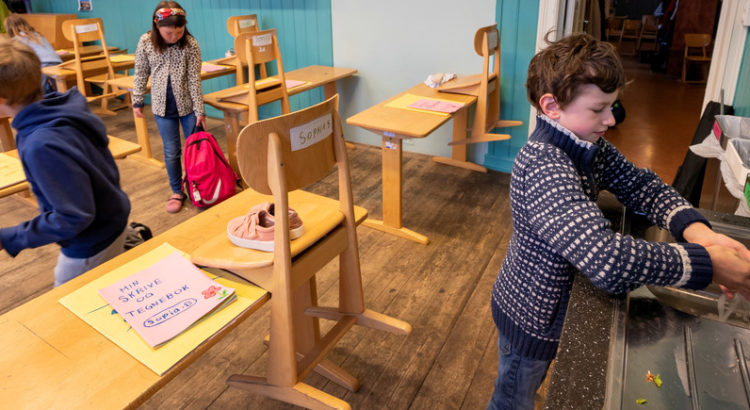
Norway began reopening its kindergartens on April 20, followed by primary schools for children in grades 1 through 4 on April 27.

Children stay in line at Vikasen school, as it reopens after few weeks, due to the coronavirus disease (COVID-19) outbreak, in Trondheim, Norway April 27, 2020. NTB Scanpix/Gorm Kallestad via REUTERS ATTENTION EDITORS - THIS IMAGE WAS PROVIDED BY A THIRD PARTY. NORWAY OUT. NO COMMERCIAL OR EDITORIAL SALES IN NORWAY. - RC2XCG90F6GI
In Norway, schools are encouraged to divide classes into groups of no more than 15 students.
Image: via REUTERS

Norway closed schools on March 12 and, like Denmark, has sent its youngest students back to class ahead of older pupils due to a decline in the rate of coronavirus transmission.

«Together we have taken control of the virus, therefore we can open up society little by little,» Prime Minister Erna Solberg said during a news conference in early April.

To encourage social distancing, the government has urged schools to divide classes into groups of no more than 15 and have children wash their desks daily, among other precautions. Upper schools and universities remain closed until further notice.

Germany reopened high schools on April 20 to high school seniors.

Students of a vocational school for pharmacy technicians participate in class on the first school day after a five-week shutdown due to the spread of the coronavirus disease (COVID-19) in Munich, Germany April 27, 2020. REUTERS/Andreas Gebert - RC2VCG93UW53
In Germany, Chancellor Merkel, advised that schools give priority to graduating students when reopening gradually.
Image: REUTERS/Andreas Gebert – RC2VCG93UW53

Select high schools across Germany reopened earlier this month so that seniors could take their final exams.

Most schools and daycares across Germany’s 16 states have been closed since mid-March during which time the country has achieved «fragile intermediate success» in reducing the spread of the virus, Chancellor Angela Merkel said earlier this month.

As part of Germany’s plan to gradually lift its lockdown following, Merkel recommended that schools begin the process of reopening on May 4, giving priority to graduating students.

Comparte este contenido:

México SEP anuncia regreso a clases: 10 de agosto

América del Norte/México/diarioeducacion.com

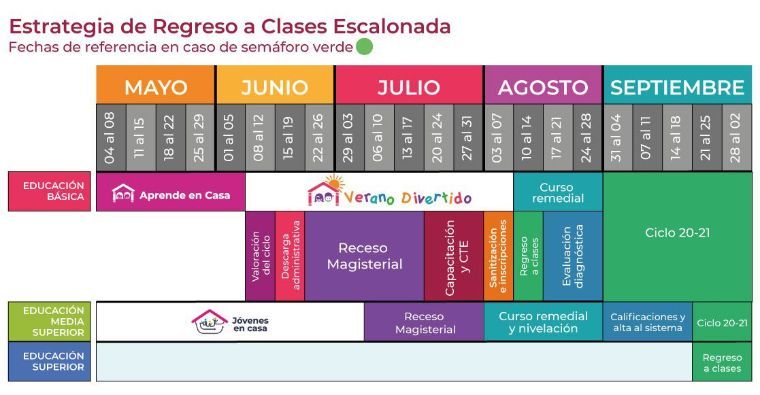
Esta mañana el Secretario de Educación Pública de México Esteban Moctezuma ha dado a conocer el nuevo calendario escolar para este regreso a clases, recalcando que éste se cumplirá siempre y cuando el semáforo sanitario esté en verde, el regreso de los niños a los salones de clase será hasta el 10 de agosto.

El regreso a la nueva normalidad en las escuelas contará con un curso personalizado remedial para evaluar el nivel de aprovechamiento de los alumnos durante este periodo de confinamiento, serán tres semanas de regularización del 10 al 28 de agosto con ciertas medidas.

  • Asistirán a clases grupos reducidos de niños, pudiéndose manejar por apellidos, dos días para la mitad del grupo, dos días para la otra mitad del grupo y el día viernes asistirán los alumnos que requieran mayor nivelación (no se especifica cuántos alumnos se admitirán por día).

Se contempla que el periodo de “Aprende el casa” tenga un cierre la próxima semana, terminando el 5 de junio, y a partir de ahí entra, un descanso vacacional para los niños “Un verano divertido» donde se seguirán programados programas educativos y culturales para los pequeños de la casa.

Con lo que respecta a docentes y administrativos el 8 de junio empieza la valoración del ciclo escolar y una segunda semana de descarga administrativa del 15 al 19 de junio.

Es ahí donde empieza un receso para docentes del 22 de junio al 17 de julio. Volviendo a las actividades del 20 al 31 de julio, con cursos y capacitación docente.

Las actividades docentes dentro de la escuela iniciaría el 3 de agosto con una semana de sanitización y limpieza de la escuela (no especifica quién lo hará), además se aprovechará para realizar las inscripciones.

Regreso a clases 10 de agosto

El 10 de agosto regresan los alumnos a las aulas con las filtros de seguridad y medidas sanitarias, 3 semanas de regularización y al mismo tiempo evaluación diagnóstica.

El 31 de agosto iniciará oficialmente el ciclo escolar 2020-2021. De esa manera quedaría el calendario escolar 2020-2021.

La entrada SEP anuncia regreso a clases: 10 de agosto aparece primero en Diario Educación.

Fuente: https://diarioeducacion.com/como-evaluar-el-tercer-periodo-sep/

Comparte este contenido:

Panamá: Ministra de Educación presento a gremios docentes estrategia frente al COVID-19

Centro América/ Panamá/ 05.05.2020/ Fuente: www.panamaon.com.

La ministra de Educación, Maruja Gorday de Villalobos, se reunió virtualmente con miembros de 17 gremios docentes de la mesa bilateral, para presentarles la estrategia, ruta crítica y plan de educación frente al COVID-19.

Durante la videoconferencia, los directores nacionales expusieron la estrategia por área de intervención que incluye: Educación Inicial, Básica General, Educación Especial, Media Académica y Profesional y Técnica, Educación de Jóvenes y Adultos y la priorización de contenidos en un currículo de emergencia.

En el encuentro virtual con los educadores, las autoridades educativas resaltaron la labor de los docentes de las escuelas oficiales que se han mantenido en contacto con sus estudiantes a través de medios virtuales y las 20 conciliaciones que se han logrado entre los padres de familia y los colegios particulares.

Igualmente, se anunció el inicio de las clases por radio para primaria través de ‘Conéctate con la estrella’ y el próximo lanzamiento de las clases por televisión, además de la impresión de guías para los estudiantes como un complemento a estas alternativas escolares.

Posteriormente, la ministra de Educación se reunió virtualmente con representantes de la Asociación de Maestros Independientes (AMIA) y sostendrá en la semana reuniones con la Asociación Nacional de Directivos de Escuelas Oficiales de Panamá (Andeop) y grupos de padres de familia del sector oficial.

Fuente de la noticia: https://www.panamaon.com/noticias/educacion/78763-ministra-de-educacion-presento-a-gremios-docentes-estrategia-frente-al-covid-19.html

Comparte este contenido:

Australia’s back-to-school plans explained: the evidence about children and coronavirus

Oceania/ Australia/ 05.05.2020/ Source: www.theguardian.com.

The federal and Victorian governments are in disagreement over whether it is safe for students and teachers to return to school, as a number of other states prepare for their students to come back to class.

While New South Wales and Queensland are planning a phased return to on-site schooling, Victoria is holding steadfast against bringing students, other than those from essential workers, back into the classroom.

The matter blew up on Sunday when federal education minister Dan Tehan was forced to withdraw comments he made on the ABC questioning Victorian premier Daniel Andrews’ leadership over the split on the issue, stating Andrews should be listening to the national health panel, not just his chief health officer.

What is the federal advice?

The advice from the Australian Health Protection Principal Committee, on which the Victorian chief health officer also sits, says there is “very limited evidence” of transmission between children in a school environment.

On Sunday, chief medical officer Brendan Murphy pointed to research about school transmissions of coronavirus both locally in NSW and in Europe.

“Our advice is transmission between children in schools is not well established,” he said. “And in fact there is increasing data now, data from Europe and the NSW study, we think children are not high transmitters of the virus in the school environment.”

He said there is a potential risk for adults in the staffroom, and at drop-offs, and a range of mitigations have been recommended to reduce the risk.

Australia’s chief medical officer Brendan Murphy (left) with the prime minister Scott Morrison.
Pinterest
 Australia’s chief medical officer Brendan Murphy (left) with the prime minister Scott Morrison. Photograph: Lukas Coch/AAP

What does the NSW study say?

The NSW study, released last month, assessed the initial 18 cases between March and April of teachers and students testing positive for coronavirus.

The study looked at 735 students and 128 staff who were close contacts of the 18 cases. No teacher or staff member contracted coronvirus from those cases, and one child from a primary school and one child from a classroom may have contracted coronavirus from one of the initial 18 cases.

“The findings from this detailed investigation are preliminary. However, they do suggest that spread of Covid-19 within NSW schools has been very limited.”

What do international studies say?

Murphy admits that studies have been limited, but has pointed specifically to studies out of Europe to support the AHPPC position.

study out of the Netherlands reported children are less likely to get infected from the virus from adults, and adults are much less likely to pass it on to children, except in a home environment.

UK study of a child who returned from the French Alps with coronavirus, and subsequently went to three schools while asymptomatic and did not transmit the virus argued it could lend evidence to the notion the transmission rate for children might be different to adults.

An analysis of over 100 studies that have been done on coronavirus transmission stated there is limited evidence of children transmitting the virus, but more data is needed.

“The role of children in transmission is unclear, but consistent evidence is demonstrating a lower likelihood of acquiring infection, and lower rates of children bringing infections into households,” the analysis states.

However, German research released last month suggested children can be as infectious as adults.

Why does Victoria disagree with the federal government’s position?

Victoria’s chief health officer Brett Sutton
Pinterest
 Victoria’s chief health officer Brett Sutton says children at school with minimal symptoms could end up contributing to community transmission. Photograph: James Ross/AAP

Victoria’s chief health officer Brett Sutton has said he doesn’t disagree that infection rates among children are lower, but he viewed keeping schools closed as a measure to lower overall community transmission, particularly for teachers, staff and parents.

“I know there haven’t been significant outbreaks in schools … but again it may be that kids who are very minimally symptomatic could transmit to other children, and it can be a contribution to community transmission,” he said.

“I’ve also been very clear that I don’t see schools as a dangerous place to be, but to the extent that kids learning from home can contribute to suppressing transmission at a community level, I think that’s a useful thing to consider.”

Andrews has said his decision on schools will be based on Sutton’s advice and Sutton has refused to reconsider his advice on sending children back to school until the state of emergency is reviewed on 11 May.

There have been indications that students in Victoria could stay learning from home for the entirety of term two.

Source of the notice: https://www.theguardian.com/australia-news/2020/may/05/australias-back-to-school-plans-expose-schism-around-children-and-coronavirus

Comparte este contenido:

Italia: ¿Solo regresará a clase la mitad de los alumnos? La ministra de Educación aclara su postura

Europa/ Italia/ 05.05.2020/ Fuente: ahoraroma.com.


La ministra de Educación, Lucia Azzolina, ha anunciado algunas posibles soluciones para el comienzo de nuevo año escolar, como la división de las clases: mitad en aula y mitad de manera remota a través de internet, en turnos alternados.

Tras su entrevista en Sky y a causa de las numerosas críticas, la ministra se ha visto obligada a aclarar en Facebook que se trata no de decisiones ya tomadas o impuestas, sino de propuestas fundadas en el trabajo del Comité de expertos que colabora con el Gobierno.

El presidente de las fuerzas de tarea del ministerio de la instrucción, Patrizio Bianchi, ha explicado que este escenario es el que ellos llaman «el escenario cero» sobre el cual están trabajando, porque «hay variantes que hay que ponderar, ya que hay niños de primer grado y estudiantes a puntos de lograr el bachillerato».

La emergencia «ha evidenciado toda una serie de problemas que en la escuela italiana había ya hace años»

Hay experimentaciones para superar las clases y hay la añeja cuestión de la edilicia escolar.

Además:  Conte y el presidente argentino: la pandemia debe gestionarse a nivel global

Entre las voces contrarias, hay la de los director de escuelas, que son muy perplejos sobre la posibilidad de realizar los exámenes de bachillerato en presencia y piden se definan «específicos protocolos de seguridad inherentes a los instrumentos, los procedimientos y las conexas responsabilidades». La asociación nacional de los directores afirma que «sirven reglas claras y sirven de inmediato».

El secretario de la Confederación Italiana de Sindicatos de Trabajadores (CISL), Anna Maria Furlan, ha escrito en Twitter que «división en turnos y didáctica a distancia son improponibles por el nivel de pobreza de muchas familias y por la escasa difusión de la banda larga».

Otra polémica, dentro de la misma mayoría de Gobierno, hay entre la ministra y los parlamentarios del PD, LeU y el grupo de Autonomías. Estos afirman que sería posible hacer concursos por títulos y en septiembre contratar docentes. Según la ministra ellos «mienten descaradamente» ya que «se trata de concursos esperados hace años. Si cambiáramos las normas, en septiembre no contrataríamos a nadie».

Además:  Ya se curaron 60.498 personas y siguen cayendo los casos de coronavirus

El parlamentario del PD Matteo Orfini ha acusado a Azzolina de haber ofendido las fuerzas de Gobierno que «según ella evidentemente tienen la gravísima responsabilidad de querer trabajar a la estabilización de los precarios a través de un procedimiento de competencia pública diferente de una prueba cruzada en plena pandemia».

Orfini las ha definido «declaraciones graves e irrespetuosas de la vida de muchos precarios, de las fuerzas de la mayoría y de la autonomía del Parlamento». Lo mismo Fratoianni de LeU, que sostiene la posibilidad y la necesidad de la competencia pública y pide que Azzolina respete el Parlamento.

Críticos los diputados de Italia Viva en Comisión cultura Gabriele Toccafondi y Michele Anzaldi que hablan de «una bofetada al Parlamento, a los alumnos y a las familias» y critican el hecho de hacer anuncios en televisión en lugar que en las sedes institucionales, sin haber discutido con nadie, en una falta de respeto hacia las comisiones parlamentarias y en una especie de réplica de los Dpcm, con el ministro que decide solo.

Fuente de la noticia: https://ahoraroma.com/2020/05/05/solo-regresara-a-clase-la-mitad-de-los-alumnos-la-ministra-de-educacion-aclara-su-postura/

Comparte este contenido:

Siria: Estudiantes continúan su educación en televisión en casa

Asia/China/05-05-2020/Autor(a) y Fuente: spanish.xinhuanet.com

SIRIA-DAMASCO-EDUCACION-TELEVISION

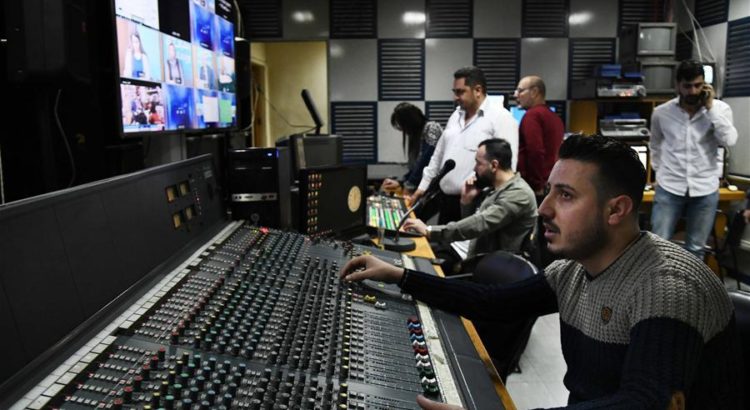
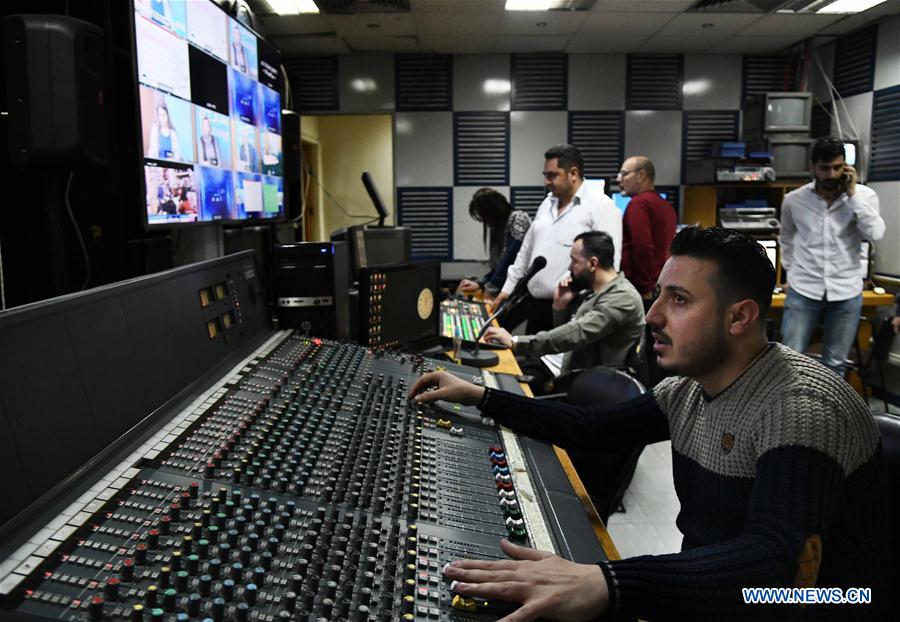
DAMASCO, 27 abril, 2020 (Xinhua) — Imagen del 23 de abril de 2020 de integrantes del equipo técnico trabajando en la sala de control de la Televisión Educativa Siria, en Damasco, Siria. Los estudiantes continúan su educación en la televisión en casa mientras el gobierno usa un canal educativo para transmitir lecciones. (Xinhua/Ammar Safarjalani)

SIRIA-DAMASCO-EDUCACION-TELEVISION

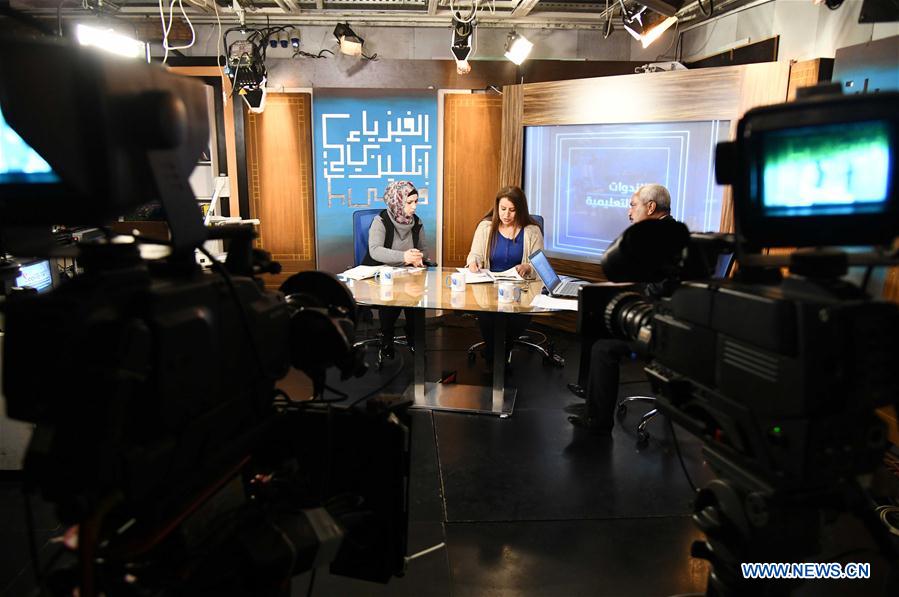
DAMASCO, 27 abril, 2020 (Xinhua) — Imagen del 23 de abril de 2020 de maestros dando clases en un estudio de televisión de la Televisión Educativa Siria, en Damasco, Siria. Los estudiantes continúan su educación en la televisión en casa mientras el gobierno usa un canal educativo para transmitir lecciones. (Xinhua/Ammar Safarjalani)

Fuente e Imagen: http://spanish.xinhuanet.com/photo/2020-05/01/c_139015279.htm

Comparte este contenido:

Chile: Mineduc y profesores se enfrentan por vuelta a clases

América del Sur/ Chile/ 05.05.2020/ Fuente: radio.uchile.cl.

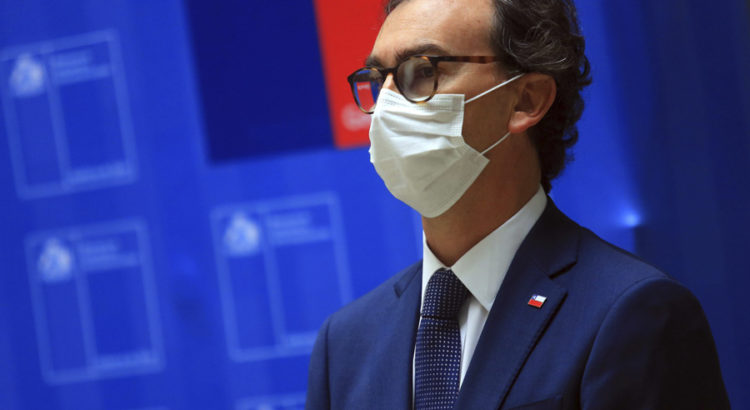
La cartera de Educación fijó para mayo el retorno gradual a las clases, sin entregar una fecha específica. Hoy en sesión especial de la Comisión de Educación de la Cámara Baja, el ministro Raúl Figueroa reconoció la dificultad de ejecutar este plan, mientras que el presidente del colegio profesional, Mario Aguilar, acusó no conocer ninguna estrategia.

Este lunes, en sesión especial de la Cámara de Diputados, la comisión de Educación recibió al ministro Raúl Figueroa y al presidente del Colegio de Profesores, Mario Aguilar.

Comparte este contenido:
Page 1556 of 6843
1 1.554 1.555 1.556 1.557 1.558 6.843
OtrasVocesenEducacion.org