Page 2828 of 6816
1 2.826 2.827 2.828 2.829 2.830 6.816

Rise in women travelling from Northern Ireland to England for abortions

By James Tapper

Campaigners say having different abortion laws on either side of Irish border breaches Good Friday agreement

The number of women travelling from Northern Ireland to have an abortion in England has jumped dramatically since the government set up a special hotline in March.

A total of 342 women and girls – including at least one 12-year-old – went to England for a termination through the British Pregnancy Advisory Service (BPAS) in the three months since March: a significant increase on the 190 women who travelled to use the same service in the previous nine months.

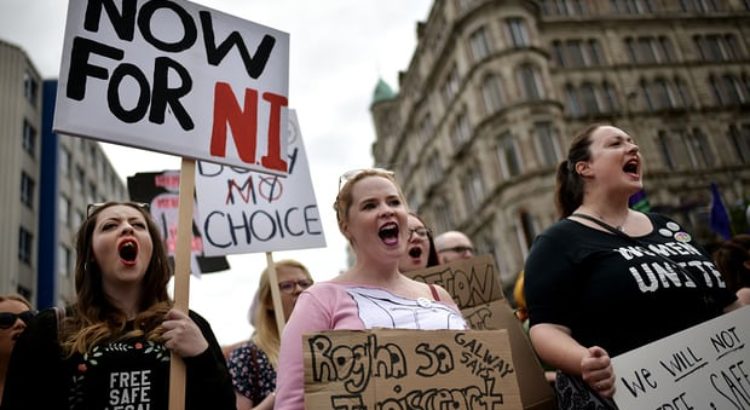
The figures have been released as pressure mounts on the government to repeal 19th-century legislation that prevents women from having an abortion in Northern Ireland. It is now the only part of Europe apart from Malta where abortion is illegal, after the Irish referendum in May.

On Wednesday, Theresa May will meet Leo Varadkar, the taoiseach, for the first intergovernmental conference between Britain and Ireland since 2007.

A letter to the leaders, signed by 173 parliamentarians from every major political party in Ireland and the UK, calls for the repeal of sections 58 and 59 of the Offences Against the Person Act 1861. In England, Wales and Scotland, the legislation has been superseded by the Abortion Act 1967 and other legislation, but it does not apply in Ulster.

Campaigners including Stella Creasy, the Walthamstow MP, who is one of the letter’s signatories, say that having different abortion laws in Ireland and Northern Ireland is a breach of the Good Friday agreement, which commits both governments to having equivalent legislation on both sides of the border.

Creasy called the letter an unprecedented intervention. She said: “We cannot let the human rights of women of Northern Ireland be forgotten. Our duty under the Good Friday agreement is to protect them, not let Theresa May sacrifice them to the political expediency of having the DUP prop up her government.

“Without action it’s clear hundreds of women and girls as young as 12 who are UK citizens are being forced to travel overseas for healthcare – and many more may be forced to continue an unwanted pregnancy as a result. The government must name the date when parliament can repeal this cruel legislation or else risk making a rape victim having to take them to court to vindicate the basic human rights of Northern Irish women.”

On 6 March the Department of Health and Social Care set up a central booking system so that women in Northern Ireland could call a phone number to make an appointment through BPAS. The figures show that an average of 28 women a day crossed the Irish Sea for an abortion through BPAS between March and May, with more than half drawing income support or having an income of less than £15,276 a year.

In 2017, 919 Northern Irish women travelled to England for an abortion, most using clinics run by BPAS or Marie Stopes.

In June, the supreme court said the abortion law in Northern Ireland was not compatible with the European convention on human rights.


Source of the article: https://www.theguardian.com/world/2018/jul/21/women-travelling-from-northern-ireland-to-england-for-abortions
Comparte este contenido:

Bolivia: Educación desmiente supuesta ampliación de descanso pedagógico en el occidente

América del Sur/23.07.18/Fuente: www.la-razon.com.

Ante la noticia falsa que circula en las redes sociales sobre la ampliación del descanso pedagógico, El ministerio de Educación emitió un comunicado para desmentirlo.

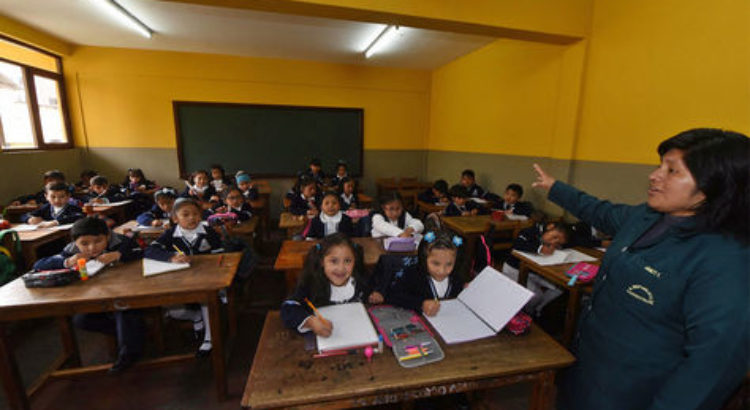
El Ministerio de Educación desmintió este domingo, mediante un comunicado, una supuesta ampliación del descanso pedagógico en los departamentos de La Paz, Oruro y Potosí.

«Ante la noticia falsa que circula en las redes sociales sobre la ampliación del descanso pedagógico. El Ministerio de Educación comunica, que NO HABRA AMPLIACION EN LA PAZ, ORURO Y POTOSÍ, las regiones afectadas por la intensa nevada suspenderán clases por emergencia climática», remarca ese comunicado difundido en la cuenta Twitter de esa cartera de Estado.

Fuente de la noticia: http://www.la-razon.com/sociedad/educacion-descanso-pedagogico-desmentido_0_2969703018.html

Comparte este contenido:

España: Educación presenta su proyecto educativo sobre videojuegos

Europa/España/23.07.18/Fuente: eldia.es.

La consejera de Educación, Soledad Monzón, cree que las dudas sobre la entrada de videojuegos deportivos a las aulas se disiparán o, por lo menos, se atenuarán, una vez sus críticos entiendan que la puesta en marcha de una liga de eSports en 20 centros educativos el próximo curso sirve para educar en su uso responsable.

Soledad Monzón presentó ayer el proyecto educativo piloto para fomentar el uso responsable de los videojuegos entre los alumnos, que se basa en una actividad extraescolar que se ofrece dos veces a la semana y durará diez semanas, del 11 de octubre al 15 de diciembre.

La actividad sobre videojuegos deportivos, que se ofertará en centros de Secundaria, Bachillerato y Formación Profesional de La Graciosa, Fuerteventura, Gran Canaria, Tenerife, La Palma y La Gomera, contempla que un día de la semana los 20 alumnos repartidos en equipos mixtos que participen por centro dediquen una hora a entrenamientos, otra hora a talleres educativos y otra a actividad física.

La Asociación de Pediatría de Atención Primaria de Canarias (APAPCanarias) ha considerado  inapropiado el apoyo del Gobierno a los videojuegos deportivos y partidos como el PP, Podemos y Nueva Canarias han criticado esta iniciativa. Sin embargo, Monzón cree que las críticas que se han vertido tienen que ver con el desconocimiento. «No se trata de una liga escolar pura y dura», sino que detrás de ella hay un proyecto educativo.

En su opinión, demonizar la liga «es eludir la realidad».

Según la Consejería de Educación, en Canarias, el 76% de niños entre 6 y 10 años juegan a videojuegos, el 78% entre 11 y 14 años y 65% entre 15 y 24 años.

Fuente de la noticia: http://eldia.es/canarias/2018-07-21/10-Educacion-presenta-proyecto-educativo-videojuegos.htm

Comparte este contenido:

How new Orleans is helping its students succed

By David Leonhardt

The New Orleans turnaround shows the power of giving more freedom to teachers and principals — and then holding them accountable for their performance

Twelve years later, Nigel Palmer still remembers the embarrassment of his first days as a fourth grader in Monroe, La. He was a Hurricane Katrina evacuee from New Orleans, living with his family in a La Quinta Inn, 250 miles from home. As soon as the school year began, he could tell that the kids in his new school seemed different from him.

They could divide numbers. He really couldn’t. They knew the 50 states. He didn’t. “I wasn’t up to par,” he quietly told me. It’s a miserable feeling.

Until the storm, Palmer had been attending New Orleans public schools, which were among the country’s worst. The high-school graduation rate was 54 percent, and some students who did graduate had shockingly weak academic skills.

After Katrina’s devastation, New Orleans embarked on the most ambitious education overhaul in modern America. The state of Louisiana took over the system in 2005, abolished the old bureaucracy and closed nearly every school. Rather than running schools itself, the state became an overseer, hiring independent operators of public schools — that is, charter schools — and tracking their performance.

Dominique Newton was the 2016 valedictorian of G.W. Carver High School. But she initially struggled in college, at Xavier, while also helping care for her father, who is on dialysis. She now is doing better, and majoring in political science.CreditWilliam Widmer for The New York Times

This month, the New Orleans overhaul entered a new stage. On July 1, the state returned control of all schools to the city. The charter schools remain. But a locally elected school board, accountable to the city’s residents, is now in charge. It’s a time when people in New Orleans are reflecting on what the overhaul has, and has not, accomplished.

So I decided to visit and talk with students, teachers, principals, community leaders and researchers. And I was struck by how clear of a picture emerged. It’s still a nuanced picture, with both positives and negatives. But there are big lessons.

New Orleans is a great case study partly because it avoids many of the ambiguities of other education reform efforts. The charters here educate almost all public-school students, so they can’t cherry pick. And the students are overwhelmingly black and low-income — even lower-income than before Katrina — so gentrification isn’t a factor.

Yet the academic progress has been remarkable.

Performance on every kind of standardized test has surged. Before the storm, New Orleans students scored far below the Louisiana average on reading, math, science and social studies. Today, they hover near the state average, despite living amid much more poverty. Nationally, the average New Orleans student has moved to the 37th percentile of math and reading scores, from the 22nd percentile pre-Katrina.

This week, Douglas Harris — a Tulane economist who leads a rigorous research project on the schools — is releasing a new study, with Matthew Larsen, another economist. It shows that the test-score gains are translating into real changes in students’ lives. High-school graduation, college attendance and college graduation have all risen.

Jewel Dauphin, a 2017 Carver graduate, now attends Opportunities Academy, a program that teaches life skills. He also does work as an advocate pushing the city to improve transportation options for people with disabilities. CreditWilliam Widmer for The New York Times 

One example: In most of Louisiana, the share of 12th graders going directly to college has fallen in recent years, probably because of budget cuts to higher education. In New Orleans, Harris and Larsen report, the share has jumped to 32.8 percent, from 22.5 percent before Katrina.

People here point to two main forces driving the progress: Autonomy and accountability.

In other school districts, teachers and principals are subject to a thicket of rules, imposed by a central bureaucracy. In New Orleans, schools have far more control. They decide which extracurriculars to offer and what food to serve. Principals choose their teachers — and can let go of weak ones. Teachers, working together, often choose thei

r curriculum.

“It puts decisions really close to the school site and the students,” Towana Pierre-Floyd, the principal of KIPP Renaissance High School, told me. Victor Jones, an English teacher at G.W. Carver High School, says, “We don’t have to wait to make changes when we know changes need to be made.”

Jones and his colleagues recently decided that their ninth graders needed more writing practice than they were getting from their literature-heavy curriculum. But the teachers still wanted to expose the students to great books. So they combined two curriculum plans to get the right mix, cutting down on novels without eliminating them. The students now read “Lord of the Flies,” “Romeo and Juliet,” “Parable of the Sower,” Ray Bradbury short stories and journalism about terrorism, among other things, and also do more writing than they used to.

Crucially, all of this autonomy comes with accountability: Schools must show their approach is working. They are evaluated based on test scores, including ACT and Advanced Placement, and graduation rate — with an emphasis on the trend lines. Schools that fail to make progress can lose their contract.

Over the past decade, the district has replaced the operators of more than 40 schools in response to poor performance. “You have to meet these minimum standards to continue to have the privilege of educating kids,” Patrick Dobard, the superintendent until last year, told me. Harris’s research has found that much of the city’s progress has stemmed from closing the worst charter schools and letting successful charters expand.

Think about how different this is from the norm in American education. In most districts, a single entity — a board of education — is responsible for both running schools and evaluating them. That combination is not a recipe for rigorous evaluation and consequences. It’s akin to letting students grade themselves.

Obviously, very few districts elsewhere are going to replicate the New Orleans model and start from scratch. But most would benefit from introducing both more freedom and more accountability. Together, the two spark human ingenuity.

For all of the improvement here, the schools still have their troubles. The academic results still trail those in less impoverished districts, and progress has slowed lately. “We’re not where we want to be,” Rhonda Dale, the principal of Abramson Sci Academy, said. Some residents told me they hoped that the new local control could accelerate academic progress – while also making the school system feel like more a local institution and less like one imposed on the city. My column next week will focus on these challenges.

Yet even with the caveats, it would be a terrible mistake to let the imperfections obscure the progress here. The city’s residents certainly recognize that progress. In a recent poll by Tulane’s Cowen Institute, 70 percent of public-school parents said the charter schools had improved education.

And what ended up happening to Nigel Palmer? In seventh grade, he moved back to New Orleans, a stronger student than when he left. Fortunately, the city’s schools had improved too. His high school, KIPP Renaissance, was “a fun, competitive environment — people wanted a high G.P.A.,” he said. “School was cool.”

This spring, he graduated from Xavier University, a historically black Catholic college here, and he recently started his first job — as a middle-school social studies teacher in New Orleans.

Source of the article: https://www.nytimes.com/2018/07/15/opinion/columnists/new-orleans-charter-schools-education-reform.html
 
Comparte este contenido:

El Salvador: Deserción escolar ronda los 13,000 estudiantes

Centro América/El Salvador/23.07.18/Por Susana Peñate/Fuente: www.laprensagrafica.com.

MINED inició el proceso de formación en educación no sexista y desarrollo humano, apoyado por ONU Mujeres, con 300 docentes.

El ausentismo y la deserción escolar por diferentes causas rondan los 13,000 estudiantes en todo el sistema educativo, según cálculos que el Ministerio de Educación (MINED) tiene registrados hasta junio de 2018, que sería aproximadamente el 1 % de la población estudiantil, comentó ayer el titular de dicho ministerio, Carlos Canjura.

“El 1 % se ve poquito, pero de lo que hay que tomar conciencia es que el 1 % de 1, 300,000 es un número considerable de niños que, por supuesto, debe preocuparnos que regresen a la escuela”, dijo.

Afirmó que es una cantidad menor a la que se ha tenido en años anteriores y que uno de los esfuerzos para atraer a los que están fuera del sistema educativo es el programa de flexibilización de la educación.

La deserción escolar tendría varias causas, como la violencia social y los embarazos a temprana edad, por lo que este tema se incorpora dentro del proceso de formación docente en educación no sexista y desarrollo humano, enmarcado en la Política de Equidad e Igualdad de Género del MINED y del Plan Nacional de Formación Docente, con el apoyo de FOMILENIO II e implementado por el asocio Universidad Centroamericana José Simeón Cañas (UCA) y ONU Mujeres.

“Queremos garantizar que las niñas se mantengan dentro del sistema educativo, prevenir la violencia sexual y lograr que con esto las niñas puedan desarrollarse plenamente, no solo en lo personal sino también contribuir al desarrollo de su familia, de su comunidad y, en última instancia, de la sociedad y del Estado salvadoreño”, dijo Ana Elena Badilla, representante de ONU Mujeres.

El proceso de formación comenzó ayer con 300 docentes y tendrá una duración de un año, con 576 horas a través de seis módulos, cada uno de 96 horas: 48 presenciales, 30 virtuales y 18 prácticas.

“El esfuerzo que estamos haciendo es por que se instale este tipo de pensamiento positivo, de combate de la desigualdad y el desarrollo de una cultura de paz que tiene que ver, obviamente, con los temas de exclusión y de tratos desiguales”, agregó Canjura.

Los 300 especialistas formados luego replicarán lo aprendido a otros 1,400 educadores y ellos hacia el resto de la planta docente a escala nacional.

“Lo que pretende es reflexionar y sensibilizar en torno a la violencia de lenguaje, la violencia física, la violencia psicológica, la violencia de género como tal a un grupo de docentes”, expresó Manuel Tobar, consultor de la UCA.

Fuente de la noticia: https://www.laprensagrafica.com/elsalvador/Desercion-escolar-ronda-los-13000-estudiantes-20180721-0050.html

Comparte este contenido:

Colombia: Docentes de Bolívar se unen a jornada de paro contra las amenazas

América del Sur/Colombia/23.07.18/Fuente: caracol.com.co.

El sindicato único de docentes de Bolívar (SUDEB) anunció su adhesión a la convocatoria de la federación de docentes (FECODE) para una jornada de paro el próximo 25 de julio. el anunció lo hizo el presidente del SUDEB, Medardo Hernández.

«Vamos a realizar una gran movilización ese día, con marchas locales pero con 5 gigantescas en las principales ciudades de cada región. De Cartagena viajará una delegación hasta Barranquilla en donde miles de maestros de la Costa mostrarán al gobierno Santos su rechazo al trato entregado al magisterio», dijo Hernández Baldiris.

Los maestros rechazarán la violencia contra líderes sociales, entre ellos muchos maestros. «La gran jornada nacional de paro rechazará la indolencia del gobierno Santos con los líderes sindicales y los maestros», aseguró Hernández.

Fuente de la noticia: http://caracol.com.co/emisora/2018/07/15/cartagena/1531653904_552136.html

Comparte este contenido:

Universidades ecuatorianas figuran en ranking de las mejores de América Latina

América del Sur/Ecuador/23.07.18/Fuente: www.expreso.ec.

Esta calificación fue elaborada por la revista británica Times Higher Education (THE).

Cinco universidades de Ecuador ha sido consideradas en el ranking de las 100 mejores universidades de la región de América Latina y el Caribe.

Esta calificación fue elaborada por la revista británica Times Higher Education (THE). Así, estas instituciones de educación superior ingresaron al Times Higher Education Latin America University Rankings.

La Universidad San Francisco de Quito, en puesto 78; la Universidad Técnica Particular de Loja, en la casilla 89; la Escuela Politécnica Nacional, EPN, posición 92 ; la Escuela Superior Politécnica del Litoral, ESPOL, en ubicación 93; y cierra la Universidad Politécnica Salesiana en el lugar 97.

A nivel regional, Brasil domina la lista con 43 universidades.

La Universidad Estatal de Campinas se mantiene en el primer puesto por segundo año consecutivo, mientras que la Universidad de São Paulo, en el segundo lugar general, ha sido considerada como la mejor para el ambiente de investigación.

THE evalúa universidades líderes en investigación a través de una visión global de sus actividades en los ámbitos de investigación, enseñanza, transferencia del conocimiento y proyección internacional.

Times Higher Education Latin America University Rankings consideró este año a 129 universidades de 10 países de América Latina, basándose en 13 indicadores de desempeño ponderados para reflejar las características de las universidades de las economías emergentes.

Los indicadores de desempeño se agrupan en enseñanza (el ambiente de aprendizaje), investigación (volumen, ingreso y reputación), citaciones (influencia investigativa), proyección internacional (personal, estudiantes y estudios) e ingresos de la industria (transferencia del conocimiento).

Fuente de la noticia: http://www.expreso.ec/actualidad/universidades-educacion-ranking-times-higher-education-espol-HN2285797

Comparte este contenido:
Page 2828 of 6816
1 2.826 2.827 2.828 2.829 2.830 6.816