Page 2861 of 6816
1 2.859 2.860 2.861 2.862 2.863 6.816

Argentina: Traen especialistas de Singapur para mejorar la enseñanza de matemática

América del Sur/Argentina/10.07.18/Fuente: www.canal13sanjuan.com.

El ministro de Educación, Felipe De los Ríos, confirmó este viernes que después de las vacaciones de invierno llegarán a San Juan especialistas de Singapur para colaborar en la migración a un nuevo sistema de enseñanza de la matemática, asignatura que sigue arrojando malos resultados en las evaluaciones.

«El nuestro es un país que lleva dentro del proceso democrático después de 1983 dos leyes de educación. Y sabemos que la educación es un proceso y debe ser sostenido en el tiempo para que los resultados sean importantes y fructuosos», dijo De los Ríos.

«Nosotros al tener dos leyes, se cambiaron diametralmente los lineamientos de la política educativa nacional, del ámbito de los servicios al ámbito de la industrialización y la producción. Estos cambios en la línea directriz hicieron que las líneas curriculares y los contenidos curriculares, cambiasen», explicó el ministro.

«Lógicamente matemática y lengua son dos áreas del conocimiento básicas para el desarrollo intelectual de cualquier persona. Argentina no viene teniendo buenos resultados en estas dos áreas y se sumaron Ciencias Sociales y Ciencias Naturales. San Juan ha podido sortear en este año pasado la mejora ya de Lengua, Sociales y Naturales, no así Matemática que está exactamente igual que el resto de las jurisdicciones de Argentina», reconoció el funcionario.

«En el día de ayer (por el jueves 5 de junio) el Consejo Federal ha podido aprobar el modelo de cambio de la matemática. Y esto tiene que ver con lo que venimos propiciando en el plan provincial de trabajar en el formato de enseñar por habilidades y capacidades para obtener competencias. Porque no es lo mismo desde lo abstracto resolver los problemas que desde lo concreto», reveló.

«Ese es el cambio y el cambio también tiene que venir acompañado de un soporte o sustrato virtual porque hoy el lenguaje tiende a cambiar debido a la modernización de las comunicaciones multimediales», continuó De los Ríos.

«La educación es un proceso, necesitamos un tiempo para que esto se desarrolle. Y San Juan va a estar trayendo después de las vacaciones de invierno especialistas de Singapur. Vamos a ver qué herramientas usan ellos para poder incorporar lo que sea propicio en este cambio que estamos haciendo en la provincia», concluyó.


Fuente de la noticia: https://www.canal13sanjuan.com/san-juan/2018/7/6/traen-especialistas-singapur-para-mejorar-enseanza-matemtica-73790.html

Comparte este contenido:

Australia: Education University funding could be tied to maths and science teaching push

Oceania/Australia/10.07.18/Source: www.theguardian.com.

The federal government could use funding agreements with Australian universities to force them to make science and maths a priority in teaching degrees.

In a speech delivered in Sydney on Monday, education minister Simon Birmingham signalled that the government was willing to use university funding as a way of addressing falling participation rates in high school maths and science.

The government says that in 2013 one in five year 7 to 10 general science teachers had not completed a year of university study in that area, a figure Birmingham said was “unacceptable”.

On Monday he said states and territories should “be willing to make clear to universities where their employment priorities lie” and create incentives for more students to consider specialising in maths and science subjects.

“Between better workforce planning and smarter use of technology every high school should have access to specialist teachers to teach specialist science and maths subjects,” he said.

“And we should strive to achieve this within the next five to ten years.”

While Birmingham conceded the federal government cannot force states to hire teachers with maths or science backgrounds, he indicated he could “influence” the teaching students entering university by tying it to university enrolment funding.

“If need be, federal funding powers over university places could be used to help the states to influence enrolments to secure the science teachers we need for the future,” he said.

It comes after a report from Australia’s chief scientist Alan Finkel which noted a long-term decline in year 12 students enrolling in science and challenging maths subjects.

The report, released in April, found the number of students choosing science had dropped from 55% in 2002 to 51% in 2013. And while maths participation had remained steady, Finkel’s report found a trend towards students choosing easier subjects.

The Finkel report argued that not enough universities required mathematics subjects for degrees – saying it is only a prerequisite for five of 37 universities offering a bachelor of science, four of 31 for a bachelor of commerce and one of 34 for an engineering degree.

He also called for a complete overhaul of the Advanced Tertiary Admission Rank system, or Atar, saying it encouraged students to game the system by aiming for higher scores by doing less demanding subjects.


Source of the notice: https://www.theguardian.com/australia-news/2018/jul/09/university-funding-could-be-tied-to-maths-and-science-teaching-push

Comparte este contenido:

Africa: School Fees in Africa Abolishing School Fees in Africa: Effects on Impoverished Children

Africa/09.07.18/By Sara Olk/Source: www.borgenmagazine.com.

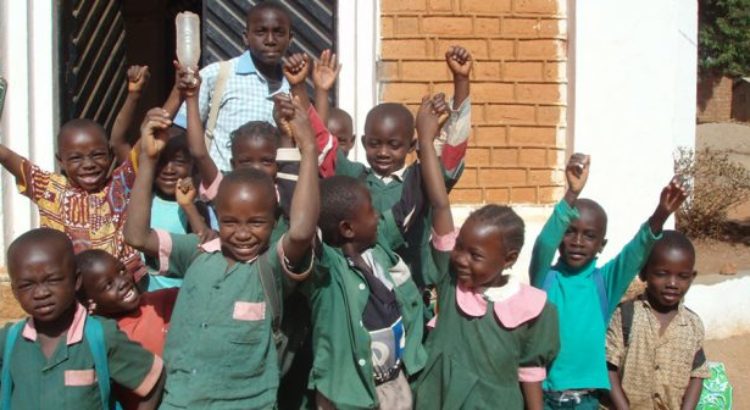
Since the mid-1990s, several countries have abolished school fees in Africa for public primary education, responding to evidence that these costs were preventing impoverished children from being able to obtain an education. In the absence of school fees, enrollment rates in sub-Saharan Africa increased by 42 percent between 2000 to 2007; however, being able to provide high-quality education to this influx of new students has proven to be a new challenge for African schools.

School Fees in Africa a Declining Trend

School fees in Africa have their origin in the post-colonial period, when newly independent African countries created them to generate much-needed funds for their educational systems. Fees could manifest as tuition charges, payments for materials, or mandatory contributions to parent-teacher associations. In some countries, including Kenya, school fees were not officially required, but many schools would suspend children if their parents were unable to contribute. This was in large part due to low government funding, which left communities responsible for the majority of education costs.

As expected, impoverished children were disproportionately affected by these fees and the most likely to be unable to attend school. In Malawi, 33 percent of children from the poorest quintile attended primary school in 1990, in contrast to 75 percent of children from the richest quintile. On average, for the poorest 40 percent of households in the region, the annual cost of sending two children to school is more than 5 percent of their household income.

With the abolition of school fees, enrollment rates began to increase as impoverished children who had been excluded from the education system began attending school. After Malawi abolished school fees in 1994, 76 percent of children from the poorest quintile (versus 80 percent from the highest quintile) were attending primary school by 1997.

Countries Working to Address Other Issues Affecting Education

For many countries, including Kenya, Malawi and Mozambique, the abolition of school fees was a prominent campaign promise that newly-elected leaders felt obligated to follow through on. In both Kenya and Malawi, little time was spent on planning for this change; however, it was accompanied by more comprehensive education reforms and an increase in government funding.

Unfortunately, many education systems were unprepared for the number of new students they would be receiving after fee abolition. Student-teacher ratios increased dramatically — Ethiopia’s average student-teacher ratio in 2005 was 66 to 1, in contrast to 1995 when it was 33 to 1 — decreasing the quality of education at public schools.

Countries have been working to find a lasting solution to this problem with mixed success. In 2004, Kenya managed to prevent its national student-teacher ratio from exceeding 40 to 1 to strategically re-assigning teachers to districts with the most need, although in some provinces the average ratio was much higher. Malawi’s government hired 18,000 new teachers in 1994 after abolishing school fees, but most of these teachers were unqualified and student-teacher ratios were not significantly reduced. In Ghana, however, fee abolition was extensively planned for and the government effectively used grants to replace the money lost by no longer charging for tuition, allowing them to keep their student-teacher ratios low even as enrollment increased.

Additionally, after countries began abolishing school fees in Africa, many wealthier families moved their children from public schools to private systems because these schools could provide a higher quality education. This further disadvantaged education for poor children, as the rich were not as concerned with investing in and supporting public schools if their children were not attending them.

Initiative Focuses on Grants to Replace School Fees and Improve Education Quality

To assist in the process of abolishing school fees and creating strong, effective school systems, the School Fee Abolition Initiative (SFAI) was created by UNICEF and the World Bank in 2005. Its mission is to help countries work through problems that hinder the achievement of quality universal primary education.

Obstacles other than school fees continue to prevent many children from being able to attend school, including location and the need for children as household laborers. Poor rural families in particular are more likely to need their children to do chores at home, and even without fees cannot afford to send their children to school. It is imperative that the abolition of school fees in Africa be accompanied by other poverty alleviation programs and school reforms that include free food and reimbursements for families.

The SFAI has also found that involving communities in decisions about how school resources will be used helps empower these communities and creates stronger ties to the local education system, improving quality and administrative efficiency. It also recommends using capitation grants, which fund schools based on enrollment, as a way of creating stronger relationships between schools and communities and promoting quality improvement.

Moving forward, UNICEF and the World Bank argue that “resources must be directed at improving quality and meeting the needs of the very poor, those in distant rural areas and children with disabilities,” as well as girls, according to a U.N. article. Abolishing school fees in Africa is the first step of many towards creating school systems that provide high-quality education to all children.

Source of the notice: http://www.borgenmagazine.com/school-fees-in-africa/
Comparte este contenido:

Colombia: Brecha digital se redujo 83% en el país los últimos ocho años

América del Sur/Colombia/09.07.18/Fuente: www.elcolombiano.com.

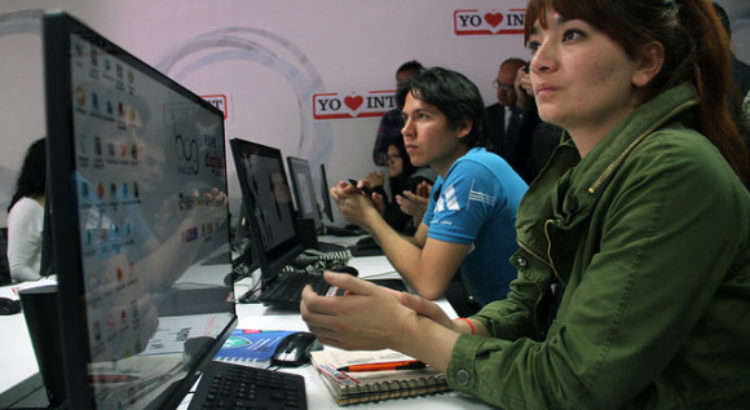
El Ministerio de las Tecnologías de la Información y las Comunicaciones (Mintic) reveló que la brecha digital en educación se redujo en un 83 % en el país durante los últimos ocho años, al pasar de tener 24 estudiantes de instituciones públicas utilizando un computador, a solo 4 niños por cada uno.

“Durante los últimos 8 años, a través del programa social del Ministerio TIC, Computadores para Educar, se entregaron más de 2,2 millones de equipos a las sedes educativas de todo el territorio. Colombia redujo su brecha digital en educación en 83%Colombia redujo su brecha digital en educación en 83 %”, explicó el Ministerio.

De acuerdo con la cartera, este logro fue posible a través del programa Computadores para Educar el cual se ha enfocado en la dotación de equipos (computadores y tabletas) a sedes educativas, la formación a docentes y padres de familia en uso de las TIC, y la retoma y adecuada disposición y aprovechamiento de equipos electrónicos que ya no se utilizan.

En ese sentido, la entidad manifestó que en el marco de esas estrategias se entregaron más de 2,2 millones de equipos para beneficiar a estudiantes de 43.000 instituciones educativas públicas de todo el país, lo cual que permitió reducir de 24 niños usando un computador en el año 2010 a solo 4 estudiantes por equipo durante este año.

Asimismo, se promovió la formación de cerca de 160.000 docentes oficiales, que representan la mitad de los que tiene el país, en el uso y aprovechamiento de las TIC en el aula de clase, a través diplomados, talleres y los encuentros de docentes ‘Educa Digital’.

“Estamos convencidos de que la tecnología genera resultados positivos en la educación cuando los docentes son formados. El reto, ahora, es hacerles un mayor acompañamiento, especialmente a aquellos profesores que se encuentran en las escuelas rurales”, manifestó Fernando Bedoya, director del Programa.

Frente al reciclaje de los equipos, el ministerio indicó que estos computadores fueron recogidos y aprovechados como material reciclable a través de su Centro Nacional de Aprovechamiento de Residuos Electrónicos (Cenare), con sede en Bogotá, que es la única planta de su tipo de manejo estatal en América Latina.

“Al Cenare son llevados todos los computadores que ya no utilizan las instituciones educativas del país y que en algún momento fueron entregados por Computadores para Educar, los cuales son sometidos a un riguroso proceso de desarmado y recuperación de las partes útiles, para incorporarlos en otros procesos e industrias de subproductos en Colombia y en países asiáticos, especialmente”, explicó el Ministerio.

En ese sentido, la cartera indicó que a través de esta iniciativa se ha logrado la recuperación de cerca de 160.000 equipos que han evitado la emisión de más de 14.000 toneladas de CO2 a la atmósfera o que equivaldría a evitar la tala de más de 1,1 millones de árboles.

Fuente de la noticia: http://www.elcolombiano.com/colombia/brecha-digital-se-redujo-83-en-el-pais-los-ultimos-ocho-anos-mintic-CG8967895

Comparte este contenido:

Malasya: New international schools opens

Asia/Malaysia/09.07.18/Source: www.thestar.com.my.

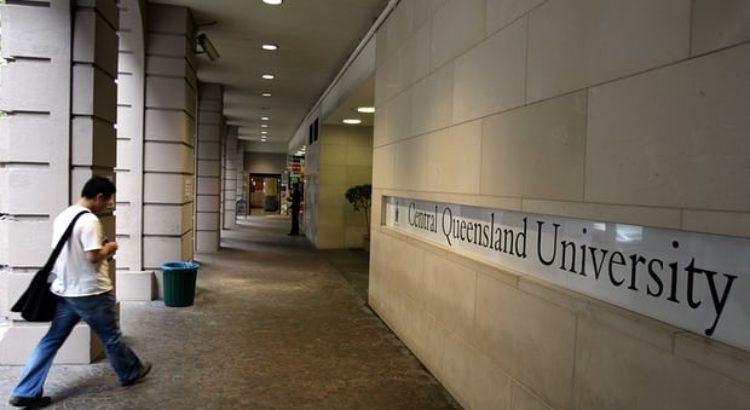
WITH over 127 years of experience in the education field, Wesley Methodist School has opened a new campus in Penang.

“We congratulate the Council of Education of the Methodist Church in Malaysia on their choice of venue,” said Chief Minister Chow Kon Yeow at the opening ceremony of Wesley Methodist School Penang (International) at 1, Lebuh Sungai Pinang 1.

“From the old days, the Methodists have shared their rich tradition of holistic and quality education to Malaysian of all ethnicities.

“We hope this school will bring forth a vibrant and quality student body, life and culture”, he said on Friday.

Wesley Methodist School Penang (International) chairman Datuk Chin Lean Keat said the school aimed to offer affordable education to working families who are seeking private education for better teaching and learning.

There was also a signing ceremony between the school and Telekom Malaysia Berhad for Digital School Management System and Solutions.

Also present were Council of Education of the Methodist Church in Malaysia chairman Bishop Rev Dr Ong Hwai Teik and Wesley Methodist School Penang (International) Building Committee Task Force co-chairman Datuk Jerry Chan Fook Sing.

Source of the notice: https://www.thestar.com.my/metro/metro-news/2018/07/09/new-international-school-opens-campus-aims-to-provide-affordable-private-education/

Comparte este contenido:

Brasil: Aumento de gastos no logra mejorar sistema educativo según informe

América del Sur/Brasil/09.07.18./Fuente: spanish.xinhuanet.com.

El aumento del gasto anual de Brasil en la educación pública, que en la actualidad representa el 6 por ciento del Producto Interno Bruto (PIB), no ha logrado mejorar el sistema educativo nacional, según un informe divulgado hoy por el Gobierno.

El informe, realizado por la Secretaría del Tesoro Nacional del Ministerio de Hacienda y bajo el título «Aspectos Fiscales de la Educación en Brasil», resalta que el gasto de Brasil para la educación pública es ligeramente superior al 5,5 por ciento en promedio que tienen los países que forman parte de la Organización para la Cooperación y el Desarrollo Económicos (OCDE).

«Cerca del 80 por ciento de los países, incluyendo varios países desarrollados, gastan menos que Brasil en educación referente al PIB», asegura el informe que destaca que a pesar de ello, el país sudamericano ocupa las últimas posiciones en las evaluaciones internacionales de rendimiento escolar.

Según la Secretaría del Tesoro Nacional, el gasto en educación pública en Brasil creció un 91 por ciento entre 2008 a 2017, con una media del 7,4 por ciento anual, mientras que los ingresos del Estado en el mismo período fueron del 6,7 por ciento, o un 0,7 por ciento anual de media.

Pese al aumento de los recursos en la educación, bajo el Programa Internacional para la Evaluación de Alumnos (PISA, por sus siglas en inglés) de la OCDE, el mayor país de América Latina ocupó, en 2015, la 63ª posición en ciencias, la 59ª en lectura y la 66ª en matemáticas entre los 70 países analizados.

«Pese a la fuerte presión social para la elevación del gasto en el área de educación, hay evidencias de que la actual baja calidad no se debe a la falta de recursos. Tal observación no se refiere sólo a Brasil, considerando que en la literatura sobre el tema ya se establece la visión de que políticas basadas apenas en la ampliación de insumos educativos son, en general, ineficaces», asegura el estudio.

Fuente de la noticia: http://spanish.xinhuanet.com/2018-07/07/c_137307572.htm

Comparte este contenido:

China: Pku prof suggests reviving Mao-era rural education camps

Asia/China/09.07.18/Source: www.atimes.com.

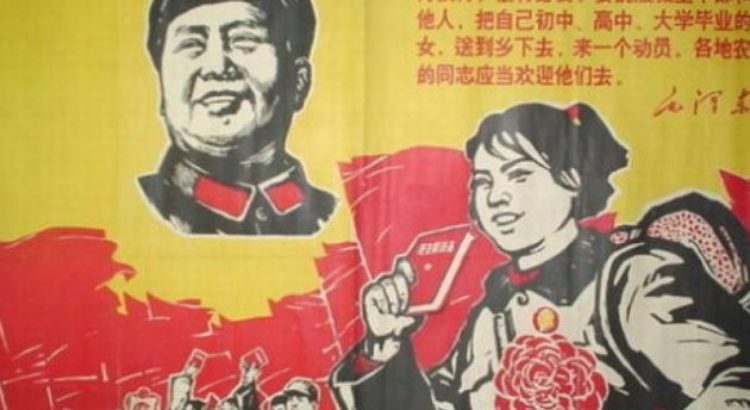
Peking University professor has stirred a commotion with his call to re-establish education centers in China’s vast rural areas, like the camps that existed from the 1960s until the Cultural Revolution intended for ideological remolding of educated urban youth, after Mao Zedong decreed that re-education by members of the proletariat, in particular peasants, was a must for college and high-school graduates.

Yu Hongjun, a professor of finance and microeconomics at PKU’s Guanghua School of Management, said in an opinion piece that “to solve college students’ employment issue, educated urban youth should be sent to the countryside or rural areas” for re-education.

Yu is also a deputy secretary of PKU’s party committee, the university’s top governing body.

He first broached the matter back in 2009, when he said that “starting the campaign in the new period” could not only alleviate employment pressure but also enable youngsters from cities, who were usually spoiled, to know about their country better.

0249_PHOTO

Yu Hongjun

Yu Hongjun, a professor of finance and microeconomics at PKU’s Guanghua School of Management, said in an opinion piece that “to solve college students’ employment issue, educated urban youth should be sent to the countryside or rural areas” for re-education.

Yu is also a deputy secretary of PKU’s party committee, the university’s top governing body.

He first broached the matter back in 2009, when he said that “starting the campaign in the new period” could not only alleviate employment pressure but also enable youngsters from cities, who were usually spoiled, to know about their country better.

Deng Xiaomang, a professor at the Wuhan-based Central China University of Science and Technology, is one of the few who have openly echoed Yu’s idea. “Young people experiencing rural life can enrich [their own lives]. I even consider it a ‘compulsory course,’ not to be carried out on a voluntary basis,” Deng said.

Under Mao, the tens of millions of postsecondary and high-school graduates mandated to spend their prime years plowing cornfields or pasturing cattle in China’s countryside were collectively known as zhiqing, or rusticated youth.

Current Communist Party General Secretary Xi Jinping was one of them, having spent seven years working the land in Liangjiahe, an impoverished village in the central province of Shaanxi, before he enrolled in Tsinghua University’s department of chemistry in 1975.

Many people cut their teeth in the harsh living environment and became experts in agriculture or rural studies, when the majority of rural China was still in penury. Yet the consensus even among today’s party cadres is that Mao’s whimsical edict led to a tremendous waste of the nation’s young talent. Graduates were deprived of tertiary education or employment opportunities in his “Up to the Mountains and Down to the Countryside” movement, an integral part of his ideals of the Cultural Revolution that wreaked havoc on China.

p14070263-1

The ordeal of their zhiqing years is still so vivid that it’s unsurprising to see the hefty backlash to Yu’s remarks, in particular from those who were told to go to the countryside in their teenage years or early 20s.

Even the Beijing-based nationalist tabloid Global Times noted in its report that reviving such camps would simply be “incompatible with the times.”

Not a few of these zhiqing stayed behind and spend the majority of their lives in villages and counties where they had been randomly assigned to go, even after Deng Xiaoping’s economic reforms ultimately rescinded Mao’s policy at the end of the 1970s.

Source of the notice: http://www.atimes.com/article/pku-prof-suggests-reviving-mao-era-rural-education-camps/

Comparte este contenido:
Page 2861 of 6816
1 2.859 2.860 2.861 2.862 2.863 6.816