Page 3378 of 6815
1 3.376 3.377 3.378 3.379 3.380 6.815

Colombia: Por ley, se enseñará en el país la Historia de Colombia

Colombia / 31 de diciembre de 2017 / Fuente: http://caracol.com.co/

Con los objetivos de contribuir a la formación de identidad nacional que reconozca la diversidad étnica cultural de la Nación; desarrollar el pensamiento crítico; y promover la formación de una memoria histórica que contribuya a la reconciliación y la paz, se aprobó la modificación a la ley general de educación que ordena modificar los lineamientos curriculares de Ciencias Sociales para que se enseñe historia colombiana.

“Nos reunimos con las facultades de historia, con los departamentos de historia, con los profesores de los colegios para discutir sobre un proyecto de ley que volviera a señalar como obligatoria la asignatura de historia”, afirmó.

En la ley, se plantea no solo la obligación de establecer esta materia, sino que se da vida a una Comisión Asesora del Ministerio de Educación para la enseñanza de la misma. Representantes de las academias de historia, de facultades de educación, docentes, entre otros, la conformarán y el gobierno tiene plazo de 6 meses para reglamentar su funcionamiento.

José Fernando Rubio Navarro, director del Programa de Historia en Universidad Externado de Colombia, una de las instituciones involucradas en la creación de esta ley, señaló: “Es significativo para la educación de las siguientes generaciones porque en los últimos 20 y 25 años tenemos generaciones bastantes –involuntariamente-, desconocedoras de su pasado, de su memoria”.

Una vez inicie la labor de la Comisión Asesora empezarán a correr los dos años de plazo para que se ajusten los lineamientos con la inclusión de esta asignatura y con ellos, las instituciones educativas deberán cumplir y dictar la cátedra.

Fuente noticia: http://caracol.com.co/radio/2017/12/30/judicial/1514656325_014699.html

Comparte este contenido:

Cuba: Logros de Cuba en Educación Especial son cada vez mayores

Cuba / 31 de diciembre de 2017 / Fuente: http://www.cubadebate.cu/

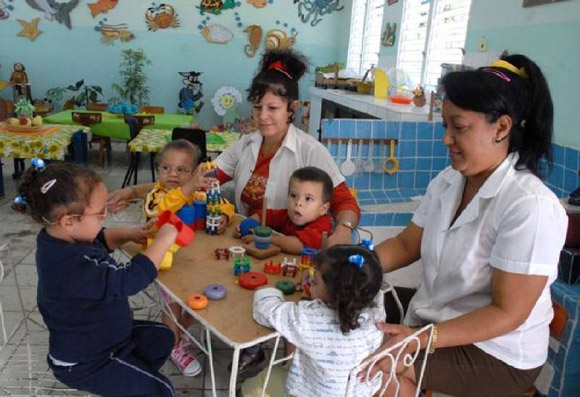
La formación de niños y jóvenes capaces de vivir en una sociedad bajo los principios de equidad e igualdad de posibilidades, es una de las máximas de laEducación Especial en Cuba.

En este sentido, pedagogos cubanos coinciden en que toda la educación ha de ser especial, adaptarse al ritmo individual de cada educando, abierta a quienes la necesiten, que sea incluyente, asuma las diferencias como valor y sea más justa y solidaria.

En la actualidad, la Educación Especial cubana está orientada hacia la solución de aquellos problemas que emanan de las necesidades sociales, y para tal empeño cuenta con más 12 mil profesores, más de 500 máster y de 120 doctores en Ciencias Pedagógicas, cifra que avala los avances en este campo.

También dispone de más 370 escuelas especiales con un personal docente que rebasa la cifra de 15 mil 700.

De acuerdo con información del Centro de Referencia Latinoamericano para la Educación Especial, no existe la pretensión de alinear el pensamiento en una sola dirección, es vital el análisis permanente de las prácticas educativas y de las reflexiones teóricas que deriven del perfeccionamiento educacional cubano, y ningún hombre está condenado por las leyes de la genética a no desarrollarse.

De ahí que cada día deja de tener sentido hablar de ‘niños diferentes’ por lo que hay que centrarse en el déficit que presentan.

El concepto inclusión en Cuba reconoce el derecho de todos a una educación de calidad, independientemente de sus particularidades y características que condicionan las variabilidades en su desarrollo.

También propicia la integración a la sociedad como individuos plenos en condiciones de poder disfrutar las posibilidades que ella ofrece y contribuir a su perfeccionamiento.

Más que asegurarle la educación a quienes poseen algunas deficiencias, reconocidos aún como los que tienen Necesidades Educativas Especiales, su objetivo debe tener un mayor alcance: la incorporación a la vida socio-laboral y estar preparados para contribuir a su transformación.

La inclusión educativa no está centrada en el tipo de escuela, especial o regular, sino en el alcance de objetivos socioeducativos.

Fuente noticia: http://www.cubadebate.cu/noticias/2017/12/30/logros-de-cuba-en-educacion-especial-son-cada-vez-mayores/#.WkgjrNR97eQ

Comparte este contenido:

Brasil: Piso salarial dos professores tem reajuste de 6,81%

Brasil / 31 de diciembre de 2017 / Fuente: http://www.brasil.gov.br/

O reajuste de 6,81% no piso salarial de professores no ano que vem vai valorizar a categoria. A medida foi publicada pelo Ministério da Educação nesta quinta-feira (28). O ganho real para o magistério será de 3,9%, já que supera a inflação esperada de 2,8% para este ano.

Dessa maneira, o piso vai a R$ 2.455,35 para aqueles que cumprem 40 horas de trabalho. Esse é o segundo aumento consecutivo que fica acima da inflação. Em dois anos, os salários subiram R$ 124,96.

A Lei do Piso exige que o reajuste da categoria seja estabelecido anualmente em janeiro. O Plano Nacional de Educação descreve ainda como uma de suas metas que o piso salarial dos professores seja equivalente ao de outras profissões até 2020.

O valor divulgado vale para os professores da rede pública de todo o País em início de carreira e que atuem na educação básica. A base de cálculo desde 2009 segue a evolução do valor aluno-ano.

Esses valores partem da quantia que o Ministério da Educação destina a cada estudante de acordo com o orçamento disponibilizado pelo Fundo de Manutenção e Desenvolvimento da Educação Básica e de Valorização dos Profissionais da Educação (Fundeb).

Fuente noticia: http://www.brasil.gov.br/educacao/2017/12/piso-salarial-dos-professores-tem-reajuste-de-6-81

Comparte este contenido:

Children under attack at shocking scale in conflicts around the world, says UNICEF

Nueva York / 31 de diciembre de 2017 / Fuente: https://www.unicef.org

Download photos, video and b-roll here:http://uni.cf/2kfq2jU

Children in conflict zones around the world have come under attack at a shocking scale throughout the year, UNICEF warned today, with parties to conflicts blatantly disregarding international laws designed to protect the most vulnerable.

“Children are being targeted and exposed to attacks and brutal violence in their homes, schools and playgrounds,” said Manuel Fontaine, UNICEF Director of Emergency Programmes. “As these attacks continue year after year, we cannot become numb. Such brutality cannot be the new normal.”

In conflicts around the world, children have become frontline targets, used as human shields, killed, maimed and recruited to fight. Rape, forced marriage, abduction and enslavement have become standard tactics in conflicts from Iraq, Syria and Yemen, to Nigeria, South Sudan and Myanmar.

In some contexts, children abducted by extremist groups experience abuse yet again upon release when they are detained by security forces. Millions more children are paying an indirect price for these conflicts, suffering from malnutrition, disease and trauma as basic services – including access to food, water, sanitation and health – are denied, damaged or destroyed in the fighting.

Over the course of 2017:

– In Afghanistan, almost 700 children were killed in the first 9 months of the year.
– In the Central African Republic, after months of renewed fighting, a dramatic increase in violence saw children being killed, raped, abducted and recruited by armed groups.
– In the Kasai region of the Democratic Republic of the Congo, violence has driven 850,000 children from their homes, while more than 200 health centres and 400 schools were attacked. An estimated 350,000 children have suffered from severe acute malnutrition.
– In northeast Nigeria and Cameroon, Boko Haram has forced at least 135 children to act as suicide bombers, almost five times the number in 2016.
– In Iraq and Syria, children have reportedly been used as human shields, trapped under siege, targeted by snipers and lived through intense bombardment and violence.
– In Myanmar, Rohingya children suffered and witnessed shocking and widespread violence as they were attacked and driven from their homes in Rakhine state; while children in remote border areas of Kachin, Shan, and Kayin states continued to suffer the consequences of ongoing tensions between the Myanmar Armed Forces and various ethnic armed groups.
– In South Sudan, where conflict and a collapsing economy led to a famine declaration in parts of the country, more than 19,000 children have been recruited into armed forces and armed groups, and over 2,300 children have been killed or injured since the conflict first erupted in December 2013.
– In Somalia, 1,740 cases of child recruitment were reported in the first 10 months of 2017.
– In Yemen, nearly 1,000 days of fighting left at least 5,000 children dead or injured, according to verified data, with actual numbers expected to be much higher. More than 11 million children need humanitarian assistance. Out of 1.8 million children suffering from malnutrition, 385,000 are severely malnourished and at risk of death if not urgently treated.
– In eastern Ukraine, 220,000 children lived under constant threat of mines and other explosive remnants of war due to the 500 kilometer ‘contact line’ – the strip of land where fighting is most severe – becoming one of the most mine-contaminated places on earth.
UNICEF calls on all parties to conflict to abide by their obligations under international law to immediately end violations against children and the targeting of civilian infrastructure, including schools and hospitals. UNICEF also calls on States with influence over parties to conflict to use that influence to protect children.

Across all these countries, UNICEF works with partners to provide the most vulnerable children with health, nutrition, education and child protection services.

#

Fuente noticia: https://www.unicef.org/media/media_102357.html

Comparte este contenido:

Kenia: Teachers speak on rigour of marking answer sheets

Kenia / 31 de diciembre de 2017 / Fuente: http://www.nation.co.ke/

Shocking details of how the marking of this year’s KCSE exam papers could have been compromised emerged Friday.

Interviews by the Saturday Nation team reveal that the teachers who marked the scripts worked under intense pressure.

The markers also said that some marking schemes had errors and that no moderation of the results was done.

Some of those interviewed also said the assessors never had a chance to review the work of the markers and therefore missed the opportunity to deal with any mistakes that may have occurred.

POOR RESULTS

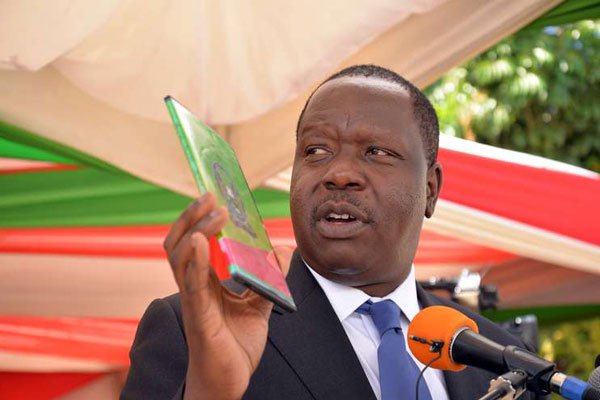
The results of the Kenya Certificate of Secondary Education examination (KCSE) were released on Wednesday by Education Cabinet Secretary Fred Matiang’i.

This year, the examination recorded worrying levels of failure.

At least 350,000 candidates got D grade and below yet only 142 candidates scored A.

Out of the 611,952 candidates who sat the exam, just 70,073 scored C+ and above and therefore qualified for university admission.

The markers gave an account of the depressing conditions under which they assessed the scripts, raising fears about the credibility of the results.

The examination was marked in a record 10 days.

ERRORS
Sources said there were errors in the marking schemes but these could not be corrected because there was no time to do it.

The emphasis appears to have been on the teachers to finish marking and have the results released in record time.

However, in an interview on Friday, Dr Matiang’i said that traditionally, marking of examinations is usually completed before Christmas and that the rest of the time before the results were released in February was spent “massaging” them.

Markers drawn from various regions, among them Nairobi, Nakuru, Kakamega, Vihiga, Laikipia and Migori counties and parts of the Coast, narrated how they were made to mark for long hours.

EXHAUSTION

Marking started at 6am and ended at 10pm every day, meaning that the markers worked for 16 hours each day.

In some centres, the marking started at 4am and ended at 10pm. Ideally, the marking should start at 7am and end at 7pm each day.

Examiners who handled English Paper 3, one of the most taxing exams, worked from 4am to 10pm.

The paper was handled by 1,400 examiners. There were few breaks in between, and this led to widespread fatigue.

Ordinarily, markers require time to rest, review their work as and when necessary, including making adjustments if need arises.

“Right from the beginning we were reminded that the marking would be fast-tracked,” one teacher said.

“First we had been told we would begin marking on December 6 only to be called abruptly on December 3 to report to the centres and start working.”

MARKING SCHEME
But it was while at the centre that the real problems started.

Traditionally, the examiners are required to take two days to familiarise themselves with the marking scheme by going through dummies.

This time round, the familiarisation only took half a day.

At Moi Girls School in Nairobi where History Paper 2 was being marked, teachers realised that one question had the wrong answer.

However, nobody cared to do the correction as the push was to finish marking as quickly as possible.

Usually, after all papers have been marked, the examiners take time to review them to ascertain the validity of the marks.

EXAM MODERATION

Most importantly, moderation is carried out because raw answers may not reflect the validity of the test.

The marking error is -2/+2 and if an examiner goes beyond this margin, he is forced to remark the entire script. This year, this was not done.

During marking, examiners are put in a pool of seven with a team leader.

For every 10 scripts they mark, the team leader has to review at least two, which are picked randomly to verify if they have been marked well.

According to multiple sources, this process was skipped this year.

STRICTNESS

Unlike previously when the chief examiners were teachers, this time round, they were officials sent by the Kenya National Examinations Council.

Some of these officials were not familiar with marking.

“The decision led to us being overworked and made to mark extra scripts. I am sure several errors may have spilled to the final results,” one examiner said.

“Throughout the marking period there was no permission to get out of the centre. Even when an individual needed medical attention, it would be given within the marking centre,” another said.

Another examiner said that he and his colleagues were subjected to poor diet, which he said may have compromised their health and morale.

“We took the same meal almost throughout our stay at the marking centre — sukuma wiki and ugali. Nobody was allowed to go out of the marking centre and take their preferred meals,” the examiner said in an interview with the Nation team.

DEMORALISED
It also emerged that some of the marking centre managers were too harsh on examiners and subjected them to constant ridicule.
“The marking centre manager at (one school in Nairobi) was harsh and humiliated teachers from upcountry, reminding them that the institution where they were was a national school,” an examiner said.

According to the teachers who spoke to the Saturday Nation, the constant pressure and ‘harsh’ conditions may have affected the quality of the final result.

The Kenya Union of Post Primary Education Teachers (Kuppet) has come out to complain about the quality of the marking and grading of the exams.

Laikipia branch executive secretary Ndung’u Wangenye faulted the examination council for subjecting the examiners to unfavourable conditions that, he said, may have compromised the integrity of the results.

BAD CONDITIONS
Kuppet’s executive secretary for the Migori Branch, Mr Samuel Jasolo, said the pressure under which the markers operated was not conducive for productivity.

“We cannot guarantee credibility of the results,” he said.

“The conditions under which the marking was done was bad and we cannot continue like that.”

Mr Jonathan Wesaya, an education expert, noted:

“With no room for standardisation and moderation, many teachers went for volume of scripts since payment is based on the number of scripts marked.”

CREDIBILITY
Kuppet Busia Executive Secretary Moffat Okisai said without moderation and standardisation, the results are questionable.

However, some teachers from Kakamega and Vihiga defended the results, noting that all the scripts had been marked by Friday last week.

But they pointed out that the moderation system used during the marking, as well as the grading, were different from what schools use.

Fuente noticia: http://www.nation.co.ke/news/education/Teachers–Our-pain-in-marking-KCSE-answer-sheets/2643604-4239528-9euiplz/index.html

Comparte este contenido:

Perú: Cerca de 15 mil colegios del país Implementarán el Currículo Nacional en 2018

Perú / 31 de diciembre de 2017 / Fuente: http://www.minedu.gob.pe/

  • La medida abarca instituciones de Educación Inicial y Educación Primaria Polidocentes Completas Urbanas y Rurales.
  • Asimismo, colegios de Educación Primaria Intercultural Bilingüe y Educación Primaria Multigrado Monolingüe Castellano.

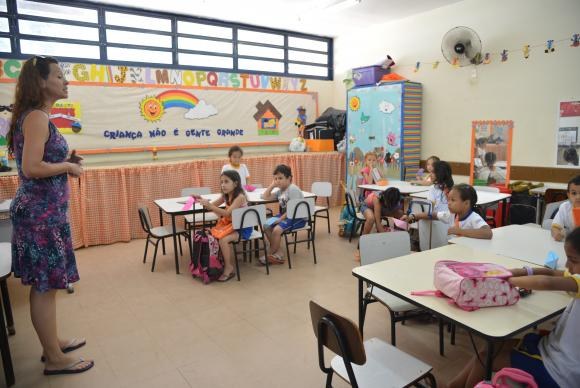
Un total de 14 993 instituciones educativas de todo el país se integrarán a partir del año 2018 al proceso de implementación del Currículo Nacional de la Educación Básica.

El ministro de Educación, profesor Idel Vexler, señaló que en el año 2019 se espera generalizar en todas las instituciones educativas de Inicial, Primaria y Secundaria el nuevo Currículo Nacional mejorado. Al respecto, explicó que el Currículo Nacional mantiene el enfoque de género como enfoque transversal aunque tendrá reajustes para que sea más fácil de utilizar.

Según la Resolución Viceministerial N.° 195-2017-MINEDU, que aprueba los listados de los colegios que se integrarán al mencionado proceso, en 2018 el Currículo Nacional se aplicará en 939 instituciones educativas de Educación Inicial de todas las regiones.

La medida abarca, asimismo, a 12 754 instituciones educativas de Educación Primaria Polidocentes Completas Urbanas y Rurales de todas las regiones, 634 de Educación Primaria Intercultural Bilingüe de las regiones Apurímac, Ayacucho y Ucayali, y 666 de Educación Primaria Multigrado Monolingüe Castellano de las regiones Piura y Ucayali.

En Lima Metropolitana, el Currículo Nacional será implementado el próximo año en 3786 colegios de Educación PrimariaPolidocentes, mientras en que Lima Provincias se aplicará en 479 colegios de similar nivel.

El Currículo Nacional, aprobado por la Resolución Ministerial N.° 281-2016-MINEDU, comenzó a ser implementado este año en las instituciones educativas públicas de Educación Primaria Polidocentes Completas y en las instituciones educativas privadas de Educación Primaria.

Fuente noticia: http://www.minedu.gob.pe/n/noticia.php?id=45406

Comparte este contenido:

Chile: Destacan altos niveles de Certificación Ambiental en planteles educativos de Aysén

Coyhaique / 31 de diciembre de 2017 / Fuente: http://www.eldivisadero.cl/

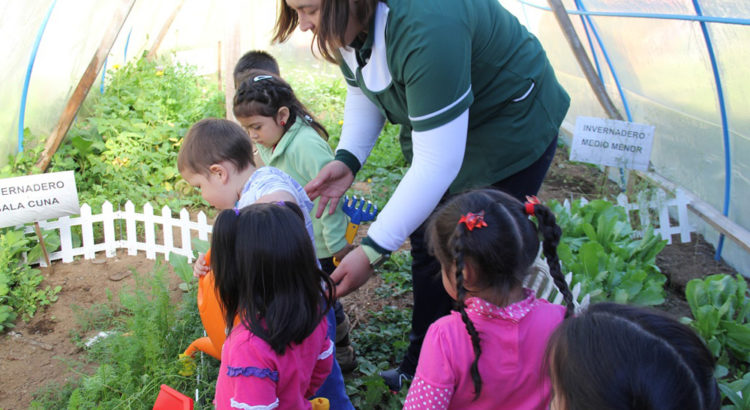
Integración de contenidos ambientales en el currículo escolar, generación de iniciativas ligadas a la eficiencia energética, prácticas de vida saludable, manejo sustentable de residuos, difusión ambiental y campañas de vinculación con el entorno, son algunas de las prácticas evaluadas por el SNCAE, Sistema Nacional de Certificación Ambiental de Establecimientos Educacionales, que destaca a la región de Aysén en la incorporación de planes ambientales de educación, pasando de un 7% en el año 2014 a un 52%, al cerrar el año 2017.

Cifra exitosa que se determina a través del trabajo coordinado entre Ministerio de Medio Ambiente, el Ministerio de Educación, la Corporación Forestal Conaf, el Ministerio de Energía, la Agencia Chilena de Eficiencia Energética, la Dirección General de Aguas, y la Organización de Naciones Unidades para la Educación, Ciencia y Cultura (UNESCO), y  que consiste en una certificación voluntaria pública dirigida a establecimientos educacionales  que implementan estrategias de educacional ambiental al interior de los jardines y colegios, midiendo el componente ambiental en ámbitos como: Curricular Pedagógico, Gestión Escolar, y las Relaciones con el Entorno.

Un trabajo sostenido que ha permitido no solamente acercar la información a las unidades educativas, sino la vinculación en terreno con los actores principales de cada establecimiento, impulsado la articulación interna y especialmente la responsabilidad con el medio ambiente, donde han sido los docentes, centros de padres, centros de alumnos, directivos y educadoras (en el caso de los jardines infantiles), quienes han fortalecido e impulsado nuevas prácticas innovadoras en temas medio ambientales, que hoy determinan el éxito de este trabajo colaborativo.

Así lo indicó la Seremi de Medio Ambiente Susana Figueroa Meza, quien señaló “estamos muy contentos con este aumento de Certificación Ambiental de establecimientos educacionales. Cuando asumimos como Gobierno el 2014, habían 10 establecimientos educacionales y hoy, al terminar el Gobierno tenemos 74 certificados en toda la región, desde Raúl Marín Balmaceda hasta Villa O´Higgins, que dijeron sí a la Certificación Ambiental, involucrando sustentabilidad en sus procesos educativos, lo que tiene una gran repercusión entre los niños y niñas, y también en la comunidad y sus familias”.

Por su parte, la impronta de esta Certificación ha sido motivar a que cada vez las unidades educativas se comprometan aún más con la implementación de nuevas prácticas ambientales, promoviendo el compromiso de la institucionalidad pública, a fin de generar un impacto social directo en los ciudadanos. Caso concreto de esto ha sido la Junta Nacional de Jardines Infantiles Junji en la región de Aysén la Fundación Integra, quienes se propusieron certificar el 100% de sus Jardines Infantiles, compromiso que se ha visto reflejado en el testimonio de educadoras comprometidas con el medio ambiente.

“Esta certificación ha sido de gran ayuda para el trabajo pedagógico del jardín y sus familias, ya que logra afirmar un compromiso de cuidar y proteger nuestro entorno, priorizando en el trabajo educativo temas ambientales, donde se planifican actividades en contacto con la naturaleza, comprometiendo valores y el respeto por nuestro entorno”, enfatiza Yannia Pérez Cárdenas, Educadora del Jardín Infantil Futuro Austral.

Finalmente, cabe destacar que la Educación Ambiental es un proceso permanente destinado a promover valores y actitudes que permitan la protección ambiental y la toma de conciencia de las problemáticas ambientales, a fin de generar un entorno más sustentable y propicio para todos y todas, donde debemos seguir avanzo como región.

Fuente noticia: http://www.eldivisadero.cl/redac-46134

Comparte este contenido:
Page 3378 of 6815
1 3.376 3.377 3.378 3.379 3.380 6.815