Page 3534 of 6819
1 3.532 3.533 3.534 3.535 3.536 6.819

Argentina: Educación: usan sus prácticas para ayudar a escuelas

Argentina/ 21 de noviembre de 2017/Fuente: www.lanacion.com.ar

Estudiantes de un secundario técnico de 9 de Julio se comprometieron a reparar y mantener seis colegios.

Martina Etchepare manipula una amoladora con temeridad. Corta el cordón de una soldadura que hasta hace unos meses sirvió para fijar las patas de un pupitre de la escuela primaria N° 12 de French. Está en el patio, con la cabeza aprisionada por orejeras y antiparras. A cuatro baldosas, entre un volcán de chispas pero protegido por una máscara, Lucas Martínez suelda la base de un silla. Del otro lado de un ventanal, los alumnos de segundo grado miran de reojo las explosiones que produce la soldadora y saben muy bien quiénes están ocultos detrás de las máscaras y qué vinieron a hacer. Dicen que son los chicos de la escuela técnica N° 2 de 9 de Julio y cuentan que llegaron para arreglar «todo lo que estaba roto».

Etchepare y Martínez tienen 18 años. Igual o un año menos que sus ocho compañeros de séptimo año que integran un proyecto inédito a nivel provincial: con la supervisión de profesores de electricidad, soldadura, herrería y carpintería, acordaron hacerse cargo del mantenimiento de 11 escuelas de pueblos rurales del partido bonaerense de 9 de Julio, ubicado 270 kilómetros al noroeste de la Capital. Lo pactaron en un convenio con el Consejo Escolar. Y se comprometieron a destinar las 216 horas anuales, a razón de seis semanales, que los alumnos del último año de las escuelas técnicas bonaerenses deben dedicar a las prácticas profesionales.

Patricios, Morea, Dudignac, Norumbega, 12 de Octubre y French son las seis localidades a las que asisten. Lo que estaba roto en la primaria de French, que funciona en un edificio que cumplió 118 años, no era poco. Ocho pupitres, 25 sillas, dos bancos de madera del comedor, cinco lámparas de tubo, una cerradura, cinco cortinas y una luz que estaba en cortocircuito. «Lo que nos entusiasma es la idea es ayudar», dice Etchepare después de seis horas de trabajo en la escuela, a 10 kilómetros de 9 de Julio, a donde llegaron en un colectivo escolar y con el aula taller que armaron en un tráiler y en la que trasladan las herramientas de trabajo.

Fue su elección. Porque los diez jóvenes podrían haber elegido hacer las prácticas profesionales en una metalúrgica, en una planta de procesamiento de cereales, en una fábrica de máquinas agrícolas o en un tambo. De haberlo hecho podrían haber cobrado hasta $ 6000 por mes por la «asignación estímulo» que suelen ofrecer las empresas, como lo consiguió la mayoría de los 52 chicos que cursan séptimo año en la escuela. Eso es lo más común en toda la provincia: el 70% de los 11.600 alumnos del último año de las 262 escuelas técnicas bonaerenses hace las prácticas en empresas.

«Para mí, es como devolverle a la escuela pública la educación que me dio», formula Juan Pablo Agostinelli. Etchepare lo interrumpe: «Además, si no venimos nosotros, todo lo que arreglamos iba a seguir inutilizado».

Martina Etchepare, de la escuela técnica N°2 de 9 de Julio
Martina Etchepare, de la escuela técnica N°2 de 9 de Julio. Foto: Ricardo Pristupluk

Mientras hacían arreglos en la escuela de French, el Consejo Escolar de 9 de Julio no tenía dinero en la cuenta bancaria del Fondo Compensador, que el 25% se compone de lo que recauda el distrito por Ingresos Brutos de medianos contribuyentes y que se destina para mantener las escuelas. El año pasado, por ejemplo, dispusieron de $ 1,4 millones para hacer mejoras en los 75 edificios escolares del distrito. A razón de $ 19.000 por sede. «De mano de obra, los trabajos que los chicos hicieron en French hubiesen costado unos $ 13.000», saca cuentas Carlos Brangeri, que es técnico mecánico y uno de los profesores que tutela el plan.

El aporte de los alumnos además resuelve una cuestión logística que, de otra manera, requeriría una inversión mucho mayor. «Nos solucionan un problema. Porque el principal inconveniente es que en estos pueblos no hay electricistas, herreros o gasistas que estén inscriptos como proveedores de la provincia y entonces puedan hacerse cargo de los trabajos. Tendrían que venir de lejos y nos saldría muchísimo», reconoce Marisa Poratti, presidenta del Consejo Escolar.

«En séptimo año desarrollan lo que aprendieron durante los seis años anteriores», explica Silvio Balbo, director de la técnica N° 2, que ya el año pasado había firmado el primer convenio con el Consejo Escolar para que otro grupo hiciera lo mismo, pero en otras localidades. «El objetivo es que se desempeñen en un ámbito real de trabajo, aprendan a resolver problemas que se les presenten en el lugar y desarrollen capacidades profesionales y solidarias», explica Brangeri.

«Está bueno cuando ves cómo solucionamos problemas que tienen los colegios. Me hace sentir bien», describe Lucas. «También creo que es un ejemplo para los chicos que nos ven trabajar. Capaz que al vernos les dan ganas de estudiar en la técnica», interpreta Lucrecia Henríquez, que aprendió a manipular a la perfección la remachadora neumática y a lo largo del año fue la encargada de asegurar las bases de sillas desvencijadas.

Todo indica que el plan que idearon en la técnica N° 2 como alternativa a las prácticas en empresas tiene larga vida. Por vocación y por necesidad. «Desde primer año en la escuela trabajamos en proyectos solidarios y eso hace que los alumnos desarrollen una sensibilidad que los lleva a elegir este tipo de prácticas», pronostica Brangeri, que a su vez aclara que seis horas semanales es suficiente, ya que si les tomara más tiempo pasarían a ser como «un trabajador encubierto» o «mano de obra barata».

Mientras que Poratti trabaja en el borrador que el Consejo propondrá como convenio para el año próximo: «Queremos incluir a más localidades». Además de la cabecera de 9 de Julio, el distrito abarca 12 poblados y 15 parajes en los que hay escuelas rurales. Balbo prepara las condiciones: «La cooperativa eléctrica de 9 de Julio, nos donó el camión F-350 usado, nos prometió un camión más grande, un Ford 14.000, que nos permitirá entrar con el taller móvil en localidades más apartadas y con accesos más complejos».

Fuente de la Noticia:

http://www.lanacion.com.ar/2083729-educacion-usan-sus-practicas-para-ayudar-a-escuelas
Comparte este contenido:

España: Madrid corre por la Educación y el Emprendimiento

España/ 21 de noviembre de 2017/Fuente: http://www.elmundo.es

La séptima edición de la Carrera Solidaria Madrid Emprendedores se celebró esta mañana con miles de participantes

La carrera contó de nuevo con un gran componente social: todos los beneficios han sido destinados a centros educativos de la Comunidad de Madrid a través de Fundación Créate

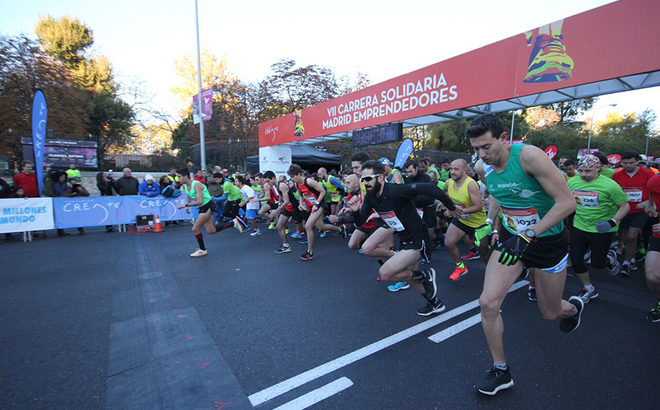
Esta mañana ha tenido lugar, en los alrededores del Parque del Retiro de Madrid, la séptima edición de la Carrera Solidaria Madrid Emprendedores. Más de 3.000 personas han disfrutado de un soleado día de running con el objetivo de fomentar valores, actitudes y habilidades a través de la innovación educativa.

El recorrido, a elegir entre 5 y 10 kilómetros, ha discurrido por el centro de la capital, con salida y meta en la avenida Menéndez Pelayo, donde también se celebró la prueba «RunKids«, en la que formaron parte más de 500 niños de entre 5 y 13 años. También se celebró una prueba de handbikes con varios participantes.

Los vencedores de la prueba han sido Paul Whitelam y Carlota Figaredo en la categoría de 5k y Samuel Martín y Alba Hernández en la de 10 kilómetros En la carrera de handbikes, los ganadores han sido Vicente Yangüez e Isabel Fernández. También se entregó un premio a la empresa con mayor número de participantes,que recayó en Deloitte y otro para el centro educativo con más corredores que, entre más de 80 centros participantes, resultó ser el Colegio Nazaret Oporto.

Carrera solidaria

La Carrera Solidaria Madrid Emprendedores ha sido organizada por Fundación Créate, con el fin de fomentar valores, actitudes y habilidades a través de la innovación educativa.

Todos los beneficios conseguidos con la carrera irán destinados íntegramente a los centros educativos de Madrid que cuentan con la ayuda de la Fundación. Con ese dinero recaudado, la fundación podrá investigar, desarrollar e implantar metodologías y herramientas experimentales con la comunidad educativa para su uso en la escuela y otros ámbitos relacionados con la educación.

La carrera ha sido organizada por Fundación Créate y se ha hecho posible gracias a la colaboración del Ayuntamiento de Madrid, Management Solutions, Deloitte, Informa D&B, Interxion y Bankinter. Como colaboradores técnicos, la carrera cuenta con Coca-Cola; además del apoyo institucional del Ayuntamiento de Madrid.

Fuente de la Noticia:

http://www.elmundo.es/madrid/2017/11/19/5a11f6a646163f4f438b45c6.html

Comparte este contenido:

Education Ministry launches “Smart classroom” to connect schools across the country

Guyana/November 21, 2017/By News Source Guyana

The technology connects classrooms in any region of Guyana. This will serve to bridge the gap between coastal schools and those in the hinterland and rural communities.

The Ministry of Education is continuing its move to connect schools and classrooms in real-time across Guyana through the use of innovative technology.

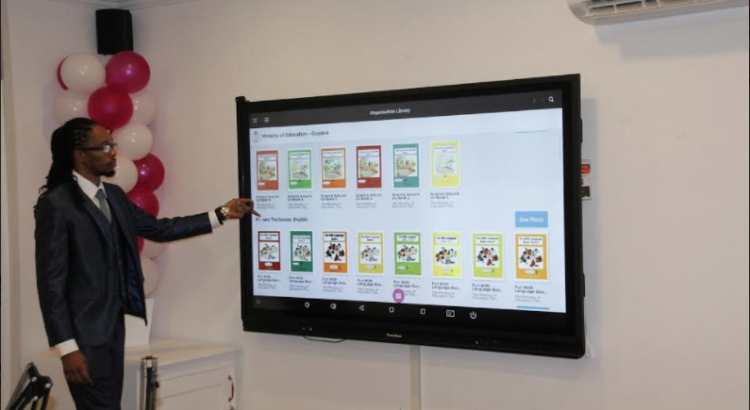
The first ‘Smart Classroom’ was launched last week at the National Centre for Education and Resource Development (NCERD).

The technology connects classrooms in any region of Guyana. This will serve to bridge the gap between coastal schools and those in the hinterland and rural communities.

Delivering remarks at the launch exercise was Chief Education Officer, Mr. Marcel Hutson who commented that the launch of the initiative marks a significant day in the history of education delivery in Guyana.

He said that it is symbolic of the education sector embracing the use of technology to deliver education; something the Ministry has been clamouring to do for the longest while.

Mr. Hutson also noted that the occasion is just the beginning and efforts will be made to establish similar rooms across Guyana. According to the CEO, the benefits are tremendous as children and teachers can benefit from interactive learning “shifting away from the chalk and talk”.

“It is the beginning of a new season in our country and will only get better as we press on.”

Minister of Education, Nicolette Henry, said that the launch of the Smart Classroom represents a high moment of the Ministry of Education as it is embracing a 21st Century Teaching Tool.

She said that the use of the Smart Classroom epitomises the Ministry’s efforts at providing quality education to all and reducing disparities between the hinterland, rural and coastal areas; an issue that will be a primary focus for the Ministry as it moves into the new year.

Meanwhile, ICT Coordinator within the Ministry of Education, Ms. Marcia Thomas said that the idea to connect classrooms around Guyana has been around for some time. However, it was after a meeting with the Minister of Education that discussed bridging the gap between the hinterland, coastal and rural areas, that ideas emerged to achieve the goal.

She said that the equipment that has been set up in a special room at NCERD were bought at a cost of US$30,000. The room features a touchscreen Promethean Board, 30 Charging stations for Tablets, Smart Phones and Computers and Ergonomic Furniture for the pupils to use.

She said that the internet connection at the NCERD building was provided by the Egovernance Unit who provided the connection at a speed of 100 Megabytes per second.

Director of NCERD, Ms. Jennifer Cumberbatch said that Guyana is truly going places. She said that the new initiative will surely make the NCERD building a resource place despite it serves to connect classrooms around the country.

The setting up of the equipment was made possible through the committed efforts of Ms. Marcia Thomas and her team along with the assistance of overseas-based Guyanese, Sheldon Blair.

Mr. Blair works at Google and gave all the technical support free of cost, a gesture that is highly appreciated.

During the launch, schools and teachers in Regions 1, 2, 3, 4, 5, 6, 9 and 10 were connected and were able to interface with each other.

Also, a number of textbooks used in the public-school system are available for use through the system which will make teaching much more efficient. One feature of the state of the art technology is that the teacher using the equipment can log the students off so that they can focus on the Promethean Board while she teaches and log them in back into the system when material on their tablets are required.

To use the system, Tablets, Smart Phones and Computers need to have access to a Zoom Cloud Meetings platform that is available on the Google Play Store.

The Smart Classroom can be used to connect schools thereby creating a universal classroom where one teacher can teach as many students as possible.

Source:

http://newssourcegy.com/news/education-ministry-launches-smart-classroom-to-connect-schools-across-the-country/

Comparte este contenido:

UN supports education in S. Sudan pastoralist communities

Sudan/November 21, 2017/Source: http://www.sudantribune.com

South Sudan government in partnership with United Nations Food and Agriculture Organization (FAO) and the UN Educational, Scientific and Cultural Organization (UNESCO), have unveiled on an initiative to provide extended education services to nomadic pastoralist communities.

JPEG - 59.5 kb
A cattle keeper carrying a gun in Lakes state (File/ST)

Officially launched on Thursday, the Pastoralist Livelihoods and Education Field Schools (PLEFS) and the Pastoralist Education Program Strategy Framework will reportedly offer active and constructivist approach tailored to meet the needs of adults, youth and children in pastoralists’ communities.

Serge Tissot, the FAO Representative in South Sudan, said PLEFS, the first of its kind in South Sudan, will provide pastoralists with sustainable and high-quality learning opportunities as they move.

«The partnership between the three line ministries, FAO and UNESCO is unique and has realized a way for marginalized communities to access vital services in challenging conditions,» said Tissot.

«FAO is committed to strengthening livelihoods, and integrating basic literacy and numeracy skills into the field school approach really improves pastoralists’ way of life,» he added.

The program, officials said, is currently being implemented by FAO and UNESCO in the central regions and it will be brought to other pastoral communities across the country in the near future.

«It is our long-term vision to see to it that pastoralist communities receive adequate services and infrastructure to improve their livelihoods,» said James Janka Duku, Minister of Livestock and Fisheries.

Illiteracy rates are high in South Sudan, a country that broke away from Sudan in July 2011. More than 80% of the South Sudanese population, UN estimates show, cannot read or write. Also, according to the UN Children Fund (UNICEF), fewer than 1% of girls in South Sudan complete primary education.

Comparte este contenido:

Haiti – Education : Laureates of the text contest on the Battle of Vertières

Haiti/November 21, 2017/Source: http://www.haitilibre.com

Friday evening at Hotel Villa Cana, in the presence of several government authorities, including Wilson Laleau, President Moïse’s Chief of Staff, Régine Lamur, Minister of Youth, members of the Presidential Commission on Innovation and Integration of young people, of the Director of secondary education and of several departmental directors of education took place the Ceremony of award ceremony for the laureates of the text contest on the Battle of Vertières.

27 young people from 9 departments from 9 departments across the country (the Nippes delegation was absent) participated in the event.

Following the rules established by the organizers, 3 laureates were chosen by department for the quality of their text.

Laureates of laureates :

First with a score of 90 out of 100: Janvier Darline, St Michel College of Charpentier (South);
Second with a score of 88 out of 100: Jacob Efrantzka Theodore, Institution St. François Xavier (North).

Organized by the Ministry of National Education and Vocational Training in partnership with the Presidency, this contest has allowed these young people to reflect on the Dessalinian ideal and the prowess of Vertières in order to provide ways to face new challenges faced by Haiit today.

Maxime Mesilas, the Director of Secondary who spoke on behalf of the Minister Cadet, delayed because of difficulties on the road because of bad weather, stressed the importance of this initiative aiming at enabling young people to put their potential to good use. Other contests will follow during the year, he said.

Wilson Laleau praised these young people who have distinguished themselves by the quality of their text and took the opportunity to provide advice to these young people for the success of their academic and professional background by insisting that Haiti has been a beacon for the world at the beginning of the 19th century and that our turpitude, our bad choices and infighting led us to the situation of today. It is possible to take up the torch, according to him, if we adopted another way of doing by inspiring us with the heroes of Vertières.

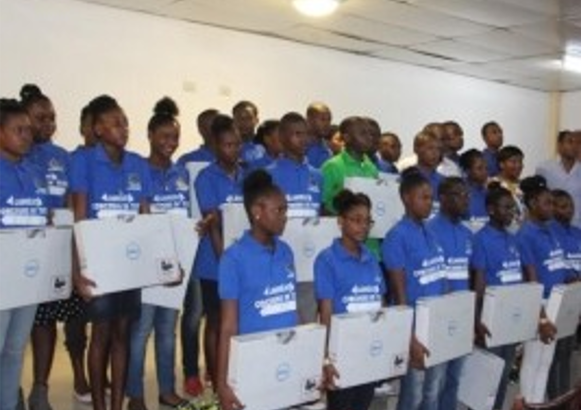
Each of the 27 laureates present received in prize a laptop from the Presidency and books will also be offered by the Ministry.

Source:

http://www.haitilibre.com/en/news-22743-haiti-education-laureates-of-the-text-contest-on-the-battle-of-vertieres.html

Comparte este contenido:

Indian: Poor kids lured with free education, converted to Islam; nine held in Telangana

Indian/November 21, 2017/By: Hyderabad /Source: http://indianexpress.com

As many as 17 children including seven girls, all in the age group of 4 to 15 years, were converted,» Sandeep said, adding that police have seized Islamic literature from the spot.

Nine persons were arrested today for allegedly converting children from poor families in Telangana to Islam under the pretext of providing them free education, food and shelter here, the police said. Police rescued 17 children in age group of 4-15 years, including seven girls, from the premises of an unrecognised school in Moula Ali area on the complaint of the Child Welfare Committee.

Out of the ten accused in the case, police arrested prime accused Mohammed Siddiqi alias Satyanarayana and eight others. “Siddiqi and eight others allegedly lured parents from interior areas of Bhadrachalam, Mahabubnagar, Khammam and Warangal districts of Telangana and made them believe that their children will get free education along with accommodation and food facilities,” Assistant Commissioner of Police (Malkajgiri Division) G Sandeep said.

He said the accused converted the children to Islam and started imparting them Urdu and Arabic studies. “They converted the children to Islam, but didn’t change their names. Their motive was to convert as many children as possible,” the officer said.

During the investigation, police found that Siddqui and nine persons were indulged in religious conversion of the minors, mostly belonging to SC/ST communities. “As many as 17 children including seven girls, all in the age group of 4 to 15 years, were converted,” Sandeep said, adding that police have seized Islamic literature from the spot.

The ACP said Siddiqui converted to Islam in 2003-2004 and started Peace Orphan Society in Warangal. He was running a school-cum-hostel in Hyderabad since the last year.

A case was registered against the accused persons under sections 153A (promoting enmity between different groups on grounds of religion, 363 (kidnapping), 342 (wrongful confinement) of the IPC and relevant sections of the SC and ST (Prevention of Atrocities) Act. Police are probing whether the accused received funding from abroad, the ACP added.

Source:

http://indianexpress.com/article/india/poor-kids-lured-with-free-educationconverted-to-islam-nine-held-in-telangana-4945289/

Comparte este contenido:

Nigeria: Change Should Begin With Education

Nigeria/November 21, 2017/Source: http://allafrica.com

The Federal Executive Council [FEC] held a special retreat in Abuja last Monday on the challenges of education in Nigeria. The retreat had the theme: «Education in Nigeria: Challenges and Prospects.» President Muhammadu Buhari declared it open while Vice President Yemi Osinbajo and most ministers were present. The decision to hold the retreat was first made in June at a FEC meeting chaired by then Acting President Osinbajo. Minister of Education Malam Adamu Adamu said at the time that «[FEC] members agreed that the falling standards in education are so serious that we will need a ministerial retreat to look at all the issues…Initially, we had prepared a blueprint but FEC felt the issue is beyond that because there are crises in all the areas of education, in out of school children, in technical education and training, in ICT, in all the areas you can think of.»

The minister increased the areas of educational malaise when he spoke at the 2017 Convergence Education Summit in Abuja last week. He said, «The education sector is plagued with so many challenges. Some of the challenges include dearth of qualified technical teachers, dilapidated and inadequate classrooms, lack of tools and equipment for technical and vocational education, poor data for educational planning and administration. Others are dearth of critical ICT infrastructure and services, low access to tertiary education due to insufficient institutions, multiplicity of curriculum-related issues, problem of out-of-school children and poor funding, among others.» The list looks very long but the minister actually left out other areas such as poor quality of teachers in many states, high drop-out rate, inability of many parents to pay their children’s exam fees, widespread malpractice in exam administration, the problem of fake certificates and sexual abuse, among others.

President Buhari’s opening speech at the retreat was overshadowed by a remark he made about Kaduna State Governor Nasir el-Rufai’s plan to sack 21,780 teachers who failed a basic competency exam. Most newspapers seized on that remark and had screaming headlines that «Buhari backs el-Rufa’i’s plan to sack teachers.» This was unfortunate because the Kaduna controversy is but a flash in the pan when it comes to tackling the major problems devilling education in Nigeria.

In his speech at the retreat, Minister of Education Malam Adamu Adamu called for a state of emergency to be declared in education. He said «all change must begin with education because if we get education right, other areas of our national life will be right and they will fall in line.» This is true indeed but what is the solution? The minister said, «What is needed is vastly improved funding accompanied by a strong political will.» He said while the Buhari administration has the will, what it «must now do is to make the funds available.» Both are easier said than done. The APC administration’s political will to solve the deep-rooted problems of the education sector is yet to be proved. As for funding, Malam Adamu said among sub-Saharan African countries, Nigeria commits far less to education as a percentage of its budgets than smaller and less endowed nations in the region.

«From 1999 to date,» the minister said, «the annual budgetary allocation to education [in Nigeria] has always been between four per cent and 10 per cent.» He said none of the E9 or D8 countries other than Nigeria allocates less than 20 per cent of its annual budget to education. It is true that for a developing country such as Nigeria, all sectors of the socio-economy are yearning for greater attention. If however we believe, beyond mouthing slogans, that education is the sector with the greatest multiplier effect for national development, then we must up our game and greatly increase spending in education at all levels to address the myriad of problems that have already been identified.

That assertion has caveats, however. The education sector is not spared from the national malaise of corruption. It cannot be said that this country has got real value for the amounts we invested in education, less though they are compared to other countries. The anti-corruption campaign being waged in other sectors must also be waged vigorously in the education sector, otherwise pumping in more money could be an exercise in futility.

It was not said after the FEC retreat whether it accepted the minister’s prayer to declare a state of emergency in education. In case it decides to do so at a later date, the elements in this declaration and the timelines for achieving specific targets should be made clear to all Nigerians so that we can all monitor compliance. Besides, the problems of education in Nigeria cannot be tackled by the Federal Government alone. In fact, state and local governments have a greater role to play in education than the Federal Government. The sectors the latter are mainly responsible for, i.e. primary and secondary education, are the ones that have suffered the greatest quality deterioration and are more badly affected by other problems. Needless to state, the Federal Government’s heavy investment in tertiary education can hardly achieve desired results if the two lower tiers of education are in crises.

That is why last week’s ministerial retreat should be followed up by a wider stakeholders’ summit involving the other tiers of government as well as non-government actors in the sector, local and international. At the end of it, a comprehensive yet simple blueprint of action with reasonable timelines should be produced and widely circulated in the country. At that point the President should bring his full moral authority to bear to get all actors to key into the program and bestow on it the political will and resource infusion. Hopefully within a few years the country will begin to reap the fruits of such concerted action.

Source:

http://allafrica.com/stories/201711190024.html

Comparte este contenido:
Page 3534 of 6819
1 3.532 3.533 3.534 3.535 3.536 6.819