Page 3846 of 6815
1 3.844 3.845 3.846 3.847 3.848 6.815

Argentina: Habrá capacitación para agentes que enseñan inglés sin título docente

América del Sur/Argentina/15 de Septiembre 2017/Fuente: elliberal/Autor:elliberal

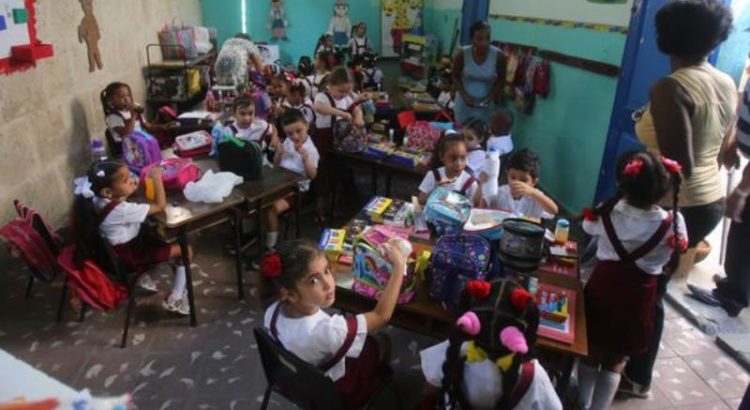
Este sábado, a las 8, dará inicio una capacitación pedagógica destinada a agentes que enseñan ingles sin título docente.

El proyecto cuenta con acreditación de 600 horas, y con resolución del Ministerio de Educación de la Provincia. Quienes lo cursen tendrán la posibilidad ser elegidos en las Juntas de Calificaciones y Clasificaciones de todos los niveles y modalidades.

La capacitación pedagógica es un proyecto específico que viene a cumplir el acompañamiento y capacitación a egresados de institutos y academias de inglés y será dictado por las profesoras Fabiana Fernández Vercelli, Patricia Hermello y la pedagoga Amanda Anríquez de Corbalán.

Los interesados podrán inscribirse en la avenida Besares y San Carlos, de la ciudad de la Banda s/n, hasta mañana de 18 a 20.

Las consultas pueden realizarse al 155854901.

Fuente de la noticia: http://www.elliberal.com.ar/noticia/366133/habra-capacitacion-para-agentes-ensenan-ingles-sin-titulo-docent

Fuente de la imagen: http://img1.elliberal.com.ar/fotos/cache/notas/2017/09/14/715x402_LIB140917-016F02.j

Comparte este contenido:

México: Transforma Telebachillerato Vidas de Adultos que no Concluyeron Nivel Medio Superior

América del Norte/México/15 Septiembre 2017/Fuente:cdnoticias /Autor:Redaccion

El compromiso del Telebachillerato Michoacán es transformar la vida de jóvenes y de adultos que no han concluido su educación media superior, indicó el director general del subsistema, Juan Carlos Barragán Vélez.

“Es importante que las y los adultos tengan acceso a una educación de calidad y a un excelente aprendizaje. Y por ello les facilitamos el derecho a la educación para que sean partícipes en la vida económica, política, cultural, artística y científica en la sociedad”, destacó.

Subrayó que por instrucciones del Gobernador Silvano Aureoles Conejo, en el Telebachillerato Michoacán se alienta a los adultos para que puedan seguir con sus estudios de media superior, ofreciendo educación de calidad y gratuita con la finalidad de abatir el rezago educativo.

Como un gran ejemplo de vida y de superación personal, expuso que recientemente terminaron su Telebachillerato Esthela Quintero Briseño, de 49 años de edad; Blanca Nieves Méndez Chávez, de 41 años, y Alicia Catalina Mendoza Tarrones, de 44, las tres originarias del municipio de Coahuayana, quienes se sienten más preparadas e invitan a la población a concluir sus estudios de nivel medio superior.

Fuente de la noticia: http://www.cdnoticias.com.mx/articulos/transforma-telebachillerato-vidas-adultos-no-concluyeron-nivel-medio-superior/capacitacion

Fuente de la imagen: http://www.cdnoticias.com.mx/contenido/uploads/2017/09/13/bachillar.jpeg

Comparte este contenido:

Como funciona o sistema Universidade Aberta do Brasil, em que houve o desvio de recursos que resultou na prisão do reitor da UFSC

Brasil/Septiembre de 2017/Fuente: Clicrbs

Resumen:  En la mañana de este jueves, la Policía Federal desencadenó la Operación Oídos Moucos, cuyas investigaciones comenzaron a partir de sospechas de desvío en el uso de recursos públicos en cursos de Educación a Distancia ofrecidos por el sistema Universidad Abierta de Brasil (UAB). Dos empresarios, un funcionario y nueve profesores de la Universidad Federal de Santa Catarina (UFSC), incluido el rector Luiz Carlos Cancellier, fueron arrestados de forma temporal o conducidos coercitivamente. El UAB es un sistema instituido en 2006 con el objetivo de expandir e interiorizar la oferta de cursos superiores en el país, a través del fomento a la educación a distancia en las instituciones públicas de enseñanza superior. En Santa Catarina, integran el UAB el Instituto Federal de Santa Catarina (IFSC), la Universidad del Estado de Santa Catarina (Udesc) y la UFSC. El sistema estimula la asociación de los gobiernos federal, estatal y municipal con las universidades públicas y otras organizaciones interesadas, y viabiliza mecanismos para el fomento, implantación y ejecución de cursos superiores. La idea es llevar a la universidad pública para quienes tienen dificultad para acceder a la formación universitaria en lugares distantes de los grandes centros o aislados, incentivando el desarrollo de municipios con bajos IDH (índice de desarrollo humano) y IDEB (Índice de Desarrollo de la Educación Básica) y capacitando a profesores de la educación básica de la red pública en otras disciplinas.

Na manhã desta quinta-feira, a Polícia Federal deflagrou a Operação Ouvidos Moucos, cujas investigações começaram a partir de suspeitas de desvio no uso de recursos públicos em cursos de Educação a Distância oferecidos pelo sistema Universidade Aberta do Brasil (UAB). Dois empresários, um funcionário e nove professores da Universidade Federal de Santa Catarina (UFSC), incluindo o reitor Luiz Carlos Cancellier, foram presos de forma temporária ou conduzidos coercitivamente.

O UAB é um sistema instituído em 2006 com o objetivo de expandir e interiorizar a oferta de cursos superiores no país, por meio do fomento à educação a distância nas instituições públicas de ensino superior. Em Santa Catarina, integram o UAB o Instituto Federal de Santa Catarina (IFSC), a Universidade do Estado de Santa Catarina (Udesc) e a UFSC.

O sistema estimula a parceria dos governos federal, estadual e municipal com as universidades públicas e outras organizações interessadas, e viabiliza mecanismos para fomento, implantação e execução de cursos superiores. A ideia é levar a universidade pública para quem tem dificuldade de acesso à formação universitária, em locais distantes dos grandes centros ou isolados, incentivando o desenvolvimento de municípios com baixos IDH (Índice de Desenvolvimento Humano) e IDEB (Índice de Desenvolvimento da Educação Básica) e capacitando professores da educação básica da rede pública em outras disciplinas.

 O UAB também estabelece a articulação entre a instituição de ensino responsável por ministrar determinado curso e os polos de apoio presencial. Em Santa Catarina, há polos de apoio presencial em 33 cidades. No programa de ensino a distância (Ead) da UFSC , a maior parte do conteúdo e da carga horária dos cursos a distância se dá em ambiente virtual, no entanto, cerca de 30% da carga horária é presencial, como as avaliações do desempenho acadêmico, estágios obrigatórios, defesa de trabalhos de conclusão de curso, atividades realizadas em laboratórios de ensino e videoconferências. Em média, ocorrem dois encontros por mês.

Veja a lista dos cursos a distância oferecidos pelo EaD-UFSC por meio do programa UAB:

Graduação
Administração
Administração Pública
Ciências Biológicas
Ciências Contábeis
Ciências Econômicas
Filosofia
Física
Letras-Espanhol
Letras-Inglês
Letras-Português
Matemática

Especialização
Controle da Gestão Pública
Controle da Gestão Pública Municipal
Gestão de Bibliotecas Escolares
Gestão em Saúde
Gestão Pública
Gestão Pública Municipal
Linguagens e Educação a Distância

Veja quais são as 33 cidades que possuem polo presencial do sistema UAB em SC:

Araranguá
Balneário Piçarras
Blumenau
Braço do Norte
Caçador
Campos Novos
Canelinha
Canoinhas
Chapecó
Concórdia
Criciúma
Florianópolis
Indaial
Itajaí
Itapema
Jaraguá do Sul
Joaçaba
Joinville
Lages
Laguna
Otacílio Costa
Palhoça
Palmitos
Ponte Serrada
Pouso Redondo
Praia Grande
Quilombo
São Bento do Sul
São José
São Miguel do Oeste
Treze Tílias
Tubarão
Videira

Leia a nota de esclarecimento da  Coordenação de Aperfeiçoamento de Pessoal de Ensino Superior  (CAPES): 

A propósito da operação da Polícia Federal, que investiga supostas irregularidades no programa Universidade Aberta do Brasil (UAB) junto à Universidade Federal de Santa Catarina (UFSC), a Coordenação de Aperfeiçoamento de Pessoal de Ensino Superior (CAPES) informa que o programa é executado desde 2006. A atual gestão foi assumida em junho de 2016 e, esclarece que, em maio de 2017, tomou conhecimento pelo corregedor da UFSC das denúncias na referida instituição. A CAPES solicitou acesso à apuração, mas não obteve resposta da corregedoria daquela universidade.

Ao tomar conhecimento da existência de uma investigação no programa de bolsas da UFSC, a presidência da CAPES determinou, imediatamente, a estruturação de uma comissão para acompanhar o programa com visita no local e solicitação de documentação complementar.

É importante ressaltar que a atual gestão aprimorou, por meio da Portaria n° 183/2016, a regulamentação das diretrizes para a concessão de bolsas no âmbito da UAB e retomou as visitas técnicas de verificação do programa. Já foram realizadas, só este ano, mais de 30 visitas e, até dezembro, estão programadas outras 10.

Ao receber a Polícia Federal, nesta manhã, a CAPES prestou todos os esclarecimentos solicitados. Assim como colocou à disposição as informações sobre a oferta do programa na UFSC e concedeu acesso a todos os sistemas de acompanhamento e controle interno.

A gestão atual da CAPES reafirma a intenção de contribuir com a investigação no sentido de que o programa cumpra rigorosamente o seu papel de formação e continua comprometida com a qualidade da formação dos alunos que estudam por meio da educação à distância na UFSC.

Fuente: http://dc.clicrbs.com.br/sc/noticias/noticia/2017/09/como-funciona-o-sistema-universidade-aberta-do-brasil-em-que-houve-o-desvio-de-recursos-que-resultou-na-prisao-do-reitor-da-ufsc-9899421.html

Comparte este contenido:

European University in Russia faces closure

Rusia/Septiembre de 2017/Fuente: Science Business

Resumen: Para la Universidad Europea en San Petersburgo, cada día es sobre la supervivencia. Ha sido así desde hace algún tiempo. La escuela de posgrado privada y con respaldo internacional ha sido un blanco de los legisladores durante más de una década, en lo que los críticos dicen que es una trama complicada para sofocar puntos de vista independientes, tomar posesión de un edificio histórico y acabar con las influencias occidentales. «Es una colección de diferentes jugadores que se han unido para aplastarla», dice Dmitry Dubrovsky, investigador asociado en el Centro de Investigación Social Independiente de San Petersburgo, y ex alumno de la universidad. «Ellos están haciendo esto con la ayuda del estado de derecho y la máquina burocrática rusa». La universidad, que cuenta con 100 empleados y 260 estudiantes, ha sido clasificada constantemente entre los mejores institutos en Rusia, y es uno de los pocos institutos no estatales calificados por el Ministerio de Educación para otorgar títulos. Pero después de perder su licencia de enseñar este año, seguido por un retiro forzado de sus locales y luego la salida de su rector, la acción contra la universidad ahora parece haber entrado en una etapa final.

For the European University in St Petersburg, each day is about survival. It has been this way for some time.

The private and internationally-backed postgraduate school has been a target of lawmakers for over a decade, in what critics claim is a complicated plot to stifle independent points of view, take ownership of a historic building, and stamp out western influences.

“It’s a collection of different players who have come together to crush it,” says Dmitry Dubrovsky, associate research fellow at the Centre of Independent Social Research in St Petersburg, and a former student of the university. “They are doing this with the aid of the rule of law and the Russian bureaucratic machine.”

The university, which has 100 staff and 260 students, has consistently rated among the top institutes in Russia, and is one of only a few non-state institutes qualified by the Ministry of Education to award degrees.

But after losing its teaching licence this year, followed by a forced removal from its premises and then the departure of its rector, action against the university now seems to have entered a final stage.

On 5 September, the school applied for a new licence to operate; if it is not approved before November 1, the university will not be able to enrol students for the new term.

Having witnessed what he calls a “political attack” on the university play out for years, professor of political science, Grigorii Golosov, is pessimistic about his university’s chances of surviving.

“I feel less optimistic than ever that we can [survive]. We have lost virtually everything we could lose: our rector, our licence and our building. We are dealing with a tremendous machine. We’re dealing with something nobody understands,” Golosov said.

Escalating pressure

The problems began with a series of snap inspections by authorities last summer.

Officials say the university has violated up to 120 rules and regulations, such as one which says that universities of a certain size in Russia must have a gym. The university’s failure to display anti-alcohol leaflets was another infraction.

It was a notable step up in pressure, which has been building for the past decade. The university first found itself in controversy in 2007 when it received a €700,000 grant from the European Commission for a project to improve election monitoring in Russia. Soon afterwards the university was shut for six weeks after failing a fire safety inspection.

Golosov says Russian president Vladimir Putin was personally involved in shuttering the university. “This was more or less transparent – not fully transparent though, because nothing is in contemporary Russia,” he said.  

The Russian government did not respond to repeated requests for comment.

After it reopened, the university fell into the local government’s crosshairs for offering a class on gender studies. Vitaly Milonov, an ultra-conservative member of parliament who rose to prominence after proposing  an ‘anti-gay propaganda’ law to prohibit teaching children about “non-traditional sexual relations», lodged an official complaint against the university.

«I personally find [gender studies] disgusting, it’s fake studies, and it may well be illegal,» Milonov told The Christian Science Monitor.

Despite attempts to rectify flaws found by officials, the university lost a court battle to hold onto its teaching licence. Over the summer, the university also had rights to its home in the famous Small Marble Palace taken away.

Officials are killing the university on technicalities, Golosov said. “They are smart people – they cannot be seen to be closing a university for political purposes. It was too blatant when we were closed in 2008, and they faced a backlash. Lessons have been learned.”

Since the university’s failed appeal in the courts, the rector, Oleg Kharkordin, has stepped down and been replaced by Nikolai Vakhtin.

Kharkordin declined to comment to Science|Business.

Vakhtin said bureaucratisation of education in Russia has reached an unprecedented level. “Universities are losing their academic freedom not because there is ideological pressure but for the simple reason that literally every lecture and every seminar is regulated by federal standards. I hope that the ministry realises this and will stop following this road which, I am convinced, is a dead-end,” Vakhtin told Science|Business.  

Death by technicality

Reactions from academics and experts inside and outside Russia to the university’s predicament range from alarm to outrage.

“The situation is deeply disturbing,” said Tanya Lokshina, Russia programme director and a senior researcher at Human Rights Watch’s Moscow office. 

Despite Vakhtin’s comments about bureaucratisation, it is hard to uncover the true motivations behind the various inspections and attacks.

Dubrovsky, who in 2015 was fired from St. Petersburg State University’s Smolny College, in what was seen by many academics as a politically driven move, believes the dispute has been primarily about occupying the Small Marble Palace.

Golosov agrees that the goal for “some of the players in the game” was to take over the prized palace, a pink and grey marble architectural gem.

For others, the motive is political. “They are looking for an excuse to shut it down,” said Michael Khodarkovsky, a professor of history at Loyola University Chicago, who was born in the Soviet Union. “They have been looking for one for a decade and they will find any one they can. It’s the usual, cynical way of pursuing nasty goals.”

Sending a warning

Freedom House, a US-based human rights watchdog, says Russia’s education system “is marred by bureaucratic interference, international isolation and increasing pressure to toe the Kremlin line on politically sensitive topics.”

There has been a crackdown on critics in recent years. In 2014, two scholars were sacked for speaking out against Russia’s invasion of Crimea. In the same year, the authorities removed more than half of the previously approved school textbooks from the country’s classrooms, leaving much of the market in the hands of a publisher owned by a close associate of Putin.

“The open, independent learning environment the European University projects within Russia…may [be] an additional reason for the university to come under fire,” says Daniel Munier, an advocacy and communications officer with Scholars at Risk Network, which has opened a file on the case.

The government’s repressive machine is working harder now, Khodarkovsky said, in the run-up to the presidential election next March. “This is about sending a message of warning to cultural elites,” he said.

Open Society Foundation

The Russian government may also be sending a message to the Open Society Foundation headed by Hungarian-American billionaire financier George Soros, which has contributed funding to the European University.

Soros, a major funder of programmes that aim to promote democracy, human rights and the rule of law, has long been a bête noire of the Kremlin, who see him as puppet master in a plot to install pro-western governments in the Balkans and Central Europe.

According to Anna Kowalczyk, a spokeswoman for the Open Society, the foundation gave over $27 million to the university between 1996 and 2015. The Russian government classified the foundation as an “undesirable” organisation in 2015 and banned it from disbursing grants to Russian partners.

The justification for the move was that it is necessary to stop foreign governments from interfering in Russia’s internal affairs.

The moves against European University coincide with Hungarian President Viktor Orban, an ally of Putin, passing a law that threatens the status of the Central European University in Budapest, also funded by Soros.

There are some parallels between the political situations both universities find themselves in, observes Mikhail Krom, professor of history at the European University.

“The same nationalist and populist forces are at work in both countries, but the similarities do not extend much further. Central European University can benefit from EU pressure, for example.”

“Here the media or opposition politicians don’t exert any influence on the Russian president,” Krom said. “Politics in St. Petersburg is completely passive, the orders come from Moscow.”

Persevering

Despite the considerable threat hanging over the university, faculty have found a way to keep going.

“We are under psychological pressure,” said Krom. “I feel trouble and pressure, but I’m trying to move forward. I just finished a book. I just went to a conference in Helsinki. We are carrying on with some hope.”

Under the forthcoming events section of the university’s website, is a message that simply reads, “Stay tuned”. 

Even without its teaching licence, the institute can survive in some form, Krom hopes, perhaps as a scientific hub that hosts conferences. Since losing its premises, the university has moved into a new building. “It’s more modest,” said Krom.

As the university staggers on, Golosov is still searching for some truth, but is not finding it. “A lot of theories can be proposed as to why we are here, but in the end nobody can prove them,” he said. “This is Russia: officials can simply say it is because we didn’t have a gym.”

Fuente: https://sciencebusiness.net/highlights/european-university-russia-faces-closure

Comparte este contenido:

Vietnam’s new education policy to take inspiration from Finland, Denmark

Vietnan/Septiembre de 2017/Fuente: SI News

Resumen:  Mientras que el clima, el sistema de gobierno y la cultura son mundos aparte, el sistema educativo de Vietnam comunista está dibujando la influencia y la inspiración de los países democráticos liberales de Finlandia, Suecia y Dinamarca. El ministro de educación de la nación del sudeste asiático, Phung Xuan Nha, completó esta semana un viaje de estudio a las naciones nórdicas, donde aprendió más acerca de su enfoque de los programas de educación desde el nivel primario hasta el terciario. Funcionarios del Ministerio de Educación y Capacitación de Vietnam dijeron que una variedad de valores en la educación general en los tres países eran compartidos por la «filosofía de educación» mejorada de Vietnam, informó Tuoi Tre News. Los estudiantes finlandeses se han desempeñado consistentemente entre los mejores del mundo en el ranking del Programa de Evaluación Internacional de Estudiantes (PISA) de la OCDE en los últimos años.

While the weather, system of government and culture are worlds apart, the education system of Communist Vietnam is drawing influence and inspiration from the liberal democratic countries of Finland, Sweden and Denmark.

The Southeast Asian nation’s education minister Phung Xuan Nha this week completed a study trip to the Nordic nations, where he learnt more about their approach to education programmes from the primary to tertiary level.

Officials from Vietnam’s Ministry of Education and Training said that a range of values in mainstream education in the three countries were shared by Vietnam’s upgraded “philosophy of education”, reported Tuoi Tre News.

Finnish students have consistently performed among the world’s best in the OECD’s Programme for International Student Assessment (PISA) rankings in recent years.

Vietnam’s performance in PISA has improved immensely, already outperforming many western countries, with the government investing a huge portion of government expenditure into its education system.

In 2015, Vietnamese students were ranked 12th in the world for maths and science, compared with Finland at number 6.

image: https://cdn.studyinternational.com/news/wp-content/uploads/2017/09/shutterstock_341286671-1024×685.jpg

shutterstock_341286671-1024x685

Students in their classroom in Helsinki, Finland. Source: Shutterstock

Some 18 memoranda of understanding were signed between Vietnamese and Finnish schools during the course of the ministerial visit regarding teacher training and online education, while in Denmark 17 were signed on medical and geological teaching and research.

Tuoi Tre reports that Vietnam’s 2019 education reforms will “empower teachers and students with more freedom and autonomy, while emphasising experimental and creative activities at school.”

Minister Phung is reportedly in talks with his counterparts around acquiring rights to publish Finnish educational materials for a variety of subjects.

According to VN Express, Finnish high schools will be opening for students in the major urban centres of Hanoi and Ho Chi Minh City in the near future.

Earlier this year, the Vietnamese ministry made English a compulsory subject from grade three onwards, starting in 2018.

Read more at https://www.studyinternational.com/news/vietnams-new-education-policy-take-inspiration-finland-denmark/#Okr0PCxbTALjZpjy.99

Comparte este contenido:

Education aid for Syria refugee kids goes missing

Siria/Septiembre de 2017/Fuente: Shanghai Daily

Resumen: Millones de dólares prometidos por los líderes mundiales el año pasado para financiar la educación de los niños refugiados sirios no llegaron nunca a los estudiantes ni pueden ser tenidos en cuenta, dijo ayer un importante grupo de derechos humanos. Los fondos que faltan de varios donantes importantes de Estados Unidos a la Unión Europea han contribuido a que cerca de medio millón de niños sirios estén fuera de la escuela, dijo Human Rights Watch en un informe. Los líderes mundiales hicieron promesas detalladas de donaciones durante una conferencia celebrada en Londres en febrero de 2016, que buscaba atender las necesidades humanitarias de millones de personas desplazadas por la guerra civil siria. Desde 2011, el conflicto ha obligado a más de cinco millones de personas a huir de Siria, muchos de los cuales buscan seguridad en el vecino Líbano, Turquía y Jordania.

Millions of dollars pledged by world leaders last year to fund the education of destitute Syrian children refugees never reached the students nor can be accounted for, a top human rights group said yesterday.

The missing funds from several major donors from the United States to the European Union have contributed to about a half million Syrian children being out of school, Human Rights Watch said in a report.

World leaders made detailed promises of donations during a February 2016 conference in London that sought to address the humanitarian needs of millions of people displaced by the Syrian civil war.

Since 2011, the conflict has forced more than five million people to flee Syria, many seeking safety in neighboring Lebanon, Turkey and Jordan.

The pledges exceeded the US$1.4 billion that aid groups and UN agencies said was needed to send out-of-school Syrian children to class.

But HRW said it “found large discrepancies between the funds that the various parties said were given and the reported amounts that reached their intended targets in 2016.”

By the end of 2016, authorities in Lebanon were still awaiting more than a quarter of US$350 million pledged to hire teachers, buy books and plan classes for refugee children, it said.

In Jordan, the shortfall for 2016 was about a fifth of the US$250-million promised.

HRW said donor nations may have failed to publicize ways that their pledges became actual donations.

The US State Department said the Agency for International Development, for instance, made payments of nearly a quarter of a million dollars to Jordan, but most of those funds failed to appear in USAID’s tracking database, the report said.

Asked for comment, a USAID spokeswoman said the funds of nearly US$601 million pledged at the London conference were not specifically earmarked for education and have been provided to the intended recipients.

HRW researchers chided the EU for being opaque about some of the US$776 million it promised to donate to educate Syrian refugee children in Jordan, Lebanon and Turkey.

EU officials in Brussels and in Washington did not comment.

School enrollment of Syrian children did increase in Jordan, Lebanon and Turkey after the London summit, HRW said. But a lack of timely funding contributed to more than 530,000 children in the three nations remaining out of school.

Fuente: http://www.shanghaidaily.com/world/Education-aid-for-Syria-refugee-kids-goes-missing/shdaily.shtml

Comparte este contenido:

More African students seek quality education in China: envoy

África/Septiembre de 2017/Fuente: New China

Resumen:  El creciente número de estudiantes africanos que buscan avanzar en su educación en China fue una clara señal de la calidad de la educación proporcionada en China, dijo un diplomático. El embajador de China en Zambia, Yang Youming, dijo que China estaba agradecida por la apreciación del sistema educativo del país por parte de los países africanos y prometió que el país continuará proporcionando educación de calidad. «El creciente número de estudiantes de África es una buena señal de la apreciación de los pueblos de África sobre la calidad de la educación en China y por eso han decidido enviar a sus hijos», dijo a periodistas durante una rueda de prensa donde dio a conocer una carta de agradecimiento de 11 de los 26 estudiantes zambianos que fueron a China el año pasado para estudiar cantar y bailar bajo un programa organizado por la primera dama china Peng Liyuan y su homóloga zambiana Esther Lungu. También reveló otra carta en la que la primera dama china respondió a la carta escrita por los estudiantes. El enviado dijo que China se ha convertido en un destino privilegiado no sólo para los jóvenes zambianos que desean estudiar en el extranjero, sino para África en general. Él dijo que China es ahora segundo a Francia en atraer a estudiantes de África.


The increasing number of African students seeking to further their education in China was a clear sign of the quality of education provided in China, a diplomat has said.

Chinese Ambassador to Zambia Yang Youming said China was grateful over the appreciation of the country’s education system by African countries and promised that the country will continue providing quality education.

«The increasing number of students from Africa is a good sign on the appreciation of the people of Africa on the quality of education in China and that is why they have decided to send their children,» he told reporters during a press briefing where he unveiled an appreciation letter of 11 of the 26 Zambian students who went to China last year to study singing and dancing under a program arranged by China’s First Lady Peng Liyuan and her Zambian counterpart Esther Lungu.

He also unveiled another letter in which the Chinese first lady responded to the letter written by the students.

The envoy said China has now become a prime destination not only for Zambian youth wanting to study overseas but Africa as a whole. He said China is now second to France in attracting students from Africa.

He said promotion of people-to-people exchange was important as it allows them to learn cultures of other countries, adding that China expects to see increased students from Africa seeking to study in Chinese universities.

According to him, countries should develop their education systems as well as their people in order to see meaningful development.

And Reuben Sakala, one of the students who studied singing and dancing at Nanjing University of the Arts and Nanjing Normal University said Zambia has a lot to learn from China’s development progress in the last 50 years.

He said Chinese people were committed and dedicated to their work as well as culture which has resulted in rapid development.

And in her response letter to the Zambian students, the Chinese first lady said the friendship of the two countries requires the young people to carry it forward.

She said young people were the future and hope of any nation and urged them to continue studying hard in order to make great contribution to Zambia’s development.

The cooperation between the two countries in recent years have borne rich fruits, with currently over 3,500 Zambian students studying in China under various scholarships while the Chinese government has provided about 800 government scholarships to Zambia.

Fuente: http://news.xinhuanet.com/english/2017-09/14/c_136610078.htm

Comparte este contenido:
Page 3846 of 6815
1 3.844 3.845 3.846 3.847 3.848 6.815