Page 3960 of 6815
1 3.958 3.959 3.960 3.961 3.962 6.815

UNICEF: 70 millones de niños viven en pobreza en Latinoamérica

América Latina/ 22 de agosto de 2017/Autor: EFE/Fuente: http://www.el-nacional.com

La directora regional de la organización advirtió que el continente es el que «más desiguala» a la niñez y el más violento para los menores de edad.

La pobreza y las muertes en la infancia comprometen el presente y el futuro de América Latina y el Caribe, por lo que los países deben reaccionar con ambiciosa voluntad para erradicarlas, afirmó la directora regional de Unicef, Marita Perceval.

Perceval, de nacionalidad argentina, expuso en una entrevista con Efe en Bolivia, las cifras de la realidad de la niñez golpeada por la pobreza, la exclusión educativa, las muertes por causas evitables, la desnutrición y la violencia.

El mundo asumió en 2015 los objetivos de desarrollo sostenible para dar fin a esos males, que en Latinoamérica están presentes sobre todo por el «empecinamiento» de la desigualdad y la violencia.

«Esta ambiciosa voluntad de la comunidad internacional tiene que plasmarse en cada uno de nuestros países y Estados en una América Latina y caribeña que, como saben, no es la más pobre en términos de población, pero somos la más desigual», afirmó Perceval, junto a su representante en Bolivia, Sun-Ah Kim Suh.

Latinoamérica es la región del mundo que «más desiguala» a la niñez y la «más violenta para los niños» no porque tenga conflictos armados, sino por la violencia sufrida en sus hogares, lamentó.

Perceval abogó por analizar con «responsabilidad sincera» y no con «desesperación pesimista» las cifras de los daños a la niñez, que cita para reiterar la necesidad de que los países, en el contexto de la crisis económica, sean más eficientes y no hagan recortes al cumplimiento de los objetivos dedicados a la infancia.

América Latina y el Caribe tiene 195 millones de niños, niñas y adolescentes, de los que 70 millones viven en pobreza, sobre todo en las zonas rurales y los entornos periurbanos, explicó.

Cada año se registran 196.000 muertes de niños menores de cinco años, la mitad en los primeros 28 días de vida.

Asimismo, 6,3 millones de inmigrantes son menores de 18 años y cada vez más migran por cuenta propia huyendo de la pobreza y la violencia.

La exclusión educativa afecta a 14 millones de niños y en el área del cambio climático hay 13,4 millones que viven en zonas de riesgo de sequía y 13,1 millones en lugares de potenciales inundaciones.

Sobre la violencia en la región, 25.000 niños y adolescentes son víctimas de homicidios cada año y 1,1 millones de jóvenes mujeres sufren violencia sexual, según citó, entre los datos más alarmantes.

Además, 6 millones de niños menores de cinco años sufren desnutrición crónica y 3,9 millones padecen sobrepeso; hay 32.000 menores de 15 infectados con VIH y 200.000 entre los 15 y 24 años.

Perceval enfatizó que es posible avanzar mucho más para cambiar esas realidades, para mejorar la nutrición como lo hizo Bolivia en los últimos años o para acabar con la transmisión vertical del VIH de madre a hijo como sucedió en Cuba, según destacó.

A su juicio, aunque hay grandes diferencias entre los niños de un país y otro, y de un continente a otro, lo que causa «una profunda desazón» son las desigualdades arraigadas dentro de una misma nación.

En ese sentido, llamó la atención sobre zonas de un país de «altísima prosperidad, que parecen del ‘primer mundo’ y los espacios de miseria, abandono, que parecería que Dios por allí no pasó».

Para que los compromisos con la comunidad internacional «no sean un papel mojado, sino proyectos de vida concretos realizables», señaló que en los países hay que trabajar más y llamar la atención sobre lo que falta por hacer, a la vez que destacar lo avanzado.

Apuntó que durante su visita a Bolivia habló con varias autoridades, entre ellas el vicepresidente del país, Álvaro García Linera, y percibió que reconocen la necesidad de hacer más.

«Ninguno nos dijo las cosas están todas bien. Creo que es también como uno se aproxima para con respeto decir las cosas se pueden hacer mejor y hay cosas que no están haciendo y que se deberían hacer», sostuvo la funcionaria internacional.

Además, destacó la importancia de que no solo el Estado haga su trabajo, sino también las familias para frenar la violencia contra niñas en sus propios espacios de convivencia o con la participación de empresarios cuando hay explotación laboral.

En este último sentido, destacó un proyecto que permite a los empresarios de la zafra de Bolivia lograr una certificación de producción cuando evitan la explotación de la niñez y adolescencia en la recolección de la caña de azúcar, algo que antes era común.

Sobre la necesidad de no hacer recortes en Latinoamérica para los temas de infancia, Perceval concluyó que «avanzar lleva años, retroceder un instante», pero si un Estado decide hacerlo está decidiendo sobre «el presente y el futuro de un país».

«Creo que la mayoría plena de los pueblos y gobiernos de nuestra región no quieren retroceder, pero si hay que reconocer que está costando más avanzar», finalizó.

Fuente:

http://www.el-nacional.com/noticias/mundo/unicef-millones-ninos-viven-pobreza-latinoamerica_199700


Comparte este contenido:

Perú: Reprograman diálogo de maestros con el Ministerio de Educación para este lunes

Perú/ 22 de agosto de 2017/ Fuente: https://peru21.pe

La ministra de Educación espera poner fin a las protestas de los docentes.

 Actualización 19:00

El parlamentario de Peruanos por el Kambio Vicente Antonio Zeballos, informó a través de su cuenta de Twitter que el diálogo entre los maestros en huelga y el Ministerio de Educación programado para este domingo a las cinco de la tarde se ha reprogramado a primeras horas de este lunes.

«Aún no culmina Asamblea de Docentes, se acordó reprogramar reunión final con el Minedu para a las 6 am.», suscribió el congresista.

Actualización 18:00

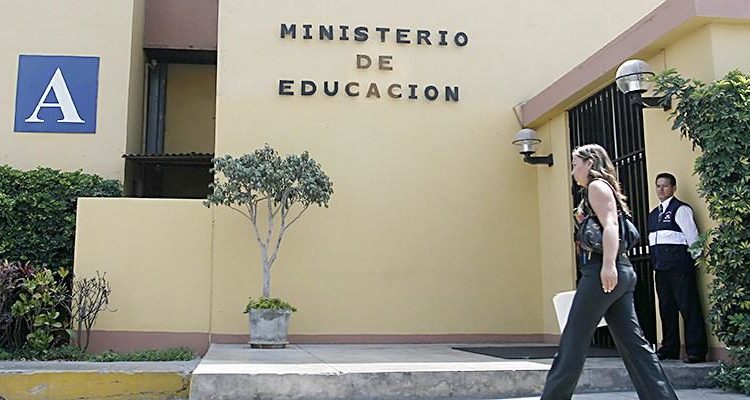
Los dirigentes de los maestros en huelga llegaron al Ministerio de Eduación, en San Borja, para continuar el diálogo con la titular del pliego, Marilú Martens, y dar su respuesta a la propuesta planteada para darle fin a las movilizaciones.

Nota original

Momento decisivo para la ministra de Educación Marilú Martens. Este domingo a las 5:00 pm. se reanudan las conversaciones con los maestros en huelga, quienes darán una respuesta a la titular del pliego en relación a la propuesta que les presentó a los dirigentes.

En total han sido 14 puntos los que plantearon los educadores para que las marchas lleguen a su fin.

Entre sus exigencias se encuentra el acceso a beneficios sociales de los profesores contratados.

Como se recuerda, se reiteró que el aumento salarial a dos mil soles se dará en noviembre y este incremento paulatino será una constante hasta el 2021, año en el que se celebra el bicentenario de la Independencia.

Fuente de la Noticia:

https://peru21.pe/politica/marilu-martens-maestros-huelga-responderan-propuesta-ministra-educacion-372342

Comparte este contenido:

Vietnam: Education sector asked to remove rigid regulations

Vietnam/August 22, 2017/ Source: http://en.nhandan.org.vn

It is crucial to remove any rigid regulations that are no longer effective and suitable with the current situation, in order to innovate education and training, particularly in state management.

Deputy Prime Minister Vu Duc Dam made the statement at a national online conference, on August 21 in Hanoi, to review the 2016-2017 academic year and launch the tasks for 2017-2018.

Addressing the conference, the Deputy PM lauded the prominent activities of the education sector, particulary the universalisation of preschool education for children of 5 years old.

The education sector has developed a curriculum for students at three levels of general education, as well as succesfully completing and reforming the 2017 national high school examination, he added.

He also highlighted that university autonomy has been gradually implemented, while educational management has been improved as unnecessary activities and exams have been eliminated.

Deputy PM Dam also pointed out five inadequate issues of the sector, including the unsuitable regulations in State management and governance in universities, schools and preschools, in addition to the slow implementation of the textbook innovation programme.

He stressed that the sector has not paid significant attention to comprehensive teaching methods; the settlement of the problem of excess teachers in secondary and high schools and the lack of preschool teachers; and continuing education.

The Deputy PM called for a strong and practical enhancement of education for the people, particularly students at the general level.

In addition, the universities’ self-reliance should be implemented properly, noted Deputy PM Dam. He asked the education sector to focus on the quality of the programme on general education and the new textbook programme.

At the conference, the delegates discussed three major tasks for the 2017-2018 academic year, including the replanning of the educational institution network, particularly teacher training institutions; the preparation of conditions for the effective implementation of the new general education curriculum; and the promotion of autonomy and self-responsibility among education and training institutions.

Source:

http://en.nhandan.org.vn/society/education/item/5434902-education-sector-asked-to-remove-rigid-regulations.html

Comparte este contenido:

United Kingdom: Brighton Board of Education Approves Pay Hike for Hourly Workers

 United Kingdom/ August 22, 2017/Source: http://whmi.com

The Brighton Board of Education has ratified a contract change for hourly workers in the Brighton Area Schools that calls for a 2% wage increase for the 2017-18 fiscal year.

The board approved the contract provision unanimously at its meeting last week. The membership of BESPA – the Brighton Educational Support Personnel Association – had already approved the contract overwhelmingly. BESPA involves about 100 secretaries, food service employees, para-professionals and ancillary service personnel. This year the workers will be in the fourth year of their five-year contract.

Superintendent Greg Gray tells WHMI that the hourly employees are a hard working group and deserve compensation that is commensurate with their work load. The district also reached tentative agreement with the Brighton Education Association, representing the district’s 300 teachers. That tentative agreement also includes a 2% pay increase. The teaching staff will be voting on the contract Aug. 28th and 29th, and the board will vote on it at its meeting on the 28th. (TT)

Source:

http://whmi.com/news/article/29139

Comparte este contenido:

EEUU: Paladino Ousted From Buffalo Board of Education

EEUU/August 22, 2017/Source: http://cnyvision.com

The past few months have seen some of the most truly spectacular political oustings in the history of our country on the national scale. In all the tumult, another ousting on the local level might have slipped under your radar: the divisive former gubernatorial candidate Carl Paladino has been shown the door, with the State Education Commissioner forcibly removing the beleaguered businessman from his position on the Buffalo Board of Education.

The dismissal was the result of a week-long hearing that took place in June after his fellow member petitioned the state to unseat him. According to the Democrat and Chronicle, the board charged that Paladino had “willingly shared” information about teacher union negotiations and a pending lawsuit, both of which were confidential.

Paladino and his attorney, Dennis Vacco, see it differently.

“The determination to remove him, at least, is excessive in the context of all of the circumstances and facts of this case,” Vacco said to the Democrat and Chronicle, insinuating that Paladino was being punished for offensive comments made in a December interview in Artvoice.

In the article, when Paladino was asked about what he’d most like to see go away in 2017, he answered, “Michelle Obama. I’d like her to return to being a male and let loose in the outback of Zimbabwe where she lives comfortably in a cave with Maxie, the gorilla.”

Despite the claims of Paladino and his legal team, however, Education Commissioner MaryEllen Elia agreed with the board, finding that Paladino had, in fact, violated the Open Meetings Law.

In her finding, Elia said, “The record demonstrates that respondent disclosed confidential information regarding collective negotiations under the Taylor Law which he gained in the course of his participation as a board member in executive session and that his disclosures constituted a willful violation of law warranting his removal from office.”

Paladino was first elected to the school board in 2013, three years after his failed gubernatorial bid, which was rocked with an eclectic collection of scandals, including racist and sexually explicit emails, homophobic remarks, and unsubstantiated accusations of marital infidelity against his opponent. Despite the many controversies, however, Paladino managed to win all eight Western New York counties and 34% of the votes.

Recently, Paladino has been raising the possibility a second gubernatorial run, citing the election of President Trump, another politician with a long record of controversial comments.

“I think he’s proven in his days in office that the kind of change that he is bringing to Washington is something that we need in Albany,” Paladino said to Spectrum News Buffalo.

How this public ousting will effect Paladino’s chances at a second attempt for the New York governorship has yet to be seen.

For the time being, however, teachers unions are rejoicing in Paladino’s removal. With three-fourths of U.S. kids attending preschool programs and 50 million students attending public elementary and secondary school nationwide, these groups argue there is no place for such disruptive behavior on school boards.

A statement from the New York State United Teachers union put out an official statement approving of Elia’s decision, according to the Democrat and Chronicle. The statement read, “There is absolutely no place in public education for someone who flagrantly disregards the rules and spouts disgusting, racially charged ideas that harm students and the teaching environment.”

Source:

http://cnyvision.com/paladino-ousted-from-buffalo-board-of-education/

Comparte este contenido:

Angola: Education ministry launches virtual school project

Angola/August 22, 2017/ Source: http://www.angop.ao

Education Ministry Monday in Luanda launched Angolan Virtual School «EVA» project aimed to complement the teaching system with contents linked to all subjects, ranging from 4th to 12th grade.

The platform is meant to facilitate teachers and students to follow up the educational life.

The initiative is part of cooperation with the Technology Company “SISTEC”, which delivered the project to education minister, Pinda Simão.

With the link «http: // school, intelnet.co.ao», the page will comprise more than 8 thousand contents.

The page will include information and knowledge for teachers to improve their performance.

According to Pinda Simão, the EVA is an instrument produced by Education Ministry to improve the quality of education in Angola.

«The initiative is also intended to broaden the training and information capacity as well as increasingly expand the capacity of the learners», he said.

The minister further stressed the importance of the project, adding that it helps conduct autonomous learning, seen as a methods of distance learning with the help of technology.

In turn, the director of SISTEC, Rui Santos, explained the creation process of the EVA.

According to him, the process lasted 12 years with the cooperation of the National Institute of Educational Research and Development (INIDE), by providing the contents.

Rui Santos also announced that the tests were carried out in three provinces of Angola to ensure the consolidation of process, namely in Luanda, Benguela and Huíla.

Source:

http://www.angop.ao/angola/en_us/noticias/educacao/2017/7/34/Angola-Education-ministry-launches-virtual-school-project,2a1f90dd-189b-4dda-93ba-0aa6b5ad8d60.html

Comparte este contenido:

Nigerians divided over sex education in schools

Nigeria/August 22, 2017/Source: https://stluciatimes.com

Nigerians are divided on the introduction of the comprehensive sex education (CSE) curriculum in schools to give students an understanding of their sexuality.

The West African country is among the most religious countries in the world with 186 million people made up of predominantly Christians and Muslims. With its over 300 tribes, Nigeria is seen as a conservative country.

These characteristics influence the divisions on the teaching of sex education in schools.

Nigeria has been praised by UNESCO for scaling up and sustaining the comprehensive sex education (CSE) programme in basic schools among a few developing countries in the world.

Nigeria’s CSE curriculum is known as family life HIV education and is designed to prevent students from contracting sexually transmitted infections including HIV, reduce teenage pregnancy and lower rates of sexual violence.

The CSE brought forth text books for the government and private primary and secondary school students with lessons on abstinence and other sexuality topics. The children are between the ages of eight and 15.

One of such books is the Junior Secondary School (JSS 1) Social Studies textbook written by S. O. Omotuyole.

This book has been condemned for its content on Page 50 that spells out “ways to give and receive sexual pleasure and develop closeness without sexual intercourse”.

Among the answers for the topic on abstinence in the book are: kissing, hugging and the undesirable “mutual masturbation”.

One parent, Bello Abdullahi, expressed concern on Facebook about the text book and called on other parents to protect their children and educate them according to the “scriptures”.

“We must keep a close watch on what is being taught our children at school and re-educate them in line with scriptures. Please alert other parents and let’s protect our children,” he said.

He received a diverse response from the public as some blamed the country’s educational board for the publication while others believe the time is right for sexual education.

The NGO Association of Concerned Mothers (ASCOM) has petitioned the Ministry of Education to withdraw the textbook for its “unwholesome and dangerous ideology.”

Also, the National Association of Proprietors of Private Schools (NAPPS) launched a campaign in July 2017 against the comprehensive sex education in schools to rather “impact moral values in the children”.

Meanwhile, reproductive health body IPAS has supported the introduction of CSE to reduce incidences of rape among children.

The Country Director of IPAS Nigeria Hauwa Shekarau said last week that adolescents needs to be equipped with information to prevent them from the various consequences of unprotected sex.

“Comprehensive sexuality education is not a taboo. Young people should be able to acquire sex education the appropriate way. If you don’t tell them the right things, they will get the information, whether right or wrong, elsewhere,” she said.

The News Agency of Nigeria (NAN) on Monday published a report carrying views of education stakeholders on the matter in the North West and North East states of the country.

They also expressed diverse views on the teaching of comprehensive sex education (CSE) in schools.

Some supported it while others disapproved of it citing religious reasons.

“Parents should not hide the truth from their children, but teach them what they need to know based on their level of comprehension and take them gradually as they develop. The rationale is to catch them young and prevent them from getting the wrong information from outsiders who may eventually exploit them,” Okene Oloruwagba, a mother told NAN.

“Sex education is an intuitive knowledge and in my opinion government should not introduce sexuality in school curriculum because it will corrupt the minds of teenagers,” Ustaz Abdulrahim Shuaibu, Muslim cleric said.

He was supported by a pastor, Ahmadu Samuel, who said: “Teaching children about sexual relationships apart from promoting immorality is like teaching a child to drive a car without explaining the traffic laws.”

The debate has heightened and the onus lies in the hands of the government to decide on scrapping sex education in schools, reviewing the policy or maintaining it as it is.

Source:

https://stluciatimes.com/2017/08/21/nigerians-divided-sex-education-schools


Comparte este contenido:
Page 3960 of 6815
1 3.958 3.959 3.960 3.961 3.962 6.815