Page 5974 of 6723
1 5.972 5.973 5.974 5.975 5.976 6.723

Taiwan: Students arrive from US to take course in Tainan

Asia/Taiwan/Julio 2016/Autor: Sean Lin / Fuente: taipeitimes.com

Resumen:   Estudiantes de universidad y posgrado de los Estados Unidos llegaron a Taiwan para recibir cursos de dos meses de lengua china y cultura taiwanesa con una beca establecida conjuntamente por Taiwan-United States Sister Relations Alliance (TUSA) y el Ministerio de Educación.

US college and postgraduate students arrived in Taiwan on Thursday for a two-month Chinese-language and Taiwanese culture course on a scholarship jointly established by the Taiwan-United States Sister Relations Alliance (TUSA) and the Ministry of Education.

The ministry said it hopes to make Taiwan the top choice for foreigners to learn Chinese.

Department of International and Cross-strait Education counselor Chiu Yu-chan (邱玉蟾) said the 55 students were selected from 46 universities across 32 US states that have joined TUSA or signed memorandums of understanding with the Foundation for International Cooperation in Higher Education of Taiwan.

Students are from Cornell University and Columbia University in New York and Stanford University in California, among others.

Chiu said they are to attend Chinese-language classes at National Cheng Kung University in Tainan over the coming two months.

In addition to 120 hours of Chinese-language studies, the students will also be taught about Taiwanese film and pop culture, food, art, politics and economics, as well as cross-strait relations based on the National Cheng Kung University curricula, she said.

The students are also to tour the nation, traveling from the streets of Taipei to the beaches of Kenting (墾丁), she said, adding that 46 families have offered the students board.

The ministry hopes to achieve “meaningful” diplomacy through the program by fostering “Taiwan-friendly” individuals, she said.

Ministry official Lai Yi-fan (賴羿帆) said more than 250 US students have participated in the scholarship program since its inception.

The program has come a long way since it was established in 2005, with the number of US students covered by the scholarship increasing from just four to 55, while TUSA received more than 200 applications this year.

The US is an important ally to Taiwan, Lai said, adding that he hopes the ministry can continue to work with TUSA to expand the scholarship so that more US students can visit Taiwan.

Lai said the ministry is exploring the possibility of offering the scholarship at other universities.

Fuente de la noticia: http://www.taipeitimes.com/News/taiwan/archives/2016/07/02/2003650173

Fuente de la imagen: https://www.google.com/search?q=universidad+tainan&client=ubuntu&hs=BV7&channel=fs&source=lnms&tbm=isch&sa=X&ved=0ahUKEwiImeOft9XNAhXDXyYKHWrMCRQQ_AUICSgC&biw=1301&bih=673

Comparte este contenido:

Canadá espera hasta 50 mil mexicanos más tras eliminación de visas

Canadá espera hasta 50 mil mexicanos más tras eliminación de visas

América del Norte/Canada/02de julio 2016/  Noticias/Informador .mix

El embajador de Canadá en México afirma que no podría haber planeado mejor fiesta

CIUDAD DE MÉXICO (01/JUL/2016). El embajador de Canadá en México, Pierre Alarie, informó que luego de la eliminación de la visa para mexicanos el 1 de diciembre próximo, se espera que durante el primer año viajen entre 25 mil y 30 mil mexicanos, y desde el tercero 50 mil.
«Realmente no pudiéramos haber planeado una fiesta en un mejor momento entre las relaciones de Canadá y México. Qué tiempo tan emocionante», detalló durante el festejo por el Día de Canadá.
Agregó que «canadienses y mexicanos tenemos mucho que celebrar. Ha sido un año entero de logros».
El diplomático precisó que ambas naciones están comprometidas y sobre todo son «muy buenos amigos. Ahora más que nunca somos socios estratégicos».
Hizo ver la importancia de proteger la dignidad y los derechos humanos de todos los ciudadanos, por lo que ambos países firmaron un acuerdo de cooperación en el que se iniciará por los temas más relevantes, la comunidad indígena, la diversidad y la inclusión.
«Son piedras angulares de una sociedad realista y Canadá seguirá defendiendo los derechos de todos», abundó.
Alarie destacó que tras la reciente reunión de los líderes de México y Canadá, «vamos eliminando los obstáculos en el comercio y la movilidad», además de la promoción del desarrollo sustentable equitativo.
«Hoy estamos construyendo puentes y derribando muros. Estamos hablando de economías más competitivas y aún más integradas. Estamos mirando hacia el futuro», finalizó.
Este 2016 ambas naciones cumplen 72 dos años de relación diplomática, 42 dentro del Programa de Trabajadores Agrícolas Temporales, y 22 como socios del Tratado de Libre Comercio de América del Norte.
El intercambio comercial bilateral alcanzó los 34 mil millones de dólares en 2015, y se mantienen como el tercer socio comercial uno del otro, mientras que el país del norte es el cuarto mayor inversionista en México con más de 22 mil 780 millones de dólares entre 2000 y 2014.
Según cifras de Canadá, México tiene una balanza comercial favorable con mil 620 millones de dólares en abril de este año, cifra 7.64 por ciento más que la registrada en enero pasado cuando fue de mil 505 millones de dólares.


Fuente:http://www.informador.com.mx/internacional/2016/669972/6/canada-espera-hasta-50-mil-mexicanos-mas-tras-eliminacion-de-visas.htm

fuente Imagen:http://img.informador.com.mx/biblioteca/imagen/370×277/1328/1327054.jpg

Comparte este contenido:

Japón: Scientists Find New Kind of Fukushima Fallout

Asia/Japón/Julio 2016/Autor: Sam Lemonick / Fuente: Forbes

Resumen:  Científicos han descubierto que parte del material radiactivo que escapó del reactor nuclear de Fukushima Daiichi en 2011 tomó una forma que nadie estaba buscando. Ahora tienen que averiguar lo que significa para Japón y para futuros desastres

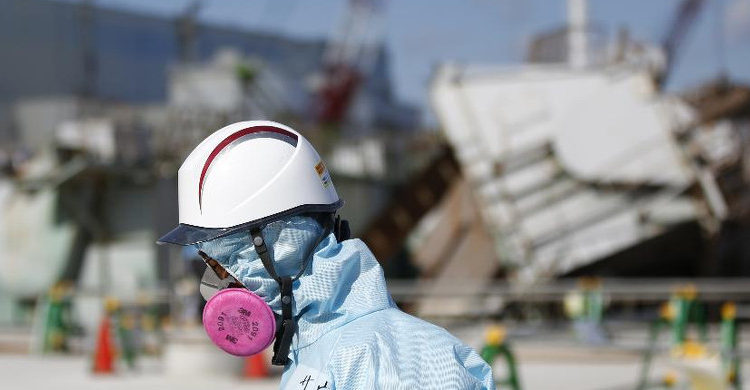
Some of the radioactive material that escaped the Fukushima Daiichi nuclear reactor in 2011 took a form no one was looking for, scientists have discovered. Now they have to figure out what it means for Japan and for future disasters.

Radioactive cesium—specifically, cesium-137—is one of the waste products of nuclear power. It’s also one of the most dangerous substances in a nuclear disaster like Chernobyl or Fukushima.

One reason why is that the type of radiation it emits is particularly damaging to our bodies. Another is that cesium-137 dissolves in water. That means it can spread quickly through the environment and get into the plants, animal and water we consume.

Until now, scientists and disaster experts thought cesium-137 fallout from the Fukushima reactor meltdown was in this soluble form. That guided their cleanup efforts, like removing and washing topsoil, and helped them map where radiation might spread.

It turns out that wasn’t entirely true. Satoshi Utsunomiya, a geochemist at Kyushu University in Japan, announced over the weekend that he had found cesium-137 in a new form: trapped inside tiny glass particles that spewed from the damaged reactors. These particles are not water soluble, meaning we know very little about how they behave in the environment—or in our bodies. He found the particles in air filters placed around Tokyo at the time of the disaster.

According to Utsunomiya, high temperatures inside the malfunctioning reactors at the Fukushima plant melted and broke down the concrete and metal in the buildings. Silica, zinc, iron, oxygen and cesium-137 fused into millimeter-wide glass microparticles, each about the size of a pin’s head. Lifted into the atmosphere by the fires raging at the plant, they then blew about 240 kilometers southeast to Tokyo.

“As much as 89% of all of the cesium [in Tokyo] was in fact in these particles. It’s profound,” says Daniel Kaplan, a geochemist at Savannah River National Laboratory in South Carolina. He attended Utsunomiya’s lecture describing the findings at the ongoing Goldschmidt Conference in Yokohama, Japan.

Kaplan says similar particles were observed near the Chernobyl reactors after the explosion there in 1986. But they were only seen within about 30 kilometers; beyond that, cesium-137 was only observed in rain.

The discovery could change how we model fallout from nuclear disasters. Kaplan explains that it might add a new variable to the models we use to predict where radioactive particles will go and how long they’ll stay there. It might also change how we treat cesium-137 during cleanup and monitoring.

It is probably still too early to say what this means for people living in Tokyo or elsewhere in Japan. Kaplan thinks the amount of radiation they received probably hasn’t changed. Whether they got it from water-soluble cesium-137 or from these particles, the radiation dose was the same—and for Tokyo residents, that number was within the margin of safe exposure.

The bad thing about water-soluble cesium-137 is that it can easily get into our bodies from soil by way of plants and animals. This new discovery alleviates that concern. But it opens up a new possibility we know little about.

“If the particles are in the air—because that’s how they get to Tokyo—then when you are aspirating this air you should find them in some ways on your lungs,” says Bernd Grambow, who studies nuclear waste chemistry as head of the SUBATECH laboratory in France.

Water-soluble cesium-137 that makes it into our lungs passes into the bloodstream and is peed out within a few weeks. But Grambow says we really don’t know what happens to insoluble cesium-137-containing particles if they get in our lungs. Some of them are likely coughed out or removed by our lungs’ other normal processes. As for the rest, Grambow says we don’t know how long they might remain.

He cautions that any internal radiation from particles containing cesium-137 would be much less than the doses people got from external radiation, which would come from cesium-137 and other radioactive elements in the soil or the environment around them. “We don’t know very much, and my point is only that they should be studied,” Grambow says.

Utsunomiya’s next step is finding out how much of the cesium-137 that ended up in soils in Tokyo and elsewhere was in these glass particles. That way, researchers will be able to better understand how cesium made its way out of the reactor and into the environment.

Fuente de la noticia: http://readersupportednews.org/news-section2/318-66/37768-scientists-find-new-kind-of-fukushima-fallout

Fuente de la imagen: http://readersupportednews.org/images/stories/article_imgs21/021680-japan-070116.jpg

Comparte este contenido:

EEUU: Jack Daniels’ Secret History Shows the Recipe Was Actually Developed by a Black Slave

América del Norte/EEUU/Julio 2016/Autor: Shaun King/ Fuente: New York Daily News

ResumenNinguna historia es más verdadera y profundamente americana que la historia del whisky Jack Daniels y la familia Brown. George Garvin de Brown aprendió a hacer whisky de un hombre negro llamado Nearis Green. Nearis, un destilador altamente cualificados, un estadounidense esclavo que era propiedad de Dan Call.

Listed at #20 on the Forbes list of America’s wealthiest families is the Brown family. Their combined net worth is $12.3 billion. Their most known product?

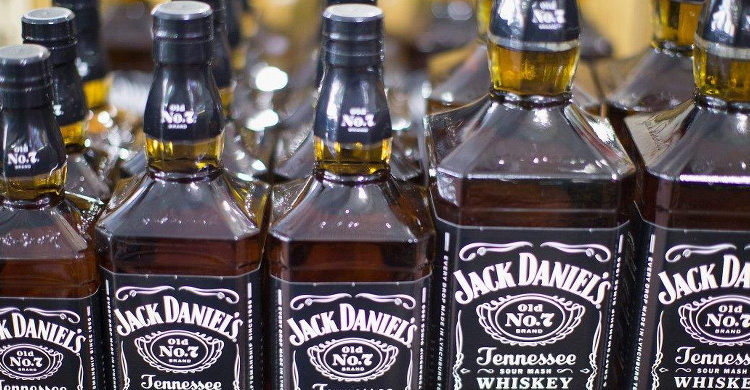
Jack Daniels whiskey. It’s now sold in over 170 countries and is a complete cash cow — racking up billions of dollars a year for investors and for the Brown family itself. George Garvin Brown, their great-great-great-grandfather, founded the company exactly 150 years ago this year. Jack Daniels is now the best selling whiskey in the world. Its iconic black logo and angular bottles are instantly recognizable.

They’ve kept it in the family. George Garvin Brown IV is now the chairman of the company board. He’s filthy rich, received degrees all over the world, fancies ski vacations, and considers himself a «wine geek.»

No story is more truly and deeply American than the story of Jack Daniels whiskey and the Brown family. By truly and deeply I mean that the company, a century-and-a-half after its founding, is now publicly admitting that the down-home story they’ve always told about George Garvin Brown learning how to make the whiskey from an old white preacher named Dan Call is a lie.

George Garvin Brown learned to make whiskey from a black man named Nearis Green. Nearis Green, a highly skilled distiller, was also an enslaved American owned by Dan Call.

So, please allow me to reframe the story of Jack Daniels whiskey a bit.

A white Christian preacher in Lynchburg, Tenn., «owned» people. One of those people he «owned» was Nearis Green, a black man who was a skilled distiller of liquor. That black man, a slave, taught George Garvin Brown how to make whiskey. The recipe and methods were deeply African.

For 150 years the story of how this whiskey came to be, who taught George Garvin Brown how to make it, and why it succeeded, though, was as white and Eurocentric as a story could be.

Even as late as last year, Jack Daniels was distributing carefully crafted infographics on the founding of the company — that never mention a single word about Nearis Green. Hundreds of thousands of people per year have been touring the Jack Daniels museum without a single mention of Nearis Green — not because his contribution was only recently discovered, but because the reality and truth of the company is far more complex and messy than they’ve ever really wanted to admit.

That, ladies and gentlemen, is the United States of America in a nutshell. How this country was founded, how wealth was made, and how it all has been maintained for centuries is not beautiful, but ugly and often malicious.

Cultural appropriation is not just white women wearing cornrows or Bantu knots and pretending like they came up with it. It is also taking what an enslaved black man taught you, building a multi-billion dollar corporation off of it, then erasing his entire contribution from the history books as if he never existed.

Nearis Green was a highly skilled genius, but all of the benefits from such a fact have been reaped by generation after generation of another man’s family.

Now, think of the story of Nearis Green and read this quote from the recent speech Jesse Williams gave at the BET Awards:

«We’ve been floating this country on credit for centuries, yo. And we’re done watching and waiting while this invention called whiteness uses and abuses us, burying black people out of sight and out of mind while extracting our culture, our dollars, our entertainment like oil, black gold. Ghettoizing and demeaning our creations, then stealing them, gentrifying our genius, and then trying us on like costumes before discarding our bodies like rinds of strange fruit. The thing is though, that just because we’re magic doesn’t mean we’re not real.»

Cultural appropriation is not cultural appreciation. It’s theft. It’s plagiarism. It’s revisionist history.

Fuente de la noticia: http://readersupportednews.org/opinion2/277-75/37771-jack-daniels-secret-history-shows-the-recipe-was-actually-developed-by-a-black-slave

Fuente de la imagen: http://readersupportednews.org/images/stories/article_imgs21/021677-jd-070116.jpg

Comparte este contenido:

Venezuela asumió presidencia temporal de Mercosur Social

Venezuela asumió presidencia temporal de Mercosur Social

America del sur /Venezuela /02 Julio 2016/ telesurtv.net

Representantes de Bolivia, Paraguay, Brasil, Venezuela, Argentina y Uruguay coinciden en crear estrategias contra la arremetida de la derecha.

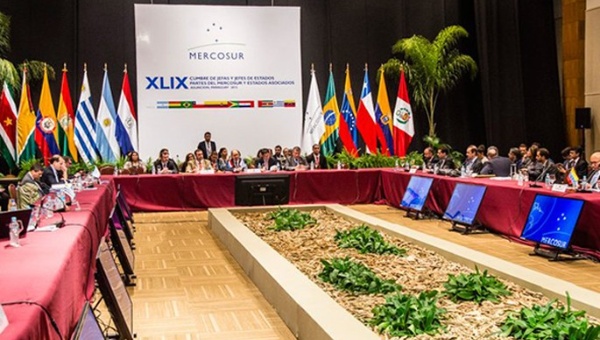
Venezuela asumió este viernes la presidencia pro tempore de la Cumbre Social del Mercado Común del Sur (Mercosur) en la última jornada de una reunión que terminó con la lectura y aprobación de la declaración final.

>>XX Cumbre del Mercosur centrará atención en derechos sociales

Federico Gomensoro, del Punto Focal de Uruguay para las Cumbres Sociales del Mercosur, aseguró que su nación entrega la presidencia del Mercosur Social a Venezuela «en respecto al derecho internacional y a la libre autodeterminación de los pueblos».

Manifestó el interés de «seguir construyendo un Mercosur muchos más amplio y participativo» en el que los pueblos y movimientos sociales de los países del Mercosur puedan seguir intercambiando ideas.

Por su parte, Marcos Medina, del Punto Focal Principal de Venezuela, recordó el papel del comandante Hugo Chávez para consolidar los procesos de integración, «porque contribuyen a fortificar la hermandad entre los pueblos».

En el cierre del encuentro, que sesionó por dos días en Montevideo, Uruguay, bajo el lema a «25 años del Mercosur: por más democracia y más ciudadanía», también se desarrolló el taller «Cómo y por qué defender la Integración Regional en la situación actual».

Delegados de Bolivia, Paraguay, Brasil, Venezuela, Argentina y Uruguay coincidieron en un panel en que ahora más que nunca se necesita la solidaridad para enfrentar la arremetida de la derecha, que pretende acabar con los logros de gobiernos progresistas.

Por su parte, el alcalde venezolano Jorge Rodríguez, señaló que los tiempos en América Latina cambiaron para siempre desde la época en que el presidente Hugo Chávez era una voz solitaria, reseña Prensa Latina.

Recuerdo mucho, dijo, una frase de Chávez que decía que los «presidentes vamos de cumbre en cumbre y los pueblos van de abismo en abismo».

>>No habrá cumbre del Mercosur, pero sí traspaso a Venezuela.

Rodríguez reflexionó que eso cambió en todo el continente americano, y sobre todo en Suramérica, con la llegada de gobiernos de izquierda en Venezuela, Bolivia, Ecuador, Argentina, Uruguay, que transformaron la situación de devastación que dejaron las políticas neoliberales en la década del 80 y los 90.

Es por eso que aparece Mercosur Social, apuntó, y añadió que este mecanismo va más allá de las relaciones comerciales y económicas entre los países, porque se afinca más en las necesidades de los pueblos para sacar a las mayorías de la situación de pobreza y proporcionar educación, salud y alimentación para todos.

El alcalde manifestó sentirse profundamente orgulloso en que su país reciba este mes la presidencia pro tempore del Mercado Común del Sur y la del Mercosur Social.

Sobre la negativa de Paraguay y Brasil

Al referirse este jueves a la negativa de los gobiernos de Paraguay y Brasil a que Venezuela asuma la presidencia pro tempore del Mercosur, Rodríguez apuntó que parece que el mundo está al revés, debido a que los cancilleres de esos países provienen precisamente «de gobiernos de facto que dieron golpes de Estado a presidentes legítimos».

Denunció también la posición genuflexa del secretario general de la Organización de Estados Americanos, el uruguayo Luis Almagro, por sus ataques contra Venezuela, en una actuación totalmente servil a los intereses de Estados Unidos.

Al inaugurar la XX Cumbre del Mercosur Social, el Alto Representante General, Florisvaldo Fier, destacó que el rumbo del bloque de integración no solo está en manos de los gobiernos y las instituciones de los Estados partes, sino en los pueblos.

«Los pueblos tienen que trabajar a conciencia para alcanzar sus derechos», dijo el funcionario.

En contexto

El Gobierno de Uruguay suspendió la cumbre presidencial del Mercado Común del Sur (Mercosur) prevista para este mes, pero indicó que el traspaso de la presidencia pro tempore del organismo a Venezuela sí se realizará.

El ministro uruguayo de Relaciones Exteriores, Rodolfo Nin Novoa, informó que el traspado de la presidencia por tempore a Venezuela se hará entre cancilleres. Esto significa que el diplomático le entregará el mando del Mercosur a su par venezolana, Delcy Rodríguez.

El alto representante general del Mercosur, Florisvaldo Fier, indicó desde Montevideo que los países de este organismo construirán un consenso en relación al traspaso de la presidencia pro tempore, que en estos momentos ostenta Uruguay y que pasará a Venezuela.

Fuente: http://www.telesurtv.net/news/Venezuela-asumira-hoy-presidencia-pro-tempore-de-Mercosur-20160701-0005.html


Comparte este contenido:

Venezuela :Expo Feria Productiva de la Misión Ribas abrió sus puertas en Pdvsa La Campiña

Expo Feria Productiva de la Misión Ribas abrió sus puertas en Pdvsa La Campiña

América del Sur/30 junio 2016/Noticias/Correodelorinoco

El público de Caracas puede asistir a la primera Expo Feria Productiva de la Misión Ribas, que se inauguró este jueves en la capital, en los espacios de la sede de Petróleos de Venezuela (Pdvsa) en La Campiña, donde están disponibles para su expendio a precios justos 10 toneladas de productos alimenticios, entre ellos carne de res, cerdo, hortalizas, tubérculos y vegetales.

La activividad estuvo dirigida por el vicepresidente Ejecutivo de la República, Aristóbulo Istúriz, quien destacó la importancia de estas jornadas en diferentes estados del país.

En declaraciones a Venezolana de Televisión, el presidente de la Misión Ribas, Orlando Ortegano, destacó los avances que en materia productiva llevan los vencedores que cursan este programa educativo para la consecución del bachillerato con una visión productiva.

Reportó que actualmente la Misión Robinson registra 180 mil vencedores distribuidos en diferentes ambintes de clase y que participan activamente en la ferias de producción y distribución de alimentos la y productos de higienes personal y para el hogar.

Entre los rubros que se expenden en la feria de este jueves se encuentran café, harina de maíz precocida blanca y amarilla, abono orgánico, plátanos, pimentón, hortalizas varias, vegetales y frutas.

Ortegano destacó que en diversos estados han producido 250 toneladas de alimentos, “que hasta el día de hoy han sido consumidos por nuestro pueblo”.

Más temprano, indicó en una entrevista que esto hay que “reproducirlo en las diferentes comunidades, en los diferentes espacios, para que no solamente se quede en los ambientes de la Misión Ribas”.

Ratificó que en el ámbito nacional, en cualquier rincón donde exista la Misión, habrá un ambiente de producción y ferias.

Recordó que la Misión lleva 12 años en la labor de graduar bachilleres: “hemos graduado un millón 76.000″.

“Tenemos la mejor disposición de incrementar estas ferias en cada uno de los espacios de producción pequeña, mediana y grande”, con la visión de que en la medida de que se vaya aumentando la producción, estos rubros también lleguen incluso a los Comités Locales de Alimentación y Producción (Clap), las redes de Mercado de Alimentos (Mercal) y de la Productora y Distribuidora de Alimentos (Pdval), añadió.

Dijo que la perspecitva del programa social es obtener mayores productos y ampliar la capacidad en cada unos de los ambientes del país.

Texto/CO, con información de AVN

Foto/Archivo

Fuente:  http://www.correodelorinoco.gob.ve/nacionales/expo-feria-productiva-mision-ribas-abrio-sus-puertas-pdvsa-campina/

Fuente imagen : http://www.correodelorinoco.gob.ve/wp-content/uploads/2016/06/hortalizas4.jpg


Comparte este contenido:

Canada and Mexico extend cooperation in education

América del Norte/Canadá/Julio 2016/Autor: Neera Sanotra / Fuente: examswatch.com

Resumen:  Canadá y México ampliaron su cooperación bilateral en educación con una serie de acuerdos conjuntos. El presidente Enrique Peña Nieto de México y el primer ministro canadiense Justin Trudeau saludaron las nuevas asociaciones entre las instituciones educativas para que incrementen el flujo de estudiantes, ideas y oportunidades entre los dos países.

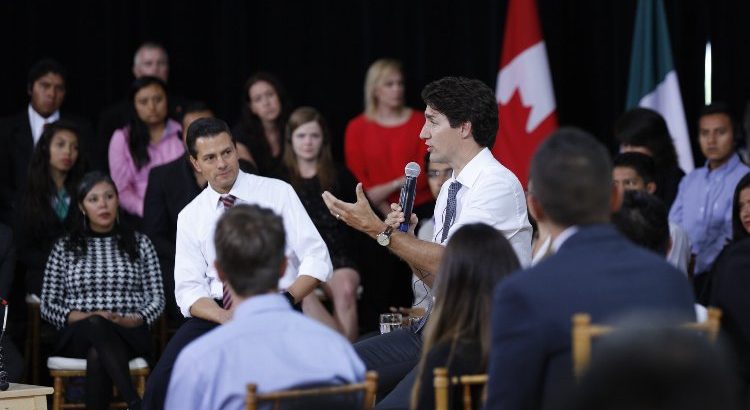
Today, Canada and Mexico extended their bilateral cooperation in education with a flurry of joint agreements. President Enrique Peña Nieto of Mexico and Canadian Prime Minister Justin Trudeau welcomed new partnerships between the educational institutions that will increase the flow of students, ideas, and opportunities between the two countries.

Canada is a leader in higher education, ranking first among Organisation of Economic Cooperation and Development (OECD) countries with 50 percent of the adult population having a post-secondary diploma or degree.

Canada’s International Education Strategy sees Mexico as one of six key priority markets that will help Canada build on strong advantages and become more prosperous, innovative and competitive by capitalizing on the vast opportunities that currently exist.

Canada and Mexico have well-established and growing cooperation in education. There are already more than 400 agreements between Canadian and Mexican higher education institutions. Educational institutes from Canadian provinces and territories and the Mexican States have extensive collaboration with each other.

Both governments also offer scholarships to students or researchers from each other’s country. A memorandum of understanding on educational cooperation (1998) and on youth mobility (2010) lay the groundwork for this collaboration.

At the 11th Canada-Mexico Partnership meeting in November 2015, the Human Capital Working Group had concluded that improved linkages between industry and academia were desirable.

Under the ELAP (Emerging Leaders in the Americas Program), the Government of Canada provides around 75 to 100 scholarships annually for Mexican postsecondary students. They can study or conduct research in Canada for up to six months.

For the academic year 2015-2016, 98 Mexican students received an ELAP scholarship to study in colleges and universities across Canada. Since 2009, nearly 600 Mexicans have come to Canada under this program, making Mexico the 10th largest source of international students for Canada.

Prime Minister Trudeau of Canada and President Peña Nieto of Mexico announced their intention to make it easier for students to travel back and forth between Canada and Mexico on exchange.

The two leaders welcomed the signing of a bilateral industrial research agreement. The agreement is between Mitacs, a Canadian, not-for-profit organization that funds research and training, and Mexico’s National Council for Science and Technology (CONACyT).

This agreement will allow up to 20 Mexican graduate students to go to Canada and up to 20 Canadian graduate students to go to Mexico under the Globalink Partnership Award program. The Mitacs Globalink Partnership Award program allows recipients the opportunity to take part in a 16- to 24-week research project with an international industry partner.

As part of this new partnership, the President, and the Prime Minister announced their intent to foster international work-integrated learning opportunities for students from Canada and Mexico, which will allow more young Canadians and Mexicans to be able to find meaningful work at the beginning of their careers.

A memorandum of understanding between CALDO, a consortium of Canadian research universities, and Mexico’s National Association of Universities and Higher Education Institutions (ANUIES) to promote academic, scientific and cultural activities in areas of common interest was signed.

An agreement between Colleges and Institutes Canada and ANUIES to establish a framework for collaboration on applied research in higher education was also signed.

A consortium of 12 Canadian postsecondary institutions specializing in Indigenous issues is formalizing its relationship with Mexico’s 12 intercultural universities for better support of indigenous youth and women in both countries through joint education activities. These include Lakehead University, Cape Breton University, First Nations University of Canada, Nicola Valley Institute of Technology, Nipissing University, Trent University, University of Lethbridge, University of Manitoba, University of Northern British Columbia, University of Regina, University of Winnipeg and Vancouver Island University.

Two documents between Lakehead University and CONACyT (Mexico’s National Council for Science and Technology) were also signed. One is a memorandum of understanding on cooperation in higher education including academic programs for Indigenous/Aboriginal women. The second is an agreement to establish joint graduate scholarships to support Mexican students who have gained admission in masters and Ph.D. programs at Lakehead University.

In addition, Lakehead University students would also be eligible for funding to carry out research at CONACyT-certified higher education institutions in Mexico.

The Government of Canada remains committed to ensuring that young Canadians receive the education and training they need to prepare for the jobs of today and tomorrow.

International education is at the heart of Canada’s current and future prosperity and will help to strengthen the middle class and those working to join it.

“Education is a passport to greater opportunities, stronger relationships, and a better future. Today’s announcement will expand our people-to-people ties for generations to come, and give young Canadians and Mexicans the opportunities they need for the future they want.” -The Rt. Hon. Justin Trudeau, Prime Minister of Canada.

Fuente de la noticia: http://examswatch.com/canada-and-mexico-extend-cooperation-in-education/

Fuente de la imagen: http://examswatch.com/wp-content/uploads/2016/06/canana-and-mexico-extend-cooperation-in-education.jpg

Comparte este contenido:
Page 5974 of 6723
1 5.972 5.973 5.974 5.975 5.976 6.723