Page 6023 of 6815
1 6.021 6.022 6.023 6.024 6.025 6.815

Australia: Why some Adelaide school students may be moved to UniSA’s Magill campus

Oceanía/Australia/Julio 2016/Autor: Daniela Abbracciavento / Fuente: East Torrens Messenger

Resumen:  Las escuelas primarias Norwood Morialta High y Magill están considerando llevar a los estudiantes al campus UniSA Magill, como parte de un plan para crear un nuevo centro de educación para niños de hasta 12 años de edad.

NORWOOD Morialta High and Magill Primary schools are considering moving students to UniSA’s Magill campus as part of a plan to create a new birth-Year 12 education hub.

The State Government has released results of an 18-month, $250,000 study into creating a new school for 1400 students at the university, which has a focus on teacher training.

Norwood Morialta is considering shifting its middle school students to its senior campus, on The Parade, and its senior campus to the university site.

Magill Primary may relocate its Years 5, 6 and 7 students.

Norwood Morialta principal Jacqui van Ruiten said her school was consulting parents about a potential move.

“The first part of the study was creating a concept and then asking stakeholders, which includes us, whether we want to be part of it,” Ms van Ruiten said.

“The idea would be a staged process, potentially over 20 years.

“We see there are some wonderful opportunities with working collaboratively with the university.”

Norwood Morialta’s middle school campus has 880 students and has not been upgraded in more than 40 years.

Magill Primary principal Di Fletcher said the government’s proposal could help ease enrolment pressure at the Adelaide St school.

“There is a positive sense from parents and staff and a strong willingness to explore the possibilities,” Ms Fletcher said.

“We do know Magill School will not be closed at this point in time.

“Moving the Year 5-7s would support Norwood Morialta and allow us to keep our facilities, but ease the pressure on us, because we are full and can’t take any more children at the moment.”

University of South Australia deputy vice-chancellor Nigel Relph said transforming the campus into an education hub would have benefits for students and teachers.

“For student-teachers, the precinct would provide a unique opportunity to work in the classroom with a teacher,” Mr Relph said.

“Students would have day-to-day interaction with exceptional educational researchers and experienced practitioners.”

The two schools have until August 26 to decide if they want to be part of stage two of the investigation process.

Education Department executive infrastructure director Ross Treadwell said the second stage would include a more detailed analysis and include costs and timing.

If the schools agreed to be involved, that stage would be complete by the end of the year.

The Education Department said it was too early to speculate on the future use of the Norwood Morialta middle school campus land.

Fuente de la noticia: http://www.adelaidenow.com.au/news/south-australia/why-some-adelaide-school-students-may-be-moved-to-unisas-magill-campus/news-story/f09d7e3bbd3b645b7451830dac539a48

Fuente de la imagen: http://cdn.newsapi.com.au/image/v1/06582be43c9c1c583806c7d87455eb9d?width=1024

Comparte este contenido:

El salvador: Convergys en alianza con Glasswing por la educación

Centro América/El Salvador/Julio del 2016/http:/Noticias/www.elsalvador.com

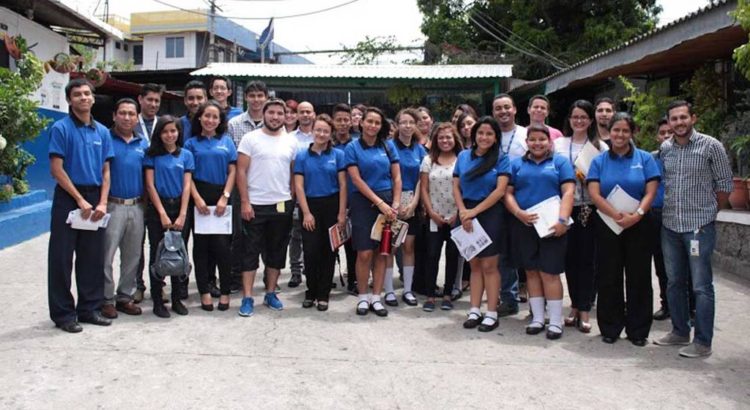
Convergys Corporation firmó un acuerdo de cooperación con Glasswing International que beneficiará a estudiantes de centros escolares públicos en el aprendizaje y reforzamiento del idioma inglés y técnicas de servicio al cliente.

La iniciativa lleva por nombre “English for Tomorrow” e incluye clases intensivas de inglés para estudiantes del Centro Escolar Gerardo Barrios y la participación de voluntarios Convergys en las sesiones.

Esto último se hace con el objetivo de que los voluntarios ayuden a los jóvenes a reforzar destrezas que les permitan optar por mejores ofertas laborales en el mercado, mejorando así su calidad de vida y la de sus familias.

“Estamos sumamente complacidos de asociarnos con Glasswing y del trabajo que iniciamos juntos. El trabajo conjunto con nuestras comunidades nos permite hacer realidad nuestro compromiso, sabiendo que la educación es la herramienta fundamental de los pueblos que desean una mejor calidad de vida para su gente,  y para las futuras generaciones”,  dijo la gerente de comunicaciones para Convergys en Latinoamérica, Eugenia Rojas.

Más de 60 voluntarios Convergys ya han confirmado su presencia y participación en el programa “English for Tomorrow”, desde su inicio. Los voluntarios, además de aportar conocimiento técnico con sus tutorías, se convierten en modelos positivos para los estudiantes y los ayudan a reforzar sus habilidades, informaron.

Resumen:http://www.elsalvador.com/articulo/negocios/convergys-alianza-con-glasswing-por-educacion-118395

Resumen: Imagen  http://am-elsalv-cdn.agilecontents.com/resources/jpg/2/9/1468024109592.jpg

Comparte este contenido:

Pakistan: Reforms in health, education sectors need of hour: governor

Asia/Pakistan/Julio 2016/Autor: Editor / Fuente: pakistantoday.com.pk

Resumen:  El Gobernador de Punjab, Malik Rafique Rajwana, dijo que ha sido sugerido el sistema de colaboración público-privada, como reformas en los sectores de salud y educación.

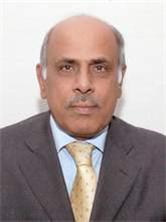
Punjab Governor Malik Rafiq Rajwana said that public-private partnership system has been suggested, as reforms in the health and education sectors was the need of the hour.

Speaking at the residence of former MNA Sheikh Rasheed, the governor said that doctors should perform their duties at government hospitals efficiently and diligently so good health services can be provided to the patients.

He said that Punjab government was going to run big hospitals and educational institutions with the help of public-private partnership to improve standard of medical treatment and education.

He said that the government would provide more budget to health institutions, and free medical treatment facilities would be offered to the needy.

He said that corporate culture needs to be adopted and strengthening of human resource sector should be ensured for providing quality education and health facilities to the masses.

The governor said that Multan Metro Bus project was being completed on a fast pace, and after its completion, the people would be able to enjoy safe journey in air-conditioned buses.

He disclosed that the Multan Institute of Kidney Diseases and Children Complex Hospital would be inaugurated soon.

Fuente de la noticia: http://www.pakistantoday.com.pk/2016/07/08/city/lahore/reforms-in-health-education-sectors-need-of-hour-governor/

Fuente de la imagen: http://cache.pakistantoday.com.pk/Governor-Punjab.jpg

Comparte este contenido:

Italia: Apple to open iOS App Development Center in Italy this October

Europa/Italia/Julio 2016/Autor: Mike Wuerthele / Fuente: appleinsider.com

Resumen:  Un alto directivo de Apple, Luca Maestri, ha declarado a la Universidad italiana de Nápoles Federico II, como el lugar para la primera incubadora de talento de codificación iOS en Europa, preparado para abrir sus puertas en pocos meses.

The Apple-sponsored site will support educators, as well as providing a curriculum for attendees of the college. Furthermore, Apple will partner with companies and organizations in Italy to enhance the educational materials presented, and to assist in finding opportunities for graduates.

At launch, 200 new students will be selected to participate in the nine-month class, with applicants from all over Europe invited to apply and take the admissions test. The university is seeking faculty for the program as well, according to Macerkopf.

«We are thrilled to be working with University of Nales Federico II to launch the first iOS Developer Academy in Europe,» said Apple’s Chief Financial Officer Luca Maestri. «Some of the most creative developers in the world come from Europe, and we are confident this center will help the next generation get the skills they need for success.»

The University of Naples Federico II is the oldest public university in the world, and is the third university in Italy ranked by enrolled students. It currently has a computer science department, but nothing else similar to Apple’s condensed developer program.

«Europe is home to some of the most creative developers in the world and we’re thrilled to be helping the next generation of entrepreneurs in Italy get the skills they need for success,» said Apple CEO Tim Cook when the program was initially announced in January 2016. «The phenomenal success of the App Store is one of the driving forces behind the more than 1.4 million jobs Apple has created in Europe and presents unlimited opportunities for people of all ages and businesses of all sizes across the continent.»

Apple also claims that the App Store is responsible for the creation of more than 75,000 jobs in Italy. Notable Italian developers include IK Multimedia and travel app purveyor Musement.

Apple expects expansion of the iOS App Development Center model in other European countries. No additional locations are known at this time. Several initiatives are underway in India, with a large design and development accelerator scheduled to open in Bengaluru in 2017.

Fuente de la noticia: http://appleinsider.com/articles/16/07/08/apple-to-open-ios-app-development-center-in-italy-this-october-

Fuente de la imagen: http://photos.appleinsidercdn.com/gallery/17498-15077-universityofnaples_720-l.jpg


Comparte este contenido:

China and Russia Establish Association of Universities to Expand Educational Cooperation

Asia/China/Julio 2016/Autor: Arthur Dominic Villasanta / Fuente: chinatopix.com

Resumen: Las cabezas de las principales universidades de China y Rusia se reunieron recientemente para discutir la cooperación chino-rusa en los campos científicos y educativos.

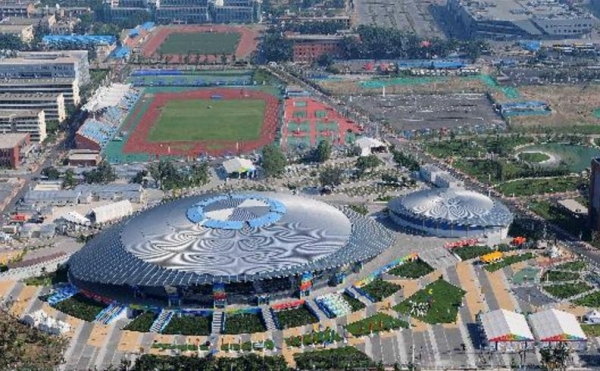
The heads of some of China’s and Russia’s leading universities met recently to discuss Chinese-Russian cooperation in the scientific and educational fields.
The Rectors Forum took place at the Lomonosov Moscow State University as a part of the XVII session of the Russian-Chinese Commission for Humanitarian Cooperation. The discussion involved a wide range of issues, including Chinese universities participating in academic exchanges and the development of the youth intellectual competition system.
«This forum will go down in the history of relations between our countries,» said Victor Sadovnichiy, Rector of the Moscow State University (MSU).
He said the implementation of the state strategy depends on the efficiency of Russia’s and China’s scientific and educational cooperation. He noted that the first contacts in the field of education and science between Russia and China began during the early 17th century.
The forum resulted in the Declaration to establish the «Association of Universities of the Russian Federation and the People’s Republic of China» signed by Sadovnichy and Zhu Shanglu, Chairman of the Beijing University Council.
In addition, agreements about the cooperation in various spheres of activity were signed between the specialized educational institutions of China and Russia. Among these are medical and technical sciences, linguistics, public administration, education, agriculture and transport.
Representatives of student sports organizations signed a memorandum of intent to the Russian-Chinese student festival of winter sports. Fifteen agreements were signed between universities and research and educational organizations of China and Russia.
Currently, 200 Russian and 600 Chinese universities have established partnerships in areas that are strategically important to both countries. They have concluded over 900 direct contracts with each other and have created eight professional associations of Russian and Chinese universities.
There are about 25,000 Chinese students studying in Russian universities while 17,000 Russian students are studying in China. There are 1,500 Chinese students enrolled at Moscow University, a number that might increase to 100,000 in the future.
Shenzhen is working on building a joint Chinese-Russian university. This university is a cooperative project of MSU and the Beijing University of Technology.
The architectural foundation for the new university’s future building will be similar to the main building at MSU. Construction of this building should be completed by late 2018. China has taken the initiative of creating the university while MSU will provide educational programs and research and development.

Fuente de la noticia: http://www.chinatopix.com/articles/94686/20160707/china-russia-establish-association-universities-expand-educational-cooperation.htm

Fuente de la imagen: http://images.chinatopix.com/data/thumbs/full/88897/600/0/0/0/higher-learning.jpg

Comparte este contenido:

EEUU: Clinton Embraces Sanders’ Plan for Tuition Free College

América del Norte/EEUU/Julio 2016/Autor: Harper Neidig / Fuente: The Hill

Resumen:  Hillary Clinton propuso el miércoles un plan para eliminar la matrícula universitaria para la mayoría de las familias, un tema empujado por Democrática presidencial principal rival Bernie Sanders.

Hillary Clinton on Wednesday proposed a plan to eliminate college tuition for most families, a topic pushed by Democratic presidential primary rival Bernie Sanders.

Under the plan, families making $125,000 or less will pay no tuition at public, in-state universities and colleges.

“The plan will be phased in over five years, but families earning $85,000 or less will immediately be able to attend an in-state college or university without paying any tuition,” reads an announcement on Clinton’s website.

The presumptive Democratic presidential nominee also unveiled a plan to use executive actions to offer a three-month moratorium on payments for those with federal student loans.

«American families are drowning in debt caused by ever-rising college costs, and it is imperative that the next president put forward a bold plan to make debt-free college available to all,» Clinton said in a statement. «My New College Compact will do just that — by making sure that working families can send a child or loved one to college tuition-free and by giving student debt-holders immediate relief.

“While [presumptive GOP presidential nominee] Donald Trump offers little more than broken promises to get rich quick, I remain committed to ensuring that a college degree is attainable for anyone in this country with the desire and determination to earn one.»

The new Clinton plan does not go as far as one proposed by Sanders, who has not yet endorsed her and is continuing to pressure the party to adopt some of his proposals.

The Vermont senator has made universal, tuition-free public college and university a major platform of his campaign. Clinton’s plan, according to the announcement, would relieve about 80 percent of students from the burden of tuition.

Shortly after the announcement, Sanders lauded Clinton for the proposal, saying the compromise «will have a profound impact on the future of our country.”

“I want to take this opportunity to applaud Secretary Clinton for the very bold initiative she has just brought forth today for the financing of higher education. This proposal combines some of the strongest ideas she fought for during the campaign with some of the principles that I fought for. The final product is a result of the work of both campaigns,» he said in a statement.

“Let me be very clear. This proposal, when implemented, will revolutionize the funding of higher education in America, improve the economic future of our country and make life immediately better for tens of millions of people stuck with high levels of student debt.»

Sanders refused to offer a timeline for endorsing Clinton during a meeting with House Democrats on Wednesday.

Even so, lawmakers viewed the coordination between the two campaigns Wednesday as a positive step toward party unity ahead of the convention later this month.

“Today is evidence that Sen. Sanders and Secretary Clinton are working together,” said Rep. Ben Ray Luján (D-N.M.), the chairman of the House Democrats’ campaign arm.

«He’s very committed to making sure that our message of doing something for the middle class is going to resonate,» said Rep. Jackie Speier (D-Calif.).

Fuente de la noticia: http://readersupportednews.org/news-section2/318-66/37864-clinton-embraces-sanders-plan-for-tuition-free-college

Fuente de la imagen: http://readersupportednews.org/images/stories/article_imgs21/021735-hillary-070616.jpg

Comparte este contenido:

Japón: Teachers say Japan’s young voters need to have political awareness nurtured in schools

Asia/japón/Julio 2016/Autor: MIZUHO AOKI / Fuente: japantimes.co.jp

Resumen:  Tres estudiantes de secundaria, de 18 años de edad, en Shinagawa Joshi Gakuin en Tokio dijeron que estaban contentos de emitir su voto en las elecciones de la Cámara Alta del domingo, estando entre los primeros adolescentes de la nación a unirse al electorado.

Three 18-year-old high school students at Shinagawa Joshi Gakuin in Tokyo said they were excited to cast their ballots in Sunday’s Upper House election, being among the nation’s first teenagers to join the electorate.

“Just the thought of having a chance to possibly change the future (of this country), and the prospects of seeing more policies addressed to younger generations makes me excited,” said Rena Yamaguchi, a third-year student at the school, while her two fellow students nodded.

“It’s a historic event, and I’m proud to be among the first 18-year-olds to vote,” agreed Mizuki Inoue.

The students also admitted, however, to being slightly bewildered, and were not exactly confident about selecting a party or a candidate.

They have studied campaign pledges and followed media coverage. But rather than making things clear, the long lists of policy pledges have left the girls uncertain about how to make the best decision.

“We want to know what we are supposed to look for before casting our votes,” Inoue said.

Now that the voting age has been lowered from 20 to 18, the nurturing of political literacy among young people is becoming increasingly important to overcome the strong sense of apathy and inertia that has characterized them in recent decades.

Observers naturally see this as an opportunity to get younger generations more involved in politics.

Educators, however, are caught in a dilemma, trapped between cultivating students’ political literacy and maintaining political neutrality as required by law.

Education ministry guidelines require teachers to maintain this “neutrality” by refraining from expressing their personal political views.

“It’s easily said. But in reality, it’s hard to maintain that neutrality,” said Shigeyuki Yamane, a social studies teacher at Kokugakuin Kugayama High School in Tokyo.

In light of the new minimum voting age, the school held a special class about the importance of voting and the basic rules of an election. It also conducted a mock election last year, hoping to raise student awareness.

But when it comes to teaching students about contentious political issues, it can get difficult, he said.

“Even just nodding when a student expresses an opinion about a certain political party may give the impression that I support that party,” Yamane said.

When discussing contentious issues such as the constitutionality of the Self-Defense Forces, he made sure to introduce the different stances of political parties to ensure neutrality.

“It makes us nervous,” Yamane said. “Political neutrality, after all, is to introduce both sides of an argument.”

In Japan, political education had long been almost a taboo topic, observers say.

Shigeo Kodama, a professor of education at the University of Tokyo, said the taboo originally functioned to keep certain ideologies from manifesting themselves in school education.

From the late 1950s to 1970s, the Japan Teachers’ Union (Nikkyoso), which was a strong supporter of opposition parties and mainly leftist-leaning, staged strikes to fight the conservative government’s education policies, particularly the textbook screenings and rating system for teachers.

To prevent ideological confrontations, schools gave short shrift to political issues, Kodama said.

Also, university student movements in the 1960s against issues such as Japan’s security alliance with the United States were rife, later spreading to high school students, with some setting up barricades to close schools in protest.

In response to those events, in 1969, the education ministry issued guidelines banning high school students from engaging in political activities.

“With the guidelines, politics were put on a par with alcohol and tobacco,” Kodama said.

Rather than cultivating students’ social awareness, schools put weight on nurturing their ability to pass high school and university entrance exams, though that focus has been changing slowly in the past two decades, he said.

One recent change was the education ministry’s scrapping of the 1969 guidelines last year, lifting the longtime ban on political activities by high school students.

“Schools avoided exposing young people to politics for a long time,” Kodama said. “Considering that, it’s not something that can be changed overnight.

“Japan is still struggling to transform the educational system it adopted during the period of rapid economic growth (between the 1950s and 1970s),” Kodama said.

One lingering concern is that educators are still refraining from raising political issues in class due to fears of violating neutrality. But teachers need to understand, Kodama said, that ensuring political neutrality means teaching students about both sides of contentious issues, and explaining why political parties are fighting over them.

“Otherwise students may never understand,” Kodama said. “The teacher’s role is to fully explain a current situation without taking sides, and to think together with students.”

Shigeo Kawaguchi, a social studies teacher at Denen Chofu Gakuen High School, agreed, saying teachers must provide students with many different points of view on current political issues.

He attempted to stimulate students think about such issues by introducing several newspaper articles in his classes.

He has also shown a placard used in a rally to oppose the security legislation to expand the scope of overseas operations of the Self-Defense Forces. Kawaguchi was among the participants in the rally .

“I don’t think I’m violating political neutrality,” Kawaguchi said. “I’m showing them that adults should have opinions on (political issues).

“I believe children won’t form political opinions unless teachers say what they think,” he said. “I always tell students it is OK to have different opinions from mine.”

Shiori Ito, 16, one of Kawaguchi’s students, said his introduction to current political issues helped deepen her understanding of what was going on in society.

“I think it has given me the chance to gain more knowledge about society,” said Ito, a second-year student who will be speaking in the United States this summer about the voting age change on a travel-abroad program.

Although Ito is not eligible to vote in Sunday’s election, she welcomed the change. “It is a great opportunity for society to hear the voices of teenagers. We could change society.”

Kawaguchi also said it is important for adults to discuss social issues to cultivate political awareness among young students.

“Their parents and their grandparents need to discuss politics in front of them,” Kawaguchi said. “But sadly, many don’t.”

Fuente de la noticia: http://www.japantimes.co.jp/news/2016/07/08/national/politics-diplomacy/teachers-say-japans-young-voters-need-political-awareness-nurtured-schools/#.V4CoINLhC01

Fuente de la imagen: https://www.google.co.ve/search?q=Teachers+say+Japan%E2%80%99s+young+voter&source=lnms&tbm=isch&sa=X&ved=0ahUKEwjVpv6CuuXNAhWEJB4KHaxvAQEQ_AUICCgB&biw=1366&bih=637

Comparte este contenido:
Page 6023 of 6815
1 6.021 6.022 6.023 6.024 6.025 6.815