Cuba / 29 de junio de 2016 / Por: Roberto Morejón / Fuente: http://www.radiohc.cu/
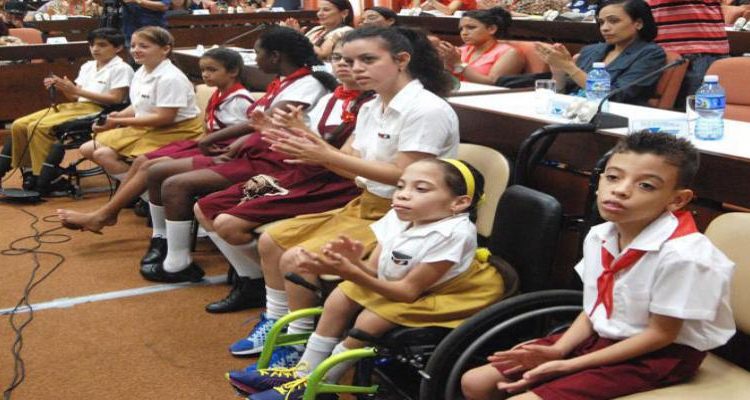
Entre las decenas de miles de niños, adolescentes y jóvenes hoy en vacaciones de verano en Cuba pueden encontrarse los matriculados en la Enseñanza Especial, una de las aristas del sistema educativo gratuito, inclusivo e integral de este país.
El sistema nacional de enseñanza y de trabajo de Cuba tiene un carácter masivo y contempla la participación de la sociedad en sus tareas, la coeducación y la atención individualizada a los estudiantes en todos los niveles.
Entre ellos destaca la Enseñanza Especial, donde maestros con una instrucción particularizada imparten clases a 37 000 alumnos en cerca de 365 escuelas.
Hablamos de una modalidad brindada incluso a infantes y jóvenes que por diversas razones no pueden asistir a los colegios y los docentes acuden a los hogares para preservar el aprendizaje.
En Cuba se perciben los cambios realizados a favor de que niños y jóvenes con limitaciones leves físico-motoras o mentales se integren a las escuelas adecuadas, gracias a un gran esfuerzo estatal.
Cada año más de 1 400 graduados de la enseñanza especial se insertan en la vida laboral, pues mediante las alianzas con diversas empresas los egresados tienen garantizada su ubicación laboral.
Expertos realizan pruebas a los estudiantes con necesidades educativas especiales, en aras de confirmar si adquirieron las habilidades para valerse por sí solos en las diversas modalidades de empleo, tanto en el estatal como en el privado.
En sintonía con tantos esfuerzos y resultados elogiosos, la Asociación Mundial de la Educación Especial confirió en 2014 el premio «Mundo de Esperanza» al Ministerio de Educación de Cuba.
En el otorgamiento, se reconoció la labor de esa institución estatal durante más de 50 años a favor de los niños con discapacidad.
Los reconocimientos estimulan, pero no obstante, metodólogos y otros funcionarios buscan perfeccionar este tipo de enseñanza, tan compleja.
Lo hacen porque creen posible mejorar la caracterización y diagnóstico de los alumnos, modificar términos y conceptos excluyentes y reforzar el vínculo con la familia y las comunidades.
Los ensayos pretenden incrementar la calidad de la metodología psíquico-pedagógica y la instrucción a directivos y docentes.
Experiencias enriquecedoras se obtienen con la realización en Cuba del séptimo Congreso Internacional de Educación y Pedagogía Especial y el cuarto Simposio de la Educación Primaria.
Cuba se afianza en el movimiento mundial de Sociedad Inclusiva, que reconoce como principio fundamental la Declaración Universal de los Derechos Humanos.
Cusco / 29 de junio de 2016 / Por: MINEDU / Fuente: http://www.minedu.gob.pe/
Esposa del vicepresidente y embajador expresaron su interés por las experiencias y logros de los estudiantes.
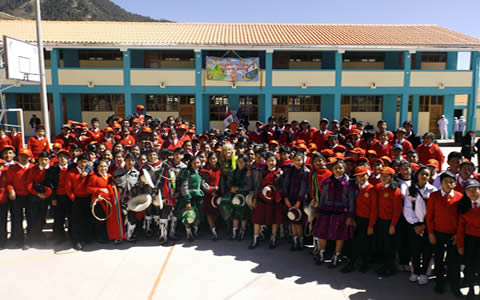
Una delegación del gobierno de los Estados Unidos, liderada por la esposa de su vicepresidente, Jill Biden visitó la sede el Colegio de Alto Rendimiento (COAR) Cusco, ubicada en Anta, a dos horas de la Ciudad Imperial.
“Ustedes tienen las llaves que abren la puerta de la oportunidad, pero les toca tomarlas y estar a la altura de la ocasión”, dijo la ilustre visitante a los jóvenes estudiantes del COAR Cusco.
Su educación les permite aprender de sus maestros, del autoaprendizaje y, lo más importante, de cada uno de ustedes, agregó Jill Biden, quien estuvo acompañada del embajador de los Estados Unidos en el Perú, Brian Nichols.
Antes de recorrer las instalaciones del Colegio de Alto Rendimiento, los estudiantes y docentes compartieron, con los visitantes, sus experiencias, logros y expectativas como líderes comprometidos con el desarrollo del país.
Tanto la esposa del vicepresidente de Estados Unidos como el embajador Nichols, alentaron a los estudiantes a continuar desafiándose a sí mismos, para marcar la diferencia en su escuela, en su comunidad y el país.
Ambas personalidades, dentro del encuentro protocolar que forma parte de la visita oficial que Jill Biden realiza al Perú, indicaron que quedaron impresionados por lo que vieron y escucharon de los maestros y estudiantes.
Estas actividades se realizan en el marco de un memorándum de entendimiento entre el Ministerio de Educación (Minedu) y la Embajada de los Estados Unidos, con el fin de articular y enriquecer las experiencias académicas de los estudiantes de la Red COAR.
Los ilustres visitantes, también visitaron Machu Picchu acompañada por dos alumnas del COAR Cusco; quienes le expresaron un gran interés en programas de STEM (Ciencia, Tecnología, Ingeniería y Matemáticas por sus siglas en inglés).
Campamento científico
En julio próximo, una delegación de alumnas de los COAR Amazonas, Ayacucho, Huancavelica, Junín, Lima, Piura, San Martín y Tacna, formará parte del campamento científico de escolares mujeres WiSci Girls STEAM Camp, donde enriquecerán su experiencia intercultural y fortalecerán sus conocimientos en ciencias.
Asimismo, un estudiante del COAR Ayacucho participará en el programa Education USA Academy en el país del norte.
La metodología de estudios en la Red de Colegios de Alto Rendimiento (Red COAR) considera una variedad de estrategias que favorecen el aprendizaje personalizado.
Se distingue por los altos estándares de calidad nacional e internacional y contempla las clases de lunes a sábado, alternando las sesiones de aprendizaje con actividades recreativas, artísticas, deportivas y de trabajo cooperativo, así como el servicio social y voluntariado.
América del Norte/Estados Unidos/Junio de 2016/The Press Enterprice
Resumen: Towngate Park en Moreno Valley en el distrito escolar unificado de Moreno Valley, esta participa en un programa de comida de verano ofrecido a miles de niños de bajos recursos en las escuelas del interior, parques, bibliotecas, centros comunitarios y otros lugares. Desde 2013, el condado de Riverside se ha ampliado de 162 a 179 lugares, mientras que el Condado de San Bernardino ha aumentado de 131 a 207 sitios.
Esta ayuda está disponibles para niños de hasta 18 años. El programa es financiado por el Departamento de Agricultura de Estados Unidos y administrado en California por el Departamento de Educación del estado. Está dirigido a dar alimentos nutritivos para los niños de bajos ingresos para que estén listos para aprender cuando se reanuden las clases
By STEPHEN WALL / STAFF WRITER
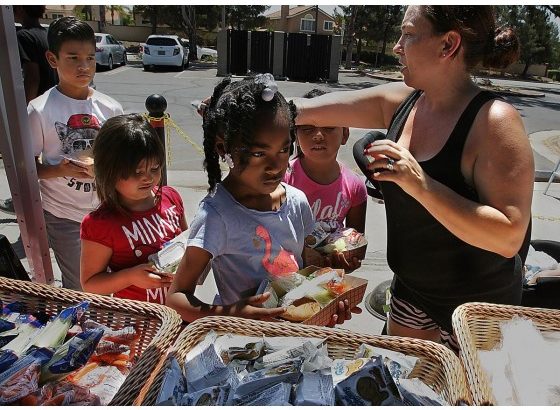
The smell of barbecue drifted through the air as Grace Melendrez’s kids slurped their frozen juice cups.
“It’s yummy,” said her 6-year-old daughter Jazlyn Baca.
“Delicious,” agreed 9-year-old son Damian Baca.
Melendrez took her three kids to Towngate Park in Moreno Valley on a recent weekday to enjoy a free lunch provided by the Moreno Valley Unified School District.
“I like it because it’s good portions and they get full,” Melendrez said. “And they’re not at home watching TV and playing PlayStation.”
The district participates in a summer meal program offered to thousands of low-income kids at Inland schools, parks, libraries, community centers and other places. Since 2013, Riverside County has expanded from 162 to 179 locations while San Bernardino County has swelled from 131 to 207 sites.
Lunches are available to kids 18 and younger. The program is funded by the U.S. Department of Agriculture and administered in California by the state Department of Education. It’s aimed at giving nutritious food to low-income kids so they’re ready to learn when classes resume. Nearly two-thirds of Riverside County students qualify for free and discount-priced lunches while almost 70 percent are eligible in San Bernardino County.
“We’re a bridge for kids who don’t get much to eat or whose parents can’t afford it,” said Linda Yeh, coordinator of the San Bernardino Public Library’s summer meal program.
The Feldheym Central Library in San Bernardino, partnering with the nonprofit group 180 Degrees and Still Standing, feeds cafeteria-style lunches prepared off site to kids before and after story and craft time, Yeh said.
State officials are focused on having meals served in places where kids hang out, such as parks and libraries, rather than asking them to go to schools that are closed for the summer, said Greg Heilner, manager in the state education department’s Nutrition Services Division.
Nationally, about one in six kids who receive free and discount-priced meals through the National School Lunch Program participate in summer meal programs. The gap exists because it’s hard getting the word out to parents after school ends, he said.
“We could double the number of sites and still not reach every child out there,” Heilner said.
The Corona-Norco Unified School District, which is offering the program at nine elementary schools for the second year, is on track to serve about 1,000 more meals this month than in June 2015, said Amanda Colon, the district’s child nutrition services director.
The Lake Elsinore School District expanded the program from one school in years past to 11 elementary schools this summer. Meals are served to coincide with the district’s literacy camp for second and third-grade students. The district is also offering summer breakfast for the first time, said Dana Kizlaitis, food service director.
The Riverside Unified School District partners with the city of Riverside and offers barbecue lunches at 18 parks, eight schools and two libraries. Participation has grown about 10 to 15 per year since the program started three years ago. Still, the district is only feeding about one third of the more than 15,000 kids eligible for free and discount-priced lunches, said Gavin Brody, nutrition services director.
Moreno Valley’s summer lunch program grew from three parks in 2014 to five last year. This summer, officials added lunches at two high schools that have summer classes and community swimming.
The district is partnering with Riverside County’s Nutrition Education Obesity Prevention program to provide nutrition-related games and activities along with meals. Kids can spin wheels and win prizes if they answer food and beverage questions correctly.
“Our goal is to nourish children not just for a day, but for a lifetime,” said Carla Lyder, the district’s nutrition services director. “They understand the difference between food and activity and the importance of both.”
Foto: http://images.onset.freedom.com/pressenterprise/gallery/o9b4x2-b88740535z.120160624201046000gfshb0j5.10.jpg
Centroamérica/Honduras/28 de Junio de 2016/Autor: Richard Carbajal/Fuente: Tiempo Digital
TEGUCUCIGALPA. Honduras es la sede para el intercambio latinoamericano de experiencias de Programas de Alimentación Escolar (PAE) como un mecanismo que contribuye a reducir la desnutrición infantil y paralelamente luchar contra la pobreza, informó la Organización de las Naciones Unidas para la Alimentación y la Agricultura (FAO).
En Honduras, la FAO desarrolló una metodología basada en la experiencia brasileña, para la implementación de un programa sostenible de alimentación escolar; que promueve la participación de los educadores, padres, madres de familia, el diseño de un menú escolar nutricionalmente adecuado, respetando las costumbres locales.
El modelo incluye la construcción de cocinas, comedores, bodegas, la implementación de huertos escolares pedagógicos y compras de productos directamente de la agricultura familiar.
ESFUERZOS CONJUNTOS PARA REDUCIR EL HAMBRE
“En el siglo XXI, estamos llamados a hace frente a múltiples y complejos asuntos, que deben ser atendidos de forma adecuada, para evitar poner en riesgo la paz, la estabilidad y la conservación del planeta. Uno de esos desafíos es garantizar la seguridad alimentaria y nutricional en un mundo en el que se produce suficiente alimentos para todos”, señaló la Representante de la FAO en Honduras, María Julia Cárdenas Barrios.
Agregó que la Agenda 2030 adopta una visión global ubicando la alimentación y la agricultura como temas centrales para alcanzar los objetivos de desarrollo sostenible, en la cual se exhorta a invertir en programas sociales para educar, alimentar y eliminar las desigualdades, comenzando con los más jóvenes, tal y como se ha logrado con el Programas de Alimentación Escolar, bajo la estrategia de “Escuelas Sostenibles”.
COOPERACIÓN SUR-SUR
Este modelo cuenta con el apoyo del Gobierno de la República Federativa del Brasil, a través del Fondo Nacional de Desarrollo de la Educación (FNDE) y la FAO en América Latina y el Caribe, como una de líneas estratégicas de la Cooperación Sur-Sur, señaló la Representante de la FAO en Honduras.
En ese sentido, la FAO y el Gobierno de Brasil desarrollan de manera conjunta con los gobiernos nacionales, el Proyecto Fortalecimiento de Programas de Alimentación Escolar en el marco de la Iniciativa ALC Sin Hambre 2025, que opera en trece países de la región, explicó Cárdenas Barrios.
El fortalecimiento a los programas de alimentación escolar ha demostrado que contribuyen positivamente para que los países alcancen objetivos vinculados a la permanencia de la población infantil en los centros escolares, mejoramiento y reducción de la desnutrición infantil, reducción de la pobreza, mediante la vinculación de los agricultores familiares como proveedores de alimentos a las escuelas y se favorece al manejo sostenible de los recursos naturales.
HONDURAS: UN PAÍS REFERENTE PARA LOS PROGRAMAS DE ALIMENTACIÓN ESCOLAR
En el año 2012 con la asistencia de la FAO en Honduras, el modelo se desarrolló en cinco escuelas en los departamentos de Lempira e Intibucá, a partir del 2015, el Gobierno de Honduras, por medio de la Secretaría de Desarrollo e Inclusión Social (SEDIS), Secretaría de Educación (SEDUC) con la asistencia técnica de la FAO, a través del proyecto Fortalecimiento de los Programas de Alimentación Escolar en América Latina y el Caribe, iniciaron la etapa de ampliación y validación de la iniciativa de Escuelas Sostenibles.
Actualmente, la SEDIS ha incorporado gradualmente a 32 municipios del corredor seco bajo un enfoque de desarrollo territorial donde la alimentación escolar se vuelve una línea de acción dentro de las agendas municipales.
En este proceso de fortalecimiento al Programa de Alimentación Escolar, participan 10 mil agricultores familiares de 83 municipios que abastecen de hortalizas, frutas, huevos y otros productos que se destinan a 1,284 centros escolares beneficiando la alimentación de 72,298 niños y niñas.
Asimismo se amplió la capacitación en Educación Alimentaria Nutricional (EAN) a 3,952 monitoras (madres de familia) que conforman los comités de alimentación escolar y que preparan los alimentos en los centros educativos.
El presidente del partido en la capital, Carlos Madrazo Silva afirmó que de no aplicarse estrategias adecuadas, las malas condiciones ambientales que la Ciudad de México ha presentado pueden alcanzar niveles de deterioro más preocupantes.
El líder del Partido Verde Ecologista en la Ciudad de México, Carlos Madrazo Silva, urgió incorporar la educación ambiental en los planes de estudio de la capital.
“Es necesario incorporar la asignatura de medio ambiente y protección de los recursos naturales a los planes y programas de estudio de educación preescolar y educación primaria de la Ciudad de México y realizar los ajustes pertinentes, con el propósito de contribuir de manera preventiva a generar condiciones ambientales óptimas para las generaciones futuras, e incluso a mediano plazo con las generaciones actuales”, afirmó.
Consideró que es imponderable tomar medidas preventivas y no correctivas para mejorar el medio ambiente, además de crear conciencia en las mentes futuras, “eso será más fructífero que corregir los deterioros ambientales causados por las generaciones pasadas y presentes, no sólo por los costos de los instrumentos y tecnologías para sanear el ambiente”.
Madrazo Silva afirmó que de no aplicarse estrategias adecuadas, las malas condiciones ambientales que la Ciudad de México ha presentado pueden alcanzar niveles de deterioro más preocupantes, colocando en alto riesgo la salud de los cerca de nueve millones de capitalinos.
“No podemos permitir que nuestro medio ambiente sea dañino para la población, como ya lo padecen países ampliamente industrializados como China. De ahí la trascendencia de esta iniciativa de ley que presentaron los diputados locales de nuestro partido”, dijo.
Finalmente, el dirigente verde ecologista capitalino indicó que está convencido de que la inclusión de dicha asignatura será fundamental para crear conciencia, tanto del daño ambiental que día tras día se genera, como de la necesidad de adoptar, desde la niñez, nuevos hábitos para contaminar menos y, a la par, “establecer los principios de una nueva cultura ecológica, desde las escuelas, para permitir que el medio ambiente se recupere para otorgar mejores condiciones de vida y salud a la población”.
Caracas / 29 de junio de 2016 / Por: ORODRÍGUEZ / Fuente: http://www.vtv.gob.ve/
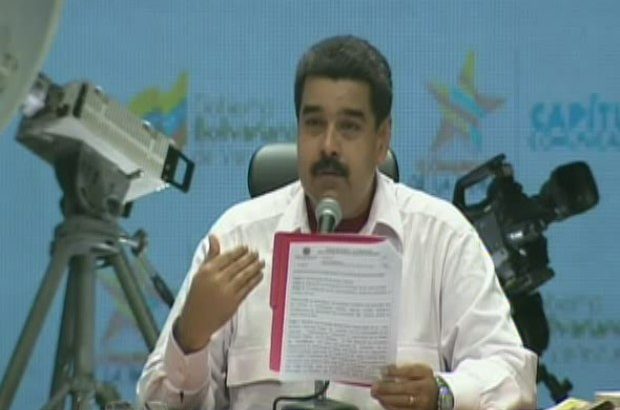
“Creo la Misión Robinson Digital, “Yo Existo, Yo Puedo”, para la defensa del derecho a la verdad, la independencia y la paz del pueblo de Venezuela. “Aprobado. Cúmplase!”, manifestó este lunes el presidente Nicolás Maduro Moros.
Desde el Congreso de la Patria, Capítulo Comunicación, realizado este Día del Periodista en el Teatro Teresa Carreño de Caracas con miles de comunicadores del sistema público nacional, el Jefe de Estado analizó la agresión mediática de la burguesía, que utiliza todo medio disponible, entre ellos las redes sociales.
En este aspecto, los integrantes del Estado Mayor de Comunicación propusieron al Mandatario Nacional un punto de cuenta para la creación de un programa de capacitación en medios digitales, para dar esta batalla.
“Aprendiendo haciendo y haciendo aprendiendo”, convino el Presidente. “En las redes sociales nos hemos metido a dar la batalla pero todavía nos falta mucho”, reconoció el Mandatario.
Comentó que es necesaria una propuesta como ésta para ir rompiendo lo que pretende la burguesía contra la Revolución, contra el país y contra la Presidencia de la República.
Exhortó a tomar las redes sociales para la conformación de una nueva capacidad de acción y de influencia.
“Creación de la Misión Robinson Digital, el plan de alfabetización en comunicación digital en redes con el nombre de ‘Yo Existo, Yo puedo’. ¡Aprobado!”
Seguiré utilizando las cadenas nacionales
Rechazó los intentos de veto de la derecha, en una nueva pretensión para silenciar la voz del Ejecutivo y lograr el silencio mediático total sobre la obra gubernamental, tal como hacen las empresas privadas de comunicación.
“Ellos pretenden imponer un veto, una censura, el silencio: por eso son tan locos y los bufetes de ricachoness que les radactan los proyectos, hacen esa pretendida ley de veto burgués contra el presidente. Es una ley de veto, de censura, ellos qusieran taparnos como nos taparon toda la vida”, comentó Maduro en referencia a la denunciada ley que la AN adeca-burguesa está “discutiendo” para regular las transmisiones oficiales.
“Voy a seguir convocando estas cadenas para que el pais tenga la información, la orientación, la moral y la fuerza”, informó.
El lenguaje es un logro humano fundamental. Es la base para la alfabetización, apuntala el éxito académico y social, y es importante para desarrollar y mantener relaciones con los demás. Los niños con trastornos del lenguaje tienen problemas para hablar y escuchar. Ellos tienden a tener vocabularios limitados, dejar terminaciones de las palabras y usar la gramática muy simple en sus oraciones. Tienen dificultades para contar historias coherentes y no entienden las instrucciones complejas. Esto causa muchos problemas en el aula. Así, por ejemplo, los niños con trastornos del lenguaje tendrán dificultades para entender las preguntas tales como «¿cuál de estos elementos flotará? ¿Por qué piensa así? «Incluso si entienden y sabe la respuesta, que pueden no ser capaces de utilizar las palabras para explicar» flotará la pelota, ya que está lleno de aire y es más ligero que el último centavo. «Un niño con trastorno del lenguaje solo pueden apuntar y adivinar, o articular un par de palabras clave como «la moneda sinked”. Exponen ¿Qué se considera un «trastorno del lenguaje ‘ También se consideraron las habilidades de razonamiento no verbal de los niños pidiéndoles que resolver problemas que no implican las palabras, por ejemplo, elegir el siguiente paso en una secuencia visual entre una selección de elementos visuales similares. Niños que no reciben ayuda A pesar de esto, menos de la mitad de los niños que cumplían los criterios para el trastorno del lenguaje se ha remitido a los servicios de terapia del habla y del lenguaje. Señalan que es claro a partir de nuestra investigación que se necesita un mayor énfasis en el desarrollo del lenguaje oral en los primeros años. Por supuesto, todavía habrá algunos niños que requieren apoyo especializado, y nuestros resultados indican claramente que esto no debería depender de la capacidad no verbal. En lugar de ello, los terapeutas del habla y lenguaje deben basar las decisiones sobre la elegibilidad para el apoyo en las necesidades de lenguaje y comunicación del niño. Pero los niños con habilidades no verbales más bajas pueden no responder a la intervención de la misma manera que los niños hacen más capaces. Es difícil probar esto, en parte, porque los niños con habilidades no verbales inferiores a menudo son excluidos de los ensayos de intervenciones que podrían ayudar a ellos. Sin embargo, eso no debe significar que no reciben ayuda – sólo eso tenemos que establecer la forma más adecuada de ayudar a los niños con múltiples problemas de desarrollo.
Two children in every school class start an unexplained With language disorder
Language is a fundamental human accomplishment. It is the foundation for literacy , academic and social success underpins, and is Important for Developing and Maintaining relationships with others.
So it is no surprise That children WHO struggle to acquire Their native language are at a distinct disadvantage When They start school. Our research , recently published in the Journal of Child Psychology and Psychiatry, found That two five-year-old children in every Year 1 classroom of 30 had a language disorder currently are unexplained. An additional 2.34% had a language disorder as part of That occurred another developmental condition,: such as autism or Down syndrome.
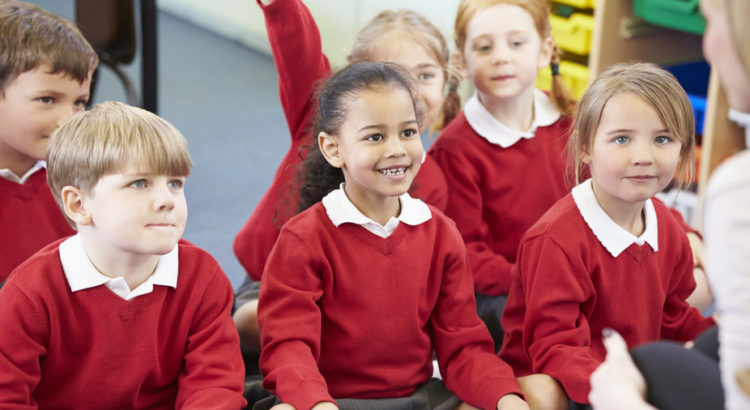
Children with language disorders Have Problems with speaking and listening . They Tend To have limited vocabularies, leave endings off very simply use words and grammar in Their sentences. They Have Difficulties telling coherent stories and do not Understand complex instructions. This causes many problems in the classroom.
So for example, Children with language disorders will struggle to Understand questions: such as «Which of these items will float? Why do you think so? «Even If They Understand and know the answer, They May not be reliable to use words to explain» the ball will float Because it is filled with air and is lighter than the penny. «A child with language disorder May just point and guess, or articulate a couple of key words: such as «the penny sinked».
Our study more than 7,000 children Involved and 190 schools in Surrey, south of London, in order to find out how many children start school in England with a language disorder – what is Known as a prevalence estimate. This May sound straightforward to work out, but it is not. As language is multi-faceted, we Measured vocabulary, grammar and narrative skills When the children Were Both speaking and listening. This is the combination of tests That Has Informed current diagnostic criteria for language disorder .
What counts as a ‘language disorder’
Have Different studies used different cutoffs for language disorder, but the severity of the cutoff point can drastically Affect the estimates of how problems are prevalent. In our study, children WHO Scored in the bottom 7% of all Pupils in the tests we gave Were Deemed To have a language disorder.
We Also Considered children’s non-verbal reasoning skills by asking them to solve problems That do not Involve words, for example, choosing the next step in a visual sequence from a selection of visually like items.
Children with good non-verbal skills May mask Problems with speaking and listening. For example, a social very child with language disorder, Who is quick to learn new activities and can copy what other children are doing May not be reliable to follow complicated instructions: such as «put your boots on after you find your coat» or May use very plain language like «picture him doing» rather than «I is painting a picture».
In recent years, many experts Have Argued That non-verbal skills shouldnt feature in the diagnosis and decisions of how to treat Children with language disorders. But many Poorer Children with non-verbal as well as abitur language disorder can still find it difficult to meet eligibility requirements for specialist speech-language therapy services.
Help Those Who need it.Www.shutterstock.com
To measure the impact of language disorder we Took Advantage of the fact That all children in England are Assessed on the Early Years Foundation Stage Profile at the end of Their first year in school. To Achieve a «good level of development» children must meet or Exceed 12 Key Curriculum targets, Which cover speaking, listening, reading, writing, numeracy, physical and personal, social and emotional development. Most of These items tap into children’s Ability to use language in the classroom, for example to play co-operatively, share ideas, and form positive relationships with others.
Overall, we found 7.58% of children That starting school Had an unexplained language disorder. Our estimate included Children with low non-verbal abilities, and children Increased These Including the prevalence of disorders by almost 50% – from 4.8% to 7.58%. But we found low non-verbal That did not result in abitur more severe language impairments, more pervasive problems or more serious Behaviour Difficulties academic.
Children meeting our criteria for language disorder were very unlikely to meet education targets on the early years profile – only 11% of them did so. They Were Also more likely than Their peers to display social, emotional and behavioral Difficulties.
Children not getting help
DESPITE esta, fewer than half of the children met criteria for WHO HAD language disorder Been Referred to speech-language therapy services.
It’s clear from our research That to greater focus is needed on oral language development in the early years. Many teachers Suggest That oral language needs To have the same status and protected teaching literacy and numeracy Time That do. Particularly in the early years, Improving oral language Should Have positive Impacts on later literacy, and social development Behaviour.
Of course there will still be some children require specialist support WHO, and our findings Cleary This should not depend Indicate on non-verbal ability. Instead, speech-language therapists Should decisions based on eligibility for support on the child’s language and communication needs.
But Children with lower non-verbal abilities May not respond to intervention in the same way children do That more reliable. It’s difficult to prove This, in part Because Children with lower non-verbal abilities are excluded from trials of Often interventions That Could help them. NEVERTHELESS, That Should not Mean They get no help – we need only to Establish That the MOST Appropriate way of helping children with multiple developmental challenges.
OtrasVocesenEducacion.org existe gracias al esfuerzo voluntario e independiente de un pequeño grupo de docentes que decidimos soñar con un espacio abierto de intercambio y debate.
¡Ayúdanos a mantener abiertas las puertas de esta aula!



 Users Today : 76
 Total Users : 35490888
 Views Today : 94
 Total views : 3604317