Fuente EDU-COMP/ 18 de Abril de 2016
le 13ème colloque international de l’Association Française d’Education Comparée (AFDECE) : Réformer l’Ecole ? L’apport de l’éducation comparée. Hommage à Louis Porcher. Jeudi 27 et vendredi 28 octobre 2016
Université Paris Descartes Faculté des sciences humaines et sociales – Sorbonne 75006 PARIS
APPEL A COMMUNICATION Les thèmes de réflexion sont les suivants :
– Réformer l’éducation : finalités, modalités
– Réformes et partenaires de l’école
– Réformes et écoles primaires, collèges, lycées
– S’inspirer des réformes éducatives qui réussissent
– Donner le goût de la lecture
– Développer la curiosité intellectuelle à l’école
– Vivre heureux à l’école
– Développer l’esprit critique des élèves
– Mobiliser toutes les capacités de tous les élèves
– Réformer la formation des enseignants
– Eduquer à l’altérité
– La place des langues dans les réformes
– L’égalité des chances
– Les écoles différentes. Intégrer des propositions pédagogiques avérées dans les écoles « non différentes ».
– Tutorats, aides et soutiens
– Quelle culture numérique pour les jeunes?
Consignes aux auteurs Les propositions de communication devront parvenir à l’AFDECE exclusivement sous forme numérique au plus tard le 1er juin 2016. Le texte de la proposition ne devra pas dépasser 3000 signes. Devront figurer de façon lisible :
Le titre de la communication
Les nom et prénom de l’auteur
Le rattachement institutionnel
La fonction
L’adresse postale
L’email
La proposition s’inscrira dans l’une des thématiques proposées. Elle comportera de quatre à six mots clés ainsi qu’une courte bibliographie. Elle présentera la problématique de la recherche, la méthodologie retenue et les résultats essentiels. Elle sera adressée sous format Word à l’adresse suivante : info@afdece.com
Les réponses relatives aux communications acceptées seront envoyées pour le 1er juillet 2016. Les textes complets à publier seront à envoyer avant le colloque, au plus tard le 15 octobre 2016 (30 0000 signes maximum).
INFORMATIONS PRATIQUES Droits d’inscription Participants et communicants 90 € *Adhérents AFDECE Etudiants 50 € Les droits d’inscription couvrent la participation à l’ensemble des activités scientifiques, les pauses café, la réception de bienvenue et le recueil des résumés des communications. Ils doivent être impérativement versés à l’AFDECE avant le 15 juillet 2016. *cotisation 2016 à jour (cf. site de l’AFDECE : www.afdece.com) Bulletin d’inscription – Nom : – Prénom : – Institution : – Email : à envoyer à : AFDECE, 23, rue Gazan, 75014 Paris, France, accompagné du règlement par chèque, mandat postal ou virement sur le compte bancaire de l’AFDECE : Crédit agricole Ile de France Code banque: 18206, Code guichet: 00200 Numéro de compte: 48985584001, Clé RIB: 69 IBAN (International Bank Account Number): FR76 1820 6002 0048 9855 8400 169 BIC (Bank Identification Code): AGRIFRPP882 L’hébergement est à la charge du participant. Une liste d’hôtels situés à Paris, à proximité du lieu du colloque, sera disponible sur le site de l’AFDECE. Dates à retenir Propositions de communication : 1er juin 2016 Réponses aux propositions : 1er juillet 2016 Clôture des inscriptions 15 octobre 2016 Les Actes du colloque seront publiés chez L’Harmattan, dans la collection « Education comparée ». L’événement sera couvert par un montage audiovisuel sonorisé pour porter témoignage des différents moments du colloque.
Le colloque a pour but de s’interroger sur le bien-fondé des réformes éducatives qui sont proposées –ou imposées ?- à la société française. Celle-ci appelle de ses vœux une véritable réforme de l’École et de la formation des enseignants qui ne serait plus conjoncturelle mais qui se ferait avec tous les acteurs de l’École et dans l’intérêt de tous les élèves. Les réformes qui ont du sens et qui sont efficaces ne sont-elles pas conçues sur le long terme, avec la participation des différents acteurs de l’École, à l’instar de la réforme éducative finlandaise, par exemple ? Quelles finalités pour l’École ? Quels sont ses objectifs prioritaires ? Pour quelle société ? Quelles sont les valeurs qui doivent innerver notre société ? Et comment peut-on travailler sur ces valeurs à l’École ? Quels sont les niveaux du système éducatif qui doivent être revisités en priorité ? Que doit-on repenser ? Les contenus disciplinaires ? Les connaissances ? Les compétences ? L’organisation des enseignements ? Comment introduire plus de démocratie et de solidarité entre les élèves, futurs citoyens ? N’est-il pas urgent de penser un curriculum, de la maternelle à l’université, axé sur les concepts d’interculturel et d’altérité ? Il s’agit de réfléchir au développement personnel et collectif des élèves à tous les niveaux du système éducatif. Quel est le profil attendu au sortir de l’école primaire, du collège, du lycée ? Comment accompagner au mieux ces jeunes pour qu’ils se rapprochent le plus possible de ce profil et éviter les ruptures préjudiciables à leur formation ? Comment permettre à tous les enfants de développer leur curiosité intellectuelle, d’apprendre dans la joie, de développer leur esprit critique ? Faut-il développer le tutorat? Modifier la classe? Faut-il les aider à acquérir une culture numérique ? Quelle formation tout au long de la vie pour les enseignants ? Le cadre comparatiste établi par l’AFDECE, ainsi que la perspective interculturelle de ce 12ème colloque, offrent un terrain particulièrement propice à des échanges rigoureux et constructifs autour de notre thème. Ce thème a été choisi en hommage à Louis Porcher qui s’intéressait à l’École, sous toutes ses formes, de l’institution scolaire à « l’école parallèle », en France mais aussi en Europe et dans le monde. Sa carrière de chercheur a commencé à l’Université Paris Descartes.
Ce colloque concerne chercheurs, décideurs, formateurs et enseignants. MODALITÉS D’ORGANISATION 1. Des séances plénières, sous forme de conférences et de table ronde suivies de débats 2. Des communications en ateliers thématiques sous la forme de présentations individuelles effectuées sur la base de propositions de contributions acceptées par un comité scientifique. LES SEANCES PLENIERES : 1. Réformer l’école : Hommage à Louis Porcher 2. Les réformes en éducation en France 3. Des réformes éducatives réussies? 4. Approches de quelques réformes éducatives : Finlande, Shanghai 5. Réforme et formation des enseignants Responsables du colloque : Dominique Groux, AFDECE, Université des Antilles Gabriel Langouët, AFDECE, Université Paris Descartes COMITÉ D’ORGANISATION Georges-Louis Baron (Université Paris Descartes, France), Aurélie Beauné (Université Paris Descartes, France), Christelle PautyCombemorel (Université Paris Descartes, France), Dominique Groux (AFDECE, Université des Antilles, France), Bernard Jabin (AFDECE, MEN, Université Paris 7), Françoise Journe (AFDECE), Gabriel Langouët (AFDECE, Université Paris Descartes, France), Carla Massoud (AFDECE, Université Saint-Joseph, ICP), Emmanuelle Voulgre (Université Paris Descartes, France). COMITÉ SCIENTIFIQUE Rodica Ailincai (ESPE, Université de la Polynésie française), Christina Allemann-Ghionda (Université de Cologne, Allemagne), Fabrice Barthélémy (Université de Franche Comté, France), Liu Baocun (Institute of International and Comparative Education, Beijing Normal University, Beijing, Chine), Georges-Louis Baron (Université Paris Descartes, France), Houari Bellatreche (Université de Mostaganem, Algérie), Lahcen Benchama (CPR Inezgane-Agadir, Maroc, AFDECE), Nabila Benhouhou (ENS de Bouzaréah-Alger, Algérie), Guy Berger (Université de Paris 8, Hélène Bézille (Université Paris Est-Créteil, France), Catherine Blaya (Université de Nice Sophia Antipolis, France), France), Jacqueline Breugnot (Université KoblenzLaudau, Allemagne), Alain Brouté (Université autonome de Madrid, Espagne), Maria Cantisano (Centro de Estudios de Género, Institut Technologique de Saint-Domingue-INTEC, République dominicaine), Nicole Carignan (UQAM, Canada), Ahmed Chabchoub (Université de Tunis, Tunisie), Manuel Crespo (Université de Montréal, Canada), Fred Dervin (Université Helsinki, Finlande), Roger Establet (Université de Provence, France), Richard Etienne (Université de Montpellier, France), Christine Fontanini (Université de Nancy, France), Enrica Galazzi (Université catholique de Milan, Italie), Camilo Garcia (Université Veracruzana, Xalapa, Mexique), Luis Ma Naya Garmendia (Universidad del Pais Vasco, Communauté autonome basque, Espagne), François-Roger Gauthier (MEN-Université Paris Descartes, France), Carolina Gonçalves (Escola Superior de Educaçao Lisboa, Portugal), Dominique Groux (Université des Antilles, France), Elisabeth Guimbretière (Université Paris Diderot-Paris 7, France), Jean-Luc Gurtner (Université de Fribourg, Suisse), Charles Hadji (Université Pierre MendèsFrance, Grenoble 2), Siegfried Hanhardt (Université de Genève, Suisse), Jürgen Helmchen (Université de Münster, Allemagne), Marie-Anne Hugon (Université Paris-Ouest Nanterre La Défense, France), Bernard Hugonnier (OCDEIEP Paris, France), Yassine Jelmam (Ecole Nationale d’Ingénieurs, Tunis, Tunisie), Anne Jorro (Cnam-Crf, Paris, France), Pierre Kahn (Université de Caen Basse-Normandie, France), Gabriel Langouët (Université Paris Descartes, France), Joël Lebeaume (Université Paris Descartes, France), Claude Lelièvre (Université Paris Descartes, France), JeanNoël Luc (Université Paris 4 Sorbonne nouvelle, France), David Matheson (Université de Nottingham, Royaume-Uni), Emmanuelle Maître de Pembroke (Université Paris Est, France), Philippe Maubant (Université de Sherbrooke, Canada), Alain Michel (MEN, IEEPS, France), Christiane Montandon (Université Paris Est-Créteil, France), Nicole Mosconi (Université Paris-Ouest Nanterre La Défense, France), Marie J. Myers (Queen’s University, Kingston, Canada), Koh Nagano (Hokkaido University, Japon), Antonio Novoa (Université de Lisbonne, Portugal), Marcel Pariat (Université Paris Est-Créteil, France), Eric Plaisance (Université Paris Descartes, France), Sébastien Quenot (Université de Corse, France), Elisabeth Regnault (Université de Strasbourg, France), Patricia Remoussenard (Université de Lille 3, France), Rebecca Rogers (Université Paris Descartes, France), Val D. Rust (UCLA, Etats-Unis), Régine Sirota (Université Paris Descartes, France), Roger Somé (Université de Strasbourg, France), Alla Stepanyan (Université Lomonossov, Moscou, Russie), Francesco Susi (Université Roma 3, Italie), Danièle Trancart (Université de Rouen, France), Emmanuelle Voulgre (Université Paris Descartes, France), Annick Weil-Barais (Université Paris Descartes, France), Huiping Wen (Université des Antilles, France), Zacharie Zachariev (UNESCO).
INSCRIPTIONS Les inscriptions se feront exclusivement à l’adresse de l’AFDECE : info@afdece.com AFDECE, 23, rue Gazan, 75014 Paris, France


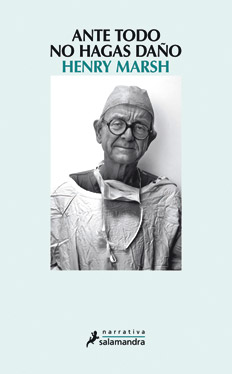 Ante todo no hagas daño. Henry Marsh Salamandra 346 páginas


 Users Today : 23
 Total Users : 35491045
 Views Today : 24
 Total views : 3604552