Page 6589 of 6727
1 6.587 6.588 6.589 6.590 6.591 6.727

Chicago Strikes Again

Labornotes/Abril 2016

It’s not a general strike—not yet, anyway. But April 1 is shaping up to be a big moment for the Chicago labor movement, and once again, teachers are leading the charge.

The Chicago Teachers Union will strike for a day against a double standard. While the city scrupulously honors its deals with the big banks, it’s threatening to unilaterally violate the teachers’ contract and slice their pay—along with the rest of the budget for city schools.

CTU won’t be alone on the picket lines. Dozens of community groups and at least eight unions have signed on to join the day of action, all victims of the slash-and-burn budgeting that’s left Chicago “broke on purpose.” They’re part of an emerging coalition that’s drawing the line between the titans of finance and the needs of the city’s working people.

Last year they forced “Mayor 1%” Rahm Emanuel into Chicago’s first-ever runoff for a sitting mayor. Later protesters disrupted the lucrative Christmas shopping season after allegations emerged that, to protect Emanuel’s reelection bid, the city had covered up video of a police officer killing African American teenager Laquan McDonald. And in March, thousands of Chicago protesters shut down a rally for spiteful billionaire turned presidential candidate Donald Trump.

This year’s Labor Notes Conference kicks off at a hub of resistance, where organized people are building the power to take on organized money.

BLAME GAME

The anger—and the organizing—in Chicago come not a moment too soon. A one-sided class war has funneled almost an entire generation of economic growth to the CEOs, the bankers, and the billionaire class.

Even retirees who worked for decades to earn their pensions are forced into a lopsided battle to stop their nest eggs from being snatched away. Politicians would rather gut public services and public sector jobs than tax the billions in profit that corporations like Boeing, Verizon, General Motors, and General Electric are raking in.

Employers are pointing fingers to make sure the rest of us don’t pick up the pitchforks. Teachers and bus drivers, they say, are bankrupting your city and taxing you out of house and home. If you don’t have a pension and good health care, why should they?

Such divide-and-conquer tactics are out front this election season. Supposedly it’s immigrants, or workers in Mexico or China, who are taking your job. But whether this tired line is coming from the boss or from a CEO con artist with a bad comb-over, the game plan is as old as the need for unions to counter bigotry with solidarity.

Real blame lies squarely at the feet of corporations like Walmart and trade deals like the Trans-Pacific Partnership that are steamrolling good jobs—here and abroad—and the unions that fought for them.

In February, West Virginia became the 26th so-called right-to-work state, following Wisconsin, Michigan, and Indiana. The death of Supreme Court Justice Antonin Scalia brought only a temporary reprieve from the looming threat of open-shop conditions in the public sector, too. The Friedrichs v. California Teachers Association case is delayed, not dead. Meanwhile Friedrichs-style lawsuits sprout up at the state level, as in a recent case against New York’s Public Employees Federation.

Anti-union forces are ready for open-shop America. They’re already training their sights on their next target: unions’ right to exclusively represent a bargaining unit.

RIPPLES OF RESISTANCE

But there’s a bright spot—a stubborn note of resistance in the country’s political mood, evident in the surprising momentum of underdog Bernie Sanders’ campaign for president.

Plenty of union members are also fed up with the status quo. Last fall, for example, Chrysler workers sent the Auto Workers top brass back to the bargaining table, voting no 2 to 1 on a contract that would have cemented their two-tier wage scale.

New hires started at $15.78 an hour, just over half the pay for “legacy workers.” The union had taken the hit in 2007, when two-tier was sold as a salve for the flagging automaker. But by last year, the revived company was making millions—and the second tier had ballooned to 45 percent of the workforce. Thanks to the grassroots revolt, union tops returned with an improved settlement that put most second-tier workers on a path to top pay.

The same spirit roiled Teamsters who haul cars from auto plants to dealerships, who voted down a concession-ridden agreement by 87 percent in October, and mechanics at railroad giant CSX, who in December nixed a job-killing pact by an 8-to-1 vote.

Some unions hit the picket lines to beat back concessions. Steelworkers at Allegheny Technologies endured a six-month lockout rather than let the company gut their contract. Wisconsin’s Kohler factory workers struck for a month against two-tier wages and health care cost-shifting, winning a partial victory that narrowed the gap between the tiers.

Thankfully, more unions are reaching for labor’s oldest weapon, and not just as a last resort. Chicago movers at Golan’s struck for six months to win their first contract, reaching an agreement last year. In November, a small band of IKEA workers struck for recognition.

To protest funding shortfalls, teachers in Washington state staged rolling strikes, culminating in a week-long walkout in September by Seattle educators who demanded, among other things, that kindergartners get at least a half-hour of recess. In the same spirit, teachers in Detroit staged rolling sickouts to protest mice, mold, and crumbling classrooms under their governor-appointed “emergency manager.”

Inside unions, the same spirit of resistance continues to boost reformers running for office, like the professional flight attendants who unseated a management-friendly president last fall and elected a rank and filer to replace her. Teachers and Teamsters alike are seeking out leaders who aren’t afraid to fight the boss. And unions from janitors in the Twin Cities to nurses in New York are proving that, especially when the community has our back, we can win.

THE CHICAGO MODEL

If a comeback is in the cards, some of the essential ingredients are bubbling up in Chicago.

  • Place the Blame on Wall Street: Since new leaders took office in 2010, the Chicago Teachers Union has told the world how Wall Street and the country’s biggest corporations have teamed up to rip off the city and drain millions from public services.Now more and more public sector unions around the country are doing the same. They’re pushing for state and local governments to renegotiate sweetheart loans that are lucrative for the banks, and proposing taxes to target corporations and the 1%.
  • Line Up with Those Ready to Fight the Status Quo: With union density hovering just over 11 percent, finding allies has evolved from a good idea to a necessity. Chicago is an example of what’s possible through coalitions, both inside and outside the labor movement.To their credit, these folks haven’t waited till they could convince the most timid within the House of Labor. They’re clear they’re building a coalition of those willing to upset the apple cart, even if that starts with a handful.
  • Every Movement Needs Infrastructure: Key unions in Chicago, most notably the Service Employees local, Healthcare Illinois-Indiana and the Teachers, created first the community-labor coalition Stand Up Chicago and then the independent political organization United Working Families.When unpredictable sparks flared up—like the Occupy movement and Black Lives Matter—these organizations were there to help meet concrete needs like space and funding, and to act as bridges to institutions and other activist networks.
  • You Lose More than You Win: Since winning their 2012 strike, Chicago teachers have seen 50 schools closed and thousands of educators pink-slipped. They weren’t able to unseat Emanuel. United Working Families won only three of the nine city council seats where it challenged incumbents.But the unions and community groups involved in the April 1 actions have grown even more committed to the strategy of confrontation, recognizing the historical lesson that breakthroughs usually follow a series of defeats. After all their setbacks, 88 percent of all Chicago teachers voted to authorize another strike.
  • Rooted in Real Power: None of this was possible without the organization and ownership of their union that rank-and-file Chicago Teachers have achieved, on a scale few other unions in recent decades have matched.The foundation is old-fashioned organizing—finding leaders in every worksite, identifying issues members care about, and moving co-workers into action. Those are the skills we highlight in our newest Labor Notes book, Secrets of a Successful Organizer, out April 1.

But building power goes beyond good tactics and technique. Unionism at its core is about taking action together.

In too many unions, officers or staff present members with: “Here’s the plan. Are you in, or are you out?” The Chicago Teachers continue to show how much better the results are when you involve everyone in the process that leads you there.

Members go to the mat because they care about what’s at stake and feel like it’s their fight. They’re part of the team steering the ship, from the shop floor to union-wide activities. The choice to be “in or out” evaporates when everyone was “in” from the beginning.

Anyone can tell when they’ve got a real say over what happens, versus just backing someone else’s plan. Chicago is proof positive of one of Labor Notes’ enduring themes—that unions need a «political revolution» too.

Comparte este contenido:

Argentina: paro nacional docente y movilización

PARO NACIONAL DOCENTE Y MOVILIZACIÓN

Los docentes de todo el país paramos y nos movilizamos el 4 de abril por los incumplimientos de los acuerdos paritarios, contra la impunidad de la causa Fuentealba II y en rechazo de la criminalización de la protesta social.


Los educadores, nucleados en la Confederación de Trabajadores de la Educación (CTERA) y en el Sindicato Argentino de Docentes Privados (SADOP), paramos por 24 horas y nos concentramos frente a la Casa de Mendoza (Avenida Callao y Avenida Corrientes) el lunes 4 de abril a las 12 horas para luego marchar al Ministerio de Educación de la Nación.

La medida de fuerza se decidió ante los muchos incumplimientos de los acuerdos paritarios, por parte de los Gobiernos provinciales y nacional; y por no solucionar los conflictos en varios distritos del país.

También, en contra de los despedidos y por la continuidad de los programas socioeducativos como Conectar Igualdad, Plan de Finalización de Estudios Primarios y Secundarios (FINES), orquestas y coros infantiles, Centros de Actividades Juveniles (CAJ), Centros de Actividades Infantiles (CAI). Asimismo, contra la pretensión de impunidad; en rechazo del desprocesamiento de los responsables de la causa Fuentealba II; finalmente en repudio de la criminalización de la protesta social.

En tanto, los docentes públicos y privados de Mendoza se movilizarán en esa provincia, acompañados por dirigentes nacionales de CTERA y SADOP.


Los maestros y profesores exigimos:


NO A LA IMPUNIDAD

NO A LA CRIMINALIZACIÓN DE LA PROTESTA SOCIAL

NO A LOS INCUMPLIMIENTOS PARITARIOS

Comparte este contenido:

China quiere un campeonato mundial

China/1 abril 2016/Autor: Pascual Albanese/Fuente: El tribuno

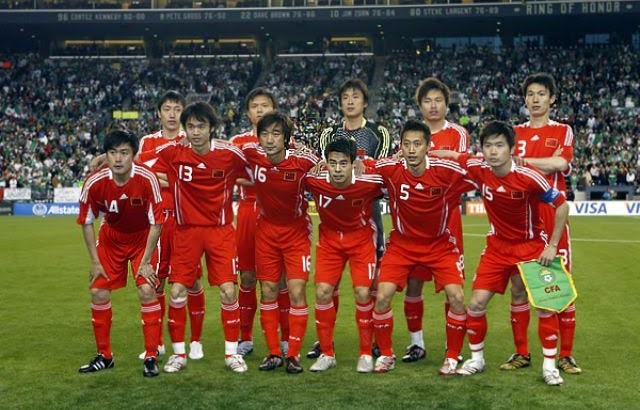
La participación del Guangzhou Evergrande en el campeonato mundial de clubes realizado en Japón, donde fue eliminado en la ronda semifinal por el Barcelona, puso sobre el tapete la decisión del Gobierno chino de erigir al coloso asiático en una potencia futbolística mundial.
No se trata de un capricho sino de un objetivo estratégico. En un escenario global en que el «soft power» (poder blando) tiende a ganar espacio frente al «hard power» (poder duro), Beijing considera que sobresalir en el deporte mundial por excelencia es una necesidad para incrementar el prestigio internacional de China.
La mitad del Guangzhou es propiedad del gigante de comercio electrónico Alibaba (conocido internacionalmente como «el Amazon chino»), que compró la publicidad estática de las transmisiones televisivas del torneo mundial de Japón, presenciadas por centenares de millones de personas en los cinco continentes. Jack Ma, el dueño de Alibaba y uno de los mayores multimillonarios chinos, adquirió el año pasado esa participación accionaria en el club más poderoso de China por un equivalente de 170 millones de euros.
El presidente Xi Jinping, quien en su juventud se destacó como jugador amateur, sostuvo que en relación al fútbol chino tenía tres grandes sueños personales: «Volver a clasificarse a un mundial, organizar una Copa del Mundo y ser campeón del mundo». No se trata de una meta sencilla. En el último ranking mundial de la FIFA, China figura apenas en el puesto 84. La última vez que se clasificó para jugar un campeonato mundial fue en 2002, cuando sus vecinos Corea del Sur y Japón fueron los anfitriones y por lo tanto no participaron de la ronda eliminatoria.
En aquella oportunidad, la selección china fue eliminada en la primera fase, tras perder los tres partidos y sin marcar un solo gol.
Empresas en acción
No resultó casual entonces que el viaje oficial que hizo Xi Jinping al Reino Unido en octubre pasado haya incluido una visita al Manchester City, difundida internacionalmente a través de una «selfie», en la que el mandatario chino aparecía sonriente junto al primer ministro británico, David Cameron y al Kun Ag ero, el jugador argentino estrella del equipo inglés.
Pero aquel gesto de Xi Jinping adquirió todo su sentido semanas después, cuando el Manchester City reveló que un grupo inversor encabezado por China Media Capital y el fondo Citic Capital había adquirido por 400 millones de dólares el 13% de las acciones del City Football Group (CFG), al que no sólo pertenece el Manchester City sino también el New York City de Estados Unidos, el Melbourne City, de Australia y un porcentaje del Yokohama F. Marinos, de Japón.
Li Ruigang, titular de China Media Capital, será parte del directorio del Manchester City.
El magnate no es un desconocido en el mundo futbolístico.
En 2014 adquirió los derechos de transmisión de la liga china de fútbol, el deporte más visto en China.
Para tener una idea de la dimensión de ese negocio, en la televisión mundial todavía se recuerda que la final del campeonato mundial de Sudáfrica, en el que la selección oriental no participó, y que se jugó a las 2.30 de la madrugada, hora de China, fue presenciada por 58 millones de televidentes.
No se trata de una iniciativa aislada. Junto a China Media Capital, cada vez son más las empresas chinas que desembarcan en el mundo del fútbol. Dalian Wanda, originariamente un conglomerado de bienes raíces, compró el 20% de las acciones del Atlético de Madrid en 45 millones de euros.
El grupo chino, interesado en ampliar sus actividades en el rubro del entretenimiento, es propietario de la cadena de cines AMC en Estados Unidos.
Rastar, otro conglomerado chino de la industria del entretenimiento, compró el 56% de las acciones del Español de Barcelona, con un desembolso de 17 millones de euros.
Política de Estado
Pero esta estrategia empresaria de penetración en los clubes europeos aparece ahora acompañada por un ambicioso plan nacional de reforma integral de la práctica futbolística, cuya autoría no corresponde a las autoridades de la liga nacional de fútbol, sino nada menos que al Comité de Reformas, que en China guía las grandes transformaciones estatales.
Alentados por el éxito obtenido con los Juegos Olímpicos de 2008, los chinos se plantean como meta la organización del campeonato mundial de 2026.
A tal fin, se estableció la enseñanza obligatoria del fútbol en todos los establecimientos educativos primarios y secundarios.
A partir del año próximo, 200 millones de niños y adolescentes chinos se adiestrarán en la práctica intensiva del fútbol.
En 2017, China contará con 20.000 escuelas equipadas con canchas de fútbol.
El objetivo es producir 100.000 jugadores, con la esperanza, estadísticamente fundada, de que entre ellos puedan surgir once de primer nivel mundial.
Los estudiantes contarán con el auxilio de un manual de siete volúmenes, publicado por la Editorial Popular de Educación, que incluyen una aplicación que permite que sean leídos en teléfonos celulares y acceder a videos de entrenamiento.
Los textos cubren tópicos que van desde las reglas básicas del fútbol hasta tácticas y estrategias de juego, enseñanzas de cómo trabajar en equipo y lecciones de moral deportiva.
Para incentivar el espíritu nacionalista de esta cruzada deportiva, los chinos acuñaron la teoría de que son ellos, y no Gran Bretaña, la cuna del fútbol.
Sostienen que hace más de 2.000 años existía en China un juego llamado «cuju», en el que competían dos equipos de doce jugadores, con una pelota maciza de cuatro piezas de cuero cocidas, en un campo cerrado entre cuatro paredes, con dos árbitros y reglas que evocan al fútbol moderno.
Para fortalecer su autoestima, reivindican también a un «Pelé chino»: Lee Wai Tong, quien jugó entre 1922 y 1947, un delantero que en su dilatada carrera fue autor de más 2.000 goles, al que en 1928 la Confederación de Fútbol de Asia le otorgó el título de «Rey del Fútbol en Asia» y que en 1976 fue elegido por una revista deportiva de la República Federal Alemana, junto con Pelé, en una reseña histórica, entre los «cinco reyes del fútbol mundial».
A través de una estrategia que combina el aprendizaje del «management» de los grandes clubes europeos con la enseñanza masiva del deporte entre sus estudiantes, China se pone en marcha para transformarse en una potencia futbolística mundial. No es improbable que lo consiga.

Fuente de la Noticia:
www.eltribuno.info/china-quiere-un-campeonato-mundial-n695130

Fuente de la Foto:
cerocero.tv/10585-china-convertira-el-futbol-en-una-materia-obligatoria-dentro-de-su-educacion/

Comparte este contenido:

Jóvenes panameños participarán en Concurso Internacional de Física

Los cinco jóvenes son del sexto año del colegio Episcopal San Cristóbal viajarán a Israel para representar a Panamá y toda Latinoamérica

Panamá/01 de Abril de 2016/La Estrella

226644_800x600_crop_56ff1b461c5bf

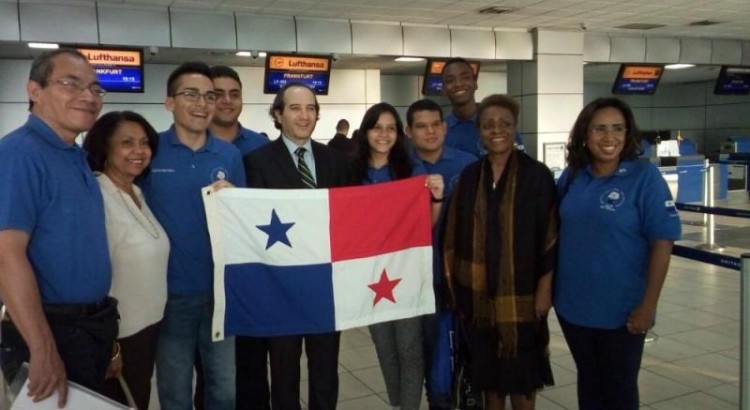
Gabriela Santamaría, Carlos Quintero, Patrick Padmore, Alejandro Medina y Omar Wynter, son los cinco finalistas del Torneo Internacional de Física del Instituto Weizmann.

Los cinco jóvenes son del sexto año del colegio Episcopal San Cristóbal, y viajarán a Israel para representar a Panamá y Latinoamérica.

En el edificio 130 de Ciudad del Saber, donde se levanta el colegio Isaac Rabin, seis grupos conformados por estudiantes de quinto y sexto año de colegios locales presentaron una caja fuerte que confeccionaron haciendo uso de su creatividad y las leyes de la física.

Luego de argumentar sus proyectos frente al jurado, integrado por el director general de Educación del Ministerio de Educación (MEDUCA), Mario Rodríguez; el profesor de la Universidad de Panamá (UP) Bernardo Fernández García, y el profesor de la Universidad Tecnológica de Panamá (UTP) Idelman Ábrego Castillo; cada equipo debía tratar de desbloquear las otras cinco cajas de seguridad.

El grupo ganador, que estará participando en Israel el 5 y 6 de abril con el resto de naciones, logró abrir las demás cajas en el menor tiempo posible, y utilizó los conceptos de magnetismo, conducción eléctrica y resistencia eléctrica para calentar un alambre en su propia caja de seguridad.

«El alambre se calentaba para reventar un globo que contenía dos bolitas, las cuales daban dos números para abrir el candado de la caja fuerte», explicó el estudiante Omar Wynter, quien tiene como meta seguir sus estudios de física desde la aviación.

Paso para la ciencia

«La educación tecnológica es clave para el desarrollo de un país», señaló el embajador de Israel en Panamá, Gil Artzyel.

«La diferencia entre los países desarrollados y el resto es la innovación», agregó.

Desde hace 21 años, el Instituto Davidson de Educación en Ciencias –brazo educativo del renombrado Instituto Weizmann de Ciencias en Israel– convoca la participación de jóvenes en el torneo de safe-cracking, poniendo a prueba sus conocimientos en física. Y la embajada del país hebreo en Panamá fue la que organizó la clasificación local.

En esta competencia en Ciudad del Saber también participaron el Colegio Bilingüe de Panamá, el Instituto David, el Instituto Enrico Fermi, el Panamerican School y dos equipos del Instituto Episcopal San Cristóbal.

El equipo panameño tendrá la oportunidad de compartir conocimientos con sus similares de Estados Unidos, Rusia, Eslovenia, Canadá, Austria, Rumania, España, Suiza, Reino Unido y Alemania en el Torneo internacional de Física del Instituto Weizmann.

Fuente: http://laestrella.com.pa/vida-de-hoy/ciencia/jovenes-panamenos-participaran-concurso-internacional-fisica/23931449

Comparte este contenido:

Las Aulas Hospitalarias Adolfo Pons, celebraron su IV aniversario


Venezuela/ 01 abril 2016/ Fuente: NOTICIA AL DÍA.

Las Aulas Hospitalarias Adolfo Pons, que brindan un servicio Educativo enmarcado en el  amor a los niños durante su proceso de hospitalización, celebraron su IV aniversario con diversas actividades.

Las actividades se iniciaron este lunes con una misa de Acción de Gracia seguido con una proyección por todo el hospital para dar a conocer el servicio de aulas hospitalarias que está ubicada en el  área de pediatría, primer  piso,  atendiendo niños y niñas que están hospitalizados con cualquier patología. En estas se le brinda la atención educativa integral y se trabaja con la metodología del amor.

AULA HOSPITALARIA ZULIA 1

La celebración continuó este jueves en el auditorio del hospital donde se llevó a cabo un foro con ponencias relacionadas al Área de la pedagogía hospitalaria, las adaptaciones curriculares, el arte  de las aulas hospitalarias y la parte socioproductiva donde participan madres para aprender algún tipo de manualidades.

Así lo dio a conocer Liliana Aular, directora del Servicio de Aula Hospitalaria Adolfo Pons, quien enfatizó que la idea es contribuir de manera significativa en el cumplimiento de las prioridades en el sistema educativo que son: garantizar la normalidad mínima de prosecución escolar, mejorar los aprendizajes de los estudiantes, abatir el rezago y el abandono escolar y promover una convivencia sana, pacífica y formativa.

Por su parte, Ingrid Ospino, coordinadora de Educación Especial del Municipio Escolar Maracaibo 1 y ponente,  refirió que esta actividad se realizó con el objetivo de conversar y compartir sobre los avances que se han realizado dentro de la atención educativa de los niños con permanencia hospitalaria.

El foro contó con la presencia de los servicios hospitalarios del Universitario y Coromoto, y los docentes de aulas integradas que están protestando ayuda en las escuelas primarias pertenecientes al Municipio Escolar Maracaibo 1.

Aula hospitalaria ZULIA 2

En esta aula hospitalaria los niños son atendidos por docentes, que en articulación con sus centros educativos de origen, les garantizan la educación integral que le permite al alumno-paciente cumplir con el currículo bolivariano, como política educativa de la nación. En este centro hospitalario se atienden dos derechos fundamentales establecidos en la Constitución de la República Bolivariana de Venezuela: el derecho a la salud y a la educación.

Los niños internos encuentran en el aula un refugio donde olvidar sus dolencias, pero también un espacio para adquirir nuevos conocimientos. El objetivo de esta aula es hacer que el niño, el tiempo que pase en el hospital, no pierda la continuidad de estudiar. Ver cómo los niños superan sus dolencias y, en algunos casos, sus limitaciones físicas llena de satisfacción a los docentes, la mayor recompensa, es recibir el cariño de sus alumnos, pero en el aula no solo los niños aprenden, ellos también dan lecciones de resiliencia a los maestros y representantes, demostrando que es posible salir adelante.


Las docentes planifican dentro de sus actividades, dibujos, juegos, cuentos, imágenes, lecturas, actividades artísticas, todo ello enlazado con proyectos de aprendizaje, en los que se valoran los alcances, logros, y exploran sus debilidades, de tal manera de fortalecer sus conocimientos. Asimismo se han entregado Canaimitas y, actualmente se desea desarrollar un proyecto con Cantv para preparar un aula virtual, promoviendo la formación integral de los niños niñas y adolescentes.

Desde otras voces en educación la invitación es a vivir la experiencia sublime de las aulas hospitalarias, desde el voluntariado, proyectos de servicio comunitario, prácticas de enseñanzas con nuestros estudiantes universitarios entre otras.

Palabras claves: educación, métodos, aulas hospitalarias, pedagogía del amor

FUENTE http://noticiaaldia.com/2016/04/aulas-hospitalarias-del-adolfo-pons-celebro-su-iv-aniversario-con-diversas-actividades/

Referencias
Imagen 1 http://noticiaaldia.com/wp-content/uploads/2016/04/IMG_20160331_094457.jpg

Imagen 2 http://4.bp.blogspot.com/-W4GZKMgOeoE/U_lAXd37pzI/AAAAAAAAALU/4nHGLTNUeWc/s1600/Aula%2Bhospitalaria1.jpg

Imagen 3 https://www.facebook.com/aulahospitalaria.adolfopons/photos/ms.c.eJw1zMENADEIA8GOTg4E7PTfWHQEnqOVzQAyxUWzzfOxfOx5jyMQIbSJrJ5oL~;87leN89rbtMqPtkOss2Pjtc~;au~_jddEzIgNw~-~-.bps.a.750066755055824.1073741833.696878063708027/750066871722479/?type=3&theater

Socializado por:

Dulmar Pérez. Candidata al Doctorado Pedagogía, Magister en Docencia Universitaria, Especialista en Docencia para la Educación Inicial. Ha publicado artículos internacionales y nacionales PEII-A Investigadora adscrita al CIM. Coordinadora CNIE en Barinas.

Comparte este contenido:

UNILA ofrece diez plazas para Maestría en Literatura Comparada; inscripciones hasta el 3 de mayo

Están abiertas las inscripciones para el proceso de selección del primer grupo de estudiantes regulares de la Maestría Académica en Literatura Comparada de UNILA. El programa ofrece diez plazas gratuitas, en dos líneas de investigación: “Narrativas, Diásporas, Memoria e Historia” y “Temas, Imágenes y Transculturalidad”.

Las inscripciones seguirán abiertas hasta el 3 de mayo. Todos los requisitos y plazos están disponibles en la Convocatoria/Edital 01/2016.

Aprobada a fines de 2015, la Maestría es una de las primeras de Brasil que se propone estudiar exclusivamente las producciones estéticas latinoamericanas y caribeñas de forma comparativa.

Comparte este contenido:

Black student leader disinvited from AIPAC for opposing Hillary Clinton


The powerful Israel lobby group AIPAC has disinvited a youth leader from a major Black civil rights organization from its annual conference.

Da’Shaun Harrison, 19, is the vice president of the NAACP chapter at Morehouse College, the historically Black institution in Atlanta, Georgia, from which Martin Luther King Jr. graduated.

Harrison had his invitation to attend the conference revoked after AIPAC learned that he participated in an October protest against Hillary Clinton and that he supports Palestinian rights.

For years AIPAC, the most influential arm of the Israel lobby on Capitol Hill, has been recruiting students from historically Black colleges in an effort to counter growing support for Palestinian rights among young people of color.

Presidential frontrunners, Democrat Hillary Clinton and Republican Donald Trump, both of whom are scheduled to speak at AIPAC’s conference, have attracted protests on the campaign trail from young Black activists involved in the movement to end state-sanctioned racial violence.

Harrison spoke to The Electronic Intifada about how AIPAC rescinded his invitation.

Based on Harrison’s account, it appears AIPAC is protecting Clinton and Trump by probing the activist histories of its Black student recruits, effectively shielding the candidates from the risk of dissent.

AIPAC has been similarly diligent in ensuring its conference is free of reporters critical of Israeli policy, as several openly adversarial journalists, including this writer, have been denied press credentials without reason.

In striking contrast, there are no reports of AIPAC subjecting members of pro-Israel Jewish groups to preemptive bans despite their publicized plans to protest Trump during his AIPAC speech.

AIPAC did not respond to a request for comment about Harrison’s exclusion.

Interrogation

Harrison says he was invited to AIPAC by an acquaintance from the Georgia chapter of the NAACP, who reached out to student leaders at historically Black colleges in the area on AIPAC’s behalf.

Harrison is well versed on the question of Palestine and is critical of Israel’s denial of Palestinian freedom, positions he credits to studying under intellectuals including Marc Lamont Hill, a Morehouse professor of African American studies who has been an outspoken advocate for Palestinian rights.

Harrison said that after reflection, he decided to accept AIPAC’s invitation and use the free trip as an opportunity to challenge his pro-Israel peers “on what it means to be Black students who are against racial injustices against ourselves” while being “pro-Israel and anti-Palestinian.”

His plans came to a crashing halt on Thursday when he got a phone call from an AIPAC representative interrogating him about his intentions.

Harrison declined to name the AIPAC representative, saying, “I don’t want this to be about an individual. This is about an establishment that openly backs the genocide of Palestinians and denies folks access to their conference due to opposing thoughts and fears.”

According to Harrison’s recollection, the AIPAC representative told him, “I heard from various people here that you have opposing views with Ms. Clinton and that you were a part of a group who disrupted her.”

Harrison was alarmed to learn that the man had apparently called his school and the NAACP acquaintance who invited him to the conference, asking probing questions about his activism.

“That’s just weird,” Harrison said.

He felt as though he was under surveillance.

Citing the protests at Trump’s campaign rallies, the AIPAC representative went on to ask Harrison if he intended to disrupt any of the presidential candidates attending the conference.

All presidential contenders are scheduled to speak at AIPAC except for Clinton’s Democratic Party competitorBernie Sanders, who turned down the group’s invitation to appear in person.

AIPAC rejected Sanders’ offer to speak via video link, despite the fact that it has allowed other presidential candidates to do so in previous years and will allow Israeli Prime Minister Benjamin Netanyahu do so so this year.

While Harrison insisted he had no intention of protesting, for the sake of transparency, he noted that he supported Palestinian rights and the conference was not going to change his mind. He was simply going for the experience, not to protest.

The AIPAC representative told Harrison he needed to consult with his colleagues. A few minutes later he called back to tell Harrison it was best that he not come to the conference, though he awkwardly extended an invitation for Harrison to participate in a future propaganda trip to Israel.

“I laughed and said I think this is very silly, me not being allowed to be in a space because of a disruption that has nothing to do with this conference,” Harrison said.

Protesting Hillary

“There’s no reason that Hillary Clinton should be at AIPAC while Ted Cruz and Donald Trump are there as well,” Harrison told The Electronic Intifada.

“Actually, I don’t think there’s a big difference between Hillary and Trump,” he then added. “Trump represents 1960s racism and she represents today’s quiet racism.”

It was this disdain for Clinton’s record on race that spurred Harrison to help organize the protest that got him disinvited from the AIPAC conference.

Back in October, during a campaign event in Atlanta, Harrison joined with a coalition of Black student activists from historically Black colleges called AUC Shut It Down to confront Hillary Clinton about her atrocious record on criminal justice.

“The Hillary action came from a group of us understanding her track record of advocating against Black and brown folks via the death penalty, three-strikes rule, mass incarceration and the Israeli-Palestinian conflict,” Harrison said.

“Black Lives Matter has become a prop in this election,” Harrison added, referring to the protest movement that arose after a series of high-profile police and vigilante killings of young Black men and women.

“Black pain should not be exploited or capitalized on, yet Hillary has been using the moms of Black teens who have been shot and killed as an endorsement,” he said.

The students expected to receive overwhelming support from those in attendance, but the opposite happened.

The room was incredibly hostile. Police tried to drag them out as “Hillary supporters were in our faces shouting at us to let her speak,” Harrison said.

But that wasn’t the worst of it for him.

“What hurt most,” Harrison said, was seeing Representative John Lewis of Georgia “trying to physically remove us. When he recognized we weren’t going to leave, he went and stood behind Hillary to show his support for her.”

Lewis’ prominent leadership role in the civil rights movement as a student, including organizing the 1965 Selma to Montgomery marches alongside Martin Luther King Jr., was depicted in Ava DuVernay’s award-winning 2014 feature film Selma.

“You’re raised to see John Lewis as a civil rights icon,” said Harrison. “We did the same thing he would have done in his time. So to see him go against us, it was eye opening, but also very hurtful.”

The backlash from Clinton supporters after the action was punishing, with some students receiving death threats, according to Harrison.

Until the AIPAC debacle, Harrison assumed the backlash was behind him. But it turns out that protesting the former secretary of state, much like protesting Israel, may come with long-lasting consequences.

Originalmente publicado en

https://electronicintifada.net/blogs/rania-khalek/black-student-leader-disinvited-aipac-opposing-hillary-clinton

Comparte este contenido:
Page 6589 of 6727
1 6.587 6.588 6.589 6.590 6.591 6.727