México y Corea del Sur/1 abril 2016/Autores: José Carreño y Paul Lara/Fuente: excelsior.com.mx
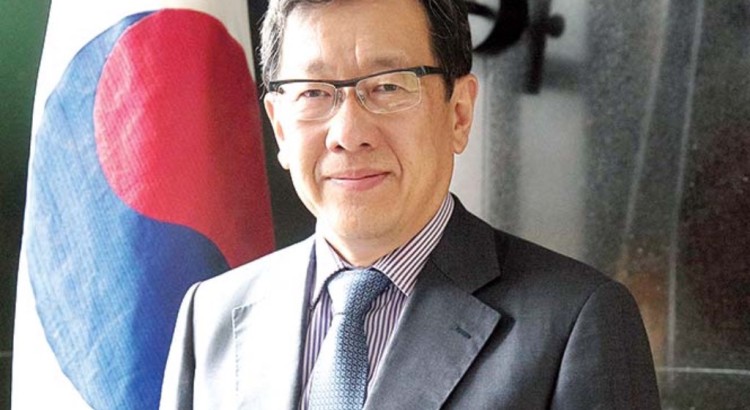
Chun Beeho, embajador de Corea del Sur en México, en entrevista especial con Excélsior, habló sobre el interés que tiene su país en invertir en ciencia y tecnología, así como en los sectores automotriz y energético. El diplomático explicó, entre otros temas destacados, la gran relevancia que tienen las reformas estructurales promovidas por el presidente Enrique Peña Nieto.
El embajador detalló que en la visita de Estado que realizará la presidenta de Corea del Sur, Park Geun-hye —del 2 al 4 de abril—, se firmarán varios compromisos y acuerdos con entidades como Bancomext y la CFE. Todo ello con el objetivo de adquirir líneas de crédito y, así, incursionar en plantas termoeléctricas para generar electricidad,
Chun Beeho adelantó que, entre los propósitos del gobierno encabezado por Park Geun-hye, se encuentra la compra de petróleo, así como la disposición que tiene su país para impulsar a diferentes empresas coreanas.
—Señor embajador, la gran reforma educativa de Corea del Sur —instaurada bajo la administración del expresidente Park, padre de la actual mandataria— está caracterizada por un alto nivel de competencia, maestros bien pagados. ¿Considera usted significativa este tipo de transformaciones?
—Las reformas educativas son importantes por varias razones. Es preciso tener maestros calificados y también por la infraestructura que alientan.
Pero, además del sistema público de educación, es bueno tener un sistema privado de educación en paralelo. De esa manera, ambos sistemas les ayudarán a los estudiantes a tener más oportunidades para ingresar al mercado y ser competitivos.
En Corea, por ejemplo, tenemos nuestro propio idioma. Sin embargo, los padres gastan mucho dinero para que sus hijos estudien un idioma extranjero como el inglés, o bien el chino, además de otras materias especializadas como matemáticas y ciencias.
—A diferencia de lo que ha sucedido en Corea del Sur, en México no ha habido una revolución educativa que le permita a los egresados competir a nivel mundial con estudiantes de otros países. ¿Cuál es su panorama sobre este asunto?
—Desde mi perspectiva, la Reforma Educativa implementada por el gobierno del presidente Peña Nieto es positiva. Su objetivo es claro: proporcionarle a los maestros una capacitación adecuada para que ellos, a su vez, doten a los estudiantes de una educación de alta calidad, lo cual beneficiará al desarrollo del país.
En segundo lugar, los estudiantes
—jóvenes, en su mayoría— deben tener más oportunidades para poder estudiar, no sólo en las escuelas públicas, sino también en las privadas. Y si así se lo proponen, incluso, los mismos estudiantes podrían adquirir una educación a través de escuelas y universidades online.
—¿Cuál es la razón primordial de la visita de la presidenta Park Geun-hye a México?
—Tras la invitación del presidente Peña Nieto, la presidenta de la República de Corea, Sra. Park Geun-hye, vendrá a promover las relaciones de asociación estratégica entre México y Corea, que, como muchos saben, fueron establecidas en el 2005.
Estas correspondencias, cabe subrayarlo, se han ido fortaleciendo con la conformación del grupo MIKTA, conformado en 2013 por Indonesia, Turquía y Australia.
Adicionalmente, hay que mencionar que este 2016, estamos celebrando el 111º aniversario de la primera migración coreana a México, que tuvo como escenario la península de Yucatán, hace cien años.
En ese sentido, nuestra Presidenta visitará México, tras la Reunión Cumbre de Seguridad Nuclear, la cual se está llevando a cabo en este momento en la capital de Estados Unidos, Washington.
Por otro lado, como bien sabemos, la economía mundial se encuentra en un momento de incertidumbre y la mayoría de los países en el mundo están considerando cómo superar esta incertidumbre, o inquietud de la economía mundial.
Por tal motivo, muchas empresas coreanas, así como otras firmas extranjeras, están considerando a México como un destino o, bien, plataforma de comercio y/o inversiones.
Para superar, en conjunto, este tipo de incertidumbres económicas, ambos países tienen que estrechar las relaciones bilaterales, además de promover el incremento del comercio bilateral y las inversiones extranjeras directas, que, desde hace algunos años, están siendo realizadas por las empresas coreanas en Mexico.
Según la estadística coreana, el volumen del comercio bilateral alcanzó más de 14 mil 500 millones de dólares en 2015. Y el volumen de inversiones extranjeras directas realizadas por las empresas coreanas en México, superó los 5 mil millones de dólares. ¿Qué significa eso?
–¿La visita de la Presidenta coreana a nuestro país tiene como eje discutir sobre algunos temas que se han trabado en cuanto a la Inversión Extranjera Directa? ¿Quizá, por ejemplo, para hablar sobre el caso de la empresa Kia, ubicada en la ciudad de Monterrey? Al parecer existen algunos problemas debido a que no se han respetado ciertos acuerdos que, originalmente, se tenían en el contrato. ¿Qué tanto podría ayudar la visita de la Presidenta para destrabar éste o algunos otros conflictos? ¿De ser el caso, con ello, se podría atraer más inversión coreana a México?
—En general, las empresas extranjeras toman la decisión de invertir en un país o en un lugar teniendo en cuenta los convenios, o bien, los compromisos que se pactan con los gobiernos locales o con el gobierno federal.
Personalmente, estuve en contacto con el gobernador de Nuevo León, Jaime Rodríguez, quien me aseguró que se respetará el contenido del convenio firmado por Kia Motors y el exgobernador del estado, Rodrigo Medina.
Además de eso, el gobernador también se comprometió a que el nuevo gobierno de Nuevo León tratará de implementar los contenidos que fueron pactados en el convenio entre Kia Motors y el gobierno de Nuevo León. Espero que, efectivamente, él haga respetar el convenio.
Ahora bien, debido a la situación financiera que actualmente está enfrentando el gobierno del estado, se dice que existen algunas dificultades para implementar o cumplir todos los compromisos. En ese sentido, la visita de nuestra Presidenta podría resultar significativa. Por principio de cuentas, ayudaría a que se promueva el respeto al convenio por parte del gobierno de Nuevo León, así como a que se cumplan cabalmente los requisitos como incentivo de las inversiones.
Cabe destacar que si el gobierno local —o bien el federal— hacen respetar el convenio con las compañías extranjeras que, en algún momento, decidieron invertir en el territorio de México, podrán incrementararse las inversiones de las empresas foráneas.
–En una entrevista anterior, usted nos comentaba sobre el enorme interés de parte de Corea del Sur por invertir y atraer empresas, sobre todo en el sector energético y el automotriz. Sabemos que viene Hyundai . También sabemos que, en el campo de la tecnología, se incorporarán grandes firmas como Samsung que, incluso, estará acompañando a la Presidenta de Corea del Sur. ¿A qué sectores, además de estos, les interesaría llegar y traer más empresas a México?
—En los últimos meses, con la iniciativa de las empresas del grupo Hyundai Motors, junto con otros proveedores de partes y componentes, se han incrementado las inversiones extranjeras directas por las empresas coreanas en ese sector.
Sin embargo, también hay interés por parte de los productos petroquímicos que, sin duda, se aprovecharán del actual contexto para armar automóviles.
Pero, aparte del automotriz, hay otro sector que tiene un gran interés en invertir en México: el energético. De hecho, actualmente las empresas coreanas ya invirtieron en el sector de Energía Liquified Natural Gas Tank Facility, además de una planta termal en Chihuahua.
Por otro lado, las empresas coreanas, encabezadas por Korean Electricity Power Corporation (KEPCO), empresa pública, junto con otras firmas coreanas —tanto del campo de la ingeniería, como del ramo de la construcción— desean tener una oportunidad de participar en alguna licitación para construir una planta termal de electricidad, a través de un convenio con la CFE, o bien Pemex. Por tal motivo, Korean Exim Bank, va a firmar un Memorándum de Entendimiento con la CFE, así como con Bancomext, para extender una línea de crédito. Todo esto, claro, siempre y cuando se logre la firma de algún contrato entre una empresa coreana y la CFE,
–¿Cuál es el número de empresas que acompañan la delegación de la Presidenta Park Geun-hye?
—Son 150 firmas. Eso se debe a que, para Corea del Sur, México es el sexto socio comercial y, en América Latina, México es el primer socio comercial para nosotros.
El volumen del comercio bilateral entre ambos es más del total del volumen de Corea con Brasil o con otros países latinoamericanos. Entonces, México debe estar muy orgulloso pues dirigentes empresariales coreanos valoran demasiado todo lo que México les ofrece.
¿A qué se debe esto? México es un país con una ubicación y extensión territorial privilegiada, que tiene como vecino a los Estados Unidos, además de ser un país emergente en América Latina en términos de su economía. Tenemos información de que algunos países como Brasil, Venezuela, aún Chile o Colombia, tienen una desaceleración en su desarrollo económico. Sin embargo, México tiene una economía estable y aún con la baja en los precios del petróleo, tiene una gran industria manufacturera capaz de mantener su economía fuerte.
Entonces, al ser Corea país centro de la red del TLC en Asia-Pacífico y México en Latinoamérica, con 15 TLC con 45 países y 15 TLC con 52 países, respectivamente, sin contar el TPP en el caso de México, ambos países tienen que promover el comercio bilateral. El año pasado (2015) la exportación de los productos automotrices y de partes y componentes de México a Corea alcanzó 350 millones de dólares.
En contraste, en el 2008, el volumen de las exportaciones de México a Corea en este mismo sector, registró sólo 50 millones de dólares. A lo largo del periodo de 2008 a 2015, hubo un incremento del 700 por ciento.
Aunado a lo anterior, en los últimos años las empresas coreanas han importado petróleo pesado, petróleo ligero y productos de agroalimentarios como carne de res y puerco, así como papaya, limón, aguacate, etc.
Aprovechando la visita presidencial, hay un grupo de los importadores encabezado por el presidente de la Asociación de Importadores de Corea. Ellos quieren explorar oportunidades de importar productos mexicanos a Corea.
Por otra parte, según la estadística de México, al revisar la estructura de las exportaciones de México, el principal destino es el mercado de Estados Unidos, con 81 por ciento, seguidos por Canadá ( 2.8%), China (1.3 ),
Japón (0.8%) y, finalmente Corea (0.7 por ciento)
¿Qué significa esto? Que hay un gran potencial de incrementar las exportaciones a otros países, además de Estados Unidos. Es decir, hacia los países asiáticos, europeos, americanos, etc.
Por tal motivo, es preciso diversificar la asignación de exportaciones de las mercancías mexicanas en el mundo. ¿Por qué? Porque al diversificar el destino de las exportaciones, la economía de México será más equilibrada en términos de sus exportaciones.
De acuerdo con este planteamiento, realizaremos una conferencia de Match Making en el sector de automóviles. Esto se debe a que aquí ya tenemos la presencia y la inversión de empresas coreanas encabezadas, precisamente, por Kia y Hyundai Motors Group, junto con primera línea de proveedores coreanos de partes y componentes. Ellos tienen que conseguir insumos que provengan de las empresas nacionales mexicanas que, a su vez, produzcan distintas partes y componentes para un automóvil. Estas alianzas, sin duda, beneficiarán a la economía mexicana.
Esperamos tener mucho éxito en este campo, ya que buscaremos empresas que tengan un alto nivel de calidad, un precio competitivo y un suministro adecuado.
–La visita no solamente la parte económica ¿o sí?, tiene un componente político importante.
—Afortunadamente, los presidentes de México y Corea, asisten a la reunión cumbre para seguridad nuclear en Washington. Así que, en términos del componente político, ambos países tienen que intensificar la cooperación bilateral e internacional para enfrentar las amenazas comunes y provocaciones que desestabilizan la situación política, la paz y la estabilidad regional e internacional.
–¿Hablamos de Corea del Norte?
—Sí. En los últimos días hemos observado que existe una gran amenaza por parte de Corea del Norte, a través de sus ensayos nucleares, tal como lo fue el lanzamiento del misil, aprovechando la tecnología balística.
Los ciudadanos de la comunidad internacional tienen derecho a vivir sin preocuparse del problema de inestabilidad provocado por los ensayos nucleares.
Aparte de esto, en los últimos años o en los últimos días, hemos observado una violencia contra la humanidad entera perpetrada por el grupo del Estado Islámico. Como miembros de la Organización de Naciones Unidas, los gobiernos de México y Corea del Sur tienen que trabajar en conjunto para suprimir cualquier tipo de amenaza potencial, ya sea que provenga de algún país o grupo terrorista.
Por otro lado, en el 2013, México y Corea del Sur crearon un grupo informal que se llama MIKTA, junto con Turquía, Australia e Indonesia
¿Por qué son cinco países? Porque dentro del Grupo G-20, está el “Grupo de los 8” y el grupo de los BRIC. Los cinco países restantes son los que confirman MIKTA. El año pasado los cinco países trabajaron en conjunto en París sobre el tema del Medio Ambiente. Todos estuvimos a favor de reducir la emisión de gas CO2, a manera de reducción voluntaria.
Además, el año pasado, en el mes de mayo, se realizó una reunión de los cancilleres de MIKTA en Seúl, Corea. Cabe apuntar que, en julio de este año se realizó una reunión de los presidentes del Senado y del Congreso de MIKTA, donde discutieron sobre los problemas regionales e internacionales comunes. Aparte de esto hay otro tema que se llama “Trabajo Conjunto contra el Terrorismo Internacional”, que significa el Combate contra el Crimen Organizado Internacional.
–¿A qué se refieren, en concreto, cuando hablan de trabajar conjuntamente contra el terrorismo y el crimen organizado a escala internacional?
—En el marco de la visita presidencial, la Policía Federal de México y la Policía Nacional de Corea van a suscribir un Memorándum de Entendimiento, que tiene como fin fomentar la cooperación en materia del combate contra el crimen organizado internacional o terrorismo internacional, por medio del intercambio de información, de inteligencia, de tecnología, de entrenamiento, etc.
En particular, hará énfasis sobre distintos sectores, tales como el crimen cibernético, tecnologías de investigación forense, entre otros.
¿Corea ya está en el TPP?
—No. Actualmente, los 12 países que integran el TPP están en sus procesos nacionales de ratificación. Corea del Sur tiene interés de ingresar al TPP cuando se termine la ratificación.
Según la información, aunque el gobierno de México está planeando llevar a cabo el proceso de ratificación por el Senado, este año todavía no ha comenzado la revisión ni el análisis.
Embajador, nos gustaría regresar al tema de este intercambio. De estos acuerdos que van a hacer en materia de seguridad del tipo de seguridad tecnológica y cibernética porque, digo, Corea del Sur es uno de los países que a escala mundial tiene de las mejores tecnologías, es un país ya que compite a nivel internacional con muchos otros países.
—En este tema del intercambio tecnológico con México para combatir la inseguridad. Sobre todo el terrorismo, el crimen organizado y los crímenes a través de computadoras en internet,
— ¿Qué tipo de tecnología podrían intercambiar con México? ¿Qué le podría ofrecer Corea?
—Tecnología. Acaba de emitirse la resolución del Consejo de Seguridad de la ONU, entonces ambos países van a trabajar en conjunto para implementar todas las obligaciones de la resolución.
Hay muchos requisitos por cumplir. Por ejemplo, suprimir la interacción o bien alguna transacción financiera o el movimiento de mercancías. Entonces me imagino que, aparte de este asunto, los gobiernos de ambos países tendrán un intercambio de tecnología que permita la investigación conjunta en materia de información, de inteligencia, robótica, etc.
La negociación está siendo realizada con el Conacyt y su contraparte coreano.
–En términos de política y diplomacia internacional, ¿se firmarán otros acuerdos?
—Estamos planeando firmar una serie de Memorándums de Entendimiento en el sector de comercio e inversiones, infraestructura del transporte, en el recurso del agua, y la extensión de líneas de crédito.
Aparte de esto, hay algunos sectores que se han dedicado al mercado de ventas online o al apoyo técnico de construcción. Asimismo, cooperación en materia de exportación e importación, cooperación en la materia de standards (normas) u homologación de conformidad.
–¿Con el fin de evitar tanto trámite aduanero?
—No solamente trámite aduanero, sino también el reconocimiento de mutua conformidad. Y otro más: el de patentes. También hay una serie de convenios en materia de salud, de equipos médicos, farmacéutica y telemedicina. No puedo olvidar la cooperación en materia de supervisión financiera o extensión del seguro para las exportaciones. Energía también, por supuesto. Energía y educación.
–¿Y en qué tiempo se logró todo esto?
—Esta es la tercera ocasión que estoy en el territorio mexicano. Estuve en este país a principios de la década de los noventa, durante los sexenios de los expresidentes Carlos Salinas de Gortari y el de Ernesto Zedillo. También permanecí en México durante el mandato del expresidente Vicente Fox.
Y ahora, también, durante la administración del presidente Enrique Peña Nieto. Prácticamente, sólo me faltó el periodo del expresidente Felipe Calderón.
Tanto los ciudadanos, como los empresarios coreanos, tenemos bastante interés en promover las relaciones bilaterales entre México y Corea.
El gobierno de la República de Corea, además del interés en invertir, tiene la mayor disposiciónen en promover la vinculación en el ámbito político, económico, comercial, educativo, cultural, tecnológico, así como también en el terreno de la investigación y el combate conjunto al terrorismo internacional y el crimen organizado.
Fuente de la Noticia y Foto:
m.excelsior.com.mx/nacional/2016/04/01/1083969







 Users Today : 65
 Total Users : 35503038
 Views Today : 67
 Total views : 3629028