Page 39 of 102
1 37 38 39 40 41 102

No classrooms, lessons or homework: New Zealand school where children are free to roam

Nueva Zelanda/Junio de 2017/Fuente: The Guardian

Resumen: Entre las corrientes y los árboles de Kauri, el sur rural de Auckland, la escuela alternativa más nueva  de Nueva Zelanda está en sesión. El tiempo está distribuido entre una sesión de pesca, seguido por el almuerzo cocinado en una chimenea. ¿Tareas y clases? Indefinidamente despedidos. «Nos llaman una escuela, pero no nos parecemos a ninguna escuela ahí fuera», dice Joey Moncarz, cofundador y director de la Escuela Deep Green Bush, que se encuentra en el término dos de su año inaugural. «No hacemos cosas como decirle a los niños que es hora de escribir o aprender matemáticas. Cuando están interesados en hacerlo, lo hacen. «

Deep among the streams and Kauri trees of rural south Auckland, New Zealand’s newest and most alternative school is in session. The weather is fine so a bout of fishing is in order, followed by lunch cooked on an open fire. Homework and classes? Indefinitely dismissed.

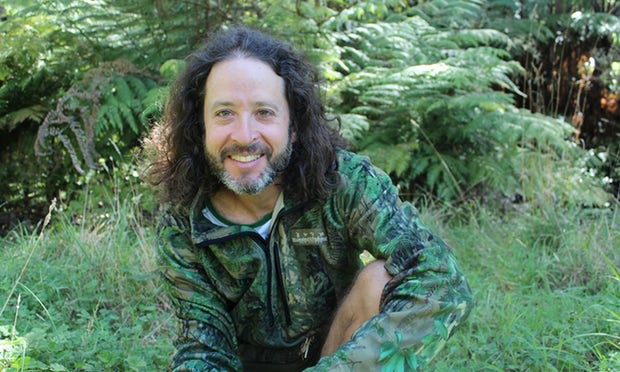
“We are called a school but we look nothing like any school out there,” says Joey Moncarz, co-founder and head teacher at Deep Green Bush School, which is in term two of its inaugural year.

“We don’t do things like telling kids it is time to write or learn maths. When they are interested in doing it, they do it.”

Moncarz is an ex-mainstream teacher. After five, frustrating years in mainstream schools in New Zealand he quit to found Deep Green Bush school, which has a roll of eight, and no classroom walls, time-out chairs or tests.

Concerned that mainstream schools were not preparing children for the global problems of the future – such as climate change –Moncarz envisioned a radically different kind of education, rooted in the primal skills of hunting, gathering and survival.

If the weather allows, pupils spend the majority of their day outdoors, exploring the New Zealand bush, learning to fish and hunt, trapping possums (which are considered a pest) and learning about the flora and fauna of their home.

The more traditional school skills, such as reading, writing and arithmetic, are acquired at their own pace, after they begin showing an interest in them. Not, says Moncarz, when the teacher dictates it is time to learn.

“We don’t have what you’d traditionally consider problem kids,” says Moncarz .

“Our parents saw their kids were unhappy and stressed in mainstream education and they started questioning; is it normal or right for kids to come home stressed and unhappy? Having taught in a mainstream school, I’d say most kids are stressed and unhappy.”

Bush school is registered with the Ministry of Education as an independent school, and therefore does not have to abide by the standard New Zealand curriculum, although it is subject to ministerial oversight.

Loosely inspired by the Sudbury Valley School in the US, which in turn was inspired by A.S Neill’s Summerhill school in the UK, since launching in January Moncarz has been fielding requests from around New Zealand and abroad to open chapters of Bush School in places as far afield as China and Europe.

Dr David Berg, a senior lecturer in education at the University of Otago, says there is a growing precedent for alternative “bush” schools worldwide, especially in Scandinavia, where some kindergarten children go ice-fishing during the school day.

However he says educators need to be careful that children are offered the full-range of skills required to get by and find employment in the modern world.

“Lots of people feel there is a disconnect with nature and the outdoors and people value that and are drawn to it,” says Dr Berg.

“In a modern society to be successful there are a range of skills to be developed and perhaps only some of those can be developed outside.”

Cathy Wylie Chief Researcher at the New Zealand Council for Educational Research said: “Deep Green Bush school is an outlier in terms of NZ schools.

“We’ve certainly had some private schools set up by parents and teachers that have drawn inspiration from schools like Summerhill, but nothing that has designed its programme and pedagogy in such a focused way around hunting and gathering.”

Moncarz insists that the school isn’t an “experiment” in education, and is based on two millions years of evidence of how parents have raised their kids, at one with nature.

“We don’t want to be one of a kind, we want to replace mainstream schools,” Moncarz.

“We are using the same wisdom parents have used to teach their kids for millions of years. Locking kids in a classroom and forcing them to learn just causes a lot of problems.”

Fuente: https://www.theguardian.com/world/2017/jun/20/no-classrooms-lessons-homework-new-zealand-school-children-are-free-to-roam

Comparte este contenido:

¡DONA! y Ayuda al equipo OVE a continuar con su trabajo.

Este portal es el resultado del trabajo de un equipo de voluntarios por la Educación mundial de calidad inclusiva. Tu Donación nos ayudará a seguir haciéndolo. 

Para donar haga clic en el siguiente enlace que está en la página principal del portal.

Agradecemos mucho lo que pueda hacer por el equipo de OVE.

Conociendo a Otras Voces en Educación:

Es un portal web de comunicación educativa mundial. OVE es concebido como un taller-escuela donde un colectivo de docentes voluntarias y voluntarios desde los cinco continentes reportan, comunican y procesan información relacionada a la educación como proceso cultural emancipatorio y como derecho humano.

Otras voces en Educación es una iniciativa independiente de todo gobierno, organismo económico nacional o internacional, culto religioso o agrupación política. En OVE convergen distintas miradas sobre el hecho educativo que se expresan con libertad y responsabilidad.

Otras Voces en Educación es un esfuerzo comunicacional del Observatorio Internacional de Reformas Educativas y políticas Docentes (REPOD-OI) y la Red Global/Glocal por la calidad Educativa que procura democratizar la información a la que acceden los maestros (as), profesores(as) e investigadores(as) educativos interesados(as) en conocer el curso de las reformas y contrarreformas educativas a escala planetaria. Pero fundamentalmente es un espacio para que docentes de todo el mundo expresen sus ideas, opiniones e informaciones asociadas al hecho educativo visto de manera integral.

Comparte este contenido:

UNICEF: Nueva Zelanda tiene más alta tasa mundial de suicidio adolescente

UNICEF- Nueva Zelanda/20 de junio de 2017/Fuente: http://globovision.com

Un nuevo informe del Fondo de las Naciones Unidas para la Infancia (Unicef), reveló que Nueva Zelanda tiene, de lejos, la mayor tasa de suicidio adolescente del mundo desarrollado.

Aunque es un dato alarmante, no es una sorpresa, puesto que no es la primera vez que el país ocupa ese puesto en el ranking.

La tasa de suicidio adolescente (personas de entre 15 y 19 años) es la mayor de una larga lista de 41 países europeos y de la OCDE, según el informe de Unicef.

La cifra de 15,6 suicidios por cada 100.000 personas es el doble que la de Estados Unidos, y casi cinco veces mayor que la de Reino Unido.

La doctora Prudence Stone, de Unicef en Nueva Zelanda, advierte que hay una combinación de razones, y es importante no quedarse solo con una estadística.

La elevada tasa de suicidios está vinculada con otros datos, como la pobreza infantil, los índices elevados de embarazo adolescente o las familias en las que no trabajan ninguno de los padres.

Además, de acuerdo con Shaun Robinson, de las Fundaciones de Salud Mental en Nueva Zelanda, el país tiene también «uno de los peores registros del mundo de acoso escolar».

 Fuente de la Noticia:
http://globovision.com/article/unicef-nueva-zelanda-tiene-mas-alta-tasa-mundial-de-suicidio-adolescente


Comparte este contenido:

Donate! and Helps the OVE team to continue its work.

This portal is the result of the work of a team of volunteers for world education of inclusive quality. Your Donation will help us continue to do so.

To donate click on the following link that is on the main page of the portal.

We really appreciate what you can do for the OVE team.

Knowing Other Voices in Education:

It is a web portal of educational communication worldwide. OVE is conceived as a workshop-school where a group of volunteer teachers and volunteers from the five continents report, communicate and process information related to education as an emancipatory cultural process and as a human right.

Other voices in Education is an initiative independent of any government, national or international economic body, religious cult or political grouping. In OVE different perspectives converge on the educational fact that are expressed with freedom and responsibility.

Other Voices in Education is a communication effort of the International Observatory of Educational Reforms and Educational Policies (REPOD-OI) and the Global / Glocal Network for the Educational Quality that seeks to democratize information that teachers, ) And educational researchers interested in learning about the course of educational reforms and counter-reforms on a global scale. But fundamentally it is a space for teachers from all over the world to express their ideas, opinions and information associated with the educational fact seen in an integral way.

Comparte este contenido:

New Zealand: Shake-up of teacher training to smooth primary to secondary transition: Education Council

New Zealand/ June 20, 2017/ By: Nicholas Jones/Source: http://www.nzherald.co.nz

New teachers could soon be trained to teach at both primary and secondary levels to help smooth the transition between school levels for students.

Education Minister Nikki Kaye was open to the idea – saying the proposal was part of «an important discussion about flexibility».

In what would be a significant shake-up of how teachers are trained, the Education Council has proposed a number of changes to initial teacher education. Others include requiring would-be teachers to meet higher literacy and numeracy standards from 2020.

Currently most teacher education programmes prepared attendees to teach at a traditional education level such as early childhood, primary or secondary school.

The council proposes developing programmes to train new teachers to teach across different ranges of year levels than happens now. It says programmes could have a focus on particular years. For example, early childhood/primary (0 to 8 years of age), or middle school (9 to 14 years of age).

The latter would see a person trained to teach at year levels currently spanning primary, intermediate and secondary.

The council said this would let teachers take advantage of more diverse career opportunities within schools and «communities of learning» – local schools that work together and share some staff.

It would also let schools and early childhood centres better support children as they moved between traditional year levels, the council said.

Research has found that if a student had difficulty following a transition between school levels they were much more likely to drop out of education, and that poor transitions impacted on students’ wellbeing and future achievement.

Previous Education Minister Hekia Parata sought advice on how the transition between pre-school and school could be strengthened, and there was now a preference for new school builds to be in the campus style – offering ECE, primary and secondary schooling on one site.

Post Primary Teachers’ Association (PPTA) president Jack Boyle said any changes to teacher training needed to be supported by adequate professional development and support for the 60,000 current teachers in schools.

«The focus doesn’t need to be on structural change for the sake of saying, ‘we’re doing something different’. It needs to be on the people in the room. If every teacher in New Zealand had access to guaranteed professional learning and support then I think you’d see a lot more improvement in what is often called the achievement gap.»

Boyle said most new teachers learnt more in the classroom, and many secondary schools already employed teachers who had degrees in primary education.

The PPTA had already expressed concern at another council proposal, to eventually make all would-be teachers complete a degree in their chosen subject as well as a postgraduate qualification in teaching. The union said that could worsen teacher-supply issues.

Currently, secondary teachers generally have a degree in the subject they teach and a graduate diploma in teaching, with more primary teachers having degrees in education.

Any changes floated by the Education Council are significant, given its role as the professional organisation advocating on behalf of teachers. It has outlined the proposal and other possible changes in a discussion document and called for submissions, closing July 7.

Kaye said she had been briefed about the proposals, and it was important to respect the independent consultation process.

«Once the consultation has been completed, the council has confirmed that it will present its final report to the sector and Government. I’m advised that some of the proposals could have potential cost implications, so these would need to be considered by the Government as the process develops.»

Source:

http://www.nzherald.co.nz/politics/news/article.cfm?c_id=280&objectid=11878789&ref=rss

Comparte este contenido:

Fewer students are going to public secondary schools in Australia

Australia/Junio de 2017/Fuente: The Conversation

Resumen: Es posible que haya escuchado recientemente que las escuelas públicas de Australia han experimentado un aumento en las inscripciones. El Sydney Morning Herald informó que las escuelas públicas de Australia han aumentado su participación en la matrícula, «invirtiendo una tendencia de cuarenta años». Un portavoz de la Oficina Australiana de Estadísticas dijo que era una «inversión de la tendencia constante» hacia las escuelas privadas.Esto es engañoso, por dos razones: En primer lugar, la población total en Australia ha aumentado, lo que ha dado lugar a un aumento de la matrícula para muchos sectores escolares. En total hay 1.28% más estudiantes (a tiempo completo) matriculados en las escuelas…

You may have heard recently that public schools in Australia have experienced increased enrolments.

The Sydney Morning Herald reported that public schools in Australia have increased their share of enrolments, “reversing a forty-year trend”.

A spokesperson from the Australian Bureau of Statistics stated that it was a “reversal of the steady drift” towards private schools.

This is misleading, for two reasons:

First, the overall population in Australia has increased, which has resulted in increased enrolments for many schooling sectors. In total there are 1.28% more students (full-time) enrolled in schools.

Second, while enrolment in public and independent primary schools (excluding Catholic schools) has increased, enrolment in public secondary schools has decreased.

We have one of the highest levels of private school enrolment within the OECD, and our country also maintains the highest levels of private expenditure towards schools (contributions from households).

It is untrue that there is a reversal of the steady drift if we look at secondary schools.

As the more expensive constituent of schooling, and also the gateway to higher education, it is the secondary school where politics truly come to the fore.

When it comes to debates about funding and privatisation, the secondary school sector is far more entangled in the politics of choice.

When we are told that our public school enrolment is increasing, this may lead you to believe that our public schools are strong and healthy. This disguises the ugly truth that many of our public secondary schools are struggling, mainly due to an ongoing stream of policies that have attacked and undermined our public secondary schools.

By how much as public secondary school enrolments decreased?

Since 2010, the public secondary school has decreased its enrolments from 60% to 59.13%.

Since 2010, the average independent school has increased its share of enrolments from 18% to 18.39%.

These changes seem very minor, and when regarded in the context of population increases, are relatively insignificant.

However, when taken with a more longitudinal analysis, it is evident that the independent secondary school in Australia has continually bolstered its enrolment share.

The independent secondary school sector has experienced the largest proportional increase in enrolment from 1990 to 2016 (6.39%).

The government (public) school has recorded the largest proportional decrease during this same period (8.87%).

Evidently, there is a consistent pattern of growth within the independent sector and a consistent pattern of decline, in terms of enrolment levels, within the public sector.

It would be simplistic to argue that this is simply a matter of demand, rather than complicated by many other factors including economic, social and cultural shifts.

As education reforms bolstered funding for the private sector, enrolment levels in the private sector increased at a similar rate and time period.

Encouraging private school choice

The government has always played a role in encouraging particular consumer choices. This is no different for schooling.

Throughout the 1990s and beyond, public schools were consistently closed or merged across various states and territories. This undoubtedly establishes a sense of instability and volatility for the consumer.

Among the reasons cited for these closures was lack of enrolment numbers. Unlike private schools, public schools must consistently prove their economic feasibility. (This reason was strongly refuted by the public. In Victoria in the 1990s, it was described as “the biggest battle over education in more than a decade”.)

While the overall number of full-time secondary students grew, by 2011 the availability of public schools had declined.

The total percentage of public schools in Australia has decreased by 2%. On the other hand, the percentage of private schools has increased by 1% of the total number of schools.

We tend to widely accept privatisation of our schools. In Australia, the overall proportion of students in private schools is 35% ( but 41% in secondary school). This far outweighs the average OECD country, where 18% is the average number.

Compare this to the US, where approximately 8% of students attend private schools. In Canada, this percentage is even lower (approximately 6%), and lower again in countries such as New Zealand, Finland or Sweden.

We also have one of the highest percentages of private expenditure within the school sector. What this means is that we rely far more on a “user-pays” system than the average OECD country.

This is clearly problematic for those families with less capacity to pay.

This was noted in the OECD’s Education at a Glance 2016 report. When it comes to secondary schooling, for the majority of OECD countries, 90% of expenditure comes from government funds. But this wasn’t the case for Australia, Chile and Columbia, which “rely on over one-fifth of private expenditure at this level”.

While many other OECD countries do fund their private schools, they are also subject to a host of regulations.

When it comes to the funding private schools, Australia is classified as a “high funding and low regulation” country. In comparison to other OECD countries, private schools have little accountability in terms of how they spend their money.

Add to this a dominant cultural narrative around the superiority of private schooling, and you have a disturbing tide of privatisation in our secondary schools.

This tide of privatisation will only further entrench equity gaps for students from families who cannot afford to pay. It will also add to the household burden for those families struggling to pay their private school costs.

Fuente: http://theconversation.com/fewer-students-are-going-to-public-secondary-schools-in-australia-79425

Comparte este contenido:

Canberra Refugee Support education scholarships help refugees to a bright future

Europa/Asia/África/Oceania, 17 de junio de 2017.  Fuente:

A new computer for studying and education fees for a semester are just two things refugees will purchase with the money from a scholarship from Canberra Refugee Support.

Others will buy joggers, and some will pay school fees.Muzhgan Gafoori is receiving a scholarship from Canberra Refugee Support to further her studies in accounting.

The 53 recipients of the money will each receive a cheque of up to $1000 to help shape the rest of their lives.

The candidates have been chosen for their hard work and dedication to their education, and for their commitment to making their lives and their family’s lives better.

Muzhgan Gafoori, 23, arrived in Canberra in 2013. She didn’t speak English, but spent a year and a half learning the language.

 She was born in Afghanistan and sought refuge in Australia with her parents and two younger siblings.
Ms Gafoori said her family came to Australia to feel safe.

«If you compare here to Afghanistan, it’s more safe here. But you can’t even compare it. At the moment in Afghanistan it’s all war. Every day there are bomb blasts.»

In the years since her arrival, Ms Gafoori has worked full time to support her family while also studying full time. She hopes to pursue a career in accounting, and is undertaking her diploma at CIT.

«It will help me pay for my diploma, and it will help me save for my advanced diploma next year,» Ms Gafoori said of the scholarship.

Her dream is to finish her accounting degree, become an Australian citizen and get a good job.

«You can do whatever you want here, but you need to work hard for it,» she said.

Mother-of-four Viola Oshan will be paying for a variety of things with her scholarship, putting it towards a new computer, her own education fees and her children’s school fees.

Ms Oshan is from Luo ethnic group from South Sudan, but lived in North Sudan due to the war. She arrived in Australia in 2005.

«We moved from North Sudan to Egypt and I was in Egypt for four years and then from Egypt we came to Australia in 2004,» Ms Oshan said. She was pregnant with her first son when she arrived, and her daughter was four years old.

Her son is now 12, and her daughter 17.

Ms Oshan works part time in a childcare to support her family both in Australia and overseas. She is also studying for her diploma in Early Childhood Education at CIT.

She also volunteers with a playground for children from the South Sudanese community. Ms Oshan said the transition to living in Australia was difficult, particularly the language barrier, but she was grateful for the help of Canberra Refugee Support.

«It’s very hard, it means a lot,» she said of the scholarship.

Canberra Refugee Support vice-president Brian Calder said the money was a recognition of achievement and effort the recipients were making in their education.

«They’ve come to Australia and they’ve really realised how education is a pathway to not only employment but to active involvement and contribution to their new community,» he said.

Canberra Refugee Support is a Canberra-region not-for-profit organisation with a purpose to be a good neighbour to refugees and asylum-seekers.

Fuente: http://education.einnews.com/article/387401136/cVE0ykZ3cQmPCCT3?lcf=ZdFIsVy5FNL1d6BCqG9muZ1ThG_8NrDelJyazu0BSuo%3D

Photo: Dion Georgopoulos


Comparte este contenido:
Page 39 of 102
1 37 38 39 40 41 102