Page 92 of 102
1 90 91 92 93 94 102

Papua Nueva Guinea Government plans to establish more schools

Papua Nueva Guinea Government plans to establish more schools

Papua Nueva guinea/abril de 2016/ Papua Nueva guinea education news

Resumen: Uno de los compromisos del Gobierno Papua Nueva Guinea es asegurar que todas las provincias del país tengan más escuelas secundarias, escuelas técnicas y escuelas normales, dice el ministro de Educación Nick kumán.
ONE of the PNG Government’s commitments is to ensure that every province in the country has more secondary schools, technical schools and teachers’ colleges, Education Minister Nick Kuman says.
Speaking at the signing of a memorandum of agreement between his department and the National Capital District Commission to transfer powers and functions to the city, Kuman said we (Government) want to ensure that all the local level governments (LLG) in every district will have high schools and eventually turned into secondary schools.”
“We also want to see that we have a vocational school in each district right throughout the country and at the same time, we are embarking on the schools of excellence.
“The objective of the Government is to overhaul the entire education system and to ensure that the delivery mechanism to basic education must always impact on quality education.
Kuman said applicable education must be provided to all our children in the country.
“When the Government was formed in 2007, education was number one priority and we ensured that we invested in education up till today.
Fuente:
http://edu.pngfacts.com/education-news/png-government-plans-to-establish-more-schools
foto:
http://edu.pngfacts.com/uploads/1/1/3/2/11320972/274429446.jpg

Comparte este contenido:

Papua Nueva Guinea: Obura-Wonenara district launches Flexible Open Distant Education centre

papua Nueva Guinea: Obura-Wonenara district launches Flexible Open Distant Education centre

Papua Nueva Guinea/ abril de 2016/ Papua Nueva Guinea Education News

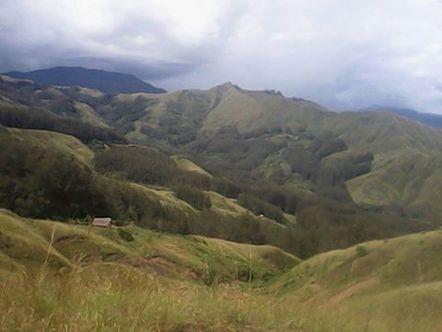
Resumen: Los estudiantes en el distrito Obura-Wonenara, montañas del este, que abandonan el sistema escolar convencional todavía puede continuar después de que el distrito puso en marcha su centro flexible abierto de Distante Educación (FODE).

STUDENTS in Obura-Wonenara district, Eastern Highlands, who drop out of the conventional schooling system can still continue after the district launched its Flexible Open Distant Education (FODE) centre.
The centre, to be called Obura-Wonenara Flexible Open Distance Education, will have the normal component of formal learning and technical/vocational school practical subjects included.
Classes at the city is expected to start this week. Obura-Wonenara MP Merrah Minnie Kipefa said the Obura-Wonenara district development authority will run the FODE centre and finance it under the district’s recurrent budget.
“I can go out of office tomorrow but OWAN FODE learning centre will remain to continue to serve students who drop off the normal school system,” he said.
Deputy principal of FODE Bob Kiakari said FODE in the district is the first out of the 89 districts in Papua New Guinea to have a FODE centre through the initiative of MP Kipefa.
“Education is very important, the contents in the FODE materials are simplified for students to understand easily,” he said. The National
Fuente: http://edu.pngfacts.com/education-news/obura-wonenara-district-launches-flexible-open-distant-education-centre
Foto de: Kastie télex
http://edu.pngfacts.com/uploads/1/1/3/2/11320972/7489166.jpg?443

Comparte este contenido:

Nueva Zelanda: Mangere Central School pitch-in on roading project

Nueva Zelanda/ Abril 2016/portal Education.govt.nz

Resumen: Un grupo de estudiantes de una escuela primaria de Auckland, han descubierto de primera mano cómo lo que aprenden en la escuela se puede aplicar en la vida real. Ocho estudiantes de la Escuela regular Central de Mangere, puso en su alta visibilidad chalecos fluorescentes para el proyecto de construcción de carreteras cerca.

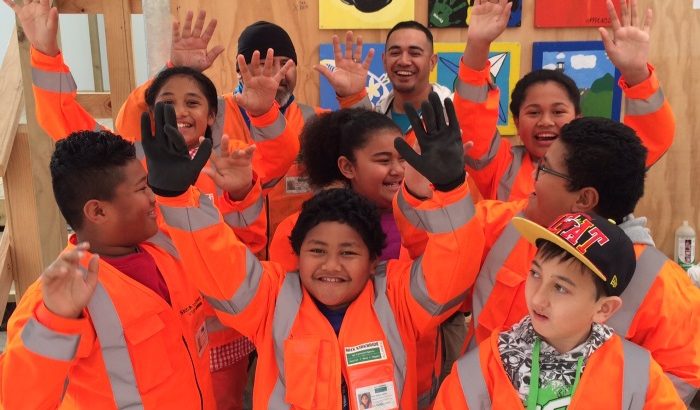
A group of students from an Auckland primary school have found out firsthand how what they learn in school can be applied in real life.
Eight Mangere Central School students regularly put on their hi-vis fluorescent jackets and head to a nearby road construction project.
They join the other workers in line for bacon and eggs, have decorated the lunch room with their works of art and are set to lend a hand planting thousands of trees.
The student’s efforts are part of a special partnership between Mangere Central School and the redevelopment of State Highway 20A in Auckland.
Principal Maria Heron says when she first heard about the road upgrade she was worried about possible disruptions to school life.
But after talking to the project’s NZ Transport Agency stakeholder manager, Kelli Sullivan, the pair came up with a plan to get the school community involved.

«Right from the start, when NZ Transport Agency came to talk to us about the project, Kelli and I have worked closely together to make something positive of the disruption,» Maria says.
«NZ Transport Agency got involved in the school’s strategic vision and how they could fit in with it, which threw up a lot of opportunities for us.»
Kelli says she and Maria wanted to create exciting learning opportunities for students at Mangere Central.
Last year the school planned a lot of its curriculum around physical structures, bridges and infrastructure, so Maria says working on the highway project ‘ticked all the boxes’ in providing authentic learning opportuinities.
Eight students in particular have been readily involved in the project. Kelli says students were given the chance to apply for a job on site and were paired-up with a fully grown counterpart – from a mini health and safety officer to a mini construction manager.
«The students were inducted onto the site and given their own photo identification cards,» Kelli says. “They are given specific monthly tasks, for example the stakeholder manager helped work on a neighbourhood barbeque to discuss the project with the community.
«The children love being involved. They have all gone from being shy and quiet to fitting right in with the rest of the team, they are great ambassadors for their school and community.»

Kelli says the workers on site enjoy having the students around.
«They love it. To be honest I think that our workers get more out of it than the kids. For them it is like having their own children on site.»
Because the students are under 18 there are strict health and safety rules when they are on site. As part of the project team the students have supervised access to site offices but are not allowed in construction areas. Luckily, due to the scale of the project, there are many vantage points and opportunities to interact directly with the workers.
Maria says both sides have tried to be good neighbours to each other and help each other in their work as much as they can
«They’ve helped us out a few times,” she says. “We were putting in a new garden so they sent over a few guys to put the boxing in for us. It was fantastic.»
«On another occasion the workers discovered eels in an old drain. They stopped work and students were involved in the process of trapping and re-homing the eels in accordance with local iwi protocol.»
Being involved in the project has shown the students many different career pathways, Maria says.
«One boy, who applied to be a mini-engineer, went up to one of the real engineers and said ‘I really like Lego, can I be an engineer?’. He turned around and said ‘that’s how I became one’.»
A lasting legacy of the partnership will be a man-made wetland across the road from the school, which students will help develop. After the project is complete the students will be the kaitiaki of this wetland.
Kelli says partnering up with stakeholders and being a good neighbour is something the NZ Transport Agency strives for on all their projects.
«The SH20A team are incredibly fortunate to be working right beside a school.»

Fuente: http://www.education.govt.nz/news/mangere-central-school-pitch-in-on-roading-project/
Foto: http://www.education.govt.nz/assets/Images/News-items/2016/MangereCentralPhoto1.jpg

Comparte este contenido:

Papua Nueva Guinea: Sopas School of Nursing progressing well

Papua Nueva Guinea: Sopas School of Nursing progressing well
Papua Nueva Guinea/abril de 2016/Papua Nueva Guinea Education News

Resumen: Después de ser cerrada, debido a las luchas tribales, el gobierno de la provincia de Enga, reactivo hace tres años, la Escuela de Enfermería de sopas en Wabag, Enga la cual ofrece un diploma de tres años en el programa de enfermería.

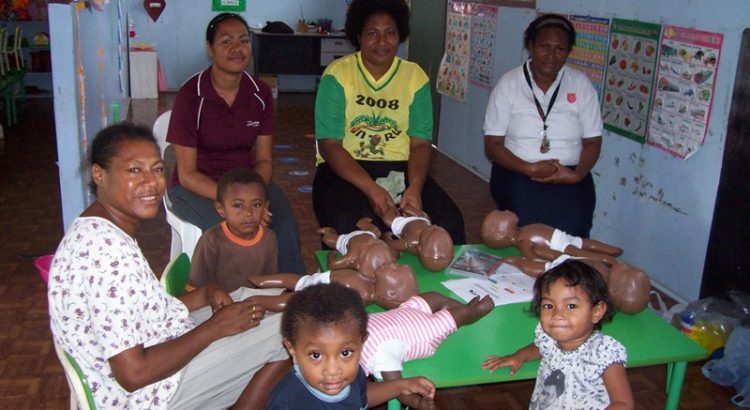
AFTER being revived by the Enga provincial government three years ago, the Sopas School of Nursing in Wabag, Enga is seeing good progress, school principal Noelyn Koutalo says.

Previously, the institution was run by the Seventh-day Adventist, but closed down due to tribal fights until being revived three years ago by the provincial government.

Koutalo said with the institution supported by the Enga government and the National Government, their (institution) operation was normal.

The school offers a three-year diploma in the nursing programme and the first lot of students that enrolled three years ago are in their second year.

“Next year will be a special year that the institution is looking forward to,” Koutalo said.
“We will be having our first graduation after resuming operation three years ago.
“From there, we will only know how much we have come so far in terms of learning and the operation of the school.”

Koutalo said the institution was functioning smoothly because of the assistance from the provincial and National Government.
Fuente:
http://edu.pngfacts.com/education-news/sopas-school-of-nursing-progressing-well

foto:

http://www.laerdal.com/la/images/L/AAJROJHK.jpg


Comparte este contenido:

Papua Nueva Guinea: Higher Education Minister Calls For More Dialogue

Papua Nueva Guinea: Higher Education Minister Calls For More Dialogue

Papua Nueva Guinea/abril de 2016/Papua Nueva Guinea Education News

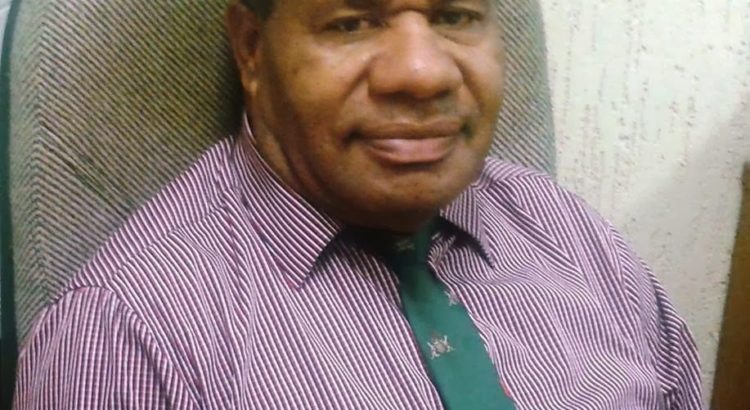
Resumen: el Ministro, Malakai Tabar, de Educación Superior, Ciencia, Investigación y Tecnología ha instado a las universidades del Estado de consultar a su departamento sobre la modificación de la legislación.
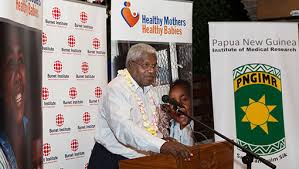
MINISTER for Higher Education, Science, Research and Technology Malakai Tabar has urged State universities to consult his department about amending legislation.
“Amendments made are to improve their quality assurance system for higher education institutions and establish conditions to improve sector governance and coordination,” Tabar said.
“What is really required of Government institution is accountability to Government of the day.
“It is my desire that the higher education sector is unified to achieve quality in higher education, expand access to tertiary education in all forms, is well managed and administered and accountable to the State.”
Tabar commended the council of the University of Natural Resources and Environment for following the due process in appointing the new Vice-Chancellor Professor John Warren.
“The appointment of the Vice-Chancellor was done through the Higher Education (General Provisions) Act 2014, Section 109,” he said. “It reflects the desire of the Government to hold CEOs of
State institutions accountable for public funds, something that is increasingly lacking in our governing councils.
“This appointment also indicates the Government’s knowledge in respecting the decision of the governing council and its preferences on who should be the CEO of the institution.”
Earlier, Rabaul MP Dr Allan Marat in the recent Parliament sitting, said that the appointment of the acting vice-chancellor was “hijacked” and that no announcement was made about the change of leadership.
He said there was a push for the appointment of Dr John Warren from Wales by the senior executive management but Warren declined.
But Tabar said the National Executive Council (NEC) was yet to discuss the issue.
NEC had finally appointed John Warren to the position of Vice-Chancellor following the University’s council’s recommendation.

Fuente:
http://edu.pngfacts.com/education-news/higher-education-minister-calls-for-more-dialogue
foto:
http://www.burnet.edu.au/system/asset/file/1770/News-Hon-Malakai-Tabar-MP-510-x-288.jpg

Comparte este contenido:

Nueva Zelanda: Secondary schools given free access to online tools

Nueva Zelanda: Secondary schools given free access to online tools

Nueva Zelanda/ Abril 2016/portal Education.govt.nz

Resumen: Miles de estudiantes de la escuela secundaria pueden ahora utilizar las herramientas en línea gratuitas para ayudarles con sus matemáticas y habilidades de lectura y escritura. Ministro Parata dice que estas herramientas se beneficiarán especialmente aquellos que necesitan ayuda para obtener CNAE Nivel 2.

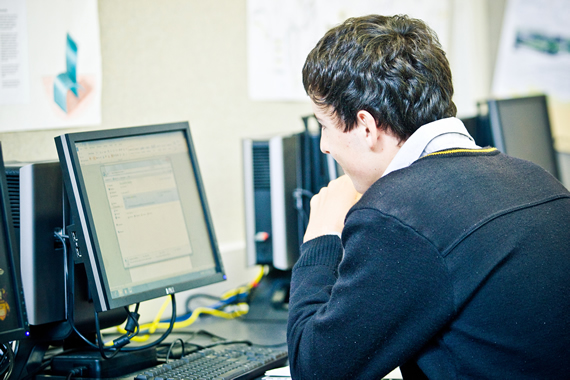
Thousands of secondary school students can now use free online tools to help them with their maths and literacy skills.
Education Minister Hekia Parata has announced that the Ministry’s interactive E-Ako programme and the Tertiary Education Commission’s Pathways Awarua tool are available in secondary schools.
Students using them answer questions relating to real-life examples at their own pace, to complement their classwork.
Minister Parata says these tools will especially benefit those needing support to obtain NCEA Level 2.

Fuente: http://www.education.govt.nz/news/secondary-schools-given-free-access-to-online-tools/
Foto
http://www.education.govt.nz/assets/Images/Carousels/NZC-Scenario-Interacting-Frankie.jpg

Comparte este contenido:

¿Qué busca Australia entre los jóvenes mendocinos?

La Feria Educativa de Australia busca estudiantes y trabajadores para ese país y el 22 estarán en la Nave Cultural.

Australia/ 14 de Abril de 2016/MDZ

El año pasado se registró un aumento record en el interés de estudiantes argentinos en estudiar en Australia, con un 24,3 por ciento más que el año anterior. La investigación tomó como punto de inicio el año 2002 y realizó una comparación en cuanto al total de estudiantes por año. «Algunas de las razones de este fenómeno pueden explicarse en primera instancia que hay una tendencia en alza, a nivel mundial, de la cantidad de extranjeros que viajan a Australia a estudiar», afirmó Carola Wober, directora y fundadora de CW International Education, agencia educativa acreditada por el Gobierno de Australia.

«Asimismo existen otros factores que, de una manera u otra, hacen que la experiencia en sí tenga un valor agregado importante respecto de otras opciones similares del mercado. Uno de estos es que, a partir de una nueva implementación realizada en el año 2013, todos los argentinos que hayan realizado dos años de estudio universitario tienen derecho a una visa de trabajo posterior a la finalización de los mismos. Otras de las razones son, por ejemplo, la cercanía con el continente asiático y el atractivo que este mercado genera, las buenas experiencias que se generan a partir de los programas de ‘work and holiday’ hacen que ,una vez finalizado ese ciclo, muchas personas quieran quedarse a estudiar y el hecho que exista un visado para las parejas o cónyuge de quienes deciden ir a estudiar», indicó Carola Wober.

La búsqueda en Mendoza

Por primera vez se hará en Mendoza la feria educativa CW Australia Educa. En lo que será su cuarta edición en el país, la exposición contará con la participación de 21 universidades provenientes de Australia que viajarán a la Argentina con el fin de promover la educación en el país insular.

El evento, que es totalmente gratuito, se llevará a cabo el viernes 22 de abril, de 14 a 22 hs, en la Nave Cultural (Avenida España y Maza, ciudad de Mendoza). Los interesados en asistir, deben pre inscribirse en el sitio web oficial:http://www.cwaustraliaeduca.com.ar/ .

Los visitantes podrán disfrutar una multiplicidad de ofertas académicas a través de más de veinte stands correspondientes a las más prestigiosas instituciones educativas australianas. Habrá, además,seminarios gratuitos, foros de estudiantes argentinos que contarán sus experiencias y promociones para realizar cursos de inglés, entre otras actividades.«Este evento nace a causa del aumento , año tras año, en la cantidad de argentinos que deciden ir a estudiar a Australia. Frente a este fenómeno,la posibilidad de nuclear en un mismo lugar todo lo que una persona debe tener en cuenta al momento de tomar esa decisión adquiere una importancia», aseguró Carola Wober, Directora y Fundadora de CW International Education.

A diferencia de otros años, la feria también ofrecerá información sobre los programas de trabajo para jóvenes profesionales, que deseen obtener experiencia laboral en distintas áreas de especialización y trabajar de la profesión para la cual estudiaron o están estudiando. Se hará foco en programas relacionados con las carreras de Ingeniería, Hotelería y Gastronomía pero los programas están abiertos a todas las profesiones. «Este tipo de programas se vienen desarrollando con gran éxito principalmente porque quienes deciden realizarlo pueden acceder directamente al área de trabajo específica que les compete o interesa».

CW Australia Educa se enmarca dentro del programa de educación que impulsa la Embajada de Australia con el fin de promover la educación de alta calidad académica que ofrece dicho país. El propio gobierno australiano tendrá su espacio en donde se brindará información correspondiente a diferentes tipos de visas y becas.

«Es una feria educativa pensada para todos aquellos que tengan como desafío potenciar su nivel académico, ganar experiencia laboral en su profesión y, al mismo tiempo, conocer una sociedad multicultural», concluyó Carola Wober.

Otras Estadísticas

· 37% de los estudiantes pertenecen al sector denominado VET, es decir, aquellas personas que decidieron realizar estudios de tecnicaturas.

· 30% entran dentro de la categoría ELICOS, quienes realizan estudios de inglés.

· 27% en aquella categoría denominada “HIGHER EDUCATION”, esto se refiere exclusivamente a estudios universitarios.

· 5% en “Non Awards”.

· 1% en “Schools”.

Asimismo, de un total de 444 personas, cabe destacar que el campo de estudio más elegido por los argentinos es el de «Sociedad y Cultura», seguido por “Management y Commerce”.

Cantidad de personas por campo de estudio:

· Society and Culture: 178

· Management and Commerce: 161

· Mixed Field Programme: 29

· Natural and Physical Science: 12

· Information Technology: 9

· Other: 55

Fuente: http://www.mdzol.com/nota/667201-que-busca-australia-entre-los-jovenes-mendocinos/

Fuente de la imagen: https://www.google.co.ve/search?q=%C2%BFQu%C3%A9+busca+Australia+entre+los+j%C3%B3venes+mendocinos%3F&espv=2&biw=1024&bih=623&site=webhp&tbm=isch&source=lnms&sa=X&ved=0ahUKEwjXjcqZsY7MAhXBej4KHcmjBUAQ_AUIBygC&dpr=1#imgrc=UWYccXO_1TfqnM%3A
Comparte este contenido:
Page 92 of 102
1 90 91 92 93 94 102