Page 185 of 264
1 183 184 185 186 187 264

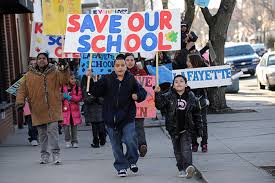
Argentina: Viernes 6 – 15hs. Desde Plaza Moreno a la gobernación ¡Todos a la marcha por el boleto educativo!

Alternativa Docente / 5 de Mayo de 2016

A los jóvenes nos cuesta llegar a fin de mes y bancar la cursada. Junto a los trabajadores, sufrimos la inflación, falta de becas, suba en las copias o la vivienda. Junto al boletazo de Macri y Vidal, más los tarifazos y el ajuste presupuestario que condicionan el funcionamiento de las universidades.
El PRO aumentó 100% el boleto para librarse de parte de los subsidios para los patrones del transporte. Y les mantiene sus ganancias aunque dan un mal servicio. Mientras tanto, Vidal se niega a implementar el Boleto Educativo Gratuito diciendo que la ley sería “insostenible”, pero los fondos están en el Presupuesto y la justicia le ordena aplicarla.
El gobierno (PRO-UCR) plantea una nueva ley en setiembre. Con cinismo, apelan a la memoria de “La Noche de los Lápices”, pero para reducir el beneficio a universitarios pobres. La ley de boleto gratuito se aprobó hace 9 meses por unanimidad de ambas cámaras. Aunque dejó fuera a docentes y auxiliares, sí garantiza el boleto gratis en colectivo y tren a estudiantes de nivel inicial, primario, medio, terciario, universitario, formación profesional y bachilleratos populares.
Desde la marcha del 14 de abril, miles de estudiantes nos movilizamos en varios municipios, calentando motores para la marcha provincial del viernes 6 a la gobernación. Si bien la FULP, los Centros de Estudiantes y organizaciones de izquierda son los motores de la lucha, varios Centros y agrupaciones kirchneristas, participan en las marchas y la Coordinadora Provincial por el Boleto.
Es importante golpear en unidad y, por esa vía, lograr la mayor fuerza para derrotar al PRO. Pero sin dejar de señalar la responsabilidad del kirchnerismo en haber llegado a esta situación ya que gobernaron por 12 años para que el boleto estuviera implementado desde hace tiempo.
Así hoy podríamos ir por el boleto también para los trabajadores de la educación y donde el costo lo paguen los empresarios, no el pueblo. En camino a un sistema de transporte público, integrado y estatal, de calidad y bajo control de usuarios y trabajadores.
Pero la Coordinadora por el Boleto viene cruzada por disputas de cartel, sobre quién y cómo encabezar o los oradores. Cuando, desde la Juventud Socialista del MST, planteamos propuestas como una conferencia de prensa en Capital, además de coordinar con la lucha estudiantil allí y preparar una acción con otras provincias que también reclaman por el boleto.
El viernes 6, 15hs desde Plaza Moreno en La Plata, volvamos a ganar las calles para torcerle el brazo a Vidal. Hagamos asambleas, clases públicas y organicemos la lucha con los estatales, docentes y CTA. Y el 12 la seguimos con la marcha nacional a Plaza de Mayo. Desde la Juventud Socialista del MST te convocamos a demostrar, una vez más, que “los lápices siguen escribiendo”.

Juventud Socialista

Comparte este contenido:

Inglaterra: Sats tests: parents and children boycott primary school exams

Fuente: theguardian.com / 6 de Mayo de 2016

Up to 30,000 families said to be backing strike, but turnout appears to have varied widely, with much of England unaffected

Sporadic but vocal protests against the government’s testing regime for primary school pupils have taken place across England, but accurate estimates of the number of people taking part are difficult to gauge.

Despite suggestions that about 30,000 families were backing the boycott of Sats assessments for seven-year-old and 11-year-old pupils, schools in many parts of the country appeared unaffected, while others, including several in Brighton and parts of London, reported high numbers of absences.

Some schools in Newcastle have seen substantial numbers of parents keeping their children out of school for the day as part of a loose nationwide coalition of parents organised through social media to take action against changes to key stage one assessments first announced last year.

In Reading, few parents taking their children to primary schools appeared to have heard that the boycott was taking place.

The biggest public event appears to have been in Brighton, where the children’s laureate, Chris Riddell, addressed hundreds of families at Preston Park in a demonstration organised by parents of children at several local primary schools.

Riddell ridiculed claims by the education secretary, Nicky Morgan, that taking part in the strike would harm children’s education, arguing instead that teaching them to question government policy was “an important lesson”.

“My feeling is there should be more trust in teachers and their ability to assess children at this age, rather than through testing,” he said. “The children are being put under undue stress and my argument is what is the value of what comes from this testing. I think it is questionable.”

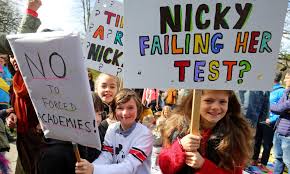
At Endcliffe Park in Sheffield, families gathered with banners reading “take a hammer to the grammar” and “sharpening my subordinate claws” in reference to the spelling, punctuation and grammar tests that critics say are too advanced for young pupils.

At some events, parents protested not just at the tests, but against the government’s desire to convert all maintained state schools into academies by 2022.

Morgan continued to tell parents that taking part in the day-long boycott could harm their children’s education. “To those who say we should let our children be creative, imaginative, and happy – of course I agree, both as a parent and as the education secretary. But I would ask them this – how creative can a child be if they struggle to understand the words on the page in front of them?” she said.

“What are the limits placed on a child’s imagination when they cannot write down their ideas for others to read? That is why the campaign being led by some of those who do not think we should set high expectations is so damaging.”


Link original: http://www.theguardian.com/education/2016/may/03/sats-tests-parents-children-boycott-primary-school-exams?CMP=share_btn_fb

Comparte este contenido:

Is East Nashville following New Orleans’ lead on schools?

The proposal to create an all-choice zone in East Nashville is concerning. For the past decade, I have studied New Orleans, the nation’s first all-charter school district. The attempt to turn around neighborhood schools by closing them and opening charters caused greater harm than Hurricane Katrina. I fear the same destructive «reforms» will strike Nashville.

In 2005, Louisiana’s state-run Recovery School District (RSD) assumed control of most public schools in New Orleans and handed them over forprivate management and profit making by «nonprofit» charter school operators.

Experienced veteran teachers in New Orleans were unlawfully fired and replaced by transient, inexperienced recruits from beyond the city, with most departing after two years. Teach For America stood ready to supply new teachers. Most of all, it stood to profit.

Neighborhood schools were closed without genuine community input. Meanwhile, charter school operators have paid themselves six-figure salaries, used public money without transparency and appointed unelected boards to govern the schools.

Community members have filed civil rights lawsuits, including one by Southern Poverty Law Center alleging thousands of disabled children were denied access to schools and federally mandated services in violation of the Individuals with Disabilities Education Act. Moreover, there are charter schools in New Orleans with out-of-school suspension rates approximating 70 percent.

Charter school operators in New Orleans do not care about children — they care about making money. They do not want to serve children who are «expensive» or may compromise the business venture.

The plan developing in Nashville follows the New Orleans model.

In 2010, New Schools for New Orleans (NSNO), the city’s leading charter school incubator, received a $28 million federal grant to expand charters in New Orleans as well as Nashville and Memphis. NSNO worked with Louisiana’s RSD and Tennessee’s Achievement School District (ASD), designed after the RSD, to «scale» the model in urban areas beyond New Orleans.

Around this same time, Mayor Karl Dean and Director of Schools Jesse Register welcomed the newly formed Tennessee Charter School Incubator (TCSI). TCSI was led initially by Matt Candler, NSNO’s former CEO, and planned to launch 20 new charter schools in Nashville and Memphis within five years.

In 2012, NSNO published the report «New Orleans-Style Education Reform: A Guide for Cities» to disseminate advice on replicating New Orleans’ all-charter model. ASD superintendent Chris Barbic contributed insights to NSNO’s guide with TCSI’s Justin Testerman and Greg Thompson. Louisiana Sen. Mary Landrieu, NSNO’s ally, hosted a forum in Washington, D.C., on the guide. Landrieu co-chairs the Senate Public Charter School Caucus with Tennessee Sen. Lamar Alexander.

Register also signed the District-Charter Collaboration Compact, an agreement between traditional district schools and charter schools to work together. New Orleans is a key contributor to this Gates Foundation-supported collaboration.

Register’s open letter says education officials are «coming up with new ideas» to solve Nashville’s problems. The ideas are not new; they were incubated in New Orleans. The plan is not in «early stages of development»; charter school entrepreneurs have been laying groundwork for years. The task force formed and «big news» dropped before community input was invited. In New Orleans, schools were seized and chartered before communities returned to the city.

«Charter Schools, Race, and Urban Space: Where the Market Meets Grassroots Resistance» chronicles the injustices resulting from charter expansion in New Orleans. Citizens concerned about the future of Nashville’s public schools may find the book illuminating.

We need to address the root causes of struggling urban schools: ongoing state disinvestment in black and brown children. Privatizing public schools will never do this.


El link original es: http://www.tennessean.com/story/opinion/2014/10/01/east-nashville-following-new-orleans-lead-schools/16487057/


Comparte este contenido:

La Carta nº 559 CEAAL

– Asamblea General del CEAAL 20 al 24 de junio /Guadalajara, México.Clic aquí.
– Perú. Diálogo “La educación como un derecho: del dicho al hecho”. Clic aquí.
– Perú. Presentación del libro “El sistema que esperaba Juan García”. Sistema Nacional de EPJA en América Latina. Clic aquí.
– Chile. CEAAL. Nuevo enlace nacional. Clic aquí.
– Guatemala. CEAAL. Nueva coordinadora de la Red Mesoamericana Alforja, Verónica del CID. Clic aquí.
– Argentina. Córdoba. Educación Popular. Los desafíos para nuestra acción política, pedagógica y cultural. Clic aquí.
– Brasilia: Seminario Internacional a lo largo de la vida. Confintea Brasil +6. Clic aquí.
– República Dominicana. CEAAL. ¡Magaly Pineda Tejada, presente!. Clic aquí.
– República Dominicana. CIPAF (CEAAL). Fallecimiento de Magaly Pineda, fundadora del CIPAF. Clic aquí.
– Brasil. Instituto Paulo Freire (CEAAL). livro “Conscientização”, de Paulo Freire, é lançado pela Cortez Editora. Clic aquí.
– México. Altepetl AC (CEAAL). 4ta Escuela de promotoras/es sociales por los derechos humanos, la igualdad, la ciudadanía y la construcción de paz. Clic aquí.
– Colombia. El IPC (CEAAL) y Unaula, unidos por la restitución de tierras en Urabá. Clicaquí.
– Brasil. Instituto Pólis (CEAAL). Novos Paradigmas de Produção e Consumo: experiências innovadoras. Clic aquí.
– Argentina. CePaDeHu (CEAAL). Taller de Parto Respetado. Clic aquí.
– Perú. PDTG (CEAAL). Taller de Educación Popular Feminista.
Clic aquí.
– Brasil. CONTAG (CEAAL). Encontro Nacional de Reforma Agrária e Crédito Fundiário termina hoje defendendo a necessidade de forte mobilização. Clic aquí.
– Sudáfrica. Premio de Educación Popular. Clic aquí.
– Honduras. Encuentro Internacional de los Pueblos “Berta Cáceres vive”. Clic aquí.

– Argentina. Convocatoria a las Jornadas “Educación y trabajo de jóvenes y adultos a lo largo de la vida. Investigaciones y estudios acerca de las políticas, los sujetos y las experiencias en la educación de jóvenes y adultos”. Clic aquí.
– Argentina. Dossier: “A 40 años del Golpe: trazar puentes entre pasado y futuro”. Clic aquí.
– Semana de Acción Mundial por la Educación 2016. Clic aquí.
– Guatemala. Organizaciones presionan al gobierno a cumplir compromisos con las minorías. Clic aquí.
– Chile. Nueva Educación Pública, cuidado con las mesas cojas.
Clic aquí.
– Último libro de Eduardo Galeano se presentará en México.
Clic aquí.
– Publicación “Nuevas oportunidades educativas. Política y gestión en la Educación Básica Alternativa” de Manuel Iguiñiz y Luis Salazar.
Clic aquí.
– CLACSO. Publicación “Actores, redes y desafíos. Juventudes e infancias en América Latina”. Clic aquí.
– UNESCO. Liderazgo escolar en América Latina y el Caribe. Experiencias innovadoras de formación de directivos escolares en la región. Clic aquí.

Si no visualiza correctamente el contenido haga clic aquí.

Comparte este contenido:

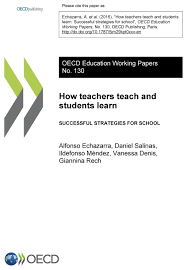
OECD: How teachers teach and students learn Successful strategies for school

5 de Mayo de 2016
This paper examines how particular teaching and learning strategies are related to student performance on specific PISA test questions, particularly mathematics questions. The report compares teacher-directed instruction and memorisation learning strategies, at the traditional ends of the teaching and learning spectrums, and student-oriented instruction and elaboration learning strategies, at the opposite ends. Other teaching strategies, such as formative assessment and cognitive activation, and learning approaches, such as control strategies, are also analysed. Our analyses suggest that to perform at the top, students cannot rely on memory alone; they need to approach mathematics strategically and creatively to succeed in the most complex problems. There is also some evidence that most teaching strategies have a role to play in the classroom. To varying degrees, students need to learn from teachers, be informed about their progress and work independently and collaboratively; above all, they need to be constantly challenged.

How teachers teach and students learn


Comparte este contenido:

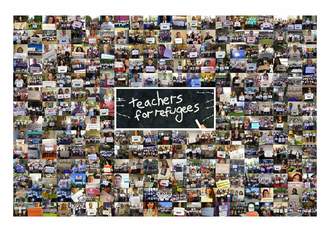
Australia: Teachers say close manus and Nauru, Welcome, Refugees

Fuente: www.megaphone.org.au  / 5 de mayo de 2016

TO: PRIME MINISTER MALCOLM TURNBULL AND MINISTER FOR IMMIGRATION AND BORDER PROTECTION PETER DUTTON

We call on Prime Minister Malcolm Turnbull and Minister for Immigration and Border Protection Peter Dutton to immediately:
– Close Manus Island and Nauru detention centres, and
– Bring all refugees and asylum seekers on Manus and Nauru to Australia for processing and resettlement.

Why is this important?

We, the undersigned teachers stand in solidarity with the family camp asylum seekers and refugees on Nauru who have been holding daily protests against their ongoing detention and offshore processing since the 20th of March.
There is no prospect of safety for refugees on Nauru. The mental health crises, sexual abuse, assaults in the community, discrimination and violence at school and permanent insecurity is intolerable and unnecessary for child and adult refugees.
Now it is clear that the detention of refugees on Manus Island is illegal. Amnesty International described Australia’s detention camp there as “tantamount to torture”, after visiting the centre in November 2013. All asylum seekers and refugees on Manus can and must be immediately brought to Australia.
The discrimination of the offshore camps is stark; while some asylum seekers have spent 1000 days in detention on Nauru without a refugee determination, others who shared the same boat journey to Australia have been living in the community in Australia for nearly three years. The cost of running the offshore prisons alone could pay for half of the $4.5 billion the Turnbull government won’t spend on the last two years of Gonski.
As teachers we uphold the rights of all children to live in a safe environment, to have access to educational opportunities and not be subject to discrimination. As teachers, we embrace the opportunity to work with refugee students and colleagues, and we know that when given a proper welcome, refugees enrich school communities. We address justice and human rights in our classrooms, and we teach our students to stand up to bullying, abuse and lies.

Link original: https://www.megaphone.org.au/petitions/teachers-say-close-manus-and-nauru-welcome-refugees?bucket&source=facebook-share-button&time=1462065364

Comparte este contenido:

EEUU: The Armed Campus in the Anxiety Age

Fuente: http://www.theatlantic.com/ 5 de Mayo de 2016

Campus-carry laws add unnecessary worry to communities already overwhelmed by unease.

ATLANTA, Ga.—A while back, a student at Georgia Tech, where I teach, showed me a series of anonymized “threats” that students in a notoriously difficult class of mine had posted in an online discussion forum. I’d just returned grades, and nobody was happy. “Does he have kids?” one asked. “I’m going to steal them and blackmail him,” answered another.” “Had kids,” added a third.

They’re the kind of comments you wouldn’t think twice about—just typical college students communing over a tough professor. Unless, that is, you also knew that those students might be permitted to carry concealed firearms on campus. Then their words might take on a different tenor, even if just hypothetically.

Eight states already allow gun possession on college campuses. Texas was the latest to adopt a campus-carry law, which will take effect August 1. Andlegislation allowing licensed gun holders over 21 to carry concealed handguns on college campuses set to reach the Georgia Senate floor as early as this week might make my state the ninth. (Of the remaining states, 19 currently ban concealed carry on campuses, and 23 leave the decision up to individual campuses.)

Texas’s law has incited a spate of recent distress among educators. Fritz Steiner, UT Austin’s dean of architecture, cited the law as a catalyst for seeking another position—he is leaving UT to become the dean of the University of Pennsylvania School of Design. The University of Virginia media studies professor Siva Vaidhyanathan, who is a UT Austin alumnus, withdrew his candidacy as a finalist for dean of that school’s Moody College of Communication due to his concerns about the new gun law. And faculty everywhere spurned a University of Houston Faculty Senate presentation on teaching after the law’s enactment. The tips it offers to faculty in the campus-carry era include “Drop certain topics from your curriculum” and “limit student access off-hours.”

University administrators don’t particularly like such policies either. Among those testifying against campus carry before the Georgia Senate Judiciary Committee last week was the University System of Georgia chancellor Hank Huckaby. His office, along with the presidents and campus police chiefs of all 29 University System of Georgia institutions, including the University of Georgia and the Georgia Institute of Technology, all oppose concealed carry on campus. And it’s not just the administrators and faculty who are concerned. A survey conducted by Georgia Tech’s Student Government Association two weeks ago revealed that a majority of students oppose concealed handguns on campus.

College students’ whole lives have been lived bathed in vague and constant threat.
Like elsewhere, critics of campus carry in Georgia make appeals to the safety of students and faculty. Concessions in the current bill would still prohibit guns in dormitories, fraternities and sororities, and athletic facilities—an exclusion justified by the possible presence of alcohol in these areas. Last weekend, the gun control advocacy nonprofit Everytown for Gun Safety aired a television ad opposing campus carry, which also cites alcohol’s impact on gun safety as a primary concern.
Meanwhile, Governor Nathan Deal, who had been swayed to oppose campus carry in a bill two years ago that expanded Georgia gun laws, has indicated his support for the measure this time around—partly because the “Wild West scenario” predicted after 2014’s so-called “Guns Everywhere” bill has not come to pass.

Apart from the discharge of firearms themselves, another case against guns on campus appeals to the chilling effects it might have on free speech. Writing last week for The Atlantic, Firmin DeBrabander cited the University of Houston presentation as evidence that campus carry could censor college classrooms. If faculty and students cannot discuss contentious issues in the open without “fear of inciting angry students to draw their guns,” Debrander reasons, then democracy itself could be undermined.


But both the appeals to safety and to free speech only superficially address the problem with guns on campus, and they do so by taking positions that many gun-rights proponents don’t share anyway. Safety cuts both ways, and appeals to security have long justified support for expanded gun rights in America. If college campuses are among the few venues where guns are prohibited, argue gun advocates, then they will become targets for attacks. And when it comes to free speech, supporters of expanded gun rights will happily pit their Second Amendment against their opponents’ First. These arguments lead nowhere—particularly in states like Texas and Georgia with strong and proud cultures of firearms ownership.

A better case against guns on campus appeals to anxiety rather than safety or speech. Deep and pervasive unease already pervades college campuses, and safety and speech worries are just instances of a more general and more universal anxiety.

Today’s college students are beset by unease. And it’s no wonder why—their whole lives have been lived bathed in vague and constant threat. Today’s 21-year-old students were born in 1995. They were kindergarteners on 9/11, and their whole childhoods were backgrounded by forever war. Their primary and secondary schooling took place under the supposed reforms of No Child Left Behind, which meant an education designed around lots of high-stakes testing and the preparation necessary to conduct it.
They entered high school just after the 2008 global financial crisis, after which declines in the tax base led to billions of dollars of funding cuts to primary, secondary, and postsecondary public education. Here in Georgia, the lottery-funded HOPE Scholarship, which had paid full college tuition for students who kept a 3.0 average, increased its achievement requirements for full tuition and eliminated support for books and fees. Meanwhile, tuition rose precipitously—35 percent over the last five years at Georgia Tech—as funding declined. And as state funding has waned, flagships like UGA and Georgia Tech have increasingly pursued more lucrative out-of-state enrollments, while increasingly relying on gifts, endowments, grants, and contracts as state funding has become a minority contributor to institutional budgets.

Getting into college also became harder. In the arms race to raise test scores and thereby rankings, admissions have pushed average SAT scores at Georgia Tech up from 1420 in 2013 to 1449 in 2015, only adding to the anxiety of admission. Twenty-five points doesn’t sound like much, but because of the way the SAT is scored, it might amount to a difference of as few as one or two incorrect answers on the exam. A couple answers might measure a differential in academic performance and potential, but it might also represent the accident of a cold testing facility or a stressful commute into the exam. Every aspect of these kids’ lives are drawn taut. One badly timed sneeze can spell disaster.

Once enrolled, college campuses are brimming with new anxieties, and newly trenchant versions of old ones. The issues of preparation, access, and affordability to create an environment in which mere survival overwhelms learning—let alone indulgences like free speech. Then someone like me comes along and teaches the same class I would have taught five or 10 or 15 years ago, only to find that students are falling apart from the stress rather than from the materials. No wonder they fantasize about kidnapping my family.

A concealed-carry campus becomes a campus in which everyone carries a potential gun.
Even the successful students still must contend with a much worse economic lot than their cohorts did in the past. At Georgia Tech, even students who pursue “practical” degrees in areas of supposed economic growth, like computing, still face massive competition and pressure for jobs. I have students who have filed hundreds of applications and endured five or 10 separate interviews for a single entry-level job, including time-consuming cross-country trips to all-day interviews, before finally receiving an offer. The only greater motivator than fear is debt.


Guns arrive on campus today in this context of massive, wholesale collegiate anxiety. DeBrabander is right to worry that they might have a chilling effect on speech, but the chill goes so much deeper, straight to the bone. A concealed-carry campus becomes a campus in which everyone carries a potential gun. And the potential gun is far more powerful than the real gun, because it both issues and revokes a threat all at once. Made habitual and spread atop an already apprehensive base, that sort of mental anguish is nothing short of terrorism.

Think back to those online comments from my students. Even if they were merely playful—which really is all that they were—they suddenly seem threatening once firearms are in the picture. You don’t even need a gun to make it happen. The idea of a gun is sufficient. And that’s just me! I’m the one with the tenured professorship! Now imagine the students, all trying to make it through my class and everything else with all those ideas of guns in the room and on the quad.

An unspoken secret about firearms is that both proponents and opponents of gun laws share a common position: that guns ascribe a feeling of power and control to their bearers. Gun detractors are foolish not to acknowledge this truth of firearms, and they are reckless for sneering at gun owners who seek (legal) refuge in this feature of the weapons. Yes, we pay a dear price, measured in mortal lives, for that feeling of control and power when firearms are used improperly. And yes, as a nation, we seem to have decided that this price is acceptable. But not just from insanity or evil. When violence does erupt, it finds its source in fear and anger and hopelessness more than it does in mental instability. Absent other comforts and certainties, is it any wonder that firearms become such a tempting salve?

Yet in giving in to that temptation, we pay another price, too. It’s harder to see but even more pervasive. It is the quiet, constant apprehension of the idea of the gun in the room, the truly silenced barrel of the firearm that probably doesn’t exist but might, and whose possible existence alters the way we think and behave.

That guns on campus are having their moment right now is no accident. The entire college experience, along with the supposedly prosperous young adulthood into which college spills out, is imploding under the weight of unprecedented apprehension. And worst of all: That apprehension isn’t even neurotic and overzealous. It’s entirely reasonable for young people to fear a future that has never been more tenuous.

There are reasons to fear on college campuses. But those fears are misdirected at hypothetical bad guys with guns against whom good guys with guns would prevail. We’d better spend our worry—and our legislative effort—de-escalating the massive anxiety among college students today. We can do that by providing the resources to teach them well as kids, to give them affordable opportunities to pursue higher education, and to help them secure productive places in society matched to their talents and capacities. The great tragedy and sorrow of the push to extend gun rights to every nook and cranny of American life is not that firearms make people feel greater power and greater control in those contexts. It’s that they are so stripped of that power and control that they should need to seek solace in guns in the first place.

IAN BOGOST is a writer, game designer, and contributing editor atThe Atlantic. He is the Ivan Allen College Distinguished Chair in media studies and a professor of interactive computing at the Georgia Institute of Technology.

El link original: http://www.theatlantic.com/education/archive/2016/03/campus-carry-anxiety-age/472920/
Comparte este contenido:
Page 185 of 264
1 183 184 185 186 187 264