Page 187 of 228
1 185 186 187 188 189 228

EU referendum: scholars weigh case for and against Brexit

Fuente .Times Higher Education  / 9 de Junio de 2016

Public debate in the UK over whether to remain in the EU has been criticised for casting little light. Here, seven academics probe the arguments

‘Our problems are not created by EU membership. Many of our benefits are’

Life is not a bed of roses for many in the UK, but that is not because of the European Union. If the UK were a far more progressive state, at the forefront of social progress on this continent, we might have cause to grumble that Brussels was holding us back. But we are the social laggards.

We need EU legislation to stop us exploiting workers over holiday pay, working hours and redundancy payments. Our political establishment would happily tolerate levels of air pollution far above those that currently incur fines from the European Commission. And we would not know about our extraordinary levels of economic inequality were it not for European legislation that forces our highest paid bankers to release details of their salaries and bonuses.

That information reveals that 2,926 of them are paid more than €1 million (£800,000) a year, compared with just 939 in the rest of the EU combined. The chancellor of the Exchequer, George Osborne, tried to stop these figures being collected and released. He will have known that, between 2012‑13 and 2013‑14, the number of bankers in the UK who received more than €1 million rose by 840 while it dropped by 153 in the rest of the EU. Presumably even George was embarrassed by their ever more stratospheric greed. And despite David Cameron’s success inwatering down related EU transparency laws concerning family trusts, the regulations are better than we would have had otherwise.

It is sometimes claimed that we can fund the NHS only because of the taxes imposed on our financial services industry, or that it is the contributions that we pay to the EU that result in the NHS being so underfunded. However, of all affluent European nations, the UK is among the lowest in its spending on health. Only Greece and Italy spend slightly less per person, and only then in very recent years. Elsewhere in Europe, health spending per person is twice as much in Switzerland as it is in the UK, 81 per cent higher in Norway, 59 per cent higher in the Netherlands, 49 per cent higher in Germany and 27 per cent higher in France. The EU is not the reason.

Norway and Switzerland are often cited as successful European countries that are not fully integrated into the EU. What is often forgotten is that they are also remarkably economically equitable countries. The best-paid 1 per cent in Switzerland take half the proportion of total income that their equivalent in the UK take, so the poorest tenth of households in Switzerland enjoy three times as much (in real terms) as the poorest tenth in the UK. In Norway, inequalities are even less pronounced. Both countries are prosperous largely because of their social solidarity, not because of their autonomy from a few EU regulations.

I could go on. I could cite the UK’s risible educational performance compared with other EU countries. I could mention the high cost and poor quality of our housing – no fault of the EU. Or how we benefit from exporting millions of pensioners to the European mainland and importing fit young people we have not paid to educate. Our problems are not created by EU membership. Many of our benefits are.

We are so unusual in Europe because our past was so different. We relied on an empire. Leaving the EU will not bring it back.

Danny Dorling is Halford Mackinder professor of geography at the University of Oxford. His latest book, A Better Politics, from which most of the statistics in this article are taken, can be downloaded for free.
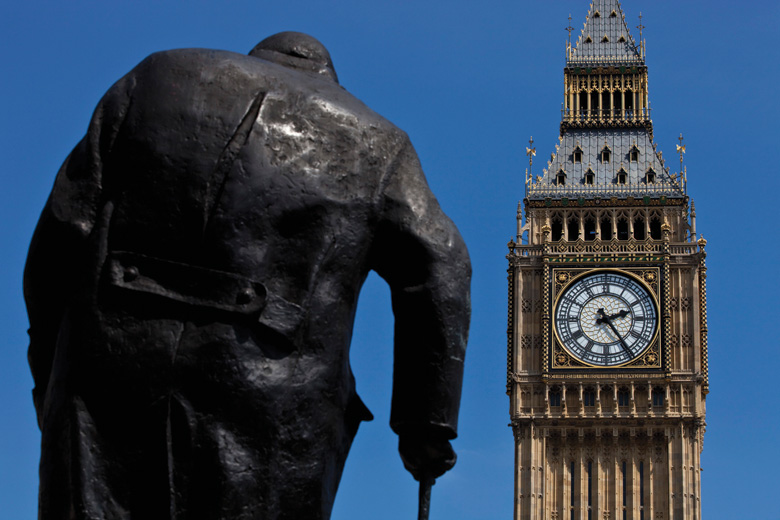
Winston Churchill statue and Big Ben, London

Source:
Alamy

‘Conservative Euroscepticism has a far longer history than is realised’

The Bagehot column in the 5 March edition of The Economist began with a description of Margaret Thatcher’s return from a European summit in Rome in October 1990, and her defiant “No. No. No.” to the House of Commons. It is now part of national folklore that this precipitated the resignation of Sir Geoffrey Howe as foreign secretary and the subsequent leadership contest that led to Thatcher’s downfall. “Partly because of the drama of those days, Europe has since transfixed and sundered the Conservative Party,” Bagehot mused.

Yes, in part. But Conservative Euroscepticism has a far longer history than is currently realised. With the emerging debate around European integration in the post-war era, many Conservatives felt that the UK would be better off without the Continent “on its back”. After all, the UK was still a world leader in heavy industry and manufacturing productivity, and its problems in adjusting to a post-war economy were thought to be short term. This enduring sense of the UK being “held back” by Europe is explicit in the current Brexit arguments.

But if Bagehot is a bit shaky on his history, so too are many of the Conservative Brexiteers themselves. For instance, their complaints that their party supported the UK’s entry into the European Economic Community in 1972 only because they thought they were joining a “trading bloc” is belied by the fact that it was Thatcher’s support for the Single European Act of 1986 that dramatically accelerated European integration.

Tory Brexiteers also appear to be unaware that their political idol, Sir Winston Churchill, was in very large part responsible for the birth of the post-war European project. Churchill and his fellow Europhile Conservatives were preoccupied with security: how to counter aggressive nationalism within European states, and how to bolster Europe from external threats.

Churchill saw the UK as being at the intersection of three circles: the Atlantic world, the European world and the world of Empire/Commonwealth. By 1953, his more sceptical foreign secretary, Sir Anthony Eden, believed that he had secured the best of all worlds: close affiliation with the Continent, stopping short of treaty-bound involvement. The trouble was that European diplomacy did not stand still. By pulling out of the Messina talks in December 1955, the UK removed itself from influencing the negotiations that led to the creation of the EEC in 1957.

Conservatives sceptics would also do well to remember the economic and political realities that prompted the UK’s original “shift” to Europe. The idea of a trading bloc founded on empire dates back to the early 20th century, but by the end of the 1950s, this had been discredited. Furthermore, trade with Commonwealth countries was declining in relative terms.

The expanded 53-member modern Commonwealth is the very antithesis of the EU. It has minimal institutional structure, loose commercial, financial and professional ties and infrequent high-level summitry. In other words, it is not a power bloc in economic and political terms, and it does not aspire to be. Indeed, the association’s other primarily small nations are very sensitive to any semblance of the UK throwing its weight around.

Furthermore, negotiations over reconfiguring the UK’s trading links with Commonwealth countries – especially Australia, New Zealand and the sugar-dependent economies of the Caribbean and the Pacific – were drawn out over a decade, ultimately drawing to a hard-fought conclusion in 1973. So although Commonwealth countries, with their shared legal, commercial and linguistic traditions, certainly offer trading opportunities, these should not be overplayed.

In terms of exercising influence, history teaches us that it is better to be on the inside arguing for change, than on the outside knocking plaintively on the door.

Sue Onslow is a senior research fellow at the Institute of Commonwealth Studies at the School of Advanced Study, University of London.
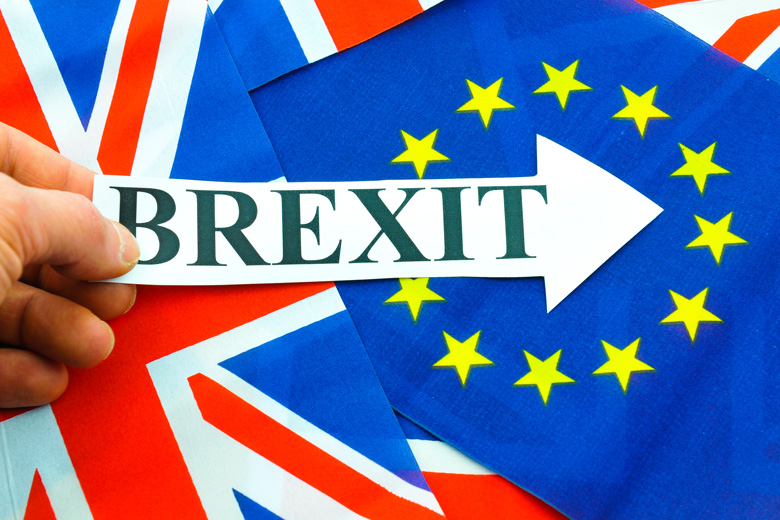
Hand holding Brexit sign, EU referendum

Source:
iStock

‘Brexit would mean that Parliament would have been undermined, not by Brussels but by British voters’

“Once you open that Pandora’s box, all sorts of Trojan horses will fly out.” That was the warning given in 1950 by foreign secretary Ernest Bevin when it was proposed that the UK participate in the European Coal and Steel Community, the precursor of the EU.

But Brexit would present the government and Parliament with a new Pandora’s box. Its advocates want to restore the sovereignty of Parliament. But if they succeed, the sovereignty of Parliament would have been undermined, not by Brussels but by British voters.

It would be an event without precedent in the long history of Parliament for MPs to support a policy – withdrawal from the EU – to which the majority of them are opposed. The people would have become, in effect, a third chamber of the legislature.

Referendums have a twofold constitutional purpose. The first is to allow the voice of the people to be heard when the party system is not working effectively. As in 1970, the last year before the UK entered the European Communities, all three parties favour British membership. So there was no way a voter in last year’s general election could have indicated that she wanted to leave the EU except by voting for the UK Independence Party.

But referendums have a second purpose: to insulate the issue in question from party and electoral politics. In theory at least, voters will be able to support Brexit without affecting the fortunes of the government or the prime minister. That is why, as in the 1975 referendum, the convention of collective responsibility has been suspended during campaigning. But, in reality, Brexit would probably lead to a crisis of confidence in the government. For the people would have said: “We reject its advice on a key issue of its programme.”

In 1979, the failure of the Welsh and Scottish devolution referendums led to the resignation of the Callaghan government and an early general election, at which the government was defeated. In France in 1969, the failure of a referendum on constitutional reform led to the immediate resignation of President de Gaulle. In 1972, Norwegians’ rejection of the advice of their government to join the European Communities prompted its prime minister to resign and the opposition parties to form a new government. In the wake of the Scottish referendum in 2014, David Cameron confessed that he would have resigned if the vote had been for independence. Could he survive a vote for Brexit? Would the Conservative Party be able to reunite in amity, or would it split over Europe, as Labour did in 1981?

If there is a vote for Brexit, Parliament must decide which EU laws it intends to preserve, which should be modified and which should be repealed. Brexiteers might well argue that this exercise is best carried out by those who believe in Brexit, and press for a general election to produce a Parliament more representative of their views. That case would no doubt be pressed particularly hard by Ukip. In 2015, it secured one-eighth of the popular vote but was rewarded with just one MP.

No wonder, then, that those opening the ballot boxes at 10pm on 23 June may well feel as if they are opening a Pandora’s box, from which new Trojan horses may fly out.

Vernon Bogdanor is professor of government at King’s College London. His books includeThe New British Constitution (2009) and The Coalition and the Constitution (2011).
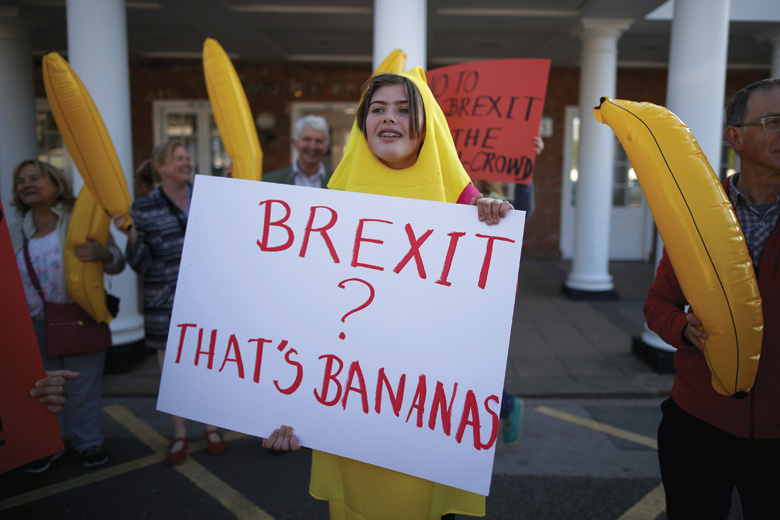
Anti-Brexit supporters dressed as bananas, Vote Leave rally, England

Source:
Getty

‘What I see on campus suggests that students are discovering a renewed passion to engage with current affairs and politics’

In our students’ union’s recent mock Brexit referendum, four times as many students said that they wanted the UK to remain in the EU as said they wished it to leave. This bears out national polling suggesting that young people are heavily in favour of remaining in the EU.

This is no wonder. This generation is less insular and more willing to engage globally than any previous one. Young people hate racism not because they feel that they ought to but because they are genuinely interested in different countries and cultures, and are in constant communication with them.

They also have very pragmatic reasons for wanting to travel and work abroad: their CVs are enhanced by global engagements. In a world opened up by technology, employers want people fluent in as many cultures as possible. The popularity of our #DMUglobal initiative reflects this. This project contributes to the travel costs of as many students as possible who are interested in an overseas experience as part of their course. Last year saw 1,196 students participate, and this year we are expecting 2,000.

But the general perception is that modern students are a shadow of their forthright, politicised ancestors of the 1960s and 1970s. And polling suggests that 18- to 34-year-olds are significantly less likely to vote in the referendum than older people. But in my experience, the apathetic label frustrates our students, and what I see on campus suggests that they are discovering a renewed passion to engage with current affairs and politics.

There was no shortage of students keen to meet the education secretary, Nicky Morgan, when the Britain Stronger in Europe campaign brought its tour bus to our campus recently. And our Q&A with pro-EU campaigner Alan Charlton, former British ambassador to Brazil, also attracted a capacity crowd.

As a university, we have made a business decision to support the UK’s remaining in the EU, but in our wish to be even-handed, we have said that we would also be happy to host a pro-Brexit speaker if asked. While I would never tell our students how to vote, I’m losing no opportunity to help them make their enthusiasm count at the ballot box. At the end of last year, following the abolition of the right for universities to mass-register their students, we introduced an online tool to help them register to vote. It was a great success, with 97 per cent of students eligible to vote responding, resulting in an extra 2,774 joining the electoral register. This year, we are having a second drive to add yet more.

For the referendum, as for other elections, we are hosting two polling stations on campus, and we are giving out very specific advice on how to vote by post, mindful that most students will be away from Leicester on 23 June.

Early polling before the equal marriage referendum in the Republic of Ireland last year – which paved the way to the legalisation of same-sex marriage – suggested that older voters were overwhelmingly opposed to change. So the “yes” campaign urged the young to speak to their parents and grandparents and win them over. I hope that Britain Stronger in Europe learns from the success of this tactic, even at this late stage.

This referendum is the most important question asked of the UK in years. Ask any group of students and you will get a very clear idea of what the answer should be. Put simply, they are thinking big – and leaving Europe is the very definition of thinking small.

Dominic Shellard is vice-chancellor of De Montfort University.

Man on ladder pasting advertising poster on billboard

Source:
Alamy

‘If some elementary questions are asked, UUK’s conclusions look intellectually tenuous’

Are universities facing disaster if the UK leaves the EU? Universities UK thinks so, and it makes the case on its Universities for Europe website. It quickly becomes clear what its main concern is: money. This is thinly disguised as a concern for student diversity and mobility and research collaboration.

As anyone who has been in senior management knows, cash cows are the beating heart of UK higher education. Leave the EU and the money will dry up, we are told, and – in an unusual departure for a debate in which facts are as rare as rocking horse manure – we are provided with a lot of numbers to persuade us. But the same numbers also show why the EU can’t afford to take its money away.

For instance, we know that in 2013‑14, 15,610 British students studied abroad on the Erasmus student exchange programme. But, in the same year, 27,401 European students came to the UK – including many from non-EU countries, from Iceland to Turkey (which sent out 15,060 students). There is no reason to suppose that a post-Brexit UK would be excluded from all this, especially when so many continental European students want to come to the UK’s world-class universities, lured by the individual attention and quality of teaching they will receive, as well as by the opportunity to improve their command of the world’s most international language.

The same goes for recruitment. Universities for Europe says that there are currently more than 125,000 EU students at UK universities. That adds up to a lot of fee income, but not all EU undergraduates pay. They study for free in Scotland (which, at 9 per cent, has the highest proportion of European students in the UK), and in England, they are entitled to student loans – on the repayment of which many default. All that adds up to an expensive subsidy from the UK taxpayer.

Postgraduates from the EU pay what UK students pay. As graduate fees are unregulated, that need not change post-Brexit. But, according to Ucas, EU nationals in 2015‑16 are vastly outnumbered by overseas students, despite the higher fees the latter are obliged to pay. So it would not be hard for UK universities to make up the lost income from EU students by recruiting more non-EU students. That fewer of them would be needed to raise the same amount could enhance the learning experience and environment for home students by easing the overcrowding.

As for research, the funding available from Brussels is certainly an incentive for UK universities to work with EU partners. But consider this: the top 30 of the latest Times Higher Education World University Rankings contains seven UK universities and only two from elsewhere in the EU (at numbers 28 and 29). Brussels would clearly be very foolish to cut EU universities off from Europe’s research powerhouse – although, admittedly, nobody can predict quite how foolish it might choose to be.

UUK is certainly not the only lobby group proclaiming that Armageddon is just around the corner if the UK votes for independence. But, if some elementary questions are asked, the conclusions they draw – or rather, infer – about the preferability of the status quo look intellectually tenuous and distinctly lacking in product confidence.

Michael Liversidge is a former dean of the Faculty of Arts at the University of Bristol. He voted in favour of European Community membership in the 1975 referendum.
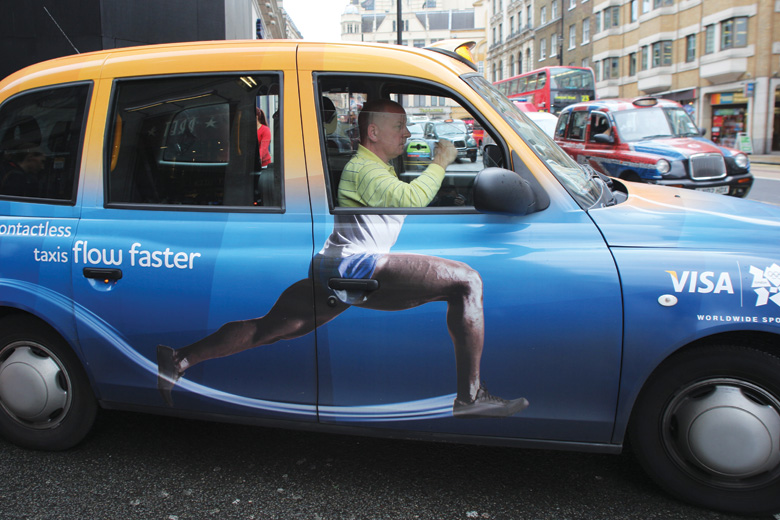
London taxi cab driver pulling into traffic

Source:
Getty

‘The views of a quarter or less of the electorate could decide the UK’s future relationship with Europe’

In theory, everyone has a civic duty to vote. However, the EU referendum campaign challenges this belief because many citizens are uninformed or confused about the issues. This leaves them with a choice of relying on their heart or their gut, flipping a coin or staying at home.

The EU’s own polls consistently find that about half the British electorate has little or no understanding of the EU. For decades, British political leaders have done nothing to alleviate that ignorance. Tony Blair quickly lost interest in the EU when he found that he could satisfy his international ambitions more profitably by allying himself with Washington and Wall Street. And David Cameron’s doomed attempt to get Brussels to repatriate major powers to Westminster shows that he was not interested in learning how Brussels works.

Because the referendum vote is about the future, it is impossible to provide “facts”. Any forecast about what the EU or the UK will be like in 2020 is speculative. The remain camp raises fears of economic and security losses, while the exit camp has a vision of a better future if the UK leaves. The remain forecast assumes that all other conditions will remain equal, while the exit forecast is a unicorn scenario because no one has ever seen what happens to a country that leaves the EU.

For the remain camp, “trust me” will not be a winning appeal to confused voters. A big majority distrusts politicians. Among Ukip supporters, virtually all of whom will vote for Brexit, 71 per cent distrust all politicians. Economists who failed to foresee the 2008 financial crisis face scepticism about their forecasts of the consequences of leaving or remaining. And bankers who claim that it would be bad for the City of London to leave the EU command few votes and even less sympathy.

Neither major party is seeking to mobilise its supporters to vote. Because the party is split, the Conservative organisation is neutral and the consequence of the conflicting signals is likely to be reduced turnout among Conservative voters. The Labour Party is keeping a low profile because it does not want to be associated with the cause of a Conservative prime minister.

At last year’s general election, one-third of the electorate did not vote, and in the 2014 European Parliament ballot, more than five in eight did not do so. If the referendum turnout falls halfway between these two figures, it will be 51 per cent. Uncertainty, confusion and distrust could even push it down to below half the electorate. This is less than opinion polls currently suggest, but polls invariably underestimate the number of non-voters.

The lower the turnout, the greater the chances of Brexit winning a majority, for opponents of the EU are full of passionate intensity while campaigners for remaining are full of qualified convictions. The government ignored requests in the House of Lords to set a 50 per cent threshold for the result to be binding. Thus, the views of a quarter or less of the electorate could decide the UK’s future relationship with Europe.

If the outcome of a low turnout is for the UK to withdraw, the prime minister has pledged to accept the verdict. If only a narrow majority of a low-turnout ballot confirms EU membership, opponents will not consent. Instead, it will be just one more stage in their “neverendum” campaign to minimise the influence of the EU on Britain’s governance.

Richard Rose is a professor of politics at the University of Strathclyde.
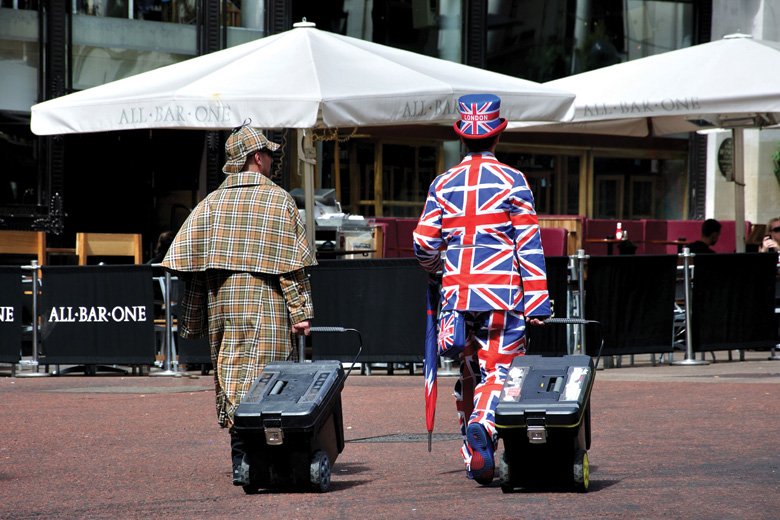
Street performers dressed in Sherlock Holmes and Union Jack costumes, London

Source:
Alamy

‘Those arguing for Brexit often do not appear to understand how global trade is conducted’

The underpinning rationale for the EU is cooperation to deliver benefits to all members. But cooperation is fragile and not easy to achieve. Individuals (whether people, corporations or countries) have incentives to cheat or free-ride, so consolidation requires rules, agreements and treaties. The cost of joining the club is paying the fee and accepting the rules.

The economic, political and social rewards of the EU have accrued over a long time. But members differ in characteristics and, therefore, derive differing net benefits, so at any point in time certain members may feel dissatisfied. Is the best response to leave the club? In general, the answer is “no” because any departing nation would be sacrificing benefits, incurring costs and creating uncertainty.

The information provided to UK voters will determine the outcome of the country’s referendum, so it is very unfortunate that the quality of the debate has been so poor, with both sides making mostly exaggerated and often misleading claims. The consequences for UK trade of leaving the EU are an area where misinformation is particularly rife, especially among those arguing for Brexit – who often do not appear to understand how global trade is conducted.

Those in the “remain” camp point to the costs of leaving the single market and losing the right to trade freely with the EU. One can argue over the magnitude, but these costs are real and would be incurred. Proponents of Brexit counter that the regulations required to be in the single market impose a high burden on UK firms and that EU exit would permit trade agreements to be negotiated with more dynamic global partners. These arguments are misguided at best: international trade is best described as a rules-based system, with those rules agreed among members of various clubs. The global club is the World Trade Organisation; the EU is one of several regional clubs. Then there are mini-clubs where two or more partners negotiate trade agreements. But in all such cases, the agreements have to be compatible with WTO rules. The majority of the “EU regulations” that UK businesses complain about (while rarely if ever giving specific examples) relate to standards that have to be met in any trade with any partner.

All the existing agreements under which the UK trades apply by virtue of the UK’s membership of the EU (in the negotiation of which the UK was fully represented). If the UK left, it would have to negotiate a new deal not only with the EU but also with every other trading partner. Even if it did not go to the back of the queue, as US President Barack Obama recently warned, it would have less negotiating power on its own than it had as part of the EU.

Moreover, a post-Brexit UK, negotiating multiple new treaties simultaneously, would be under pressure to make concessions to expedite agreements (as delay increases uncertainty). This would be true not only as regards trading giants such as the US and China, but also with respect to smaller trading partners, which tend to negotiate as blocs.

The EU is far from perfect, but that is not the issue voters should consider. Globally, the UK alone would be in a weaker bargaining position than the EU is. Hence, it is only reasonable to predict that a future outside the EU would be less favourable to the UK public than a future within it.

Oliver Morrissey is professor of development economics at the University of Nottingham.


Link original: https://www.timeshighereducation.com/features/european-union-eu-referendum-scholars-weigh-case-for-and-against-brexit
 

Comparte este contenido:

El secreto de Canadá para acoger a miles de refugiados en tiempo récord está aquí

Canadá/09 junio 2016/Autor: María Torrens Tillack /Fuente: El Español

“Nos sentimos en casa y altamente respetados, como humanos”, dijo uno de los primeros refugiados que llegó a Canadá a principios de diciembre pasado, al primer ministro Justin Trudeau. La familia, con una hija pequeña, acababa de aterrizar en Toronto a principios de diciembre de 2015 y las cámaras recogieron el encuentro.

Trudeau quiso saludar personalmente junto a la premier del Estado de Ontario a los recién llegados y estrecharles la mano para proclamar públicamente: “Welcome home” (Bienvenidos a casa). “Querríamos darle las gracias por toda esta hospitalidad, toda esta bienvenida y todas estas cosas”, expresó el padre de familia después de que el equipo de bienvenida les ataviara con un anorak para afrontar el duro invierno canadiense.

Ha pasado ya medio año desde aquel día y después de que Canadá alcanzara su plan iniciado el 4 de noviembre para acoger a 25.000 refugiados en febrero, el Gobierno de ese país decidió ampliar su programa de acogida. Hoy acoge a 27.580 sirios y sigue trabajando por recibir a más, junto a organizaciones e iniciativas privadas.

Este miércoles la Alta Representante de la Unión Europea, Federica Mogherini, inició una visita de dos días a Canadá para tratar, entre otros asuntos, la “crisis migratoria” y probablemente tomar buena nota del ejemplo en la gestión de la acogida de refugiados del país norteamericano.

Voluntad y ejemplo político

Canadá rema a contracorriente. Mientras los Veintiocho en la Unión Europea apenas han reubicado a más de 2.000 refugiados entre los Estados miembros de los 160.000 acordados desde septiembre, el Ministerio de Inmigración, Refugiados y Ciudadanía canadiense lo dice todo ya en su propio nombre. No es un ministerio del Interior, ni de asuntos sociales el encargado de llevar todo esto a cabo, sino uno específico que ya contempla el asilo entre sus principales políticas (hasta que llegó Trudeau al Gobierno no incluía a los refugiados en el título).

“Apunte para líderes mundiales: así es como se da la bienvenida a los refugiados”, tituló Al Jazeera, el canal más internacional del mundo árabe, un artículo de opinión sobre el “espectáculo” de Trudeau. El texto apreciaba el esfuerzo canadiense y la avidez en la estrategia política para fomentar la buena imagen del carismático premier, a la vez que criticaba la escenificación propagandística.

Sin embargo, Michelle Banks, responsable del Programa para Estudiantes Refugiados en Canadá cree que es primordial dar buen ejemplo. “Cuando los líderes [políticos] muestran un apoyo por iniciativas como ésta y crean una imagen positiva de los recién llegados, generan apoyo social. Ahí posiblemente la Unión Europea tenga trabajo por hacer”, sugiere por teléfono a EL ESPAÑOL desde Ottawa.

“Fue una promesa electoral. Empezó a haber un cambio en la opinión pública por Aylan Kurdi”, apunta Loly Rico, presidenta del Consejo Canadiense para Refugiados, desde Toronto. Se refiere al pequeño sirio cuyo cuerpo sin vida apareció en una playa turca el pasado septiembre. Si al resto del mundo le conmovió la escena e impulsó que la Unión Europea se movilizara, a Canadá le tocó más aún si cabe: la tía del niño fallecido vivía en Canadá. “Eso hizo que la opinión pública volviera a pedir al Gobierno [una política activa en la ayuda a los refugiados]”.

Como un ciudadano canadiense desde el minuto 1

Una política que podría sonar osada en Europa, con los crecientes movimientos xenófobos y de extrema derecha en distintos países miembros, es la que ha recuperado el Gobierno de Trudeau al estrenarse en 2015.

“Una vez usted viene tiene los mismos derechos como cualquier otro ciudadano, excepto por el voto”, destaca Rico. Ella lo sabe bien, pues vivió en sus propias carnes la situación de los refugiados en Canadá al llegar hace 26 años de El Salvador huyendo de su guerra civil.

Como residentes, los refugiados tienen acceso a todos los servicios sociales, como sanidad y educación, permiso para trabajar desde el mismo momento en el que pisan suelo canadiense y otras ayudas más habituales en otros lugares del mundo, como clases gratuitas para aprender el idioma del país de acogida. Ahora algunos municipios están valorando la posibilidad de dar a los residentes permanentes el acceso a la votación en las elecciones locales.

Rico no tiene duda alguna de que estas políticas de integración son la clave en el éxito -aunque puntualiza que siempre quedan puntos que mejorar- de la acogida de refugiados en Canadá.

El impulso de guerras que han marcado la historia

Canadá presume de tener una larga tradición en la acogida de refugiados. Rico explica que todo comenzó en los años 40 con quienes huían de la guerra en Europa. “Fue por un punto económico, porque Canadá no estaba habitado históricamente”, indica la presidenta del Consejo para Refugiados.

Una ley de 1976 que se aprobó durante la guerra de Vietnam, la última vez que Canadá promovió una llegada masiva de refugiados al país hasta ahora. Aquella nueva normativa hablaba de la recepción y aceptación de diferentes culturas. “Con esa política lo que se ha logrado es que muchos de los refugiados que hemos venido tenemos acceso para integrarse dentro de la sociedad”, opina.

En 2002 vino un nuevo giro normativo y la ley abordó directamente la protección de refugiados. Sin embargo, Rico cuenta que tras los atentados del 11-S en 2001 se había comenzado a cerrar las puertas a las llegadas de refugiados, especialmente a aquellos provenientes de países de mayoría musulmana. No se llegó a cerrar el flujo del todo, pero ha sido con el nuevo Gobierno liderado por el centrista Trudeau cuando se ha retomado la política histórica de acogida a los demandantes de asilo. La campaña actual está centrada en sirios de campamentos de refugiados en Líbano, Jordania o Turquía.

Estudiantes que financian los estudios de refugiados y otros patrocinios privados

“Me estoy convirtiendo en la persona que imaginé que sería”, cuenta por videoconferencia Anas Hussain, un sirio de 24 años que llegó a Canadá unos meses antes de que el Gobierno de Trudeau impulsara una campaña específica para acoger a compatriotas suyos. Llegó el 26 de agosto de 2015 y en tierra le recibieron un grupo de estudiantes universitarios junto a Michelle Banks.

Para Anas fue “una de las sensaciones más agradables” en su vida reciente. La guerra destruyó su casa familiar en el sur de Siria y se mudó con sus padres y hermanos a Damasco. Allí pudo estudiar informática en la universidad, pero cuando el Gobierno le llamó a filas decidió que “no quería estar en ese lado de la Historia”. Y huyó a Jordania.

Allí trabajó de todo: carpintero, panadero, vendedor en una tienda de móviles. En negro, no tenía ni estatus de refugiado ni permiso para trabajar. Estuvo malviviendo en Amán (la capital) durante dos años y medio hasta que el Programa para Estudiantes Refugiados de Canadá cambió su suerte.

Anas abandonó Siria en enero de 2013 para evitar tener que unirse al Ejército.

Anas abandonó Siria en enero de 2013 para evitar tener que unirse al Ejército.Cedida por Anas Hussain

Mientras en España las iniciativas privadas y los voluntarios que surgieron al estallar la crisis de los refugiados se encontraron de bruces con la legislación española, que no contempla esta posibilidad, en Canadá existen un centenar de organizaciones de iniciativa privada para patrocinar la llegada de refugiados. De los más de 27.500 refugiados acogidos hasta ahora en la presente campaña, cerca de 10.000 han llegado a Canadá gracias a iniciativas ciudadanas.

¿Qué implica ese patrocinio? Tanto si es el Gobierno como una organización privada la que acoge a un refugiado, adquieren el compromiso de financiar su estancia durante el primer año, un periodo clave para la integración del nuevo residente canadiense, explica Rico.

Canadá promueve fórmulas como la acogida en familia o en un entorno universitario. “La concienciación sobre la crisis en septiembre cambió nuestro programa. Duplicamos nuestras cifras”, asegura Banks, del programa de acogida para estudiantes universitarios refugiados. Si el curso pasado pudieron apoyar la llegada de 84 jóvenes, en el presente curso tramitan recibir a un total de 160.

Puede sonar a poca cosa, pero se trata de un programa muy especial, porque son los propios estudiantes universitarios los que con microdonaciones que van de 25 céntimos a 20 dólares anuales financian su acogida. También contribuyen las instituciones universitarias, que les conceden alojamiento y matrícula gratuitos. Así entre todos ellos se comprometen a al menos un año de sustento garantizado.

En total han pasado de recaudar 3,2 millones de dólares en 2015 a más de 6 millones este año. “Se recaudó de manera local por estudiantes. Fue cosa de unas semanas en realidad: en septiembre enviamos una carta invitando a incrementar la cuota o a unirse al programa a las universidades y ahora tenemos doce nuevos campus participando”, explica la responsable del programa.

También ponen especial hincapié en el elemento clave señalado por Rico: la integración. Y es que los voluntarios universitarios ayudan a los estudiantes refugiados a adaptarse a su nueva realidad, les acompañan en el proceso y asesoran para que sepan adónde recurrir para cada necesidad. La responsable de este programa asegura que el “apoyo moral” para los recién llegados es al menos igual de importante que el monetario y por ello también trabajan en la concienciación de la comunidad universitaria. Para Banks, implicar a los jóvenes es esencial.

Pasado el año de financiación al que se compromete el Programa para Estudiantes Refugiados (aunque algunas universidades amplían este apoyo), estos jóvenes de entre 18 y 30 años tienen el mismo derecho que los canadienses para acceder a becas universitarias y ayudas del Gobierno regional o federal y pueden trabajar sin restricciones.

En Italia la comunidad católica de San Egidio recibió en mayo a más de un centenar de refugiados, algo impensable en España, donde la Comisión Española de Ayuda al Refugiado (CEAR) tuvo que responder a las solicitudes de ciudadanos españoles que no podían acoger a refugiados en sus casas, pues todo tenía que pasar por la Administración. Rico, la presidenta del Consejo para los Refugiados, asegura que Alemania se ha interesado por el modelo de patrocinio privado canadiense.

Identificar a los más vulnerables in situ

“Si [los 28] esperan que lo haga todo Acnur, [no funcionará]”, advierte Aslam Daud, presidente de Humanity First Canada, una ONG humanitaria con origen en Reino Unido. Esta organización ejerce de mediadora entre patrocinadores privados y los demandantes de asilo y para ello se desplazan a los campamentos de refugiados personalmente. Desde septiembre han gestionado la llegada a Canadá de 200 refugiados sirios.

Daud cree que es “extremadamente importante” identificar a quienes más ayuda necesitan sobre el terreno. Su ONG identifica a “los más vulnerables, especialmente mujeres y niños o familias con hijos pequeños”.

La Unión Europea baraja desde hace algún tiempo establecer centros de registro en los campamentos de refugiados de Oriente Medio o en los lugares de conflicto y así poder gestionar una vía legal y segura para quienes cumplan los requisitos necesarios para obtener el estatus de refugiado y así evitar que se sometan a una ruta potencialmente mortífera, y a veces sin visos de prosperar su solicitud de asilo.

“Yo no creo que la solución esté en trasladar a 4 millones de refugiados a otro país. Hay que ayudar a los más vulnerables [para reubicarlos] y encontrar una solución permanente”, opina Daud. “Los campamentos de refugiados son una solución mejor que el realojo [para los demás]”. Lo que hay que hacer es mejorar las condiciones de esos campamentos, añade.

Comunicación transparente

“Bienvenidos refugiados” es el lema que encabeza la página web del Ministerio de Inmigración y Refugiados concernido, con un completo despliegue que promueve su acogida a través de una red de organizaciones locales, facilita el contacto de patrocinadores privados con familiares sirios en Canadá, cuenta historias personales de los recién llegados, promociona las donaciones y busca voluntarios activamente.

El portal de internet ofrece una completísima información tanto a los ciudadanos de ese país que desean informarse sobre la campaña #WelcomeRefugees como a aquellos que desean implicarse en la acogida de los demandantes de asilo y también para los propios refugiados que quieren tramitar su solicitud con el país norteamericano.

Los canadienses pueden ayudar con una donación económica, ofrecerse como voluntarios a su organización local más cercana o patrocinar a refugiados. En la web se pueden encontrar los distintos pasos que se pueden dar en cada caso, además de un mapa en el que localizar las distintas iniciativas relacionadas que existen en todo el país, con los correspondientes datos de contacto.

La distancia puede ayudar

“Desde CEAR hemos visto con envidia la rapidez del proceso de reasentamiento en Canadá frente a la lentitud desesperante de la Unión Europea”, reconoce la Comisión Española de Ayuda al Refugiado a este periódico.

Mientras en la Unión Europea arrecian las críticas por la lentitud en la reubicación de los 160.000 refugiados acordados el pasado otoño o por el acuerdo de Bruselas con Ankara para frenar la llegada de demandantes de asilo por el Egeo, los canadienses consultados por EL ESPAÑOL son más comprensivos.

“Es un contexto diferente por la proximidad”, subraya Banks. “No es justo comparar ambas situaciones”. Rico coincide en el diagnóstico, pero señala que “las muertes del Mediterráneo son un resultado de las leyes de la UE: donde usted va, ahí es donde empieza el proceso de refugiado, no donde necesita llegar”.

Ana, el estudiante y trabajador refugiado sirio, admite que no le gusta lo que ve en la gestión de la crisis de refugiados por parte de la Unión, pero dice que es normal que deban “parar la inmigración ilegal: tienen que librarse de la gente que no tiene problemas”.

La presidenta del Consejo para Refugiados pone una puntilla crítica con Canadá y recuerda que aunque los 27.580 refugiados sirios que ha recibido el país en los últimos seis meses es una buena noticia, hay muchos más sirios y demandantes de asilo de otros países que necesitan ayuda.

Menos de un año después de su llegada a Canadá, Anas sigue estudiando un nuevo grado de Informática, ha conseguido trabajo en el departamento internacional de su universidad y dice que “trabaja por conseguir una buena versión de mí mismo”.

El recuerdo sigue siendo duro. Anas sufrió problemas de ansiedad e ingesta compulsiva de alimentos durante el mal trago que supuso su paso por Jordania. Algunas canas empiezan a asomar en su joven cabellera, muestra con una sonrisa a través de la cámara.

Pero su vida sigue sin ser un camino de rosas: trabaja no sólo para mantenerse a sí mismo, sino para poder mandar dinero que a sus padres y su hermana, que siguen en Damasco. Cuando su hermano pequeño llegó a la edad para prestar el servicio militar, también huyó. Ahora está en Turquía y esperan poder reunirse.

Fuente:

http://www.elespanol.com/mundo/20160608/130987320_0.html

Comparte este contenido:

Colombia: ¿Qué opina el sindicalismo sobre la realidad nacional?

Fuente FECODE / 9 de junio de 2016

Docentes y comunidad educativa han desarrollado varias marchas para denunciar lo que está ocurriendo y exigir soluciones inmediatas. La administración ha hecho caso omiso a sus necesidades.

La tercera Encuesta de Opinión Sindical, contratada por la Escuela Nacional Sindical, evidenció el reconocimiento del gremio con el trabajo de Fecode y su gestión en defensa de los derechos del magisterio, así como el acompañamiento al proceso de paz y las precarias condiciones del derecho a la sindicalización en un estado de derecho como Colombia.

Los sindicalistas del país consideran que los tres temas en los que el gobierno debe centrar su atención son: a) generación de trabajo decente, b) disminución del desempleo y c) las libertades sindicales. La encuesta destacó el trabajo de fecode con un 86.5% por su liderazgo social, político y de restitución de derechos.

Este es un documento visibiliza la opinión de los sindicatos y trabajadores, su quehacer para incidir en la agenda nacional sobre temas estructurales como el trabajo decente, el proceso de paz y la violación al derecho a la sindicalización.

“Nos encontramos que instituciones relacionadas con el mundo laboral, como el caso de los jueces laborales, la Corte Constitucional y la Contraloría General de la Nación, entre otras, tuvieron un porcentaje de desconfianza bastante alto, lo que evidencia que la desconfianza en este tipo de instituciones aumentó. Sin embargo, permanece la percepción que tienen los líderes y lideresas sindicales sobre el maltrato que reciben de instituciones como la ANDI, Fedesarrollo, etc., y el poco reconocimiento que estas mismas les dan a ellos como representantes de organizaciones de los trabajadores”, precisó Carmen Lucía Tangarife, responsable de la temática Trabajo Decente y Mundo Laboral en la ENS.

Un dato tremendamente relevante es que tan solo el 1% de los líderes encuestados tiene entre 25 y 35 años. De ahí la importancia de insistir en la vinculación de jóvenes a las organizaciones, de motivar el derecho a la sindicalización y la reivindicación laboral, que garantice el relevo generacional. La encuesta es una muestra contundente de la importancia del liderazgo sindical y su incidencia real en el diseño y aplicación de políticas públicas y sociales en el país.

Comparte este contenido:

Simposio sobre derechos humanos y valores en la educación: Los valores universales son el objetivo de la educación sobre derechos humanos

Fuente: Internacional de la educación / 9 de mayo de 2016

El mensaje de hoy en Riga, Letonia, se ha centrado en los cimientos de una educación con un enfoque inspirado en los derechos humanos, que incluya valores universales como la comprensión y la tolerancia, y que entienda las diferencias culturales como una oportunidad en lugar de como una amenaza.

Hoy se ha alcanzado un consenso sobre la importancia de una educación que fomente la aceptación por encima del odio en un simposio sobre derechos humanos y valores en la educación organizado por la Internacional de la Educación y LIZDA, el Sindicato de docentes de Letonia.
El Secretario General de la Internacional de la Educación (IE), Fred van Leeuwen, inauguró este simposio de dos días de duración con una defensa apasionada de un enfoque holístico sobre un sistema educativo que permita la convivencia de sociedades democráticas diversas.
«En nuestras sociedades multiculturales, la identidad es un aspecto crucial. El orgullo de la identidad propia debería complementarse con el respeto por la identidad de los demás», afirmó. «Nuestros centros escolares deberían reconocer las identidades de cada alumno, con independencia de su origen o procedencia. Las escuelas deberían ser lugares donde los niños y jóvenes aprendieran a convivir y entender la riqueza de la diversidad, porque todas las sociedades en las que les tocará vivir en el futuro serán democracias diversas y multiculturales».
También recogió esta visión la ponente Sneh Aurora, que realizó un repaso general de los instrumentos internacionales que abordan las cuestiones de la educación sobre derechos humanos y ciudadanía global, debatidas y definidas por la comunidad internacional y cuyo resultado han sido declaraciones y documentos sobre política adoptados por organizaciones intergubernamentales como la UNESCO y la ONU. La amplia investigación de Aurora incluye un documento de referencia sobre Educación en derechos humanos publicado por el propio simposio. Puede descargarse aquí.
El día se cerró con debates del panel y talleres en los que los participantes pudieron compartir experiencias y prácticas recomendadas de sus países, así como aprender de otros colegas.
Haldis Holst, Vicesecretaria General de la IE, resumió el éxito de la convocatoria. «Los docentes son piezas clave en el fomento de valores sociales: democracia, igualdad, comprensión cultural, respeto por los derechos…», declaró. «El objetivo último de la profesión docente es el deseo de conseguir la igualdad en el aula, en el colegio y en la sociedad. Los sindicatos de docentes ponen soluciones sobre la mesa y muestran el camino hacia la democracia, los derechos humanos y el futuro sostenible».
Comparte este contenido:

Se necesita una escuela entera, si no toda la sociedad, para enseñar sobre derechos humanos

Fuente: Internacional de la educación / 9 de Junio de 2016

Preparar a los estudiantes de hoy en día para su realidad multicultural va más allá de la enseñanza de los derechos humanos como lección independiente de una clase; al contrario, requiere la creación de un entorno donde todos comprendan, valoren y protejan los derechos humanos.

Eleanor Roosevelt, Presidenta de la Comisión de Derechos Humanos de Naciones Unidas entre 1946 y 1952, fue una de las primeras defensoras de la educación en los derechos humanos y definió el enfoque necesario para transmitir estos conocimientos al destacar que «los derechos humanos no tienen ningún valor si la gente no los conoce, los comprende y exige que se respeten».
Para consolidar los progresos en este ámbito, el Consejo de Europa, que ha desarrollado y publicado una Carta sobre educación para la ciudadanía democrática y educación en derechos humanos completa, puso en marcha el Centro Wergeland de Europa. Ana Perona-Fjeldstad, Directora del Centro, explica cómo los objetivos más amplios de la educación implican preparar a los alumnos a través de una base de conocimiento profunda y avanzada para la vida y el empleo sostenible, pero también como ciudadanos de sociedades democráticas.
«En numerosos sistemas educativos europeos, desarrollar la capacidad de comportarse como un ciudadano tiene una prioridad menor que adquirir las destrezas y conocimientos necesarios en el mercado laboral», declaró. «Por este motivo, el Consejo de Europa ha desarrollado un marco que describe las competencias principales que permiten a los ciudadanos participar de forma efectiva en una sociedad democrática. Esto no se puede conseguir con la enseñanza de una única lección en clase, sino que requiere que toda la comunidad escolar y la sociedad en su conjunto adopten los valores representados por los Derechos Humanos».
Sneh Aurora, asesora sobre educación en derechos humanos, incide en la idea de que la educación sobre derechos humanos es clave para desarrollar una cultura sobre ellos y una sociedad que promulgue la dignidad, la inclusión y la igualdad.
«La educación sobre derechos humanos es un proceso de aprendizaje de por vida que intenta fomentar el conocimiento, por una parte, y los valores, actitudes, comportamientos y actos por la otra», reflexionó.
Guntars Catlaks, Director del Centro Nacional para la Educación de la República de Letonia, destaca otro aspecto importante.
«El aprendizaje sobre derechos humanos conforma el primer paso fundamental hacia el respeto, el fomento y la defensa de dichos derechos. El conocimiento y la comprensión de los derechos humanos puede aportar a los jóvenes las competencias necesarias para conseguir una sociedad más pacífica y justa», afirma. «Para tratar estos aspectos, los docentes requieren apoyo y formación con el fin de desarrollar las destrezas necesarias».
Perona-Fjeldstad, Catlaks y Aurora fueron los principales ponentes en el Simposio sobre derechos humanos y valores en la educación de la Internacional de la Educación (IE) que se celebró en Riga (Letonia) el 7 y 8 de junio de 2016.
Haga clic aquí para descargar un documento de referencia sobre los enfoques de la educación en derechos humanos redactado por Sneh Aurora. Su presentación de Powerpoint está disponible aquí.
La presentación de Ana Perona-Fjeldstad está disponible aquí.
Fred van Leeuwen, Secretario General de la Internacional de la Educación, inauguró el simposio. Su intervención está disponible aquí.


Comparte este contenido:

Anti-Politics and the Plague of Disorientation: Welcome to the Age of Trump

«Ignorance, allied with power, is the most ferocious enemy justice can have.»
— James Baldwin

The Greek chorus has finally been heard in that both the left and right are now calling Donald Trump a fascist or neo-fascist. Pundits and journals across the ideological spectrum now compare Trump to Hitler and Mussolini or state he is an unbridled tyrant. For example, the liberal magazine Slate finds common ground with the conservative journal National Review in denouncing Trump as a tyrant, while liberals such as former US Secretary of Labor Robert Reich and the actor George Clooney join hands with conservatives such as Andrew Sullivan and Robert Kagan in arguing that Trump represents a loud echo if not a strong register of a fascist past, updated to correlate with the age of reality TV and a fatuous celebrity culture. While such condemnations contain a shred of truth, they only scratch the surface of the conditions that have produced the existing political landscape. Such arguments too often ignore the latent authoritarian and anti-democratic forces that have a long legacy in US politics and society.

For more original Truthout election coverage, check out our election section, «Beyond the Sound Bites: Election 2016.»

Unfortunately, recognizing that the United States is about to tip over the edge into the abyss of authoritarianism is not enough. There is a need to understand the context — historical, cultural, political and economic — that has created this moment in US society in which fascism becomes an endpoint. Trump is only symptomatic of the problem, and condemning him exclusively does nothing to contain it. Moreover, such arguments often ignore the fact that Hillary Clinton is the underside of the new neoliberal oligarchy, which indulges some progressive issues but is indebted ideologically and politically to a criminogenic culture of finance, racism and war. Put differently, she represents a less obscene, less in-your-face form of authoritarianism — hardly a viable alternative to Trump.

Capitalism, racism, consumerism and patriarchy feed off each other and are mobilized largely through a notion of common sense.

Maybe this is all understandable in a corporate-controlled neoliberal society that uses new communication technologies that erase history by producing a notion of time wedded to a culture of immediacy, speed, simultaneity and endless flows of fragmented knowledge. As Manuel Castells writes in Communication Power, this is a form of «digital-time» in which everything that happens only takes place in the present, a time that «has no past and no future.» Time is accelerated in this new information-saturated culture, and it also flattens out «experience, competence, and knowledge,» and the capacity for informed judgment. Time has thus been transformed to provide the ideological support that neoliberal values and a fast-food, temp-worker economy require to survive.

A Culture of Forgetting and Lies

Language has also been transformed to produce and legitimate a culture of forgetting that relishes in a flight from responsibility. Capitalism, racism, consumerism and patriarchy feed off each other and are mobilized largely through a notion of common sense, which while being contested as a site of ideological struggle shows little sign of losing its power as a pedagogical force. As a result, we are living through an ongoing crisis of democracy in which both the agents and institutions necessary for such social order are being dismantled at an accelerating rate in the face of a massive assault by predatory capitalism, even while there is growing resistance to the impending authoritarianism. It gets worse.

We live in a moment of political change in which democratic public spheres are disappearing before our eyes.

We live in a moment of political change in which democratic public spheres are disappearing before our eyes, language is turned into a weapon and ideology is transformed into an act of hate, fear, racism and destruction — all of which is informed by a dark history of political intolerance and ethnic cleansing. The war on democracy has produced both widespread misery and suffering and finds its ideological counterpart in a culture of cruelty that has become normalized.

To read more articles by Henry A. Giroux and other authors in the Public Intellectual Project, click here.

The bankers, hedge fund managers, financial elite and CEOs who rule the United States’ commanding institutions have become the modern version of Mr. Kurtz in Joseph Conrad’s Heart of Darkness. As Hannah Arendt describes them in The Origins of Totalitarianism, citing Conrad: «‘these men were hollow to the core, reckless without hardihood, greedy without audacity and cruel without courage …’ the only talent that could possibly burgeon in their hollow souls was the gift of fascination which makes a splendid leader of an extreme party.»

In the age of Trump, anticipation no longer imagines a better world but seems mired in a dystopian dread, mimicking the restlessness, chaos and uncertainty that precedes a historical moment no longer able to deal with its horrors and on the verge of a terrible catastrophe. We now live in a time in which mainstream politics sheds its ideals and falls prey to choices that resemble a stacked deck of cards and mimic the values of an authoritarian society. All the while politics is being hollowed out as lawlessness and misdirected rage, while a loss of faith in electoral politics has given rise to a right-wing populism that is more than willing to dispense with democracy itself.

Demands to support Hillary Clinton as a lesser evil compared to Trump refuse to acknowledge that such mandates keep existing relations of power intact. Such actions represent more than a hollowing out of politics — they represent a refusal of the affirmative nature of political struggle. They also represent the surrender of any hope of moving beyond the enveloping fog of authoritarianism and a broken political system. Put bluntly, such choices sabotage any real hope for developing a new politics and a radical democracy. These limited choices also undermine the need to develop a broader vision of struggle, a comprehensive politics and the need to engage multiple publics in the quest to rethink the political terrain outside of a neoliberal notion of the future. At issue here is the moral blight that permeates the United States: a politics of the lowest expectations, one saturated in lies, deceptions and acts of bad faith.

Historical memory is saturated with the lies of mainstream politicians. The list is too lengthy to develop but extends from the Gulf of Tonkin falsehoods that led to the Vietnam War to the lies that produced the wars in Iraq, Afghanistan and Pakistan, which have left 1.3 million dead. As documented by Elizabeth Hinton in From the War on Poverty to the War on Crime: The Making of Mass Incarceration in America, the politics of lying by politicians and their intellectual collaborators fueled a regressive neoliberal war on poverty and crime that morphed into a racist war on the poor and helped produce the carceral state under Nixon, Reagan, Bush and Clinton.

We now are approaching a moment in US history in which truth is either viewed as a liability or ignored.

In addition, during the Obama administration, the politics of hope quickly became a politics without hope, functioning to legitimate and accelerate a flight from social responsibility that provided a blank check for Obama’s refusal to prosecute government officials who engaged in egregious acts of torture, to conduct immoral drone attacks, to expand the nuclear arsenal and to display a cold indifference to the criminal environment of Wall Street. All of this adds up to a notion of politics partly driven by a culture of ignorance and lying that has surpassed previous historical eras, marking an entry into what Toronto Star reporter Olivia Ward calls a «post-truth universe.» In this instance, the politics of performance denigrates language and shamelessly indulges a culture in which the truth is sacrificed to shouting, dirty tricks and spin doctors.

We now are approaching a moment in US history in which truth is either viewed as a liability or ignored; at the same time, lies become more plausible, because as Hannah Arendt argued in Crises of the Republic, «the liar has the great advantage of knowing beforehand what the audience wishes or expects to hear.» Lying is now the currency of mainstream politicians and finds its counterpart in the Wild West of talk radio, cable television and the mainstream media. Under such conditions, referentiality and truth disappear along with contexts, causes, evidence and informed judgment. A manufactured ignorance and the terrifying power and infusion of money in politics and society have corrupted democratic principles and civic life. A combination of arrogance, power and deceit among the financial elite is exemplified by Donald Trump, who has repeatedly lied about his business transactions, his former misdeeds with the media, the number of Latinos who support him and the claim he personally hired instructors for Trump University.

Desperation among many segments of the American public has become personal, furthering a generalized anger ripe for right-wing populism or worse. One consequence is that xenophobia and economic insecurity couple with ignorance and a collective rage to breed the conditions for symbolic and real violence, as we have seen at many Trump rallies. When language is emptied of any substance and politics loses its ability to hold power accountable, the stage is set for a social order that allows poor Black and Brown youth to continue to be objects of domestic terrorism, and provides a cover for corporate and political criminals to ravage the earth and loot the public treasury. In the age of Trump, truth becomes the enemy of governance and politics tips over into a deadly malignancy.

One thing about the political impasse facing the American public is that it finds itself in a historical moment in which language is losing its potential for imagining the unimaginable, confronting words, images and power relations that are in the service of violence, hatred and racism — this is the moment in which meaning slips into slogans, thought is emptied of substance and ideas descend into platitudes and sound bites. This is an instant in which the only choices are between political narratives that represent the hard and soft versions of authoritarianism — narratives that embrace neo-fascism on the one side and a warmongering neoliberal worldview on the other.

This is the age of a savage capitalism, one that the director Ken Loach insists produces a «conscious cruelty.» The evidence is everywhere, not only in the vulgar blustering of Donald Trump and Fox News, but also in the language of the corporate-controlled media apparatuses that demonize and prey on the vulnerable and proclaim the primacy of self-interest over the common good, reinforce a pathological individualism, enrich themselves in ratings rooted in a never-ending spectacle of violence and legitimate a notion of freedom that collapses into the scourge of privatization and atomization.

A New Language of Liberation

The left and other progressives need a new language to enable us to rethink politics, develop a militant sense of hope, embrace an empowering sense of solidarity and engage a willingness to think outside of established political orthodoxies that serve the global financial elite. We need a new vocabulary that refuses to be commodified, and declines to look away — a language that as the brilliant writer Maaza Mengiste argues «will take us from shock and stunned silence toward a coherent, visceral speech, one as strong as the force that is charging at us.»

In the age of Trump, truth becomes the enemy of governance and politics tips over into a deadly malignancy.

Progressives need a vocabulary that moves people, allows them to feel compassion for the other and gives them the courage to talk back. We need a vocabulary that enables us to confront a sense of responsibility in the face of the unspeakable, and do so with a sense of dignity, self-reflection and the courage to act in the service of a radical democracy. We need a vocabulary that allows us to recognize ourselves as agents, not victims, in the discourse of radical democratic politics. Of course, there is more at stake here than a struggle over meaning; there is also the struggle over power, over the need to create a formative culture that will produce new modes of critical agency and contribute to a broad social movement that will translate meaning into a fierce struggle for economic, political and social justice.

What happens to language when it is reduced to a vehicle for violence? What does it take for a society to strip language of its emancipatory power and reduce it, as Mengiste states, to «a rhetoric of desperation and devastation molded into the incomprehensible, then vomited out in images and words that we cannot ignore though we have tried»? What does it mean to define language as a tool — rather than a weapon of domination — in the service of economic and political justice? What institutions do we need to sustain and create to make sure that in the face of the unspeakable we can resist and hold power accountable? Language is part of public memory, informed, in part, by «traces» that allow oppressed people to narrate themselves as part of a broad collective struggle, as we see happening with the Black Lives Matter movement, among other emerging social movements. That is, suppressed histories of violence become visible in such stories and form part of a genealogy that puts current acts of violence in perspective. For instance, capital punishment is framed within the historical context of slavery, lynchings and the emerging violence of a police state.

Domination in the Age of Trump

The hate-filled, xenophobic and racist dialectic among language, images and the stories produced in the age of Trump constitutes one of the most pernicious forms of domination because it takes as its object subjectivity itself: This dialectic empties subjectivity of any sense of critical agency, turning people into spectators, customers and consumers. Identities have become commodities, and agency an object of struggle by the advertising and the corporate elite. After 50 years of a neoliberal culture of taking, unbridled individualism, militaristic violence and a self-righteous indifference to the common good, the demands of citizenship have not merely weakened, but they have been practically obliterated. In their book Babel, Zygmunt Bauman and Ezio Mauro speak to the denigration of politics and citizen rights in an age of generalized rage and emerging right-wing populism. They write:

The «culture of taking,» divorced from all rights-duties of giving and of contributing positively, is not merely a reduction of citizenship relations to a bare minimum: it is actually perfectly instrumental to a populist and charismatic simplification of politics and leadership, or rather a post-modern interpretation of a right-wing tradition, in which the leader is the demiurge who can work out public issues by himself, freeing citi­zens from the burden of their general civic duties, and leaving them to the solitary sovereignty of their privacy, spurring them to participate not in national political events but in single outbursts of collective emotional reaction, triggered by the oversimplification of love and hate on which populism feeds.

The fusion of culture, power and politics has produced a society marked by a flight from political and social responsibility. In an age in which five or six corporations dominate the media landscape and produce the stories that shape our lives, the democratic fabric of trust evaporates, public virtues give way to a predatory form of casino capitalism and thought is limited to a culture of the immediate. Politics is now performance, a kind of anti-politics wedded to the spectacle.

As Mark Danner points out in The New York Review of Books, much of Trump’s success and image stems from his highly successful role on The Apprentice as «the business magus, the grand vizier of capitalism, the wise man of the boardroom, a living confection whose every step and word bespoke gravitas and experience and power and authority and … money. Endless amounts of money.» Not only did The Apprentice at its height in 2004 have an audience of 20.7 million, catapulting Trump into reality TV stardom, but Trump’s fame played a large role in attracting 24 million people to tune in and watch him in his initial debate with a host of largely unheard of Republican politicians.

Corporate media love Donald Trump. He is the perfect embodiment of the spectacle that drives up their ratings. Danner observes that Trump is «a ratings extravaganza» capable of delivering «audiences as no other candidate ever has or could.» A point that is well taken given «that the networks have lavished upon him $2 billion worth of airtime.» According to Danner, Trump’s willingness to embrace ignorance over critical reasoning offers him an opportunity not to «let ‘political correctness’ prevent him [from] making sexist and bigoted remarks, … [while reveling in and reinforcing] his fans’ euphoric enjoyment of their hero’s reveling in the pleasures of free speech,» and his addiction to lying as an established part of the anti-politics of performance and showmanship.

Beyond a «Lesser of Two Evils» Political Framework

The American left and progressives have no future if they cannot imagine a new language that moves beyond the dead-end politics of the two-party system and explores how to build a broad-based social movement to challenge it. One fruitful beginning would be to confront the fact that our society is burdened not only by the violence of neoliberalism but also by the myth that capitalism and democracy are the same thing. Capitalism cannot rectify wage stagnation among large segments of the population, the growing destruction of the ecosystem, the defunding of public and higher education, the decline in life expectancy among the poor and middle classes, police violence against Black youth, the rise of the punishing state, the role of money in corrupting politics, and the widening gap in income and wealth between the very rich and everyone else.

If some elements of the left and progressives are to shift the terms of the debate that shape US politics, they will also have to challenge much of what passes for neoliberal common sense. That means challenging the anti-government rhetoric and the notion that citizens are simply consumers, that freedom is largely defined through self-interest and that the market should govern all of social life. It means challenging the celebration of the possessive individual and atomized self, and debunking the claim that inequality is intrinsic to society, among others. And this is just a beginning.

Politics is now performance, a kind of anti-politics wedded to the spectacle.

When the discourse of politics amounts to a choice between Donald Trump and Hillary Clinton, we enter a world in which the language of fundamental, radical, democratic, social and economic change disappears. What liberals and others trapped in a lesser-of-two-evils politics forget is that elections no longer capture the popular imagination, because they are rigged and driven by the wealth of the financial elite. Elections bear no relationship to real change and offer instead the mirage or swindle of real choice. Moreover, changing governments results in very little real change when it comes to the concentration of power and the decimation of the commons and public good. At the same time, politicians in the age of reality TV embody Neil Postman’s statement inAmusing Ourselves to Death that «cosmetics has replaced ideology» and has helped to usher in the age of authoritarianism. Power hides in the dictates of common sense and wields destruction and misery through the «innocent criminals» who produce austerity policies and delight in a global social order dominated by precarity, fear, anxiety and isolation.

What happens when politics turns into a form of entertainment that washes out all that matters? What happens to mainstream society when the dominant and more visible avenues of communication encourage and legitimate a mode of infantilism that becomes the modus operandi of newscasters, and trivia becomes the only acceptable mode of narration? What happens when compassion is treated as a pathology and the culture of cruelty becomes a source of humor and an object of veneration? What happens to a democracy when it loses all semblance of public memory and the welfare state and social contract are abandoned in order to fill the coffers of bankers, hedge fund managers and the corporate elite? What are the consequences of turning higher education into an «assets to debt swapping regime» that will burden students with paying back loans in many cases until they are in their 40s and 50s? What happens when disposable populations are brushed clean from our collective conscience, and are the object of unchecked humiliation and disdain by the financial elite? As Zygmunt Bauman points out in Babel: «How much capitalism can a democracy endure?»

What language and public spheres do we need to make hope realistic and a new politics possible? What will it take for progressives to move beyond a deep sense of political disorientation? What does politics mean in the face of an impending authoritarianism when the conversation among many liberals and some conservatives is dominated by a call to avoid electing an upfront demagogue by voting instead for Hillary Clinton, a warmonger and neoliberal hawk who denounces political authoritarianism while supporting a regime of financial tyranny? What does resistance mean when it is reduced to a call to participate in rigged elections that reproduce a descent into an updated form of oligarchy, and condemns millions to misery and no future, all the while emptying out politics of any substance?

Instead of tying the fortunes of democracy to rigged elections we need nonviolent, massive forms of civil disobedience. We need to read Howard Zinn, among others, once again to remind ourselves where change comes from, making clear that it does not come from the top but from organized social formations and collective struggles. It emerges out of an outrage that is organized, collective, fierce, embattled and willing to fight for a society that is never just enough. The established financial elites who control both parties have been exposed and the biggest problem Americans face is that the crisis of ideas needs to be matched by an informed politics that refuses the old orthodoxies, thinks outside of the box, and learns to act individually and collectively in ways that address the unthinkable, the improbable, the impossible — a new future.

As politics is reduced to a carnival of unbridled narcissism, deception, spectacle and overloaded sensation, an anti-politics emerges that unburdens people of any responsibility to challenge the fundamental precepts of a society drenched in corruption, inequality, racism and violence. This anti-politics also removes many individuals from the most relevant social, moral and political bonds. This is especially tragic at a historical moment marked by an endless chain of horrors and a kind of rootlessness that undermines all foundations and creates an uncertainty of unprecedented scale. Fear, insecurity and precarity now govern our lives, rendering even more widespread feelings of loneliness, powerlessness and existential dread.

Instead of tying the fortunes of democracy to rigged elections we need nonviolent, massive forms of civil disobedience.

Under such circumstances, established politics offers nothing but scorn, if not an immense disregard for the destruction of all viable bonds of solidarity, and the misery that accompanies such devastation. Zygmunt Bauman and Ezio Mauro are right in arguing, in their book Babel, that we live at a time in which feeling no responsibility means rejecting any sense of critical agency and refusing to recognize the bonds we have with others. Time is running out, and more progressives and people on the left need to wake up to the discourse of refusal, and join those who are advocating for radical social and structural transformation. This is not merely an empty abstraction, because it means thinking politics anew with young people, diverse social movements, unions, educators, environmentalists and others concerned about the fate of humanity.

It is crucial to acknowledge that we live in a historical conjuncture in which the present obliterates the past and can only think about the future in dystopian terms. It is time to unpack the ideological and structural mechanisms that keep the war machine of capitalism functioning. It is also time to recognize that there are no shortcuts to addressing the anti-democratic forces now wrecking havoc on US society. The ideologies, grammar and structures of domination can only be addressed as part of a long-term collective struggle.

The good news is that the contradictions and brutality of casino capitalism are no longer invisible, a new language about inequality is being popularized, poor Black and Brown youth are battling against state violence, and people are waking up to the danger of ecological devastation and the increased potential for a nuclear apocalypse. What is needed is a new democratic vision, a radical imaginary, short-term and long-term strategies, and a broad-based social movement to act on such a vision.

Such a vision is already being articulated in a variety of ways: Michael Lerner’s call for a new Marshall Plan; Stanley Aronowitz’s call for reviving a radical labor movement; my call for making education central to politics and the development of a broad-based social movement; Angela Davis’ call for abolishing capital punishment and the mass incarceration system; Nancy Fraser and Wendy Brown’s important work on dismantling neoliberalism; the ongoing work of Alicia Garza, Patrisse Cullors and Opal Tometi of the Black Lives Matter movement to develop a comprehensive politics that connects police violence with other forms of state violence; Gene Sharp’s strategies for civil disobedience against authoritarian states; and the progressive agendas for a radical democracy developed by Salvatore Babones are just a few of the theoretical and practical resources available to galvanize a new understanding of politics and collective resistance.

In light of the terror looming on the political horizon, let’s hope that radical thought and action will live up to their potential and not be reduced to a regressive and pale debate over electoral politics. Hope means living without illusions and being fully aware of the practical difficulties and risks involved in meaningful struggles for real change, while at the same time being radically optimistic.

Copyright, Truthout. May not be reprinted without permission.

HENRY A. GIROUX

Henry A. Giroux currently is the McMaster University Professor for Scholarship in the Public Interest and The Paulo Freire Distinguished Scholar in Critical Pedagogy. He also is a Distinguished Visiting Professor at Ryerson University. His most recent books include The Violence of Organized Forgetting (City Lights, 2014), Dangerous Thinking in the Age of the New Authoritarianism (Routledge, 2015) and  coauthored with Brad Evans, Disposable Futures: The Seduction of Violence in the Age of Spectacle (City Lights, 2015). Giroux is also a member of Truthout’s Board of Directors. His website is www.henryagiroux.com.

Comparte este contenido:

Huelga de electricidad en Francia: los trabajadores conectan la luz a hogares pobres

Fuente: Misiones / 9 de junio de 2016

Una semana después de que la huelga comenzara a afectar a las plantas de energía nuclear, CGT hizo un llamamiento a los trabajadores del gas y la electricidad para que se sumaran a la huelga “frente a la terquedad del gobierno” con su imposición de la reforma laboral. El sindicato promete amplificar “ahora y en los próximos días” sus acciones.

Los portavoces advertían que “no vamos a cortar las líneas de 400.000 voltios para hundir a Francia en la oscuridad, pero podemos cortar a los clientes industriales aquí y allá”. El martes pasado, los militantes sindicales dejaron sin luz la inauguración de la “Ciudad del vino” en Burdeos, justo en el momento en que Hollande se encontraba en el acto oficial.

Para ganar adeptos al movimiento de protesta, los trabajadores han cortado la electricidad en empresas y actos del gobierno, mientras la restituyeron para 300.000 hogares pobres con problemas para pagar la tasa, según informa Libération.

“El sábado los oficiales han restablecido la electricidad a personas en una situación precaria” a las que la empresa les había cortado el servicio, informó Marie-Claire Cailletaud. “Y esto es sólo el principio” promete la portavoz.

Para sumar puntos al nerviosismo del gobierno, los sindicatos mayoritarios de los pilotos de la línea aérea de bandera Air France han convocado a la huelga contra los recortes, los ajustes y por una mejora de las condiciones salariales entre el 11 y el 14 de junio, en plena Eurocopa de football.

La protesta se decidió en un referéndum entre los pilotos y el lunes se comunicó el resultado de la votación, en el que participaron el 78 % de los pilotos: un 68 % se pronunciaron a favor de “un movimiento [de huelga] que dure”.

La lucha contra la reforma laboral de Hollande y su primer ministro Valls, se comenzó a radicalizar la semana pasada con el bloqueo de las principales refinerías del país y la huelga en las centrales nucleares. Dos tercios de las expendedoras de combustible tuvieron algún problema de abastecimiento y el gobierno tuvo que recurrir a las reservas del país para evitar un colapso. Sin embargo la situación se puso aún más caliente a pocos días del inicio de la Eurocopa.
Los trabajadores entendieron que era un buen momento para presionar en extremo y esta semana arrancó con una votación masiva de huelgas en prácticamente todos los sistemas de transporte, y sectores estratégicos de la producción.

La impopular reforma laboral es rechazada por la mayoría de la población. El intento de pasarla ninguneando al parlamento (un mecanismo conocido como 49.3 que funciona como un decreto), no solo generó más descontento en la población sino que enfureció a los miembros de la Asamblea Nacional, incluyendo a una parte sustancial de la propia bancada del Partido Socialista.

El gobierno suma descrédito dentro y fuera de sus propias filas y es posible que el primer ministro tenga que volver a someterse a un voto de confianza, que no es del todo seguro que pueda ganar.

Si bien la principal disputa entre el gobierno y las direcciones sindicales se encuentra en el punto 2 de la reforma, que elimina la negociación colectiva privilegiando los acuerdos por fábrica, en las calles los trabajadores y jóvenes piden la caída de toda la Ley de Trabajo.

Este lunes se inició una semana que puede ser decisiva. Los trabajadores con huelgas y piquetes, y el gobierno profundizando la represión de la odiada policía, marcaran el pulso de la calle francesa.

Enlace original: http://misionesonline.net/2016/06/06/huelga-de-electricidad-en-francia-los-trabajadores-conectan-la-luz-a-hogares-pobres/

Comparte este contenido:
Page 187 of 228
1 185 186 187 188 189 228