Page 21 of 33
1 19 20 21 22 23 33

Desvertebración educativa.

Por: Saturnino Acosta.

Una única ley educativa y 17 sistemas educativos distintos, con 17 evaluaciones distintas, con 17 resultados distintos, con 17 gestiones distintas y como resultado de los 17 currículos autonómicos distintos, un mínimo de 816 asignaturas distintas en la ESO, ni hablamos ya de los libros de texto, los cuales pueden parecerse de un extremo a otro de España lo mismo que un huevo y una castaña.

Ante la posibilidad de alcanzar un pacto educativo, y tras ya muchas comparecencias en la subcomisión creada a tal efecto, parece que los medios especializados están centrando sus miras en la desvertebración educativa que sufrimos.

En apenas una semana, han salido a la palestra dos cuestiones que cuestionan la cohesión y vertebración del sistema educativo español.

La primera son los hasta ahora resultados en la PAU (Prueba de Acceso a la Universidad), próxima EBAU (Evaluación de Bachillerato para Acceso a la Universidad), que posibilitan elegir estudios universitarios.

Parece ser que una comunidad cercana, pone en tela de juicio las elevadas notas de ciertas comunidades, como Extremadura y Canarias.

Si bien es cierto que debiera existir una prueba común para un acceso común con una evaluación común, no es menos cierto que la prueba se realiza en concordancia con el desarrollo del currículo autonómico por lo que lo único demostrable que denotaría unas notas bajas, sería que el currículo no se corresponde con la prueba o viceversa, lo cual dice poco de la coordinación existente dentro de la propia comunidad o del desarrollo del currículo en las aulas con quien elabora la prueba.

Si el trabajo es «serio» y «riguroso» (por alusiones a Extremadura y a los extremeños, docentes y alumnos) dentro y fuera del aula, los resultados deben ser favorables, así que !Ole! por Extremadura, sus responsables educativos y sus docentes. La segunda son los libros de texto. El presidente de la Asociación Nacional de Editores de Libros y material de enseñanza, en su paso por la subcomisión para el pacto, se ha quejado incluso insinuado dependiendo de qué partido gobierne y el espíritu de cada comunidad, de las múltiples peticiones o presiones recibidas para incluir ésto o lo otro, y la disparidad de los libros de texto en cada comunidad.

Un pacto educativo estatal será papel mojado si las Comunidades no participan, consensúan, asumen y cumplen en los tres ámbitos de concreción educativas.

Fuente: http://www.elperiodicoextremadura.com/noticias/opinion/desvertebracion-educativa_1017069.html

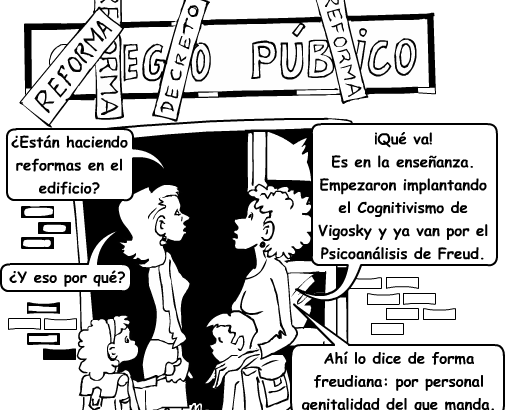
Imagen:http://o.aolcdn.com/images/dims?thumbnail=2000%2C1000&image_uri=http%3A%2F%2Fi.huffpost.com%2Fgen%2F3237322%2Fimages%2Fn-CAOS-EDUCACION09-628×314.jpg&client=cbc79c14efcebee57402&signature=0bcc803a9cdee963fd0bb791c6c18b8a1476cdbe

Comparte este contenido:

Boletín Informativo N°2. Reformas y Contrarreformas Educativas. CLACSO


Publicación que llega a ustedes, gracias al apoyo de investigadores(as) del GT CLACSO “Reformas y Contrarreformas Educativas” y el Observatorio Internacional de Reformas Educativas y Políticas Docentes (OIREPOD), registrado en el IESALC – UNESCO.

Para iniciar la edición del boletín tenemos un extraordinario artículo sobre las reformas educativa de Darío Balvidares denominado, ¿Revolución educativa o Invasión educativa? en https://www.rebelion.org/noticia.php?id=226737

En América, EEUU: Los Angeles School Board race takes center stage in battle for public education”, mencionan sobre las elecciones de la Junta Escolar de Los Ángeles que se realizó el 16 de mayo del corriente año, donde se enfrentan, los partidarios de la educación pública contra la industria de escuelas charter y sus aliados en el esfuerzo de reforma educativa corporativa. en http://otrasvoceseneducacion.org/archivos/217822,

Por otro lado, presentamos el artículo “Mercantilización de la educación” de Xavier Díez en http://otrasvoceseneducacion.org/archivos/220699

Propiciando el Apagón Pedagógico Global, en México, “Enrique Peña Nieto menciona EPN: la reforma educativa, el mejor regalo a la niñez mexicana”, en http://otrasvoceseneducacion.org/archivos/217942

Siguiendo en México, hay quienes expresan que “La reforma educativa inicio al revés: académico de la UNAM”, véalo en http://www.eluniversal.com.mx/articulo/nacion/sociedad/2017/04/28/reforma-educativa-empezo-al-reves-academico-de-la-unam

Continuando en México que es uno de los laboratorios de reformas educativas en el mundo, tenemos el artículo de Miguel Brenner que nos habla sobre La reforma educativa como reforma laboral” en http://www.educacionfutura.org/la-reforma-educativa-como-reforma-laboral/

Con la innovación educativa en Uruguay, Muestran al Plan Ceibal como el puntapié de la reforma educativa” http://www.elobservador.com.uy/muestran-al-plan-ceibal-como-el-puntapie-la-reforma-educativa-n1069472

No podía falta en éste recorrido por América, la reforma educativa y laboral que se está impulsando en Argentina en la siguiente Avanza Macri con su reforma educativa: presentó una web para debatir el Plan Maestro” http://www.entornointeligente.com/articulo/9909266/ARGENTINA-Avanza-Macri-con-su-reforma-educativa-presento-una-web-para-debatir-el-Plan-Maestro-24042017

En Europa, otra acción que va en contra del derecho a la educación es lo que promueve la ley de educación húngara, en ese sentido no se pierda de leer “Hungary education law: Orban to meet EU demands”, en http://otrasvoceseneducacion.org/archivos/217830

En España, Los colegios públicos viven otro paro sin cambio de posturas entre sindicatos y Gobierno”, ya que han denunciado, los recortes salariales, pérdida de poder adquisitivo, sustituciones que no se hacen hasta pasada una semana, o la penalización de las bajas, entre otros aspectos. A ello se suman las reformas educativas (Lomce y Heziberri), que suponen una mercantilización de la educación, léalo en http://www.eldiario.es/norte/euskadi/colegios-publicos-posturas-sindicatos-Gobierno_0_646386373.html

Para concluir éste pequeño recorrido, observamos la protesta estudiantil en un programa televisivo australiano por los recortes en la inversión educativa universitaria, léalo en “Australian: Q&A: Protesters confront Education Minister Simon Birmingham over university fee increases”, http://otrasvoceseneducacion.org/archivos/220690


Comparte este contenido:

Los 5 países que mejor lo están haciendo en educación

Por: Educacion 3.0

Tanto por los informes PISA como por los diferentes rankings y encuestas que múltiples entidades realizan, todos tenemos más o menos ubicados cuales son los mejores países en educación. Ya sea por sus innovadores sistemas educativos, por el uso de metodologías activas o por la tradición a la hora de enseñar y formar, hoy vamos a descubrir cuáles son algunos de estos países del mundo que mejor lo están haciendo en el terreno educativo, así como en las razones por las que se han convertido en una absoluta referencia de la que tenemos mucho que aprender.

Corea del Sur

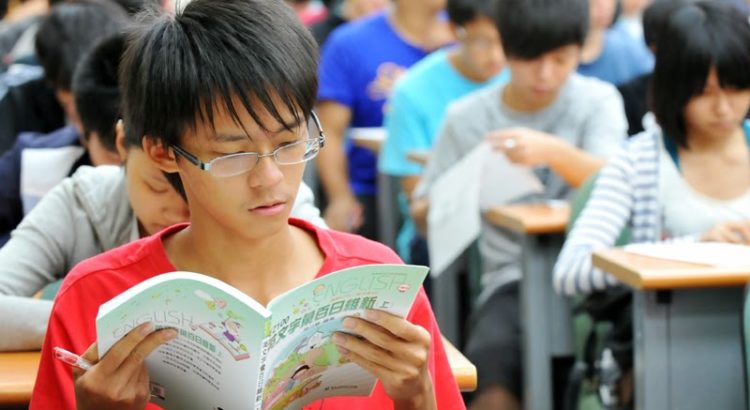
De los países asiáticos hay uno que luce con especial fuerza: Corea del Sur es uno de los grandes núcleos de la innovación mundial, y también uno de los países más potentes en lo referente a la educación. Este éxito se basa en el esfuerzo, en el trabajo y en las largas jornadas de estudio, acompañados de un máximo respeto por el profesor y su trabajo, junto con importantes jornadas extraescolares (y por supuesto, de pago) que repercuten en los rankings mundiales. Con algunas críticas, sí, pero también posicionado como uno de los países líderes en la educación del mundo.

Singapur

De Singapur hemos oído mucho en España en los años más recientes, a través del denominado Método Singapur que han llevado la enseñanza de esta materia de una forma muy diferente a como, al menos en este país, siempre hemos llevado a cabo. Partiendo de un enorme esfuerzo realizado a lo largo de décadas, en Singapur han conseguido crear un sistema sólido y que permite a profesores y expertos liderar cómo debe ser la enseñanza.

Finlandia

La educación nórdica tiene entre sus grandes hitos el haber sido una de las grandes punteras de entre los sistemas educativos mundiales. Aprovechamos también para recordar la entrevista que le hicimos a Jari Lavonen, decano de Educación en Finlandia, en la que se plasman algunas ideas clave sobre por qué han tenido —y continúan teniendo— un gran éxito: un sistema completamente gratuito, diseñado para que asistan desde bebés y con algunos de los profesores mejor formados del mundo. Poca estructura y organización que permite a los profesores afrontar el día a día del aula casi ‘en tiempo real’.

Japón

Fundamentado en la enseñanza tanto de las matemáticas como, sobre todo, del lenguaje japonés, en las tierras niponas han sabido sacarle el máximo partido a la enseñanza más tradicional. Precisamente el idioma tiene mucho que ver, ya que el Ministerio de Educación de Japón requiere que los niños conozcan más de 1000 kanjis al terminal la etapa de Primaria, y más de 2000 en la universidad. El trabajo y el esfuerzo, junto con la vida en una sociedad perfectamente estructurada, organizada y respetuosa, han colocado a Japón como uno de los países con la mejor educación del mundo.

Estonia

Es posible que Estonia, con sus aproximadamente 1,3 millones de habitantes, pase desapercibida a los ojos de cualquier persona, pero la realidad es que cuenta con uno de los mejores sistemas educativos europeos. Precisamente la reducida —en comparación con otros países— población les permite, por ejemplo, crear estándares que unifican la experiencia de la clase, la cual tiene como objetivo que los niños se diviertan en su día a día. También es especialmente reseñable el buen trabajo realizado en lo referente a la introducción de las nuevas tecnologías y las metodologías asociadas a ellas con el objetivo de ofrecer nuevas posibilidades a los profesores.

Consulta la nota original en: Educación 3.0

Comparte este contenido:

Negerian: Saraki Canvasses Comprehensive Education Reform

Negerian/25 April 2017/Source: http://www.promptnewsonline.com

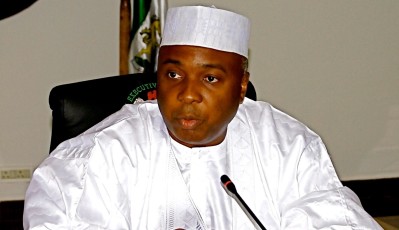
President of the Senate, Dr. Abubakar Bukola Saraki, has said that with the recent economic recession in the country, interventions in the nation’s educational system must no longer be business as usual.

In a statement signed by his Special Adviser on Media and Publicity, Yusuph Olaniyonu, the Senate President said there is a need for comprehensive education reform across all levels to ensure that Nigerian students and schools are competitive globally.

“Considering the economic situation in the country and the widening social inequality, we need to ensure that all Nigerians are well equipped for the future that lies ahead,” he said, “This means that any reform in education can no longer be business as usual — it must involve government, academia, and the private sector.

“What we all want to see is an educational system that is meeting the demands of the employers in both the public and private sectors,” the Senate President said, “ However, it goes beyond just reforming our school systems, we have to tackle this problem from the root, which is primary education, all the way to tertiary education, which is at the top.

“For example, basic education is the primary responsibility of the local governments. This needs to be reviewed. We have to look into and redesign the current education model that has domiciled the most important tier of education in the weakest tier of government.”

The Senate President also stated that all reform in education must be addressed from the simple perspective of: “What do we as Nigerians want our children to know and be able to do at each stage of their education?”

“Once we are able to answer this question, once we are able to determine what our children should know and be able to do at every age and level, from these expectations, we can begin to measure the competence of both teachers and students.”

The Senate President stated that over the next few months, the Senate will be working to restructure Nigeria’s education system by providing a legislative framework that will create more autonomy for Nigeria’s education system to make it more competitive locally and internationally.

Source:

Saraki Canvasses Comprehensive Education Reform


Comparte este contenido:

Australia: OECD education chief Andreas Schleicher: great teachers more important than class size

OECD- PISA – Australia/18 April 2017/By: Kelsey Munro/Source: The Sudney Morning Herald

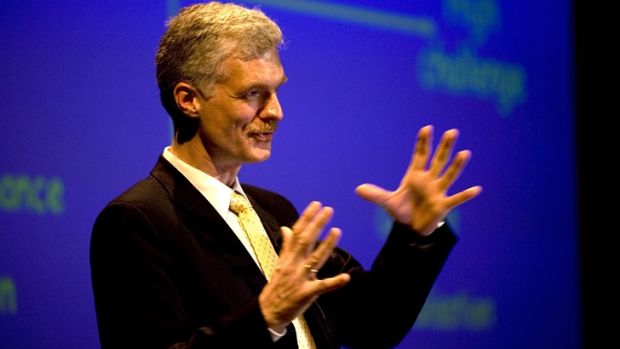
Australia should move to bigger class sizes if it wants to improve its education system without spending more money, according to the OECD’s top education guru Andreas Schleicher, and he has the data to prove it.

The highest performing countries in the OECD’s PISA tests have classes significantly larger than Australia’s average, he said.

But it’s not the class size that’s the key, he explains – it’s giving teachers less class time so they can focus on high-quality teaching.

The trade-off in a finite education budget for having teachers doing just 12-16 hours of class time a week is that you have to fit more kids into their classes.

The impact of class size on education quality is a highly contested issue within the research, while smaller class sizes tend to be popular with teachers, education unions and parents.

Mr Schleicher’s point is that the key factor is not the size of the class – it’s the quality of teaching strategies. Given the choice between a great teacher and a small class, pick the great teacher.

«Australian teachers have relatively little time for other things than teaching compared with their Asian counterparts,» he told Fairfax Media at an education conference in Dubai.

«If you’re a teacher in Hong Kong, China, Japan, you teach a lot less than Australian teachers, but you actually work more.

«You have a lot more time to engage with students individually, to work with parents, to work on reviewing lessons, analysing lessons, observing practice and so on. So there’s more emphasis on the professional development, particularly for higher order thinking skills.

«Those are very important. And the trade-off is bigger classes. The more popular trade-off is a smaller class, that’s what everybody likes. But if you ask me what is actually going to give better outcomes, Australia should think harder about this.»

According to the latest OECD data, the average class size in Australia for both primary and lower secondary was 24 pupils in 2014, compared with the OECD average of 23.

As policymakers have struggled to deal with Australia’s slipping performance in international benchmark tests like PISA and TIMSS, the perceived quality of teachers has come under fire.

Australia has not been as good at extending its top students, and has become less effective at mitigating socio economic disadvantage in its schools. But the OECD’s research suggests the problem is how our teachers are using their time.

«Australia has many ingredients of success,» Mr Schleicher said, speaking on the sidelines of the Global Education and Skills Forum in Dubai on Saturday, but our policy settings have been focusing on things that are not addressing the source of our achievement gap between students.

The reporter travelled to the Global Education and Skills Forum as a guest of the conference.

Source:

http://www.smh.com.au/national/education/oecd-education-chief-andreas-schleicher-great-teachers-more-important-than-class-size-20170320-gv1sr2.html

Comparte este contenido:

El Plan Maestro y la Represión a Docentes

Miguel Andrés Brenner

Buenos Aires, Argentina

Abril de 2017

  1. PLAN MAESTRO

El proyecto de ley del llamado Plan Maestro no figura aún en ninguna página oficial de la Nación Argentina, mientras que algunos diarios hacen una escuetísima, parcializada y antojadiza alusión al mismo. A continuación presento algunos aspectos cruciales del Plan Maestro a modo de síntesis.

EVALUACIÓN DEL DESEMPEÑO DOCENTE

Proyecto de ley a elevarse al Congreso de la Nación Argentina

 ANTECEDENTE: El Anexo de la Resolución 285/2016 del Consejo Federal de Educación en el inciso 2.2.4 establece la evaluación a los docentes.

ASPECTOS CENTRALES DEL PLAN MAESTRO:

  • IMPLICA LA MODIFICACIÓN DEL ESTATUTO DEL DOCENTE, EL REEMPLAZO DE LOS CONVENIOS COLECTIVOS DE TRABAJO POR CONVENIOS INDIVIDUALES DE TRABAJO INCENTIVADOS POR MÉRITO INDIVIDUAL.

  • ES MÁS UNA REFORMA ADMINISTRATIVA LABORAL QUE UNA PROPUESTA PEDAGÓGICA SUPERADORA.

  • DEBILITA TOTALMENTE EL ROL DE LOS SINDICATOS o bien tiende a anularlos.

  • SE MEZCLAN ALGUNOS OBJETIVOS AMBICIOSOS, y aún seductores para el no avezado, EN UN CONTEXTO DE AJUSTE PRESUPUESTARIO.

  • SE ESTABLECEN METAS IDEALES, y antojadizas, A CORTO PLAZO (conste que la reforma educativa finlandesa, que se presenta como ejemplo, constituyó una política de Estado durante 30 años, que excede a un período de gobierno, y en contextos socioeconómicos muy diferentes a los países de nuestro Sur).

  • ESTABLECE PARA 2021 UN SISTEMA DE EVALUACIÓN INDIVIDUAL PARA ESTUDIANTES Y EGRESADOS DE LOS ISFD, aunque no aclara sus consecuencias.

    2.REPRESIÓN A DOCENTES

La represión a los docentes del domingo 9 de abril de 2017, que deseaban instalar una Escuela Itinerante en el predio de una plaza, la del Congreso de la Nación, a fin de explicar el significado del actual conflicto docente, amerita una segunda lectura:

  • Seguir la experiencia mexicana (no la chilena, aunque ahí también hay evaluación a los docentes, pero de otra manera, también nefasta). A saber=

  1. Desprestigiar a los docentes por la situación de la educación mexicana, mediante profusas estadísticas en base a resultados de aprendizaje de los alumnos, con pruebas estandarizadas que preparan con criterios nada transparentes empresas privadas, quienes con impresionantes ganancias diseñan las pruebas PISA (a quien le interese, para Argentina, http://otrasvoceseneducacion.org/archivos/193079  , donde se ve al CEO del INET Sánchez Zinny – Instituto Nacional de Educación Técnica – con su empresa Kuepa, y el negociado con la mundial empresa Perason, en la elaboración de las pruebas PISA).

  2. El poderoso Grupo Televisa conjuntamente con la ONG Mexicanos Primero se encargan, principalmente, de difundir el descrédito a los docentes, abonando así el camino para que la población mexicana apruebe la evaluación a los docentes (frente a computadoras, como si pudiera homologarse la relación con una máquina a una relación educativa, personal y comunitaria, situada).
  3. Represión en México y hasta con docentes asesinados por dicha represión para que, a sangre y fuego, se imponga la evaluación a los docentes con sus negociados por parte de importantes grupos empresarios.
  • LA REPRESIÓN DEL DOMINGO 9 DE ABRIL DE 2017 A LOS DOCENTES EN LA PLAZA DEL CONGRESO DE LA NACIÓN IMPLICA QUE LA REFORMA EDUCATIVA DEL PRESENTE GOBIERNO NEOLIBERAL, CON SU PLAN MAESTRO, SE PRETENDE HACER A LA FUERZA, SOBRE LOS DOCENTES Y NO CON LOS DOCENTES.
Comparte este contenido:

A Letter from my Brother to my Son. Letter to a young teacher

by Rick Ayers

Huffington Post Blog

So my nephew Malik, a fabulous renaissance man who has taught sixth grade math, science, and Spanish as well as coaching basketball and baseball for the last six years, was given a pink slip.  Again.  It’s a March ritual around here.  School districts are dealing with slashed budgets and are not certain of enrollment.  In response they send out a flurry of layoff notices.  I’m pretty sure Malik will be hired back.  He’s got some time in, he’s a beloved teacher, and he is extremely successful teaching students in his working class and low-resourced middle school.

But the whole thing is infuriating.  I texted him to say I hoped he was doing OK.  He texted back, telling me that he would never advise a friend to go into this profession.  I was so sad to think about this response, the kind of feeling that so many teachers get at this time of year.

I tried to send him back some words of encouragement.  I’m a teacher educator, after all, and it’s my calling to encourage people to become teachers and help them to be successful.  I wrote him something about the fact that the pink slip is an insult, only that, but he would certainly still have a job.  But as I thought about it, I realized this is one insult piled on top of the many others that are being offered to teachers.  While there is a small problem of some bad and ineffective teachers hanging on to their jobs, as there is with bad, ineffective, lazy lawyers, doctors, nurses, architects, bankers, cops, financial analysts, cooks, firefighters and farmers,  there is a huge bleeding gash in the system – the 40% of new teachers, mostly excellent teachers, who quit in the first three years.  They are discouraged, demoralized, scorned, and ridiculed by the media, politicians, and bosses.  I want you all to hang in there.  So here is my attempt to pull together my thoughts.  It is my “letter to a young teacher.”

Dear Malik,

We are, sadly, living in the year of hating teachers.  Whether it’s Wisconsin governor Scott Walker rewarding the super-rich while complaining about the high compensation of teachers or Obama’s education secretary Arne Duncan applauding the mass firing of teachers and endorsing the teacher-bashing rhetoric of the right, we’re having it hard these days.  After decades of “devolution” of federal funding and escalating military budgets, state governments are de-funding education.  Policy wonks fantasize about making schools in the US that look like those in Singapore – with compliant students who study desperately to make the grade – and the President talks about education designed to compete with China and India – as if that were the purpose of education in a democracy.  The national discussion of education, driven by right wing media and think tanks, suggests that teacher education, teachers, teacher unions, and just about everything else about schools is worth trashing.  Professor William Watkins may be right – these people may really have in mind closing down public education altogether.

On the teacher profession side we find plenty of despair.  Teaching, like the other caring professions, has been regarded as women’s work and therefore worthy of less respect and pay.  And now teachers are being forced more and more into mindless scripted curricula, which amount to low-intelligence test-prep exercises.  Teacher education programs are cutting back their offerings and fewer people, particularly with math and science degrees, are willing to go into teaching.  Getting that March pink slip is just another turn in the barrage of insults teachers suffer.

As I was thinking about this, and how to respond to you, something dawned on me.  I think we pretty much should stop waiting for respect.  It’s not going to come, not for a long, long time.  We know we are creative, growing professionals who are engaged in one of the world’s most demanding jobs and we know we should be honored for our work with children and adolescents.  But perhaps we should simply stop thinking along the lines of that framework of professionals who should be respected.

Here are a few other ways we might frame our job:

First, the miracles.  We teachers fight for success in the classroom every day and many days we fail – like health professionals, it’s part of the job and we try to learn from the losses.  But sometimes we work our magic and it comes out right.  That’s when you want to leap up and give a fellow teacher or a student a high five.  Yes, we get both emotions, twenty times a day.  We have the honor of being with these students more than any other adults – laughing and crying, seeing transformations before our eyes.  And we usually find ourselves in a wonderful community of teachers – intense, funny, brilliant, and deeply ethical colleagues who help us through.

I remember when I first went into teaching.  I had been a restaurant cook for ten years and I knew the slog of production:  bring in raw materials, work on them, push product out the door, charge money, get a little pay.  Mostly it was hard, physical work.  I remember how amazed I was when I first started teaching:  I could get paid for reading, writing, talking, and listening?  What a delight.  And it was the most intellectually and ethically challenging job I could imagine – on the level of course content (we are always scavenging, studying, borrowing, innovating, learning more) and even more on the human interaction dimension (constantly studying the kids, doing close observation, trying to figure out how to be successful at inspiring, encouraging and challenging them).  We get joy, real joy and satisfaction, from our students.  Yes, that’s the secret delight of this profession, working with inspiring colleagues, knowing these kids and being with them through the small and large changes in their lives, knowing their families and the heroic struggles of the communities they come from.  We have the coolest job ever – we are privileged to be working with young people every day.

Secondly, as that t-shirt says, “Be an activist, be a teacher.”  We might head off to work with more joy and positive feeling if we think of ourselves as organizers. Teaching, after all, is not only community service, it is a project of social change. We don’t go to work to blithely reproduce the inequities that exist in our society.  We want students to learn, not just the ropes of the game and the gatekeepers, but their own power, their own capacity.  We want them to have the creativity and imagination to know that another world is possible; we want them to have the skills to make it so.  If you were organizing Mississippi sharecroppers in the 60’s or Flint auto workers in the 30’s, you would not be waiting for someone in power to say you’re great.  You would expect to be insulted and vilified.  But you do the work because you know it’s right.  We teachers do this job because we are change agents. A lot of people jaw about social change and activism but teachers do the work every day.  Like an organizer, you are fighting for broader goals, ones tied to the doors you open for this student, the progress you make on that project.

We go back to work again and again for those goals, not for the ones defined by those who are selling off the public domain and the promise of equality, justice and the common future, the policy wonks who seem to be in charge today.  My hero and heroine teachers are not the savior types you see in the movies.  They are people like Septima Clark teaching in rural South Carolina, Paulo Freire organizing in the mountains of Brazil, Father Lorenzo Milani transforming peasant kids in Tuscany, Sylvia Ashton-Warner empowering Maori children in New Zealand, and so many others.  They got no respect.  They changed the world.  Like organizers, we learn the hard lessons of social change – it never comes when we are patronizing and hand out charity; it only succeeds when we respect the people we teach and act in solidarity with them.  And, like organizers, we are energized by the knowledge that we just might win together, by the knowledge that we do win small victories every day.

Thirdly. . . there is no thirdly.  Just those two.  The joy of working with kids.  The commitment to organizing and social justice.  The pay is bad but, really, not that bad.  One can have a decent, if modest, living doing this.  And we may be scorned by idiots but we are revered by parents, communities, and students. All in all, not such a bad gig.  Of course I’m pretty sure you’re going to stick with it, Malik.  And I hope you encourage other friends to join our ranks.  We need them!

Affectionately,

Tio Rick

Comparte este contenido:
Page 21 of 33
1 19 20 21 22 23 33