Page 1065 of 6179
1 1.063 1.064 1.065 1.066 1.067 6.179

Mundo: Injusticia climática y pandemia

Injusticia climática y pandemia

Un informe de Oxfam de septiembre 2020 sobre quien produjo el cambio climático entre 1990 y 2015, expone la lacerante desigualdad en el tema, que está directamente relacionado a la salud de los ecosistemas y de las personas. Las causas del cambio climático se entretejen con las de la pandemia: en ambos casos el sistema alimentario agroindustrial es uno de sus principales causantes.

Según el informe mencionado, el 10% más rico de la población mundial (630 millones de personas) generó 52% de las emisiones de gases de efecto invernadero (GEI) acumuladas, mientras que la mitad del mundo más pobre (3100 millones de personas) generó tan sólo 7% de las emisiones. O expresado de otra manera, la mitad más rica del mundo ha generado el 93% de las emisiones acumuladas.

En el lapso 1990-2015 las emisiones anuales de gases de efecto invernadero (gases como dióxido de carbono y otros que calientan la atmósfera en forma permanente) se incrementaron en un 60%, pese a que ya existía claro conocimiento de sus causas y el riesgo de colapso climático.

El 5% más rico de la población (aproximadamente 315 millones de personas) fue responsable de 37% de este aumento. El aumento total de las emisiones de apenas el 1% más rico fue en volumen tres veces mayor que el de todo el 50% más pobre.

Solamente 10 países son responsables de dos terceras partes de las emisiones históricas de GEI acumuladas desde 1850 –aunque esa referencia es engañosa, porque la gran mayoría de las emisiones de gases de efecto invernadero se realizaron en los últimos 50 años, y se aceleraron después de 1990. Estados Unidos encabeza esa lista. Con menos del 5% de la población mundial consume cerca del 25% de la energía global. En la última década, China se convirtió en el mayor emisor de gases de efecto invernadero y Estados Unidos pasó a segundo lugar, seguido de la Unión Europea e India. No obstante, medido en emisiones per cápita, Estados Unidos sigue emitiendo 10 veces más GEI que India y más del doble per cápita que China.

El 5% más rico de la población (aproximadamente 315 millones de personas) fue responsable de 37% de este aumento. El aumento total de las emisiones de apenas el 1% más rico fue en volumen tres veces mayor que el de todo el 50% más pobre.

Solamente 10 países son responsables de dos terceras partes de las emisiones históricas de GEI acumuladas desde 1850 –aunque esa referencia es engañosa, porque la gran mayoría de las emisiones de gases de efecto invernadero se realizaron en los últimos 50 años, y se aceleraron después de 1990. Estados Unidos encabeza esa lista. Con menos del 5% de la población mundial consume cerca del 25% de la energía global. En la última década, China se convirtió en el mayor emisor de gases de efecto invernadero y Estados Unidos pasó a segundo lugar, seguido de la Unión Europea e India. No obstante, medido en emisiones per cápita, Estados Unidos sigue emitiendo 10 veces más GEI que India y más del doble per cápita que China.

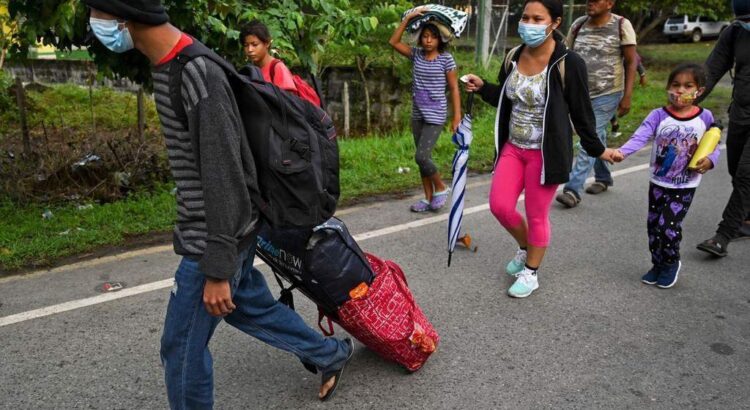
Lo más terrible es que más de 100 países del Sur global, y la mitad de los habitantes más pobres del planeta prácticamente no emiten gases de efecto invernadero, pero son los que más sufren por las consecuencias del cambio climático, con inundaciones y sequías extremas, migraciones obligadas, por quedar sin casa ni vías de sustento, etc. En todo el mundo, dentro de cada país, los efectos del calentamiento global provocado por las minorías más ricas los sufren los más pobres y marginalizados, tanto en comunidades urbanas como rurales e indígenas, como entre otros, los efectos de huracanes en Nueva Orleáns, las inundaciones en Reino Unido o los incendios descontrolados de la costa Oeste de Estados Unidos, Australia, Brasil, Argentina, Indonesia.

Las causas del cambio climático son ya bien conocidas. Es una consecuencia del sistema de producción y consumo industrial a gran escala y basado en combustibles fósiles. Según el Panel intergubernamental de expertos en cambio climático (IPCC) los principales sectores emisores, por orden de magnitud, son la extracción y generación de energía, la deforestación y agricultura industrial, la construcción y transportes. Si de estas fuentes extrapolamos el uso de energía, uso de suelo, deforestación, transportes, emisión de gases por desechos orgánicos, se muestra que el sistema alimentario agroindustrial (desde las semillas y agrotóxicos, a los supermercados con empaques, refrigeración, transportes, desechos) es responsable de 40 a 55 por ciento de las emisiones de GEI. Ese mismo sistema agropecuario industrial es el factor principal en la generación de epidemias y pandemias.

Pero ni en el cambio climático ni en las pandemias, las políticas oficiales se dirigen a eliminar las causas: en ambos casos se privilegia volver a subsidiar a las poderosas industrias causantes de tan tremendas crisis, apoyando salidas tecnológicas que les garantizan nuevos mercados.

En la pandemia, con enormes inversiones públicas en vacunas escasamente evaluadas y que plantean nuevos riesgos (Ver Covid y vacunas transgénicas) dejando intocadas las causas.

En políticas climáticas, permitiendo que en lugar de reducir emisiones reales, las empresas y países se basen en el concepto perverso de “emisiones cero netas”, es decir, que puedan seguir contaminando con GEI, pero que supuestamente lo compensen con otras medidas. En la reciente Semana del Clima, realizada en Nueva York paralela a la Asamblea de la ONU, las mayores corporaciones globales expusieron varios proyectos en ese sentido, como tecnologías de geoingeniería y lo que llaman “soluciones basadas en la naturaleza”, que es un concepto para disfrazar megaproyectos de plantaciones y otras formas de explotar y mercantilizar áreas naturales.

Ni la injusticia climática ni las pandemias son naturales. Son producto de sistemas de producción y consumo que nos enferman y que tenemos que terminar.

Informe: https://tinyurl.com/info-oxfam 

Por Silvia Ribeiro. Investigadora del Grupo ETC www.etcgroup.org

Ecoportal.net

Fuente de la Información: https://www.ecoportal.net/covid-19/injusticia-climatica-pandemia/

Comparte este contenido:

Alemania: Coronavirus en asilos: los ancianos necesitan más contacto social

Coronavirus en asilos: los ancianos necesitan más contacto social

En muchos lugares de Alemania los casos de coronavirus están aumentando de nuevo. Pero la mayoría de las personas mayores en el país probablemente no tengan que volver a vivir en confinamiento absoluto.

La fase con más contagios de coronavirus en marzo y abril fue un momento especialmente malo para muchas personas mayores en Alemania. En los asilos tuvieron que soportar semanas sin casi ningún contacto con el mundo exterior. El sistema de atención domiciliaria, en el que muchos cuidadores provienen de otros países de Europa del Este, pareció entonces estar al borde del colapso.

Según el Instituto Robert Koch, el 86 por ciento de las personas que murieron en relación con COVID-19 en Alemania, tenían, hasta el 18 de septiembre de 2020, 70 años o más. «La política y la sociedad han aprendido mucho, y ahora son más sensibles con el tema de la libertad de los residentes de los asilos», dice Helene Maqua, quien dirige el departamento de cuidado de ancianos en la Asociación Diocesana de Caritas del Arzobispado de Colonia. Después de las numerosas quejas sobre las medidas, a veces, muy estrictas, se han adoptado otro plan de actuación.

Aislamiento prolongado, perjudicial para la salud

Desde mediados de marzo hasta principios de mayo de 2020, de acuerdo al Reglamento de Protección contra el Coronavirus del estado de Renania del Norte-Westfalia (NRW), se prohibieron, con solo unas pocas excepciones, todas las visitas «que no fuesen atención médica o de enfermería o necesarias por razones legales» en los asilos. Tuvieron que comer solos en sus habitaciones. No fue una situación fácil, especialmente para los residentes con demencia, quienes no podían entender por qué tenían que mantener distancia, y los familiares no los visitaban.

Entre tanto, como en la mayoría de los otros estados federales, las visitas están de nuevo permitidas en NRW, aunque por un tiempo limitado, con mascarilla y a distancia, porque rápidamente quedó claro el enorme estrés que supuso la ausencia de visitas para los ancianos.

Cuando los cuidadores van a casa

También las personas mayores que viven en casa y reciben cuidados por parte de un servicio a domicilio o de 24 horas, tuvieron que aceptar ciertas restricciones: el llamado distanciamiento social. En una entrevista con el diario Frankfurter Rundschau a finales de abril, el investigador de envejecimiento Hans-Werner Wahl dijo: «Las emociones positivas, la sensación de ser necesitado, la ternura, todo eso se ha ido ahora. Es muy estresante».

Esto hace que el contacto con los enfermeros y cuidadores sea aún más importante para estas personas mayores. Sin embargo, al comienzo de la pandemia, el personal tuvo también sus propias dificultades, como informa Renata Föry. «Cuando se cerró la frontera germano-polaca a mediados de marzo, fue un caos absoluto, nadie sabía nada y algunas de nuestras cuidadoras se fueron por su propia cuenta a sus países de origen», dice la directora de Seniocare24, una agencia de contratación de cuidadores polacos. En ese momento, se decidió pagar un bono coronavirus de 300 euros para incentivar que se quedaran en Alemania. A finales de marzo, el Ministerio del Interior alemán dejó claro que los cuidadores (y conductores de camiones) de Europa del Este podían viajar a Alemania. Fue una excepción.

Senioren | Besuchscontainer eines Altenheim

Corona revela deficiencias en la atención domiciliaria

Para proveedores de cuidados sanitarios, como Seniocare24, la situación, en gran medida, se ha normalizado. Sin embargo, según una estimación de la asociación industrial VHBP, en los 300.000 hogares alemanes en los que los cuidadores viven con las personas a las que cuidan, más del 90 por ciento ni siquiera trabaja para tales agencias, lo hacen ilegalmente.

Es probable que estos trabajadores ilegales hayan regresado a sus países de origen en marzo y no regresen durante mucho tiempo. Durante esta fase, «muchos de los que anteriormente contrataban cuidadores de Europa del Este recurrieron a nosotros», afirma Föry. Sin embargo, desde la apertura de la frontera en junio, cada vez más clientes le han dicho que han «encontrado a alguien en privado», lo que suele ser sinónimo de ilegalidad.

Föry no teme a condiciones similares a las de marzo, aunque la cantidad de infecciones por coronavirus está aumentando nuevamente. Después de una breve fase de caos, los políticos actuaron

rápidamente: «Estoy muy agradecida al señor Spahn por ello».

Confinamientos probablemente solo a nivel local

Helena Maqua, de Caritas, piensa de forma similar. Solo al principio, las instituciones se sintieron abandonadas con la responsabilidad, lo que luego llevó a la excesiva cautela en algunos lugares. Pero ahora ya no se esperan confinamientos generalizados de asilos. Además, el estado de Renania del Norte-Westfalia ha establecido grandes existencias de materiales de protección; al comienzo de la pandemia, la escasez de guantes, máscaras u otra ropa fue un verdadero problema.

Los centros de ancianos también deben estar en cuarentena si se producen casos de coronavirus, pero con la ayuda y consideración de todos, estos pueden seguir siendo casos aislados. El virólogo Hendrik Streeck también enfatizó, durante una entrevista con la Agencia Alemana de Prensa, que él cuenta con «que la gente asume la responsabilidad, no solo de sí misma, sino también de otras personas. Casi todos conocemos a personas mayores o personas de riesgo, para las que el coronavirus puede ser peligroso».

Fuente de la Información: https://www.dw.com/es/coronavirus-en-asilos-los-ancianos-necesitan-m%C3%A1s-contacto-social/a-55110670


Comparte este contenido:

Japón: This Japan Startup Is Using Deep Learning To Detect Early-Stage Cancer In Blood Samples

This Japan Startup Is Using Deep Learning To Detect Early-Stage Cancer In Blood Samples

Unique skillsets

PFDeNA Inc. was established in 2016 as a joint venture between DeNA, a Japanese internet giant, and Preferred Networks, Japan’s leading artificial intelligence startup, to solve complex problems. One such problem is cancer detection.

PFDeNA’s cancer research can be traced back to the vision of one of Japan’s pioneering entrepreneurs. In 1999, Namba Tomoko founded DeNA, a mobile and online services company that had extraordinary success in e-commerce and gaming. Namba stepped down from her role as CEO in 2011 to care for her cancer-stricken husband, but her commitment to fighting the disease inspired DeNA to launch a healthcare business with its own bioscience lab in 2014. Meanwhile, Preferred Networks had been conducting research on cancer screening with National Cancer Center Japan since 2015, but needed a partner with expertise in lab operations and business. The two companies decided to use PFDeNA as a platform for collaboration, which began in 2018.

DeNA founder Namba Tomoko

Led by board members including DeNA President and CEO Moriyasu Isao and Preferred Networks CEO Nishikawa Toru, PFDeNA is harnessing the power of deep learning, an artificial intelligence technique modeled on the brain, as a way to detect cancer as early as possible. To do that, the venture is building computer tools as well as a state-of-the art lab that will be able to find almost undetectable signs of cancer in routine blood samples. This “liquid biopsy” approach contrasts greatly with current methods such as radiographic imagining and tissue biopsies.

“We want to transform healthcare from a sick-care model, in which patients are cared for when they become ill, to one based on preventive medicine,” says Yoneyama Hiroshi, executive officer at DeNA and vice president of PFDeNA. With a background in business development and healthcare, Yoneyama is keenly aware of the challenges faced by the medical care system in Japan.

“There’s a dire need for early-cancer detection, not only in Japan but overseas as well,” Yoneyama says. “There are hurdles in the liquid biopsy field but we believe we can overcome them based on the strengths of our two founding companies.”

Each partner brings a unique skillset to the challenge. Preferred Networks’ specialty is developing cutting-edge AI solutions. DeNA is able to quickly make decisions on large-scale investments based on its long experience in mobile services. It’s also a player in the healthcare business, and has accumulated significant experience in negotiating with medical centers as well as lab operations. In 2014, DeNA began a direct-to-consumer genetic testing service called MYCODE, which can detect predisposition to a variety of illnesses. About 90% of MYCODE users have made lifestyle modifications to protect their health.

Looking for molecular changes

PFDeNA aims to screen for 14 types of cancer, including lung and pancreatic cancer, and estimates the domestic market for such services could be worth about 400 billion yen ($3.8 billion). The startup is working to develop a system that can rapidly detect telltale signs of the 14 cancers with just one blood test. These can include changes in the number of molecules that can indicate the likelihood or presence of cancer.

Prostate-specific antigen (PSA), for instance, is a protein produced by the prostate gland that is used to screen for prostate cancer. Genetic mutations can also suggest whether a patient may be more likely to develop certain kinds of cancer. PFDeNA is examining the expression patterns of extracellular ribonucleic acid (exRNA) including microRNA (miRNA) as a potential screening tool for multiple types of cancer. Many cancer researchers expect that certain changes in these miRNA biomarkers can indicate the presence of cancer in various organs.

PFDeNA Vice President Yoneyama Hiroshi

“In addition to massive computational resources, high-quality data is indispensable for the high-precision deep learning computations needed to create an accurate screening system,” says Abe Motoki, a bioinformatics engineer at Preferred Networks. Abe is in charge of developing a predictive model using deep learning. He also has access to Preferred Networks’ computational resources including the MN-3 supercomputer, recently ranked as the world’s most energy efficient on the Green500 list.

“With a disease like prostate cancer, we only need to look at the levels of just one biomarker, PSA,” Abe says. “But with we are trying to detect multiple types of cancer by analyzing over a thousand exRNA expression levels, which is way more than humans can possibly handle. That’s why we need technology like deep learning.”

A powerful collaboration

Japan provides an ideal location for medical startups such as PFDeNA, in part because of readily available medical checkups covered by employers and municipalities, as well as a wealth of high-quality medical data. At its lab in Tokyo, PFDeNA is analyzing thousands of blood samples provided, with patient consent, by medical institutions such as National Cancer Center Japan. The company is working with more than 10 medical centers as it works toward its goal of building a rapid-screening system that could be part of annual medical checkups in the future. These partnerships, along with collaborations with industry and academia, form a solid foundation that’s giving PFDeNA the best chance of succeeding in its quest.

Abe Motoki, a bioinformatics engineer at Preferred Networks

The Japanese government has also pivoted to support such efforts. With their universal healthcare system, Japanese tend to focus on treating problems, paying less attention to prevention. This tendency, along with the aging population, has increased demand for medical care. While grappling with these issues, the Japanese government is trying to transform the national healthcare system into one that focuses more on prevention. The state is also backing R&D projects in the field of early disease prediction and intervention through programs such as the Cabinet Office’s Moonshot R&D program.

«The Japanese government is very keen to come up with measures for cancer detection and prevention, so we fit into the context of what it’s doing,” says Yoneyama. “We were able to receive cooperation from more than 10 medical institutions because they’re working on this issue, and it’s now a trend. So Japan, as a government and as a whole, is very much backing this movement and taking leadership in this area.”

While PFDeNA works toward publishing the results of its research in academic journals, it’s consulting with the Pharmaceuticals and Medical Devices Agency, the authority responsible for certifying drugs and medical devices in Japan, in order to streamline approval of its services when they’re ready for the market.

PFDeNA’s lab

“Japan is an aging society, and early cancer detection is one way in which the burden of healthcare costs can be reduced,” says Ishikura Kiyo, associate director of PFDeNA’s healthcare business. “Liquid biopsies are a hot international topic right now. This service would be the first of its kind in the world and it’s a complex challenge to overcome. It’s a long-term journey but we have already begun.”

Note: All Japanese names in this article are given in the traditional Japanese order, with surname first.

To learn more about PFDeNA, click here (Japanese).

Fuente de la Información: https://www.forbes.com/sites/japan/2020/09/30/this-japan-startup-is-using-deep-learning-to-detect-early-stage-cancer-in-blood-samples/#3152f0a53c91


Comparte este contenido:

A maxi-Mars, a mini-moon and meteors light up the October night sky

A maxi-Mars, a mini-moon and meteors light up the October

night sky

Get set to be dazzled by the big beautiful glow of mysterious Mars this weekend as it puts on a show with the Moon.

The Red Planet is getting bigger and brighter every day as it makes its closest approach to Earth since July 2018.

On Friday evening (October 2) Mars will appear close to the full moon above the north-eastern horizon at 8:00pm.

But this is no ordinary full Moon.

It’s a mini-Moon — a full Moon that occurs at the most distant point in its orbit from Earth each month — so it will appear slightly smaller than usual.

And it’s actually the first of two consecutive minimoons, which means the Mars-and-Moon show will look even more spectacular on Saturday night.

«It will be best on 3 October when Mars and the Moon are only about a handspan apart,» says amateur astronomer Ian Musgrave.

The Red Planet will be at its biggest next week

Mars will be at it’s closest point to Earth on October 6 at 14.10 UTC.

Depending upon which Australian time zone you live in, that will either be late Tuesday night (WA and NT) or early Wednesday morning on October 7.

But don’t let anyone tell you it will be bigger than the Moon — even a mini-Moon.

This internet hoax does the rounds every time Mars reaches its closest point (known by the astronomical term ‘perigee’), but from where we stand Mars is more than 60 times smaller than the Moon.

Mars and Earth come close to each other around every two years — that’s because Mars takes 26 months to orbit the Sun, compared to Earth’s 12 — but the distance between them varies each time.

This time it will be 62.07 million kilometres away from Earth.

Illustration showing Mars perigee size difference

Mars continues to get brighter and brighter until Wednesday October 14 when it reaches ‘opposition’, in other words it is in a direct line with Earth and the Sun.

The reason why there is a week’s difference between the closest approach and opposition comes down to the elliptical shape of the Red Planet’s orbit, explains Jonti Horner, an astronomer at the University of Southern Queensland.

«If the orbits were perfectly circular then the closest approach and opposition would occur at the same time,» Professor Horner says.

The closest approach happens when opposition coincides with ‘perihelion’ — the point where Mars is closest to the SunThis happens about every 16 years.

In 2018 Mars and Earth were separated by 57.6 million kilometres, but in 2003 they were only 55.7 million km apart — the closest they’d been in 60,000 years.

Although not quite as close as those, this opposition will be the best until 2033.

After October 14, Mars will start to become dimmer, but will still be one of the brightest objects in the sky until the end of the month, Dr Musgrave adds.

«By the end of month it will be still be brighter than Jupiter,» he says.

Venus, Leo and the Moon

Mars is not the only planet to shine in the first half of the month.

Venus will be spectacularly close to Regulus, the brightest star in the constellation of Leo, in the eastern sky on the morning of October 3 between 5:00am and 5:30am.

«They’re going to be less than half a finger apart,» Dr Musgrave said.

Then, on October 14, Venus and Regulus will form a pretty triangle with the crescent moon in the early morning sky.

Meteor showers

The annual Orionids meteor shower lights up the early morning sky between October 21 – 23.

This meteor shower is caused by Earth passing through the dust stream of Halley’s comet, the same comet that is responsible for the Eta Aquarids shower earlier in the year.

It’s not as spectacular as the Eta Aquarids, but you could see at least 13 meteors an hour between 4:00AM and 5:00 AM at the peak of the shower if you are in a dark area.

Not only will the meteors start high in the sky an hour before sunrise, the first quarter Moon will be below the horizon.

«The best time to see it is the morning of the 22nd, but you’ll see decent meteor rates on the 21st and 23rd, Dr Musgrave says.

Map showing Orion and Orioniids meteor shower

To find the Orionids, scan the northern sky and look for the ‘Saucepan’. This is actually the belt of the constellation of Orion.

The meteors will come out from a point below the belt near a big orange star called Betelgeuse and shoot up through the belt.

«If you can see the stars of the belt then you’ve got a good chance of seeing a meteor,» Dr Musgrave says.

If you are very lucky, you may even see a meteor shooting in from the left from the neighbouring constellation of Taurus.

The southern Taurid meteor shower (formed out of debris from Comet Encke) peaks on October 10 but runs right through the month.

However, the rates are much lower — only two meteors an hour at the peak.

Even though the rates are very low, Taurid meteors tend to be brighter than Orionid meteors, says Professor Horner.

«If it’s moving quickly its an Orionid meteor, if it’s moving slowly it’s a Taurid,» he says.

Fuente de la Información: https://www.abc.net.au/news/science/2020-10-02/mars-mini-moon-and-meteors-light-up-october-night-sky/12637676?nw=0


Comparte este contenido:

Trial to get more teachers to NSW regions

Trial to get more teachers to NSW regions

A trial program targeting NSW regional schools with the worst teacher shortages will start in term one next year.

NSW Education Minister Sarah Mitchell said it was the second pilot program designed to bring more teachers to regional NSW.

«It can be difficult to attract and retain teachers in rural and remote areas for a number of reasons including travel distances, lack of suitable accommodation close to schools and limited opportunities for teachers to access professional learning,» she said in a statement on Wednesday.

A «hub and spoke» pilot will provide teachers employed in a ‘hub’ school, who can also be sent to nearby ‘spoke’ schools.

«Through this pilot, up to 12 teachers will be employed and will be able to be deployed quickly to a nearby spoke school to cover classes,» she said.

«It will also provide certainty to casual teachers, knowing they have a permanent position.»

The program targets schools with the greatest reported shortages and grouping them in travel distance clusters to reduce average commuting times to less than an hour.

Ms Mitchell also said an in-built relief model first piloted last year, would be extended to carefully selected schools next term.

«One temporary teacher will be embedded in each school to provide relief when permanent teachers are unavailable due to professional development or illness.»

The trials will improve working conditions in rural and remote schools by: reducing commuting time, offering longer engagements, offering temporary or permanent appointments that include leave and other benefits, providing employment certainty, as well as investing in professional development and learning.

Fuente de la Información: https://7news.com.au/news/education/trial-to-get-more-teachers-to-nsw-regions-c-1352962


Comparte este contenido:

The Rise of Women Leaders in North Korea

The Rise of Women Leaders in North Korea

Since Kim Jong Un came to power, North Korean media has carefully curated the public image of both his wife and sister, a departure from how women were portrayed in the Kim Jong Il era. But they aren’t the only women in Pyongyang’s inner circles—several have been promoted to powerful political and diplomatic roles in recent years. While it may not have much impact on his policy decisions in the long run, the fact that Kim Jong Un has opened doors to some women is particularly striking given the historically male representation of power and politics in North Korea.

The Kim Dynasty as the Source of Women’s Leadership

North Korea’s national history abounds with images of women as revolutionaries—whether as soldiers, workers or symbolic “mothers” to the nation, especially the mothers, wives and consorts of the Kim dynasty. Official history calls Kim Il Sung’s mother the “mother of Choson,” upheld as pure legend in the cult of the Kim family. Kim Jong Suk (Kim Il Sung’s first wife and mother to Kim Jong Il) and Kim Hwak Sil (called “the Woman General” of the Anti-Japanese Guerrilla Army) were exceptional women in the independence movement who fought alongside men in battle, upheld as unshakeable and committed revolutionaries (Park 1992-1993).[1]

Kim Il Sung’s second wife, Kim Song Ae, was officially introduced to the public in the 1960s, and received titles such as chairman of the Democratic Women’s Union and held meetings for foreign female delegates.[2] She sought to expand her political clout—positioning her children as possible heirs—making her a formidable challenger to Kim Jong Il’s claim to leadership. By the 1970s, she lost her position as head of the women’s committee and in 1981, as Kim Jong Il consolidated power, was placed under house arrest.[3]

Kim Jong Il, on the other hand, never appeared with his wives and consorts—Hong Il Chon, Song Hye Rim, Kim Yong Suk and Ko Yong Hui—because he reportedly did not like them to be involved in political activities.[4] A notorious womanizer, he largely kept his partners in secluded mansions and apartments, and purportedly preferred them to focus on their motherly duties.[5]

Kim Jong Un’s Rule and Female Leadership

It seems that Kim Jong Un has taken a different tack than his father or grandfather, and is surrounding himself with notable women in high-level positions, suggesting a potential shift for women among a new generation of leaders. These include (listed in alphabetical order):

  • Choe Son Hui has been North Korea’s first vice minister of Foreign Affairs since 2018. Fluent in English, she takes a leading role in DPRK relations with the United States, having previously served as director of MOFA’s North American department. She was involved with the Six Party Talks and nuclear negotiations. She is the adopted daughter of Choe Yong Rim, honorary vice president of the Supreme People’s Assembly Presidium and a former premier.
  • Hyon Song Wol is a popular singer and leader of the Moranbong Band and Samjiyon Orchestra who has taken on greater political responsibilities since 2017, when she was appointed to the Central Committee of the Workers’ Party of Korea. She serves as vice director of the powerful Propaganda and Agitation Department under Kim Yo Jong and often appears in her stead in that role as well as is often included on delegations to inter-Korean events, including her 2018 trip to South Korea. That visit, scheduled as part of increasing inter-Korean engagement in the lead-up to the Pyeongchang Olympics, dominated South Korean news, and is considered a diplomatic success.
  • Kim Kyong Hui, Kim Jong Un’s aunt, appeared as a frequent advisor and confidant during the early years of his rule. Kim Jong Il promoted her to a four-star general (despite having no known military experience) in the Korean People’s Army at a Party Conference in 2012—listed next to Kim Jong Un the first time his name appeared in North Korean media.[6] While she frequently appeared with Kim Jong Un beginning in 2010, she was not seen in public after her husband was executed in 2013, until earlier this year when she was photographed seated with Kim Jong Un and his family at a Lunar New Year’s concert in January. Her role in family affairs is unclear, although she likely helps handle patronage networks.
  • Kim Song Hye serves as head of the secretary bureau of the Committee for the Peaceful Reunification of Korea, the counterpart to South Korea’s Minister of Unification. She has experience working on North-South relations and has been involved with talks since the 2000 Inter-Korean Summit. Kim has been part of several delegations to visit South Korea, including during the 2018 Pyeongchang Olympics. In 2019, it was reported that she, along with several other delegates to the Hanoi Summit, faced detention and investigation following the lack of the summit’s success.
  • Kim Yo Jong serves as her brother’s de facto right-hand (wo)man, and has been given broader responsibilities within the Politburo, where she has been an alternate member since April 2020. South Korea’s National Intelligence Service claims that Kim Jong Un has delegated part of his authority to aides, including his sister, to “oversee state affairs,” although it is unclear what this means in practice. South Korean and US media has speculated why she hasn’t appeared in public since late July. She was not seen at two key Political Bureau meetings on August 13 and August 25. Some analysts have suggested that she is lying low to decrease suspicion that Kim Jong Un has ceded too much authority to her because of ill health. It is just as possible that the Kim family is limiting their exposure to the public as part of anti-epidemic measures.
  • Pak Myong Sun has a leading role in economic affairs, and is likely the head of the Korean Workers’ Party (KWP) Light Industry Department—the third woman to hold this position in North Korea’s history and the second not related to Kim Il Sung or Kim Jong Il. Pak Myong Sun and Kim Yo Jong are currently the only women in the Politburo.
  • Ri Sol Ju, Kim Jong Un’s wife, was conferred the ceremonial political title of “First Lady” of North Korea in 2018 ahead of summits with South Korea and the United States, presumably to match the titles of Kim Jung-sook and Melania Trump, the first ladies of South Korea and the United States, respectively. The title hadn’t been used since 1974, when it was used to refer to Kim Il Sung’s second wife. She accompanies Kim Jong Un at domestic political meetings like the Party meetings as well as site visits and summits with foreign leaders.

Implications of Elite Female Leadership

It is sometimes assumed that greater inclusion of women may change policy content. That may be the case in democracies, but the increased participation of North Korean women in elite politics does not necessarily indicate change to the broader social or political systems. Studies of political influence in other authoritarian and hybrid regimes suggest that women’s inclusion in national politics actually reproduces—not challenges—norms, representation and control mechanisms that reinforce existing political institutions.

In North Korea, successful female political leaders have toed the party line closely. Choe Son Hui has drawn a tough line on the possibility of dialogue with the United States. One of the “prime authors” of the plan for sanctions relief, Kim Song Hye, reportedly worked closely with Kim Yo Jong in the lead-up to the Hanoi Summit and the visit to South Korea during the Winter Olympics. Hyon Song Wol leads North Korea’s cultural diplomacy activities, bringing delegations of North Korean artists to South Korea and China. And Kim Yo Jong worked as a hardline counterbalance to Kim Jong Un’s earlier engagement with US and South Korean leaders, sending confusing messages via the Korean Central News Agency (KCNA).[7]

North Korean women have played a strong role in neighborhood politics since the founding of the country and have been at the forefront of changes in the local economy since the Chollima movement started in the 1950s, not to mention their important role in marketization following the Great Famine. For now, it is noteworthy the extent to which women do work in high-level positions in varied sectors of politics, diplomacy and the economy. It seems that at the very least, being female is not a disqualifier for gaining influence in Kim Jong Un’s regime.


  1. [1]


  2. Kyung Ae Park, “Women and Revolution in North Korea,” Pacific Affairs, 65, no. 4 (Winter 1992-1993): 527-545.

  3. [2]

    Jae-Cheon Lim, Kim Jong-il’s Leadership of North Korea (London: Routledge, 2008).

  4. [3]

    Jing-sung Jang, Dear Leader: My Escape from North Korea, trans. Shirley Lee (New York: 37Ink/Atria, 2014).

  5. [4]

    Lim, 2008.

  6. [5]

    Jung Pak, Becoming Kim Jong Un: A Former CIA Officer’s Insights Into North Korea’s Enigmatic Young Dictator (New York: Random House, 2020).

  7. [6]

    See: Ken Gause, “North Korea’s Political System in the Transition Era: The Role and Influence of the Party Apparatus,” in North Korea in Transition: Politics, Economy, and Society, ed. Kyung-Ae Park and Scott Snyder (Lanham, Maryland: Rowman & Littlefield, 2013); and Peter M. Beck, “North Korea in 2010: Provocations and Succession,” Asian Survey. 51, no. 1 (2011): 33-40.

  8. [7]

    “Press Statement by Kim Yo Jong, First Vice Department Director of Central Committee of Workers’ Party of Korea,” KCNA, July 10, 2020.

    Fuente de la Información: https://www.38north.org/2020/09/ddraudt092520/

Comparte este contenido:

España: Educación celebra el primer examen oficial de lengua asturiana con 407 inscritos

Europa/España/04-10-2020/Autor(a): EUROPA PRESSS/Fuente: www.elcomercio.es

El próximo lunes, 5 de octubre, se realizarán las pruebas orales, en el Instituto Aramo, de Oviedo.

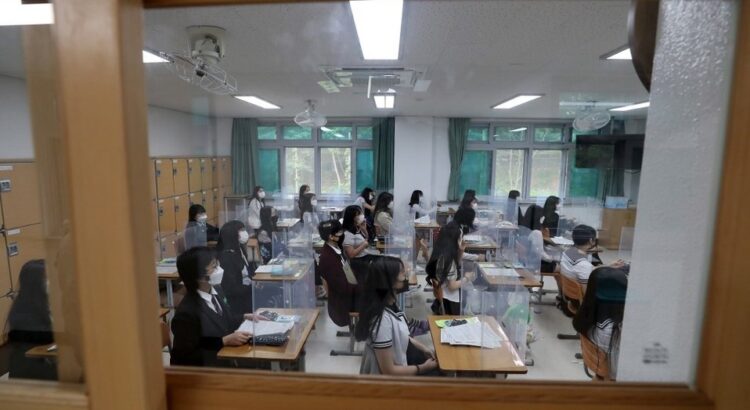
La Consejería de Educación ha organizado este sábado en Oviedo la primera prueba de certificación de Lengua Asturiana de nivel intermedio (B2), en el que estaban inscritos 407 aspirantes.

En esta primera jornada se han desarrollado los exámenes escritos, en el edificio sur de la Facultad de Formación del Profesorado y de Educación. El próximo lunes, 5 de octubre, comenzarán los orales, en el Instituto Aramo, de Oviedo.

La convocatoria cuenta con su propio protocolo de medidas higiénico-sanitarias adaptado a la realidad de la pandemia y visado por la Consejería de Salud. Para cumplir con todos los requisitos de seguridad, la entrada será escalonada. A cada participante se le ha enviado un mensaje SMS asignándole una hora de acceso.

Un total de 800 aspirantes registraron su solicitud participar en esta prueba de certificación, para la que se ha establecido un cupo máximo de 500 plazas. El criterio de selección para determinar quién podría realizar en la prueba se decidió mediante el sorteo de la letra del apellido. Finalmente, han formalizado el pago del precio público correspondiente 407 candidatos y candidatas.

Por otro lado, esta semana se han constituido dos tribunales nombrados por la Consejería de Educación, que serán los encargados de gestionar los exámenes de certificación. Ambos están integrados por profesorado funcionario de carrera del cuerpo de profesores de Secundaria y por lingüistas expertos en Lengua Asturiana.

Las pruebas surgen de la colaboración entre las consejerías de Educación y Cultura, Política Lingüística y Turismo. El decreto 47/2019, de 21 de junio, por el que se establecen los niveles de competencia del uso de la Lengua Asturiana y que regula esta prueba de certificación fue diseñado por Cultura, Política Lingüística y Turismo.

Educación se ha encargado de la convocatoria, la inscripción, la organización y la aplicación de los exámenes. Será también la Administración encargada de expedir los certificados. Los niveles están adaptados al Marco Común de Referencia Europeo (MCRE) de las Lenguas.

Fuente e Imagen: https://www.elcomercio.es/asturias/educacion-celebra-primer-examen-lengua-asturiana-oficial-20201003191650-nt.html

Comparte este contenido:
Page 1065 of 6179
1 1.063 1.064 1.065 1.066 1.067 6.179