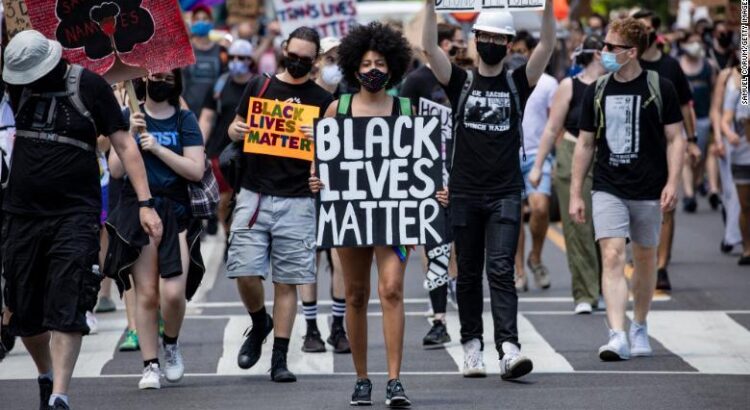
«Nos enfrentamos a esta enorme crisis económica, esta enorme crisis de salud pública y, por encima de todo, una verdadera crisis de legitimidad estatal, en la que la derecha se ha vuelto explícitamente racista», sostiene la académica y escritora Donna Murch.
Donna Murch es profesora asociada de Historia en Rutgers, Universidad Estatal de Nueva Jersey, y forma parte del consejo ejecutivo de la Asociación del Profesorado Universitario –Federación de Docentes de EE.UU. Es autora de Living for the City: Migration, Education, and the Rise of the Black Panther Party in Oakland, California (University of North Carolina Press), que obtuvo el Premio Phillis Wheatley. Su último libro, editado por Haymarket Books y de próxima aparición, se titula Assata Taught Me: State Violence, Mass Incarceration and the Movement for Black Lives.
Todd Chretien y Brais Fernández: ¿Puedes caracterizar la situación política general en EE.UU. en plena pandemia de COVID-19, la recesión que se expande y la rebelión antirracista?
Donna Murch: Creo que, de alguna manera, EE.UU. se enfrenta a una situación sin precedentes a causa de la simultaneidad de estas crisis múltiples. En primer lugar, es la mayor crisis sanitaria que ha conocido nunca EE.UU., incluidas las epidemias de tuberculosis, sífilis y, más recientemente, la del SIDA. En segundo lugar, la escala y magnitud de la epidemia ha generado un desempleo masivo en poquísimo tiempo, alcanzándose un récord de siete millones de parados y paradas registradas en una sola semana, en marzo, mientras que en julio se mantiene bastante por encima de un millón de nuevos registros a la semana. La tasa de paro oficial se sitúa ahora en el 11 o el 13%, pero pienso que es mucho más elevada a la luz de los informes de los distintos estados. En tercer lugar, y cito a una amiga mía, la gente se ha visto forzada a manifestarse en las calles para oponerse a otra pandemia, la violencia estatal.
Entiendo que estas crisis múltiples se nutren del hecho de que EE.UU. se halla en un rápido declive. Este proceso comenzó hace ya mucho tiempo y la elección de Donald Trump es un reflejo de este declive. Él lo acelera, pero también es un síntoma de la descomposición de nuestras instituciones y del pensamiento violento de derechas que en parte es fruto de la rapidez de nuestro declive. Él no es la única causa, pienso que existe una continuidad del supremacismo blanco que hace que esto sea posible.
Así que esto es a lo que nos enfrentamos, esta enorme crisis económica, esta enorme crisis de salud pública y, por encima de todo, una verdadera crisis de legitimidad estatal, en la que la derecha se ha vuelto explícitamente racista –se acabaron las insinuaciones larvadas, los discursos posteriores al movimiento de derechos civiles que acomodan el racismo en otro lenguaje–, se ha vuelto todo muy explícito, tanto su racismo como su antisemitismo.
T. C. y B. F.: Para seguir este hilo, Donald Trump es evidentemente un sociópata, pero ¿considerarías que él y el movimiento político que trata de construir es fascista? ¿Cuáles son las políticas e ideas con las que intenta organizar su bloque político? ¿Hay algún indicio de que se enfrenta a la clase dominante estadounidense o hace lo que le conviene a ella?
D. M.: Soy muy cauta a la hora de definir el fascismo, especialmente cuando hablo con personas como las del Estado español, que vivieron bajo Franco durante muchos años. Suelo atenerme a los términos de los que habló Daniel Guérin, quien veía en el fascismo la fusión del Estado y el capital, junto con fuertes tradiciones de autoritarismo, militarismo y una base principal de racismo como una especie de fuerza unificadora. Son definiciones generales que muestran continuidades incluso con cosas que vemos en democracias liberales, aunque con formas intensificadas hasta el extremo. Así que pienso que Trump representa la fuerza del fascismo en función de cómo lo definas. Tiene memes tuiteados explícitamente nazis y ha apoyado a gente que celebra el nacionalsocialismo y la política genocida.
Trump es el peor capitalista, es un agente de la propiedad inmobiliaria. No me gusta nada la palabra populista porque en la historia de EE UU hay un montón de cuestiones que incluyen este término, mientras que en Europa siempre se asocia con movimientos conservadores autoritarios. En EE UU es una historia más compleja.
Trump se presentó como un hombre del pueblo, pero no asumiendo intereses concretos, sino más bien expresando el resentimiento popular, y este aspecto es muy importante. También cambiaba de opinión como de camisa durante la campaña presidencial, y básicamente propuso poner fin a las guerras de EE UU. No por pacifismo, sino porque es un nacionalista económico y defiende una especie de America First similar al aislacionismo de Charles Lindbergh en la década de 1930, y así es como llegamos al Make America Great Again: que todos vuelvan a casa, que gasten su dinero aquí, combatir a China y otros países y después trabajar por el predominio de EE UU.
No olvidemos que su primer secretario de Estado, Rex Tillerson, había sido el administrador ejecutivo de Exxon Mobil. Dimitió porque ni siquiera él soportaba estar a las órdenes de Trump. Alex Azar, nuestro actual secretario de Salud y Servicios Humanos, antes fue el jefe de Eli Lilly, una importante compañía farmacéutica, cuya actividad sigo de cerca a raíz de mi investigación sobre la crisis de los opioides. Es casi como una caricatura satírica ver a los directores de grandes empresas ocupando cargos ministeriales en el gobierno de Trump. Así que sí, Trump es un hipercapitalista, un agente de la propiedad inmobiliaria. En realidad es un agente inmobiliario fracasado que se ha construido una carrera a base de pulir su imagen y vender su nombre, ese es nuestro actual presidente de EE UU.
T. C. y B. F.: Visto este declive en el interior, ¿puedes evaluar la posición geopolítica de EE UU frente a otras potencias, especialmente China?
D. M.: Parte de lo que voy a decir son recuerdos personales. Nací en 1968 y recuerdo la transición que tuvo lugar hacia finales de la década de 1990 o comienzos de la de 2000, que luego se intensificó tras el 11 de septiembre. Previamente, cuando yo era una niña en pleno apogeo de la Guerra Fría, en el discurso político estadounidense era normal que todos, fueran demócratas o republicanos, comenzaran cualquier intervención y presentación en el Congreso diciendo “somos el país más grande del mundo”. En los últimos diez años o más he notado que es mucho menos común y que cada vez más esta idea la pregonan ciertos políticos de derechas.
En la conciencia popular estadounidense esto está retrocediendo, ya que buena parte de nuestro sentido de grandeza tiene que ver con nuestra economía y nuestro ejército, nuestra hegemonía, nuestra dominación. Hemos entrado en declive y todo el mundo lo sabe. Provengo de una familia de clase obrera por parte de madre y todos y todas lo saben. No leen el New York Times o el Wall Street Journal, pero lo saben. Ven cómo se quiebran los puentes, ven los socavones en sus carreteras, ven los problemas que tienen con las infraestructuras, la fontanería, el agua. La mayor parte del país no es rica y sus descendientes tienen un nivel de vida más bajo que el que tuvieron ellas y ellos, y este aspecto es muy importante. Es una experiencia de declive vivida por la gente común.
T. C. y B. F.: ¿Cómo se manifiesta este declive a escala internacional?
D. M.: Recuerdo una conversación con una amiga de Sudán cuando estaba cursando posgrado y estuvimos reflexionando sobre esto y le dije: “Los estadounidenses blancos no llevarán bien el declive porque la imagen de sí mismos está muy imbuida de superioridad”. Fue la primera vez que vi los verdaderos peligros políticos del declive y creo que esto es lo que representa Trump.
¿Cómo repercute esto en el plano internacional? Creo que hemos de comprender que la presidencia de George W. Bush fue muy importante, tanto por la extensión de todas esas guerras en Oriente Medio –que de hecho enlazaron con la primera guerra de Irak– como por la victoria de los neoconservadores. Se sobrepasaron mucho y este es un aspecto central. Asimismo, Bush preparó el terreno para Trump con la utilización explícita del racismo. Si recordáis, utilizó todo ese lenguaje de las guerras con los indios en EE UU, “sacarlos con humo de sus agujeros” y esas expresiones de la frontera americana, todo lo cual resultó increíblemente popular. Por supuesto, es un plutócrata, de una familia de postín que se remonta a los orígenes del país, pero se forjó la imagen de un populista texano. Una de las tretas que utilizó para ello fue su propia incultura. Fue el ejemplo de un verdadero patricio que cambió de imagen, en gran parte gracias a su propia estupidez, para presentarse como un hombre del pueblo. Pienso que, por desgracia, en parte le funcionó.
Esto es importante porque la gente presenta a Donald Trump como una especie de aberración terrible y muchos reclaman ahora a George W. Bush como el buen republicano, pero en realidad creo que prefiero trazar una línea de continuidad entre ambos. Y esto es importante cuando pensamos en cómo el Estado ha redistribuido ahora, de un modo completamente desregulado, el dinero entre todas esas grandes empresas con motivo de los rescates durante la Covid-19. Vimos un precedente de esto bajo la presidencia de Bush, cuando utilizó toda la potencia devastadora del ejército para destruir Irak y luego entregar el país a todas esas compañías estadounidenses que, como Halliburton, entraron básicamente con contratos de adjudicación directa. Fue un regalo de billones de dólares que nunca acabó de regularse plenamente. Creo que durante los dos primeros rescates de la Covid-19, Trump se atuvo a un guion muy parecido. Las compañías recibieron enormes cantidades de dinero sin un cuidadoso seguimiento de su uso y ahora escuchamos esas historias sobre cómo el Ayn Rand Institute recibió 350.000 dólares.
Desde el punto de vista de la política mundial, el grado de racismo que moviliza Trump contra China es muy peligroso. Pero lo que ocurre con Trump es que, puesto que es un bandido, un criminal, continuamente va dejando caer que al mismo tiempo habla con Xi Jinping entre bastidores. Así que, por una parte, tenemos el discurso público de racismo contra mexicanos y centroamericanos, contra árabes y musulmanes, y su racismo contra China, pero por otra, trata constantemente, en secreto, de cerrar sus propios acuerdos. Es un poco contradictorio.
T. C. y B. F.: Pasando a la política nacional, desde el asesinato de George Floyd por la policía, hemos visto una movilización antirracista dirigida por el movimiento negro. ¿Cuáles son las características de este ciclo de protestas y qué antecedentes tiene?
D. M.: Para comprender el periodo actual creo que debemos remontarnos a 2009. De alguna manera es una fecha arbitraria, ya que la gente afroamericana viene movilizándose contra la policía desde 1965 por lo menos. Hubo revueltas urbanas masivas en la década de 1960 y en 1992. Pero el motivo por el que menciono 2009 es porque ese año asesinaron a Oscar Grant en Oakland, en la estación de Fruitvale. Fue la primera vez que vi una movilización de este tipo tras un asesinato policial que había sido grabado en vídeo, y después vino el trabajo constante, quiero decir, años y años organizando el movimiento. Y la elevación de Oscar Grant a la condición de mártir político.
Más tarde hubo una explosión tras el asesinato de Trayvon Martin en 2012. Fue a partir de este asesinato de Trayvon Martin y de la exoneración de George Zimmerman, su asesino –que no era poli, pero que se dedicaba a patrullar el barrio por decisión propia–, que las tres fundadoras de Black Lives Matter utilizaron por primera vez esta expresión, que se convirtió en hashtag y después en red social. Con el tiempo, pasó a ser una especie de coordinadora, llamada Movement for Black Lives, que incluye agrupaciones en todo el país, así como algunos centros académicos y organizaciones benéficas.
Así que, visto ahora, hemos de ampliar el espacio temporal, pues el trabajo de organización se ha prolongado durante mucho tiempo. Una de las claves de su éxito es que al utilizar la expresión Black Lives Matter ha conseguido dar la vuelta al discurso de ley y orden y a la visión de las personas negras siempre a través de la lente de la criminalización. Ha invertido la identificación, de modo muy parecido a lo que hizo el Partido Pantera Negra: Black Lives Matter ha sacado a la luz la violencia cometida contra la población negra y de este modo anula la fuerza profunda de una clase particular de racismo. Todo esto significa que existen importantes elementos de continuidad.
Ahora bien, las manifestaciones que ha habido durante los dos últimos meses son distintas de las que se produjeron entre 2009 y 2016, que en gran parte movilizaban a gente afroamericana. En aquellas manifestaciones anteriores participaban personas blancas y gente de todos los colores, pero el núcleo duro, creo, era un movimiento de protesta negro. Ahora ha habido manifestaciones en más de 400 ciudades y la cosa continúa. La semana pasada estuve en Filadelfia de compras y hubo una manifestación y la policía acordonó media ciudad.
Lo que hemos visto ahora es una expansión, una demografía mucho más amplia. Uno de los efectos de la intersección con la Covid-19 es que la gente que se manifiesta es más joven, ya que muchas de nosotras nos confinamos en casa. Siempre voy a las manifestaciones, pero entonces no acudí porque soy mayor y me quedé en casa. Así que pienso que las y los manifestantes son más jóvenes y racialmente más diversos. A mi entender, el reto al que se enfrentan es cómo convertir esta movilización masiva en un cambio sustancial, dado que el gobierno federal está encabezado por un loco racista y un problema general de la política estadounidense es cómo hacer que el Estado sea receptivo a las movilizaciones populares masivas.
T. C. y B. F.: Has mencionado los elementos de continuidad en la lucha de la población negra. ¿Puedes identificar algunas de las ideas y demandas fundamentales que, durante siglos, han guiado al movimiento negro por la liberación y, más concretamente, a partir de 1965, como has señalado antes?
D. M.: El año 1965 es importante porque ese año se promulgó la Ley de Derecho al Voto (Voting Rights Act). Aunque tengamos la democracia más antigua, la población afroamericana no ha podido votar durante la mayor parte de nuestra historia. Hubo un breve periodo de doce años tras la Guerra Civil durante el cual los hombres negros podían votar si contaban con la protección de las tropas federales en el periodo de la Reconstrucción, pero también hubo decenas de miles de personas asesinadas por tratar de votar en los estados sureños.
Mientras, en el norte el voto negro estaba restringido, había una situación como la de Irlanda del Norte, donde los impuestos al sufragio, los pucherazos y las inhabilitaciones eran medios comunes para suprimir el voto de la población católica. Utilizo a menudo esta comparación para que la gente europea pueda entenderlo. Así es como impidieron que la población negra ejerciera su derecho formal de voto en el norte, mientras que en el sur reinaba un régimen de terror. Así, el año 1965 es importante por la Ley del Derecho al Voto y la Ley de Derechos Civiles, que dispusieron el fin de la segregación legalizada en el sur, aquello de “iguales, pero separados”.
Pero el año 1965 también marca la mayor revuelta urbana de la historia de EE UU en Los Ángeles, apenas una semana después de que se promulgara la Ley del Derecho al Voto. En su momento fue una gran sorpresa, ya que tras la gran victoria jurídica ves cómo aumenta la rebeldía. Tal como lo entiendo, y como lo entienden la mayoría de historiadores, es que a pesar de que cuando se plantea la cuestión de la raza en EE UU la gente piensa a menudo en el sur, es realmente importante centrar la atención en el norte y en el oeste, donde no tuvieron el sistema de Jim Crow. Porque en 1965 hubo manifestaciones, como hoy, a raíz de la brutalidad policial. Así que creo que esta es la primera cuestión fundamental desde el punto de vista de la continuidad en el movimiento negro entre entonces y ahora: la brutalidad policial y los asesinatos policiales.
La segunda cuestión fundamental es el modo en que esta violencia refuerza un régimen de capitalismo racial y violencia racial dentro de las comunidades afroamericanas. En el norte, Bayard Rustin lo calificó de combate por la vivienda, la educación y el empleo. En el fondo se trataba de luchas por la redistribución que tenían una base económica muy profunda, lo que es importante destacar. Pero estas demandas se relacionan con una violencia increíble, cómo decirlo, una violencia policial que apuntala y refuerza este proceso de desinversión y de segregación de hecho. No se trata tan solo de que la policía es violenta, sino que mantiene un sistema de orden y control en el que la familia negra media tiene hoy, desde la crisis de 2008, tan solo una treceava parte de los ingresos de una familia blanca media estadounidense. Es una enorme brecha económica. Las estadísticas son increíbles; por ejemplo, el graduado universitario negro medio gana menos que su homólogo blanco. Por tanto, la violencia policial y la desigualdad económica están absolutamente relacionadas.
Creo que el tercer elemento, y esto es importante históricamente, es que hoy la lucha de liberación de la población negra está encabezada en gran parte por mujeres y se concibe a través de una lente feminista queer. Las mujeres han participado desde siempre en la lucha, pero, en comparación con la década de 1960, las fundadoras de Black Lives Matter son mujeres, dos de las tres se declaran lesbianas, de modo que ha habido un cambio en el que la movilización contra la violencia estatal no solo incluye a mujeres, sino que estas dirigen efectivamente y definen el movimiento.
T. C. y B. F.: Vista esta larga trayectoria, un cambio ahora es que la lucha de la comunidad negra no está aislada, sino que se produce en el contexto de Me Too, la Marcha de las Mujeres, una nueva ronda de luchas feministas, la campaña de Bernie Sanders y la popularización del socialismo, la Red State Rebellion y las huelgas de enseñantes y del sector público y, por supuesto, como has comentado, las catástrofes gemelas de la Covid-19 y la crisis económica. Por tanto, hay la sensación de que la rebelión encabezada por la comunidad negra se halla integrada en un círculo más amplio de luchas y movimientos. ¿Cómo se relaciona el movimiento Black Lives Matter con estas otras formas de protesta y en qué se diferencia de ellas?
D. M.: De entrada diré que no entiendo la caracterización del movimiento negro como algo separado históricamente de estos otros movimientos, porque negros y negras han desempeñado siempre un papel absolutamente central en la izquierda estadounidense. Es realmente importante entender esto, particularmente en el siglo XX. Por ejemplo, pensad en el Partido Comunista en la década de 1930 y en figuras como Paul Robeson. Así que, en este sentido, el movimiento negro nunca ha estado separado de otras formas de lucha. Hay muchos sindicalistas e intelectuales negros famosos que procedían de la izquierda negra. En este sentido es difícil diferenciar.
La fuente del movimiento actual, o al menos de una parte del mismo, se remonta a las décadas de 1960 y 1970, y el icono del movimiento es Assata Shakur, que fue militante de base del Partido Pantera Negra en Nueva York. Esta mujer también militó en el Ejército Negro de Liberación, fue detenida por matar a un agente de policía, pero se fugó de la cárcel a finales de la década de 1970 y vive en Cuba desde finales de los años 1980. Así que el icono del movimiento actual es una marxista negra. Esto es importante. Es casi al revés, de muchas maneras la izquierda blanca mira más hacia figuras revolucionarias negras como Angela Davis, que fue una figura central del abolicionismo negro, y Assata Shakur.
Dicho esto, todavía estoy tratando de comprender la composición de estas manifestaciones. En parte porque no he participado personalmente. Es difícil hacer análisis sociales desde tu apartamento. Por eso soy cautelosa. Estuve implicada en lo que ocurrió entre 2009 y 2016, pero no he participado en estas manifestaciones porque soy una persona entrada en años y tengo que confinarme en casa. Trato de analizar desde la distancia, así que habréis de tener paciencia.
Creo que el racismo patológico y la violencia sexual de Trump han soliviantado a EE UU. Asistimos a un tipo de movilización contra la violencia sexual, en parte, porque no podemos llevar a los tribunales al presidente. Me Too mantenía esta relación dialéctica con Trump, es casi como que Harvey Weinstein hizo de sucedáneo de Trump, y no digo que él no lo mereciera, porque lo merecía. La intensidad de la rabia contra Trump, la Marcha de las Mujeres, los sombreros rosas, hay rebotes en muchas direcciones.
Otro motivo de la masiva participación de personas blancas en estas manifestaciones radica en que Black Lives Matter ganó la guerra ideológica, siendo capaz de demonizar la violencia estatal y desarrollar una especie de empatía que permitió que toda clase de personas diferentes se identificaran con la protesta y vieran la violencia como un ataque contra ellas mismas. La lucidez intelectual de esto fue crucial, porque invirtió la idea de ley y orden y en vez de librar simplemente una batalla en torno a la criminalización dijeron: “Olvidadlo, mirad cómo morimos. Mirad cómo nos matan en la calle”. De este modo definieron nuevos términos para la protesta. Estas mujeres han contribuido a definir esto para toda una generación. Nada de esto habría ocurrido sin su activismo.
Sin embargo, también pienso que vemos una participación blanca masiva porque tiene que ver con Trump. Si el presidente fuera Joe Biden, un demócrata, no estoy segura de que veríamos lo mismo. También hay una dinámica con la Covid-19, en el sentido de que esta gente joven se vio atrapada en casa y creo que hay todo tipo de presiones que siente la gente. Me sorprendieron las manifestaciones que vi en Filadelfia, en su gran mayoría de gente blanca. Vivo en una parte muy blanca de la ciudad, así que esto pudo haber influido, no estaba en la parte occidental de Filadelfia, donde la población es pobre y negra de piel. Así que pienso que es una manera de oponerse al racismo y autoritarismo de Trump, a la enorme violencia que representa Trump.
A veces me cuesta encontrar el lenguaje adecuado para describir lo que hace Trump. Es racista y violentamente machista, pero hay más. Es una exaltación del sadismo y la crueldad y carece totalmente de empatía. Quizá pueda expresar para los lectores y las lectoras en España un poco lo que pienso refiriéndome a la película El silencio de otros, de Pedro Almodóvar 1/, que he estado viendo. Me causa tanto dolor, solo puedo mirar de seguido durante un cuarto de hora o así. Pero cuando la miro, siento una profunda resonancia porque es lo más cercano a lo que he visto jamás de fascismo en EE UU. Y eso que soy una historiadora afroamericana que escribe sobre la izquierda negra, de modo que llevo mucho tiempo en esto, pero estoy completamente pasmada y atemorizada por lo que estoy viendo.
Estuve en Brasil justo después de la elección de Jair Bolsonaro y observé una especie de suma circunspección ante la violencia interpersonal movilizada por la derecha y puedo detectar que lo mismo está ocurriendo bajo Trump en EE UU. Y el rechazo de la apología de la violencia racista y sexual forma parte de la respuesta que estamos viendo aquí, en este país, porque la gente percibe cierto grado de crisis. Incluso quienes no necesariamente se hallan en el punto de mira directamente.
T. C. y B. F.: ¿Qué clase de ideas políticas crees que serán necesarias para transformar el sistema del capitalismo racializado? Asistimos a un resurgimiento del socialismo, que cuenta con una larga tradición y que, como has dicho, ha estado siempre estrechamente relacionado con la izquierda negra, pero las condiciones son radicalmente diferentes de las de hace un siglo. ¿Qué ideas socialistas son útiles para el movimiento en estos momentos y qué tiene que aprender el socialismo de los movimientos sociales para ser útil?
D. M.: Abordaré esta cuestión dando un rodeo. Soy en gran medida una militante de izquierdas de la época de la Guerra Fría, formada en esta corriente antes de 1989. Es interesante observar cómo el movimiento despega ahora, porque no siempre veo continuidades con la izquierda anterior a la Guerra Fría. Esto es muy emocionante. Pero hay casi una inflexión en nuestra historia, porque el anticomunismo en EE UU es enorme. Soy muy consciente de ello cuando observo a una generación más joven de militantes de izquierdas y cómo somos casi de constituciones diferentes. Nuestro secretismo; por mucho que yo estudiara posgrado en la Universidad de California en Berkeley tuve que firmar el juramento de lealtad que decía que yo nunca había militado en el Partido Comunista, esto fue a comienzos del año 2000. Así, lo primero que hay que decir es que creo que la gente de EE UU subestima el anticomunismo.
Me llamó la atención ver, durante la campaña de primarias de Bernie Sanders, que le seguían montones de sesenta y setentañeros y montones de milennials con Alexandria Ocasio-Cortez, pero hay una generación que falta, mi generación, y creo que esto tiene que ver con la intensidad de la represión en la década de 1980. Cuando pensamos en el socialismo y el profundo arraigo del anticomunismo, hemos de tener presente que el macartismo no desapareció con Joe McCarthy, sino que continúa vivo en toda la década de 1980.
¿Cómo afecta esto al socialismo actualmente? La respuesta no es nada fácil. Un par de cosas. En primer lugar, necesitamos más diálogo intergeneracional entre una generación más vieja de militantes de izquierda que vivieron la época de la Guerra Fría, y los y las izquierdistas más jóvenes. Este es el motivo de que mencione a la izquierda negra, porque fue la comunidad negra la que se llevó la peor parte de la histeria anticomunista. La destrucción de la carrera de Paul Robeson, la inclusión de Angela Davis en la lista de personas más buscadas del FBI y la recompensa de 2 millones de dólares que pesa sobre la cabeza de Assata Shakur, que actualmente está en Cuba, son hechos muy simbólicos. Hemos de tener cuidado y estar vigilantes. Me preocupa que la generación más joven no sea consciente del nivel de represión en nuestro país.
Dejar que el socialismo respire y se integre en el discurso estadounidense es crucial, hemos de esperar y ver que esto ocurra. Creo que lo más importante es mirar activamente a tradiciones del socialismo y del marxismo que vienen del Sur Global y de gente que no es blanca. Por ejemplo, aprender de marxistas afroamericanos, la tradición marxista negra de Cedric Robinson y C.L.R. James, el Partido Pantera Negra, los teóricos de la dependencia en América Latina, etc. Para mí, esto es lo más importante. Fundamentar nuestra noción del socialismo fuera de Europa, porque de alguna manera tenemos más en común con Brasil que con Europa occidental. EE UU no tiene una tradición socialdemócrata y pienso que uno de los errores en EE UU (debido al eurocentrismo) es mirar siempre al este, a Europa. Sin embargo, de muchas maneras EE UU es un país de colonos blancos, así que para entender los efectos del colonialismo de invasión creo que tiene más sentido, es más fácil comprender nuestra experiencia, que miremos a América Latina y el Caribe. Es en gran parte lo que hizo la izquierda negra en el siglo XX.
Construir un movimiento socialista exige pensar sobre nuestras referencias. Creo que leer a Marx es sumamente importante y pienso que Lenin y Luxemburg son importantes y que el canon europeo es importante. Me encanta la Escuela de Fráncfort, a través de ella conocí el marxismo. Sin embargo, para comprender hoy a EE UU y la naturaleza de la política racial y qué es la izquierda, creo que hemos de basarnos en tradiciones no blancas del socialismo y del marxismo.
En tercer lugar, hemos de superar el llamado antagonismo entre política identitaria y política de clase. En EE UU, debido a la historia del capitalismo racial y las enormes disparidades económicas tan profundamente racializadas (incluidas las jerarquías de género), hemos de comprender realmente cómo la ubicación social de la gente afecta a las condiciones materiales básicas de sus vidas y los tipos de violencia a que se enfrentan.
Acabaré diciendo que colaboro muy estrechamente con el sindicato de nuestra facultad, que es un verdadero sindicato radical que lucha por la justicia social y que cuenta con un componente de izquierda muy fuerte de distintas generaciones. Y luchamos por esas cosas, cómo plantear las principales cuestiones económicas de la lucha contra la universidad y la patronal, pero comprendiendo también cómo las divisiones de género y de raza y las posiciones de cada cual nos ponen difícil eso de luchar juntos contra su fuerza unida. Así que lo que importa realmente es aprender de aquellos movimientos, cómo hablaron de distintas formas de desempoderamiento y ubicación social y cómo afecta esto a la lucha. Hemos de situar el género y la raza en el centro de nuestra comprensión del funcionamiento real de estas estructuras materiales.
Todd Chretien es miembro de Democratic Socialists of America y editor de No Borders News.
Brais Fernández es redactor de viento sur. Traducción: viento sur.
Nota:
1/ Pedro Almodóvar fue uno de los productores de la película El silencio de otros, dirigida por Almudena Carracedo y Robert Bahar [n.d.t.].
Fuente: https://vientosur.info/black-lives-matter-ha-ganado-la-guerra-ideologica/



 Users Today : 534
 Total Users : 35495783
 Views Today : 600
 Total views : 3615126