Por: Periodismodebarrio.org
Con pocos días de diferencia entre sí, los sistemas de educación pública de Puerto Rico, República Dominicana, Islas Vírgenes y Cuba suspendieron las clases en las escuelas en marzo de este año para prevenir la propagación del coronavirus. Sin tiempo, sin herramientas y sin una política pública clara para establecer estrategias que de algún modo aseguraran y midieran la participación y progreso de los estudiantes, la enseñanza a distancia tuvo resultados previsibles.
Las deficiencias estructurales de los sistemas de enseñanza, la desigualdad social entre estudiantes y maestros, la brecha digital y la ausencia de procesos que integraran a las comunidades escolares en el diseño de los planes educativos, son dilemas no resueltos de cara al regreso a clases, sin que la amenaza de contagio por COVID-19 se haya disipado.
“No se aprendió casi nada”, afirmó un estudiante puertorriqueño de 13 años sobre el cambio abrupto en su proceso de enseñanza desde que suspendieron las clases. Otro joven, de 14, recordó lo difícil que fue adoptar una rutina de estudios junto a su hermana menor y su madre: “Soy estudiante de Educación Especial y estamos acostumbrados a cierto ritmo y apoyo”.
Una estudiante senior de la provincia de Mayabeque en Cuba cruzó los dedos deseando la posposición de los exámenes de ingreso universitario mientras en su casa leía “el libro de texto de las pruebas de ingreso de años anteriores y las teleclases”, refiriéndose a las lecciones televisadas del Ministerio de Educación.
En Puerto Rico, la preocupación de una estudiante de duodécimo era precisamente la posposición de ese examen.
“Prefiero estar en el salón que en esto [educación virtual]”, le dijo una estudiante de 12 años a su padre en República Dominicana. Otro, de St. Thomas, recordó algo similar sobre su hijo de 14 años: “En tres semanas me dijo, ‘estoy cansado de esto’”.
Las Islas Vírgenes estadounidenses y Puerto Rico rondan casi los tres años en una lenta recuperación tras los huracanes Irma y María. Varios terremotos empeoraron el panorama desde principios de 2020 al afectar más de 300 planteles en el suroeste de Puerto Rico. En Cuba, la ministra de Educación, Ena Velázquez Cobiella, reconoció en un informe sobre el regreso a clases que “tenemos un diagnóstico de las escuelas que tienen problemas con los lavamanos, los baños o el abasto de agua”. República Dominicana lidia con la falta de agua en sus escuelas desde antes de la pandemia, según señala un estudio de la Asociación Dominicana de Profesores (ADP) en el cual de una muestra de 300 centros educativos, sólo 23% reciben este servicio a diario.
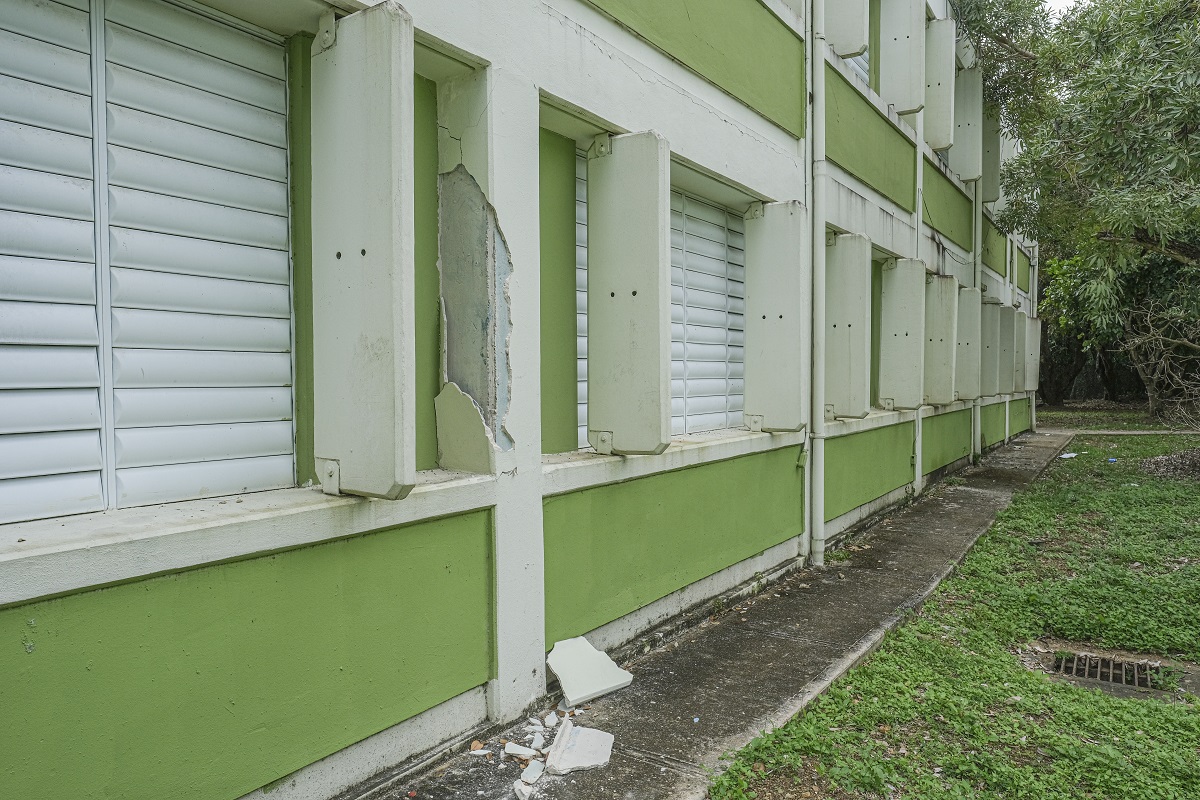
Daños sin reparar en la escuela superior Josefa Vélez Bauzá de Peñuelas, Puerto Rico (Foto: Archivo Centro de Periodismo Investigativo).
Ya que la Organización Mundial de la Salud (OMS) no limita la recomendación del distanciamiento físico al cierre de las escuelas y el uso de herramientas digitales, sino a la elaboración de “políticas flexibles de asistencia y licencias por enfermedad”, cambios en el calendario académico u horarios escalonados, el Centro de Periodismo Investigativo (CPI) indagó sobre qué políticas o cambios proponen estos sistemas educativos del Caribe para iniciar el próximo curso escolar.
Sin acceso a los fondos federales para reducir la brecha digital en Puerto Rico
Los maestros del Departamento de Educación (DE) de Puerto Rico regresarán a los salones a mediados de agosto a impartir clases virtuales para sus estudiantes, pero a dos semanas del inicio del semestre, sólo 49% tiene en sus manos una computadora provista por la agencia al 27 de julio. Los estudiantes del sur, afectados además, por la lenta recuperación tras los huracanes, los terremotos y el COVID-19, deben ser los primeros en recibir una computadora o tableta, pero no será hasta noviembre que toda la matrícula del DE cuente con equipo.
Aún si la agencia distribuyera equipos a todos los maestros, el internet en las escuelas no alcanza a todos los salones.
“Voy pasillo por pasillo de la escuela con la computadora a ver hasta dónde llega el internet para reportar el espacio que puedo usar”, contó la directora de la Escuela Ecológica de Culebra, DiMarie Ramos, quien se expresó preocupada de “sacar maestros de la comodidad de su hogar, que pueden estar dispuestos a usar el internet de su casa como lo hicieron toda esta temporada, y los voy a meter en un salón con dos maestros más porque a su salón no llega el internet y exponerlo [a contagiarse]”.
Datos preliminares del DE apuntan que el 10% de los estudiantes no cuentan con dispositivos para acceder a internet. Sin embargo, la agencia no ha hecho una encuesta para conocer las necesidades de equipos tecnológicos entre las comunidades escolares.
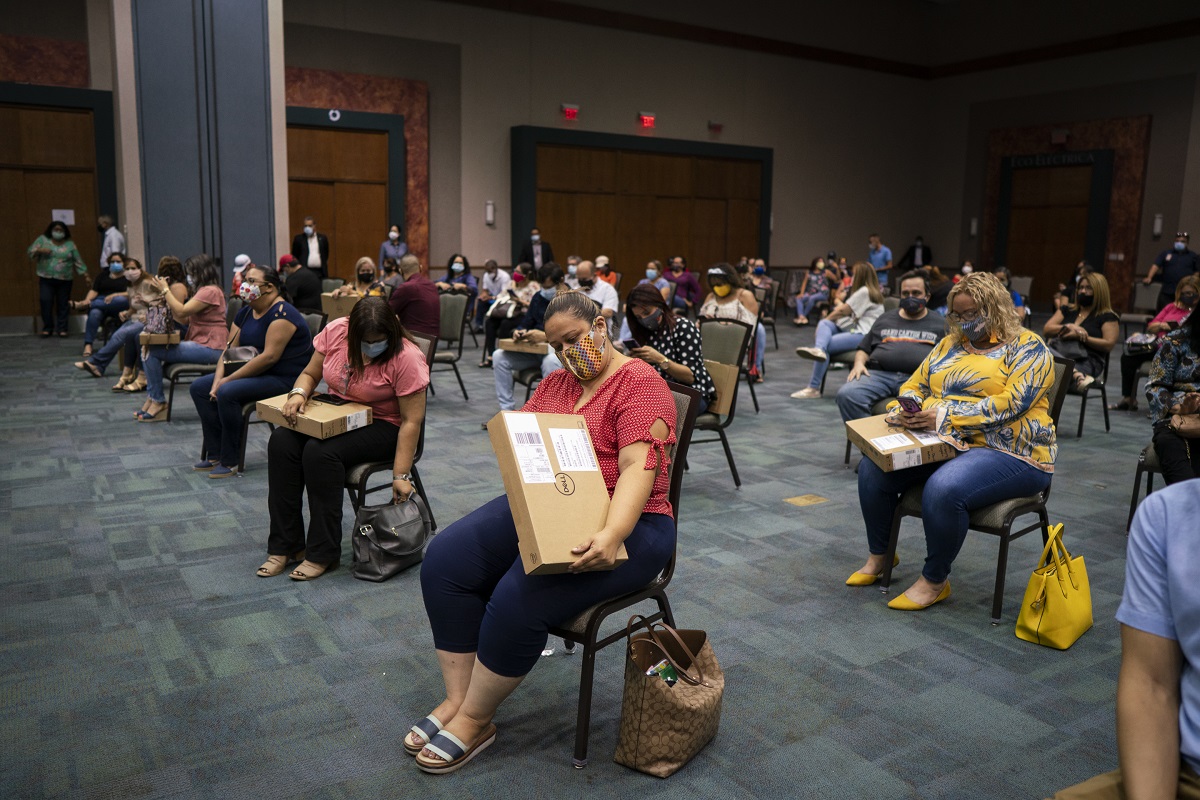
La entrega de equipos fue el pasado 7 de julio en el Complejo Ferial de Ponce, Puerto Rico (Foto: Eric Rojas).
Raziel Ramos, estudiante de Educación Especial de 14 años, recomendó algo más sencillo: “Antes de empezar en línea, el Gobierno debe repartir un checklist (hoja de cotejo) donde se pueda decir qué equipo tienen y entonces proveerle al estudiante”.
Dependerá de las órdenes ejecutivas y el fortalecimiento de los sistemas de rastreo municipales, pero el DE propuso el 14 de septiembre como fecha tentativa para el regreso a salones o vagones, que son lo que tendrán por ‘infraestructura’ los estudiantes de los municipios de Peñuelas, Guánica y Guayanilla. Bajo un modelo híbrido, grupos de 15 estudiantes alternarán entre clases presenciales y en línea.
La agencia tiene un plan para los fondos asignados por la Ley federal de Ayuda, Alivio y Seguridad Económica de Coronavirus (Cares Act) para las escuelas primarias y secundarias, reservando la mayor inversión de los fondos para una plataforma de enseñanza en línea. El dinero también servirá para proveer dispositivos para conectarse a internet, y contratar psicólogos y enfermeras para todas las escuelas; pero el DE sólo tendrá acceso a $7.3 millones de los $349,113,000 hasta que se firme un contrato con el síndico impuesto por el Departamento de Educación Federal.
Algunas escuelas cuentan con enfermeras y psicólogos, pero estos profesionales se tienen que dividir entre varios planteles, según contó el director de la escuela Ramón Power y Giralt de San Juan, Eddie Santiago. “Tengo enfermera pero no está los cinco días a la semana porque es compartida con otra escuela. Está tres días y es pagada por fondos Restart, así que dividen a las enfermeras para cubrir todas las escuelas”, explicó.
La participación de los estudiantes y profesores en las plataformas de educación a distancia adoptadas y su eficiencia no se pueden determinar, pues la agencia se limitó a contar los usuarios de las páginas web, en lugar de los usuarios únicos o información sobre su navegación y uso. Aunque el DE divulgó módulos en su portal como parte de las alternativas de educación a distancia, al menos cinco maestros consultados dijeron que optaron por plataformas alternas como Google Classroom y Edmodo, reuniones virtuales o llamadas telefónicas para comunicarse con sus estudiantes. Todos coinciden en que no alcanzaron a contactar el 100% de su matrícula.
Pese a que el magisterio no pudo contactar a todos sus alumnos, el DE flexibilizó las evaluaciones promoviendo a 4,752 estudiantes de octavo y duodécimo grados que reprobaron una materia. La agencia adoptó nuevos códigos – promovido (P) y promovido condicionado (PC) – para sustituir las evaluaciones finales de fracaso (F), otorgando PC a 38,042 alumnos. Estos estudiantes podrán sustituir esa evaluación tras reforzar destrezas mediante un programa de horario extendido (afterschool) el próximo semestre, dijo la agencia.
“Transmitir cierta estabilidad o normalidad” fue prioritario para la maestra de español de la escuela Juan Ponce de León en Guaynabo, Marianela Méndez, quien recurrió a un blog, videoconferencias, y chats para contactar a sus alumnos. Por su parte, el maestro de matemáticas en la escuela Lola Rodríguez de Tió en San Germán, Ángel Nazario, creó una evaluación general con los trabajos enviados “sin penalizar a nadie” para culminar el semestre ya que de 127 estudiantes, sólo pudo comunicarse por correo electrónico o teléfono con 75.
El maestro de física de la escuela superior Gilberto Concepción de Gracia en Carolina, Hugo Delgado, pudo comunicarse con casi todos sus estudiantes de duodécimo, pero con los de noveno no tuvo la misma suerte. De manera similar, el maestro de matemáticas en la escuela María T. Piñeiro de Toa Baja, Miguel Torres, estimó que alcanzó a contactar al 70% de sus alumnos. Noelanie Fuentes Cardona, maestra de estudios sociales en la escuela intermedia Liberata Iraldo de Río Grande, recordó que atendió a la mayoría de sus alumnos en la plataforma Edmodo, sin embargo, “tuve estudiantes que sólo tenían el celular del gobierno y se comunicaban cuando tenían señal”.
Raziel recordó que fue difícil mantener su rutina de estudios como estudiante de Educación Especial desde la casa porque, “Mi mamá tiene su propio trabajo remoto, más mi hermana chiquita”.
Amanda Parés y Maia González, ambas de siete años, hablaron de volver al salón algunos días de la semana. Pero José M. Vázquez, de 13, dice que “estar con mascarilla ocho horas está fuerte”, aunque admite que la educación virtual del pasado semestre no le gustó porque “no hubo organización para tener clases a distancia. Creo que ninguna escuela tuvo [organización] porque nadie sabía lo que venía. No se aprendió casi nada”.
El proceso de enseñanza virtual fue descrito por la senior Patricia González Navarro, como “estar en un servi carro de comida rápida, al tiempo que hacen la comida, tú vas haciendo la tarea y la despachas”. Ahora su mayor preocupación es el examen de ingreso universitario porque, “Los estudiantes de undécimo grado se supone que cogiéramos el College [Board] en febrero y no pudimos por los terremotos. Entonces, cuándo nos lo van a dar, porque ya en diciembre las universidades comienzan a recibir solicitudes”.
Sólo 54% de los hogares en la Isla cuentan con acceso a internet y 62% tienen una computadora, según la Encuesta de la Comunidad 2013-2017 del Buró del Censo de EE.UU. (US Census Community Survey). Algunas muestras entre el magisterio manifiestan limitaciones semejantes. Un sondeo entre 190 asistentes de escuelas públicas Montessori reflejó que 50% no tiene computadora y 63% tienen internet limitado de su celular. Otra muestra, de 3,720 educadores de la FMPR, encontró que el 88% no cuenta con una computadora provista por el DE. Para muchos, el teléfono celular es la opción para conectarse a la red, con las respectivas limitaciones de datos disponibles y velocidad.
La presidenta de la Asociación de Maestros de Puerto Rico (AMPR), Elba Aponte, sostuvo que las reuniones con el Secretario continúan porque, “comprendemos la importancia de abrir las escuelas, nuestros maestros añoran el aula, y descartan la alternativa virtual porque no es la más viable para atender las necesidades de los estudiantes. El área sur tiene la brecha más amplia, aparte de que las escuelas no se han podido rehabilitar [luego de los terremotos]”.
La Federación de Maestros de Puerto Rico (FMPR) estimó que más de 13 mil estudiantes del suroeste nunca regresaron a clases a causa de los terremotos que afectaron sus escuelas. El testimonio de una madre ante el Comité Timón de Educación Especial, Saime Figueroa, lo confirma: “La escuela de mi hijo nunca abrió tras los sismos. Ninguna escuela de Yauco comenzó operaciones”.
Sobre esta situación, la trabajadora social escolar Lydimar Garriga Vidal advirtió que, “Tuvimos estudiantes este semestre que se desaparecieron del sistema porque estaban en escuelas que no pudieron abrir después de los terremotos, y entre cambio y cambio de escuelas llegó la pandemia, y nadie tenía una dirección ni un teléfono para contactarles. Aquí hubo estudiantes que desaparecieron y el Departamento no ha hecho nada para enmendar esas situaciones”.
A seis meses de la declaración de emergencia por los sismos, la única obra visible ha sido la demolición de la escuela Agripina Seda de Guánica, a un costo de $579,000. De las reparaciones para 253 planteles declarados parcialmente aptos y 53 no aptos, todavía no se conoce el plan de reparaciones, pero el Secretario confirmó que los estudiantes de Guayanilla, Peñuelas y Guánica tomarán clases en vagones en grupos más reducidos. Los contratos para el alquiler de los vagones todavía no se completan, pero se firmó el alquiler por casi dos millones de dólares de unos lotes de la Compañía de Fomento Industrial donde se van a ubicar.
Padres y madres de Islas Vírgenes tienen la última palabra
Líderes magisteriales de las Islas Vírgenes estadounidenses (USVI) coinciden en que la falta de escuelas y herramientas tecnológicas, independiente de la modalidad que se escoja, serán un obstáculo para un regreso a clases efectivo.
“Creo que la enseñanza a distancia continuará por algún tiempo” porque el sistema educativo tendrá que hacer un gran esfuerzo para cumplir con las guías del Centro para la Prevención y Control de Enfermedades (CDC en inglés), dijo la presidenta de la Federación de Maestros de St. Croix, Rosa Soto-Thomas.
Su homóloga de St. John & St. Thomas, Carol Callwood, entiende que, “no tenemos la infraestructura para garantizar la educación a distancia”.
En USVI, el acceso a tecnología e internet será determinante para que aumente o no la brecha académica entre estudiantes (Foto: Facebook/VIDE).
A la madre de tres niñas y presidenta interina de la Asociación de Padres y Maestros de la escuela elemental Pearl B. Larsen de St. Croix, La Vaughn Belle, lo que le preocupa del regreso a clases es, “¿cómo afectará mentalmente a nuestros niños si el enfoque es evitar que se toquen o tosan uno al lado de otro, que no toquen las superficies? No puedo imaginar esa dinámica todo el día”.
El Departamento de Educación de Islas Vírgenes (VIDE en inglés) propuso un protocolo de seguridad y el 8 de septiembre como fecha tentativa para comenzar el curso 2020-21, pero serán los padres quienes decidan cómo sus hijos e hijas retoman la enseñanza. Entre las opciones se encuentran permanecer un semestre con educación virtual o regresar a la escuela en un modelo híbrido de tres días presenciales y dos a distancia.
Callwood no duda que, “se ampliará la brecha académica y de equidad porque aquellos [estudiantes] que no tenían al principio [herramientas para educarse a distancia], ahora tienen menos. Entonces, cuando regresen, sabrán menos”.
Encuestas divulgadas por la agencia hacia finales de junio reflejaron que la mayoría de los padres prefieren continuar la educación online, mientras los maestros escogerían el modelo híbrido. Aunque la mayoría de los alumnos contestaron que comprenden los riesgos de regresar a clases, también admitieron que detestan la idea de volver a los salones con una mascarilla puesta todo el tiempo.
El director de la organización educativa sin fines de lucro Junior Achievement, Dr. Wayne Archibald, recordó que, “la primera semana, más o menos, mi hijo pensaba que [la educación virtual] era lo más cool… quedarse en casa, ver a los amigos [en la pantalla]. Pero como tres semanas más tarde decía ‘ok, estoy cansado de esto’”.
Belle destacó que unos estudiantes tienen más problemas que otros para aprender desde la casa. “Ese tipo de educación [virtual] no es óptima para todos. Si es un niño con trastorno de déficit de atención, ¿cómo pretender que se siente frente a una computadora por su cuenta dos horas?”, opinó.
Similar al Departamento de Educación de Puerto Rico, el VIDE se quedó corto en la distribución de equipos para sus 21,800 estudiantes. Hasta mayo, la agencia había repartido 417 laptops y 335 dispositivos para conectarse a internet entre estudiantes cuyo promedio del primer o tercer cuatrimestre fuera menor de 70%. Callwood dijo que las computadoras que distribuyó la agencia no eran nuevas, sino las que ya había en las escuelas.
“Lo único que tuvieron que hacer fue comprar los Mi-Fis (dispositivos portátiles para conectarse a internet) de las compañías”, explicó.
Aunque casi todos los maestros tienen computadoras o tabletas, muchos alumnos de las Islas no tienen computadoras en sus hogares o las comparten con otros miembros de la familia, dijo Callwood. Además, los apagones son muy comunes y hay áreas del archipiélago donde no hay ningún tipo de conexión a internet, dijo. Según el Censo de 2010, de 55,901 residencias, 3,616 no cuentan con ninguna conexión a internet, aunque no se ha completado ningún censo posterior a los huracanes Irma y María, que afectaron gran parte del sistema de comunicación en las islas.
En St. Thomas & St. John se necesitan al menos dos escuelas nuevas luego que la intermedia fuera destruida por el huracán María y la superior tuviera que cerrar tiempo después porque estructuralmente es insegura, contó Callwood. En las escuelas suelen tener 25 a 30 estudiantes por salón, aunque “sería ideal una clase de 15 [estudiantes], pero como han consolidado escuelas será imposible [mantener la distancia]”, dijo.

De izquierda a derecha, el gobernador Albert Bryan Jr., la comisionada de Educación Racquel Berry-Benjamin, la COO Dionne Wells-Hedrington, y la directora de la Oficina para la Recuperación tras Desastres Adrienne Williams-Octalien (Foto: Facebook/VIDE).
Archibald recordó que después del huracán María, “los niños perdieron un semestre completo, en enero regresaron en turnos alternos. Te hace cuestionar cuánto se está aprendiendo realmente. Tenemos una generación de niños con muchas brechas en su educación”.
Soto-Thomas se expresó preocupada de que funcionarios del Departamento fueran incapaces de responder con exactitud cuántos estudiantes continuaron su educación a pesar del COVID-19 durante una vista ante un comité del Senado de USVI. “Hubo preguntas de cuántos estudiantes fueron alcanzados y nadie pudo responder. Eso me perturbó. Es necesario recopilar esa información”, dijo al cuestionar que la agencia asignó solamente una laptop por hogar cuando hay familias con más de un estudiante. También aseguró que el Departamento desconoce cuántos maestros unionados no tienen internet o necesitan equipo.
La comisionada de Educación, Racquel Barry-Benjamin, estimó que un plan para la educación a distancia necesitaría una inversión de $14.5 millones.
Jeanette Smith-Barry, miembro de la Junta de Educación de las Islas desde enero 2019, entiende que todo el mundo enfrenta dificultad para adaptar la educación a los tiempos de la pandemia pero, “Hay mucho por hacer y desconozco cuánto se está haciendo” para planificar el regreso a clases tomando en cuenta que la recuperación por los huracanes de 2017 continúa.
El plan del VIDE para dejar las notas que obtuvieron en el último periodo fuera de la evaluación para promover estudiantes encontró oposición de la Junta de Educación al considerarlo injusto para los alumnos que se esforzaron en sus trabajos durante ese periodo.
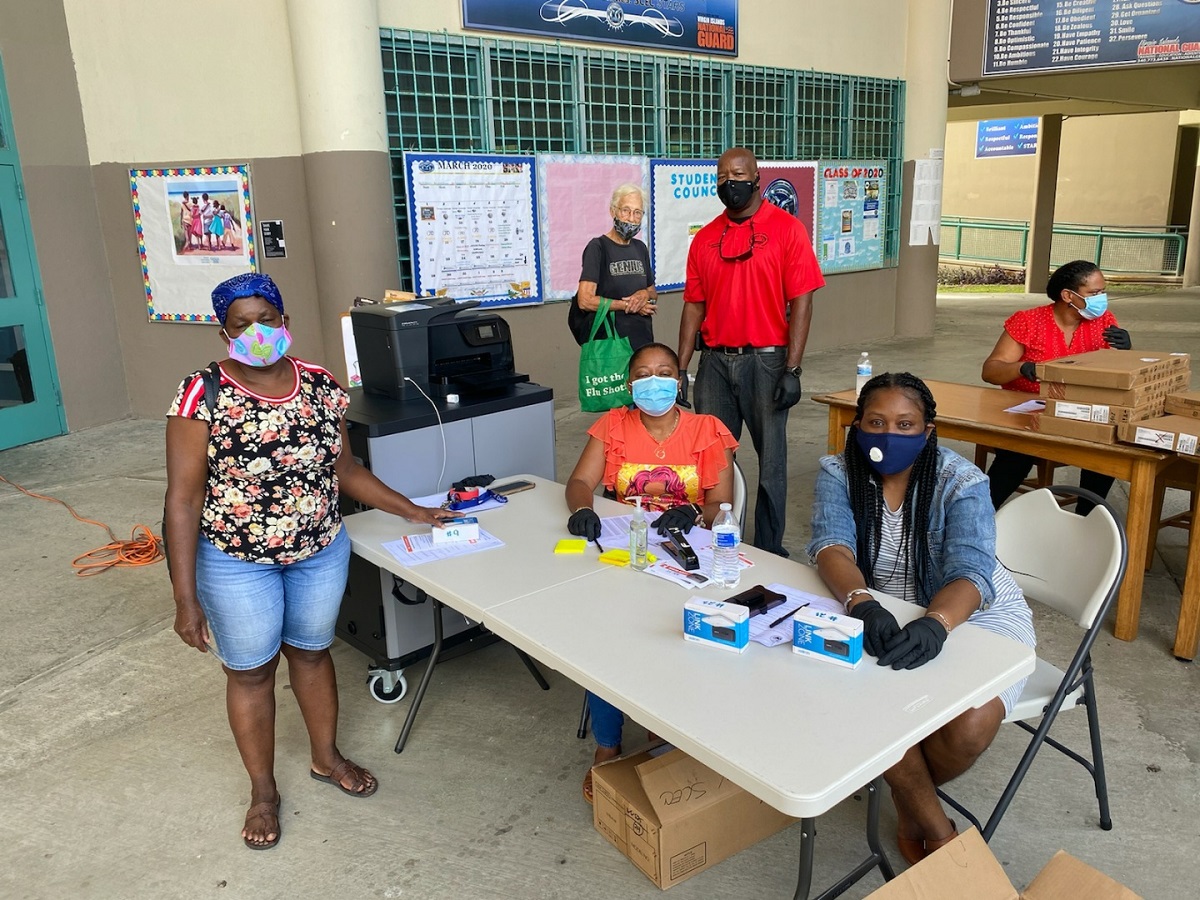
En las USVI, la inversión para una educación a distancia funcional se ha estimado en $14.5 millones (Foto: Facebook/VIDE).
La eliminación de ese último periodo para otorgar calificaciones resultó en un alivio para La Vaughn Belle, porque la educación a distancia “Estaba creando mucho estrés y ansiedad en los hogares. Las maestras no necesariamente fueron entrenadas para las clases en línea”.
Las diferentes agendas de cada maestra también “dificultan a un padre trabajar”, dijo al tiempo que agregó que después que el Gobierno relajó la importancia del cuarto periodo de evaluación, la situación mejoró.
Dominicana sabe cuándo pero no cómo volver a clases
Para Quisqueya la educación virtual también supuso un reto pues según la presidenta de la ADP, Xiomara Guante, en su país sólo uno de cuatro hogares poseen computadora con acceso a internet, y el proyecto República Digital, una iniciativa gubernamental que busca cerrar la brecha tecnológica, apenas ha llegado al 5% del estudiantado.
Abril y Ariel Paulino, de 12 y 14 años de edad, respectivamente, son parte de esos estudiantes que recibieron computadoras por medio de esta iniciativa, contó su padre Antonio. “Desde el año pasado tienen una laptop, que no es lo último de los muñequitos, pero para estudiar funciona bien”, dijo al recordar que, “conozco la experiencia de una escuela en donde al no existir esa conectividad con los padres lo que se acordó es que los lunes retiraban del centro las tareas que en la semana sus estudiantes iban a hacer, y el viernes llevaban las tareas hechas a la escuela”.
La Encuesta Nacional de Hogares 2018, divulgada por la Oficina Nacional de Estadísticas dominicana, apuntó que de casi 40 mil encuestados 75% no tenían servicio de internet en la casa, 94% tampoco cuenta con una computadora de escritorio y 89% no tiene una laptop.
“Los maestros tuvieron que utilizar WhatsApp, una plataforma que no es para impartir docencia, sólo para salvar el año, que había que salvarlo, pero eso ocasionó mucho estrés y muchas situaciones”, reconoce Guante.
Desde mediados de marzo el ministro de Educación, Antonio Peña Mirabal, dejó claro que, “no podemos costearle internet. Las familias pueden ir a los puntos públicos de wifi guardando la distancia recomendada”. El Ministerio de Educación de la República Dominicana (MINERD) dispuso tres plataformas para atender a la población estudiantil por niveles y una para los docentes. Casi un mes después, estableció programación educativa en dos canales de televisión, y a los estudiantes de prekinder y kinder les entregaron “cuadernillos de trabajo impresos”. A partir de junio, el MINERD retomó la distribución de computadoras para estudiantes de secundaria y profesores.
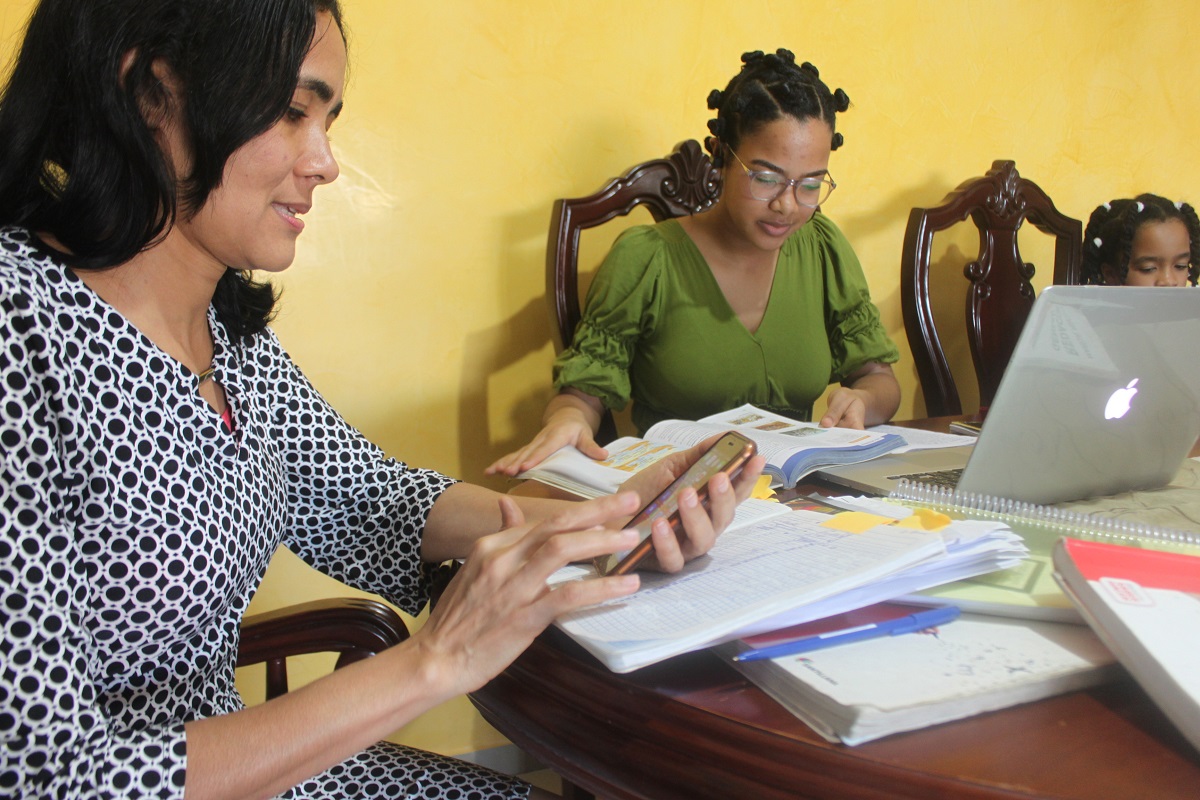
La profesora de nivel secundario, Isabel Rodríguez, trabaja junto a sus hijas Roisbel y Roismeli Hernández (Foto: Mariela Mejías).
Shiomelkys Brito, maestra de primaria, entiende que “el aprendizaje no se dio como se esperaba. Sí se terminaron los contenidos, pero los niños no aprenden igual, porque se necesita una persona que esté encima de ellos”. Sobre la vuelta a clases, la profesora aseguró que “ya sé las desventajas y las ventajas que puedo tener, y prepararía a los papás para que trabajemos en [la plataforma de videoconferencias] Zoom”.
De sus 31 alumnos, Brito pudo contactar a 26 “porque no tenían internet, porque el teléfono se les dañó o por cualquier otra situación”.
Luz del Carmen Madrigal, maestra de secundaria, contactó a sus estudiantes por correo, WhatsApp y luego Google Classroom. “Algunos tenían inconveniente porque no tenían internet para poder enviar la clase. Ellos se comunicaban con algunos de sus compañeros, a veces se las mandaban a ellos en foto para que ellos me la enviaran a mí. Aparecieron unos cuantos que nunca se interesaron, pero por dejadez”.
Para Annie Paulino, madre de tres hijos de 12, 7 y 4 años de edad, la dejadez fue de las maestras de sus dos más pequeños.
“En el caso de Camila, que está en sexto, la profesora hacía una videollamada y ya ahí retomaban los contenidos de esa semana las preguntas que tuvieran los niños, pero ya con los dos chiquitos solamente mandaban las fotos y yo era la que tenía que guameármela (bregar o afrontar la situación). No les daban una explicación. Uno como padre puede saber los contenidos, pero no los sabe enseñar de la forma que el niño lo pueda entender. Es el profesor que tiene entrenamiento para hacer una explicación que el niño la pueda entender”, detalló.
Similar a Puerto Rico e Islas Vírgenes, el Consejo Nacional de Educación (CNE) aprobó el 20 de mayo promover a los alumnos que obtuvieron más de 70 puntos de manera condicionada. Para los estudiantes que no acumularan el puntaje, tomaron un “Programa de Recuperación” virtual del 1 al 19 de junio. Si reprueban ese programa, pasan a un tercer “proceso de nivelación” durante los primeros 45 a 60 días del próximo curso escolar.
Para Guante, la docencia debe ser combinada porque la mayoría de las escuelas, “no tiene agua potable permanente, la mayoría no tiene ni siquiera elementos para garantizar la higiene, no hay condiciones físicas. Entonces, para reducir la cantidad de estudiantes, obligatoriamente tiene que plantearse dividirlos y tener docencia virtual y tener docencia presencial”. Sin embargo, Antonio Paulino recordó que su hija le manifestó, “prefiero estar en el salón que en esto [educación a distancia]; porque les ponían muchas clases”.
Peña Mirabal sugirió un protocolo para reducir el tamaño de grupos que vayan a las escuelas, alternando días presenciales y virtuales a partir de agosto, pero todavía no se ha tomado una decisión final.
Cuba reabre sus aulas en septiembre
Antes de la suspensión de clases presenciales el 23 de marzo, Elisa García Luis, recordó que en la escuela de su hija de siete años, “los niños se tienen que lavar las manos antes y después de merendar y almorzar, pero el problema es que a veces no hay agua. Prepararon un pomo grande con hipoclorito que se los echan (en las manos) cuando entran al centro. A Karolina yo le mando su jabón, su toalla y su gel. En el aula hay 28 niños y no circula el aire. Están yendo pocos. Nosotros no la vamos a mandar mañana, y mañana es que terminan (de impartir) el alfabeto”.
En Cuba existe un programa de reparación de escuelas y círculos infantiles que interviene más de mil de estos centros cada año. El 10% o 1,339 fueron calificadas en condición regular y mal estado, detalló en el espacio televisivo Mesa Redonda el director de inversiones del Ministerio de Educación (MINED), Francisco Navarro Gouraige, pero hasta ahora se han reparado sólo 233 instituciones.
El acceso al servicio de agua potable en los centros educativos fue un problema reconocido por la Ministra de Educación aunque aseguró que, “Eso se está tratando, y muchas escuelas estaban en el plan de mantenimiento y reparación”.
Aún con estas necesidades estructurales, cerca de 200 círculos infantiles – que atienden alumnos desde los seis meses a seis años – continuaron funcionando. “Hay muchas madres que deben trabajar y no tienen quién les cuide su niño o niña y necesitan de este servicio”, indicó Velázquez Cobiella.
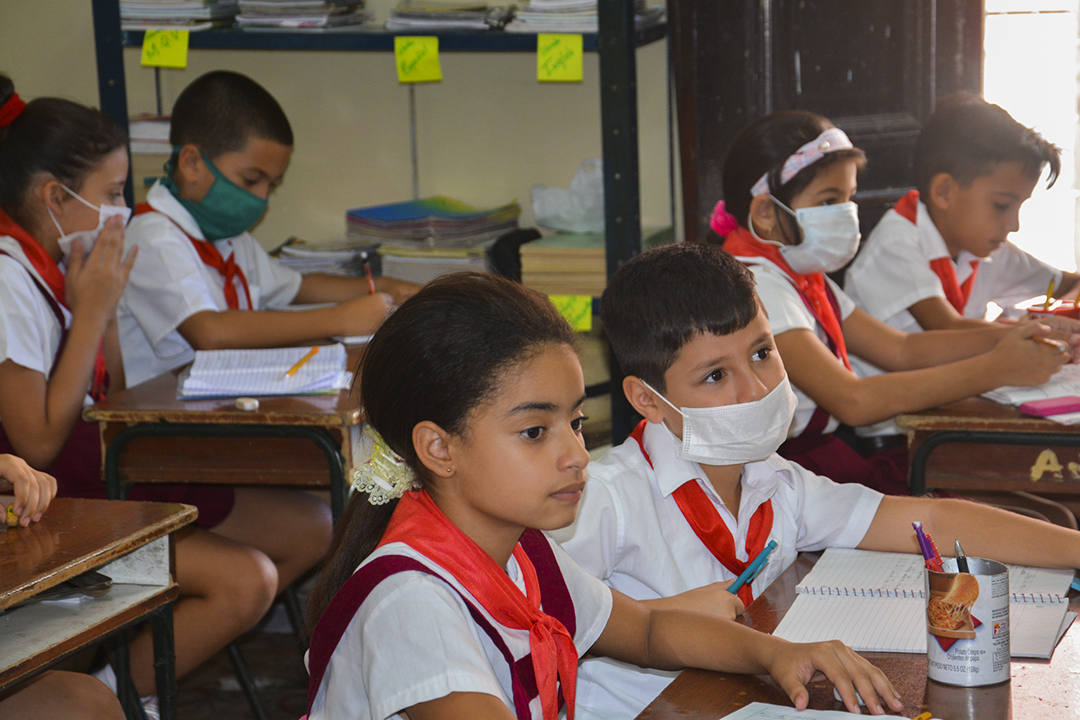
Además del acceso a internet y equipo, en las escuelas cubanas hay una situación de acceso a agua potable para que los estudiantes puedan lavarse las manos y seguir las medidas de salubridad (Foto: Yailín Alfaro).
Clara Amelia Fernández, madre de un niño de ocho años, aplaudió el cierre de escuelas, “Pero los niños tienen que estar en su casa, no en la cola del pan ni en la calle. Kevin lleva toda la semana aburrido, loco por coger calle, pero no puede”.
Mientras Fernández aplaudió la clausura de escuelas, una joven maestra de círculo infantil cuestionó: “Si cerraron los demás niveles de educación, ¿por qué no cerrar este, que es donde están los niños más pequeños?”. Massiel Heredia Anglada cuenta que, “de los 35 niños de mi salón nada más están yendo seis. Hay muchos que no tienen tos ni fiebre pero las madres no los llevan por miedo a que se enfermen”.
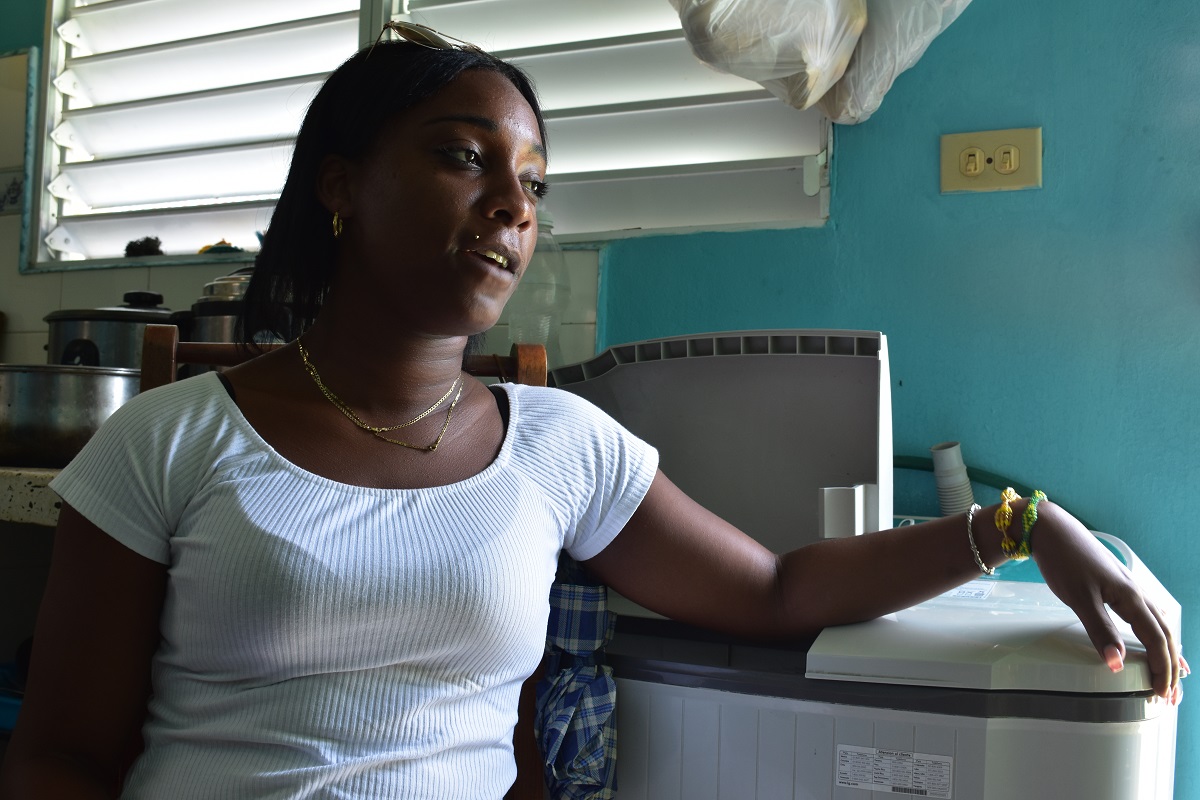
Massiel Heredia Anglada (Foto: Sabrina López).
En Cuba siete millones de 11 millones de habitantes cuentan con conexión a internet y hace un año se integró la conexión por datos móviles con velocidades promedio entre 2g y 3g. El servicio velocidad 4g está supeditado a conectarse en alguno de los 1,513 terminales o hotspots públicos. Un paquete de datos mensual de 10 gigas cuesta $45, un precio prohibitivo para el salario promedio mensual del país ($30). Respecto a la disponibilidad de equipos, el anuario de la Oficina Nacional de Estadística e Información reflejó que al cierre de 2018 había 126 computadoras personales por cada mil habitantes.
El costo de acceder a internet o la falta de equipo tecnológico anula las posibilidades de educación virtual para los estudiantes cubanos por lo que las clases comenzaron a ser televisadas desde el 30 de marzo.
Jennifer Sánchez Alonso tiene 18 años y cursa duodécimo en el preuniversitario Ignacio Agramonte de la provincia de Mayabeque, entre La Habana y Matanzas. Destacó que, “en la escuela dio tiempo a repasar la mitad de los contenidos, la otra mitad queda por nosotros. Para mí es mejor que pospongan las fechas de los exámenes [de ingreso a la universidad]. En historia, por ejemplo, casi todo depende del estudio individual; pero en matemática hay muchas cosas que no se repasaron y van a la prueba. Yo estudio por el libro de texto las pruebas de ingreso de años anteriores y las teleclases. Ahora mismo estoy estudiando matemáticas. Cuando tengo dudas voy a preguntarle a la profesora, que vive cerca de mi casa. Pero el que vive en otro pueblo no tiene forma de aclarar las dudas”.
El MINED estableció unas fases para el reinicio del curso en un modelo híbrido de clases televisadas y presenciales. Desde el 1 de septiembre hasta el 31 de octubre los estudiantes se incorporarán a los centros educativos para completar el año escolar 2019-2020, “en el mismo grado y año, porque el curso se terminará en esta fase”, detalló Velázquez Cobiella. Solo los alumnos de primaria tendrán clases presenciales toda la semana; a partir del séptimo grado serán cuatro días; y de décimo en adelante, tres veces en semana.
El año escolar 2020-21 comienza el 2 de noviembre, con una reducción de nueve semanas de tiempo de clase con “las adaptaciones curriculares elaboradas por equipos de especialistas del Instituto Central de Ciencias Pedagógicas, UCP Enrique José Varona y el MINED, que no implican reducción de frecuencias de las asignaturas, ni eliminación de contenidos”. Se prevé que la educación continúe en una modalidad combinada.
Fuente: https://www.periodismodebarrio.org/2020/08/los-sistemas-de-educacion-publica-en-el-caribe-ante-la-covid-19/



 Users Today : 76
 Total Users : 35510467
 Views Today : 994
 Total views : 3640739