Page 1496 of 6195
1 1.494 1.495 1.496 1.497 1.498 6.195

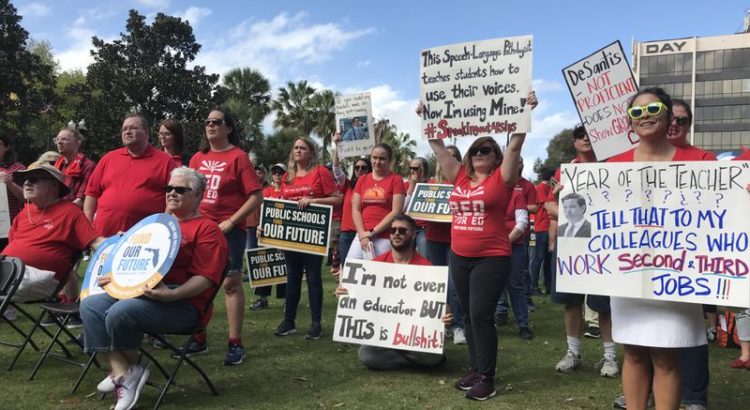
Maestros y activistas exigen más fondos para educación en manifestación desde Lake Eola, Orlando

Maestros y activistas exigen más fondos para educación en manifestación desde Lake Eola, Orlando

Para Heather Lambert, el trabajo no termina cuando sus estudiantes salen de la escuela. A menudo, la maestra de matemáticas y ciencias de cuarto grado pasa horas calificando exámenes, elaborando planes de lecciones y preparándose para el próximo día escolar.

Con su salario de maestra, es una labor sin un pago extra. “No es un salario digno de vivir”, dijo Lambert, quien enseña en Chickasaw Elementary en Orlando y agregó que quiere que los legisladores “nos pongan a la vanguardia de la conversación [sobre educación]. Nos merecemos algo mejor”.

Es por eso que dijo que estaba en el parque Lake Eola el sábado por la tarde, donde cientos de maestros, estudiantes y activistas se reunieron para llamar la atención sobre la financiación de las escuelas públicas, que los manifestantes dijeron que la educación ha quedado rezagada durante décadas mientras se creaban las escuelas charter y los programas de vales escolares para que las familias envíen niños a escuelas privadas.

Organizado por líderes sindicales de nueve condados del centro de Florida, la manifestación del sábado fue una continuación de una manifestación del 13 de enero en Tallahassee, donde miles de maestros y activistas de educación pública acudieron al Capitolio del Estado para abordar innumerables cuestiones a los legisladores, como la alta rotación de maestros y los bajos salarios. Según la Asociación Nacional de Educación, Florida se ubicó cerca del final del salario inicial de maestros en el año escolar 2017-2018 en $ 37,636, casi $ 2,000 por debajo del promedio nacional.

El gobernador Ron DeSantis llamó a 2020 “el año del maestro” y lanzó un plan que aumentaría los salarios iniciales a $47,500, con bonos adicionales vinculados a la mejora de las calificaciones anuales. Si bien los activistas están satisfechos con el aumento de sueldo para los nuevos maestros, que elevaría el pago del estado al segundo más alto del país, muchos dijeron que deja de lado a los educadores veteranos y no hace nada para abordar el énfasis en las escuelas charter y los vales de elección de escuela a expensas de las escuelas públicas tradicionales.

“Si realmente es el año del maestro, escuchemos las voces de los maestros”, dijo Wendy Doromal, presidenta de la Asociación de Maestros del Condado de Orange y uno de los líderes sindicales que ayudaron a organizar la manifestación. «Lo que debemos hacer es levantar a todos , y no estoy hablando solo de maestros, estoy hablando de trabajadores de cafeterías, conductores de autobuses y secretarias «.

El mes pasado, la portavoz de DeSantis, Helen Aguirre Ferré, dijo que el gobernador apoya a los maestros y dijo que las sugerencias en sentido contrario son “una desafortunada desconexión con la realidad”.

Los maestros de todo el estado llegaron para mostrar su apoyo a la causa. Scott y Laura Hottenstein condujeron casi dos horas hasta el mitin de Orlando desde Riverview en el condado de Hillsborough, donde trabajan en Rodgers Middle School como maestro de educación cívica de séptimo grado y consejero escolar, respectivamente.

La pareja dijo que los problemas con la educación pública contribuyen a una serie de otros problemas que prácticamente no se han abordado y que tienen un impacto en los estudiantes y los maestros. Esa es parte de la razón por la cual Scott Hottenstein se postula para un cargo en el Distrito 57 de Florida House como demócrata.

“Como consejera, veo la salud mental de nuestros estudiantes como una prioridad y fue necesario disparar a la escuela para que eso sucediera, pero nuestros educadores se están perdiendo totalmente ese proceso”, dijo Laura Hottenstein. “El agotamiento no ocurre de la noche a la mañana … Ya basta. Las personas que están haciendo estas leyes no están en el sistema escolar ni están visitando las escuelas para averiguar lo que necesitan”.

Los organizadores esperan mantener el impulso de la manifestación del 13 de enero mientras continúan reuniendo a maestros en todo el estado para apoyar la causa. Fedrick Ingram, presidente de la Asociación de Educadores de Florida, dijo que los líderes sindicales están organizando una manifestación en el sur de Florida en las próximas semanas. Añadió que actualmente hay apoyo bipartidista en la Legislatura para fondos adicionales de educación pública, pero ese apoyo, principalmente de legisladores demócratas junto con republicanos clave como el presidente del Senado, Bill Galvano, no es suficiente.

La representante demócrata de la Cámara de Representantes, Anna Eskamani, habló en la manifestación y dijo que, junto con los fondos escolares, los legisladores también deberían centrarse en reformar las leyes que rigen los vales de las escuelas privadas al prohibir su uso en las escuelas que discriminan a los estudiantes LGBTQ o las familias con padres LGBTQ, aludiendo a un informe del Orlando Sentinel que reveló más de 150 escuelas religiosas tienen reglas que rechazan a estudiantes LGBTQ.

Pero lo que falta, dijo Ingram, es coraje político.

“Nuestro estado ha pasado por dos décadas de financiación insuficiente”, dijo Ingram. “Hemos tratado sistemáticamente de establecer formas paralelas de educación, ya sea escuelas charter o escuelas de cupones, y no hemos financiado nuestras escuelas [públicas] al nivel que deberían ser. … Si va a decir que este es el año del maestro, entonces trate de mostrarnos este año y de darnos un resumen para los próximos años de que va a invertir en escuelas públicas, apoyará nuestro maestros y ustedes obtendrán lo que necesitamos para hacer lo que debemos hacer por cada estudiante».

La historia fue escrita por el periodista Cristóbal Reyes para el Orlando Sentinel.

Fuente de la Información: https://www.orlandosentinel.com/elsentinel/os-es-maestros-protesta-marcha-dinero-educacion-orlando-lake-eola-20200216-yapv65lu3neydlojbzz7xhxeoq-story.html

Comparte este contenido:

When schools integrated 50 years ago, these black students had to pick up and move

When schools integrated 50 years ago, these black students had to pick up and move

GREENVILLE, S.C. – He was just a boy, but he could see something the grown-ups couldn’t.

Maybe because children’s eyes are wide enough to see the whole sky. Or they are close enough to the ground to spot the beginnings, the tiny roots of things. Maybe because youth is not an age but a lens.

When Ernest Hamilton watched the trees topple in the forest, they toppled for him. When the earth behind his Nicholtown house moved, it moved for him. When he watched cement and metal and glass rise from the clearing, he knew the building was built for him.

When the doors opened and the walls became 40 classrooms, a 600-seat auditorium, a gym for 1,500, the school still appeared to be for him and him alone.

Joseph E. Beck High School belonged to Ernest, and Ernest belonged to Beck. They shared a foundation.

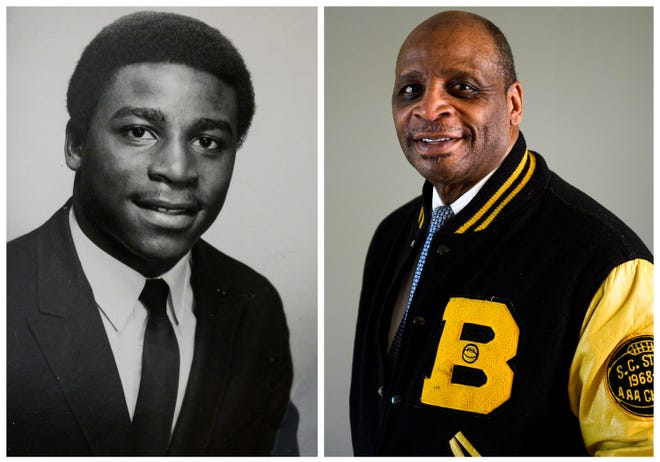
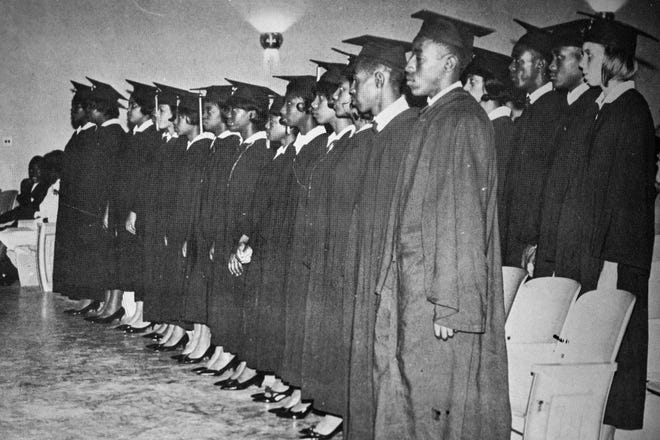
The first graduating class of Beck High School is pictured in this photograph displayed in a Beck yearbook.

Just as he watched the school’s making from his backyard, the school watched him being made. A boy built up into a leader in the classroom and on the football field.

When Ernest graduated in 1969, he didn’t leave Beck. He scratched his initials in hallway corners. He scrawled his full name on the wall outside the basketball courts.

He was to be there, always.

But Beck’s time lasted only a few months more.

On Feb. 17, 1970, Beck became a middle school. It was open as a high school for just five years.

Ernest Hamilton graduated from Beck High School in 1969, the last graduating class and part of the first group of students who attended Beck from freshman year to senior year.

The change was part of a court-mandated integration plan finalized and executed in a matter of weeks. Tens of thousands of books and furniture and supplies shifted over one long weekend in February – the middle of the school year.

A judge’s order meant that Greenville, a city in the state that was second-to-last in the USA to desegregate, could operate only integrated schools. Greenville was the last major district in South Carolina to do so, and with 58,000 students, it was one of the largest in the nation.

The district built Beck a decade after U.S. Supreme Court justices ruled unanimously that segregated systems were unconstitutional. It opened eight years after federal troops escorted nine black students into a school in Little Rock, Arkansas, and two years after a judge had approved black student transfers to all-white schools in Charleston.

When the county finally moved, it was black Greenville that did the majority of the moving.

It was the black community that performed the heavy lifting of public school integration after decades of bearing the burden of legally enforced segregation.

About 12,000 students received transfer-assignment letters days before the change. The district moved students and faculty to achieve an 80% white, 20% black makeup, a formula calculated to reflect Greenville’s population at the time.

Ernest Hamilton holds his Beck High School varsity letter. Hamilton was part of the last graduating class at Beck before Greenville County Schools integrated in 1970.

About 60% of the black student population was reassigned. Only 10% of the white students were.

That meant black seniors ordered rings for graduating classes that never walked across the stage. Majorettes no longer had a band to lead. It meant championship basketball teams disbanded mid-season.

Integration cut homes and neighborhood streets in half. A son would go to one school, a daughter to another. Students on the left of the street would have to board a bus to a school on one side of town; students on the right side would board a bus that took them the other direction.

Fuente de la Información: https://www.usatoday.com/story/news/education/2020/02/16/black-history-month-people-facts-segregation-civil-rights-movement-leaders/4767229002/

Comparte este contenido:

‘I’ve listened to teachers’: Dr. Jill Biden talks education plan in town hall at Valley HS

‘I’ve listened to teachers’: Dr. Jill Biden talks education plan in town hall at Valley HS

Educators in the Las Vegas valley had the chance to voice their concerns to Doctor Jill Biden in a town hall today at Valley High School.

Education, a topic close to her heart but also a change she believes is critical to our nation. Changes local educators could see if her husband, Democratic Presidential candidate Joe Biden wins the presidency.

“There’s so much that we need to do,” and Dr. Biden says it starts with listening.

«I’ve traveled around this country., I’ve heard what they need,” Dr. Biden said.

Dr. Biden, a teacher of 35 years said there’s a critical need for change when it comes to education. And her husband has the plan to do just that.

RELATEDBiden on Sanders’ aggressive supporters: ‘I’d disown them’

Why? Because she says its teacher approved.

“The one thing when I say what would you like. They don’t say pay, they say we need resources for our children,” Dr. Biden said.

Part of Biden’s education plan is aimed to give educators the pay and respect they deserve with competitive pay and benefits.

But Dr. Biden said teaching also comes with its burdens.

“Children are coming from homes where poverty exists, they’re coming from homes with food insecurities, they’re coming from maybe victims of domestic violence. And so, our teachers are so burdened I think with trying to teach their subject area and then trying to help all these children through life’s problems,” Dr. Biden said.

Joe Biden’s plan is to invest in mental health resources to help students grow so educators can focus on teaching.

“They need help with wraparound services and that’s why Joe Biden is going to double the number of counselors and psychologists in our schools,” Dr. Biden said.

Though Dr. Biden said education is what sets her husband apart. It’s experience that will make a difference.

“When he is on that debate stage and he and Donald Trump are going head to head. The one thing, when Donald Trump stands up there and says, ‘I’ve been in this situation and I can make these decisions.’ Joe Biden can stand right up against him and say, ‘Yes, but I have done that too,” Dr. Biden said.

Fuente de la Información: https://news3lv.com/news/local/ive-listened-to-teachers-dr-jill-biden-talks-education-plan-in-town-hall-at-valley-hs

Comparte este contenido:

The education sector must stay vigilant

The education sector must stay vigilant

Scrapping or delaying exams may upset study schedules and add to the stress of tens of thousands of Hong Kong students, but they are necessary steps to avoid aggravating the public health crisis posed by the coronavirus

As the new coronavirus spreads wider, many public activities have been forced to scale down or be suspended, and justifiably so. Among them are classes and examinations.

The possibility of scrapping or delaying some exams by up to a month may upset study schedules and add to the stress of tens of thousands of Hong Kong students, but they are necessary steps to avoid aggravating the public health crisis.

Under the options considered by the Education Bureau, the Chinese-language speaking exams may be put back from mid-March to late May, while keeping the original schedule for written exams for most subjects. The other option is to postpone all written exams until April 24 to May 25, with the Chinese and English speaking exams cancelled.

It is still unclear which option will be adopted. But the alert seems to give students – especially cross-border ones – enough time to make suitable preparations.

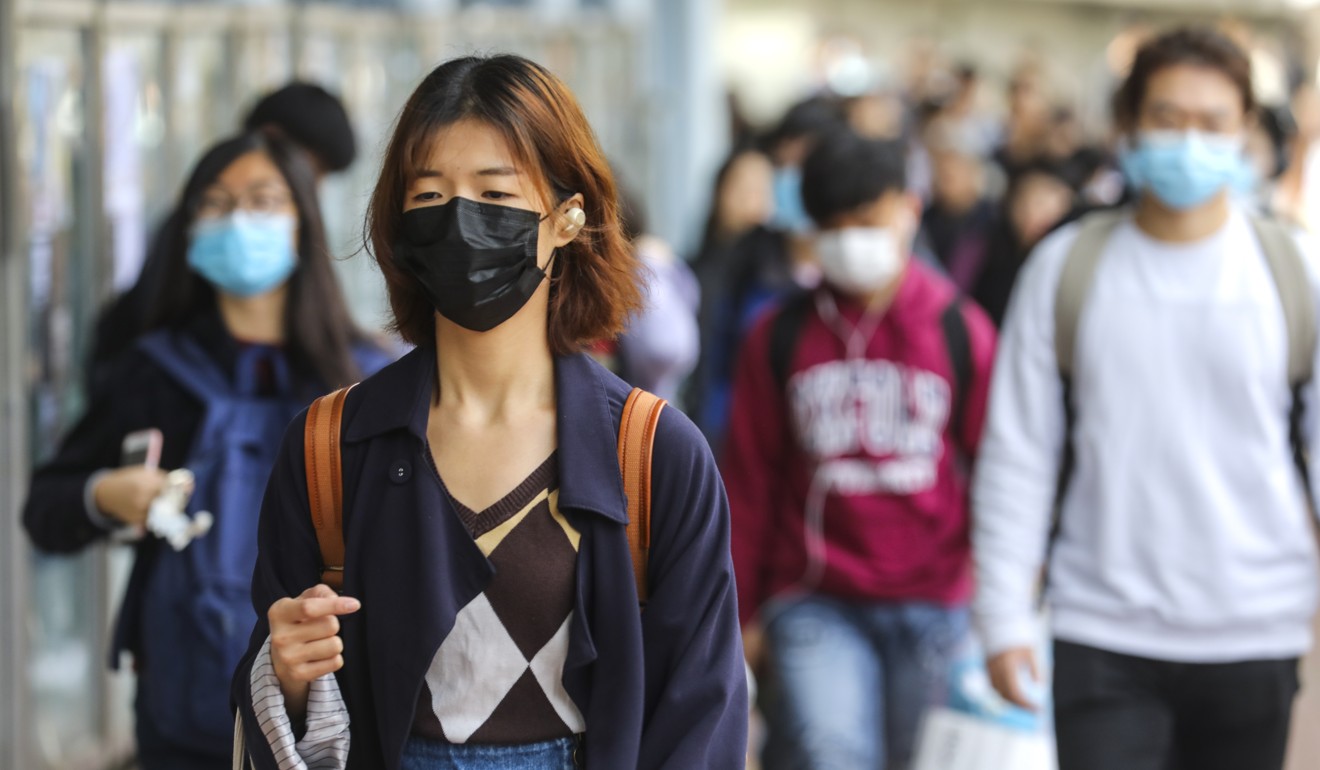
Students at the Chinese University of Hong Kong recently. Photo: SCMP

Those returning from the mainland may need to be quarantined for 14 days before attending an exam, if that measure is still required at the time. No less important are the precautionary arrangements to minimise the risk of infection at exam venues.

Taking the body temperatures of students is essential, as is the provision of surgical masks to strengthen protection.

Appropriate policies and measures adopted by education authorities are always useful references for schools and students. But concerted efforts are needed to stop campuses and exam venues from becoming breeding grounds for disease. The responsibility is as much the government’s as it is the stakeholders’.

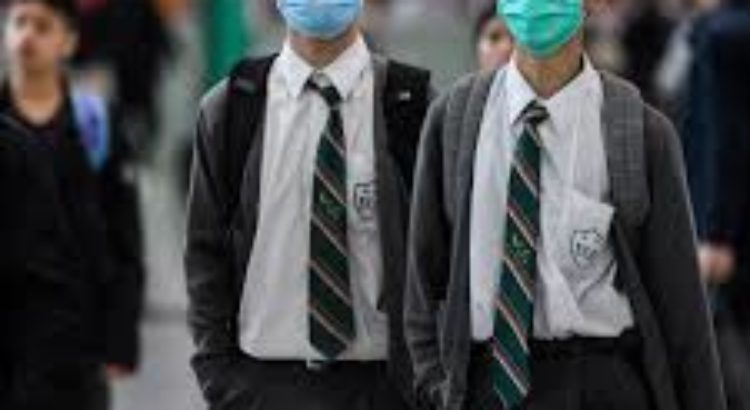
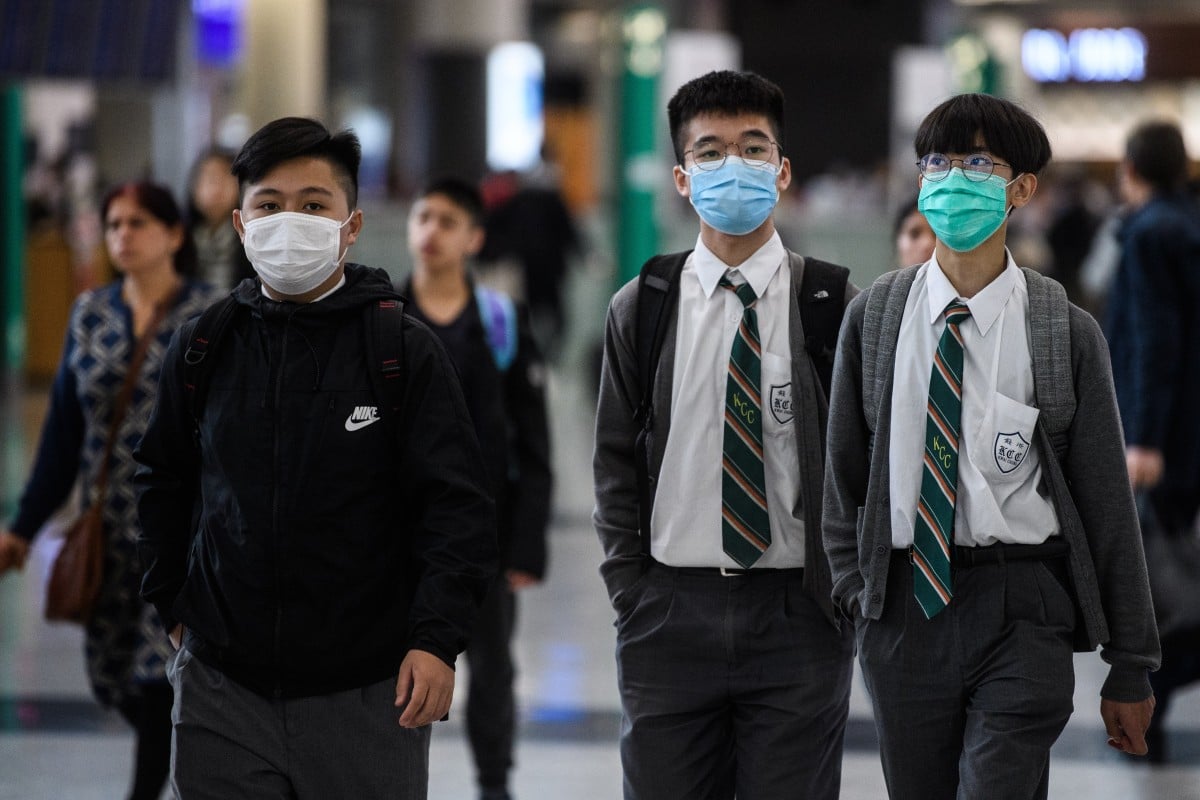
Students at Hong Kong's international airport last month. Photo: AFPStudents at Hong Kong's international airport last month. Photo: AFP
Students at Hong Kong’s international airport last month. Photo: AFP

As the new coronavirus spreads wider, many public activities have been forced to scale down or be suspended, and justifiably so. Among them are classes and examinations.

The possibility of scrapping or delaying some exams by up to a month may upset study schedules and add to the stress of tens of thousands of Hong Kong students, but they are necessary steps to avoid aggravating the public health crisis.

Under the options considered by the Education Bureau, the Chinese-language speaking exams may be put back from mid-March to late May, while keeping the original schedule for written exams for most subjects. The other option is to postpone all written exams until April 24 to May 25, with the Chinese and English speaking exams cancelled.

It is still unclear which option will be adopted. But the alert seems to give students – especially cross-border ones – enough time to make suitable preparations.

Students at the Chinese University of Hong Kong recently. Photo: SCMP

Those returning from the mainland may need to be quarantined for 14 days before attending an exam, if that measure is still required at the time. No less important are the precautionary arrangements to minimise the risk of infection at exam venues.

Taking the body temperatures of students is essential, as is the provision of surgical masks to strengthen protection.
Appropriate policies and measures adopted by education authorities are always useful references for schools and students. But concerted efforts are needed to stop campuses and exam venues from becoming breeding grounds for disease. The responsibility is as much the government’s as it is the stakeholders’.
Hong Kong to extend school closures until March 16 over coronavirus..
A decision by universities to further suspend on-site lectures can help avoid the gathering of crowds. The requirement of health declarations for staff and students returning to campus is another prudent step. Concerns were raised after some universities used hotels in the vicinity to isolate returning mainland students.
It was a convenient way to reduce the risk of infection on campus. But whether hotels make suitable quarantine facilities remains to be seen. Compliance and health protection for hotel staff are also valid issues. The education sector must stay vigilant and adjust class and exam arrangements in light of the threat posed by the deadly virus.
Fuente de la Información: https://www.scmp.com/comment/opinion/article/3050883/education-sector-must-stay-vigilant
Comparte este contenido:

Education 4.0: Is Indonesia ready?

Education 4.0: Is Indonesia ready?

In the endeavour to build the future of any nation, higher education contributes significantly by providing “global competitive talent”. The skilled workforce coupled with innovative technology and advanced infrastructures are key drivers for any country’s sustainable growth. In that context, if we inspect both India and Indonesia – two of the most populous economies – it’s evident that they are facing some of the biggest global challenges: the rapid ascension of artificial intelligence (AI), machine learning (ML), automated learning (AL) and the Fourth Industrial Revolution. Both nations are struggling to equip their respective workforces with advanced skills, attitude and knowledge essential to stay relevant in today’s education 4.0 era.

These two countries share similar peculiarities – a vibrant and energetic youth – and are faced with the same question: “How to equip their higher education system for challenges associated with ever-evolving global technological advancements, and transform their institutions into ‘world class’ universities?”

Nevertheless, the scenario for India is marginally better as the sub-continent has supplied “some” of the world’s best talents in the past. For instance, CEOs at a few global companies like Adobe, PepsiCo, Google, and Microsoft are all Indians, and the landscape has expanded over the last decade. A recent Deloitte report has shown that the number of universities in India has slowly grown from 436 in 2009–2010 to 903 in 2017–2018. The number of colleges rose from 29,000 to 39,000 in 2010. In addition, with record-breaking student enrolments (35.7 million students) India stands as the third-largest in the world, next to China and the United States (US), but despite that, the country still lags behind the standards of the world’s best universities.

While for Indonesia the agony is more severe as, in the past, it has supplied high volume but low-quality human capital. Surprisingly, according to research conducted by the Global Business Guide (GBG), Indonesia has 4,498 universities providing 25,548 majors, which is nearly double that of China, (2,825 universities); with a population that is less than one fifth of the latter. The country, in reality, is facing a 50 percent shortage of skilled workers according to data from the World Bank.

Quality versus quantity 

Merely having a massive number of universities and a record-breaking number of student enrolments does not guarantee quality. Rather, a robust and updated academic curriculum decked up with technological advancements, industry-academia collaboration, enough research funding, and quality global research, is required to transform a country’s education institutions into world class universities.

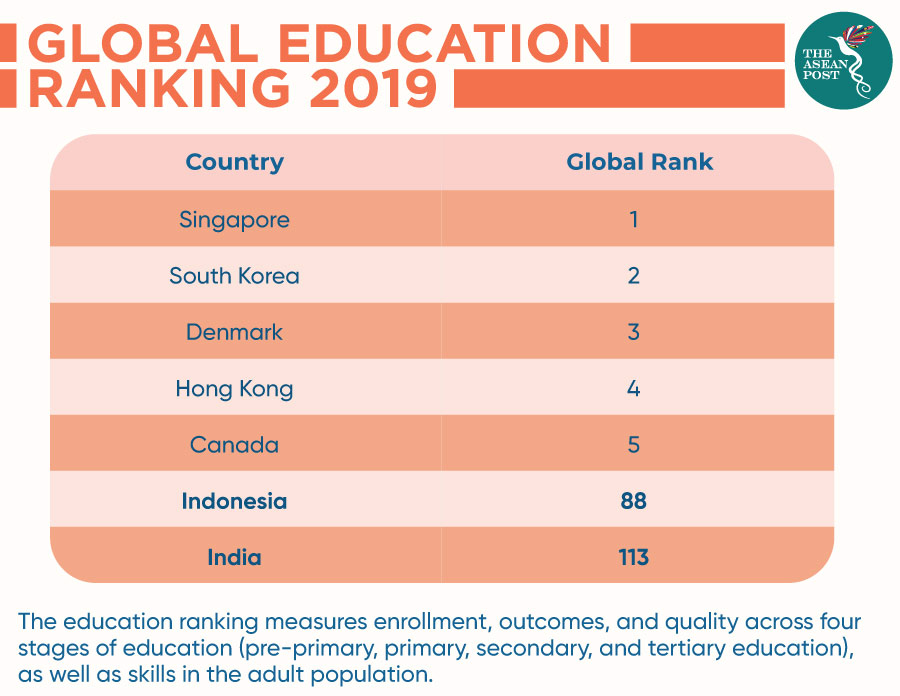
Since, in these economies, most of the universities or institutions are, mostly, privately owned, the quality of education imparted is mostly substandard resulting in “ill-equipped” graduates which encumber the global competitiveness of these countries. Merely three national universities in Indonesia managed to penetrate the world’s top 500 universities listing while India has 16. Though the latter ranked higher than Indonesia, globally, both are still far behind China and Japan with 39 universities, or South Korea and Taiwan with 24 universities.

Fearing this alarming situation, the education ministries of both nations have issued several decrees. The Ministry of Research, Technology and Higher Education in Indonesia has allowed for the appointment of foreign permanent lecturers in their public and state-owned universities and are inviting foreign universities to collaborate with local universities to boost academic achievements.

According to Universitas Sangga Buana YPKP in Kota Bandung in West Java, the Indonesian government has given its permission for 200 foreign lecturer appointments to speed up the growth of the country. On the same note, India’s former Minister of Finance and Corporate Affairs, the late Arun Jaitley made the Higher Education Financing Agency (HEFA), a non-profit organisation accountable for ameliorating the infrastructure of the country’s premier universities and establishing “20 world-class universities”.

Global Education Ranking 2019

Research

Research quality and quantity issues have been an ongoing debate for ages around the globe. The plethora of research literature available globally in the realms of science and business is imposing tremendous pressure on the peer review system. Every year, around two million scientific papers, as per an estimate, are published by 30,000 journals globally, mostly from countries like the United States (US), United Kingdom (UK), Germany, and China.

On a positive note, according to the SCImago journal and country ranking, research publications are gradually increasing for both, India and Indonesia with approximately 1,670,099 papers for India and 110,610 for Indonesia. While India is clearly ahead with a global ranking of nine, it still has far to go to move up in the academic world. Both countries should invest in bolstering the number of quality research publications and develop skilled, productive and flexible labour forces such as those found in the US, UK, China, and South Korea.

Faculty

Another critical determinant for a world-class university is having acclaimed and meritorious faculty pools who are excellent in the classroom. However, sadly, both countries lack in this regard too.

According to a report by global technology specialists, GBG, most lecturers (approximately 155,591) working in Indonesia only hold a Master’s level degree. In a few cases (34,393) even Bachelor’s degree holders are permitted to teach.

According to the National Education Policy Draft Report, the quality and standard of education imparted in India is largely below the mark. The faculties are underpaid and the majority work on an ad hoc basis which eventually forces them to seek other career options which offer more appealing salary packages coupled with higher career growth prospects. In fact, it is speculated that India will soon experience around 30 to 40 percent paucity of eligible lecturers.

Funding

Sufficient funding is another key ingredient for producing independent, high-quality research and in that respect, during the last couple of years, the Indian government has remained stagnant and even moved backwards as a funder for both, public and private universities. In Indonesia, funding is gradually increasing. In 2017-2018, Indonesia’s research expenditure was 0.24 percent of its gross domestic product (GDP) whereas India’s expenditure on research stood at 0.62 percent versus China’s 2.06 percent, Singapore’s 2.36 percent and Malaysia’s 0.63 percent. Public funding, somehow, for education has remained inadequate for both countries compared to other developing nations such as Brazil and South Africa.

Higher education in both nations desperately need a revolutionary change where “industry oriented and focused teaching” is desirable. Though India stands ahead when compared to Indonesia, it is still far behind in the global ranking. The governments of both emerging economies should initiate and design innovative solutions to stand against the global forces of change. Perhaps developing an “eco-system” among all the constituents of higher education – educational institutions, students, alumni, regulatory bodies and accreditation agencies, employers, and governments – can speed up their growth and aid them in remaining relevant in the era of Education 4.0.

Fuente de la Información: https://theaseanpost.com/article/education-40-indonesia-ready


Comparte este contenido:

Kenya: West Pokot County Govt launch Ksh 400 Million bursary fund.

Africa/Kenya/16-02-2020/Author(a): West Pokot/Source: www.kbc.co.ke

West Pokot County Government has launched a four hundred million shilling bursary kitty for needy students.

The bursary is set to benefit students from secondary, colleges and universities.

Speaking when he launched the disbursement exercise of the bursary at Ortum Boys high school, West Pokot Governor Prof John Lonyangapuo said that school enrollment in the County had increased sharply.

He stated that school retention and transition rates had also improved significantly.

Ortum Boys Secondary School which has the highest number of students from West Pokot received a total of Ksh 13 million.

“We have a vision on education, economy and equity to shun vices. Education is not devolved but we have invested heavily in education. There is no cattle rustling in the North Rift region and we are giving out bursaries without discrimination or based on political parties or tribe,” he said.

The County boss pointed out that students from households affected by recent landslides will be considered for an additional amount.

He also noted that his administration had put emphasis on matters concerning education to help reduce illiteracy levels and empower the people of West Pokot.

Governor Lonyangapuo also called on the Teachers ServiceCcommission (TSC) CEO Nancy Macharia to post more teachers saying the region is understaffed.

He said that the County will start a scholarship program which will enhance specialist’s technical courses for self-sufficiency in terms of expertise.

Source and Image: https://www.kbc.co.ke/west-pokot-county-govt-launch-ksh-400-million-bursary-fund/

Comparte este contenido:

México: ¡Balazos y no abrazos! ¡Represión y no solución!

América del Norte/México/16-02-2020/Autor(a) y Fuente: Colaboradores de OVE

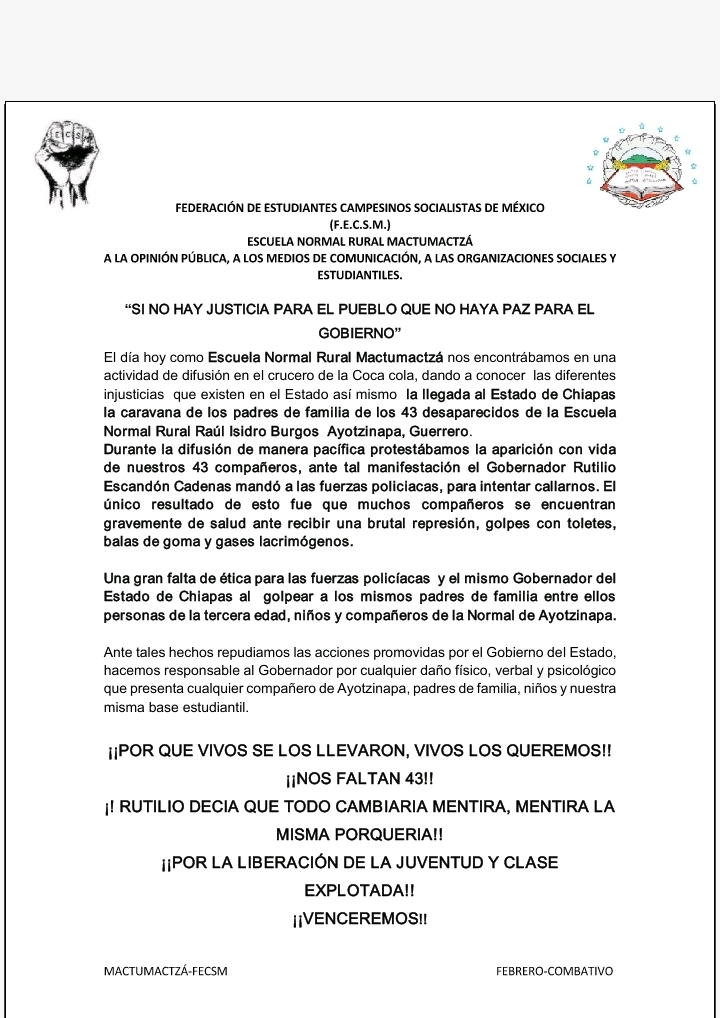
¡Balazos y no abrazos! y ¡represión y no solución! al parecer son los lemas del gobierno actual en el estado de Chiapas, México, encabezado por Rutilio Escandón Cadenas.

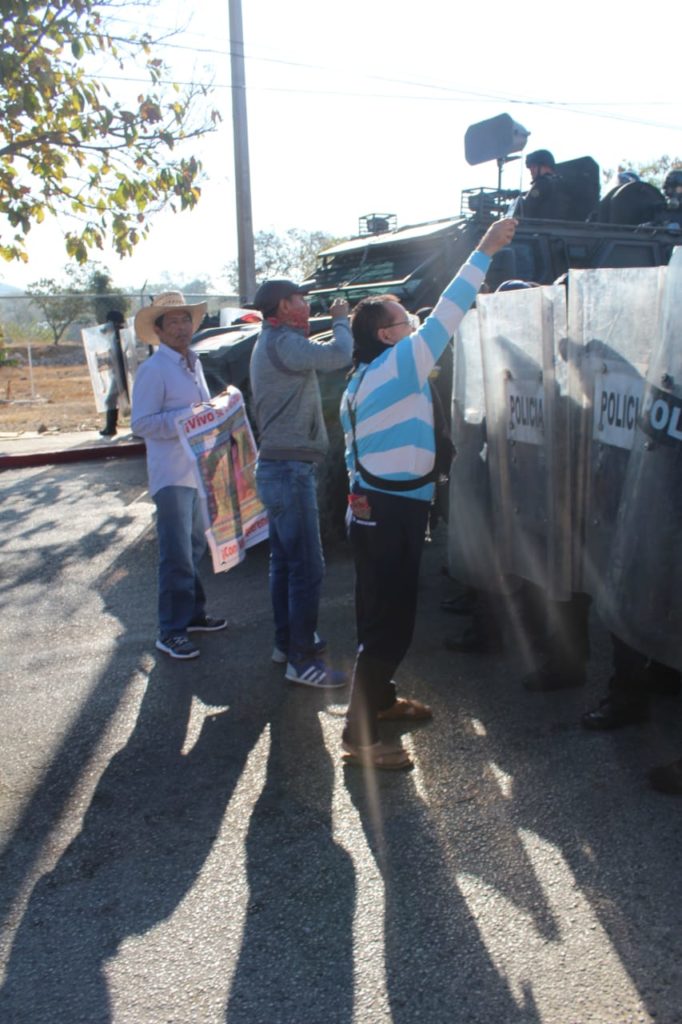
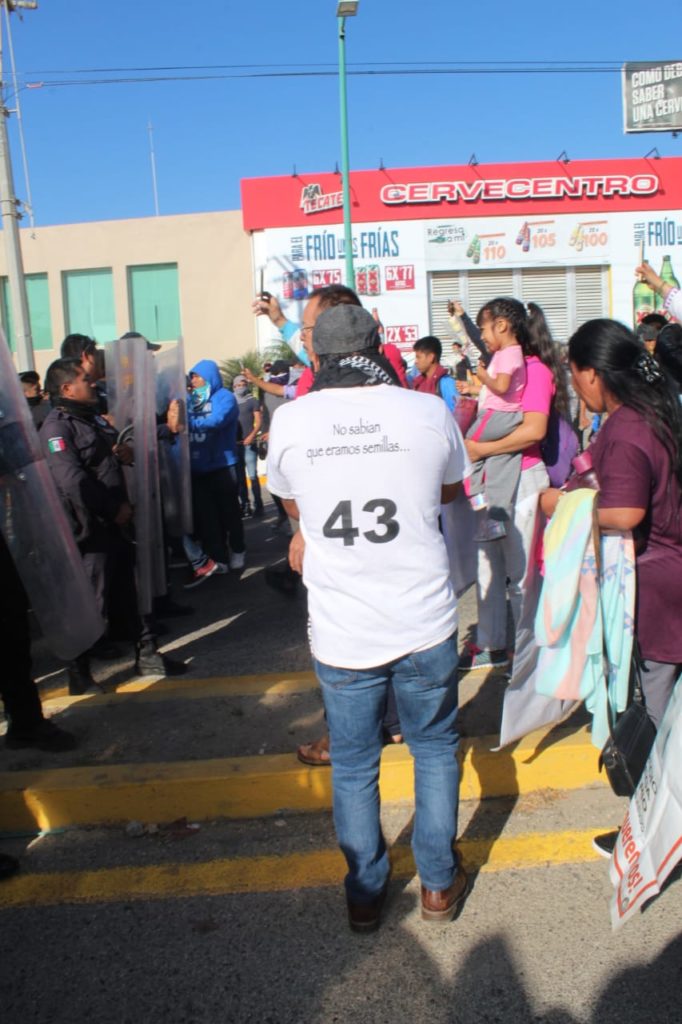
El día de hoy la Escuela Normal Rural Mactumactzá recibió a compañeros y compañeras estudiantes de la hermana Escuela Normal Rural Raúl Isidro Burgos de Ayotzinapa, Guerrero y a los padres y madres de los 43 estudiantes desaparecidos en el mes de septiembre del 2014 de la escuela visitante, con motivo al apoyo total a la Caravana «En busca de los 43» que encabezan las madres y los padres de los estudiantes desaparecidos, las cuales, convocaron a las organizaciones sociales y sociedad en general a una marcha para el día de hoy a las 17:00 horas en la capital Chiapaneca.

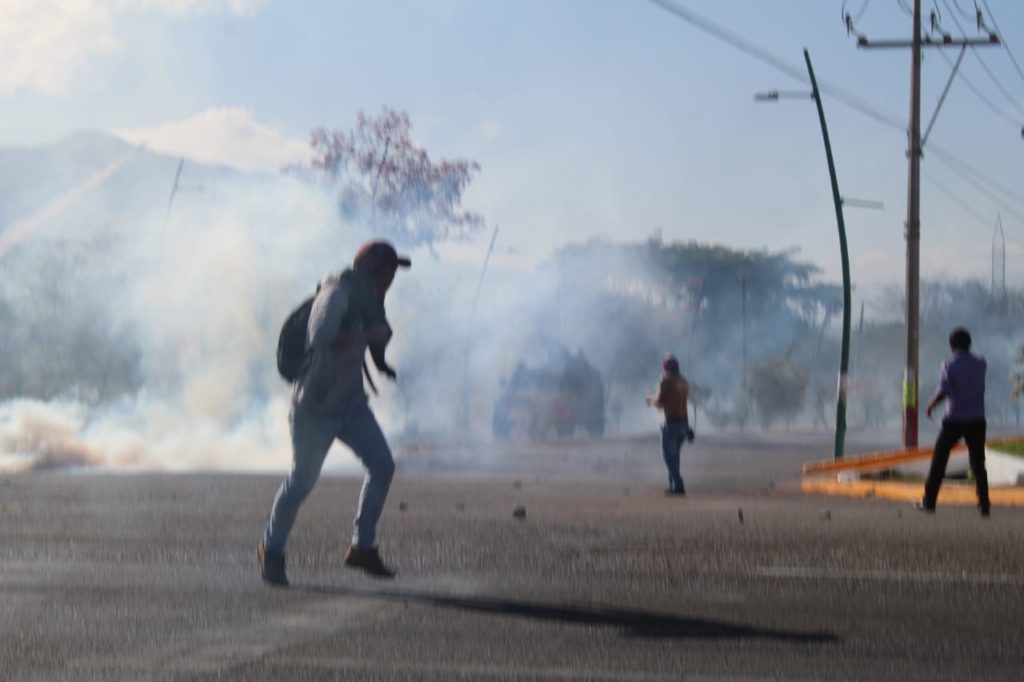
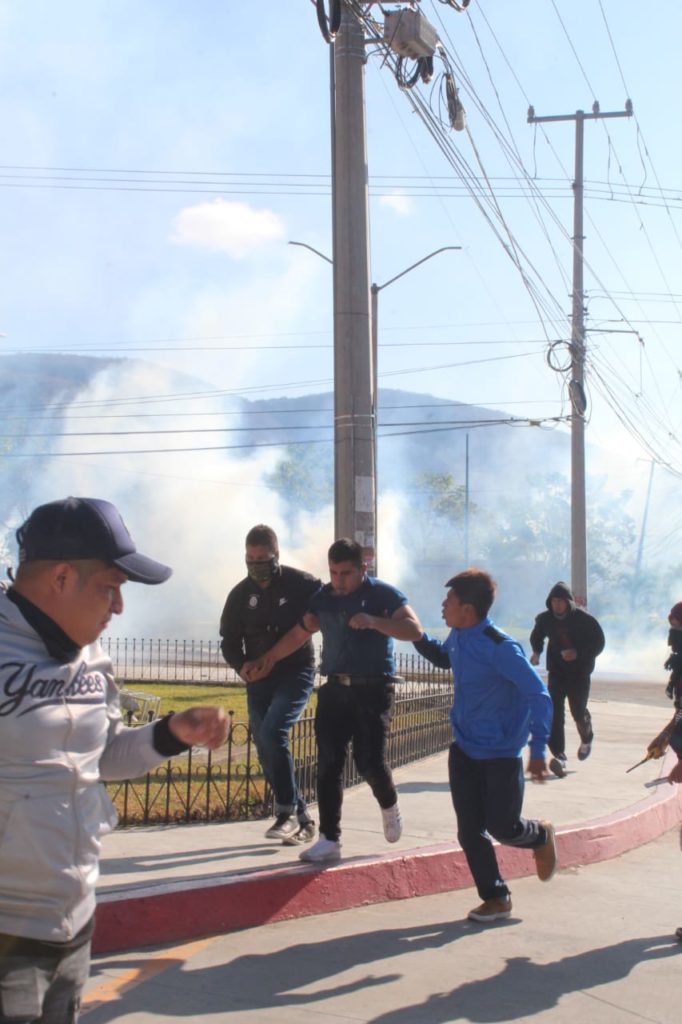
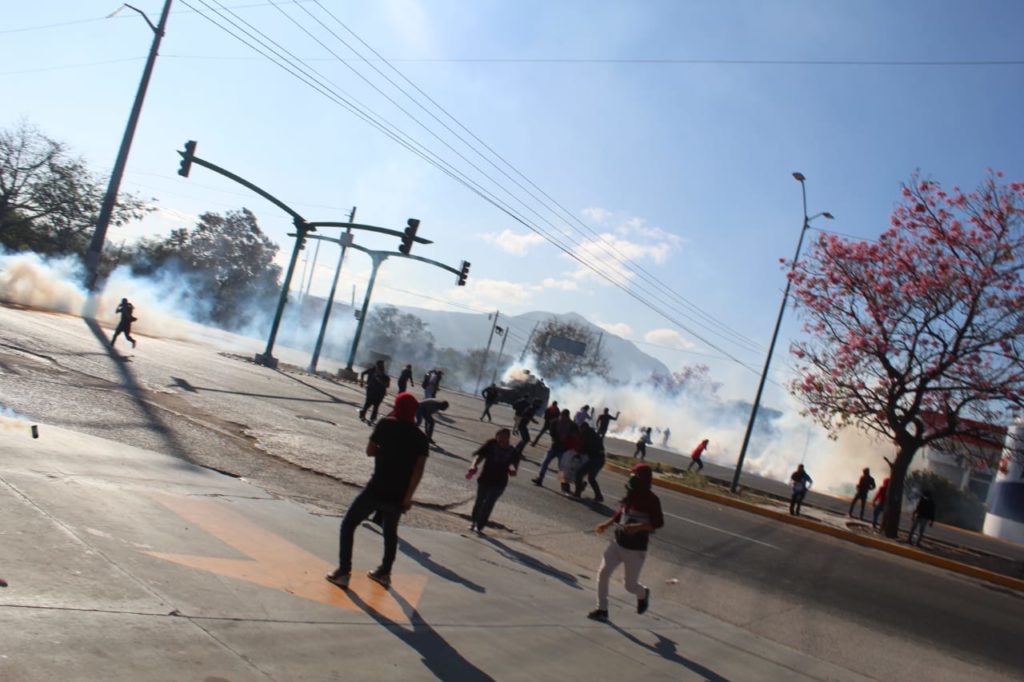
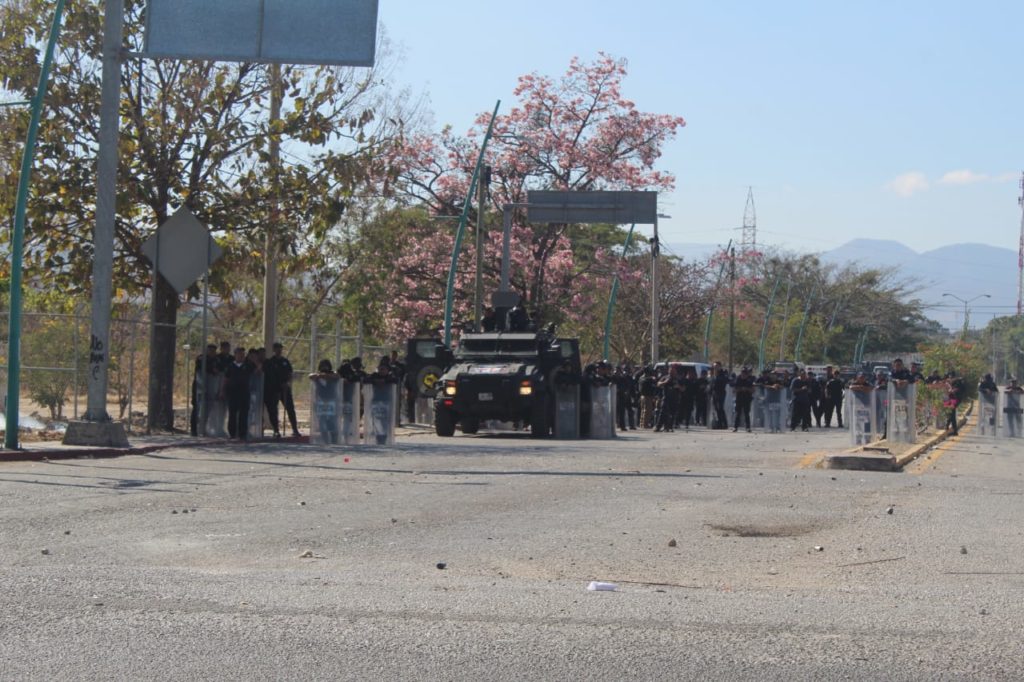
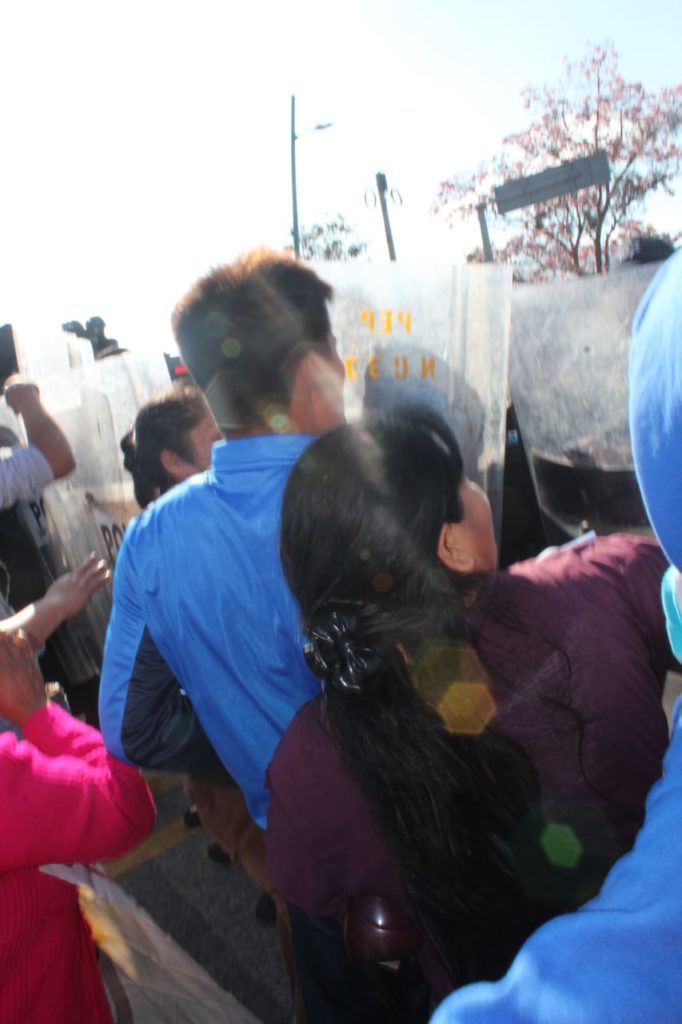
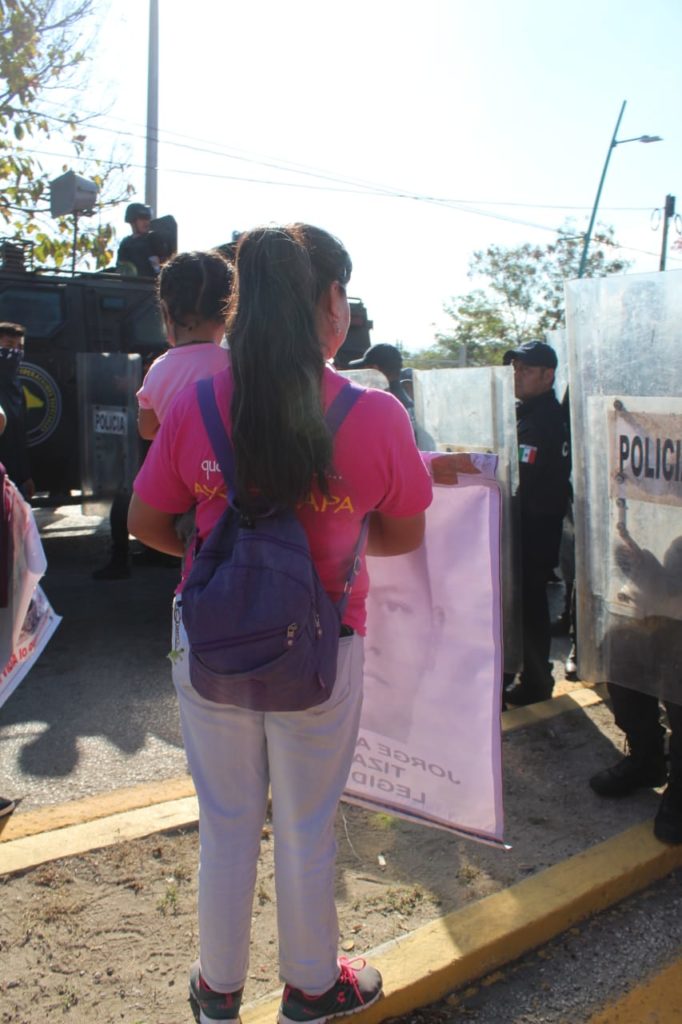
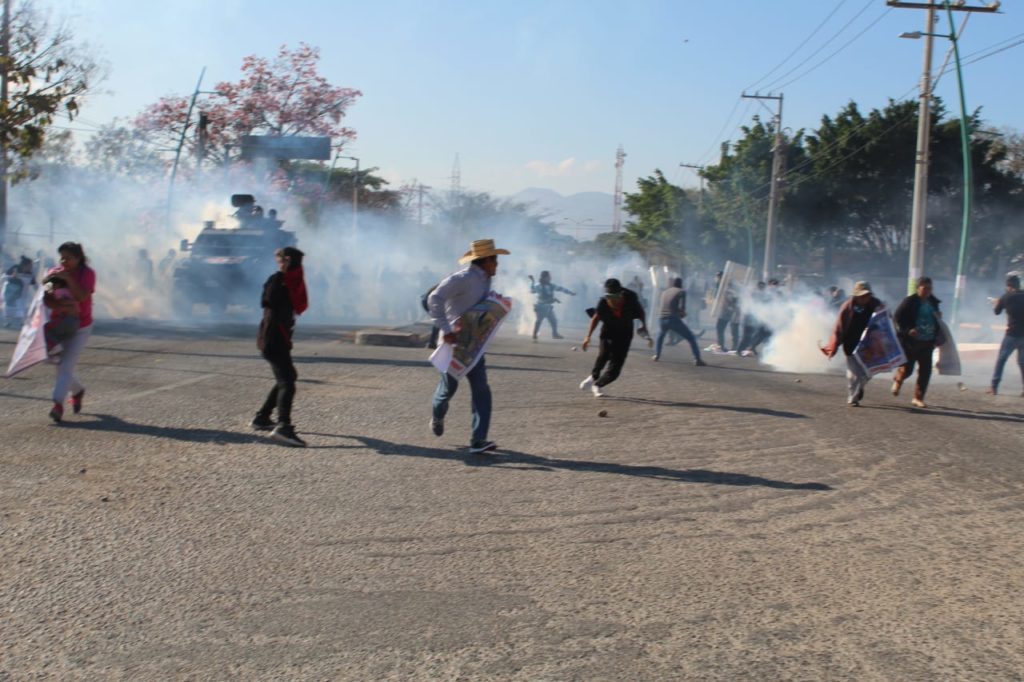
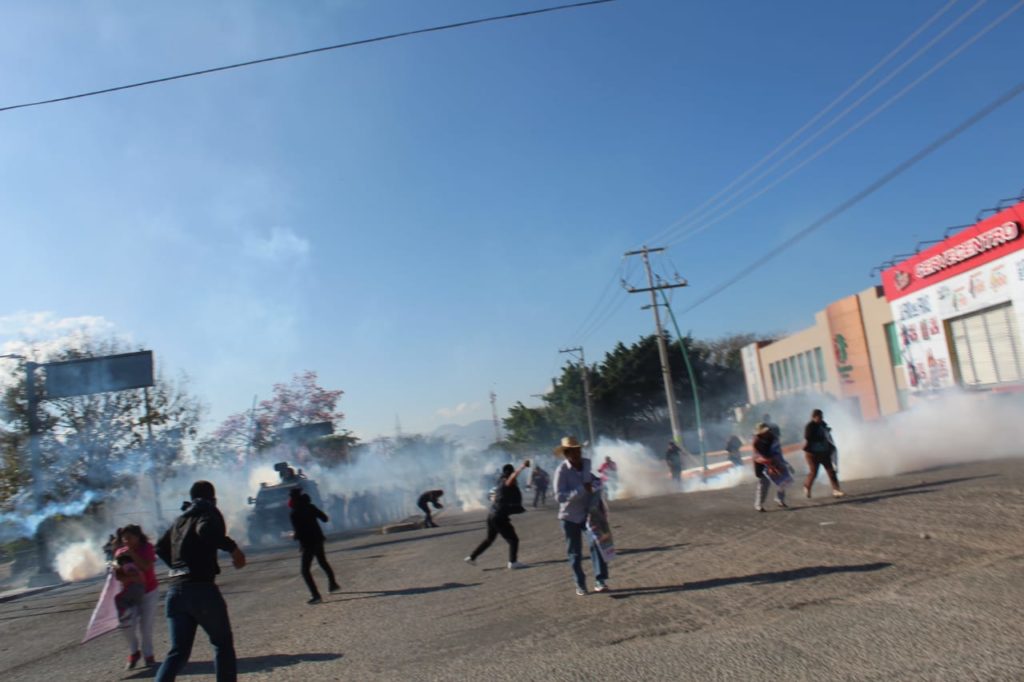
De lo anterior, para difundir dicha convocatoria, los y las estudiantes se dieron cita en el crucero de la Coca-Cola en la Ciudad de Tuxtla Gutiérrez, Chiapas, México, para repartir volantes de manera pacífica, pero,  para callar las voces de los y las estudiantes, el Gobierno del Estado de Chiapas, encabezado por Rutilio Escandón Cadenas mandó a las fuerzas policiales a reprimir brutalmente a los y las manifestantes, dejando un saldo de muchos jóvenes, niños, niñas y adultos mayores graves de salud causado por golpes con toletes, disparos con balas de goma y gases lacrimógenos.

«Una gran falta de ética para las fuerzas policiacas y el mismo gobernador del Estado de Chiapas al golpear a los mismos padres de familia entre ellos personas de la tercera edad, niños y compañeros de la Normal de Ayotzinapa».

A continuación mostramos imágenes que nos hicieron llegar a la redacción del portal de las maestras y los maestros Otras Voces en Educación:


Fuente e Imagen: Colaboradores de OVE

Comparte este contenido:
Page 1496 of 6195
1 1.494 1.495 1.496 1.497 1.498 6.195