Page 1544 of 6194
1 1.542 1.543 1.544 1.545 1.546 6.194

Autismo y acoso escolar: la voz de los niños que no pueden contarlo

Autismo y acoso escolar: la voz de los niños que no pueden contarlo

Un vídeo no previsto, una madre transformada en directora creativa y unos compañeros de colegio que se convierten en actores improvisados. Carolina Marín lanzó un vídeo viral sobre autismo en 2015, prometió que no haría ninguna campaña más, pero la vida le ha llevado a incumplir su propia palabra. Hace diez años se convirtió en mamá de una niña con autismo no verbal llamada Carla y de su melliza Daniela. Ahora, lanza un nuevo vídeo para concienciar sobre el acoso en las escuelas y animar al entorno a ser la voz de los niños que no pueden contar que están siendo víctimas de violencia:»Las personas con autismo no verbal no pueden defenderse ni físicamente ni verbalmente, hay que estar atentos y educar a nuestros hijos a que no se debe pegar, vejar ni humillar».

Los internautas conocen a Marín desde abril de 2015, cuando subió un vídeo animando a ser «la voz» de los niños que, como Carla, tienen autismo no verbal. De forma inesperada, su historia se hizo viral y comenzó a recibir vídeos de otros usuarios con un gesto que ya se ha hecho famoso, el del dedo índice de una mano apuntando a la palma de la otra. Esta mujer es la mejor prueba de que el amor maternal mueve montañas de bytes. En sus vídeos han participado desde artistas como Alejandro Sanz o Bebe hasta políticos como Mariano Rajoy o Pedro Sánchez. «Mi principal motivo es concienciar a quien no tiene ni idea de qué es», explica. A partir de ese primer vídeo, decidió subir otros hablando de la estereotipia, las crisis, contando su propia historia o la de Daniela, la hermana melliza de Carla.

Este enero ha vuelto a lanzar una campaña, esta vez, concienciando sobre bullying en los colegios. La protagonista es Carla, aunque cuenta con una doble para las escenas más bruscas, y vuelve a aparecer muy bien acompañada. En esta ocasión, han colaborado compañeros de clase de las niñas, las chicas del equipo de Majadahonda FSF y los artistas del Studio 23, entre otros muchos cómplices. También se han solidarizado con la causa personajes del mundo del cine como Hugo Silva, Javier Cámara o Koldo Serra.

En esta ocasión, Marín se inspira en un episodio real para concienciar sobre el bullying. En el caso de niños con autismo no verbal, esta madre cree que cambios de actitud como la tristeza o la pérdida de ganas de ir al colegio pueden poner en aviso a los padres y terapeutas: «En el caso de mi hija, habla a través de pictogramas y con un sistema bimodal, a través de gestos, donde ella te puede ir contando cómo se siente y cómo se encuentra.  Hay que encontrar el momento adecuado», asegura sobre cómo la niña confesó a las terapeutas que se sentía triste cuando iba al colegio.

En el caso de Carla, tiene una gran compañera de vida, su hermana Daniela, que se ha convertido en su mejor embajadora .»Si no es por su hermana, no me enteraría», recuerda Marín sobre el papel que tuvo la melliza de Carla al contarle lo que estaba pasando en su aula. Los compañeros de clase de Daniela también arroparon rápidamente a la niña y el colegio activó el protocolo para estos casos.

En el vídeo aparecen figuras negras y lluvia que representan la tristeza, pero tiene un final feliz. La protagonista acaba sacando fuerzas y rebelándose contra el abuso: «Es la conclusión de la campaña. Ante estas situaciones, todos estamos tristes, pero esa tristeza hace que te levantes y luches contra todo», asegura Marín, en un mensaje que sirve para los niños que sufren bullying, pero también para los adultos que los acompañan.

Autismo sin estereotipos

La historia de Carla es el ejemplo de que las personas con autismo van mucho más allá de los estereotipos de las series de televisión. En su colegio, se encuentra totalmente integrada y le encanta practicar baloncesto «jugando a tirar», al pilla-pilla o que le hagan cosquillas.

«Nosotras vamos a un parque de bolas que le encanta a Carla. Allí la conocen y los monitores saben que tienen autismo y que no pueden decirle «no te subas ahí», sino que hay que hacerlo de otra manera. La mejor persona para concienciar en el parque al resto de los niños es mi hija Daniela. Les dice que su hermana no puede hablar, pero puede jugar y les dice cómo tienen que hacerlo», explica sobre su hermana, que asume su rol con absoluta normalidad.

Marín no pide dinero, ni pertenece a ninguna asociación. Cada campaña tiene el objetivo de divulgar y comunicar desde su experiencia, es decir, como madre. «Cuando me dijeron que mi hija tenía autismo no verbal , no sabia qué significaba, ni entendía qué podía suponer. Hay personas que incluso necesitan ir al psicólogo», explica. Para ellos también son sus vídeos.

Fuente de la Información: https://www.cuartopoder.es/sociedad/2020/01/16/autismo-y-acoso-escolar-la-voz-de-los-ninos-que-no-pueden-contarlo/


Comparte este contenido:

Global Digital Signage in Education Market Overview by Types, Strategies, Current Trends, Growth Opportunities, Challenges and Forecast Report till 2024

Global Digital Signage in Education Market Overview by Types, Strategies, Current Trends, Growth Opportunities, Challenges and Forecast Report till 2024

The Digital Signage in Education market was valued at XX Million US$ in 2018 and is projected to reach XX Million US$ by 2024, at a CAGR of XX% during the forecast period. In this study, 2018 has been considered as the base year and 2019 to 2024 as the forecast period to estimate the market size for Digital Signage in Education.

Global Digital Signage in Education industry market professional research 2014-2024, is a report which provides the details about industry overview, industry chain, market size (sales, revenue, and growth rate), gross margin, major manufacturers, development trends and forecast.

To access the sample report of the Digital Signage in Education market visit at: https://www.orbisresearch.com/contacts/request-sample/4159109

Key players in global Digital Signage in Education market include:
ADFLOW Networks
Cisco Systems
NEC Display Solutions
Samsung Electronics
BrightSign
Dynamax Technical Services
Eclipse Digital Media
Mvix
Scala

Market segmentation, by product types:
Hardware
Software

Market segmentation, by applications:
K-12 schools
Higher education institutions

Market segmentation, by regions:

North America (United States, Canada)
Europe (Germany, France, UK, Italy, Russia, Spain)
Asia Pacific (China, Japan, Korea, India, Australia, New Zealand)
Middle East & Africa (Middle East, Africa)
Latin America (Mexico, Brazil, C. America, Chile, Peru, Colombia)

Click to access full pages https://www.orbisresearch.com/reports/index/global-digital-signage-in-education-market-professional-survey-2019-by-manufacturers-regions-types-and-applications-forecast-to-2024

The report can answer the following questions:
1. North America, Europe, Asia Pacific, Middle East & Africa, Latin America market size (sales, revenue and growth rate) of Digital Signage in Education industry.
2. Global major manufacturers’ operating situation (sales, revenue, growth rate and gross margin) of Digital Signage in Education industry.
3. Global major countries (United States, Canada, Germany, France, UK, Italy, Russia, Spain, China, Japan, Korea, India, Australia, New Zealand, Southeast Asia, Middle East, Africa, Mexico, Brazil, C. America, Chile, Peru, Colombia) market size (sales, revenue and growth rate) of Digital Signage in Education industry.
4. Different types and applications of Digital Signage in Education industry, market share of each type and application by revenue.
5. Global market size (sales, revenue) forecast by regions and countries from 2019 to 2024 of Digital Signage in Education industry.
6. Upstream raw materials and manufacturing equipment, industry chain analysis of Digital Signage in Education industry.
7. SWOT analysis of Digital Signage in Education industry.
8. New Project Investment Feasibility Analysis of Digital Signage in Education industry.

For More Information, Enquiry and Avail Discounts at- https://www.orbisresearch.com/contacts/enquiry-before-buying/4159109

About Us:
Orbis Research (orbisresearch.com) is a single point aid for all your market research requirements. We have vast database of reports from the leading publishers and authors across the globe. We specialize in delivering customised reports as per the requirements of our clients. We have complete information about our publishers and hence are sure about the accuracy of the industries and verticals of their specialisation. This helps our clients to map their needs and we produce the perfect required market research study for our clients.

Fuente de la Información: https://dagorettinews.com/global-digital-signage-in-education-market-overview-by-types-strategies-current-trends-growth-opportunities-challenges-and-forecast-report-till-2024

Comparte este contenido:

Why Paxful’s founder is building schools in Africa

Why Paxful’s founder is building schools in Africa

Elon Musk can have Mars—there’s potential right here, says Ray Youssef, as the peer-to-peer Bitcoin marketplace begins work on its third African school.

Paxful, the peer-to-peer bitcoin marketplace, announced today that work has commenced on a third school in Africa, funded by its #BuiltwithBitcoin initiative.

The new school is in Machakos County, Kenya, not far from the capital, Nairobi. Children from three to six years old will benefit from the education provided, and from a new water well system. Paxful is also donating $30,000 towards the initial operating costs of the school.

Embedded video

“Elon Musk can have Mars, I’m interested in the invisible planet of six billion humans right here,” Paxful co-founder Ray Youssef told Decrypt. “It really is like an invisible planet. No one sees these people,” he explained.

Youssef’s philanthropy stems from his own childhood experiences growing up in New York’s Hell’s Kitchen, where his parents settled as refugees from Egypt. The streets were so dangerous that his father provided him with a knife ring so that the eight-year-old could better protect himself on his paper round.

His early experiences led him to believe that improving education facilities is vitally important. He related how, when he travelled to New Orleans to help rebuild the city after the devastation wrought by Hurricane Katrina, he ended up rebuilding the first functional school. That led to the fire department and the police restarting operations, and families returning to the stricken city.

“That experience has stayed with me my entire life,” he said. “Schools are the core of civilisation.”

Paxful kicked off its 100-school initiative in 2017 in partnership with ZamZam Water, to bring proper education centers to emerging countries in Africa and beyond. It currently supports over 400 students in Rwanda.

Over 45% of those who use the peer-to-peer bitcoin marketplace live in Africa, and its user base in the country doubled last year.

Future-fantastic Akon City is live

Rapper Akon kicks off construction for world’s first «crypto city»

Africa is to get the world’s first “crypto city.” Musician and entrepreneur Akon tweeted on Monday that he now has official approval to build …

marketplace is calling on others in the crypto community to help #BuiltWithBitcoin and fund more schools. The donation website will go live on Thursday. Eventually, Paxful aims to bring education to nearly 15,000 young people throughout Africa while providing jobs to nearly 300 teachers.

“We saw the potential. Not just for Bitcoin but for human advancement,” said Youssef.

He’s not alone in thinking that Africa’s unbanked will define the future. Twitter and Square CEO Jack Dorsey has his eye on the continent too.

Fuente de la Información: https://decrypt.co/17189/why-paxfuls-founder-is-building-schools-in-africa


Comparte este contenido:

Guernsey’s teachers warn of ‘calamitous’ education plans

Guernsey’s teachers warn of ‘calamitous’ education plans

A group of teachers have written an open letter warning against «calamitous» education plans.

The letter from teaching staff at St Sampson’s High School, Guernsey, has been signed by 88 staff members.

Guernsey’s States has proposed reducing the current four school system to two sites under one combined institution.

Deputy Matt Fallaize, president of the committee for Education, Sport and Culture said the reforms were «much better» than any other model proposed.

The teachers’ letter warns of issues with transport, infrastructure and space in the plans to have two secondary school sites.

It reads: «Whilst we agree with the Executive Leadership Team that delay and uncertainty are difficult, we strongly feel that to continue along the present path without pause for reflection and improvements to the current transition model will lead to a calamitous result for education and the island as a whole.»

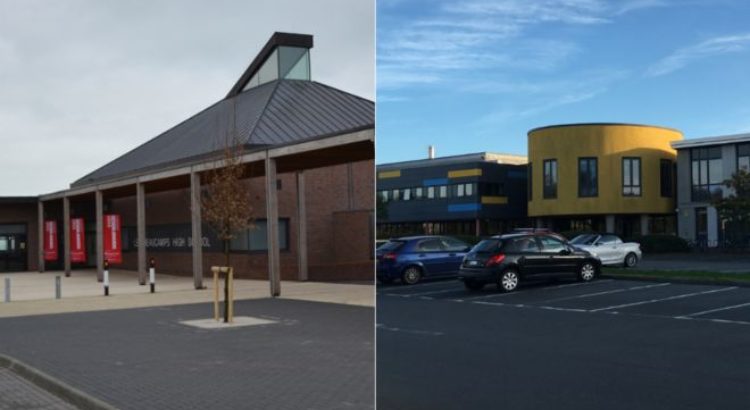
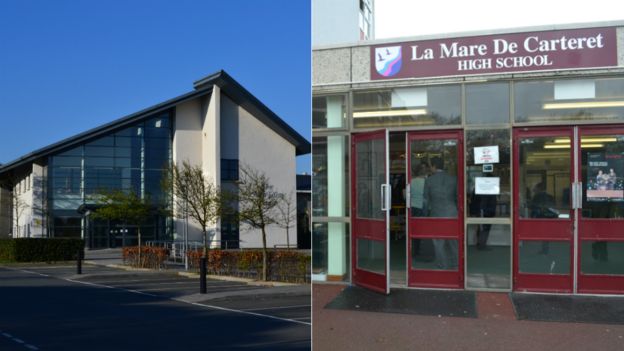
Grammar School/La Mare De Carteret

The signatures from 95.6% of the St Sampson’s faculty were verified by Deputy Peter Ferbrache.

The open letter is a response to another open letter from Guernsey’s education committee, whose plans are being scrutinised, which warned against a delay which would have «no winners».

Three deputies have released the draft of a petition they intend to place, calling for the current plans for a single secondary school across two sites to be compared with other previously presented models of non-selective education before any contracts are signed.

Guernsey States approved the final version of the new model by 23 votes to 15 last September.

Fuente de la Información: https://www.bbc.com/news/world-europe-guernsey-51192689


Comparte este contenido:

Education innovations in Asia: 5 takeaways from Taiwan’s NXTEducator Summit

Asia/ Taiwan/ 21.o1.2020/ Source: www.brookings.edu.

here’s no question that children in school today will encounter an entirely different workplace than the one we’re in now. The impact of new technologies and a changing climate will influence the kinds of jobs available and the skills needed to be successful in them. While it’s impossible to know what exactly the future will hold, education scholars are emphasizing the need for young people to acquire skills such as collaboration, critical thinking, and problem-solving. These so-called “21st century” skills will help young people thrive in an uncertain future. Around the world, innovators are finding new and creative ways to deliver such skills.

I recently took part in the NXTEducator Summit in Taipei on 21st century skills in Asia, which shed light on the many innovations in the Chinese-speaking world. Co-hosted by the Finnish nonprofit HundrED and the Sayling Wen Cultural and Educational Foundation in Taiwan, the summit brought together more than 100 teachers, administrators, and innovators across China, Taiwan, Singapore, and Malaysia to learn from seven featured innovators and exchange ideas for delivering a quality, future-ready education for all of today’s young people.

At the Center for Universal Education (CUE) at Brookings, we research education innovations, and the summit provided a window into current trends in the region as well as similarities we see across the globe that can help inform our future work. Below are five takeaways from the summit:

1. Leapfrogging is happening in the here and now. The summit’s featured innovators confirm that rapid, nonlinear progress in education, or what CUE calls “leapfrogging,” is alive and well in communities across the Chinese-speaking world. CUE’s leapfrog pathway highlights how innovation can move education from the status quo to a place where all young people develop the breadth of skills needed to be successful in the future. For example, the Co-Publishing Project in Taiwan works with economically disadvantaged students and students from immigrant families, putting them at the center of learning through hands-on photography projects. Student-centered learning is a core element of leapfrogging, as highlighted in CUE’s leapfrog pathway. The project fosters students’ curiosity about their own cultures and the world around them and allows for their self-expression through the art of photography. Another featured innovation, Teach for Taiwan, recruits university graduates and professionals to teach in economically disadvantaged primary schools through its two-year fellowship program, helping to address educational inequity among rural and urban communities. The innovation represents an example of widening the pool of teachers, another aspect of the leapfrog pathway.

2. Advanced technology is being harnessed for learning. While many well-resourced classrooms have tablets and computers, the use of drones in school is less common. The Drone-based Interdisciplinary Learning and Entrepreneurship Education program in Hong Kong has seized on the greater commercial availability of drones to further student learning. Secondary school students first learn about drones in the classroom, applying math, science, and coding skills to program drones and track their trajectories. They also meet entrepreneurs and professionals who use drones in their day to day careers. Students apply their learnings to the real-life measurement of water quality, first by engineering drones to collect water samples through a testing process in the classroom and then collecting samples from local bodies of water. Back in the classroom, students analyze the collected samples to identify levels of water pollution and pollution sources. The program enables students to solve a local problem through technology, while robustly building their 21st century skills.

3. Familiar models are being used in new ways. Innovation isn’t always the brand new, never-before-seen thing. Indeed, in “Leapfrogging Inequality,” Brookings scholar Rebecca Winthrop defines innovations in education as a break from current practice, whether new to the world or new to a context. Two featured innovations, BEEP Lab and FunMeiker, represent examples of an old idea being adopted to serve a new purpose. Both innovations use concepts from the field of architecture to teach K-12 students. The programs work with local architects as mentors who guide students through the processes of inquiry-thinking, design-thinking, and problem-solving. While architecture’s use in K-12 education is not brand new, these innovations are providing thoughtful, new ways to deliver context-specific concepts and ideas to children in Singapore and Taiwan, such as a focus on the natural and cultural environments in addition to the built environment.

4. Innovation is promoting empathy and cross-cultural exchange. Featured innovation MTA World (Mondragon Team Academy) is a university in which students spend each year in a different country. Students can choose to study in Asia in China and Korea, as well as in Spain, Mexico, and the United States. Instead of classrooms, learning takes place through innovation labs where students work in teams of entrepreneurs. MTA recognizes that when young people have the opportunity to interact with others from different backgrounds, they develop new perspectives and ways of working that will serve them throughout their lives. Another innovation that promotes cross-cultural learning at the tertiary level is City Wanderer, in which teams of university students take on challenges in their city that benefit underserved groups—for example by cooking meals for the homeless or spending time with elderly neighbors. By interacting with others from different backgrounds, students develop empathy and a commitment to improve their world.

5. There is tremendous opportunity for governments to help innovation scale. Six of the seven featured innovations are led by nongovernmental organizations (the seventh is a social enterprise). Many collaborate with formal education systems by partnering with schools to lead after-school and weekend programs. This trend mirrors CUE’s research. In its global catalog of nearly 3,000 education innovations, CUE found that two-thirds of innovations originated from the nonprofit sector, whereas only 12 percent of innovations originated from governments. While innovation tends to occur outside of formal systems for a number of reasons, there is great value in more fully bringing innovation into the mainstream, where it can reach millions more students. CUE has called for a mindset shift among leaders as a starting point to encourage greater uptake of education innovation by local and national governments.

While we can’t say for certain what the world of work will look like 10 or 15 years from now, the conversations at the NXTEducator Summit show us that the education innovations community is putting into practice a range of creative ideas inside and outside of the classroom.

Comparte este contenido:

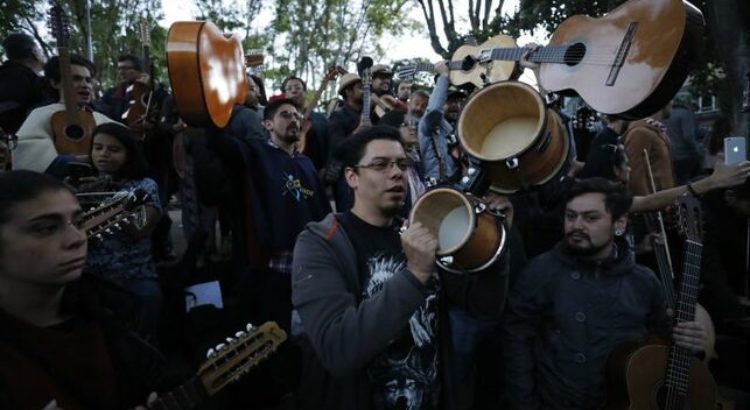
Cacerolazo contra la violencia, la primera gran protesta del año en Colombia

América del Sur/ Colombia/ 21.01.2020/ Fuente: www.eldiario.es.

Trabajadores, estudiantes, indígenas y activistas saldrán nuevamente este martes a las calles colombianas para realizar un cacerolazo en rechazo al asesinato de líderes sociales, los abusos de la fuerza pública y las políticas sociales del Gobierno, entre otras demandas.

La protesta de este 21 de enero, la primera del año después de las masivas manifestaciones de noviembre y diciembre contra las medidas sociales y económicas del Gobierno de Iván Duque, fue convocada en esta ocasión por el Comité Nacional de Paro bajo el lema «defensa de la vida».

ASESINATO DE LÍDERES SOCIALES

El motivo central de la movilización, según sus convocantes, es el repunte de la violencia en varias regiones del país, donde en las tres semanas que van de año han sido asesinados alrededor de veinte líderes sociales, en promedio uno diario.

La situación llevó incluso a que el Consejo de Seguridad de la ONU expresara su «seria preocupación» y reclamara «acciones efectivas» para mejorar la seguridad en el país.

De acuerdo con los registros de la ONU, 107 activistas fueron asesinados el año pasado en Colombia, la mayoría en áreas rurales y casi todos ellos (98 %) «en municipios con economías ilícitas donde operan grupos criminales o armados», mientras varias decenas están amenazados.

A ello se sumó la denuncia del subdirector de la Fundación Paz y Reconciliación, Ariel Ávila, sobre amenazas contra él, contra la alcaldesa de Bogotá, Claudia López, y contra políticos de izquierda como Gustavo Petro y el líder del partido FARC, Rodrigo Londoño, por parte del grupo criminal Águilas Negras.

«Amenazas contra la alcaldesa Claudia López y otros líderes sociales y políticos deben motivarnos a que el próximo 21E se constituya en una estruendosa expresión de rechazo a los asesinatos y toda forma de violencia. Millones de cacerolas sonarán por la vida y por la paz», advirtió en Twitter Diógenes Orjuela, presidente de la Central Unitaria de Trabajadores (CUT).

RECLAMOS SOCIALES Y CONTRA LA FUERZA PÚBLICA

Al cacerolazo se unirán distintos sectores para recordar sus reclamos sociales y económicos, como el rechazo a la recién aprobada reforma tributaria, además de repudiar las interceptaciones ilegales del Ejército a políticos, magistrados y periodistas.

«Continuamos junto al pueblo contra la reforma tributaria y el ‘holding’ financiero, el alza de impuestos, de las tarifas de los servicios públicos, por el derecho a un medioambiente sano», por los «recursos para atender la salud, la educación, el agua potable y el saneamiento básico», afirmó la Federación Colombiana de Trabajadores de la Educación (Fecode).

La movilización será también en rechazo al Escuadrón Móvil Antidisturbios (Esmad), causante de la muerte del bachiller Dilan Cruz, de 18 años, quien falleció el pasado 25 de noviembre en Bogotá a raíz de las heridas sufridas en la cabeza por un proyectil disparado por un miembro de ese cuerpo policial.

En respuesta, la alcaldesa de Bogotá, Claudia López, en el cargo desde el 1 de enero, presentó la semana pasada un nuevo protocolo de seguridad para las protestas, en el que reafirma que el Esmad será la última instancia en intervenir para evitar situaciones como la de Dilan Cruz.

«El Esmad no es regulador de movilizaciones ciudadanas, es un organismo de choque de última instancia, no de primera instancia», ha defendido la alcaldesa al asegurar que de ahora en adelante ese cuerpo antidisturbios saldrá cuando haya protestas «sí y solo sí con la expresa autorización del alcalde».

PRIMERA DEL AÑO

El cacerolazo, que está previsto para las 17.00 hora local (22.00 GMT), será la primera gran manifestación de 2020 para el Gobierno de Iván Duque, luego de las multitudinarias protestas de sectores sociales a finales del año pasado.

A esta jornada, para la que otros grupos han anunciado acciones como bloqueos en la capital, le seguirá un encuentro nacional de los sectores aglutinados en el Comité del Paro, el 30 y 31 de enero, en el que buscarán acordar la estrategia política y el plan de acción para este 2020.

El Comité Nacional del Paro reúne a trabajadores, estudiantes, asociaciones indígenas, pensionados, campesinos, ambientalistas, activistas de derechos humanos y víctimas de la violencia, entre otros.

Fuente de la noticia: https://www.eldiario.es/politica/Cacerolazo-violencia-primera-protesta-Colombia_0_986902277.html

Comparte este contenido:

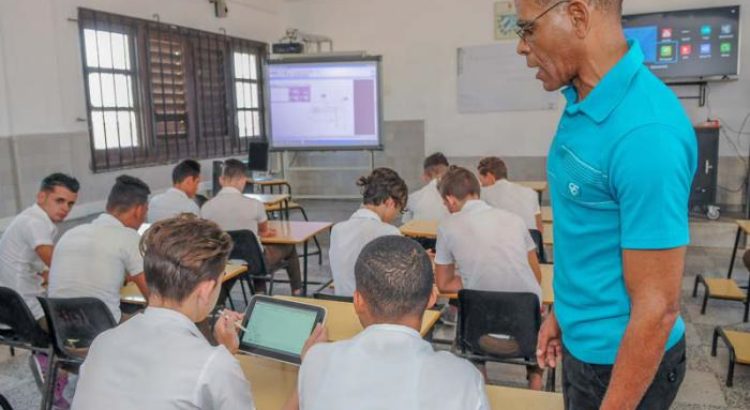
Reconocimiento para la Educación en Cuba

Centro América/ Cuba/ 21.01.2020/ Fuente: www.radioreloj.cu.

Por segundo año consecutivo, este 24 de enero Cuba acogerá con satisfacción y entusiasmo la celebración del Día Internacional de la Educación, al ser reconocida su labor en el sector por la Asamblea General de Naciones Unidas.

Cuba considera el reconocimiento, como un hecho significativo en el mundo que vivimos, donde la educación representa uno de los vehículos cruciales para alcanzar sociedades mucho más equitativas y justas.

La educación contribuye al desarrollo pleno del ser humano, a enfrentar los grandes retos de la Humanidad y el Planeta, a construir la Paz y avanzar con pasos sólidos hacia las metas que nos hemos trazado con los Objetivos de la Agenda para el Desarrollo Sostenible 2030.

Esa ha sido una de las principales líneas de desarrollo en el país, desde el momento mismo del triunfo de la Revolución Cubana en enero de 1959.

Fuente de la noticia: http://www.radioreloj.cu/es/educacion/reconocimiento-para-la-educacion-en-cuba/

Comparte este contenido:
Page 1544 of 6194
1 1.542 1.543 1.544 1.545 1.546 6.194