Page 2348 of 6179
1 2.346 2.347 2.348 2.349 2.350 6.179

Education in Nigeria: Overcoming Mass Displacement

Africa/Nigeria/By Kathryn Quelle/Source: www.borgenmagazine.com.

Boko Haram is a militant group in northern Nigeria that wants to institute Islamic law. The group also operates in Chad, Niger and Cameroon, but it originated in Nigeria in the late 1990s. The ongoing Boko Haram insurgency officially started in 2009, and since then militants have killed at least 20,000 people. The violent attacks have also displaced about two million Nigerians, with little chance of them being able to return home in the near future.

Mass internal displacement has a large impact on a country’s economy as well as its resources and living conditions. Displacement also greatly affects education. An estimated 952,029 Nigerian children have been displaced with little or no access to education because of the Boko Haram violence. At one point, the U.S. Embassy in Nigeria reported that only 28 percent of primary age children attended school in Borno state in northern Nigeria, as opposed to 97 percent in most parts of southern Nigeria.

In the local Hausa dialect, Boko Haram means “Western education is forbidden” and the quality of education in Nigeria will suffer if the group succeeds in their goals. In 2016, Human Rights Watch reported that Boko Haram had deliberately killed more than 600 teachers. Attacks in northern Nigeria have also destroyed more than 900 schools and forced at least 1,500 to close.

In combination with local NGOs, the U.S. Agency for International Development (USAID) launched the three-year Education Crisis Response (ECR) program in 2014 to address the fractured system of education in Nigeria. According to USAID, the program’s goal was to “expand access to quality and protective non-formal education and alternative education opportunities for out-of-school children, ages 6 to 17.”

Results in the Classroom

During ECR’s tenure in Nigeria, USAID partner Creative Associates International established more than 1,400 non-formal learning centers and more than 700 formal schools. Creative reached more than 80,000 children, 23 percent more than its target of 65,000. USAID’s final report found that 47 percent of the children reached by the program had never attended school before.

When ECR was launched, USAID performed a baseline assessment. The agency found that 64 percent of the children scored at zero level for Hausa and 50 percent scored at zero level for English, meaning the children could not even recognize letters from the languages. After three years, USAID’s endline assessment found that 49 percent could read Hausa and 37 percent could read English, showing significant improvement.

Besides substantially raising literacy rates in both Hausa and English, ECR also addressed mathematical knowledge. At the beginning of the program, 40 percent of children could not recognize the numbers 1-9. At the end, the same percentage were able to perform basic mathematic functions.

Beyond the Classroom

Beyond simply improving education in Nigeria, the learning centers set up by the program also provide meals and help students get to and from school. For example, ECR established 12 non-formal education centers specifically for children with physical disabilities, and the program distributed wheelchairs and crutches to the students. These 12 centers enrolled 539 children over three years and, in addition to basic knowledge and skills, the centers taught children vocational skills that they can utilize even after the program has ended.

The ECR program also focused on children’s psychosocial development. Many of the children in the program were displaced due to attacks on their homes and villages, leaving them traumatized. USAID recognized that children have a hard time learning when their fears and traumas are not addressed, and it trained facilitators on how to teach children sensitively.

Facilitators encouraged positive, interactive student-teacher relations and used group exercises to encourage children to make friends and interact with each other. Within local communities, organizations also encouraged spreading messages of peace. ECR director Ayo Oladini said, “We make sure that we don’t create any more trauma, either for these children or within the community where they live.”

Ensuring the Continued Success of Education in Nigeria

Throughout its tenure, ECR was supported by Nigeria’s state and federal governments. Officials helped determine which communities to focus efforts in, developed training manuals and sat in on classes. Every learning center established also had two local government education officials assigned to mentor teachers.

Nigeria’s government further demonstrated their commitment to education and ensuring ECR’s continued success by implementing transition plans worth $287,709 in its 2017 budget. The budget has been used to establish 100 more non-formal learning centers following ECR’s model and train more than 8,000 formal school teachers in conflict-sensitive education. At the end of the three years, five Nigerian state governments separately promised to replicate ECR’s non-formal education model.

In addition to government support, ECR mainstreamed 30,154 children who passed its end-of-program exam into formal schools to ensure the children’s continued success. ECR also provided them with additional free scholastic materials. Even though the ECR program has ended, the program has re-established quality education in Nigeria and helped a lot of kids get back to school.

Source of the notice: http://www.borgenmagazine.com/school-fees-in-africa/

Comparte este contenido:

Greece: IOM with EU helps thousands of migrants get education

Europe/Greece/Source: www.devdiscourse.com.

IOM, the UN Migration Agency, announced today that almost 2,800 children living in Greece in open-accommodation centers for migrants and refugees attended school in 2018, marking the second year when European Union (EU)-funded transportation services enabled these students to return to class.

IOM with EU emergency support, together with the participation of the Greek Ministry of Education, Research and Religious Affairs ensured the safe transportation of students from accommodation centers to nearby schools.

IOM Director General William Lacy Swing praised the outcome of two years of cooperation with the EU and the Government of Greece to give migrant and refugee children a chance to access and continue their education during their time in Greece. DG Swing drew attention to how this programme also has helped to ease children’s integration into Greek society.“I am pleased to see these children get back into the school system, especially after the hardships and deprivations they have endured,” Director General Swing said, adding, “Gaps in education can be devastating, not only to a child’s development but also to society in general.”

“IOM is steadfast in its commitment to supporting the education and the integration of migrant and refugee children in Greece in every way.  Education is priceless in its own right. But less talked about is its power to help the children and their families join in and build links to the local communities,” he concluded.

EU Commissioner for Humanitarian Aid and Crisis Management Christos Stylianides said: “We have a responsibility to act to prevent lost generations and avoid the risk of children growing up without education. The EU is a global leader in bringing children back to school with 8 percent this year and 10 percent next year of our humanitarian aid budget dedicated to education. This project is a great example of the fruitful cooperation between the Greek authorities, IOM and the EU. It brought migrant and refugee children back to school. It contributed greatly to the elimination of mental and physical barriers which hamper a child’s ability to go back to school.”

According to IOM’s latest figures, 88 school buses with 117 bus escorts carried 2,800 children from 26 accommodation centers to 123 nearby schools daily.  These students also were equipped with school kits – including notebooks, pens, pencils and other necessary supplies.

The vast majority (91%) of migrant and refugee students come from one of three countries: Syria (35%), Iraq (31%) and Afghanistan (25%). These are all places where their education often was severely interrupted, or their schools bombed or destroyed.

About 1,200 students surveyed by IOM found the access and experience overwhelmingly positive.

According to the survey, 92 percent of the children indicated their satisfaction with transportation, escorting, and safety precautions.  Eighty-nine percent said they appreciated going to school, learning and interacting with other children, which are good indicators for integration into the formal education system.

“The Greek language course is my favorite, and I don’t find it difficult to learn. I have Greek friends at school. When the bell rings and we go outside for a break, we play with the ball in the schoolyard altogether. I like going to school so much! I dream of becoming a doctor when I grow up,” said 10-year-old Younes, from Iraq. Funded by the European Commission, the project is part of the “Humanitarian and Recovery Support to the Affected Population in Greece” programme.


Source of the notice: https://www.devdiscourse.com/Article/52063-iom-with-eu-helps-thousands-of-migrants-get-education-in-greece

Comparte este contenido:

OECD: upward educational mobility ‘possible in Switzerland’

By Isobel Leybold-Johnson/swissinfo.ch/12-09-2018

People from disadvantaged groups are more likely to participate in Swiss higher education and have better outcomes than in many other countries, says the Organisation for Economic Co-operation and Development (OECD). But there is still room for improvement.

Switzerland does perform better in terms of equity in education (equal opportunities) – the key theme of the 2018 global OECD reportexternal link –  than average in most areas, the OECD confirmed to swissinfo.ch on Tuesday.

Indeed, students in Switzerland have more opportunities for upward educational mobility than on average across other OECD countries, it said in its country report for Switzerlandexternal link.

For example, the country was above average when it came to the likelihood of students advancing to tertiary education (higher education institutions) when they do not have a tertiary-educated parent.

But this group was one that was “still less likely to perform well or attain higher levels of education than those from an advantaged background,” said the OECD’s Marie-Helene Doumet in an email.

There were also other areas needing improvement. Foreign-born adults in Switzerland are more likely to have gone to university or higher education than the OECD average. But comparative to other countries, they have a harder time finding jobs than locally-born degree holders, the OECD said.

Vocational training

Overall, as in other OECD countries, most people have upper secondary levelexternal link (education that prepares for higher education or entry into the workplace) as their highest qualification level in Switzerland (45%).

The country is however above average in terms of bachelor and masters level attainment and has a higher proportion of doctorate holders than any other OECD country at 3% of its adult population.

Vocational training remains a key field in the Swiss educational landscape, with 65% of upper secondary students enrolled in vocational programmes, the report said. This compares to a 44% OECD average. In all, 58% are enrolled in combined school- and work based programmes, “the highest share across all OECD countries,” the report noted.

Tradition, model

Switzerland’s dual vocational and education training (VET) system is often held up as a model for others, with interest from countries such as Singapore and the United States.

*Fuente: https://www.swissinfo.ch/eng/education-indicators_oecd–upward-educational-mobility–possible-in-switzerland-/44389680

Comparte este contenido:

Ghana: Los sindicatos denuncian los planes de dar dinero recaudado de los impuestos a empresas de educación con ánimo de lucro

Africa/Ghana/PrensaIE

“Dada la escasez de recursos, es lamentable que el Education Outcome Fund (EOF) for Africa and Middle East tenga planeado transferir fondos de contribuyentes destinados al bienestar de los/las niños/as a inversores privados que buscan beneficiarse de la educación”.

Es la postura de las organizaciones miembros de la IE, GNAT, NAGRAT y TEWU, que se reunieron para evaluar su plan para la campaña nacional cuyo objetivo es frenar e invertir la comercialización de la educación en Ghana.

La reunión de evaluación y planificación, que forma parte de la respuesta mundial de la IE a la creciente comercialización y privatización de la educación, culminó en la presentación de un comunicado al ministro de Educación en un acto público al que asistieron representantes de los tres sindicatos y organizaciones de la sociedad civil.

En el comunicado se señala una «profunda preocupación ante la noticia del establecimiento de un nuevo fondo mundial para la educación (Education Outcomes Fund for Africa and Middle East)» que se centrará en actores no estatales.

Además, indica que «contribuirá a la comercialización y la mercantilización de la educación, legitimará la obtención de beneficios en la prestación de servicios educativos y minará los esfuerzos destinados a fortalecer y ampliar el suministro de una educación gratuita inclusiva y equitativa de calidad para todos/as en consonancia con el Objetivo de Desarrollo Sostenible 4.

Dada la escasez de recursos, es lamentable que el EOF tenga planeado transferir fondos de contribuyentes destinados al bienestar de los/las niños/as a inversores privados que buscan beneficiarse de la educación.

La promoción por parte del EOF de modelos escolares como escuelas subvencionadas/APP y que cobran tasas, las denominadas escuelas privadas ‘de bajo coste’, ignora el creciente número de datos empíricos que muestran que la privatización no mejora el acceso a la educación ni los resultados académicos, sino que agrava la desigualdad y la segregación negando a todos/as los/las niños/as el derecho a la educación de calidad”.

El comunicado concluye pidiendo al Gobierno de Ghana y a la comunidad internacional que demuestren su compromiso con el ODS4 de cumplir su obligación de garantizar el suministro de una educación pública de calidad y gratuita para todos/as.

Se puede leer la versión completa del comunicado aquí.

La IE agradece a la Friedrich Ebert Stiftung (FES) el apoyo brindado para la organización de este acto.

Fuente: https://www.ei-ie.org/spa/detail/15949/ghana-los-sindicatos-denuncian-los-planes-de-dar-dinero-recaudado-de-los-impuestos-a-empresas-de-educaci%C3%B3n-con-%C3%A1nimo-de-lucro

Comparte este contenido:

Filosofía de la UBA se prepara para la asamblea interestudiantil

América del Sur/Argentina/11.09.18/Fuente: laizquierdadiario.com.

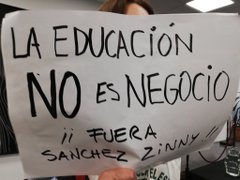
En medio de la semana de toma, la Facultad de Filosofía y Letras de la UBA se prepara para la gran asamblea de este jueves a las 18 hs. en Plaza de Mayo, el centro político del país

En la última asamblea del Centro de Estudiantes de Filosofía y Letras de la UBA (CEFyL), se votó continuar la toma de la Facultad hasta el Viernes donde una nueva asamblea resolverá la continuidad de la medida.

La asamblea del CEFyL votó participar de la asamblea interestudiantil convocada para este Jueves a las 18 hs. en Plaza de Mayo donde confluirán estudiantes universitarios de distintas facultades así como secundarios y terciarios, para votar un plan de lucha frente al ataque del Gobierno y el FMI al conjunto de la educación pública.

Brenda Hamilton, presidenta del CEFyL y militante de En Clave Roja (PTS + Independientes) sostuvo que «queremos ser miles en la asamblea del Jueves para impulsar un plan de lucha conjunto de toda la comunidad educativa fmque enfrentamos los planes de ajuste de Macri, los gobernadores y el FMI. Porque nos dicen que no hay plata para educación pero destinan millones de dólares por día a los intereses de la deuda pública.»

«Por eso, estudiantes de todo el país decimos que queremos plata para educación y no para la deuda que es la verdadera sangría del déficit fiscal del que tanto le gusta hablar a este Gobierno de empresarios especuladores», agregó Hamilton.

«Desde En Clave Roja propondremos a la asamblea participar de un corte en el Obelisco el Miércoles a las 8 hs. para confluir con los trabajadores como los del Astillero Río Santiago que también vienen enfrentando el ajuste del macrismo. Queremos poner en pie la fuerza de la unión entre estudiantes y trabajadores que en la historia de nuestro país ha llegado a protagonizar hechos como el Cordobazo, tirando abajo ministros de Economía y dictaduras militares», apuntó la presidenta del CEFyL.

La facultad ubicada en Puan 480 ya se pronunció, asamblea mediante, a impulsar el corte del próximo Miércoles en conjunto a sectores de trabajadores en lucha. El plan de ajuste recae no solo en educación, sino que es un saqueo abierto al pueblo trabajador encabezado por el FMI y Macri, en conjunto con peronistas y radicales en el Congreso, las burocracias atornilladas en los sindicatos, y los rectores universitarios y agrupaciones estudiantiles en nuestras facultades.

A pesar de ello, los estudiantes vienen expresando su fuerza y predisposición a luchar para vencer a lo largo y ancho del país, organizándose en asambleas, comisiones de base y tomas de facultades.

Fuente de la noticia: http://laizquierdadiario.com/Filosofia-de-la-UBA-se-prepara-para-la-asamblea-interestudiantil

Comparte este contenido:

Ethiopia Begins the Harmony of Peace through Collaboration of Politics, Education, Religion and Civil Society

Africa/Ethiopia/11.09.18/Source: www.borkena.com.

Political and social representatives in Africa and Middle East were gathered to discuss international cooperation for peacebuilding through a series of events held in Addis Ababa, Ethiopia including the “Ethiopia Peace Conference” on August 15 with education experts and civil society, the “Addis Ababa Summit” with political leaders from Africa and the Middle East and the “Open Dialogue with Religious Leaders” on August 16.

On August 15, government, educator and youth sought a way to reconciliation for peace at the ‘Ethiopia Peace Conference’ held in the United Nations Economic Commission for Africa (UN ECA) located in Addis Ababa, Ethiopia. At this event, attended by former President of Ethiopia Negasso Gidada, representatives of 10 universities, state minister of education and 700 university students, the DPCW Advocacy Signing Ceremony was held to invent cooperative peacebuilding with the participation of people from every field of society.

Mrs. Dagmawit Moges, Deputy Mayor of Addis Ababa’s municipal government who addressed a speech saying ” Addis Ababa city administration has a deep conviction that the launching of peace education in the Universities could help promote harmony among students regardless of their nationalities, cultural background and religions.” at the event, emphasize about the necessity of peace education and also says that the City Administration pledges to extend every support necessary to institutions engaged in the implementation of this peace education project. In addition, the eleven university presidents and representatives who attended the event laid the foundation for peace education in Ethiopia by signing an MOU to agree on peace education at their universities.

The Chairman of the Heavenly Culture, World Peace, Restoration of Light(HWPL) who visited Ethiopia following a peace tour to the United Nations in May, says “We should also write a letter to the president to support the Implementation of international laws for the cessation of war. It says that the people have all the power of the state. That’s why the president has no reason to refuse what the people want.”. And the Chairman presented a role of civil society for peace and urged them to join peace activities.

In the ‘Open Dialogue with Religious Leaders’, “No religion teaches fighting or killing each other. In order to resolve the religious conflicts, we all must know the Scriptures, and I hope that we can show first from the Ethiopian Protestant Church by Open Dialogue with Religious Leaders.”

In addition, about 50 pastors who participated in a pre-seminar and signed the Pledge for the Regular Operation of Open Dialogue in Ethiopia had time to deliver it to Mr. Lee, Chairman of HWPL. They signed that religious leaders should lead in creating a peaceful environment through holding a regular event for different religious groups starting December this year.

At the “Addis Ababa Summit” held in Medium CR, African Union Commission and co-hosted by international organizations including, Inter-African Committee on Traditional Practices(IAC), International Law Association(ILA) Egyptian Branch and HWPL, politicians from Africa and the Middle East discussed the need for the international law for peace to bring out stability in the regions and promote peace-related projects at each continental level.

RT. Hon. Rebecca A. Kadaga, Speaker of the Parliament of Uganda stressed the role of political leaders for realization of peace. “DPCW draws upon the principles of peace expressed through the ages through which the people of the world expressed their desire for global peace and called upon world leaders to put aside their vested interests that stand in the way of world peace and harmony. ”

With this, prominent leaders had the time to sign on the Signature in Support of the Declaration of Peace and Cessation of War(DPCW).

Before these events in Ethiopia, official declaration of support for the DPCW by heads of African countries such as Eswatini and Republic of Seychelles was followed.

The DPCW deals with the international cooperation to institutionalize and culturally develop peace and cessation of war through the cooperation of world legal experts by HWPL. In this Declaration of Peace and Cessation of War covers the develop friendly relations between nations, prohibit the use of the forces, respect of the international law, foster religious freedom, and spread a culture of peace.

Over 15th to 16th days, HWPL had the time to sign for the support of DPCW with participants from all walks of life. DPCW was created by international law experts for building the peace world without the war. During the two-day peace tour, participants at each event pledged to support and urge the DPCW for sustainable peace.

The Chairman Lee of HWPL, who held the summit with Ethiopian leaders during the 29th Peace Tour, emphasized the importance of peace movement to work as one in which each stratum came together, saying “If there is an answer to peace, then any family of the global village born in this era should become a messenger of peace, ending war and making sustainable peace a legacy for future generations..”

Source of the notice: https://www.borkena.com/2018/08/20/ethiopia-begins-the-harmony-of-peace-through-collaboration-of-politics-education-religion-and-civil-society-press-release/

Comparte este contenido:

República Dominicana: Casi la cuarta parte de los alumnos dominicanos sufre insultos en la escuela, según la Unicef

Centro América/República Dominicana/11.09.18/Fuente: www.eldiario.es.

Casi una cuarta parte de los estudiantes dominicanos de entre 13 y 15 años (un 24,1 %) sufre gritos e insultos en las escuelas y sus alrededores, según el informe publicado hoy por el Fondo de las Naciones Unidas para la Infancia (Unicef).

El documento recopila los datos de la Estrategia Nacional de Cultura de Paz del Ministerio de Educación obtenidos de diferentes estudios y revela, además, que en República Dominicana un 13,6 % de los alumnos en ese rango de edad recibe golpes.

El 7,1 % sufre amenazas e intimidaciones, y el lanzamiento de objetos o pertenencias de un estudiante se produce en un 6,6 % de los casos, apunta el informe titulado «Violencia en las escuelas: una lección diaria.»

Las formas en que se presenta la violencia de profesor a estudiante entre 13 y 15 años son gritos e insultos en el 23,9 % de los casos, la intimidación la sufre el 5,3 % de los adolescentes, mientras que lanzar objetos o pertenencias de un estudiante ocurre en el 4,3 %, y recibe golpes el 3,5 % de esos alumnos.

Además, el 39,6 % de los estudiantes dominicanos se sienten excluidos en su escuela, el 34,9 % incómodos y fuera de lugar, y el 30,9 % afirma sentirse solo; dichos valores superan los porcentajes del resto de países de América Latina y el Caribe, según datos del informe del Programa Internacional para la Evaluación de Estudiantes 2015 (Pisa, por sus siglas en inglés).

La mitad de los estudiantes de entre 13 y 15 años de todo el mundo (alrededor de 150 millones) declaran haber experimentado violencia entre pares en las escuelas y en sus alrededores; algo más de uno de cada tres estudiantes experimentan acoso, y una proporción similar participa en peleas físicas.

 Para poner fin a la violencia en las escuelas, Unicef República Dominicana y sus aliados hacen un llamamiento mundial para que se adopten medidas urgentes, como implementar políticas y leyes que protejan a los estudiantes de la violencia en las escuelas.

Asimismo, se sugiere reforzar las medidas de prevención y respuesta en las escuelas, instar a las comunidades y a las personas a que se sumen a los estudiantes para denunciar la violencia y trabajen para cambiar las costumbres en las aulas y en las comunidades.

Se aconseja realizar inversiones más efectivas y específicas en soluciones que hayan demostrado ayudar a los estudiantes y a las escuelas a permanecer seguros, y recopilar datos desglosados de mayor calidad acerca de la violencia contra los niños dentro y fuera de las escuelas y compartir aquello que funcione.

Unicef publicará una encuesta en sus redes sociales dirigida a jóvenes de todo el mundo para recolectar datos sobre sus experiencias con la violencia, que expresen qué necesitan para sentirse a salvo en la escuela y sus entornos, y qué soluciones están poniendo en práctica para acabar con este problema.

«Violencia en las escuelas: una lección diaria» se publica como parte de la campaña mundial de Unicef #ENDViolence, que cuenta en República Dominicana con el apoyo del Ministerio de Educación.

Fuente de la noticia: https://www.eldiario.es/sociedad/alumnos-dominicanos-insultos-escuela-Unicef_0_811569704.html

Comparte este contenido:
Page 2348 of 6179
1 2.346 2.347 2.348 2.349 2.350 6.179