Page 2452 of 6193
1 2.450 2.451 2.452 2.453 2.454 6.193

Venezuela: Funvisis reforzará educación sísmica


América del Sur/Venezuela/24.07.18/Fuente: www.ultimasnoticias.com.ve.


La Fundación Venezolana de Investigaciones Sismológicas (Funvisis) iniciará a partir de noviembre de este año un evento de alfabetización sismológica especial denominado “En cascada”, que consistirá en la preparación de 168.400 facilitadores en la materia en todo el país.

La meta es que “en un lapso de un año y durante 40 semanas consecutivas podamos llegar con los contenidos a adultos y niños. La idea es que todos por lo menos una vez al año recibamos esos contenidos para que estemos preparados en caso de un sismo”, explicó el presidente de Funvisis, Roberto Betancourt.

Para apuntalar también la preparación en cultura sismológica, Funvisis, comenzará el 17 de agosto una campaña piloto en el Metro de Caracas, a partir de una actividad pautada en la estación Propatria de la línea 1 del sistema, a fin de preparar a la población acerca de qué hacer antes, durante y después de un terremoto.

“La meta que nos estamos imponiendo a partir de octubre de este año, y cada año, es llegar a 35 millones de venezolanos, 8 millones de hogares, para que todos seamos capaces de dar la respuesta apropiada ante un evento de este tipo, señaló Betancourt.
Invitó al sistema nacional de medios públicos y privados a sumarse a estas campañas de formación en torno a eventos y estudios sísmicos, dado que Venezuela es un país sísmico.

Destacó el éxito del programa Aula Sísmica “Madeleilis Guzmán” para ampliar los contenidos no solo a estudiantes de Educación Básica, sino a adolescentes y adultos.

Dijo que el 2 de agosto lanzará la página web www.funvisis.gob.ve, renovada con toda la información “ y tienen disponible el teléfono 0800TEMBLOR (0800-8362567) para atender inquietudes de la población”, indicó Betancourt.

Fuente de la noticia: http://www.ultimasnoticias.com.ve/noticias/comunidad/funvisis-reforzara-educacion-sismica/

Comparte este contenido:

PROMOTING GIRLS EDUCATION: NEED TO DROP TAX ON SANITARY PADS IN NIGERIA

Africa/Nigeria/24.07.18/Source: nigerianobservernews.com.

Among the list of goods that are prohibited from being exported to the country or are otherwise restricted in 2017 are Sanitary Wares of Plastics and Domestic Articles and Wares of Plastics (but excluding Baby Feeding bottles) and flushing cistern and waterless toilets. A way the government can help improve menstrual hygiene is by removing sales tax on feminine hygiene products and regularly distributing free menstrual pads in schools

There is need for Nigerian government to scrap the tax on the sanitary napkins. The move will help more girls to go to school during their periods and also boost their job prospects. It will help schools and government to regularly include menstrual hygiene education in any health programme organised in communities or the larger society as a whole, It will promote girl- child education in Nigeria. It will boost girl- child education in the rural areas in the current economic development process of Nigeria. It will help Nigeria to realise its greatness globally, she must make strong impact by boosting girl- child education in our rural areas. He further said when we harness the potentials of our girl – child education in Nigeria; we will reduce poverty, provide jobs and create wealth as well as create opportunities for future entrepreneurs.

Scrapping of sanity pads tax will help girl-child in proper menstrual education and hygiene that is essential to boost the confidence of female child in contributing positively to the society. The scrapping of sanitary pads will help in tackling biggest barriers of education for girls. We all know that girls in many schools are forced to stay back home during their periods as there are lack of toilets and sanitization facility which creates a big problem to them during these painful days. Periods are one of the leading factors of our country where every girl has to go through pain for five days of every month. However, due to lack of money and high prices of sanitary pads, four out of five women avoid using sanitary napkins. Sanitary pads were taxed at 12 percent under Goods and Services Tax (GST) that was launched in 2017
The scrap of tax on sanitary pads will help more girls to go to school during their periods and boost their job prospects.

Removing the tax on pads will tackle one of the biggest barriers to education for girls, who are often forced to stay at home due to a lack of access to clean hygiene products, while also facing stigma and a lack of toilets in schools.
Periods are among the leading factors for girls to drop out of school in a country where four out of five women and girls are estimated by campaigners to have no access to sanitary pads. I am sure all mothers and sisters will be very happy to hear that sanitary pads are now 100 percent exempt from tax,
Sanitary pads were taxed at more yhan 5 percent under Nigeria’s Goods and Services Tax (GST) that was launched in 2017.
Nigerian girls and women face many challenges when they have their periods, especially in rural areas where a lack of awareness and the cost of pads mean many instead use unsanitary cloth or rags, increasing the risk of infections and disease.
The tax exemption will be a massive boost for girls education in Nigeria.
More than a third of girls in Africa miss school during their periods, as they lack access to toilets or pads, and many receive no education about menstruation before reaching puberty, according to a recent report by charity WaterAid and UNICEF.

Simply having access to sustainable sanitary pads, the school attendance of many adolescent girls in some rural primary schools of Nigeria is improving.
It is now reasonable for me to say that the distribution of sustainable sanitary pads will make a substantial contribution to the support for girl to stay in school. At first, many girls abscond classes when menstruating, fearing the unknown.
In this article I want to promote and advocate for socioeconomic and emotional wellbeing of adolescent girls and young women by influencing positive social change and build girls leadership to improve their quality of lives. Nigerian government must produce the sustainable sanitary pads which are freely distributed to vulnerable girls. The pads are coupled with menstrual hygiene management which are both helping to keep adolescent girls in school.
The sustainable sanitary pads are made of cotton layers with a water proof layer at the bottom in order to guarantee reasonable absorbing capacity. A package contains 4 pads and a panty with small hooks to keep the pads in place. These are packaged in an attractive small bag. And the washing is straight forward: rinse in cold water, wash with soap in lukewarm water, rinse again and hang to dry. There is one other reason for the introduction of sustainable sanitary pads which is an environmentally one: Non-sustainable sanitary pads represent a waste problem, they cannot be recycled and they are poisonous towards the environment because of the plastic component.

In northern Nigeria majority of Adolescent girls do not go to school when menstruating due to reasons ranging from culture to lack of sanitary facilities and menstrual hygiene management. This eventually leads to a sharp increase in dropout rates among girls after 4, 5 and 6 years of primary education.
There are many reasons for the increased cases of Adolescent girls’ absenteeism and dropping out of school but one is that girls tend to stay at home when menstruating, missing 4 or five days out of every school month.
According, to a 2012 Water Aid report entitled “School menstrual hygiene management in Africa: More than toilets”, lack of separate and adequate sanitation and washing facilities in schools also discourages girls from attending school, particularly during menstruation, affecting their school performance and increasing their risk of dropping out.

Menstrual hygiene issues were accountable for 12 to 36 days of absence annually per girl. When their cloths leaked at school, most girls left class to change, and then returned to lessons. However, 11% went home and stayed home and 7% said they didn’t come to school at all on heavy days, according to Save the Children.
To promote girls’ education, after puberty, however, it takes more than exercise books and toilets. They also need materials like sustainable sanitary pads and critical information on how to cope with menstruation.
In Nigeria, the introduction of free primary education in 2004 with the introduction of universal basic education has seen a large increase in the number of pupils going to school but this increase in access has also brought about major infrastructure problems and a big decline in quality. This mostly impinges on poor adolescent girls.
For most girls in rural areas, menstruation is connected with a number of mistaken beliefs, which brings about negative results on their lives and education. The reason why a girl-child stops going to school during menstruation is the pre-conceived myths and misconception about this natural event.
_

Source of the notice: https://nigerianobservernews.com/2018/07/promoting-girls-education-need-to-drop-tax-on-sanitary-pads-in-nigeria/

Comparte este contenido:

Bolivia: Inauguran Internacional de Educación con alcance para 30 mil personas

América del Sur/Bolivia/24.07.18/Fuente: www.lostiempos.com.

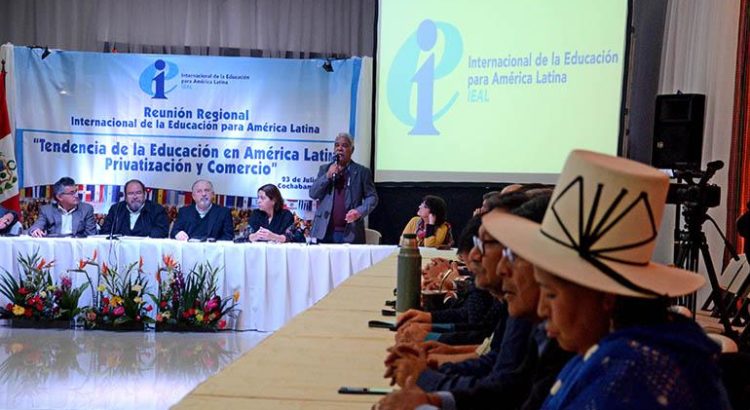
La Reunión Regional de la Internacional de la Educación se inauguró anoche en el hotel Camino Plaza de Cochabamba con la participación de más de 30 mil inscritos a este evento.

El Comité Regional Internacional de la Educación de América Latina, que lleva adelante el evento explicó que, de forma online, 118 sedes habilitadas seguirán la reunión.

Además, en el evento se abordarán temáticas educativas en beneficio de la región con invitados especiales.

Cochabamba será el espacio destinado a generar un ámbito de diálogo de temáticas vinculadas al panorama político educativo latinoamericano y mundial.

Se proyecta generar espacios donde se puedan abordar temas educativos que hagan referencia a la privatización, mercantilización y financiamiento educativo; calidad educativa y procesos de evaluación que estará a cargo de la coordinadora Fátima Silva, en su cargo de vicepresidenta del Comité Regional IEAL.

De este diálogo se proyecta identificar cuál debe ser el perfil de un modelo educativo democrático e inclusivo en el marco del Movimiento Pedagógico Latinoamericano.

Para seguir el evento de talla internacional, el Ministerio de Educación habilitó 118 sedes que realizarán la transmisión online hoy a todo el país para los más de 30 mil participantes que seguirán el curso en línea, a través de las direcciones departamentales de Educación, direcciones distritales, normales de maestros, institutos técnicos tecnológicos y otros.

EXPOSITORES: EXPERTOS INTERNACIONALES

Entre los expositores del Congreso Internacional de Educación, inaugurado ayer, se encuentran Hugo Yaski (Argentina), David Edwarsd (Bélgica), Ángelo Gabrielatos (Bélgica), Combertty Rodríguez (Costa Rica), Luis Fernández Dourado (Brasil), Elno Gómez de Araujo (Brasil) y Sonia Alesso (Argentina).

Los expertos, según los organizadores, darán el contexto de diálogo educativo construyendo y fortaleciendo las bases de la transformación educativa continental.

El evento busca un perfil de modelo educativo democrático e inclusivo en el marco del Movimiento Pedagógico Latinoamericano.


Fuente de la noticia: http://www.lostiempos.com/actualidad/pais/20180723/inauguran-internacional-educacion-alcance-30-mil-personas

Comparte este contenido:

Chile: Cruda realidad: Estudio desnuda que 5 millones de adultos no han terminado 4º medio en Chile

América del Sur/24.07.18/Por Jonathan Flores/Fuente: www.biobiochile.cl.

Cinco millones de adultos no finalizaron sus estudios de Enseñanza Media en Chile, mientras que cerca de 700 niños viven en la calle, lo cual les impide tener una actividad escolar, según estudios de la Fundación Don Bosco.

Las cifras fueron entregadas este sábado en las dependencias de ese organismo, donde estuvieron presentes los ministros de Educación, Geraldo Varela; y de Desarrollo Social, Alfredo Moreno, quienes en su paso por la institución también realizaron una visita a niños en situación de calle que cursan sus estudios en esa institución.

En ese contexto, Moreno valoró el trabajo realizado por Fundación Don Bosco y aseguró que es necesario reincorporar a estos niños al proceso escolar normal.

La autoridad de Gobierno se refirió también a la protección de las personas en situación de calle bajo el Código Azul y recalcó que las personas están tomando conciencia de este suceso.

En tanto, el titular de educación explicó que lo más importante es trabajar en conjunto desde el punto de vista pedagógico, social y psicológico.

Por su parte, el especialista en evaluación y medición educacional de la Universidad de Santiago, Daniel Ríos, aseguró que las cifras dadas a conocer por las autoridades de Gobierno son preocupantes.

Expertos en educación aseguran que es necesario implementar políticas públicas de integración, tanto en los 700 niños que viven en situación de calle como también disminuir la cifra de los 5 millones de adultos chilenos que no finalizaron su Enseñanza Media con el fin de no perjudicar el desarrollo laboral en nuestro país.

Fuente de la noticia: https://www.biobiochile.cl/noticias/nacional/chile/2018/07/21/cruda-realidad-estudio-desnuda-que-5-millones-de-adultos-no-han-terminado-4-medio-en-chile.shtml

Comparte este contenido:

Africa’s first online database on education research

Africa/23.07.18/By Eldon Opiyo/Source: www.scidev.net.

A database on education research conducted by Africa-based researchers has been launched to raise the visibility and impact of such research.

The database, which has about 2,000 education research including theses and working papers on 49 African countries, resulted from the collaboration between the Research for Equitable Access and Learning (REAL) Centre at the UK-based University of Cambridge and the Education Sub-Saharan Africa , a charity with a mission to transform educational outcomes on the continent.

The database is searchable by country, research methods and keywords such as access to education, early childhood education, higher education, school feeding and literacy.

“There are some existing inventories and databases for specific contexts but no central location to access [education] publications by African-based researchers, which has contributed to a lack of visibility and use of this research,” says Rafael Mitchell, a researcher at the REAL Centre. “We hope that the database will facilitate greater use of research written by those in African universities and research institutions to ensure it is drawn upon and cited, and to be used to influence policy and practice.

“We hope that the database will facilitate greater use of research written by those in African universities and research institutions.”

Rafael Mitchell, Research for Equitable Access and Learning (REAL) Centre

“This should also help to ensure that research by African-based researchers is taken into account in global debates. There is a lot of important work done by researchers in the region that is currently overlooked and undervalued.”

Wisdom Harrison K. Hordzi, the Ghana coordinator of the Educational Research Network for West and Central Africa, agrees and tells SciDev.Net, “The database will help researchers and others to know what education research has already been conducted on Sub-Saharan Africa and identify gaps for more research.”

Hordzi adds that the database could make people appreciate the contribution of African education researchers.

“People think that education researchers in Africa are not doing anything. The database will help others know that at least we are doing something,” explains Hordzi, a senior lecturer at the Ghana-based University of Education, Winneba.

According to Mitchell, it will help researchers and others to identify where future research is likely to be most urgent.

“Our preliminary analysis indicates that a large amount of research is on higher education, around 30 per cent of the publications. Yet, in Sub-Saharan Africa, less than one per cent of the poorest reach higher education,” she says.

Only around three per cent is on early childhood education, which suggests that limited evidence is available that can inform policymakers on how to address disadvantage in education from the early years, Mitchell explains.

Types of research methods and their proportions used by African education researchers as of July 2018
Types of research methods
Source: African Education Research Database 

The database was launched last month (15 June) at an event hosted by the French Development Agency in France.

The creation of the database started in May 2017. The first phase was completed by May 2018, with the launch of the database the following month but the process is ongoing as more research can and will be integrated, according to Mitchell.

It is being funded by ESSA – Education Sub Saharan Africa. To finance the two research positions at the REAL Centre, University of Cambridge, ESSA has raised funds from individual donors. The Jacobs Foundation, Zurich also joined this endeavour as a partner, providing funding for the second year of mapping project.

Mitchell tells SciDev.Net that the database — the first of its kind in Africa — could provide greater opportunities for research funding in areas of priority to Africa researchers and research funders.

Beatrice Muganda, director, higher education programme at the Kenya-based Partnership for African Social and Governance Research, says there is a dearth of literature on Africa written by Africans on issues affecting them.

“Scholars, researchers and students are persistently searching for relevant case studies and empirical evidence that speaks adequately to the local context,” Muganda tells SciDev.Net. “Any effort made to address this gap is laudable.”

Muganda says that although the database could help researchers, repositories are hardly the right platforms for helping policymakers to access research.

She calls on researchers to make education research findings accessible to policymakers through active outreach initiatives.

Source of the notice: https://www.scidev.net/sub-saharan-africa/education/news/africa-online-database-education-research.html

Comparte este contenido:

Japan: Brazil makes media studies compulsory in schools

Asia/Japan/23.07.18/Source: the-japan-news.com.

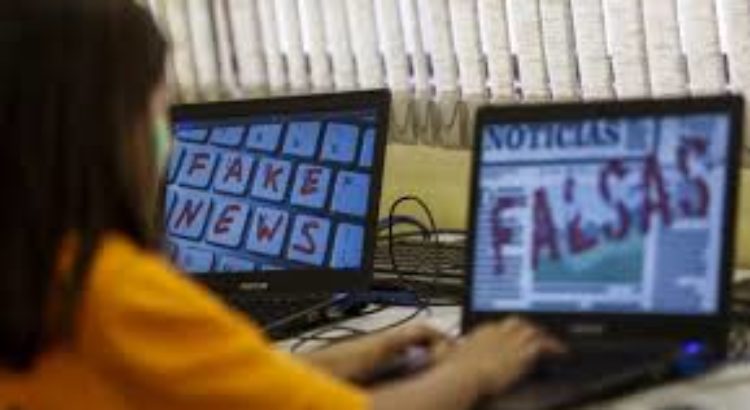
Brazil has taken a stand against the explosion of “fake news” stories swamping the internet by making media analysis studies compulsory for schoolchildren.

“The aim is to teach students to identify fake news, and now it’s part of the national curriculum because the country has decided it’s necessary,” said Leandro Beguoci, editorial director at Brazilian education specialists Nova Escola.

“The proliferation of social media networks have created an urgent situation in this respect,” Beguoci said.

Media analysis studies became compulsory in December 2017, but have been offered alongside traditional subjects like mathematics and history for years in some Brazilian schools.

Kayo Rodrigues, 14, said the Brazilian press is not perfect, but plays a vital role in combating fake news “because not everyone has the internet or the tools to check facts.”

She enrolled in the “Young Press” program launched six years ago in the Casa Blanca public school in Sao Paulo.

At Casa Blanca, teachers Lucilene Varandas and Hildenor Gomes do Santos ensure their students, aged eight to 14, know not to take everything they watch or read at face value.

“When I receive a piece of information, I look for it on the internet and ask myself if it’s true,” said Helena Vital, 11, whose parents are teachers. She said the program has taught her to view the media from a different perspective.

The children do not have the tools to systematically check everything, but “they look at the articles, who wrote them, who could be interested in them and where they’re published, which are all ways of questioning the information,” said Varandas, who is looking to create partnerships with fact-checking agencies to expand the children’s education.

The measures seem to be working despite the children’s young age.

“All it takes is one click to share false news; this project teaches me to think about my clicks,” said Rodrigues, daughter of a shopkeeper and a manicurist.

The students enrolled in “Young Press” have also been analyzing local media stories about the project, and even found inaccuracies.

Social media presence huge

With a population of almost 208 million people, Brazil has a massive social media presence: 120 million WhatsApp users, more than 100 million people on Facebook and another 50 million signed up to Instagram.

“In the past, kids were taught by their parents, but now that happens through a variety of means, something which alters the role of the school,” said Beguoci, a trained journalist.

“What’s so interesting in Brazil is that media and technological literacy are considered as important as classical literacy.”

Beguoci denies that information analysis is an additional burden on the education system, saying it rather offers “a context that can improve education.”

“We’re talking about things that are part of the student’s world,” he said.

For Veronica Martins Cannata, who coordinates technology and communication studies at the private Dante Alighieri school, children have their own responsibility when it comes to fake news.

“Technology has facilitated communication, but the time has come to question its content,” she said.

“As natives of the digital age, children and teenagers must take the responsibility to analyze that content before reproducing it.”

Dante Alighieri has been analyzing media content for 11 years and has also brought the fight against fake news into the classroom.

Children are born “with ingenuity,” but at school they acquire “a critical eye and no longer consume information in the same way,” said Martins Cannata.


Source of the article: http://the-japan-news.com/news/article/0004582311

Comparte este contenido:

England: IAEA nurtures nuclear education in Asia Pacific

Europe/England/23.07.18/Source: www.world-nuclear-news.org.

The International Atomic Energy Agency (IAEA) held the first in a series of six regional training courses for secondary school science teachers last month in Indonesia. The courses aim to equip teachers in Asia Pacific to inspire a new generation of nuclear scientists and engineers by engaging students and enhancing their understanding of nuclear science and technology.

The first two-week course was attended by 26 teachers from 17 countries. The course comprised presentations, laboratory work and technical visits to Indonesia’s National Atomic Energy Agency (Batan). It also served a good opportunity for teachers from different countries to network and exchange experiences in teaching. The IAEA said the course marks the first time that it had formally engaged with the secondary education teaching community.

The participants were introduced to diverse methods of teaching nuclear science and technology to children aged 12-18 in an effective and engaging manner. The IAEA said it hoped the attendees will become mentors to other teachers in their countries. «This way, the project aims to reach one million students by 2021,» it said.

Sunil Sabharwal, a radiation processing specialist at the IAEA, said: «The idea is to introduce teachers to the link between the key role being played by nuclear science in enhancing the quality of our everyday life and the simple nuclear concepts being taught in schools as well as to provide them with innovative methods to deliver this knowledge to students through academic as well as extra-curricular approaches.»

Following the course, Jordanian teacher Amal Al-Khassawneh said, «The training course provided me with the necessary confidence, courage and knowledge to talk about the real facts of nuclear science with students.»

The course followed a Regional Workshop on Curriculum Development and Launching of Nuclear Science and Technology for Secondary Schools that took place in the Philippines in February. During an earlier workshop, in Japan, a regional nuclear science and technology competency framework was established that serves as reference for national educational curriculums. The IAEA said the competency framework was crucial in the preparation of the training course in Indonesia.

The next regional training course for secondary school teachers will take place at the Argonne National Laboratory in the USA in August. The following four will take place in Japan, the Philippines, Malaysia and Australia this year and next.

Between 2012 and 2016, the IAEA and experts from Australia, India, Israel, Japan, South Korea and the USA developed a compendium that collects unique teaching strategies and materials to introduce science and technology in education systems across Asian countries. This compendium was piloted in Indonesia, Malaysia, the Philippines and the UAE and reached 24,000 students. The IAEA said the pilot demonstrated that students «were more receptive to learning about nuclear science and technology when teachers used a diverse set of methods, which also increased their problem-solving skills».

The IAEA said an updated version of the compendium will be prepared over the coming years.

Source of the notice: http://www.world-nuclear-news.org/NN-IAEA-nurtures-nuclear-education-in-Asia-Pacific-2007185.html

Comparte este contenido:
Page 2452 of 6193
1 2.450 2.451 2.452 2.453 2.454 6.193