| Deliberadamente o no, la Academia está encubriendo una posición ideológica clara acerca del uso del lenguaje y se está haciendo desde una posición de poder privilegiada |
Hagamos un breve ejercicio de imaginación. Piensa por un momento en un grupo de genios. Imagínatelos a todos en una habitación, uno haciendo garabatos en un papel, otro haciendo aspavientos frente a una pizarra, etc. Recréate unos segundos con la imagen. Ahora imagínate a un grupo de futbolistas. Imagínatelos a todos entrenando para un partido y siguiendo las instrucciones de sus preparadores. Por último, piensa en un grupo de científicos tratando de resolver un complicado problema teórico.
Si el uso del masculino genérico es realmente inclusivo y si términos como “genios”, “todos”, “futbolistas”, “preparadores” y “científicos” son completamente neutrales con respecto al género siempre que se usan, entonces en el ejercicio anterior te habrás imaginado a grupos donde no solo había hombres. Quizás este sea el caso. Quizás seas una persona ajena a los prejuicios y las asociaciones que se explotan mediante el uso del lenguaje y, mientras leías esto, te hayas imaginado a grupos que incluían a mujeres futbolistas, preparadoras, científicas, etc. El problema es que el resto, criados en sociedades donde existe la discriminación por motivos de género, no estamos exentos de estos sesgos.
Por otro lado, y aún más importante, aquello que hacemos cuando usamos el lenguaje no depende solo de nuestras intenciones o de nuestras representaciones privadas. El significado de las palabras es público y está estrechamente ligado a nuestro modo de vida social; al hablar explotamos diferentes mecanismos, de manera deliberada o no, que no dependen exclusivamente de lo que hay en nuestras cabezas. Nuestras propias intenciones y representaciones no son suficientes para asegurar que no excluimos, discriminamos, ofendemos o somos sexistas cuando usamos el lenguaje.
Hay multitud de estudios que apoyan empíricamente la idea de que usando el lenguaje podemos excluir, discriminar u oprimir a un grupo desfavorecido e influir en sus decisiones futuras. En un estudio publicado en la revista Science en 2017, la filósofa Sarah-Jane Leslie descubrió, junto a sus colegas Andrei Cimpian y Lin Bian, que los estereotipos nos influyen desde bien temprano. En concreto, descubrieron que ya a la edad de seis años las niñas comienzan a identificarse con menos frecuencia que los niños con expresiones como “genio” o “alguien muy, muy listo”. Se perciben y son percibidas progresivamente como si fueran menos brillantes que los niños de su misma edad, que sí se identifican y son identificados con este tipo de expresiones. En otro estudio posterior, llevado a cabo por las mismas personas y publicado en la revista Journal of Experimental Social Psychology, se descubrió que las mujeres suelen estar menos interesadas en carreras y en ámbitos científicos asociados con la posesión de un talento innato. Esto contribuye a la generación de una brecha de género importante en la mayoría de las carreras científicas, brecha que se mantiene incluso en los países con mayores índices de igualdad. En sintonía con este trabajo, un estudio anterior publicado en 2007 en la revista Journal of Educational Psychology, llevado a cabo por Pascal Huguet e Isabelle Régner, mostró que las mujeres de diferentes grupos de bachillerato solían hacer peor el mismo ejercicio cuando pensaban que se trataba de un ejercicio de geometría que cuando creían que se trataba de un ejercicio de dibujo.
Estudios de este tipo muestran, por un lado, que hay una fuerte asociación entre términos como “genio” y el género masculino y, por otro lado, que esta asociación influye en que de hecho sea el caso que al utilizar estos términos en determinadas situaciones estemos discriminando a algún grupo desfavorecido e infrarrepresentado. El mecanismo asociativo que opera cuando usamos estos términos no es nuevo. El lenguaje con frecuencia se ha utilizado y se utiliza como arma propagandística y con fines de exclusión y opresión, como ocurre por ejemplo con el fenómeno de los silbatos para perro (dogwhistles), recientemente tratado en la prensa por J. R. Torices. Las asociaciones que explotan determinados mecanismos de exclusión lingüística pueden explotarse de manera deliberada o no. Alguien puede no tener la intención de excluir a un grupo no privilegiado con sus palabras, alguien puede por ejemplo referirse con éxito no solo a hombres cuando utiliza la palabra “científicos”, pero el significado de las palabras, su efecto y lo que hacemos con ellas, no está completamente determinado ni por la referencia ni por las intenciones de las hablantes. Otros elementos contextuales, tales como la posición socioeconómica de la persona que habla, el medio empleado o el propósito de la conversación o discurso, juegan un papel crucial a la hora de determinar lo que de hecho se comunica. Cambiar lo que hacemos cuando usamos el lenguaje no es solo una cuestión de cambiar nuestras intenciones.
Como lo que hacemos cuando usamos las palabras en determinados contextos escapa a nuestro control, podemos discriminar, excluir u ofender sin pretenderlo; podemos perpetuar inadvertidamente patrones de dominación con el uso que hacemos del lenguaje. Esta es una de las razones por las que, en ocasiones, no pertenecer a un grupo desfavorecido particular elimina el derecho a priori a utilizar ciertas palabras sin resultar ofensivo, incluso aunque no se tenga la intención de serlo, como ocurre por ejemplo con el uso de algunos términos racistas. La otra cara de la moneda es que, al igual que podemos resultar discriminatorias, excluyentes u ofensivos sin pretenderlo, también podemos ser discriminatorios, excluyentes u ofensivas sin parecerlo. Del mismo modo que al utilizar algunas palabras en determinados contextos podemos estar excluyendo a un grupo sin quererlo, también podemos excluir a un grupo deliberadamente y tratar de encubrirlo. En otras palabras: se pueden hacer pasar evaluaciones y juicios ideológicos por descripciones, por información objetiva acerca de algo. Esto último suele ocurrir en casos como los mencionados de silbatos para perro, pero también en situaciones en las que alguien usa el lenguaje de manera discriminatoria, excluyente u ofensiva y trata de negarlo apelando a alguna acepción particular recogida en el diccionario, a la economía del lenguaje, a su libertad de expresión o a cualquier otra razón que, quizás sin pretenderlo, encubra la cuestión. Por ello resulta muy importante reflexionar acerca del modo en el que nos comportamos lingüísticamente y reflexionar también acerca de cómo nos gustaría comportarnos, qué nos gustaría hacer y no hacer cuando nos comunicamos. El lenguaje inclusivo es una invitación a participar de esta obligación, a pensar sobre la posición que de hecho ocupamos cuando usamos el lenguaje. La idea que subyace a la tarea de ser inclusivos con nuestro comportamiento lingüístico es la de combatir la desigualdad también desde el lenguaje, tanto la deliberada como la que no lo es, tratando de eliminar los usos discriminatorios y visibilizando a los grupos infrarrepresentados. Expresar actitudes sexistas al hablar es ser sexista; no hay un uso neutral, no sexista, de las expresiones que de hecho fomentan la discriminación por razones de género.
La Real Academia Española (RAE) se ha opuesto a determinadas instancias de lenguaje inclusivo y ha defendido en diferentes ocasiones y a través de diversos medios que el masculino genérico no es discriminatorio. Desde la RAE se ofrecen varias razones en contra del lenguaje inclusivo. Algunas de estas razones han sido que el significado de las palabras es el que ya está recogido en el diccionario o que los desdoblamientos a los que incita dejar de usar el masculino como genérico atentan contra el principio de economía del lenguaje. También se ha defendido que el lenguaje inclusivo fomenta situaciones como la que tuvo lugar hace unas semanas, cuando una empresa aceitera decidió no pagar a sus empleadas alegando que en el convenio no se hablaba de trabajadoras, o que el uso de la letra “e” como marca de género es innecesario y ajeno al sistema morfológico español. Sin embargo, como ya hemos mencionado antes, lo que hacemos con nuestras palabras no siempre depende de nuestras intenciones, ni de las que decimos que son nuestras intenciones.
Oponerse al lenguaje inclusivo aduciendo razones lingüísticas difícilmente defendibles desde cualquier teoría contemporánea razonable del significado es expresar una fuerte oposición a combatir la desigualdad desde el lenguaje. Esto es en parte así porque supone obviar gran parte de la producción científica sobre las diferentes injusticias que se cometen a nivel lingüístico y la creciente demanda social con respecto al cambio en el uso del lenguaje. Independientemente de que se haga de manera deliberada o no, desde la RAE, en esta ocasión, se están favoreciendo las condiciones que permiten la discriminación, la exclusión y la opresión lingüística, se está dificultando la reflexión productiva sobre nuestro comportamiento lingüístico. Oponerse al uso inclusivo del lenguaje alegando que este no respeta las reglas gramaticales convencionales no es ser neutral con respecto al debate acerca de la injusticia lingüística. Oponerse al lenguaje inclusivo por estas razones es favorecer la posición en el debate que niega tal fenómeno. La supuesta neutralidad ideológica a la que se apela desde la RAE tiene una carga ideológica claramente conservadora, lo sepan o no. Es falso que el lenguaje sea inmutable, y también es falso que el lenguaje no sea discriminatorio. Las razones que a menudo se ofrecen desde la RAE en contra del lenguaje inclusivo tienen forma de descripciones, aparentan ser simples afirmaciones que ofrecen información acerca de cómo son las cosas, acerca de cómo funciona de hecho el lenguaje. Sin embargo, deliberadamente o no, se está encubriendo una posición ideológica clara acerca del uso del lenguaje y se está haciendo esto desde una posición de poder privilegiada.
Manuel Almagro Holgado es doctorando en Filosofía del lenguaje en la Universidad de Granada.
Fuente: http://ctxt.es/es/20180704/Firmas/20472/RAE-lenguaje-inclusivo-linguistica-femenismo-igualdad.htm
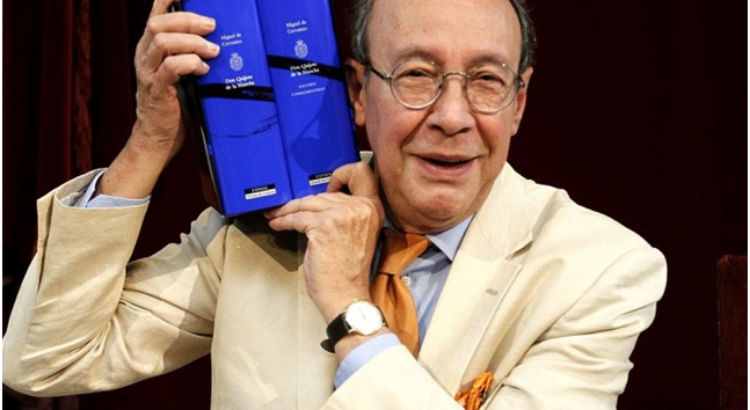
Imagen:El escritor Francisco Rico, uno de los académicos de la RAE en contra del uso del lenguaje inclusivo. WIKIMEDIA (RAE)







 Users Today : 4
 Total Users : 35491026
 Views Today : 5
 Total views : 3604533
My family was murdered before I could tie my shoes. As a young boy in Sierra Leone, years that should have been playful and carefree were spent fighting in someone else’s war. For me, childhood was a nightmare; escape always seemed impossible. But when the war officially ended, in 2002, I began finding ways to recover. One of the most important has been an opportunity I couldn’t have imagined as an angry, illiterate, nine-year-old soldier: school.
I am living proof of the transformative power of education. Thanks to hard work and lots of good fortune, I managed to graduate from high school and then university. Now, in just a few months, I will begin graduate classes at the Fordham University School of Law, an unimaginable destination for most of the former child soldiers in my country.
And yet, throughout my brief educational journey, one question has always nagged me: why did luck play such a crucial role? After all,education is supposed to be a universal human right. If only it were that simple.
Today, more than 260 million children are out of school, and over 500 million boys and girls who do attend are not receiving a quality education, as the International Commission on Financing Global Education Opportunitydiscovered. By 2030, more than half of the world’s school-age children – some 800 million kids – will lack the basic skills needed to thrive or secure a job in the workplace of the future.
Addressing this requires money. But while education may be the best investment a government can make to ensure a better future for its people, education financing worldwide is far too low. In fact, education accounts for just 10% of total international development aid, down from 13% a decade ago. To put this in perspective, developing countries receive just $10 per child annually in global education support, barely enough to cover the cost of a single textbook. In an age of self-driving cars and smart refrigerators, this dearth of funding is simply unacceptable.
Over the past few years, I have advocated on behalf of three global education initiatives – the International Commission on Financing Global Education Opportunity (Education Commission), the Global Partnership for Education (GPE), and the Education Cannot Wait fund (ECW). I have done so eagerly, because these organizations are working collectively toward the same goal: to raise funds to make quality education for every child, everywhere, more than a matter of luck.
One of the best ways to do this is by supporting theInternational Finance Facility for Education, an initiative spearheaded by the Education Commission that could unlock the greatest global investment in education ever recorded. Young people around the world understand what’s at stake. Earlier this month, Global Youth Ambassadors presented a petition, signed by more than 1.5 million children in some 80 countries, to United Nations Secretary-General António Guterres, calling for the UN to support the finance facility.
By leveraging roughly $2 billion in donor guarantees, the finance facility aims to make $8 billion in new funding available to countries that need it most. If adopted widely, the program could make it possible for developing countries to provide quality education to millions more children, including refugees, young girls, and former child soldiers like me.
Politicians often say that young people are the leaders of tomorrow. That’s true; we are. But platitudes not backed by financial support are meaningless. Simply put, the world must unite to fund quality education for everyone. The International Finance Facility for Education – which is already backed by the World Bank, regional development banks, GPE, ECW, and numerous UN agencies – is among the best ways to make that happen.
Twenty years ago, law school was an impossible dream for me. Today, thanks to hard work, global support, and much good fortune, my future is brighter than it has ever been. But my story should not be an exception. To ensure that others can gain a quality education and follow the path that has opened up to me, we must remove luck from the equation.
*Fuente: https://www.project-syndicate.org/commentary/financing-universal-quality-education-by-mohamed-sidibay-2018-05