Por: Clases de Periodismo. 11/07/2018
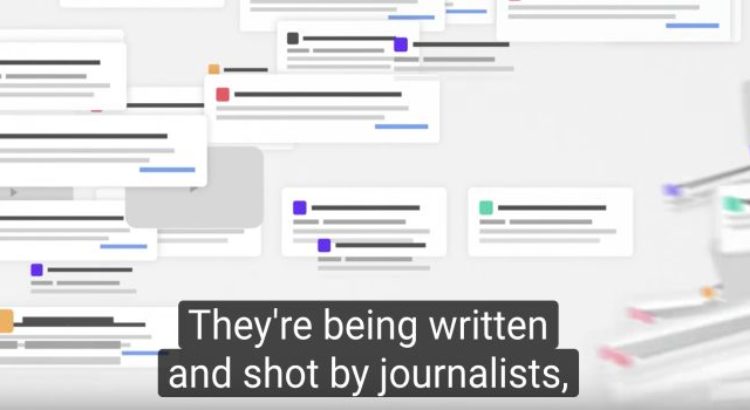
Google News se reinventa para que sea más fácil mantener el ritmo y darle sentido a todo lo que hay en la red enfocándose en el gran periodismo. Para ello, decidió que sus productos informativos sean parte de una experiencia unificada.
Google News utiliza lo mejor de la inteligencia artificial para encontrar lo mejor de la inteligencia humana en base a “el excelente informe hecho por periodistas de todo el mundo”.
LAS NUEVAS CARACTERÍSTICAS
- Usar AI / ML en tiempo real para organizar las noticias La rediseñada Google News usa un nuevo conjunto de técnicas de inteligencia artificial para tomar un flujo constante de información cuando llega a la web, analizarla en tiempo real y organizarla en historias. Este enfoque “significa que Google News comprende las personas, los lugares y las cosas involucradas en una historia a medida que evoluciona, y conecta la forma en que se relacionan entre sí. En esencia, esta tecnología nos permite sintetizar información y unirla de una manera que le ayude a dar sentido a lo que está sucediendo, y cuál ha sido el impacto o la reacción”.
- Más informado. La aplicación “For You” te permite mantenerte al día con todo lo que te importa en un solo lugar. “Comenzamos con un resumen de cinco historias que Google News ha organizado para usted: una combinación de los titulares más importantes, noticias locales y los últimos desarrollos sobre los temas que le interesan”, explica Google, tras agregar que cuanto más uses la aplicación, mejor será la aplicación. También ha creado controles fáciles de usar y de fácil acceso para decidir si desea ver más o menos un tema o editorial. Y precisa: A medida que construimos la aplicación, nos enfocamos en permitir que las historias hablen por sí mismas con excelentes imágenes y videos de YouTube y de toda la web.
- Cobertura total: comprender la historia completa. La función “Cobertura completa” proporciona una imagen completa de cómo se informa esa historia a partir de una variedad de fuentes. Con solo tocar se verá los principales titulares de diferentes fuentes, videos, informes de noticias locales, preguntas frecuentes, comentarios sociales y una línea de tiempo para las historias que se han reproducido a lo largo del tiempo: “Tener una conversación o debate productivo requiere que todos tengan acceso a la misma información. Es por eso que el contenido en cobertura total es el mismo para todos: es una vista no personalizada de eventos de una variedad de fuentes de noticias confiables. Para saber qué está leyendo el mundo, dirígete a los titulares para obtener una vista sin filtro de noticias de todo el mundo. Las secciones adicionales le permiten profundizar en la tecnología, los negocios, los deportes, el entretenimiento y otros”.
- Google News, señala el blog de Google, no existiría 2sin el gran periodismo creado todos los días. La pestaña Quiosco hace que sea más fácil encontrar y seguir las fuentes en las que confías, así como navegar y descubrir otras nuevas. También puede acceder a más de 1,000 títulos de revistas en un formato de lectura optimizado para dispositivos móvile”.
- DATO Gracias a la nueva plataforma Suscribirse con Google (lanzada como parte de la Iniciativa Google News ), se obtendrá acceso a su contenido pago en todas partes: en todas las plataformas y dispositivos, en Google Noticias, Búsqueda de Google y en los editores. ‘propios sitios web.
Fuente: http://www.clasesdeperiodismo.com/2018/05/27/las-claves-de-google-news-la-inteligencia-artificial-y-el-periodismo-de-calidad/
Fotografía: Clases de periodismo




 Users Today : 207
 Total Users : 35501414
 Views Today : 2817
 Total views : 3624866
My family was murdered before I could tie my shoes. As a young boy in Sierra Leone, years that should have been playful and carefree were spent fighting in someone else’s war. For me, childhood was a nightmare; escape always seemed impossible. But when the war officially ended, in 2002, I began finding ways to recover. One of the most important has been an opportunity I couldn’t have imagined as an angry, illiterate, nine-year-old soldier: school.
I am living proof of the transformative power of education. Thanks to hard work and lots of good fortune, I managed to graduate from high school and then university. Now, in just a few months, I will begin graduate classes at the Fordham University School of Law, an unimaginable destination for most of the former child soldiers in my country.
And yet, throughout my brief educational journey, one question has always nagged me: why did luck play such a crucial role? After all,education is supposed to be a universal human right. If only it were that simple.
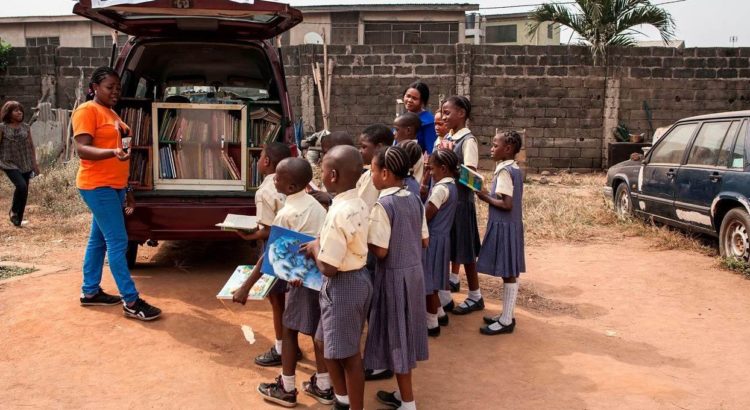
Today, more than 260 million children are out of school, and over 500 million boys and girls who do attend are not receiving a quality education, as the International Commission on Financing Global Education Opportunitydiscovered. By 2030, more than half of the world’s school-age children – some 800 million kids – will lack the basic skills needed to thrive or secure a job in the workplace of the future.
Addressing this requires money. But while education may be the best investment a government can make to ensure a better future for its people, education financing worldwide is far too low. In fact, education accounts for just 10% of total international development aid, down from 13% a decade ago. To put this in perspective, developing countries receive just $10 per child annually in global education support, barely enough to cover the cost of a single textbook. In an age of self-driving cars and smart refrigerators, this dearth of funding is simply unacceptable.
Over the past few years, I have advocated on behalf of three global education initiatives – the International Commission on Financing Global Education Opportunity (Education Commission), the Global Partnership for Education (GPE), and the Education Cannot Wait fund (ECW). I have done so eagerly, because these organizations are working collectively toward the same goal: to raise funds to make quality education for every child, everywhere, more than a matter of luck.
One of the best ways to do this is by supporting theInternational Finance Facility for Education, an initiative spearheaded by the Education Commission that could unlock the greatest global investment in education ever recorded. Young people around the world understand what’s at stake. Earlier this month, Global Youth Ambassadors presented a petition, signed by more than 1.5 million children in some 80 countries, to United Nations Secretary-General António Guterres, calling for the UN to support the finance facility.
By leveraging roughly $2 billion in donor guarantees, the finance facility aims to make $8 billion in new funding available to countries that need it most. If adopted widely, the program could make it possible for developing countries to provide quality education to millions more children, including refugees, young girls, and former child soldiers like me.
Politicians often say that young people are the leaders of tomorrow. That’s true; we are. But platitudes not backed by financial support are meaningless. Simply put, the world must unite to fund quality education for everyone. The International Finance Facility for Education – which is already backed by the World Bank, regional development banks, GPE, ECW, and numerous UN agencies – is among the best ways to make that happen.
Twenty years ago, law school was an impossible dream for me. Today, thanks to hard work, global support, and much good fortune, my future is brighter than it has ever been. But my story should not be an exception. To ensure that others can gain a quality education and follow the path that has opened up to me, we must remove luck from the equation.
*Fuente: https://www.project-syndicate.org/commentary/financing-universal-quality-education-by-mohamed-sidibay-2018-05