Page 2507 of 6193
1 2.505 2.506 2.507 2.508 2.509 6.193

Gobierno de Nicaragua prioriza sistema educativo en medio de crisis

Centro América/Nicaragua/28 Junio 2018/Fuente: Prensa Latina
El gobierno nicaragüense prioriza hoy el sistema educativo al implementar planes especiales ante las afectaciones a la actividad académica y la infraestructura escolar, a causa de la ola de violencia desatada hace dos meses en el país.
El Ministerio de Educación (Mined) iniciará la reparación de 51 colegios dañados por grupos delincuenciales, según informó el asesor presidencial en temas educativos, Salvador Vanegas.

Nueve brigadas de mantenimiento y restauración trabajarán de inmediato en las afectaciones a infraestructura, mobiliario, sistema eléctrico y destrucción por incendios parciales o totales.

La entidad también repondrá la base material de estudio, útiles escolares y equipos tecnológicos necesarios.

El gobierno hará todos los esfuerzos posibles para continuar las clases en medio de la crisis sociopolítica en el país, donde actualmente funcionan el 90 por ciento de los centros educativos públicos y el 88 de los privados, de acuerdo con la fuente.

Para ello, el Mined ejecutará de forma gradual a partir de esta semana un plan especial, con guías de estudio, con el objetivo de que los estudiantes recuperen las horas lectivas y no pierden el curso escolar.

Durante los últimos dos meses, delincuentes azuzados por la extrema derecha vandalizaron y tomaron colegios, además sometieron a docentes a agresiones, secuestros, intimidación, amenazas de muerte e incendios, según denunció la titular del Mined, Miriam Raúdez.

El ambiente de zozobra y los bloqueos de vías impuestos por los grupos que pretenden desestabilizar el país, también violan el derecho a la educación de miles de niños y jóvenes, así como el traslado de la merienda escolar, lo que perjudica a los más vulnerables, agregó Raúdez.

La ola de violencia iniciada el 18 de abril persiste en varios departamentos del país, pese al llamado a la paz de gran parte de la población.

Dicha espiral estalló en medio de protestas contra reformas al seguro social, más tarde derogadas, pero que no detuvieron las manifestaciones, a las cuales se sumaron otras demandas políticas.

Las reformas sirvieron de pretexto para poner en marcha un plan dirigido desde el exterior con el objetivo de desestabilizar la nación y provocar el derrocamiento del gobierno, según denunció la administración.

Fuente: http://www.prensa-latina.cu/index.php?o=rn&id=190290&SEO=gobierno-de-nicaragua-prioriza-sistema-educativo-en-medio-de-crisis
Comparte este contenido:

Ministerio de educación de Ecuador por centros docentes sin violencia

América del sur/Ecuador/28 Junio 2018/Fuente: Prensa Latina

 »Más conciencia, menos violencia» es una campaña que desarrolla hoy el ministerio de Educación de Ecuador, en el marco del Plan Nacional de Convivencia Armónica y Cultura de Paz »Más unidos, más protegidos».
La iniciativa consiste en la conformación de un equipo antiviolencia integrado por la máxima autoridad de los planteles, docentes, estudiantes, personal de los Departamentos de Consejería Estudiantil y padres de familia o representantes.

Todos esos actores tendrán la facultad para intervenir y denunciar cualquier tipo de agresión que se suscite en el entorno escolar.

‘Es necesario que todos se informen sobre los casos de violencia en las instituciones, esto solo será posible si recorremos juntos el camino de la paz, es un camino difícil, pero es el único que nos asegura una vida plena’, afirmó el titular de Educación, Fander Falconí, durante la presentación de la propuesta.

Asimismo, advirtió que se deben generar mecanismos de prevención y sanción cuando sea necesario hacerlo, pues nadie está por encima de la ley.

Varios artistas nacionales como Daniel Betancourt y Maykel se sumaron al proyecto, junto a estudiantes del Liceo Panamericano, para entonar la canción ‘No temas más’, que tiene como eje transversal la problemática del llamado bullying; y compartieron mensajes de apoyo y concientización con frases como ‘basta ya de violencia’.

La campaña se aplicará, en una primera fase, en todas las instituciones educativas de Guayaquil, Durán y Samborondón, donde se han registrado más de 130 casos de acoso físico o psicológico durante el período lectivo 2017-2018.

Fuente: http://www.prensa-latina.cu/index.php?o=rn&id=189964&SEO=ministerio-de-educacion-de-ecuador-por-centros-docentes-sin-violencia
Comparte este contenido:

Africa: Mahama wants re-engineering of university education curriculum

Africa/ June 27, 2018/Source: https://www.myjoyonline.com

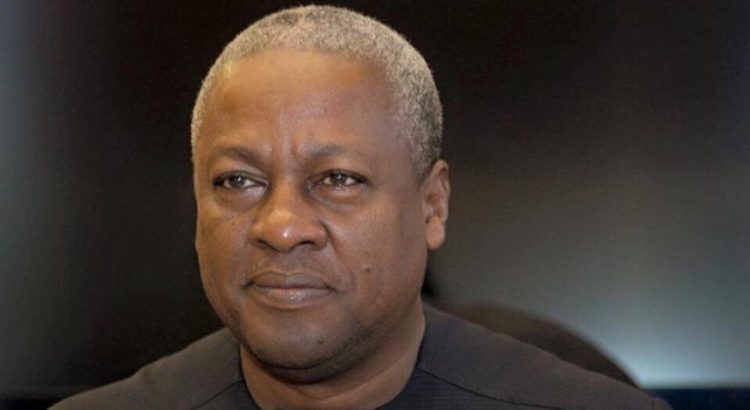
Former President John Mahama has called for re-engineering of the curriculum of University education in Africa to stimulate accelerated development if the continent is to remain competitive and relevant in the global space of skills acquisition and training.

He identified the mismatch nature curriculum bequeathed the continent from colonial mastership, which currently under-rights the content of syllabi at the Universities.

Speaking on the “Future of Work and Industrialisation” on the sidelines of the 53rd Annual Meetings of the African Development Bank in Busan, South Korea, Mr Mahama said churning out graduates of humanities for example in large droves would not unlock the quest for accelerated industrialisation in Africa.

It was on the theme, “Accelerating Africa’s Industrialisation,” which is underpinned by the Bank’s High 5 strategy including light up and power Africa, feed Africa and improve the quality of life of Africans.

He said stringent measures should be instituted to achieve a 70 by 30 parity in the sciences against the humanities to place the continent in pole-position to advance economically, socially and in the fields of science and technology, which is the catalyst to reaching accelerated development of the continent.

Mr Mahama said Africa was ready to break into the legion of industrialised continent, when the right pillars of development was activated and matched-up to the global competition even in the face of deployment of hitech artificial intelligence and robotics saying “we can start at our own pace and leverage to succeed.

“Rethinking Africa’s development paradigm will lead us to the desired destination.”

Mr Ken Ofori-Attah, Minister of Finance, also a panellists said stakeholders in Africa should pursue radically reforms in education pedagogy especially teaching programmes in entrepreneurship to jump-start changing the psyche of students to leapfrog Africa’s industrial.

He said political stability, investment in infrastructure as well as in technology, energy, macro-economic stability were essential.

Mrs Kanny Diallo, Minister of Planning and International Cooperation said frequent changes of governments and non-adherence to time-bound blueprints or development plans even makes Africa’s quest to notch accelerated development looking remote.

She insists huge investments in the agricultural sector and harnessing of the gains in the mining industry could be ploughed into the social services sector would enhance development in the agri-business value-chain to generate the necessary jobs for the youth.

She said long-term planning and solutions would assist the private sector to partner state institutions to absorb the defenceless and teeming youths with skills of engagements.

Source:

https://www.myjoyonline.com/news/2018/May-26th/mahama-wants-re-engineering-of-university-curriculum.php

Comparte este contenido:

EEUU: Could protest curb school violence? Lessons from the opt-out movement

Por: theconversation.com/27-06-2018

In the wake of the Santa Fe, Texas, school shooting, former Secretary of Education Arne Duncan voiced support for a school boycott. The boycott – which Duncan has said could take place in September – would involve keeping kids out of school until changes are made to the nation’s gun laws to make America’s schools safer. It is unclear how long the boycott would last.

If parents, students and others decide to stage a national school boycott, it would pay for them to take a few pages out of the playbook from a different protest: the opt-out movement that seeks to reduce burdensome testing. I make this observation as the author of books on political dissent in schools and the state of public education.

A more compelling argument

The opt-out movement draws attention to the suffering of children, reveals political and economic concerns with individuals and corporations who benefit from testing, and exposes the learning time lost to testing. Since school safety carries more significance than testing, a school boycott to change gun laws may employ similar justifications in an even more compelling way.

The opt-out movement has effectively raised awareness about problems introduced by testing, including the stress inflicted on teachers and students. It has done so through public demonstrations at sites such as the Department of Education, but also by generating smaller local conversations with other stakeholders.

Importantly, opt-out leaders have invited a wide and diverse collection of parents into their movement. They have proposed alternative forms of assessment. They have effectively pressured legislators to reduce testingin states like New York and to remove “zero score” penalties for children who do not take the test.

Overcoming complacency

The consciousness-raising actions of opt-out organizations have forced some people who see testing as an unavoidable part of life in schools to rethink their assumptions. A school boycott could lead to rethinking among those who feel powerless to stop school shootings.

The school boycott cannot just focus on troubling, but rare mass shootings. Based on what I know about effective political dissent, boycotters would need to expose widespread smaller forms of violence in our schools in order to paint a more complete picture of the problem and spur change. Like the Opt Out movement, boycotters would also need to highlight related practices, such as lock down drills and the arming of teachers, to expose ways in which those practices deprive classrooms of educational time, concern teachers, and cause fear in children. Boycotters should reveal how insecurity due to violence create a climate that lacks the stability and focus children need to learn well.

More than just skipping school

Finally, boycotting doesn’t mean simply staying home. It requires public demonstrations to raise awareness and to pressure legislators by letting them see the dissatisfaction and demands of the public. It entails a call to deliberate with other citizens, gun advocates, teachers, legislators and others to reach moments of compromise and consensus as well as to craft alternatives.

These alternatives might take the form of particular gun laws, but may also relate to other aspects of school culture that impact school violence, such as bullying, stress and exclusion.

How do we preserve educational opportunity if classrooms are empty? At a minimum, boycotters must model quality political dissent for students so that they learn how to be effective citizens, one of the most longstanding and widely accepted educational aims.

Moreover, parents should join up with students who’ve already led the charge through staging national school walkouts in the wake of Parkland and other shootings. And they should collaborate with organizations like Black Lives Matter, who have already been championing the need for safety in schools, in order to craft better informed plans for change.

A sufficiently robust boycott could prompt new forms of gun legislation and bring new practices to curb violence to America’s schools. All the while, parents may become more active citizens in the democratic process of public education and students may witness – and participate in – political dissent in action.

*Fuente: https://theconversation.com/could-protest-curb-school-violence-lessons-from-the-opt-out-movement-96975

Comparte este contenido:

Sex education given LGBT-inclusive overhaul in Wales

Por: theguardian.com/27-06-2018

Supporters of planned changes say country can be a global leader in teaching the subject

Wales could soon be “leading the way” in relationship and sex education (SRE) in schools after announcing an overhaul of its curriculum.

The changes, which include the subject being renamed relationships and sexuality education, were announced by Wales’s education secretary, Kirsty Williams, who said the days of traditional sex education were “long gone”.

In a departure from the traditional teaching approaches, and coming 30 years after the introduction of section 28, which banned the “promotion of homosexuality in schools”, the subject will be LGBT inclusive. It will also focus on wider issues such as consent, domestic abuse and respecting diversity.

It will form a statutory part of Wales’s new curriculum, which comes into force in 2022, for all children aged from five to 16 and will be embedded across the curriculum rather than taught as a separate subject.

The announcement follows a report by Wales’s sex and relationship education expert panel, which concluded that SRE was often too biological and too negative, with not enough attention given to rights, gender equity, emotions and relationships.

Williams said: “The world has moved on and our curriculum must move with it. Sex should never be taught in isolation for the simple reason that it is about so much more than just sex; it’s also about relationships, rights and respect and that must go hand in hand with a much broader understanding of sexuality. Anything less does a disservice to our learners and teachers.”

The announcement was welcomed by charities and campaigners includingStonewall Cymru. The charity’s director, Andrew White, was a member of the expert panel and said his charity had lobbied for years for this change.

He said: “It’s great news, particularly as this week is the anniversary of the introduction of section 28 and our research shows that a majority of LGBT young people here in Wales have heard nothing about LGBT issues in the classroom.

“The legacy of section 28 unfortunately still lives on and this change will go some way to readdressing the balance.”

He said it was important that issues were discussed in the classroom. “If we don’t, those conversations will happen on the web with sometimes unreliable sources.”

The panel’s chair, Emma Renold, a professor of childhood studies at Cardiff University, said the changes would mean sex and the issues surrounding it would not be limited to biology lessons. “It will broaden it out so you can cover the issues in humanities and expressive arts as well as science for example,” she said.

“We identified what constitutes high-quality SRE provision and provided the Welsh government a blueprint because we were calling for a major overhaul. It’s not just about curriculum content but about developing the infrastructure, teacher training and support systems that are necessary to ensure it actually works.”

She said the changes were more progressive than in England and could mean Wales would soon be leading the way internationally when it comes to sex education.

Eleri Butler, the chief executive of Welsh Women’s Aid, said the new curriculum was a positive step towards eradicating violence and abuse.

She said: “It’s vital that children and young people learn about age-appropriate relationships and sexuality education, and have access to high-quality learning and support about equality, safety, sexual consent and healthy relationships.”

Since you’re here …

… we have a small favour to ask. More people are reading the Guardian than ever but advertising revenues across the media are falling fast. And unlike many news organisations, we haven’t put up a paywall – we want to keep our journalism as open as we can. So you can see why we need to ask for your help. The Guardian’s independent, investigative journalism takes a lot of time, money and hard work to produce. But we do it because we believe our perspective matters – because it might well be your perspective, too.

*Fuente:https://www.theguardian.com/education/2018/may/22/sex-education-given-lgbt-inclusive-overhaul-wales
Comparte este contenido:

Perú: Junín: 360 profesionales participaron de Evaluación Intercultural Bilingüe

América del Sur/Perú/26.06.18/Fuente: larepublica.pe

UGEL Huancayo evaluó de manera oral y escrita, por tres días, a profesionales de educación y otras carreras.

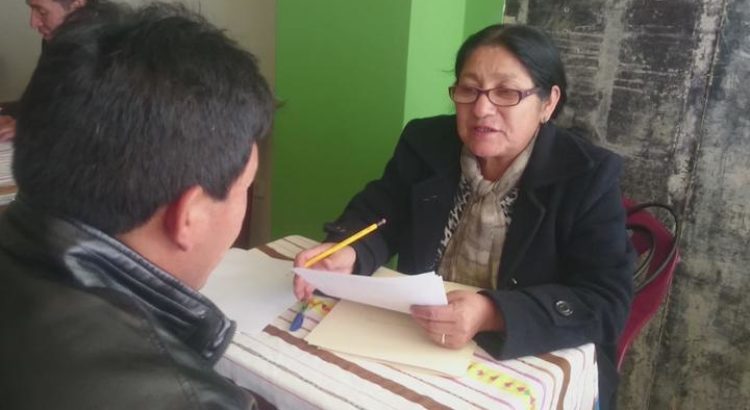
El jueves 14 y viernes 15 se llevo a cabo la evaluación de la Educación Intercultural Bilingüe (EIB)a cargo de la Unidad de Gestión Educativa Local de Huancayo (UGEL) y que este año convocó a diferentes profesionales . “La finalidad de esta evaluación es medir el conocimiento y el dominio de la lengua quechua chanca y yarupasco, habladas aun en la región de Junín” indicó Santiago Aliaga especialista de la UGEL- Huancayo

Según la resolución ministerial 630-2013 en el artículo 30 del Reglamento de la Ley General de Educación, se establece que los servicios de Educación Básica que requieran la atención de la Educación Intercultural Bilingüe serán identificados como tales considerando los criterios lingüísticos, cultural y de auto adscripción.

Por ello ante la diversidad lingüística y cultural de los estudiantes en el país, se debe identificar y registrar a las Instituciones Educativas que demandan de un servicio de EIB y tener un registro de profesores con dominio oral y escrito de la lengua originaria respectiva nivel intermedio o avanzado.

Los docentes fueron evaluados (oral y escrito) el jueves y viernes, con preguntas en la lengua originaria «quechua» . El jueves y viernes fueron evaluaciones con preguntas personales con un espacio de 15 a 20 minutos por profesional. El último día de evaluación, sábado, se realizó un examen escrito que constó en comprensión lectora, respuestas abiertas, que serán evaluadas la gramática, enlaces, sintaxis entre otros aspectos.

Esta evaluación contó con la presencia del representante del Ministerio de Educación y el coordinador regional de Dirección General de Educación Intercultural Bilingüe y Rural DIGEIBIRA multilingüe el ministerio. Fueron 661 inscritos, de los cuales 360 terminaron estas evaluaciones de lengua originaria, cabe resaltar que esta evaluación se dirige a nivel nacional en cada Unidad de gestión educativa local UGEL.

Fuente de la noticia: https://larepublica.pe/sociedad/1266145-evaluacion-educacion-intercultural-bilingue-convoca-profesionales-educacion-carreras

Comparte este contenido:

Japan: Schools in Japan are starting to introduce gender neutral uniforms

Asia/Japan/26.06.18/Source: www.gaystarnews.com.

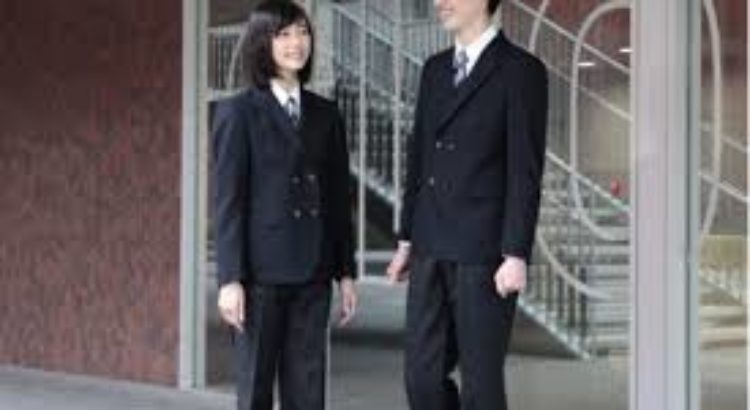
A number of schools across Japan have started to introduce more gender neutral uniform options for LGBTI students.

The move comes after LGBTI groups lobbied for student’s to be allowed to wear the uniform suited to the gender they identify with. It also comes after a 2015 notice from Japan’s Education Ministry to schools to improve their inclusion of LGBTI students.

A 2017 survey found that 50% of LGBTI students were bullied at school. That survey also found that of those bullied children,  70% said their teachers did nothing to help them.

‘Some students are embarrassed and cannot concentrate on their studies because of uniforms. In some cases, they stop going to school,’ Anri Ishizaki, head of FRENS, an organization supporting LGBT people told Japan Times.

‘Although uniforms are not the only factors tormenting them, it is a significant element as they are required to wear them all the time.’

Working on getting it right

One of the schools leading the charge was Kashiwanoha Junior High School. It’s in the Chiba prefecture about 60kms east of Tokyo.

‘We thought it would be better to let students wear something they feel comfortable in if they have to struggle to come to school because of uniforms,’ said Koshin Taki, the school’s vice principal of Kashiwanoha Junior High.

‘We chose a subdued color and check patterns so the uniform would be suitable for any student.’

Students will be able to wear skirts or pants and ties or ribbons to go with blazers regardless of their gender identity.

Tombow Co – a clothing manufacturing company – started making gender neutral uniforms after the Education Ministry’s notice.

It said it had been experimenting with the most neutral approaches since then. It found students did not want to wear uniforms that clearly emphasize male and female shapes.

Source of the notice: https://www.gaystarnews.com/article/schools-in-japan-are-starting-to-introduce-gender-neutral-uniforms/#gs.aXy9WKQ

Comparte este contenido:
Page 2507 of 6193
1 2.505 2.506 2.507 2.508 2.509 6.193