Page 2553 of 6196
1 2.551 2.552 2.553 2.554 2.555 6.196

Jamaica: Education the missing ball in the competition for growth

Central America/Jamaica/05.06.2018/Source: www.jamaicaobserver.com

Jamaica’s education system has followed a rocky road from as far back as we can check our history. This is not to say that the road does not have its smooth spots, but it is only in minor sections that we can feel the satisfaction of a system at work which is successfully producing good results on a sustainable basis.

It may seem that this is an exaggeration. It is not. How else is it possible to describe an education system that produces some 75 per cent failures in its graduating class year after year? Worse than that, 38 per cent of the age cohort are not even allowed to sit the exams for graduation, being considered too weak academically to achieve even the most minimal results.

From another point of view, the education system is an enigma. Many of those who qualify from the secondary school system and go on to tertiary education have turned out to be outstanding scholars who have consistently contributed much to national development. Some have even achieved international acclaim, and the best of our education system can stand up to international ratings.

But judgement of society is not concerned about safe landings. It’s about crashes. The education system speaks volumes to the frustrations and failures which make it dysfunctional. Yet, despite these obstacles, the system is too crucial to be allowed to exist in a state of bewilderment.

Generally, I approach problems logically and there is much to be gained by viewing education in this way. Reading through the insightful analysis of the brain in the Pulitzer Prize-winning work Inside the Brain, by Ron Kotulak, nearly 15 years ago, gave me a whole new perception of the earliest years of life and the impact of early childhood education.

The brain is examined as an organ which begins as a blank slate, gathering and processing an awesome collection of information by stages of complexity which allow children to grow in knowledge progressively. Scientific findings indicate that the growth period of the brain ceases at around seven years of age, leaving the child to work essentially with the size and capacity achieved at that time for the rest of his/her life.

This sounds frightening, but it does not mean that learning stops at that time; it only means that the ability of the brain will be limited in the future to the capacity it has acquired in the first seven years of life and the process of learning will only be more difficult, but certainly not impossible.

This puts the spotlight on those first seven early years as being of prime concern. Early Childhood Education (ECE) must then be the priority. In fact, it sets the stage for success thereafter as the support base for further education — just as the first layer of a three-layer cake is fully dependent on the ability of the bottom layer to support the top two. A weak first layer will expose the top two to weaknesses, failures and possibly some collapse, as is the case in the education system.

To reposition the early stage of education would logically require much more funding. Over the years, Jamaica has spent far less on education than is the case for many other English-speaking countries (Caricom) of the region. This led me to focus my own parliamentary efforts on a call for the reform of early childhood education, to strengthen it as the base — to the extent that, in 1997, I devoted my presentation in the budget session entirely to that subject.

Unfortunately, the budget was presented by the Opposition at the Jamaica Pegasus hotel that year because of a dispute with the then Government. As a result, in the budget session of the next year I presented the same speech again, giving the subject matter double exposure but also to get it in the official parliamentary record for future reference.

I continued what I considered a mission to promote early childhood education for the remainder of my parliamentary years until I retired in 2005. But to realistically do so, I also had to call for increased financing for the system. With Government under-financing the education system by providing only some 10 to 12 per cent of the national budget (this was the figure up to a few years ago), compared to 15 per cent and more in many other Caricom countries, I called for an increase of one per cent per annum for five years, starting November 2004.

My resolution to Parliament to this effect, together with a number of other educational reforms, was accepted by both sides of the House. I am not aware if its financial target has been met. To me, the most important objective in creating a rational, functional education system is to create a well-funded early childhood layer capable of giving a good start.

But another consideration has now been added by me which is even more important, particularly since it requires no additional funds, nor does it require any considerable period of time to accomplish.

Sometimes, the greatest benefits can come from the simplest changes in seeking solutions to problems. The most critical problem facing education is illiteracy. It holds the key. For decades the education system has recognised that illiteracy is a deep-rooted fundamental problem. Without literacy, learning is impossible. Yet, faced with this undeniable truth the system has been crawling for generations to adjust to meet this awesome challenge.

The readiness test administered to grade 1 entrants to primary schools has repeatedly shown that only 25-30 per cent of entrants are ready to receive formal education at the entrance levels. This was precisely the case half-a-century ago when the secondary school system was opened to secondary schools on a broad basis. Five years after that, Edwin Allen, minister of education, had to devise a unique way to give primary school graduates a secondary education by changing the admission policy.

It was decided that 70 per cent of all entrance places to secondary schools should be reserved for primary school students. This could have the most far-reaching effect on the future capacity of the country to grow and prosper. However, it was discovered that at 12 years old these new students, as in the case of entry to primary schools at six years, could not cope with the educational requirements. Indeed, many were barely literate.

That was decades ago yet the problem remains until today, with the majority of primary school graduates being low achievers. This should not be surprising as 60 per cent in the grade 4 National Literacy Test for 10-year-old students have repeatedly demonstrated various weaknesses in coping with reading and writing at this advanced stage, although this low figure is showing slight improvement now, thus leaving them unable to deal with secondary education. This would not have been the case had this percentage of students been literate.

This is a new road for education, one that challenges us to think outside of the box. For centuries we have travelled the same failed course; time now to travel a different path, to try something new.

The day has come at last. I was thinking that it may never happen after so many years of speaking and writing about the critical need for Government to take over the basic school system so that it could handle the transformation of these schools which have been neglected for so long. Recently, the Minister of Education Ruel Reid announced that Prime Minister Andrew Holness has agreed to that proposal. This is an excellent move.

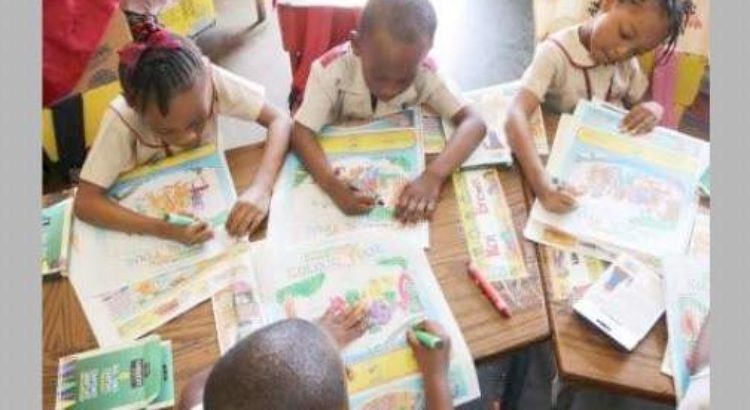
Generally, many persons think of these schools for little children from three to five years old as “play-play” schools, where their little ones can be parked in the day under the care and protection of teachers.

But parents are not aware that this is a vital stage in the education system. Children who are not educated at this stage can fail miserably, in later years of schooling, to be sufficiently educated to get passing grades when they leave secondary school without graduating.

The reason for lack of appreciation is as a result of little understanding of the role of early childhood education and what it can achieve when it is taken seriously. The seriousness of this phase of ECE is that it is the foundation of all education, because it is the beginning of the education of the child. If you are building a house you have to start with the floor, not the rooms, nor the roof. ECE provides that foundation.

Failure to put this opportunity to use by enrolment and regular attendance is a trap many people fall into, out of ignorance or the lack of care. The result is, children who go to primary school eventually at six years old have to keep up with other children who received ECE for their first step in education and have become acquainted with the early stages of reading, writing, numeracy, social and cultural activities, among other areas of learning.

In the first grade of primary school, who do you think the teacher is going to focus on? The children who have participated in the ECE progamme who can follow what is being taught in grade 1 to prepare for grade 2, or the ones who lack the education which should have been received as the first step of the ECE? The teacher is naturally going to focus on the children who are better able to enter grade 2.

The children knowing too little about what is going on because of knowledge deficiency are naturally left behind. And so it continues in each grade thereafter as the gap widens, focusing on those who can learn while leaving those who cannot further behind. Each grade will suffer in the same way, producing students who have learned and those who have not.

This stream flows right through the system until at graduation the ratio is still, more or less, the same: 30 per cent who have benefited from early schooling and can graduate and the seventy per cent who have not and cannot [graduate]. That is what we have to build a nation — a minority who are skilled and find employment or become gainfully self-employed, and a sizeable majority who have no skills and who, even if they find some hustling or unskilled work, will not be able to even keep themselves. This will continue to be our future if significant improvements are not made.

There is still one more step in this critical pathway to failure when those who fail cannot, as adults, pay water rates, electricity rates, taxes and other such basics of life. The costs of these have to be carried by the minority who are skilled by training. Prosperity for the nation won’t come until far more students go through comprehensive schooling and training. The ratio then could be reversed to 30 per cent failure and 70 per cent passes. This would produce more of each category of skills. Then we can build a nation.

To this major undertaking must be added properly trained teachers of which the minister says there is now one per school. Completing this programme will provide the necessary opportunities for the development of real prosperity.

What are the steps to accomplish this?

• Special financing would be needed. I have already proposed that the National Housing Trust (NHT) needs more educated adults in the society to be able to deal with more mortgage financing, as it has admitted, to increase the housing stock and provide more homes. The NHT has a surplus of some $20 billion a year. It can spare $2-$3 billion per year and still increase its surplus annually.

• Increased teaching staff. This could be programmed by arranging facilities by training in teachers’ colleges and in the HEART Trust/NTA over a number of years.

• Increase the sources for equipment for ECE schools. I started a programme which I called Programme for the Advancement of Early Childhood Education (PACE), which I proposed to use to get the Jamaican Diaspora involved by asking groups with enough involvement in the community affairs of Jamaica to undertake to obtain equipment — new or used — overseas for the ECE schools. This is a project which would be able to fit in with their own interests since on a number of occasions the Diaspora has shipped to schools in Jamaica, furniture and equipment obtained from replacement in schools in their areas abroad.

In my visit to Toronto in 1988 to start the programme, I found a number of Jamaicans who were interested and were willing to serve in such an organisation I called PACE of Canada. This group has worked out very well for the past 30 years, with shipments arriving regularly. I had hoped to establish many more PACE units in the USA, Canada, and Britain but the Government was changed in 1989 and nothing further happened.

We are thankfully on the way now with one of the most important projects for building a prosperous nation in which all could learn to earn, and earn to learn.

With the changes in the early childhood education system, we are on the way to helping those who are caught in the deficiencies they now face to find a way out. As I have often said in a quote which I coined: “There is no country that is uneducated that is rich and no country that is educated that is poor.”

The time has come to take a giant step into the future. Time to move now.

Source of the news: http://www.jamaicaobserver.com/news/education-the-missing-ball-in-the-competition-for-growth_134780?profile=1096
Comparte este contenido:

Ecuador: UTPL finaliza congreso internacional de educación superior a distancia en Loja

América del Sur/ Ecuador/ 05.06.2018/ Fuente: http://laconversacion.net

Este congreso es un paso preliminar a la III Conferencia Regional de Educación Superior de América Latina y el Caribe 2018 (CRES), una reunión regional que se constituye en el evento más importante del Sistema de Educación Superior de América Latina y el Caribe, y se realizará del 11 al 15 de junio de este año en Córdoba, Argentina.

El VI Congreso Cread Andes y VI Encuentro Virtual Educa Ecuador, abordó como eje central los paradigmas que afronta la evaluación, certificación y acreditación de la educación superior a distancia y en línea.

Con la presencia de más de 600 profesionales y estudiantes a nivel internacional y de 28 expositores provenientes de 15 países distintos de América, África, Asia, Europa y Oceanía, concluyó con éxito, este viernes 1 de junio, el VI Congreso Cread Andes y VI Encuentro Virtual Educa Ecuador.

El congreso, que se desarrolló durante cuatro días, contempló en su última jornada conferencias en torno a temas como: movilidad académica en el espacio común, métodos innovadores para el aseguramiento de la calidad y la acreditación de la educación superior a distancia online, proceso de evaluación y acreditación en el Ecuador, entre otros temas y casos de éxito de Ecuador, Colombia y México.

José Tinoco, representante de la Universidad Abierta y a Distancia de México (UnADM), manifestó que la educación superior ha tenido un impulso global, tanto en las modalidades escolarizadas como en las no escolarizadas a distancia; modalidad que, complementada con la revolución de las tecnologías de la información y la comunicación (TIC), ha fomentado el aprendizaje virtual y el desarrollo de diversos métodos para la transmisión y generación de conocimiento.

Movilidad virtual en la educación superior

El fomento de la movilidad es, hoy en día, una necesidad prioritaria en el ámbito académico mundial y constituyó uno de los temas más discutidos a lo largo de este congreso. “Una armonización de la educación superior basada en la calidad, promoverá el trabajo colaborativo birregional y la movilidad académica”, expresó José Barbosa Corbacho, rector de la Universidad Técnica Particular de Loja (UTPL) y director ejecutivo del Instituto Latinoamericano y del Caribe de Calidad en Educación Superior a Distancia (CALED), acotando que existe la imperiosa necesidad de crear institutos evaluadores de calidad educativa y formadores de líderes capaces de desarrollar todos los procesos fortalecedores de la confianza colectiva en pro de la educación virtual y su consecuente internacionalización.

Clausura

El último día del VI Congreso Internacional de Educación Superior a Distancia, desarrolló las temáticas:

  • El estado del arte de la certificación y acreditación de instituciones, programas y cursos en educación superior a distancia y en línea.
  • Desafíos y compromisos de la certificación y acreditación a nivel internacional.
  • Práctica de la evaluación como eje vertebrador de la calidad de los programas y cursos en la educación a distancia.

Dichos temas fueron abordados en tres mesas, en donde se definieron 30 comunicaciones lideradas por moderadores y ponentes de 8 países de Latinoamérica.

En el Centro de Convenciones de la UTPL, Mary Morocho, subdirectora del CALED y coordinadora de la Unidad de Evaluación y Acreditación de la UTPL, expuso las conclusiones del evento junto Barbosa, dando a conocer que esta sexta edición del Congreso Cread Andes y Encuentro Virtual Educa Ecuador cumplió con sus expectativas y extendió un agradecimiento a los delegados de las instituciones participantes. “El futuro es incierto, por ello debemos estar preparados para el cambio y las innovaciones”, concluyó Morocho.

Este congreso es un paso preliminar a la III Conferencia Regional de Educación Superior de América Latina y el Caribe 2018 (CRES), una reunión regional que se constituye en el evento más importante del Sistema de Educación Superior de América Latina y el Caribe, y se realizará del 11 al 15 de junio de este año en Córdoba, Argentina.


Fuente de la noticia: http://laconversacion.net/2018/06/utpl-finaliza-congreso-internacional-de-educacion-superior-a-distancia-en-loja/

Comparte este contenido:

Brasil: Ministros da Educação tiveram média de dois anos de gestão desde 1979

América do Sul/ Brasil/ 05.06.2018/ Fonte: www.jb.com.br.

Os ministros da Educação do país desde 1979 tiveram um curto período de gestão, alcançando em média somente dois anos, devido à instabilidade provocada por crises políticas e econômicas. A conclusão é do jornalista Antônio Gois, autor do livro Quatro décadas de gestão educacional no Brasil.

Segundo o autor, os “tempos conturbados” acabam por deixar a cada ministro um curto período de gestão, em uma média de cerca de dois anos. “Afinal, o país atravessou nessas quase quatro décadas períodos de graves crises econômicas e de instabilidade política, como o impeachment de dois presidentes da República”, enfatiza Gois.

Análise das políticas públicas de educação

A publicação faz uma análise da evolução das políticas públicas de educação a partir dos depoimentos de 13 ex-ministros e uma ex-presidente do Instituto Nacional de Estudos e Pesquisas Educacionais Anísio Teixeira (Inep).

As entrevistas abrangem desde o período anterior à redemocratização do país, durante o governo do general João Batista Figueiredo (1979-1985), até o governo da ex-presidente Dilma Rousseff (2011-2016).

Esses cenários complexos também marcaram, de acordo com o jornalista, as decisões dos ex-titulares da pasta da educação. “Foram tempos difíceis, mas também de avanços, a começar pela transição democrática após o fim de uma ditadura militar de 21 anos”, acrescenta. Além disso, esses gestores tiveram de enfrentar deficiências estruturais do país.

O ex-ministro do primeiro mandato do governo Luiz Inácio Lula da Silva, o atual senador Cristovam Buarque (PPS-DF), cuja gestão durou somente cerca de 12 meses, destaca, por exemplo, que tentou encarar como prioritária a diminuição do analfabetismo no país.

“Para mim, alfabetizar não é nem uma questão educacional, é primeiro uma questão de direitos humanos. A democracia acabou com a tortura nas cadeias, não acabou nas ruas. Segundo, eu sou de uma geração que viu João Goulart – Paulo Freire com João Goulart – falando em erradicar o analfabetismo, que viu Cuba erradicar o analfabetismo depois de Fidel Castro chegar ao poder, que viu os próprios militares preocupados com alfabetização. Isso fica na cabeça da gente, então eu tinha como meta a alfabetização”, diz Cristovam, em seu depoimento.

Segundo a última Pesquisa Nacional por Amostra de Domicílios (Pnad), com dados referentes a 2016, o Brasil ainda tem cerca de 11,8 milhões de analfabetos. A pesquisa feita pelo Instituto Brasileiro de Geografia e Estatística (IBGE) indica que 7,2% das pessoas maiores de 15 anos não sabem ler, sendo que, entre os negros, o percentual chega a 9,9%.

Fonte das notícias: http://www.jb.com.br/pais/noticias/2018/06/04/ministros-da-educacao-tiveram-media-de-dois-anos-de-gestao-desde-1979/

Comparte este contenido:

Nicaragua: Ponen a la disposición biblioteca virtual para educación digital

Centro América/Nicaragua/05.06.2018/Fuente: www.elnuevodiario.com.ni.

Las temáticas que abordan las investigaciones y análisis tienen que ver con Cultura Digital, Educación y Tecnología, Economía de Datos, Arte y más, siendo Fundación Telefónica un actor relevante de la transformación digital que vive la sociedad.

Como parte de su compromiso con la educación digital, Fundación Telefónica puso a la disposición a través de su página web www.fundaciontelefonica.com.ni la investigación y publicación de diferentes estudios y análisis sobre el beneficio de la tecnología en la vida de la sociedad.

En la actualidad, Fundación Telefónica tiene disponible en esta biblioteca virtual más de 280 libros en diferentes formatos y de múltiples autores del mundo entero, albergados con el fin de ofrecer alternativas digitales a los nicaragüenses para la obtención de información de calidad, confiable y certificada.

Temáticas

Las temáticas que abordan las investigaciones y análisis tienen que ver con Cultura Digital, Educación y Tecnología, Economía de Datos, Arte y más, siendo Fundación Telefónica un actor relevante de la transformación digital que vive la sociedad.

En el sitio de web de Fundación Telefónica, los nicaragüenses pueden buscar todo este contenido en la sección Publicaciones, donde encontrarán un buscador separado por categorías o filtros por país de origen, temática y año de publicación.

También, el usuario puede hacer la búsqueda por palabras claves.

Por Nicaragua hay publicaciones como la memoria del Programa Proniño en Nicaragua, la experiencia de la aplicación de herramientas digitales en escuelas del país, la sistematización del programa Mobile Learning y otras más.

Fuente de la noticia: https://www.elnuevodiario.com.ni/economia/empresas/466283-ponen-disposicion-biblioteca-virtual-educacion-dig/

Comparte este contenido:

Haïti – Social : Impact de l’éducation sexuelle sur les femmes en Haïti

Amérique Centrale//Haïti/05.06.2018/Source: www.haitilibre.com.

Dans le cadre le cadre de la Journée internationale d’action pour la santé des femmes (28 mai), lors d’une conférence débat organisée par le Collectif du droit à la Santé Sexuelle et Reproductive (DSSR),autour du thème « se dwa fanm pou jwenn bonjan swen sante » (Les femmes ont droit à de bons soins de santé) ; la sociologue et militante féministe Danièle Magloire, Représentante de « Kay Fanm » a déclaré que la vulnérabilité des femmes haïtiennes dans le domaine de la sexualité est actuellement l’un des grands défis du système de santé national.

Elle a souligné que « Cette éducation sexuelle doit participer à une déconstruction des représentations stéréotypiques et des conceptions erronées, qu’ont les femmes, face à leurs maladies » critiquant l’idée mécanique qui lie la santé des femmes à la seule fonction reproductrice affirmant « La femme ne peut pas se définir uniquement à partir de son potentiel de procréation. Elle existe indépendamment de ce potentiel »

Le Dr Reynold Grand’Pierre, Directeur de la Direction de Santé de la Famille (DSF) du Ministère de la Santé publique, a rappelé que l’âge moyen pour le premier rapport sexuel en Haïti est entre 13 et 14 ans pour les garçons et entre 16 et 18 ans pour les filles plaide pour la planification familiale rexpliquant « la planification familiale, n’empêche pas les femmes d’enfanter, mais leur permet d’enfanter au moment voulu et d’espacer les naissances » convaincu que la planification de la grossesse est une étape importante qui permettrait aux femmes d’accoucher à l’âge approprié et dans de bonnes conditions. Soulignant que la qualité et l’accès aux soins et la capacité des hôpitaux sont d’autres fardeaux du système de santé qui affectent directement les femmes.

Dans son intervention, l’ex Ministre de la Justice Me. Jean Joseph Exumé, Président de la Commission présidentielle sur la réforme du droit a souligné « On ne peut pas concevoir une bonne médecine, sans un système d’assurance fiable et une résidence appropriée pour les professionnels de la santé […] Les textes de loi doivent mettre en exergue les droits des patientes et patients » déplorant que le code pénal ainsi que le code d’instruction criminelle du pays datent de 1835.

Source des novelles: http://www.haitilibre.com/article-24551-haiti-social-impact-de-l-education-sexuelle-sur-les-femmes-en-haiti.html

Comparte este contenido:

Egypt: Education min. to integrate students with special needs in society

Asia/Egypt/05.06.2018/Source: www.egypttoday.com.

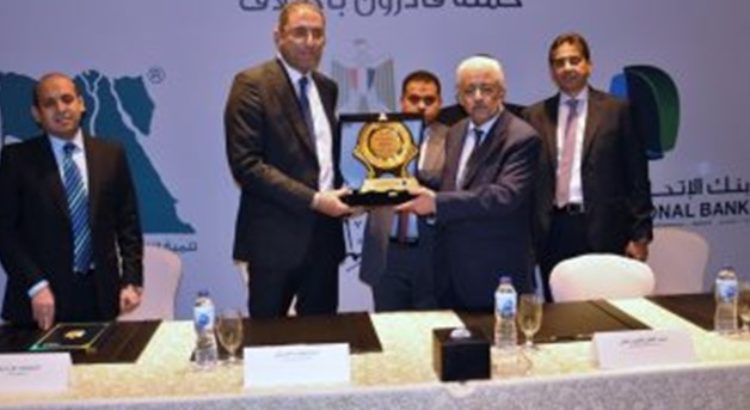
The Ministry of Education signed on Saturday a cooperative protocol with the National Union bank and Misr El Kheir Foundation (MEK) to implement the media campaign “Differently-abled” that aims to integrate students with special needs in the society.

Advisor of the Minister of Education for Marketing and Promotion, Yousra Allam, launched the biggest national campaign “Differently-abled”, focusing on psychological and educational needs of students with special needs, according the spokesman for the Ministry of Education Ahmed Khairy.

Allam remarked that the campaign will raise the awareness of the society particularly parents about the sound ways to treat their children through different kinds of media.

The Ministry of Education has taken several steps to enhance education in Egypt, which is part of Egypt’s 2030 vision to cultivate economic and social justice and revive the role of Egypt as a regional leader. Launching the first Arabic Citation Index (ARCI) worldwide comes at the top of these efforts.

First Arabic Citation Index worldwide

Minister of Education and Technical Education Tarek Shawki, a representative of the Knowledge Bank, signed on May 28 a protocol with Clarivate Analytics to launch the first Arabic citation index worldwide.

The signing ceremony was attended by Minister of Culture Inas Abdel Dayem, head of Bibliotheca Alexandrina Mostafa el Feki, public figures, members of Parliament and leaders at the Ministry of Education.

“The ARCI will be powered by the Web of Science – the world’s most trusted and only publisher – neutral citation index for researchers in Egypt and across the 22 member states of the Arab League,” according to Clarivate Analytics’ website.

The new system of education

In the same context, he mentioned that the index is included in the new system of education at the secondary school, stressing that the Ministry of Education has contracted many international entities to buy their contents and deliver them to Egyptian students, along with buying 2D and 3D films, adding that 5,700 videos in English and Arabic have been bought. He said that these movies, Al-Adwaa book and other scientific content would be put on tablets.

He stated that a random exam would be prepared every week to encourage students to come to schools.
Japanese schools

On the sidelines of the signing ceremony, the minister of education said in a press statement that the Egyptian-Japanese schools’ curriculum will be in Arabic at primary schools.

The Japanese education system, Tokkatsu, will be applied at 40 Egyptian-Japanese schools in different governorates in September.

A total of 20,000 teachers have applied to receive a training in the Japanese Tokkatsu education system in the ministry.

Shawki added that the ministry will hold a meeting on June 4 to choose 1,500 students for Japanese schools.


Source of the news: https://www.egypttoday.com/Article/1/51471/Education-min-to-integrate-students-with-special-needs-in-society

Comparte este contenido:

Israel: Ultra-Orthodox Families’ Increasing Demand for Secular Education Not Being Met

Asia/Israel/05.06.2018/By: Or Kashti/ Source: www.haaretz.com.

Education Ministry ‘foiling attempts at integration into society,’ say parents who want state-run Haredi school system to incorporate subjects like English, math

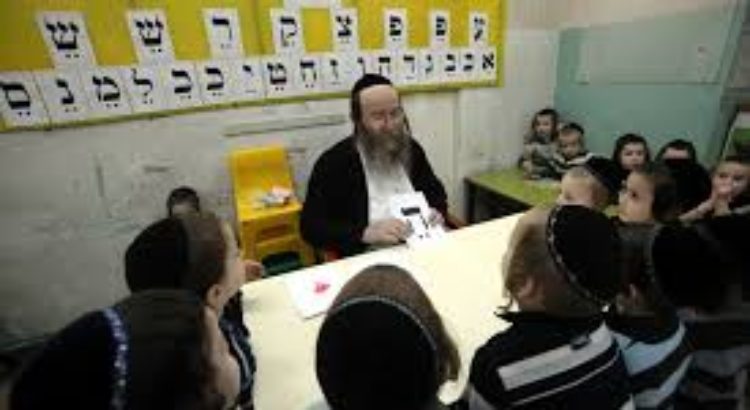
Hundreds of ultra-Orthodox children whose families want them to receive education in secular subjects are likely to be left in the lurch in the coming school year.

Despite growing demand among the ultra-Orthodox, or Haredim, to have children learn «core» subjects as English and math as part of the curriculum in the state Haredi school system – no solution has been forthcoming. The reasons for this, parents claim, include lack of room, hurdles by the local authorities and indifference on the part of the Education Ministry.

In light of this situation, an attempt by parents of some 250 children to be accepted to state Haredi schools next year is doomed to fail. A group of parents has gotten together recently, demanding an increase in the number of classrooms in these schools, but it seems that most will end up registering their children in the regular Haredi school system, where secular subjects are taught at a low level, if at all.

The parents accuse the Education Ministry of shirking its responsibilities. One has even charged that “the state is foiling attempts by Haredi families to integrate into the general society.”

The state Haredi school system was launched at the initiative of former Education Minister Shai Piron, who sought to bypass the contentious issue of core subjects being taught in the non-state schools that cater to the community. In addition to religious subjects, the relatively new state-run system offers a full curriculum of secular subjects from the first grade, and it is supervised by the ministry, in contrast to the Haredi system that is independently managed and has its own curriculum.

According to Education Ministry figures, the number of children enrolled this academic year in 43 state-run Haredi schools is 5,562, as compared to 4,675 pupils in 36 institutions last year. The ministry would not divulge data regarding the coming school year.

In conversations with parents and Haredi education activists it emerges that some 150 children who will be entering first grade in Jerusalem in the fall have been told that the schools are completely full. In Petah Tikva and Bnei Brak, 70 children are looking for a place in Haredi state schools, while others seek to enroll in them in Bat Yam, Holon and other cities – including locales with a Haredi majority such as Modi’in and Betar Ilit.

According to senior Education Ministry officials, these are numbers that warrant urgent attention.

A preliminary survey by Itamar Kea Levi, an activist in Jerusalem, reveals that there are 120 families across the country that have shown interest in setting up a school as part of the state-Haredi system in their own locales. He says that dozens of other families did not wish to give details about their efforts, as yet.

“The world is changing, people realize that you can stay in the world of Torah and work at the same time,” says Kea Levi. “In such a world, you want your child to have all the options.”

There are currently three such schools in Jerusalem – an elementary school for girls, and an elementary and high school for boys. Next year, a high school for girls is scheduled to be opened.

‘A different approach’

Former Bnei Brak resident Neta Katz says that he moved to Jerusalem so that his two sons, aged 7 and 9, will be able to study at a state Haredi school. “We’re at the end of the first year and I thank God for the move,” he says, adding that his daughter will be entering first grade in the fall of 2019.

“I asked the principal of the girls’ school to keep a place for her,» he says, «but she told me not to count on it. If it’s hard to deal with the demand at this point, I have no doubt that things will only get worse.”

Katz himself studied in schools run by the strict Gur Hasidic sect, and he recalls that, “95 percent of the time was devoted to religious studies, with an hour or an hour and a half left over for secular subjects. English was taught on an irregular basis. When I reached the academic world I had great difficulties since I had to start from very basic concepts like simple arithmetic problems.”

In the state Haredi schools, Katz explains, “the approach is completely different, both in terms of the level and the scope. I never knew there was a subject called science. I don’t believe core subjects should be imposed on people who don’t want them, but the state must enable this for those who do. In many high-density Haredi communities there are no such schools. If one considers the interest of the state, this is an unacceptable situation.”

Israel’s compulsory education law gives the responsibility for education to the state and to local authorities. Often, this joint responsibility leads one of the sides to pass the buck. According to sources in some local governments, the procedure is usually that the municipal education department turns to the ministry to ask for a new school to be built. The ministry has various methods of supporting the school system in local authority, through enhanced general budgets or by covering some specific expenses.

The Haredi department at the Education Ministry is responsible for state Haredi schools as well as for the independent Haredi system. Katz says that when he met in the past with people in this department, he was advised to organize a group of parents and then approach the local authority.

“The problem is that you can’t wait for the free market to kick in,” says Katz. “There are many hurdles and objections and you can’t tell parents to deal with local governments on their own.”

Says Yehuda Grovais, from Bnei Brak, “The Haredi department promised to deal with establishing a school if we produced a list of interested parents. By word of mouth we managed to get a list of 40 girls who want to attend such a school next year. So we were sent to the municipality. The sense is that the Education Ministry prefers that someone else do the fighting for them.”

Grovais notes that city hall had suggested that the girls go to a regular Haredi school. When he insisted he wanted something different, he was told that, “it won’t work here.” The same thing happened to another group in Petah Tikva.

“[Education Minister] Bennett is abandoning ultra-Orthodox people who want to integrate” says one parent. “The ministry is strengthening the grip of the extremist elements of the Haredi community and we’re paying the price.”

In response, the Bnei Brak municipality says that efforts will be made to resolve the issue. The Petah Tikva municipality said there was not enough demand for such schools.

The Education Ministry said it viewed the demand for more state-run Haredi schools positively and would examine ways to meet it, together with the relevant local authorities.

Source of the news: https://www.haaretz.com/israel-news/.premium–1.6141203

Comparte este contenido:
Page 2553 of 6196
1 2.551 2.552 2.553 2.554 2.555 6.196