Page 2622 of 6193
1 2.620 2.621 2.622 2.623 2.624 6.193

Sri Lanka: Yendo más allá de los libros

Una iniciativa de la organización global «Room to Read» tiene como objetivo garantizar que las alumnas de todo el país terminen su educación secundaria y al mismo tiempo adquieran habilidades esenciales para la vida. Shakya Wickramanayake informa desde Anuradhapura

Asia/Srilanka/punchng.com

Anuradhapura, cerca de la ciudad de Kebithigollawa es la pequeña escuela de Wahalkada D2.Llegamos allí un poco después de que el día escolar haya terminado, pero para un grupo de 12 estudiantes, las lecciones aún no han terminado. Esta no es una lección ordinaria centrada en la geografía o las matemáticas. En cambio, se enfoca en un área que el currículo escolar nacional no ve: habilidades para la vida y habilidades interpersonales.

Para la lección de ese día, el maestro conocido como «movilizador social» enseña administración del tiempo y cómo preparar efectivamente un calendario de estudio para los próximos exámenes, así como lograr que cada niño se ofrezca como voluntario para enseñar a otro alumno sus materias preferidas. A los niños se les pide que expliquen las funciones familiares, los eventos inesperados e incluso los descansos.

Todo parece bastante simple, casi  de sentido común, pero los efectos son de gran alcance. Cuando visitamos la casa de Piyumi Sandamalie, de 14 años de edad, una pequeña casa sin pintar, la madre de Piyumi nos cuenta con entusiasmo cómo el programa ha cambiado la vida de su hija. «Se ha vuelto más paciente ahora, y hará todo lo posible por ayudar a los demás», dice, y reitera cómo su hija enseña a los niños del vecindario a pesar de que se dedica a su tiempo de estudio. Aunque naturalmente talentosa en escribir y bailar, no fue hasta que participó en el programa de educación de las niñas que su confianza floreció y comenzó a participar activamente en las competiciones. Esta niña, una vez tímida, no solo sobresale en la escuela, sino que tiene un impacto positivo tanto en casa como en su comunidad.
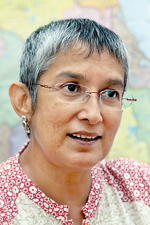
Shevanthi Jayasuriya:

«Estamos transformando vidas».

Pic por Priyantha Wickramaarachchi

Es posible que su historia no suene tan especial hasta que te des cuenta de los desafíos que enfrentan la mayoría de las mujeres en áreas rurales desfavorecidas. La directora de país de Habitación para leer en Sri Lanka, Shevanthi Jayasuriya explica cómo las niñas de las comunidades rurales tienen más probabilidades de quedar embarazadas cuando son adolescentes, se casan a una edad temprana, se convierten en víctimas de abuso y quedan atrapadas en el ciclo de la pobreza. «Algunas mujeres intentan escapar de este ciclo yendo al extranjero como ayudantes domésticas, pero solo el 20% de ellas están en mejor situación que cuando se fueron», dice y agrega que la mayoría de las mujeres sufren algún tipo de abuso o dificultad como resultado de su empleo. y que la tasa de abuso incesto aumenta en los hogares sin madres.

El programa de educación para niñas que había estado funcionando en la escuela desde 2011 es una iniciativa de la organización benéfica internacional «Room to Read» (RTR). Sus objetivos son dos: primero, garantizar que las niñas completen su educación secundaria y, en segundo lugar, que adquieran las habilidades necesarias para negociar las decisiones clave de su vida.Comenzando desde el 6º grado hasta el 12º grado, el programa cubre una variedad de áreas desde la toma de decisiones, la empatía, la salud sexual y la reproducción, la planificación de carreras, la educación financiera hasta la construcción de relaciones saludables y evitar las abusivas.

Los programas los lleva a cabo el activista social, generalmente una persona del área que actúa como mentora de las niñas y enlace entre la comunidad y el programa. Estos activistas sociales deben monitorear constantemente el progreso y la asistencia de las niñas: si un niño está ausente durante tres días consecutivos, visitan su hogar para ver cómo está. Esto ha ayudado a prevenir innumerables abandonos. En la mayoría de los casos, estos movilizadores sociales forman una gran relación con los niños y pueden llegar a ellos de una manera que los padres no pueden.
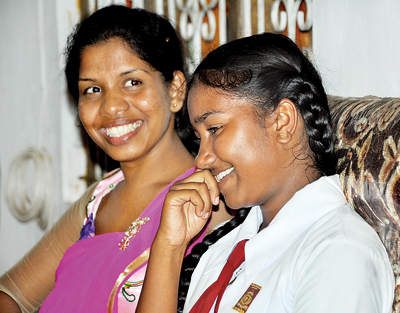
Estrecha relación: Sachini Nimesha Tillekaratne, de 15 años, con su movilizador social

Vimos esto con Sachini Nimesha Tillekaratne, de 15 años. Aunque un poco tímidos con extraños, fuimos testigos de lo burbujeante y entusiasta que estaba con el movilizador social, que es a la vez su mentor y confidente. Su madre comenta que le tranquiliza saber que su hijo tiene alguien con quien conectarse siempre.»Ella no siempre puede abrirse a mí porque soy su madre, pero siempre puede hablar con ella (la movilizadora social)», agrega.

«Estamos comprometidos en un trabajo transformador.Estamos transformando vidas «, dijo Shevanthi hablando sobre el programa, que opera en las escuelas de Moneragala, Badulla, Matale, Anuradhapura y Kandy. los resultados hablan por si mismos. El 95% del primer grupo de niñas que siguen el programa en una escuela en Hatton se han graduado y están en educación superior, capacitación vocacional o empleo. Dos estudiantes de una escuela de campamento IDP en Puttalam ingresaron a las Facultades de Derecho de Colombo y Peradeniya.

«El auto respeto y la autoestima no se enseñan en el sistema», dice Shevanthi, al referirse tanto a los sistemas culturales como a los educativos. Al enseñarles estos valores a las niñas y enseñarles a soñar en grande y apuntar más alto, «espero que la masa crítica se cree cuando nos vamos y las niñas se conviertan en modelos a seguir en su comunidad».

Sin embargo, el trabajo realizado por Room to Read no se centra solo en la educación de las niñas ni se limita a Sri Lanka. Una organización benéfica global, Room to Read, que opera en 14 países, desde Nepal hasta Sudáfrica, busca transformar las vidas de los niños a través del desarrollo de capacidades centrándose en la alfabetización y la igualdad de género. Ya RTR ha llegado a más de 10 millones de niños en todo el mundo con sus programas de alfabetización y educación para niñas, y espera llegar a más de 15 millones para 2020.
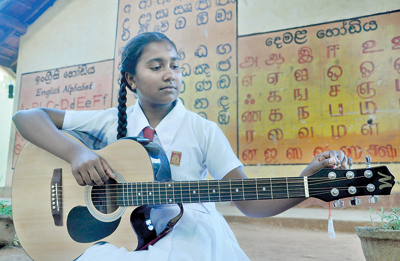
Músico aspirante: Sachini probando su nueva guitarra

La organización que fue fundada por el ex ejecutivo de Microsoft John Wood, la ex ejecutiva de Goldman Sachs Erin Ganju y Dinesh Sheshtra, tuvo sus inicios en un encuentro fortuito en 1998. Mientras hacía trekking en Nepal, Wood conoció a un inspector escolar nepalés que lo invitó a visitar una de las escuelas locales.

Al ver la escasa colección de libros que formaban la biblioteca de la escuela, Wood se mudó. Inmediatamente contactando a sus asociados y conocidos para pedir libros, Wood pudo construir una valiosa biblioteca para los 450 estudiantes impares de la escuela. A partir de ahí, Wood renunció a su trabajo y comenzó «Libros para Nepal», que se convirtió en Room to Read.

Hoy, su programa de alfabetización ha ampliado sus operaciones, desde la mera adquisición de libros y la construcción de bibliotecas, hasta la publicación de libros para niños en los idiomas locales y la capacitación de maestros de escuelas primarias sobre la enseñanza efectiva de idiomas. De hecho, ahora se dice que la organización es una de las editoriales infantiles más influyentes de la región, ya que ganó el Premio Confucio de Alfabetización 2011 de la UNESCO. Esta integración vertical en la publicación se vio estimulada por la falta de libros de calidad, apropiados para la edad y culturalmente relevantes en los idiomas locales disponibles en los mercados locales. «Hoy capacitamos a los autores e ilustradores locales sobre cómo escribir exactamente para los niños», explica Shevanthi, y agrega que los libros se publican internamente y se distribuyen de forma gratuita a las bibliotecas escolares.

Pero el programa que tal vez ha tenido el mayor impacto son los programas de formación de docentes primarios. Pilotado en 2012 y lanzado en 2014, el programa que trabaja a través del sistema de educación zonal capacita a maestros de escuela primaria en la metodología basada en la evidencia para enseñar el lenguaje, especialmente las lenguas maternas, reemplazando el aprendizaje memorístico obsoleto que se centra en la memorización en lugar de la comprensión. «Más del 70% de los estudiantes que se inscriben para la beca de quinto grado reciben un cero para la pregunta de ensayo», dice Shevanthi, explicando que esto muestra una falta de comprensión. «No se pueden hacer otras asignaturas sin las habilidades básicas del lenguaje», agrega destacando la importancia de que los niños capten los principios básicos del lenguaje a una edad temprana.
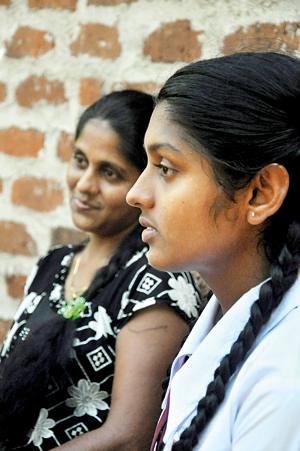
14 años de edad, Piyumi Sandamalie con su madre

Bajo la nueva metodología, los maestros usan ‘palabras sin sentido’ (palabras ficticias) para evaluar si los niños están simplemente memorizando o si comprenden las reglas del lenguaje; así como también el método científico para medir la velocidad de lectura. Además, están entrenados en el arte de contar historias y usan varias técnicas de lectura, como lectura fuerte, compartida y emparejada. Los maestros ahora pueden identificar las habilidades de lectura y el nivel de cada niño y atenderlos individualmente de acuerdo con RTR. Para la mayoría de las escuelas, los resultados se ponen de manifiesto después del examen de becas de quinto grado, dice Shevanthi. Pero en los primeros meses, el ausentismo de los docentes disminuye, ya que los maestros se muestran más entusiastas cuando ven el progreso de un niño que viene con cada lección.»Hemos tenido maestros que dicen que por primera vez en sus 25 años de enseñanza, disfrutan de su vocación», dice Shevanthi.

Sus programas de alfabetización también han resultado en que los padres y la comunidad se involucren más en la educación de sus hijos.»Una vez que los padres ven el progreso del niño, aumentan sus niveles de interés», dice Shevanthi, mencionando que en algunos casos el niño que está en el Grado 1 o 2 lee el periódico a sus propios padres. La comunidad también se involucra a través del sistema de la biblioteca. Esto se debe a que, aunque las bibliotecas escolares están construidas por RTR, son los padres quienes las administran. Esto ayuda a hacer que todo el sistema sea más sostenible a medida que la comunidad compra el concepto.

En última instancia, el objetivo de sus programas de alfabetización es brindar a los niños las habilidades de lectoescritura necesarias para continuar sus estudios, así como crear el hábito y fomentar el amor por la lectura. Como quizás sea mejor dicho por el famoso autor de libros infantiles, el Dr. Seuss, «cuanto más leas, más cosas sabrás. Cuanto más aprenda, más lugares irá «. Eso es lo que RTR busca, la transformación de vidas a través de la educación.

Actualmente su programa de alfabetización en Sri Lanka opera en Vavuniya, Polonnaruwa, Badulla y Anuradhapura, en más de 200 escuelas. Estos programas junto con los programas de educación para niñas se financian con donaciones individuales y corporativas de todo el mundo, mientras que el mayor apoyo corporativo aquí ha sido Hong Kong y Shanghai Banking Corporation (HSBC), que ha ayudado a RTR a llevar a cabo su trabajo en toda la isla, y especialmente en las áreas rurales más remotas que especialmente necesitan esta ventaja para romper el ciclo de la pobreza.
 Fuente: http://www.punchng.com/unesco-seeks-educational-integration/
Comparte este contenido:

¿Nativos y Nativas Digitales?

Por: Elbinario. 02/05/2018

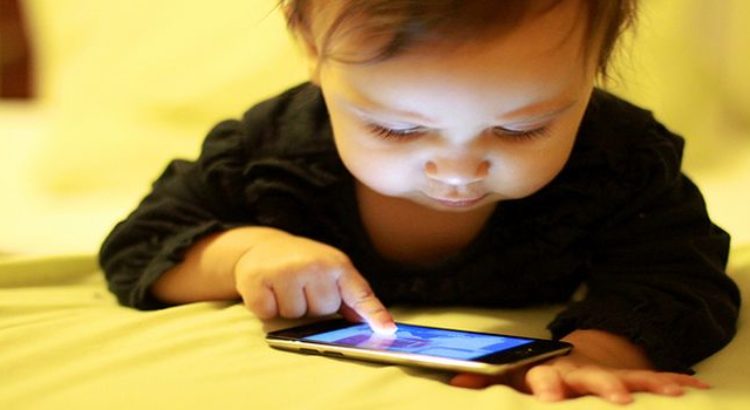
Cada vez que oigo el termino “nativo digital” algo rechina en mis oídos, soy padre y veo como mis peques manejan desde pequeños dispositivos electrónicos con una cierta soltura, algo que seguramente han aprendido usando el método de imitación. Los niños y niñas aprenden desde pequeños a relacionarse con su entorno imitando a sus familiares, si una niña o niño que no llega al año de edad sabe desbloquear un móvil o aplicación es porque se tiran horas observando el comportamiento de los adultos, pero el hecho de que consigan manejar con cierta soltura(algunos mejor que algunos adultos) la tecnología que los rodea, solo significa que han nacido con ella, no que comprendan como funciona.

Si saben manejar con cierta soltura una aplicación o juego no es solo porque sean unos y unas genios, si no porque los dispositivos y las aplicaciones tienen una capa de “abstracción” muy alta y una interfaz muy intuitiva que permite que cualquiera pueda manejarlos con destreza. Si programo una app con un web-loic y un botón que diga ¡Fire!, y se lo doy a mi pequeña lo mas probable es que acabe realizando un ataque de DDOS y no por ello sera una “juanquer” 😛 😉 por lo tanto no podemos pensar que son “nativos o nativas digitales” solo por haber nacido en en siglo XX, tenemos que hacer mucho trabajo de pedagogía para que según vayan creciendo entiendan como funcionan las redes, como diferenciar una pagina segura de no segura, como contrastar una noticia falsa, como proteger su privacidad,etc..

Lamentablemente por falta de esa pedagogía lo único que veo(hablo de mi experiencia) con niños y niñas de mediana edad y preadolescentes es cultura del exhibicionismo en las redes, pequeños y pequeñas narcisos, intentando obtener la mejor pose para ese “selfie” o vídeo que compartir con sus amigas,exposición irresponsable de datos privados colgados en cualquier pagina, solo porque “esta lo pide” o sus amigas también están registradas,o difusión constante de bulos y noticias falsas intoxicando aun mas las redes.

Necesitamos que comprendan como funciona Internet, puesto que es un elemento fundamental para la humanidad hoy en día, pero también necesitamos que conozcan como funciona la tecnología, fuera de los cánones de corporaciones que solo quieren convertirlos en meros clientes de sus productos y cual es la relación de ella con la sociedad, la “brecha” digital y el “precio” que se paga en derechos laborables y humanos por el “low cost” de esos juguetes tecnológicos y las alternativas mas éticas a estos.

Recuerdo que antiguamente cuando comprabas un nuevo equipo, este venia con un montón de discos y manuales para aprender a usarlo y tus padres te decían no lo toques hasta que leas como funciona, obviamente no le hacías ni caso y la liabas, pero después de liarla cogías al manual y aprendías a como no había que usarlo(por lo menos en mi caso), hoy en día entregamos dispositivos conectados a un gigantesco “mundo”” llamado Internet a nuestros hijos y hijas sin ningún tipo de instrucción y advertencia, porque son nativos y nativas digitales” y claro saben manejarlo mejor que tu y cometemos un grandísimo error,porque estamos fomentando personas, dependientes de un medio que realmente no comprenden como trabaja o funciona, por lo que solo se están convirtiendo en esclavos digitales de empresas y corporaciones, peones para una sociedad tecnocrata cada vez mas intrusiva y controladora.

Tal vez el problema de usar de manera tan alocada la tecnología, sea que esa capa de “abstracción” que hemos comentado antes, también sirva para pensar que detrás de esa pagina que nos pide que nos registremos,compartamos o subamos ese video/foto no existen personas, que al igual que en la vida real, puedan ser capaces de hacer cosas maravillosas o cosas terroríficas, por lo que debemos de enseñar a los niños y niñas que darles nuestros datos es entregarles la llave de nuestros mas preciados secretos y intimidades y eso si en la vida real no lo hacen con “cualquiera” tampoco deberían hacerlo en las redes por muchos “likes” que consigan.

*Fuente: http://insurgenciamagisterial.com/nativos-y-nativas-digitales/

Comparte este contenido:

Tear gas and terror: A Palestinian education under occupation

Por: Yumna Patel/middleeasteye.net/02-05-2018

Officials say 95 West Bank schools were attacked in 2017 as intimidation, demolitions and occupation take high toll on Palestinian children

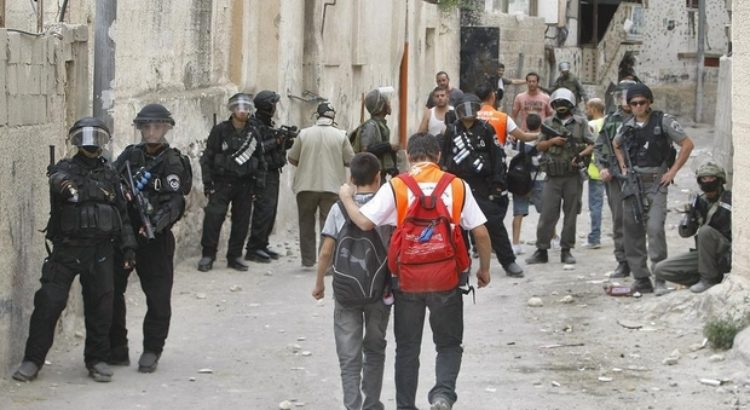
NABLUS, Occupied West Bank – The Israeli soldiers came as children were playing outside their village school south of Nablus. Within minutes tear gas had engulfed the playground, stones were thrown, and a 10-year-old boy was shot in the head with a rubber-coated steel bullet.

The violence on that morning of Sunday, 25 March was but the latest in a series of confrontations outside Burin village’s high school and Ahmad Faris, the 10-year-old taken to hospital for stitches, was the latest casualty.

The settlers try to break the school windows and attack teachers and students with rocks. Sometimes they shoot live bullets

– Ghassan Najjar, Burin activist

According to locals, the school is attacked up to three times a week by residents of the nearby illegal Yitzhar settlement, and Israeli soldiers from the nearby watchtower.

«More than 10 students refused to go to school after Ahmad’s injury, and another one wet himself at school,» Ghassan Najjar, a local activist told Middle East Eye.

«When you are studying and your school is surrounded by Israeli soldiers, how can you possibly focus in class?»

And the attacks fit a national pattern of increasing intimidation and violence against schools, children and teachers.

The Palestinian education ministry’s annual report found 80,279 Palestinian children and 4,929 teachers and staff were «attacked» by Israeli settlers or soldiers.

Over the course of the year, nine students were killed under various circumstances, 600 were injured, and more than 300 were arrested, in 352 attacks by Israelis on 95 schools.

An Israeli soldier points his weapons at a youth during clashes in Burqin in February 2018 (AFP)

Schools on the frontline

Nestled in the rolling hills of the northern West Bank, Burin is home to about 3,000 Palestinians, and is surrounded on all sides by two illegal settlements, an illegal outpost, and a military base.

The school sits at the entrance of the village, and is attended by about 300 local boys and girls.

Perched on the mountaintop overhead is Yitzhar, the source of multiple settler attacks. About 50 metres behind the school is an Israeli watchtower.

With its close proximity to both, the school is often on the frontline of settler and soldier raids on the village, according to Najjar.

«Every week there are at least two or three attacks, from both settlers and soldiers,» he told Middle East Eye.

«The settlers will come down from the mountain and try to break the school windows and attack teachers and students with rocks. Sometimes they even shoot live bullets.»

He recounts how one day armed settlers managed to break into the school as children were taking exams.

Soldiers, he says, often leave the watchtower to shout insults at the children, and blast music from the vehicles to provoke them

Children often throw stones in retaliation. «Then the soldiers use this as an excuse to tear gas the school and shoot at the kids,» Najjar said.

Najjar, who has volunteered at the school, said children are on edge all the time, always on the lookout for soldiers or settlers. «They have this mentality that ‘we need to protect ourselves and we need to protect our school’.»

And 2018 is shaping up to be another dangerous year for children and teachers – Palestinian media has reported several attacks on schools since the beginning of the year.

On 21 March, days before Faris’ injury, Israeli forces carried out a «show of force» in the Ramallah-area village of al-Mughayyir as children walked to school. Eight children were injured by rubber bullets in the ensuing clashes.

Two days before that, a school in the Bethlehem-area town of Tuqu was attacked by Israeli soldiers. Stones were thrown and tear gas was fired into the school grounds, and staff were forced to barricade the doors to prevent the soldiers getting inside.

Bedouin children attend school outside in Abu Anwar near the Jewish settlement of Maale Adumim (background), after their classrooms were demolished (AFP)

Confiscation and demolition

While such attacks threaten the safety of children and teachers, Najjar told MEE that his biggest concern was Israel’s ongoing confiscation of school land. In February, soldiers delivered a notice that Israel would be confiscating almost 15 acres of Burin school’s land for the construction of a separation wall.

«This is the most dangerous threat facing the school now,» Najjar said. «The planned construction of this wall will put more pressure on students, and make it impossible for them to get a proper education.

«They will be focused on protecting their land, and not on studying.»

Confiscations are under way across the occupied territories. According to a Februarystatement from the UN Office for the Coordination of Humanitarian Affairs (OCHA), 37 schools have pending demolition orders in Area C of the West Bank, which is under the full civilian and security control of Israeli authorities.

When an organisation comes to build new classrooms, the children know it is only a matter of time before the bulldozers come again

– Dawoud al-Jahalin, Abu Nuwar council

One of those schools, which was partially demolished in February for the sixth time since 2016, is located in the Bedouin village Abu Nuwar, where 670 Palestinians live in tents and sheet-metal shacks.

Under the pretext of being built without Israeli permits – which are nearly impossible for Palestinians to obtain in Area C – Israeli authorities demolished two EU-funded classrooms serving 26 Palestinian children in Abu Nuwar, sparking widespread criticism from Palestinian officials and the international community.

«These classrooms have been demolished so many times now,» said Dawoud al-Jahalin, the head of Abu Nuwar’s village council.

«When an organisation comes to build new classrooms, the children can’t even be excited – they know it is only a matter of time before the Israeli bulldozers come again.»

According to Jahalin, the 26 children now study in a local community centre and barbershop.

«Of course we hope to rebuild proper classrooms, but we need the help of the international community to put more pressure on the Israeli government to stop its demolitions,» he said, adding that the confiscations went further than ‘illegal’ buildings – Israeli forces last summer confiscated solar panels that powered the classroom and a local guesthouse.

Israelis march from the illegal settlement of Maale Adumim to the E1 zone in February 2014 (AFP)

Israeli incursions

Located in the strategic so-called «E1 area» of the West Bank, Abu Nuwar is the largest of several local Bedouin communities threatened with demolition.

The E1 plan would see the construction of hundreds of settlement units linking Maale Adumim and Kfar Adumim with occupied East Jerusalem.

If implemented, it would create an urban settlement bloc in the middle of occupied Palestinian territory which would effectively cut the southern and northern parts of the West Bank in two, and further isolate occupied East Jerusalem from the West Bank.

The plan would spell the end for Khan al-Ahmar, whose entire community, including its school, is already threatened with demolition and forced displacement, andJabal al-Baba – where the village’s only kindergarten was destroyed in August 2017, one month before the start of the school year.

Rights groups have argued that Israel’s policies in E1 amount to forcible transfer – strictly prohibited under international humanitarian law and a violation of the Fourth Geneva Convention.

«The Bedouin communities in the Jerusalem area have been here since the 1950s, after we were made refugees from our original lands in the Negev desert, and we are not even allowed electricity, water, or road networks,» Jahalin told MEE.

«Meanwhile Maale Adumim, which was built illegally in the 1980s, has over 70 gardens and play areas, 12 schools, and buses to take their kids to and from school.

«We are living in the 21st century, and Palestinian children still do not have access to one of the most basic human rights: the right to education.»

Israeli soldiers arrest a young Palestinian boy following clashes in Hebron in June 2014 (AFP)
Running the gauntlet

The education ministry also highlighted the effect Israel’s extensive network of checkpoints and closed military zones on the right and safe access to education.

The ministry’s 2017 report said Palestinian children and teachers at 51 schools were delayed at military checkpoints and gates while on their way to and from school.

26,808 students and 1,029 teachers were either prevented from getting to school or faced long delays at checkpoints, resulting in «35,895 classes wasted»

– Palestinian Ministry of Education report

As a result, 26,808 students and 1,029 teachers were either prevented from getting to school or faced long delays, resulting in «35,895 classes wasted».

In the southern West Bank, in the Masafer Yatta area of the south Hebron hills, 210 Palestinian children living in a cluster of 12 small villages face the daily challenge getting to class in an active military training zone.

Learning in a firing zone

Declared by the Israeli government as Firing Zone 918 in the late 1970s, the Palestinians living in the area spanning 8,648 acres are subjected to the whims of the Israeli army, which routinely exercises with live ammunition.

Nidal Younis, the head of Masafer Yatta village council, told MEE that the children in the community were often the most exposed to the military exercises.

Can anyone else in the world imagine themselves as a child, or imagine their children, trying to get a proper education under these conditions?

– Nidal Younis, Masafer Yatta village council

«There are only three schools in the entire area, and most of the communities do not have access to school buses, forcing kids to walk several kilometres to and from school,» Younis said.

He added that any buses secured for children were often stopped and turned around by Israeli forces on the way to school.

«As the kids walk to school, military helicopters fly overhead at low altitudes, whipping up clouds of dirt and sand around the children, hurting their eyes and delaying their journey to school,» he said.

He added that during active training periods, soldiers will close certain areas leading to the schools for up to 10 days, leaving teachers and children sitting at home until the army reopens the area.

Younis said Israel has prevented locals from paving proper roads, or installing electricity or water infrastructure inside the zone.

«In the summer, kids walking on dirt paths have to fend off snakes and scorpions, and by the time they arrive to school they have overheated and are thirsty – and they don’t even have access to running water.

«Can anyone else in the world imagine themselves as a child, or imagine their children, trying to get a proper education under these conditions?

«It is unbearable, almost impossible. But in Palestine, this is what our children must go through just to learn.»

*Fuente: http://www.middleeasteye.net/news/israeli-attacks-palestinian-schools-1123654765

Comparte este contenido:

‘We have received nothing’: Sinjar’s only school pleads for help in post-IS Iraq

Por: Tom Westcott/middleeasteye.net/02-05-2018

Teachers in north Iraq struggle with class sizes of 100, few texts and no electricity – and no one has helped them get back on their feet

SINJAR, Iraq – Children pour out of overcrowded classrooms with shattered windows, running out onto Sinjar’s decimated streets in a cacophony of happy shouts and screams. Behind them, weary volunteer teachers head towards the sparsely furnished staff room for their daily meeting with headmaster Alias Nimr Azdo.

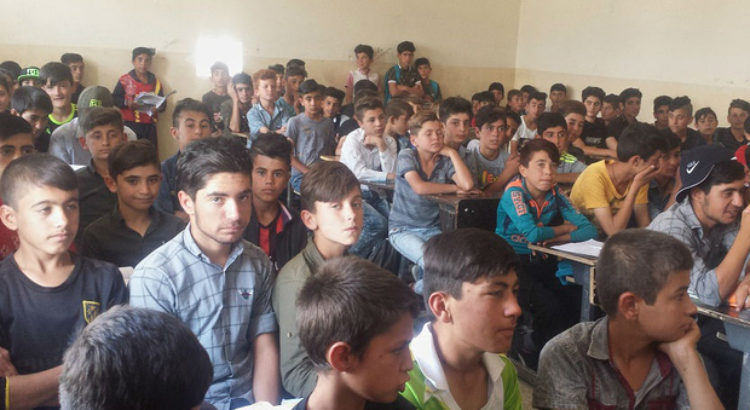
Most classes have over 100 pupils, who cram into classrooms sitting four to a desk

«This is the only functioning school in the whole of Sinjar and we run two shifts – morning and afternoon – to try and provide access to education for everyone here,» he told Middle East Eye. «But we are running this school with almost nothing.»

Even with all the classrooms in use during both shifts, Sinjar Mixed School is much too small for the number of pupils, who currently number more than 1,300, including 75 Muslim Shia children.

Most classes have over 100 pupils, who cram into classrooms sitting four to a desk. With insufficient teachers or space to cater for different age groups, they often have an unusual mix of ages and abilities.

But while Sinjar’s other former schools lie in ruins, either destroyed by the Islamic State (IS), which occupied much of Sinjar for a year and a half, or damaged by fighting and air strikes during the battle for liberation, there is no imminent solution to ease overcrowding.

And as word spreads that the school has reopened, it continues to attract more children, both new returnees and from Sinjar’s many outlying villages.

After four years of living as internally displaced people (IDPs), often without access to proper schooling, most families are keen for their children to try and catch up, although teachers say more than 1,000 children in nearby villages are still unable to reach the school because of transport difficulties.

Few books or pens

«We are trying to follow the official Iraqi curriculum, which is the same one as is taught in Baghdad schools, and we only teach in Arabic, even though most of the teachers don’t even speak perfect Arabic themselves, but we only have a few textbooks, so there are huge gaps in the curriculum we are able to teach,» said Azdo.

No funding or practical support, not even the textbooks which are compulsory across Iraq, have been sent to Sinjar by either the Iraqi government or the Nineweh Local Council, under whose jurisdiction Sinjar falls, he said.

We have received nothing, not even one single pen from the department of education

– Khairo K Wahb, teacher 

Since the area was liberated from IS in late 2015, no representative from the Ministry of Education has even visited the town, although Azdo insisted that the terrible situation faced by the school has been made clear through multiple and regular phone calls to the ministry.

IS militants stripped the premises of all its furnishings and Azdo first opened the school using empty cardboard boxes as furniture before members of the local Hashd al-Shaabi (Popular Mobilisation) forces managed to procure desks from elsewhere.

«We have received nothing, not even one single pen from the department of education,» said qualified teacher Khairo K Wahb, shaking his head.

Two children walk home after school, past the ruins of Sinjar Old Town (MEE/Tom Westcott)

When the school first opened last October, it tried to operate a system where parents paid 5,000 dinars ($4) per month towards schooling costs. But with most of Sinjar’s residents living below the poverty line and unable even to spare one dinar, this was abandoned.

As pupils across Iraq prepare for their end of term exams, already overwhelmed volunteer teachers have clubbed together and bought a computer and printer with their own money, to enable Sinjar’s pupils to take the national exams.

With no electricity and no running water, the premises lack even the most basic facilities, and the handful of toilets used daily by over 1,000 children are unsanitary.

The Iraqi government continues to work on repairing infrastructure damaged by fighting, and electricity supplies have been restored to some parts of Sinjar town but these have not yet reached the school.

A privately owned minibus ferries some children between their homes and the school but many others, whose families cannot afford to pay for the bus, and several of the volunteer teachers, have to walk up to 5km to attend the school.

Children leave afternoon classes at the school (MEE/Abbas al-Karady)

Volunteer teachers

Azdo is one of only three qualified teachers at the school, only two of whom receive a government salary. The remaining 14 teachers are all young people who have finished secondary school and, despite having no teaching experience, are doing their best to help provide basic education.

«We had to ask people to volunteer to teach in order to save the future of more than 1,000 students, and give them their right to an education,» explained 26 year-old Shevan Khero, the school’s only English teacher and himself a volunteer.

I have just one textbook, so I am gradually writing out the whole textbook on the blackboard, and the children are supposed to copy that down

– Hana Hassan, Arabic teacher

A month ago, there was almost double the number of volunteer teachers but, worn down by the difficult job and with no prospect of financial support, many have left.

Qualified teacher Wahb admits that classes are often so loud and unruly that lessons are feats of crowd-control, with teachers struggling to quiet down overexcited pupils enough to be able to try and teach.

«I volunteered here because I knew the children needed teachers so I was happy to do something to help,» said Arabic teacher Jian Nawaf, 19, who started working at the school in November. «But it’s very difficult because I have 120 pupils in my class and the noise they all make means teaching is almost impossible and, to be honest, I often long for the classes to end.»

Blankets and pieces of carpet keep out the elements (MEE/Tom Westcott)

Hana Hassan, 21, who also teaches Arabic, admits the job is tougher than she had expected. «I have just one textbook, so I am gradually writing out the whole textbook on the blackboard, and the children are supposed to copy that down, but they don’t all have paper and pens and there are so many children, I can’t even show them pictures and diagrams from the textbook.»

Scant follow-through on NGO promises

Despite the overcrowding, dilapidation and insufficient materials and resources, there is a charming atmosphere in the school and Sinjar’s children say classes are a highlight of their lives, living amidst the tragic ruins of Sinjar.

While his brothers play in the street on a sunny afternoon, seven-year-old Hassan proudly reads aloud from a battered geography textbook pulled from the ruins of a collapsed house. Heavily-scrawled by former students, it has now become a valuable and cherished item. «There are 70 pupils in my class but I love going to school,» he said happily.

«Ninety percent of the pupils here don’t have books or materials for study,» said Khero. «The only way I can teach them English is by speaking and writing on the board because there are no textbooks and most of the pupils don’t have pens or exercise books. It’s very difficult for me but it’s much more difficult for them.»

Sinjar’s overwhelmed and overworked teaching staff were also critical of international NGOs who, they said, despite making numerous visits, have done little more than make empty promises.

«More than ten international organisations have visited the school and seen the situation we face here and they have promised all sorts of things, but nothing ever comes of these promises,» said teacher Bashar Omar Ali.

He said so many NGOs had visited the school, staff struggled to keep up with the names of all the organisations, adding that, since the promises had proved to be only empty words, this was largely irrelevant.

Children wait outside Sinjar school for their parents to collect them (MEE/Abbas al-Karady)

UNICEF spokesperson Laila Ali told MEE that during 2017 and 2018, it had supported 10 Arabic schools (3,477 children) and 17 Kurdish schools (5,298 children) across the Sinjar region, providing 106 boxes of educational supplies, and had supported the transportation of over 15,000 school textbooks.

Supplies from any organisation or government, however, have not reached Sinjar town’s only school since the beginning of the school year until now.

Teacher Omar Ali said representatives claiming to be from a UN organisation had made three visits and given extensive promises, including replacing shattered window glass, currently patched up with cardboard or draped with blankets to keep out the elements, and providing much-needed new water tanks. But nothing had yet been done.

Ali, the UNICEF spokesperson, said the organisation had not visited the school nor had not made any such promises.

And even when help does occasionally materialise, said Wahb, this is not always well thought out.

«The last international organisation to visit us made a one-off payment to half the teachers while leaving the other half unpaid, which made a very big problem among the teachers because it was so unfair,» he said.

International aid agencies, mostly working out of Baghdad or Erbil, struggle to provide detailed and accurate accounts of work they have apparently undertaken in the remote Sinjar region, usually carried out by local partner organisations.

Local medics told MEE that work was of a very low standard and often left incomplete, including faulty electrics and broken water systems in one healthcare clinic «renovated» by a major NGO.

*Fuente: http://www.middleeasteye.net/news/worst-school-sinjar-139676923

Comparte este contenido:

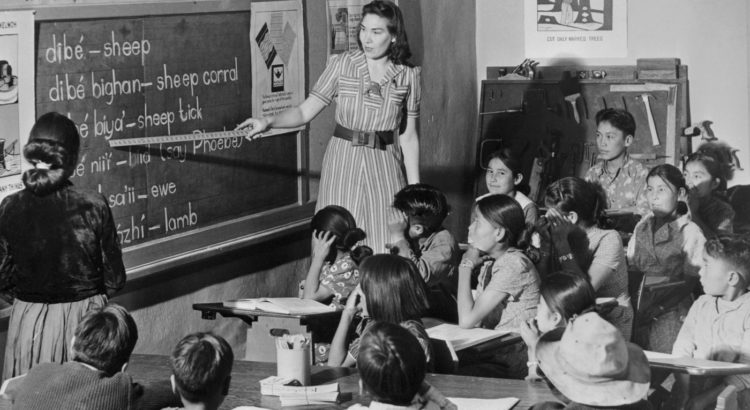
EEUU-Massachusetts: Native Language Schools Are Taking Back Education

Por:  intercontinentalcry.org/ Abaki Beck/ 02-05-2018
MORE THAN A CENTURY AGO, THE LAST FLUENT SPEAKERS OF WÔPANÂAK PASSED AWAY. NOW THIS SCHOOL IS WORKING TO REVIVE THE LANGUAGE.
For more than 150 years, the Wôpanâak language was silent. With no fluent speakers alive, the language of the Mashpee Wampanoag people existed only in historical documents. It was by all measures extinct. But a recently established language school on the Mashpee Wampanoag Tribe’s reservation in Massachusetts is working to bring back the language.

The threat of extinction that faces the Wôpanâak language is not uncommon for indigenous languages in the United States. Calculated federal policy, not happenstance, led to the destruction of Native American languages such as Wôpanâak.

But today, Native language schools are working to change that by revitalizing languages that have been threatened with extinction.

In the 19th century, federal policy shifted from a policy of extermination and displacement to assimilation. The passage of the Civilization Fund Act in 1819 allocated federal funds directly to education for the purpose of assimilation, and that led to the formation of many government-run boarding schools. Boarding schools were not meant to educate, but to assimilate.

Tribal communities continue to be haunted by this history. As of April, UNESCO’s Atlas of the World’s Endangered Languages listed 191 Native American languages as “in danger” in the United States. Of these, some languages are vulnerable—meaning that children speak the language, but only in certain contexts—to critically endangered—meaning the youngest generation of speakers are elderly.

Today, the education system in the United States fails Native American students. Native students have the lowest high school graduation rate of any racial group nationally, according to the 2017 Condition of Education Report. And a 2010 report shows that in the 12 states with the highest Native American population, less than 50 percent of Native students graduate from high school per year.

By founding schools that teach in Native languages and center tribal history and beliefs, tribal language schools are taking education back into their own hands.

Mukayuhsak Weekuw: Reviving a silent language

On the Massachusetts coast just two hours south of Boston is Mukayuhsak Weekuw, a Wôpanâak language preschool and kindergarten founded in 2015. The school is working to revitalize the Wôpanâak language. As one of the first tribes to encounter colonists, the Mashpee Wampanoag faced nearly four centuries of violence and assimilation attempts; by the mid 19th century, the last fluent speakers of Wôpanâak had died.

In the 1990s, Wampanoag social worker Jessie Little Doe Baird began to work to bring the language back to her people. It began like this: More than 20 years ago, Baird had a series of dreams in which her ancestors spoke to her in Wôpanâak. She says they instructed her to ask her community whether they were ready to welcome the language home.

She listened, and in 1993 she sought the help of linguists and community elders to begin to revitalize the language—elders like Helen Manning from the Aquinnah Wampanoag Tribe, with whom she would later co-found the Wôpanâak Language Reclamation Project.

Baird found a lot of resources. To translate the Bible, colonists had transcribed Wôpanâak to the Roman alphabet in the 1600s, which the Wampanoag used to write letters, wills, deeds, and petitions to the colonial government. With these texts, Baird and MIT linguist Kenneth Hale established rules for Wôpanâak orthography and grammar, and created a dictionary of 11,000 words.

In 2015, the Wôpanâak Language Reclamation Project was ready to open the Mukayuhsak Weekuw preschool. According to the school’s Project Director Jennifer Weston, 10 students attended in the first year it opened, growing to 20 in the current school year. As part of the language program, parents or grandparents of students at the school are required to attend a weekly language class to ensure that the youth can continue speaking the language at home.

The curriculum is taught entirely in the Wôpanâak language, and it is also grounded in tribal history and connection to the land. “Our languages embody our ancestors’ relationships to our homelands and to one another across millennia,” Weston says. “They explain to us to the significance of all the places for our most important ceremonies and medicines. They tell us who we are and how to be good relatives.”

In addition to language learning, the children also learn about gardening, hunting, and fishing. They practice tribal ceremonies, traditional food preservation, and traditional hunting and fishing practices. At Native American language schools like Mukayuhsak Weekuw, students experience their culture in the curriculum in a deeply personal and empowering way.

‘Aha Pūnana Leo: Overcoming policy barriers

Considering the violent history of America’s education system towards Native Americans, it is perhaps unsurprising that policy barriers continue to hinder contemporary language revitalization schools.

Federal policies are often misaligned with the reality of tribal communities and language revitalization schools. Leslie Harper, president of the advocacy group National Coalition of Native American Language Schools and Programs, says schools often risk losing funding because they lack qualified teachers who meet federal standards. But these standards are paternalistic, notes Harper, who says that fluent language teachers at Native schools are often trained outside of accredited teaching colleges, which don’t offer relevant Native language teaching programs. These teaching colleges don’t “respond to our needs for teachers in Indian communities,” she says.

In Hawai’i, ‘Aha Pūnana Leo schools have had some success in overcoming policy barriers like these. The schools have led the way for statewide and national policy change in Native language education.

When the first preschool was founded in 1984, activists estimated that fewer than 50 children spoke Hawaiian statewide. Today, ‘Aha Pūnana Leo runs 21 language medium schools serving thousands of students throughout the state, from preschool through high school. Because of this success, emerging revitalization schools and researchers alike look to ‘Aha Pūnana Leo as a model.

Nāmaka Rawlins is the director of strategic collaborations at ‘Aha Pūnana Leo. Like Harper, she says that required academic credentialing burdened the language preschools, which relied on fluent elders. This became an issue in 2012 when kindergarten was made compulsory in Hawai’i, and teachers and directors of preschools were required to be accredited. But she, along with other Hawaiian language advocates, advocated for changes to these state regulations to exclude Hawaiian preschools from the requirement and instead accredit their own teachers as local, indigenous experts. And they succeeded. “We got a lot of flack from the preschool community,” she says. “Today, we provide our own training and professional development.”

One of the early successes of ‘Aha Pūnana Leo was removing the ban on the use of Hawaiian language in schools, which had been illegal for nearly a century. Four years later, in 1990, the passage of the Native American Language Act affirmed that Native American children across the nation have the right to be educated, express themselves, and be assessed in their tribal language.

But according to Harper, progress still needs to be made before NALA is fully implemented by the Education Department. Since 2016, Native American language medium schools have been able to assess students in their language. This took years of advocacy by people like Harper, who served on the U.S. Department of Education’s Every Student Succeeds Act Implementation Committee and pushed for the change.

While this is an important first step, Harper is concerned that because language medium school assessments must be peer reviewed, low capacity schools—or those that lack the technical expertise of developing assessments that align with federal standards—will be burdened. And the exemption doesn’t apply to high schools.

Studies from multiple language revitalization schools have found that students who attend these schools have greater academic achievement than those who attend English-speaking schools, including scoring significantly higher on standardized tests. “We are beginning to see the long-term benefits of language revitalization and language-medium education in our kids,” Harper says. “But the public education system and laws are still reticent about us developing programs of instruction for our students.”

Looking back, looking forward

A movement to revitalize tribal languages is underway. The success of ‘Aha Pūnana Leo and promise of Mukayuhsak Weekuw are examples of communities taking education into their own hands. When Native American students are taught in their own language and culture, they succeed.

Weston says parents are eager for Mukayuhsak Weekuw to expand into an elementary school, and in fall 2018, the school will include first grade in addition to pre-school and kindergarten. It is a testament to the work and vision of the Wampanoag that just two decades ago, their language was silent, and today, they have a school that expands in size each year. “All of our tribal communities have the capacity to maintain and revitalize our mother tongues,” Weston says—no matter how daunting it may seem.

This article was originally published by Yes! Magazine. It has been re-published at IC under a Creative Commons License.

*Fuente: https://intercontinentalcry.org/native-language-schools-are-taking-back-education/

Comparte este contenido:

Kenya Public Universities Crack Whip on Striking Lecturers

Kenya/May 01, 2018/By Ouma Wanzala/ Source: http://allafrica.com

The University of Nairobi has taken the lead by suspending 35 lecturers after they declined to return to work following the Labour Court’s ruling that declared the pay strike illegal and unprotected in March. The industrial action enters its third month on May 1.

Public universities have started cracking the whip on striking lecturers and other staff as the industrial action enters its third month on Tuesday.

The University of Nairobi (UoN) has suspended 35 lecturers after they declined to return to work following Labour Court’s ruling that declared the strike illegal and unprotected last month.

Technical University of Kenya (TUK) on Friday started a head count of lecturers who are teaching, and has threatened to sack those who will not report to work.

At UoN, acting Deputy Vice Chancellor Finance and Administration Isaac Mbeche said the suspension is a warning to those who are still on strike.

«We are now dealing with individuals since they have different contracts with the university. If you do not come to work without permission, there are consequences,» Prof Mbeche warned.

SALARIES

He said the institution wrote to staff asking them to resume work, and that those who abided have not been punished.

«Some wrote back agreeing to resume work while others insisted they were still on strike,» Prof Mbeche said, adding that learning had resumed at the institution.

Last month, the university denied more than 1,200 staff their salaries for boycotting work.

At TUK, all staff are now required to sign commitment forms as the institution moves to ensure that operations are normalised.

«The directors of schools and heads of administrative units are hereby requested to ensure compliance with this directive by submitting completed commitment forms to the management,» a circular by Deputy Vice-Chancellor in charge of Administration and Planning, Joseph Kiplangat, reads.

Staff at the university who are still on strike are set to start receiving their suspension letters today.

ACADEMIC CALENDAR

At Moi University, Vice-Chancellor Isaac Kosgey has warned that the striking staff will not get their salaries.

«Other disciplinary measures will be taken as the university council advises.

«Staff who are ready to resume work can do so by registering with the respective heads of departments on a daily basis with immediate effect,» Prof Kosgey said.

At Kenyatta University, lecturers are now required to sign forms indicating their willingness to teach, and which must be submitted to deputy VC in charge of administration and planning.

Jaramogi Oginga Odinga University has since adjusted its academic calendar for all students due to the strike.

STUDENTS

Students in most universities have gone home as they wait for a solution to the crisis that has affected learning for the last one year.

The strike, which started on March 1, has paralysed learning in all 31 public universities. Lecturers are demanding Sh38 billion for the 2017-2021 CBA.

Education Cabinet Secretary Amina Mohamed last week set up a team to table a counter-offer.

«The impact of these perennial strikes has, to say the least, been disastrous.

«The image of our university education worldwide is taking a severe beating.

«Our students are taking more than double the period required to complete academic programmes and employers are losing faith in the capacity of our graduates,» Ms Mohamed said.

SRC

Ms Mohamed said with the enactment of the Constitution and the subsequent creation of the Salaries and Remuneration Commission, all salaries in the public sector must now be based on advice from the commission.

However, Universities Academic Staff Union Secretary General Constantine Wasonga said lecturers will only call off their strike after receiving an offer.

«We are used to threats, and we will now be forced back to work,» Dr Wasonga said.

 
 Source:
http://allafrica.com/stories/201804300034.html
Comparte este contenido:

«La lección más grande del mundo»: el proyecto educativo de la ONU

ONU/01 de mayo de 2018/Fuente: http://noticias.universia.es

La erradicación de la pobreza y el cuidado del planeta es cosa de todos y es un proyecto de educación mundial.

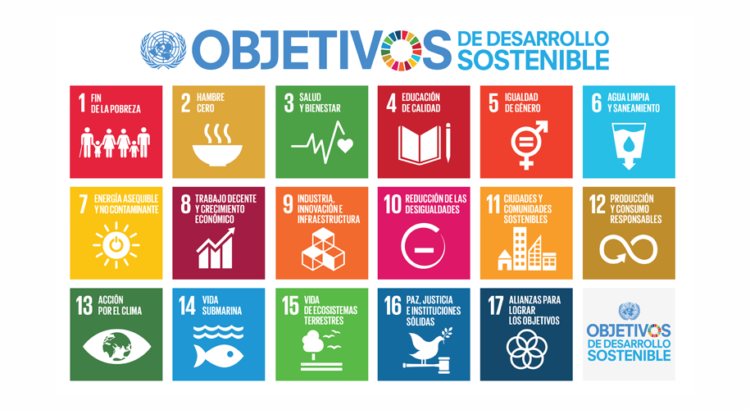
  • “La Lección más Grande del Mundo” es el proyecto lanzado por las Naciones Unidas que recoge los 17 Objetivos Mundiales para el Desarrollo Sostenible.
  • Te damos a conocer estos objetivos y las metas que persigue, porque es responsabilidad de todos colaborar para conseguirlos.
  • Este proyecto educativo conlleva que docentes y alumnos sean conscientes del valor de la educación social y que todos tenemos mucho que aportar.

«La lección más grande del mundo” es el proyecto de educación social y mundial creado por la ONU y en el que se ha dado forma a diversos objetivos para el alcance de unas metas que terminen con la pobreza extrema, apoyen la igualdad social y luchen contra el cambio climático.

Este proyecto de educación mundial necesita de una importante difusión, de manera que todos los ciudadanos conozcamos esos objetivos y trabajemos para llevarlos a cabo, tanto en nuestra faceta personal como profesional.

Objetivos Mundiales difundidos por la ONU

Es importante que conozcamos los objetivos, trabajemos en ello y los compartamos en nuestro entorno y comunidad para que más gente se una a este proyecto mundial.

1. Erradicar la pobreza en todas sus formas y en todos los lugares del mundo.

2. Luchar contra el hambre, logrando la seguridad alimentaria, una buena nutrición y promoviendo la agricultura sostenible.

3. Buena salud y un nivel de bienestar aceptable para todos los habitantes del planeta.

4. Educación de calidad, inclusiva y equitativa.

5. Igualdad de género y empoderamiento de mujeres y niñas.

6. Agua potable y saneamiento.

7. Uso de energías renovables, sostenibles y accesibles para todos.

8. Empleo digno y crecimiento económico.

9. Innovación e infraestructuras para una industria sostenible e inclusiva.

10. Reducir la desigualdad social y favorecer la inclusión de todo tipo de nacionalidades, etnias o creencias.

11. Ciudades y comunidades sostenibles.

12. Consumo responsable, siendo conscientes de las repercusiones de lo que producimos y gastamos.

13. Erradicar el cambio climático de forma urgente con medidas que frenen su impacto.

14. Cuidado de la flora y fauna acuática. Reestablecer la salud de los océanos y de la vida marina.

15. Cuidado de la flora y fauna terrestres. Promover ecosistemas que favorezcan la biodiversidad y combatan la degradación del suelo.

16. Paz y justicia, trabajando en la creación de sociedades pacíficas y dialogantes.

17. Alianzas para conseguir los Objetivos Mundiales con el compromiso de todos los países.

«La lección más grande del mundo» es un proyecto de educación social que estará vigente hasta 2030, con la esperanza de haber resuelto gran parte de estas problemáticas mundiales y que suponga la solidez de unas medidas y alianzas que favorezcan un desarrollo próspero y sostenible.

¡Es hora de ponerse manos a la obra y aportar nuestro grano de arena!

Fuente de la Noticia:

http://noticias.universia.es/educacion/noticia/2018/04/30/1159291/leccion-grande-mundo-proyecto-educativo-onu.html

Comparte este contenido:
Page 2622 of 6193
1 2.620 2.621 2.622 2.623 2.624 6.193