Page 2669 of 6178
1 2.667 2.668 2.669 2.670 2.671 6.178

Cómo mejorar la atención de los niños en el aula

Por: guiainfantil.com/Andrés París/04-04-2018

Trucos para tener a los niños atentos en clase

Una de las situaciones en las que se está incidiendo últimamente en la educación es como mejorar la atención de los niños en las aulas.  Es habitual encontrar alumnos que dejan de atender, que cortan o se despistan en mitad de la clase, maestros que reclaman o regañan cuando esto se produce y padres que no saben cómo ayudar o qué hacer con sus hijos.

Bueno, pues lo primero que debemos saber es que todo esto es normal, y se produce por razones que “casi” escapan a nuestra voluntad. Entonces, ¿qué podemos hacer para facilitar y fomentar la atención dentro del aula?

¿Qué podemos hacer para facilitar y fomentar la atención de los niños dentro del aula?

Debemos saber que la atención del ser humano es una capacidad o cualidad de seleccionar unos estímulos y no otros, y lo más importante, es limitada. Tiene una duración máxima en los alumnos de entre 10 y 15 minutos. Por tanto debemos normalizarlo, no desconectan porque quieran (aunque a veces se produzca), es que en el caso de que estuviesen muy motivados hacia una tarea, el cerebro se desconectaría automáticamente. Es importante no culpar a los niños de esta acción. Además, no todas las personas tienen la misma capacidad de atención.

Antes que nada, deben quedar claros dos puntos:

1- El inicio de la clase es clave: En este punto hay que reclamar la atención del alumno, ya que es cuando están más receptivos. Hay que abrir el foco del interés y despertar su curiosidad.

2- Cambios metodológicos: Cambiar de metodología con cierta frecuencia ayuda a que los alumnos abran su foco de atención hacia la actividad. Aunque todas pueden ser buenas según el momento y actividad, hay estudios que demuestran que a metodologías más activas la atención es más alta, y por el contrario, a metodologías más planas, la atención de los niños disminuye.

A continuación detallo una serie de consejos que pueden facilitar esta labor:

1. Comenzar la sesión estableciendo juegos, retos, desafios……

2. Establecer pausas cada 15 minutos; tener en cuenta que los alumnos pueden desactivar la atención. Podemos adelantarnos y tenerlo programado con actividades o juegos que les desconecte para poder conectarse de nuevo con más garantías.

3. Tener estrategias de supervisión; pedir a los alumnos resúmenes, titulares o ideas sobre lo que se trabaja de forma recurrente para mantenerles activos.

4. Introducir cambios de registro en el tono de voz.

5. Contar historias.

6. Preguntarles. La pregunta hace participe.

7. Usar ejemplos que sean familiares, analogías y metáforas.

8. Controlar la dificultad de la tarea para que se ajuste a las características de nuestros alumnos.

9. Usar el humor; importantísimo, todo entra mejor con una buena dosis de humor.

10. Haz variaciones metodológicas y pausas para juego activo. La variedad estimula la atención.

11. Sorprende.

*Fuente: https://www.guiainfantil.com/articulos/educacion/escuela-colegio/como-mejorar-la-atencion-de-los-ninos-en-el-aula/

Comparte este contenido:

Colombia: Por falta de aulas, estudiantes de Santander recibirían clases en discoteca

Por: vanguardia.com/ 04-04-2018
Estudiantes de un colegio en Santander reciben clases en un restaurante escolar, donde el ruido de las licuadoras dificulta su aprendizaje. Ante la falta de aulas, la discoteca del corregimiento se adaptaría entre semana como salón escolar.
Se trata de unos 60 estudiantes de primaria y bachillerato del colegio San Pedro de la Tigra, ubicado a 11,5 kilómetros del casco urbano del municipio de El Playón, Santander.

El rector de la institución, Héctor Guillermo Mancera Jurado, explicó a Vanguardia.com que a este colegio rural cada año se le suman más estudiantes, pero su infraestructura se quedó pequeña para la demanda escolar. “Desde hace cuatro años le he solicitado a las autoridades departamentales y locales colaboración porque estoy sin aulas. Hace poco una comisión de padres fue a la Alcaldía de El Playón y no les dieron respuesta favorable».

La falta de salones obligó a Mancera Jurado a trasladar a estudiantes a las instalaciones de un salón de una asociación privada, al restaurante escolar y al aula de informática. «Tenemos una incomodidad total.El Municipio solo realiza inversiones en los dos colegios urbanos, todos los recursos de calidad se quedan allá. Es justo que también nos recuerden».

El rector considera esta situación, además de incómoda, peligrosa para los docentes y estudiantes. «Si llega a explotar un cilindro de gas del restaurante escolar, podría afectar a los más de 30 niños de cuarto primaria que reciben clase en este comedor”.

Igualmente, el rendimiento académico de los estudiantes se ve afectado, puesto que les cuesta mantener la concentración durante el proceso de aprendizaje. «Cuando las minipuladoras inician a hacer sus labores deben hacer al menos cinco licuados. Se interrumpe la clase con los ruidos de la licuadora industrial. Además, cuando se empiezan a preparar los alimentos salen los olores», indicó Mancera.

El rector pidió a la Alcaldía de El Playón, ser más riguroso para atender las necesidades prioritarias de la población. «El Alcalde endeudó el municipio por más de $1.300 millones para hacer el encerramiento de otro colegio. ¿Cuáles son las prioridades de la Administración Municipal? ¿Dónde queda la atención a las necesidades básicas de las comunidades?», se pregunta.

Ante esta situación estudiantes y padres de familia han protestado en la institución para reclamar mejores condiciones en el entorno escolar. «Se va a iniciar un proceso regular. Fue una comisión a la Alcaldía y la Gobernación pero no les solucionaron nada», explicó.

Según Mancera, en el colegio San Pedro de la Tigra se requieren al menos tres aulas más, para mitigar el problema. Incluso, el rector plantea que se verá obligado a enviar nuevamente a algunos estudiantes a recibir clases en la discoteca del corregimiento, como sucedió hace dos años.

«Es un salón amplio, pero una situación incómoda. Cada fin de semana se desarmábamos el salón de clases para que funcionara el negocio y el lunes volvíamos a armarlo para que asistieran los estudiantes».

Mancera aseguró que en su colegio además la carencia de aulas también hay ausencia de transporte escolar. «Tenemos estudiantes que deben caminar hasta dos horas y media. Los gobernantes no tienen dolencia».

Alcaldía dice que no tiene recursos

La secretaría de Desarrollo Social y Salud de El Playón, Nancy Gutiérrez, aseguró a Vanguardia.com queel municipio no tiene recursos para mejorar la infraestructura de los colegios rurales. «Prácticamente todo el presupuesto para educación se ejecuta en el colegio Camilo Torres. Estamos terminando la primera fase de construcción».

La funcionaria indicó que el alcalde de El Playón, Luis Ambrosio Alarcón, y el rector de San Pedro La Tigra fijaron una reunión para programar una visita a la Gobernación de Santander y encontrar una solución. «El rector no se ha acercado para confirmar dicha reunión”.

Además, Gutiérrez afirmó que para realizar obras relacionadas con educación el municipio depende de la Gobernación de Santander.

Al ser consultada por Vanguardia.com, la secretaria de Educación de Santander, Doris Gordillo, expresó que no tenía conocimiento de esta situación, por lo que no existe un plan para solucionar el problema de hacinamiento en el colegio San Pedro de la Tigra. «Estamos trasladando la información al Gobernador (Didier Tavera Amado), para ver como buscamos los recursos para construir las tres aulas».

Sin embargo Vanguardia.com corroboró que desde el 2015 el colegio ha enviado solicitudes para construir aulas escolares en dicho plantel educativo, tanto a la administración de Richard Aguilar Villa como de Didier Tavera.

A la fecha se desconoce cuántos recursos se necesitarían para edificar aquellos salones, por lo que Gordillo aseguró que se enviaría un ingeniero para que evalúe la situación, sin precisar cuándo. «Quedamos en que el rector vendría en la tarde de este lunes o el próximo miércoles para conocer más detalles».

¿Derroche de recursos?

Raúl Chinome, líder comunitario de El Playón, afirmó a Vanguardia.com que existe un abandono estatal a las escuelas rurales de esta localidad. «Es un municipio ubicado a tan solo una hora de Bucaramanga, pero se ve afectado por la corrupción y falta de liderazgo de esta Administración y las pasadas».

Chinome considera que se debe revisar la distribución de los recursos para la educación en El Playón, pues en una sola obra se invertirían $1.340 millones, al endeudar al municipio. Dicho crédito se pagarían con recursos de regalía entre 2018 y 2026. «Hay otras necesidades en la gran mayoría de las escuelas rurales, incluso algunas están a punto de caer», explica Chinome.

*Fuente: http://www.vanguardia.com/area-metropolitana/bucaramanga/428944-por-falta-de-aulas-estudiantes-de-santander-recibirian-clases-
Comparte este contenido:

Sudáfrica: Matric pupils robbed of an education

Por: risingsunchatsworth.co.za/Bianca Lalbahadur/04-04-2018
Angered parents of the pupils said their children were being robbed of an education due to the lack of interest by the Department of Education to employ teachers at the school and in the interim, their children are at a major disadvantage.

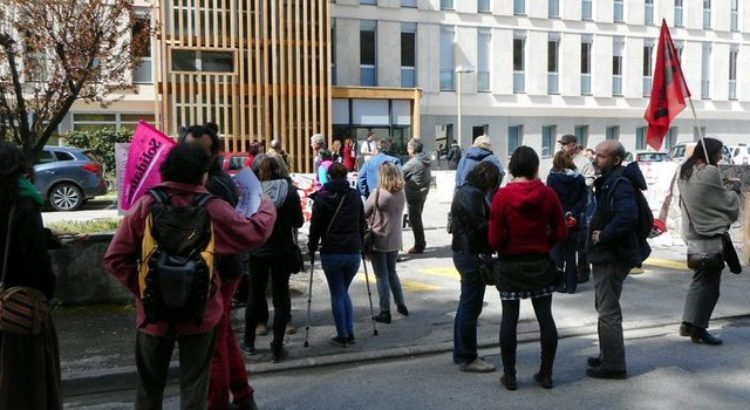
Irate and disgruntled SGB members and pupils of Dumisani Makhaye High School in Welbedacht West marched to the Education Board in Pietermaritzburg to demand their basic right to an education after they missed their first quarterly physical science examination due to a lack of proper staff, on Wednesday.

Angered parents of the pupils said their children were being robbed of an education due to the lack of interest by the Department of Education to employ teachers at the school and in the interim, their children are at a major disadvantage.

The only pupils who did not write their exams are those studying physical science.

“Physical science is one of the most complicated subjects that children study at secondary school level and the fact that they were forced to miss the examination is very disappointing and unacceptable,” said the parents.

Speaking to journalists, the chairman of the school governing body, Joseph Jili said, “The reason for the protest was to highlight all of the issues that the pupils have been faced with since the inception of the school.  The school has been left without six teachers and non-teaching staff as well, since early last year.  As a result of this, pupils of matric physical science class had to miss their first exam.”

He added that the principal is doing everything in his power to assist and resolve this issue.

Since the protest, the head of the Department of Education agreed to meet before the next school term to address all of the issues that are being faced at the school.

“The reason why we do not have the staff that the school requires is because the department sent out a new HRM which made it difficult to hire new teachers as there is only one person, who signs off these documents.  Members of the school governing body, and myself included are hopeful that through this meeting, we can establish a way forward for the school and the pupils in terms of their examinations which they were unable to write,” added Jili.

Spokesman of the Department of Education, Kwazi Mthethwa said, “All schools in the district do have teachers that the department of education has provided to them.  The school governing body and the pupils need to address the principal with regards to their issues.  The governing body of the school still needs to be elected.”

Principal of the school, Mr Zwane, was unable to comment on the matter at hand, due to protocol from the Department of Education.

*Fuente: https://risingsunchatsworth.co.za/109965/matric-pupils-robbed-education/

Comparte este contenido:

There is no one-size-fits-all school model: Developing a flexible and innovative education ecosystem

Por: brookings.edu/Stavros Yiannouka and Zineb Mouhyi/04-04-2018

November 2017, at the bi-annual World Innovation Summit for Education (WISE) in Doha, Qatar, we held a roundtable with renowned school innovators from around the world. What was striking was the wide diversity of school models represented at the table. At one end of the spectrum was Mike Feinberg, co-founder of KIPP, a model with a focus on high expectations and building character enforced by a disciplined, structured approach to education. At the other end was Ramin Farhangi, co-founder of École Dynamique, a school in France based on the Sudbury Valley School, which emphasizes on educational freedom, democratic governance, and personal responsibility. At École Dynamique, children are free to organize and use their time as they please. The two schools could not be more different. Yet, by certain terms, they are both quite successful and have other schools emulating their models worldwide. We came out of that roundtable ever more convinced that when it comes to education, there is no one-size-fits-all model.

The latest Brookings report “Can We Leapfrog? The Potential of Education Innovations to Rapidly Accelerate Progress” analyzes 3,000 education innovations from around the world, showing just how effective widely different approaches can be. Yet, governments still search for the oneeducation system that will trump them all and produce the best outcomes for every child. Instead, governments should consider developing a system of different school models that provide opportunities for flexibility. The Netherlands exemplifies this approach, giving all public schools a high degree of independence, so they can define their own curriculum, provided they follow certain standards established by the government.

So, why should governments consider moving from a school system to a diversified system of schools? We believe there are (at least) three good reasons for doing so:

Reason 1: Different students have different needs.
By pursuing a system of schools, governments can tailor individual schools to meet the needs of different sets of students. For instance, although U.S. charter schools have on average not delivered better results than public schools, a growing body of evidence indicates that urban charter schools have had large positive effects on the test scores of disadvantaged students. A likely reason is that charter schools targeting disadvantaged students have devised specific strategies to address their students’ needs—including, longer school hours, higher standards, and emphasis on character development. Each school tweaks these parameters, and others, based on what is appropriate for their particular students. Again, it is important to emphasize that charter schools are one model for giving autonomy to schools.

Moreover, students learn best when their learning is adapted to their context. UNESCO reports that “inadequate understanding of the development context of an education system is a fundamental cause of its irrelevance to geographical and temporal development contexts, its irrelevance to individual and collective development needs, its ineffectiveness for purpose and therefore its poor quality.” In the name of equality, a uniform education system ends up systematically underserving a portion of the population, typically the least advantaged.

Reason 2: A diversified portfolio of schools is better equipped to deal with an uncertain future.
Anyone familiar with basic finance knows that the key to successfully lowering the risk of your portfolio is to diversify it. In a world where our ability to predict is the future is mediocre at best, why should the future of an entire nation bet on a single approach to education? And how is it beneficial for a country to adopt a one-size-fits-all model of education, particularly when this approach is shown to produce very disparate outcomes?

In discussions on how to prepare students for an unpredictable future, we keep hearing “don’t prepare students for something; prepare them for anything.” We would argue the same thing holds true for school systems: don’t design school systems for something; design them for anything. In an era of personalized learning, we wonder whether we can consider personalized schooling as the possible next step forward. A system of schools with diverse options should logically be much more resilient and capable of coping with uncertainty.

Reason 3: A systems of schools would allow for more experimentation and innovation.
For education innovations to live up to their potential of leapfrogging educational progress, governments need to embrace innovations and find ways to incorporate them into education systems. As the Brookings report points out, “By adding an expanding set of options for how to approach education, governments can open up fruitful avenues for leaping ahead that perhaps were closed before.”

“Government innovation” almost sounds like an oxymoron. Indeed, governments around the world are known for their complex bureaucracy, slowness, and risk aversion—not exactly what you would call a good recipe for innovation. However, as seen in Finland and Singapore, for example, governments can enable and embed a culture of change, adaptation, and innovation in the governance of education. This leads to a higher tolerance for risks, failures are controlled and on a much smaller scale. This also allows for a dramatic increase in the number of actors involved in the innovation process, naturally leading to more innovations. Finally, this experimentation process could potentially uncover very effective approaches that could be applicable on a wide scale.

Increasingly, education stakeholders are calling for a flexible, resilient, and innovative education ecosystem, as highlighted in the Millions Learning report by Brookings and in the Learning Generation report by the Education Commission. We believe that in order to have this ecosystem, we need to leave the one-size-fits-all school system behind and embrace a system of schools with diverse co-existing schools like KIPP and Sudbury Valley, as well as schools focused on arts or Science, Technology, Engineering and Mathematics (STEM)—all putting the student at the center and following centrally agreed upon standards.

*Fuente: https://www.brookings.edu/blog/education-plus-development/2018/04/03/there-is-no-one-size-fits-all-school-model-developing-a-flexible-and-innovative-education-ecosystem/

Comparte este contenido:

Africa: Education Begins When You Can Ask Why!

Por: africa.com/04-04-2018

I went to a bed-bug riddled school around Yaba (Yabatech) whose unofficial mandate is to make docile the crop of young people who are supposed to be movers and shakers of the community. But alas myself and an infinitesimally few others understood that the Nigerian education system is designed to bring out the corporate slaves in us, hence we educated ourselves beyond the four walls of the college.

Although earlier on throughout 2017, my political appointment as the National director of student affairs for KOWA party Nigeria,tilted my inclination towards researching into the education sector, unbeknownst to me that there is much work to be done and that the pragmatics of real changes begins with restructuring our model of education

My friend John Ashiekaa rekindled the fire when he advised me to take over my mother’s private school as the new administrator, considering that my youthfulness comes along with brilliant ideas and pragmatism that the school needed for her survival.

The last 3months has seen me code switching responsibilities as family head, school manager,business man, political appointee,and a couple of other things I would like to leave off records.

“In my time as the school manager I was able to see from the field, the impact the current education setup has on the challenges facing our immediate society.”

You would agree with me that every organized society today in any part of the world adopts an education model that is in resonance with the solution designed to solve future challenges that have been foreseen to affect the society from the concrete study of her past in relationship with current happenings.

I believe that every society should design her own model of education, ingenious to the people, extracted from the cultural system and lingua Franca with reverence to historical consciousness suitable to meet both her immediate need, and provide enough resources for the coming generation to fight a seemingly lesser and different battle.

The propaganda of our colonial education system is to keep us literate but uneducated enough to find it difficult to solve the smallest of our little problem. The education we have received has made us docile enough not to ask any questions but to rather follow instructions to letter.

Why is our education model not addressing our political, economical, and developmental challenges as a nation? Why have we not been able to ingeniously solve any of our problems? Why do we need to bring in foreigners to help with the smallest of technical work with the vast numbers of tertiary institutions around?

This questions are not far fetched, “our education system is designed to make us uneducated but sophisticated literates.”

Not until young Nigerians begin to ask “why” with the strong intent to know why, we might keep ruminating within the whims of our challenges till the next century. But if we begin to ask unusual questions we would get unusual answers that would lead us in the path of long lasting solutions to our problems.

But until we understand that education begins when you ask why, Nothing will change.

I hope you would start asking why!

Olakunle Olawole

Nat’nl Director, Directorate of student affairs, KOWA Party Nigeria.

*Fuente: https://www.africa.com/education-begins-can-ask/

Comparte este contenido:

Rab Butler revolutionised education in 1944. Let’s do it again

Por: theguardian.com/Sir Tim Brighouse/04-04-2018

Our school system is broken and only a radical new education act for the 21st century will fix it.

the last 100 years there have been two defining education acts – Butler’s in 1944 and Baker’s in 1988. They represent two distinct chapters in England’s educational story.

Tim Brighouse
Tim Brighouse was the schools commissioner for London. Photograph: Martin Godwin for the Guardian

The first witnessed new schools, colleges and curriculum innovation, especially in the arts, as well as new youth and career services. Margaret Thatcher’s neoliberalism underpinned Baker’s 1988 reform bill, which meant a prescribed national curriculum and tougher accountability, along with diversity in school provision and autonomy.

Now once again we doubt our schools – and it isn’t simply exams or test results we question. Terrorist attacks? Introduce the Prevent agenda and promote “British values”. Fall behind in the Pisa tests that compare achievement worldwide? It’s the fault of schools.

From economic woes to sporting failures, from concerns about mental health and eating habits, to a rise in drug and drink problems, schools are simultaneously seen as the cause of the problem, and the key to the solution. Schools, however, have no chance of rising to the challenge until at least five systemic structural issues have been addressed. 

The first is a growing crisis in teacher recruitment and retention: teachers stay for less and less time in the profession. “Securing and retaining a sufficient supply of suitably qualified teachers” was one of the original three duties of the secretary of state (there are now more than 2,000). Michael Gove abandoned this, believing the market would find a solution. It has: gluts in some areas, acute teacher shortages elsewhere. Without good teachers we are a lost civilisation.

Second, the curriculum is not fit for purpose. That won’t be corrected unless the deficiencies in exams are tackled simultaneously: at present these are unreliable, costly and privately run for profit by three boards. By focusing on the essential skills of numeracy and literacy we neglect others equally vital to our youngsters’ futures – such as high-level IT skills, thinking analytically within disciplines, solving inter-disciplinary problems, working in teams, interacting civilly with individuals from different cultural backgrounds and thinking for themselves while acting for others.

Third, the over-centralised governance and accountability system also needs reform. Ministers exercise too much power and too little judgment. Schools should of course be accountable – but not as academies are to the minister. Those in effect are nationalised “government schools”, a model usually found in totalitarian states.

A combination of exam league tables and high-stakes Ofsted inspections has re-enforced a myopic and narrow interpretation of what education is for. At best it celebrates the winners in a competition focusing on the measurable at the expense of the valuable; at worst it creates a climate of fear, bullying and human failure.

Rab Butler
Rab Butler, who was responsible for the 1944 Education Act. Photograph: Hulton Archive/Getty

Meanwhile, in every other developed democracy, including other parts of the UK, schools are accountable to a democratically elected local body. That is not true of the 7,000 free schools and academies that are an unholy hybrid of private company and charitable foundation, leading to financial scandals.

To these three structural failings add a fourth: school admissions arrangements based on a false prospectus of parental choice when the reality is that schools choose parents through covert selection, favouring the children of the rich over those from challenging families.

Finally, since 2010 the huge funding deficit between state funded schools and the private independent sector has widened further. Social mobility, a declared aim of both government and opposition, will remain a pipe dream until we tackle the unfair privileges this funding gap symbolises and perpetuates. Equity and equality of opportunity to live a fulfilled life are illusory unless these five issues are resolved.

An education act of 2020 should be passed after a cross-party parliamentary “conference”, jointly chaired by the education spokespeople from the three main parties and modelled on the select committee. Its task should be to take evidence from all interested stakeholders about what our future education service should look like. It would deal with the five systemic issues highlighted here and provide a comprehensive action programme for all educational entitlements, from the earliest years into old age.

It would herald an age of ambition, hope and partnership and a society committed to unlocking the talents not of a few, nor even the many, but of all its citizens.

Tim Brighouse was the schools commissioner for London from 2002-07

 Since you’re here …

… we have a small favour to ask. More people are reading the Guardian than ever but advertising revenues across the media are falling fast. And unlike many news organisations, we haven’t put up a paywall – we want to keep our journalism as open as we can. So you can see why we need to ask for your help. The Guardian’s independent, investigative journalism takes a lot of time, money and hard work to produce. But we do it because we believe our perspective matters – because it might well be your perspective, too.

I appreciate there not being a paywall: it is more democratic for the media to be available for all and not a commodity to be purchased by a few. I’m happy to make a contribution so others with less means still have access to information.Thomasine, Sweden

If everyone who reads our reporting, who likes it, helps fund it, our future would be much more secure. For as little as £1, you can support the Guardian – and it only takes a minute. Thank you.

*Fuente: https://www.theguardian.com/education/2018/apr/03/rab-butler-1944-revolutionise-education-act-tim-brighouse

Comparte este contenido:

EEUU: Teachers in Oklahoma and Kentucky Walk Out: ‘It Really Is a Wildfire’

Por: nytimes.com/ Dana Goldstein/04-04-2018

Thousands of teachers in Oklahoma and Kentucky walked off the job Monday morning, shutting down school districts as they protested cuts in pay, benefits and school funding in a movement that has spread rapidly since igniting in West Virginia this year.

In Oklahoma City, protesting teachers ringed the Capitol, chanting, “No funding, no future!” Katrina Ruff, a local teacher, carried a sign that read, “Thanks to West Virginia.”

“They gave us the guts to stand up for ourselves,” she said.

The walkouts and rallies in Republican-dominated states, mainly organized by ordinary teachers on Facebook, have caught lawmakers and sometimes the teachers’ own labor unions flat-footed. And they are occurring in states and districts with important midterm races in November, suggesting that thousands of teachers, with their pent-up rage over years of pay freezes and budget cuts, are set to become a powerful political force this fall.

The next red state to join the protest movement could be Arizona, where there is an open Senate seat and where thousands of teachers gathered in Phoenix last week to demand a 20 percent pay raise and more funding for schools.

The growing fervor suggests that labor activism has taken on a new, grass-roots form.

“Our unions have been weakened so much that a lot of teachers don’t have faith” in them, said Noah Karvelis, an elementary school music teacher in Tolleson, Ariz., outside Phoenix, and leader of the movement calling itself #RedforEd, after the red T-shirts protesting teachers are wearing across the country

“Teachers for a long time have had a martyr mentality,” Mr. Karvelis said. “This is new.”

The wave of protest is cresting as the Supreme Court prepares a decision inJanus v. Afscme, a major case in which the court is expected to make it harder for public sector unions to require workers to pay membership fees. But the recent walkouts suggest that labor activism may not need highly funded unions to be effective. Unlike in strongholds for labor, like New York or California, teachers’ unions in West Virginia, Oklahoma, Kentucky and Arizona are barred by law from compelling workers to pay dues. Yet that has not stopped protesters from making tough demands of lawmakers.

Striking West Virginia teachers declared victory last month after winning a 5 percent raise, but Oklahoma educators are holding out for more.

Last week, the Legislature in Oklahoma City voted to provide teachers with an average raise of $6,000 per year, or roughly a 16 percent raise, depending on experience. Gov. Mary Fallin, a Republican, signed the package into law.

Teachers said it was not enough. They have asked for a $10,000 raise, as well as additional funding for schools and raises for support staff like bus drivers and custodians.

About 200 of the state’s 500 school districts shut down on Monday as teachers walked out, defying calls from some parents and administrators for them to be grateful for what they had already received from the state.

To pay for the raise, politicians from both parties agreed to increase production taxes on oil and gas, the state’s most prized industry, and institute new taxes on tobacco and motor fuel. It was the first new revenue bill to become law in Oklahoma in 28 years, bucking decades of tax-cut orthodoxy.

In Kentucky, teachers earn an average salary of $52,000, according to the National Center for Education Statistics, compared with $45,000 in Oklahoma. But teachers there, thousands of whom are picketing the Capitol during their spring break, are protesting a pension reform bill that abruptly passed the State House and Senate last week. If Gov. Matt Bevin signs it into law, it will phase out defined-benefit pensions for teachers and replace them with hybrid retirement plans that combine features of a traditional pension with features of the 401(k) accounts used in the private sector. Teachers in the state are not eligible for Social Security benefits.

Andrew Beaver, 32, a middle school math teacher in Louisville, said he was open to changes in teacher retirement programs, such as potentially asking teachers to work to an older age before drawing down benefits; currently, some Kentucky teachers are eligible for retirement around age 50. But he said he and his colleagues, many of whom have called in sick to protest the bill, were angry about not having a seat at the negotiation table with Mr. Bevin, a Republican, and the Republican majority in the Legislature.

“What I’m seeing in Louisville is teachers are a lot more politically engaged than they were in 2015 or 2016,” he said. “It really is a wildfire.”

In Arizona, where the average teacher salary is $47,000, teachers are agitating for more generous pay and more money for schools after watching the state slash funds to public education for years.

“We’re going to continue to escalate our actions,” Mr. Karvelis said. “Whether that ultimately ends in a strike? That’s certainly a possibility. We just want to win.”

Oklahoma educators are holding out for more than the $6,000 per year raise that was signed by the Legislature last week. CreditAlex Flynn for The New York Times

Mr. Karvelis, 23, said teachers would not walk out of class unless they were able to win support from parents and community members across the state, including in rural areas. But he said the movement would be influential regardless of whether it shuts down schools.

“We’re going to have a lot of teachers at the ballot box who I don’t think would normally go in a midterm year,” he said. “If I were a legislator right now, I’d be honestly sweating bullets.”

With Republican legislators and governors bearing the brunt of the protesters’ fury, the Democratic Party is trying to capitalize on the moment. The Democratic National Committee plans to register voters at teacher rallies, and hopes to harness the movement’s populism.

The teacher walkouts are “a real rejection of the Republican agenda that doesn’t favor working-class people,” said Sabrina Singh, the committee’s deputy communications director. “Republicans aren’t on the side of teachers. The Democrats are.”

That type of rhetoric is a sea change from the Obama years, when many Democrats angered teachers by talking less about core issues of schools funding than about expanding the number of charter schools, or using student test scores to evaluate teachers and remove ineffective ones from the classroom.

“School reformers kind of overshot the mark, and we’re now in a pendulum swing where teachers increasingly look like good guys,” said Frederick Hess, director of education policy studies at the American Enterprise Institute, a conservative-leaning think tank.

Republicans, too, he said, should consider pitching themselves as teacher-friendly candidates, perhaps by tying teacher pay raises to efforts to expand school choice through private school vouchers or charter schools.

Lily Eskelsen García, president of the National Education Association, the nation’s largest teachers’ union, called the movement an “education spring.”

“This is the civics lesson of our time,” she said. “The politicians on both sides of the aisle are rubbing the sleep out of their eyes.”

*Fuente: https://www.nytimes.com/2018/04/02/us/teacher-strikes-oklahoma-kentucky.html

Comparte este contenido:
Page 2669 of 6178
1 2.667 2.668 2.669 2.670 2.671 6.178