Page 2702 of 6195
1 2.700 2.701 2.702 2.703 2.704 6.195

Argentina: Aceiteros “A partir de las 22h iniciamos un paro nacional por 24 horas”

Por: izquierdadiario.com/28-03-2018

La Izquierda Diario habló con Marco Pozzi, secretario de Salud Laboral de la Federación Aceitera. Desde las 22 h de este martes lanzaron un paro nacional de la actividad contra despidos y por aumento salarial.

Miles de docentes y estatales se movilizaron en la mañana de este martes en Rosario. Lo hicieron en rechazo de la oferta salarial del gobernador Miguel Lisfchitz. Los trabajadores aceiteros se sumaron a la marcha.

En el acto de cierre La Izquierda Diario habló con Marco Pozzi, secretario de la Salud Laboral de la Federación Aceitera, quien anunció la huelga nacional que comienza a las 22 h del mismo martes.

También se solidarizó con los trabajadores estatales y de la educación. Además repudió el discurso oficial que busca estigmatizar a los docentes por «vagos».

Por otro lado, reivindicó la tarea que cumplen los docentes en la formación de los alumnos. «A mi hijo no lo tiene de rehén ningún docente, lo tiene de rehén el Estado. Mi hijo piensa de manera libre porque tiene a un docente en frente que le enseñó que cada 24 de marzo hay que decir 30 mil veces presente», dijo. Su discurso fue muy aplaudido.

¿Por qué se movilizaron junto a los docentes y los estatales?

MP: Nos movilizamos, en principio acompañando con la propuesta de empezar a participar de sus luchas también, porque creemos que a la hora de «venir a buscarnos» no hay diferencias entre lo que estatal y lo que es privado. Las políticas son las mismas, traemos el mensaje de unir el poder de fuego tanto de los docentes estatales, los docentes privados y nosotros.

¿Cómo ves la propuesta salarial del gobierno a los trabajadores estatales?

Es un risa que a una persona antes de que cobre el aumento sabe que a ese aumento ya se lo comió la inflación, es un poco gracioso y sigue siendo la tomada de pelo que empezó hace un tiempo con ellos y esto lo profundiza.

Anunciaste en tu discurso una huelga nacional aceitera

Sí, a partir de hoy, porque nosotros ademas del conflicto en Cargill y en Huanguelén en provincia de Buenos Aires, tenemos el conflicto paritario y hoy a partir de las 22 iniciamos un paro nacional por 24 horas. Así que este es el planteo que también vinimos a contar acá y sumamos nuestra lucha a la lucha de los gremios estatales. El reclamo salarial de los aceiteros en esta etapa es del 22% que seria el salario mínimo vital y móvil que nosotros defendemos, estamos hablando de $31400.

*Fuente: http://laizquierdadiario.com/Aceiteros-A-partir-de-las-22-iniciamos-un-paro-nacional-por-24-horas

Comparte este contenido:

EEUU: Apple to launch low-cost iPad for education next week

EEUU/March 27, 2018/BY JAMES WALKER/Source: http://www.digitaljournal.com

Apple is said to be preparing a low-cost iPad for launch at a rare education-focused event next week. The company will make a revived push into classroom devices after losing ground to strong competition from Microsoft and Google.

Education software

According to a report from Bloomberg today, Apple will launch a «lost-cost iPad» for teachers and students during its event at the Lane Technical College Prep High School in Chicago next week. It comes as Apple recommits to education devices with its first dedicated event since 2012.

The device will be a new lower-cost version of Apple’s entry-level 9.7-inch iPad. Apple is also developing specialised classroom software to improve the iPad’s usability in schools. Further details on the as-yet unannounced device are currently scarce. Insiders who spoke to Bloomberg said they could not disclose more information because of the private nature of the plans.

9.7-inch iPad Pro

9.7-inch iPad Pro
Apple

The launch will see Apple make a bold re-entry into the education market. Over the past couple of years, education PC makers have become highly competitive. The industry is currently led by Microsoft’s Windows 10 and Google’s Chrome OS platforms, both of which have recently launched new education software experiences and upgraded school-oriented hardware.

Throughout the increasingly fierce battle between Microsoft and Google, Apple has so far remained on the sidelines. The rising dominance of Chrome OS, coupled with Microsoft’s renewed efforts to promote Windows 10, now seems to have prompted Apple to take action. The cheaper iPad may help it to regain its lost ground in the classroom, particularly in the U.S. market where it has struggled to compete with low-cost Chrome OS products.

Tablet convenience

It’s of note that Apple seems to be choosing the iPad as the device to spearhead its new education strategy. For years, the company has promoted the iPad as a more modern alternative to traditional PCs. Apple frequently cites advantages including the device’s portability, light weight and responsiveness as key reasons for consumers to choose one over a regular PC.

Apple may now be taking this message into classrooms. With Microsoft and Google still predominantly focused on laptops and convertibles, Apple could try to sell schools on the promise of touchscreen tablets. iPads might be simpler to distribute to students and easier to carry during the day.

Apple MacBook Pro (2016)

Apple MacBook Pro (2016)
Apple

With Apple also expected to unveil a new entry-level MacBook, the company seems to be waking up to the computing needs of schools. While MacBooks are still popular with college students, Apple’s failure to launch more low-end devices has made them uncommon in the classroom.

 Next week’s event could debut a renewed focus on education PCs, which can only be positive for teachers and students. With Microsoft, Google and now Apple now aggressively competing for classroom dominance, schools have more hardware to choose from and increasingly sophisticated software platforms. Soon, all three major ecosystems may have compelling hardware options and dedicated learning experiences, helping to digitally transform the education sector.

Source:
Comparte este contenido:

Indonesia: Jakarta to improve education in Christian-majority regions

Indonesia/March 27, 2018/By: Ryan Dagur/Source: https://www.ucanews.com

Government has increased budget for three eastern provinces where levels are among lowest in nation.

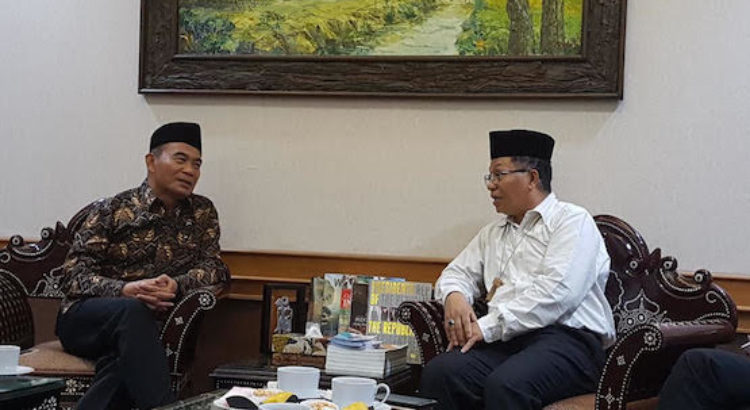
Indonesia will focus on improving the quality of education provided in three eastern, Christian-led provinces in cooperation with local churches, Minister of Education and Culture Muhadjir Effendy said.

Papua, West Papua and East Nusa Tenggara consistently rank at the bottom of the table in terms of education among the country’s 34 provinces.

«We still face huge challenges, especially in [improving] public schools. But I am optimistic that working more closely with the church will make the government’s job in this area easier,» Effendy said on March 21 during a meeting with the National Council of Catholic Education (MNPK).

The MNPK, a work unit of the Bishops’ Conference, is responsible for 5,000 Catholic schools across the country.

Effendy lavished praise on the quality of education at Catholic schools, adding he wants to see what can be taken and applied in public schools.

«There are many best practices in Catholic schools that can be adopted by other schools,» he said.

The three provinces have much work to do before they can compete with other parts of the country in education quality, but Catholic schools including seminaries are generally considered a cut above.

Effendy said he visited the three provinces to discuss ways of effecting change with local government officials. They cited problems related to facilities, teachers and school management, he added.

The government raised the education budget for the three provinces this year and is likely to continue doing so to improve school facilities and install better-qualified teachers and principals, the minister said.

For East Nusa Tenggara, the government has set aside US$66 million this year, a more than fivefold increase from the US$10.9 million granted in 2017 to give students a more comprehensive education.

Effendy said the MNPK will help to organize teacher training programs and the government will support funding.

«I came to the conclusion the government cannot walk alone, so we decided to invite the private sector to participate, especially the church,» he said.

Father Vinsensius Darmin Mbula, chairman of the MNPK, welcomed the plan.

«Our commitment is to help the government with its programs,» he said.

These efforts will be bolstered by the establishment of teacher-training centers in some areas in eastern Indonesia, he added.

«We will select the teachers who will become facilitators,» he said, adding the government must continue to work with the church in order to maximize results.

«Funding for public schools is quite high but the results have been minimal,» he said.

Robertus Ombe, a resident of Benteng Jawa in East Manggarai district, East Nusa Tenggara said he hoped the government would pour in the necessary resources to make the scheme a success.

He cited the case of a junior high school that was established in his village five years ago but which local people had to donate one hectare of land to as the government did not provide it.

«Hopefully, the government will fully realize its commitments this time,» he said.

Source:

https://www.ucanews.com/news/jakarta-to-improve-education-in-christian-majority-regions/81875

Comparte este contenido:

India: Education loans the newest asset class in securitisation mart

India/ March 27, 2018/By: https://economictimes.indiatimes.com

MUMBAI: The Rs 75,000-crore education loan market, growing at over 15 per cent on a compounded annual basis since in the past decade, has become the latest asset class for securitisation.

Though banks dominate the education loan segment as it is eligible for priority sector lending, non-banking finance companies have also been steadily scaling up their loan book over the last few years.

«Well-underwritten education loan portfolios lend themselves to securitisation given the long-term nature of assets and attractive yields on the pass through certificates (PTCs). For originators, securitisation provides the much- needed capital relief and liquidity,» says Crisil in a report.

But the report is quick to add that selection of underlying pools recognising the unique characteristics of the asset class, adequate credit enhancement levels, and adequate level of liability-side structuring to ensure the right risk- return profile are essential to draw investors to this segment on a sustained basis.

Securitisation of education loans is driven by two key developments, widening of the investor base and growing demand for non-priority sector loan securitisation.

In February this year, Crisil had rated the country’s first personal loan/cash loan securitisation transaction in almost a decade and early this month it rated the PTCs backed by receivables from consumer durable loans.

Earlier this month, Crisil also rated on the country’s first education PTC by Vivriti Victor Trust originated by Avanse Financial Services.

According to Crisil, «appetite for non-priority sector asset classes will remain elevated given the increasing participation of mutual funds and NBFC treasuries in the securitisation market, and banks’ continued focus on retail asset growth.»

«Healthy demand growth for non-priority sector securitisation augurs well for the long-term growth of the securitisation market, which is facing headwinds from the wide adoption of priority sector lending certificates by banks,» concludes the report.

Source:

Comparte este contenido:

Canada: Specialty education programs can help students launch a successful career

Canada/March 27, 2018/By: ROSE O’LEARY/Source: https://www.theglobeandmail.com

Executive director, Canadian School of Natural Nutrition.

With the increasing demand for work-life balance, a great company culture and a flexible working schedule, many young Canadians are moving toward starting their own business.

Based on a recent study from Intuit Canada, the software company behind TurboTax and Quick Books, Michael Shulman of Yahoo Finance Canada determined that nearly half of Canada’s work force will be self-employed by 2020.

It is important that education in Canada adapts to meet these changing trends. Specialty post-secondary education programs provide the skills, tools and certifications required to fulfill these changing demands and for students to begin a successful career.

In addition to providing the skills for these new careers, there are many benefits of enrolling in specialty education programs with small class sizes and flexible learning schedules. The primary benefit is that students can obtain the tools, credibility and support they need to start their new career within a relatively short period of time.

For example, in 1994, the late Danielle Perrault, founder of the Canadian School of Natural Nutrition (CSNN), identified the need for a specialty holistic nutrition program taught in the classroom. Today, approximately 8,800 students have graduated from CSNN’s specialty Natural Nutrition diploma program, resulting in numerous entrepreneurs merging the worlds of self-employment and alternative medicine.

Tools: Those looking for a new career now – not later – may want to consider a specialty education program that provides them with the necessary tools and certification. A specialty education diploma program may not provide the traditional status of a degree; however, it does provide the knowledge and tools needed to start practicing tangible skills that will be used in the work force. This is very different from a four-year degree program that may additionally require graduation from a master’s program or an internship program before a career is able to begin.

Credibility: Finding the specialty education program that provides the necessary education, tools and certification to be credible is crucial in launching a new successful career. Certifications are only credible if students’ knowledge and skills have been adequately tested and screened with board exams. For example, in the holistic nutrition industry, the public looks to see that an author of a book or article is certified and has a designation from a reputable specialty education program before trusting what is written about nutrition and health. And holistic nutrition practitioners must be certified to obtain insurance in their private holistic nutrition practices. This could be true of any entrepreneurial industry where consumers are trusting individuals, relying on internet searches and word-of-mouth referrals for services.

Networking: As is true in any new career, those new to an industry benefit if they have continued support after graduating and access to those with industry experience. When researching specialty education programs, search for schools that offer these levels of support because, even with excellent skills training, some graduates may lack confidence in navigating a new industry.

The mandate of provincially regulated private career colleges is to provide the skills and tools graduates need to acquire jobs and self-employment opportunities. As a result, many specialty education programs have job boards for their graduates and work collaboratively with their alumni associations and industry associations that help graduates navigate the industry and find ways of attracting new clientele. The goal is to collectively help graduates be successful in their budding careers.

Canadians have a lot of choice when it comes to educational programs and careers, especially if entrepreneurship is desired. As new industries and careers emerge, and as the employment trend increasingly moves toward self-employment, specialty programs may be the right step to gain the tools, credibility and network needed to reach career goals.

Executives, educators and human resources experts contribute to the ongoing Leadership Lab series.

Source:

https://www.theglobeandmail.com/report-on-business/careers/leadership-lab/specialty-education-programs-can-help-students-launch-a-successful-career/article38319100/?cmpid=rss1

Comparte este contenido:

Argentina: La educación rural y el mensaje de Ulises

Argentina/27 de marzo de 2018/Fuente: https://www.lanacion.com.ar

La clase dirigente debe recoger su ejemplo y extremar los esfuerzos para que todos los alumnos del país puedan recibir la educación de calidad que merecen.

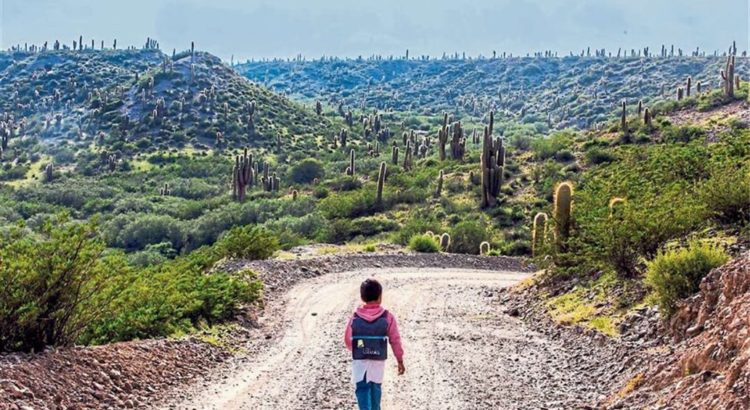
Dos semanas atrás, con motivo del inicio de las clases, LA NACION publicó una nota titulada La odisea de Ulises, que narraba la diaria travesía de numerosos chicos que viven en distintos parajes de los Valles Calchaquíes y deben recorrer a pie muchos kilómetros de escarpados terrenos para asistir a una escuela rural. El protagonista de esa crónica, Ulises, de solo siete años, es apenas un ejemplo de los muchos alumnos de escuelas rurales que deben realizar enormes esfuerzos para acceder al sistema educativo.

Trasladarse todos los días desde Punta del Agua o desde otros parajes de esta zona de Salta hasta la Escuela N° 4575 Las Cortaderas no es tarea fácil. Todo lo contrario. A la necesidad de atravesar solitarios caminos de tierra, polvo y piedras se suman las inclemencias del clima, la carencia de transporte público y las limitaciones de una zona a la cual no llegan la señal telefónica ni Internet, donde también se complica acceder al agua y donde la energía eléctrica ha sido suplida por paneles solares que brindan energía por contadas horas.

Unos 65 alumnos, sumados los del nivel primario y los del secundario, concurren este año a la citada escuela rural. Diez de ellos la utilizan también como albergue de lunes a viernes, ya que viven demasiado lejos como para trasladarse diariamente.

De acuerdo con el relato del enviado especial de LA NACION al lugar, en el curso de su camino, Ulises carga agua de una acequia, que en este tiempo está generosa -algo que no ocurre siempre- y permite regar frutas y verduras en la zona. En su trayecto hacia la escuela, el pequeño viajero recuerda las recomendaciones de su mamá, que le aconsejaba caminar por la orilla del camino. Como es de imaginar, las madres pasan zozobra por los riesgos latentes del camino, ya que en las inmediaciones no hay ninguna sala de primeros auxilios adonde recurrir en caso de que fuera necesario.

Las necesidades de la zona y de la escuela Las Cortaderas son muchas, aunque también las de numerosos establecimientos educativos rurales de todo el país.

La difusión de la realidad de Ulises y muchos de sus compañeros ha movilizado, felizmente, a no pocos lectores de LA NACION. Algunos juntaron bicicletas, camas, colchones, ropa, juguetes didácticos, agua mineral y libros, para acercar a su escuela. También, alguna computadora, aunque la imposibilidad de conectarse a Internet condiciona por ahora su utilidad. Otros han manifestado su voluntad de acercarse al lugar para compartir un tiempo con los alumnos y sus familiares, y ver de qué manera colaborar.

Es sabido que el extenso territorio argentino ofrece realidades muy diferentes en términos de acceso a la educación. Distintos estudios, como los realizados por la Fundación Educar 2050, dan cuenta de que los alumnos de zonas rurales suelen tener un rendimiento inferior al de quienes viven en grandes ciudades. Las diferencias de recursos son muy grandes; de allí que sea imprescindible trabajar por la igualdad de oportunidades de aprendizaje y de progreso, para acortar esta brecha.

No pocas organizaciones de la sociedad civil colaboran asiduamente mediante distintos programas de ayuda a las escuelas rurales, que incluyen cursos de capacitación para docentes y entrega de útiles escolares. Pero nada de esto puede desligar al Estado de su obligación de proveer las condiciones necesarias para un desarrollo lo más normal posible del proceso educativo, independientemente de las limitaciones del contexto geográfico.

Resulta admirable el esfuerzo cotidiano de docentes, alumnos y padres de estas zonas alejadas para cumplir con las obligaciones escolares, haciendo patria día tras día, a pesar de las dificultades del viaje diario, de las adversidades del clima y de tantas otras limitaciones. Conmueve ver a pequeños como Ulises recorriendo kilómetros en busca de una oportunidad para mejorar su vida, a través de la educación. Este simple gesto debería ser el mejor incentivo para alumnos y maestros en la tan fascinante como difícil tarea de educar, y un ejemplo para que la sociedad toda, empezando por su clase dirigente, se comprometa a que todos los chicos de nuestro país puedan recibir la educación de calidad que merecen.

Fuente de la Noticia:

https://www.lanacion.com.ar/2118454-la-educacion-rural-y-el-mensaje-de-ulises

Comparte este contenido:

Cuba: Promueve Guantánamo educación de calidad en círculos infantiles

Cuba/ 27 de marzo de 2018/Fuente: http://www.acn.cu

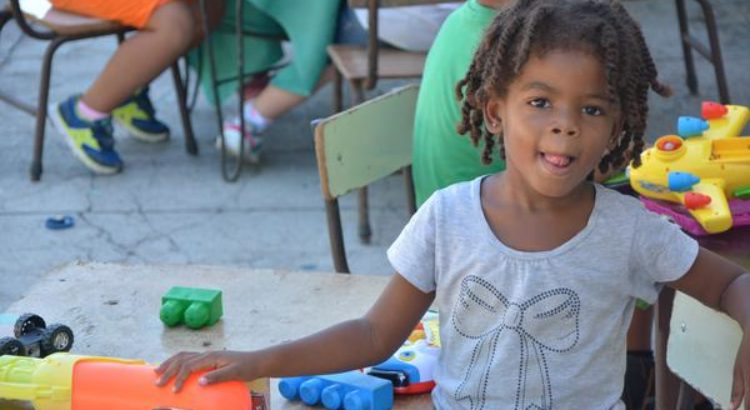
Dotar a los círculos infantiles de la adecuada base material de vida y estudio, fiscalizar su inclusión en los planes de inversiones y estimular la formación de educadores para esa enseñanza son de las directrices para ofrecer educación de calidad a infantes guantanameros.
Labores sistemáticas de ampliación, reparación y mantenimiento así como también renovación del mobiliario y equipos en diversas áreas de servicios, son algunas de las acciones ejecutadas en esos planteles, indicó a la ACN Yuvasnovys Maceo Pérez, funcionaria de la Dirección Provincial de Educación (DPE).
Asimismo se fomenta la construcción o modificación de locales para su conversión en instituciones de ese nivel educativo según las normativas del Ministerio de Educación, destacó.
Muestra de ello son la apertura del círculo infantil “Vocecitas del Toa” en el municipio de Yateras en diciembre pasado, la actual ejecución de otro en Imías y la proyección de una instalación similar en San Antonio del Sur, expresó Maceo Pérez, jefa del Departamento de Enseñanza Preescolar en la DPE.
A ello se suma la inserción de más de 32 mil niños en el programa Educa a tu hijo, incluyendo especialmente las intrincadas zonas del Plan Turquino, de gran relevancia pues más de las tres cuartas partes del territorio guantanamero es montañoso.
En observancia de la política gubernamental de estimulación a la natalidad, se prioriza también el otorgamiento de plazas en esos planteles a las madres trabajadoras con dos hijos o más, a quienes además se les facilitan cupos en los seminternados, señaló.
Según la directiva tales logros han sido posibles gracias a la incorporación de las familias y demás factores de la comunidad como actores conscientes en el desarrollo de los infantes.
Igualmente favorecen esos resultados la sólida cobertura docente y la superación de las educadoras en carreras de licenciatura.
De acuerdo con un informe de la oficina en Cuba del Fondo de las Naciones Unidas para la Infancia (UNICEF), el país es líder en la región para el desarrollo de la primera infancia, gracias a la creación y fortalecimiento de servicios, programas e instituciones que de manera holística persiguen el máximo desarrollo integral posible en cada niño cubano.

Fuente de la Noticia:

http://www.acn.cu/cuba/32718-promueve-guantanamo-educacion-de-calidad-en-circulos-infantiles

Comparte este contenido:
Page 2702 of 6195
1 2.700 2.701 2.702 2.703 2.704 6.195