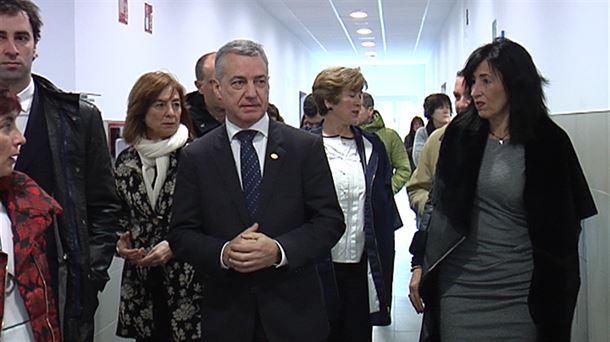
El lehendakari ha inaugurado un nuevo instituto en Ugao-Miraballes, donde ha asegurado que «hay espacios para el diálogo, la discusión y la negociación».
El lehendakari, Iñigo Urkullu, ha pedido este miércoles a los agentes educativos actuar con «la máxima responsabilidad»para evitar la «tensión» en los centros educativos y «garantizar» así «la tranquilidad en las aulas».
Durante la inauguración de un nuevo instituto en Ugao-Miraballes, Urkullu ha evitado citar de forma expresa las movilizaciones en el sector de la educación, pero ha dicho que «hay espacios para el diálogo, la discusión y la negociación». En un acto en el que ha estado acompañado por la consejera de Educación del Gobierno vasco, Cristina Uriarte, el lehendakari ha asegurado que la sociedad demanda que «nos centremos en lo importante«, que ha dicho que es «la educación».
Por ello, ha afirmado que es necesario «preservar este espacio», para «no someterlo a tensiones y reivindicaciones que puedan entorpecer el proceso educativo». El lehendakari ha recalcado que la mejora de la educación representa para el Gobierno Vasco un «reto de país y un objetivo prioritario» y ha apuntado que uno de cada cuatro euros son invertidos por el Ejecutivo autónomo en enseñanza. Urkullu ha señalado que la sociedad vasca «es consciente» del «esfuerzo» que el Gobierno Vasco viene realizando para mejorar las condiciones de todo el personal que desarrolla su labor en los centros educativos.
Además de la ejecución de inversiones en los centros educativos, ha apuntado que el Ejecutivo vasco seguirá mejorando las condiciones «en todos los ámbitos» educativos, con la puesta en marcha de nuevas OPEs, programas de refuerzo, sustituciones y profesorado de educación especial, entre otras medidas. En cualquier caso ha manifestado que es «básica» la «implicación» del profesorado y ha señalado que «pocas profesiones tienen una responsabilidad tan elevada».
El nuevo instituto de Ugao-Miraballes, que ha costado al Gobierno vasco 4,4 millones de euros, acoge desde septiembre de 2017 en las aulas de primero y segundo de ESO a 66 alumnos de este municipio y de Arrankudiaga y Zeberio, además de a 14 profesores. Tiene una superficie de 3.331 metros cuadrados y capacidad para acoger a 300 estudiantes.
Fuente de la noticia: http://www.eitb.eus/es/noticias/sociedad/detalle/5299387/declaraciones-urkullu-ugaomiraballes-movilizaciones-educacion/
América del Sur/Uruguay/ 28.12.2017/ Fuente: ladiaria.com.uy.
1.000.372 es el número de matriculados en el sistema educativo en 2016, tomando en cuenta todos los niveles de educación y los sistemas público y privado. El dato surge del Anuario estadístico de la educación, que presentó el Ministerio de Educación y Cultura (MEC), junto con el Panorama de la educación, ambos documentos elaborados por el Departamento de Estadística Educativa de la Dirección Nacional de Educación.
Primera infancia y educación inicial
En materia de matrícula, el cambio más destacado de los últimos años es el incremento de niños en primera infancia y educación inicial. De 2005 a 2016, aumentó 40,8% la cantidad de niños anotados a algún centro educativo. En 2016 se mantuvo la tendencia, ya que la matrícula creció 1,5%; hubo 2.637 niños más en instituciones educativas, lo que significa una tasa de asistencia de 61,9% respecto del total de niños en edades de cero a cinco años. Entre los chiquitos de cero a dos años, la mayoría (38.743) concurrió a centros CAIF; lo siguen los centros privados supervisados por el MEC (9.543) y los privados supervisados por el Consejo de Educación Inicial y Primaria (CEIP) (7.227). La relación cambia cuando los niños tienen cuatro y cinco años, ya que en esa franja la mayoría fue a escuelas o jardines de infantes del CEIP (34.171 niños). En total, entre los niños de cero a cinco años, 29,3% concurrió a CAIF.
Primaria
En primaria la cobertura se mantuvo constante, cercana a 100%, si bien la tendencia en cuanto a la matrícula es a la baja: entre 2006 y 2016 hubo 53.620 estudiantes menos. La tasa de asistencia neta ajustada es de 95,9%, y fueron en total 314.236 niños los matriculados en 2016 (80% en escuelas públicas, 18% en privadas; el resto son jóvenes y adultos que cursaron programas de alfabetización o de acreditación de la primaria).
La repetición en primaria disminuyó, al igual que lo viene haciendo desde el 2000. Respecto de 2015, la repetición de primer año a segundo descendió de 5% a 4,7%, y de primero a sexto, de 12,9% a 12,1%.
Media básica
En educación media básica se registraron 182.319 matriculados, tanto a nivel público como privado: 67% se inscribieron en liceos del Consejo de Educación Secundaria, 19% en escuelas de la UTU y 14% en liceos privados. Según los datos del Panorama en educación, entre 2006 y 2016 la matrícula creció 13,9%, en mayor medida debido al aumento que tuvo en ese período la matrícula de la UTU (que creció 35,5%).
Media superior
En 2016 más de ocho de cada diez jóvenes de entre 15 y 17 años asistieron a un centro educativo, independientemente del nivel educativo, y cinco de cada diez concurrió a alguna institución de educación media superior o terciaria. En 2016 los matriculados fueron 165.705 jóvenes: 73% se anotó en el Consejo de Educación Secundaria (CES), 27% en la UTU y 10% en liceos privados.
El documento señala que entre 2011 y 2016 la repetición en educación media superior pública presenta una tendencia a la baja, lo que se explica por la baja de la repetición, de 9,6 puntos porcentuales en el CES. En 2016 la repetición se ubicó en 34,9% entre los estudiantes del CES. Por otra parte, en la UTU la repetición viene en aumento desde 2013; en 2016 se ubicó en 40,5%, es decir que cuatro de cada diez estudiantes no pasaron de año.
La extraedad, como se conoce cuando un estudiante se encuentra en grados menores a los que debería encontrarse según su edad, afecta fuertemente a la educación media superior: casi cuatro de cada diez estudiantes (38,1%) está en esa situación. En la UTU la extraedad triplica a la del CES (65,5% de los estudiantes de la UTU frente a 20,2% entre los alumnos del CES); en esto incide que la UTU no tiene restricciones de edad al ingreso.
Terciaria no universitaria
En opciones de este nivel la matrícula fue de 11.589 estudiantes para 2016: en su mayoría, 91,3%, en carreras de la UTU; 7,4% en carreras de educación policial y militar, y 0,9% en la Escuela Municipal de Arte Dramático.
En carreras de formación en educación, en total hubo 24.566 matriculados: 57,3% son estudiantes de profesorado, 26,5% de magisterio, 6,5% de educación social, 5,1% de maestros técnicos y 4,5% de asistentes técnicos en primera infancia. En el período 2000-2016, la matrícula de formación en educación aumentó 85%; pero, si bien el egreso de estudiantes de profesorado se ha mantenido relativamente estable –cercano a los 700 egresos por año–, en magisterio ha disminuido desde el 2000: ese año se recibían 1.400 estudiantes y en 2016 lo hicieron 763.
Terciaria universitaria
En este nivel se matricularon 108.616 personas: la gran mayoría, 79%, en la Universidad de la República, 20% en universidades privadas y el resto en la Universidad Tecnológica. El informe indica que entre 2005 y 2016 las cuatro áreas de mayor ingreso a nivel universitario fueron enseñanza comercial y administración, medicina, ciencias sociales y del comportamiento, y derecho.
El otro fenómeno que consigna el Panorama de la educación es que entre 2000 y 2016 las universidades privadas prácticamente triplicaron su matrícula (de 8.559 a 22.353 estudiantes).
Becas y apoyos
El documento detalla que hay 22 programas distintos de apoyo educativo, algunos de los cuales brindan becas económicas para poder estudiar; otros, apoyo pedagógico o acciones socioeducativas, y algunos combinan ambas opciones. En 2016 se otorgó un total de 30.894 becas, lo que significa más de seis veces las que se otorgaron en 2005.
Fuente de la reseña:https://ladiaria.com.uy/articulo/2017/12/en-2016-la-matricula-del-sistema-educativo-supero-el-millon-de-personas/
Schools in England are legally required to promote the moral development of pupils. Unfortunately though, there is little agreement on what this involves. Most people recognise that morality is important and needs to be taught – but when it comes to saying what it is and how to teach it, the consensus soon breaks down.
But, whatever the merits of these initiatives, they have little to do with the teaching of morality. Indeed, one reason for the general confusion about moral education is that moral values have not been clearly distinguished from values of other kinds.
Someone who fails to value democracy certainly gets something wrong, but the failing is not a moral one. And the character traits the government champions – grit, resilience, confidence, ambition – are no doubt necessary for survival in unforgiving economic times, but they are hardly requirements of morality.
What are moral values?
In my new book I argue that to have a moral value is to subscribe to a standard in a particular way. A standard is a rule specifying something to be done or not done. Subscribing to a standard involves intending to comply with it, being in the habit of complying with it, and feeling bad about failing to comply with it.
A person subscribes to the standard “do not lie”, for example, when they try not to lie, tend not to lie, and regret the lies they tell.
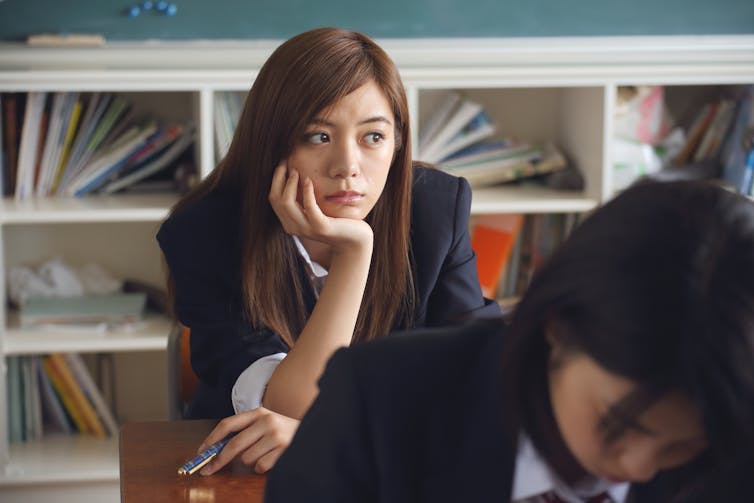
Schools should play a role in passing on common morality.Pexels
Subscribing to a standard counts as moral when it has two further features. First, the subscriber not only tries to comply with the standard themselves, but wants everyone else to comply with it too. Second, they see violations of the standard as deserving of punishment or condemnation.
The stability of human social groups depends on people subscribing to at least some standards in this way. At the very least, people must be committed to not killing or causing harm, stealing or extorting, lying or cheating, and to treating others fairly, keeping their promises and helping those in need. These standards make up the core of common morality.
How to teach them
Schools have a role to play in passing on common morality to the next generation. To do this, they must provide two kinds of moral education.
The first is “moral formation” – cultivating in children the intentions, feelings and habits of moral subscription. This involves giving children moral guidance, rewarding them for doing right and punishing them for doing wrong, as well as modelling good conduct and modelling appropriate reactions to the conduct of others.
From the experience of having their behaviour regulated, children learn to self-regulate. And by emulating the moral reactions of others, children learn to react in those ways themselves.
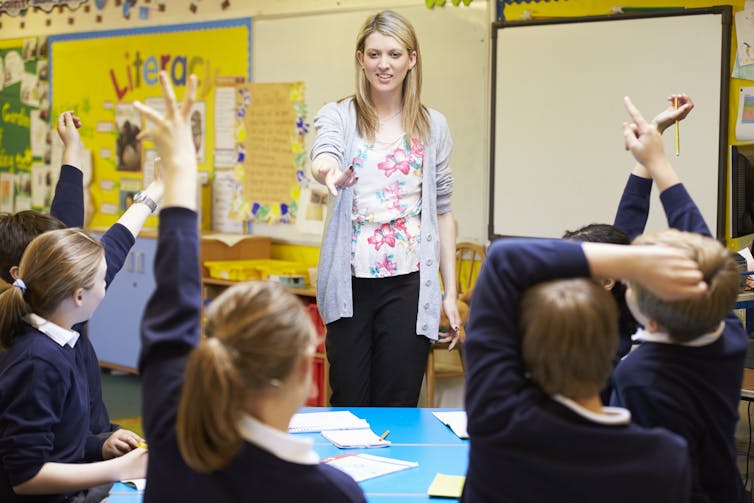
Children must develop moral intentions, feelings and habits.Shutterstock
The second kind of moral education is “moral inquiry” – engaging children in discussion and reflection on the nature and justification of moral values. Teachers must ensure, by explicit intervention or gentle steering, that moral inquiry brings to light the justification for common morality. It is vital that children come to understand what morality is for and why it demands the things it does.
Of course, alongside the task of passing on common morality, schools must also help children to pick their way through the minefields of moral controversy. Many moral standards are fiercely contested and it is not for schools to decide whether or not they are justified. Here moral inquiry should take the form of open-ended exploration, with the aim of equipping children to form their own considered views.
Promoting the moral development of pupils is difficult, but the challenges it poses are not insurmountable. Ensuring children subscribe to common morality, and understand the reasons for it, is a task schools must not shrink from – society depends on it.
VIENA (AA): Las recientes declaraciones del recién nombrado ministro de Educación de Austria, Heinz Fassmann, en contra del pañuelo en la cabeza han despertado inquietud por parte de los musulmanes que viven en el país. La entrevista de Fassmann publicada en el periódico local Kurier el viernes lo citó diciendo que «los profesores no deben usar pañuelo en la cabeza».
Cuando se le preguntó acerca de su opinión sobre la prohibición del velo, Fassmann dijo: «Sí, tengo una simpatía por el estado secular y veo que los maestros no deben usar pañuelo en la cabeza, excepto los maestros de escuelas religiosas y privadas».
El gobierno de coalición formado por el Partido Popular de Austria (OVP) y el Partido de la Libertad (FPO) de extrema derecha a principios de este mes, tiene una postura anti-Islam y anti-inmigrante.
En respuesta a la entrevista, el presidente de la Autoridad Religiosa Islámica en Austria (IGOG), Ibrahim Olgun, dijo a la Agencia Anadolu: «El pañuelo es nuestra línea roja».
«Por esta razón, nunca permitiremos tal intento. Haremos todo lo posible para evitar que comience la prohibición del velo, y llevaremos el tema al tribunal constitucional si es necesario «, agregó.
Olgun dijo que la comunidad se reunirá con el ministro para hablar sobre el tema y expresar claramente sus reservas.
«Creemos que detrás del deseo de prohibir el velo descansa el anti-islamismo», agregó Olgun.
El Secretario General de la Federación Islámica de Viena (FIM), Harun Erciyas, dijo: «Afirmar que los maestros con pañuelos en la cabeza son contrarios al principio de imparcialidad en realidad significa insultar la educación y el trabajo de [los maestros]. Ciertamente no aprobamos esto.
«La Comunidad Islámica, una institución oficial del país, describe el pañuelo como parte del Islam. Por esta razón, si eliminas a las personas con pañuelos del gobierno, también eliminarás del público a todos los miembros de esta religión y, naturalmente, se discriminará «.
Fatih Karakoca, presidente de Austria de la Unión de Demócratas Europeos de Turquía (UETD), dijo que los comentarios del ministro fueron «desafortunados».
Continuó diciendo que si bien hay muchos problemas que resolver en Austria, la coalición de extrema derecha está decidida a crear división y tensión en la sociedad.
«Aquellos que quieren esconderse detrás del secularismo y prohibir a los maestros con pañuelos en la cabeza hoy extenderán esto a todas las áreas, incluidos los estudiantes, lo que provocará inquietud en la sociedad mañana», dijo Karakoca.
[Foto: Manifestantes protestan contra el nuevo gobierno austriaco durante el juramento en Heldenplatz, Viena, Austria, el 18 de diciembre de 2017. El Partido de la gente de Austria (OVP) conducido por Sebastian Kurz y la extrema derecha, Partido de la Libertad de Austria (FPO) ) acordó formar una coalición para el próximo gobierno. Fotógrafo: Omar Marques / AA]
Los sindicatos educativos árabes se centran en la renovación sindical y la educación pública de calidad
Los líderes de sindicatos de docentes de países de lengua árabe han debatido sobre cómo trabajar mejor con docentes nuevos y jóvenes, y sobre los pasos necesarios para conseguir el acceso a una educación de calidad para todos en 2030 en esta región.
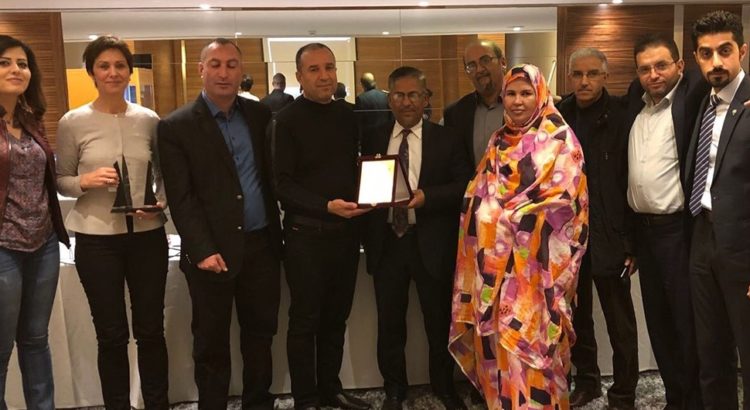
Estos asuntos fueron el foco principal de la 12.ª reunión de la conferencia regional de la Estructura Interregional de los Países Árabes (ACCRS) de la Internacional de la Educación (IE), celebrada del 13 al 14 de diciembre en Beirut (Líbano).
Después del discurso de apertura, del que se encargó el máximo responsable del Consejo de la ACCRS de la IE, Hussein Boujarra (FGESRS, Túnez), se llevó a cabo una sesión en memoria del anterior presidente del Consejo, Taher Dhaker, tristemente fallecido el pasado mes de julio.
En el Consejo posterior se siguió debatiendo sobre la renovación sindical y la segregación religiosa en los colegios. Manal Hdaife (PPSTLL Líbano) subrayó la importancia de implicar a los miembros jóvenes en las actividades sindicales y narró al Consejo lo inspirador que había sido participar en el seminario de Juventud y los ODS de la IE celebrado en Bruselas en julio, así como intercambiar experiencias con compañeros de todo el mundo.
Slim Griss (SGEB Túnez) dio una charla inspiradora de introducción antes de un debate sobre la puesta en marcha de los ODS. Destacó varios retos de los países de habla árabe, entre ellos, la importancia de ampliar la Educación de la primera infancia, solucionar la falta de igualdad de género y tratar las carencias en cuanto a financiación.
Otros aspectos que debatieron los miembros del Consejo incluyeron información sobre la temática del próximo Congreso Mundial de la IE y posibles resoluciones, campañas actuales y futuras reuniones de la IE, así como una puesta al día sobre los avances en la implementación del programa de actividades de 2017-2018 para la región árabe.
«El desarrollo del trabajo sindical en países árabes en relación con la libertad sindical y la democracia, con un énfasis en la defensa y la mejora de la educación pública y la lucha contra el extremismo violento es el desafío más importante en estos momentos. Este Consejo y las afiliadas de la IE en la zona permanecerán unidos para afrontar estos problemas», concluyó Hussein Boujarra, máximo responsable del Consejo.
Argumentan que si la medida es positiva para la calidad educativa debe serlo para el conjunto de la enseñanza extremeña
Europa/España/hoy.es
La Consejería de Educación emprenderá tras Navidad la negociación con las centrales sindicales para que los docentes de la enseñanza pública vuelvan a tener 18 horas lectivas, en lugar de las 20 actuales, dentro de su jornada laboral de 37,5 horas como el resto de empleados públicos.
Se trata de una negociación reivindicada y esperada por las centrales, que llevan desde 2012, cuando se impusieron las 20 horas, reclamando la vuelta a las 18. Al entender que con la ampliación no sólo se ha perjudicado a las plantillas, por la reducción de puestos de trabajo, y al clima de convivencia en los centros, sino que la calidad del sistema educativo ha empeorado al obligar al profesorado a impartir materias que no le son propias.
La vuelta a las 18 horas supondrá, por tanto, la contratación de más profesores de Secundaria, Bachillerato y Medias, que son los niveles en los que se aplicaría. Y la enseñanza concertada reclama a la Consejería de Educación que no la olvide en esta negociación.
Según FSIE, Extremadura es la región con mayor brecha salarial entre ambos colectivos
«Lo que sea bueno para la pública debe serlo para la concertada y lo que se implante para mejorar la calidad educativa debe alcanzar a todos los centros sostenidos con fondos públicos de la región», señala José Manuel Carbonero, de USO.
Sobre todo, añade, «si tenemos en cuenta que los docentes de la concertada no tienen 20 horas lectivas como los de la pública, sino 25 y más en algunos casos, lo que es una absoluta barbaridad».
Explica que, a pesar de que el convenio colectivo de la concertada establece para sus profesores una jornada lectiva de 25 horas semanales, «la Consejería de Educación tiene potestad para mejorarlo, igual que ha añadido complementos a nuestros sueldos para subir las cantidades fijadas en ese convenio nacional».
USO detalla que la fórmula para reducir las horas lectivas a los profesores de la concertada pasa «por que se amplíe la ratio de docentes por aula, lo que supondrá un aumento de puestos de trabajo y posibilitará dedicar tiempo a otras muchas tareas que hay que hacer en un centro y que, sin embargo, con 25 horas lectivas, dando clase, es muy complicado», indica Carbonero.
«Vemos con preocupación que los trabajadores de la concertada únicamente se equiparan con sus compañeros de la educación pública cuando hay recortes, pero no en los beneficios», lamenta. «Y hay que recordar que el servicio público educativo lo prestan también los colegios concertados, y la misma calidad se merecen todos los alumnos, independientemente de la titularidad del centro donde se encuentren matriculados», concluye.
FSIE, sindicato también de la concertada, defiende la conveniencia de que «se disminuyan las horas lectivas de todos los docentes, tanto de la pública como de la concertada», en favor de una mejora de la calidad educativa, así como que «se alcance la homologación salarial».
Presupuesto
Esta central mantiene que la equiparación de los sueldos entre los docentes de la concertada y la pública, así como la de los profesores de la concertada extremeña con el resto de comunidades, debe producirse cuanto antes. Según sus datos, Extremadura es la región que presenta a día de hoy la mayor brecha salarial entre ambas enseñanzas. En la actualidad, la diferencia que hay entre el salario que recibe un profesor de Primaria de la escuela concertada en Extremadura con respecto al que cobra uno de la pública es de un mínimo de 244 euros.
Es el motivo por el que, junto con la Asociación de Docentes de la Enseñanza Concertada en Extremadura (Adecex), FSIE ha pedido a los diferentes grupos parlamentarios, en las reuniones que han mantenido en las últimas semanas, que apoye a los trabajadores de la concertada para que cobren lo mismo que los de la pública y también equiparen sus sueldos con sus homólogos de otras comunidades autónomas.
Para ello, reclaman que de los 925 millones destinados a Educación, se dediquen de 1,6 a 2,5 millones de los presupuestos para que de forma progresiva en los siguientes años 2018, 2019 y 2020 se alcance «la justa homologación salarial que se merecen los trabajadores de nuestro gremio». FSIE rechaza que «por ser trabajadores extremeños, seamos los que menos retribuciones tengamos y suframos las peores condiciones laborales», en palabras de Pedro González, responsable regional.
América del Norte/EEUU/huffingtonpost.com/Rebecca Klein
Sunnie Kahle solía pensar que si prometía ser buena, podría volver a su vieja escuela.Le suplicaba a su bisabuela que la dejara inscribirse de nuevo en las Escuelas Cristianas de Timberlake, adonde se había ido desde que tenía 3 años. Incluso si los maestros fueran malos con ella, incluso si otros niños dijeran cosas malas sobre ella, ella no estaría enojada.Ella solo quería recuperar su antigua vida.
Su bisabuela y guardiana, Doris Thompson, de 74 años, no sabía cómo decirle a Sunnie que no se le permitía regresar a la escuela. Los administradores no la querían allí. En una carta de 2014 a Thompson que básicamente expulsaba a Sunnie, la escuela hizo referencia a varios pasajes de la Biblia sobre por qué no la llevarían de regreso. Sugirieron que Sunnie no estaba actuando como «Cristo» con el pelo corto y prefiriendo los pantalones a las faldas.
Sunnie tenía 8 años. Ella no era tradicionalmente lo suficientemente femenina para ellos.
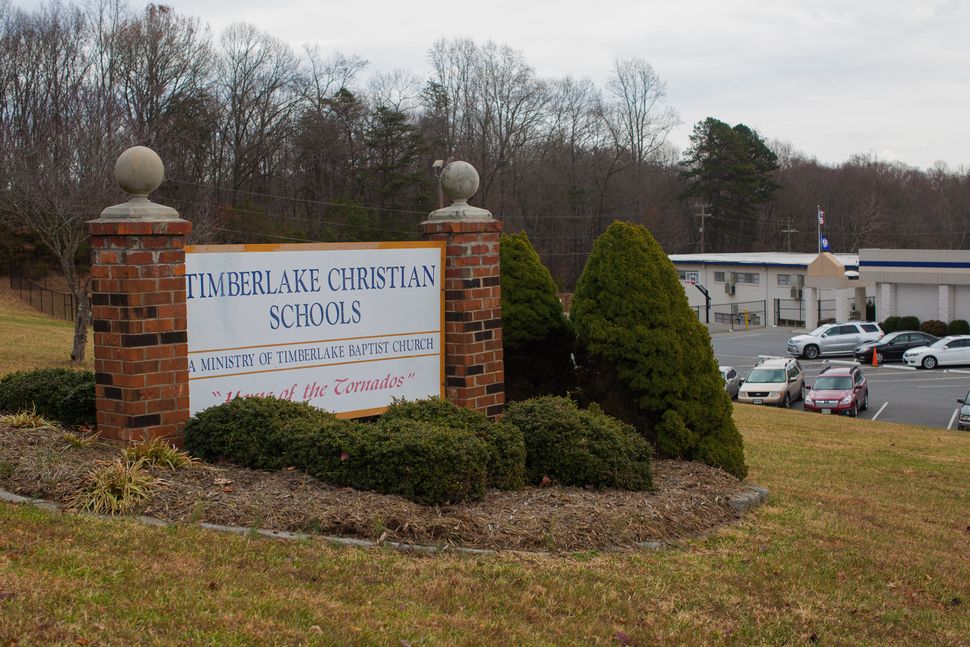
Las escuelas cristianas de Timberlake en Virginia son una de las más de 700 escuelas religiosas en Estados Unidos que actualmente reciben dinero público mientras publicitan y practican abiertamente políticas anti-LGBTQ, HuffPost descubrió en una nueva investigación.
HuffPost ha estado examinando escuelas privadas que reciben dólares de contribuyentes a través de programas de cupones o créditos fiscales. Creamos una base de datos de más de 7,000 escuelas en 25 estados y el Distrito de Columbia con programas de elección de escuelas privadas que dan dinero público a escuelas religiosas privadas.
En la primera historia de esta investigación, que publicamos a principios de diciembre, miramos lo que se estaba enseñando. Descubrimos miles de escuelas que utilizaron el currículo cristiano evangélico, considerado en gran parte inexacto y no científico. En nuestro segundo artículo, señalamos un puñado de escuelas que pretendían ser seculares pero mantenían fuertes lazos con la Iglesia de Scientology . Para esta historia, investigamos el número de escuelas en nuestra base de datos que practican la discriminación hacia estudiantes LGBTQ y miembros del personal.
Visitamos todos los sitios web de cada escuela en busca de evidencia de sus actitudes y políticas sobre los estudiantes LGBTQ y no conformes con el género. Si una escuela no publicitó una política específica, realizamos un seguimiento por correo electrónico o una llamada. Para las escuelas católicas, buscamos políticas de la diócesis sobre estos temas. A menudo, estas escuelas también tenían políticas contra el sexo heterosexual antes del matrimonio.
Encontramos que al menos el 14 por ciento de las escuelas religiosas toman una postura activa contra el personal LGBTQ y los estudiantes. Algunas de estas escuelas tienen políticas en sus sitios web que generalmente transmiten su oposición al matrimonio entre personas del mismo sexo o incluso afirman su creencia de que la homosexualidad es un pecado a la par de la bestialidad. Otros tienen políticas más duras, específicamente declarando que los estudiantes pueden enfrentar castigos, como expulsión, por mostrar signos de un «estilo de vida homosexual» o «identidad de género alternativa». Al menos el 5% de estas escuelas también tienen políticas explícitas contra contratar o retener al personal LGBTQ.
Por otro lado, también encontramos muchas escuelas que tienen políticas que protegen específicamente a los estudiantes contra la discriminación basada en la orientación sexual.
Muchas más de estas escuelas pertenecen a iglesias más grandes que predican el sentimiento anti-LGBTQ. La Iglesia Adventista del Séptimo Día se «opone a las prácticas y relaciones homosexuales», según el sitio web de la denominación . La Iglesia Católica Romana dice que el matrimonio solo puede ocurrir entre un hombre y una mujer. No asumimos que las escuelas que se identificaban con estos grupos eran lugares hostiles para los estudiantes LGBTQ. En nuestro conteo, incluimos solo escuelas (o diócesis) que tenían una política específica anti-LGBTQ. De esa manera, nuestros números representan un mínimo de escuelas donde los estudiantes LGBTQ pueden encontrar hostilidad.
Las escuelas religiosas generalmente están exentas de los tipos de regulaciones que protegerían a los estudiantes y maestros de la discriminación basada en la orientación sexual. Sin embargo, solo en los últimos años, estas escuelas han recibido una inyección de fondos de los contribuyentes con el aumento y la expansión de los programas de elección de escuelas privadas a nivel estatal.
Dado que el presidente Donald Trump y su secretaria de educación, Betsy DeVos , han expresado su deseo de utilizar dólares federales para aumentar la elección de escuelas privadas, vale la pena examinar de cerca qué estudiantes reciben servicios y cuáles no.
MATT EICH PARA HUFFPOST
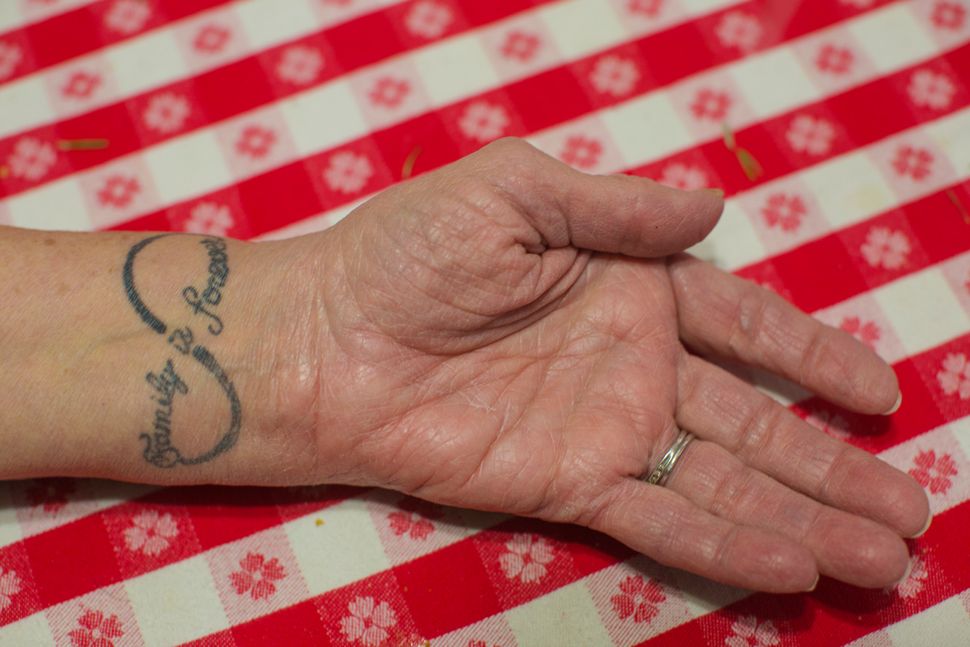
Doris Thompson, de 74 años, guardiana de Sunnie, muestra un tatuaje que recibió hace cuatro años que dice: «La familia es para siempre».
Después de que Sunnie fuera expulsada de Timberlake, su bisabuela la transfirió a la escuela pública. Thompson, que es enfático cuando habla de Sunnie, del modo en que solo hacen las abuelas orgullosas, tiene un tatuaje en su muñeca que dice: «La familia es para siempre».
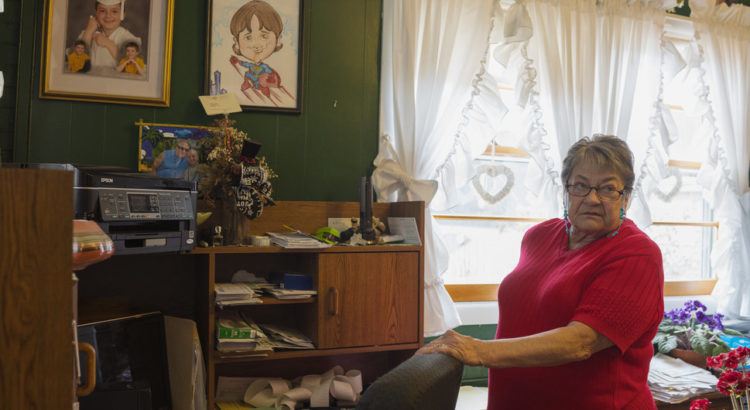
Sentada en su sala de estar, con las paredes llenas de fotos de Sunnie, aquí en esta ciudad, a solo un par de horas de Richmond, la capital de Virginia, Thompson explicó cómo llegó a ser la guardiana de Sunnie. Es una historia complicada de enfermedad mental y adicción, pero desde que Sunnie tenía 2 meses, Thompson ha sido su protector.
En febrero de 2014, cuando Sunnie estaba en segundo grado, el director de la escuela le envió una carta a Thompson diciendo que, aunque Sunnie era una «niña muy brillante», ella recomendó que Sunnie no se reinscribiera el próximo año si no fuera así. capaz de «vestirse» y comportarse de acuerdo con su «identidad ordenada por Dios» como mujer.
Thompson la sacó de la escuela de inmediato.
«Arruinaron bastante la vida de una niña pequeña», dijo Thompson, quien ayuda con el negocio de reparación de camiones de su esposo Carroll.
Sunnie no asistió a Timberlake utilizando una beca financiada con fondos públicos a través del programa de crédito impositivo de Virginia para estudiantes de bajos ingresos. Pero el año en que la echaron, otros estudiantes sí lo echaron. Durante el año fiscal de 2014, Timberlake recibió $ 104,121.57 en becas. Ese número ha aumentado. Para el año fiscal de 2017, la escuela recibió $ 237,500, según el Departamento de Educación de Virginia.
En Virginia, los créditos fiscales se otorgan a individuos y corporaciones que donan a programas de becas. Estos grupos de becas ayudan a los estudiantes de bajos ingresos a asistir a escuelas privadas. Los programas de cupones son más directos: los fondos de los contribuyentes ayudan a proporcionar becas de cupones para estudiantes que cumplen con ciertos requisitos para asistir a escuelas privadas.
Un análisis de 2016 de las reglas del programa de comprobantes realizado por la profesora de la Universidad de Indiana Suzanne Eckes descubrió que ni una sola tenía protecciones que evitaran la discriminación de los estudiantes LGBTQ. Eckes no incluyó los programas de crédito fiscal en su investigación.
Así que HuffPost llevó a cabo un análisis similar, incluidos los programas que Eckes dejó fuera. Encontramos la misma tendencia. Solo el programa de un estado, el de Maryland, protegió a los estudiantes de la discriminación basada en la orientación sexual. Mientras que en nuestra investigación encontramos un puñado de escuelas de Maryland que expresaron su oposición al matrimonio entre personas del mismo sexo y la homosexualidad, cada una no llegó a decir que negarían la admisión de estos estudiantes.
Vea todas las escuelas que podemos confirmar que tienen una política discriminatoria.
MATT EICH PARA HUFFPOST
Doris Thompson, la bisabuela de Sunnie, también es su guardiana. Ella se preocupó por Sunnie desde que era bebé.
DeVos ha sido presionada anteriormente si las escuelas privadas que reciben dinero federal bajo un posible programa de vales tendrían que prohibir la discriminación anti-LGBTQ. En junio, testificando ante un subcomité del Senado , DeVos dijo que dicho programa tendría que seguir la ley federal.
De hecho, en un correo electrónico a HuffPost, un portavoz de DeVos hizo hincapié en el hecho de que no existe un programa de vales federales y que, si los hubiera, «debería cumplir con la ley federal».
El problema es que la ley federal es turbia.
La administración de Obama interpretó el Título IX, la ley federal que prohíbe la discriminación sexual en las escuelas, para incluir protecciones para los estudiantes LGBTQ.La administración de Trump parece pensar que estas decisiones deberían tomarse a nivel local.
«No hay protecciones federales para los estudiantes LGBTQ fuera del Título IX», dijo Nathan Smith, director de políticas públicas para la Red de Educación Gay, Lesbiana y Recta.»Todavía creemos que cubre a los estudiantes LGBTQ, a pesar de que esta administración no lo cree».
Suscríbete a The Morning Email.
Despiértate con las noticias más importantes del día.
Los defensores de la elección de escuela enfatizan que el acoso escolar contra LGBTQ es un problema en todas las escuelas, no solo en las privadas que participan en los programas de vales. Predican la mayor causa de dar a los padres la posibilidad de elegir la escuela más adecuada para su hijo. De hecho, los programas de cupones suelen estar destinados a familias de bajos ingresos que normalmente no podrían pagar la escuela privada de su elección.
«Aborrezco la discriminación y espero que las escuelas no discriminen contra los estudiantes LGBTQ incluso si el tema es parte de sus declaraciones de fe», escribió Robert Enlow, CEO y presidente de EdChoice, un grupo de reforma educativa, en un correo electrónico. «También reconozco que vivimos en una sociedad pluralista que valora la elección, la libertad individual y un respeto permanente por todas las religiones. Confío en que los padres hagan las mejores elecciones para sus hijos en función de sus valores y objetivos compartidos «.
Pero Thompson espera que los líderes en Timberlake sepan que su interpretación de la fe no tiene mérito.
» Lo siento por ellos», dijo Thompson, refiriéndose a los administradores de Timberlake, «si tienen que responder y comparecer ante nuestro Dios algún día».
La mujer de 74 años describe a Sunnie como el gran amor de su vida. Incluso después de criar dos hijos y ayudar con tres nietos, Sunnie es su mejor bebé. La niña siempre ha sido ferozmente leal e indefectiblemente independiente, y tiene un corazón tan dulce como el pastel de manzana, dijo Thompson, radiante de orgullo cuando se le preguntó acerca de la personalidad de Sunnie.
Pero ahora, a los 12, Sunnie también está enojado y triste.
La vida nunca iba a ser fácil para Sunnie. La madre de Sunnie la tenía cuando era adolescente. El padre de Sunny no ha sido una presencia constante, dijo Thompson.
MATT EICH PARA HUFFPOST
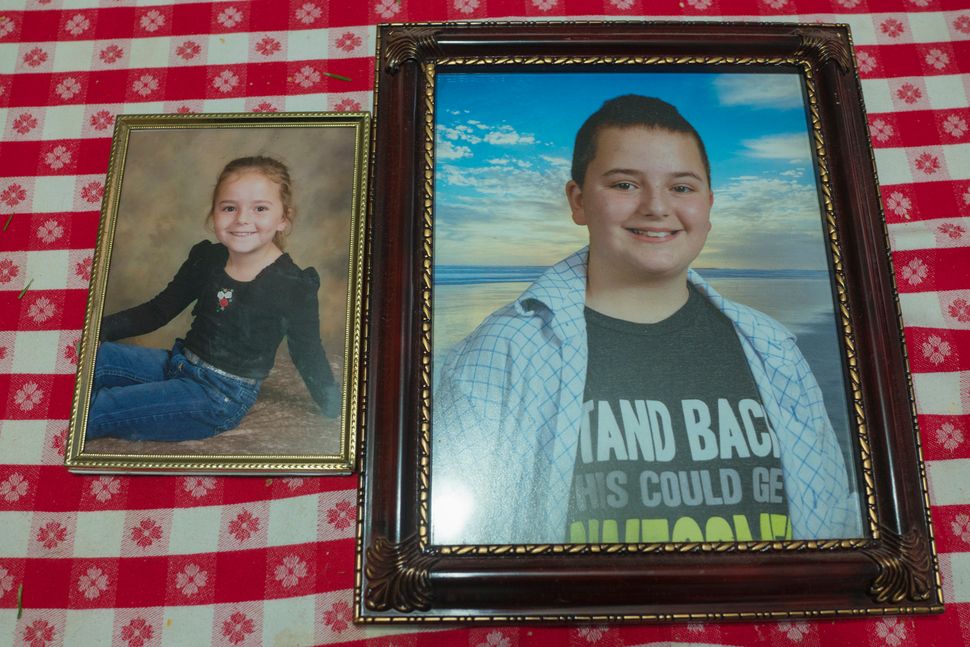
La casa de Doris Thompson está llena de imágenes de Sunnie, a quien llama el gran amor de su vida.
La historia de Sunnie de haber sido expulsada de Timberlake fue ampliamente cubierta en los medios cuando ocurrió por primera vez en 2014. Los titulares gritaban indignación.Sunnie fue otra víctima de la homofobia, otra historia viral aquí hoy y desaparecida mañana.
Lo que no estaba cubierto es lo que sucedió después. Sunnie no quería irse de Timberlake.Desde su punto de vista, era un lugar donde era amada y aceptada por sus amigos.
En su nueva escuela pública, la molestaron. Los otros estudiantes la llamarían «eso» y «gay». Sunnie hizo un amigo, solía ir los fines de semana y jugaban juegos, recordó Thompson.Entonces, de repente, el padre del niño dejó de dejarlo venir. El padre dijo que Sunnie necesitaba «descubrir su género» antes de poder volver a pasar el rato.
Las cosas no mejoraron Primero, Sunnie fingió estar enferma con tanta frecuencia que el absentismo escolar se convirtió en un problema.
Sunnie no habló con HuffPost para este artículo por razones que HuffPost no está informando para proteger la privacidad de un menor.
Pero Thompson quiere que se escuche la historia de Sunnie.
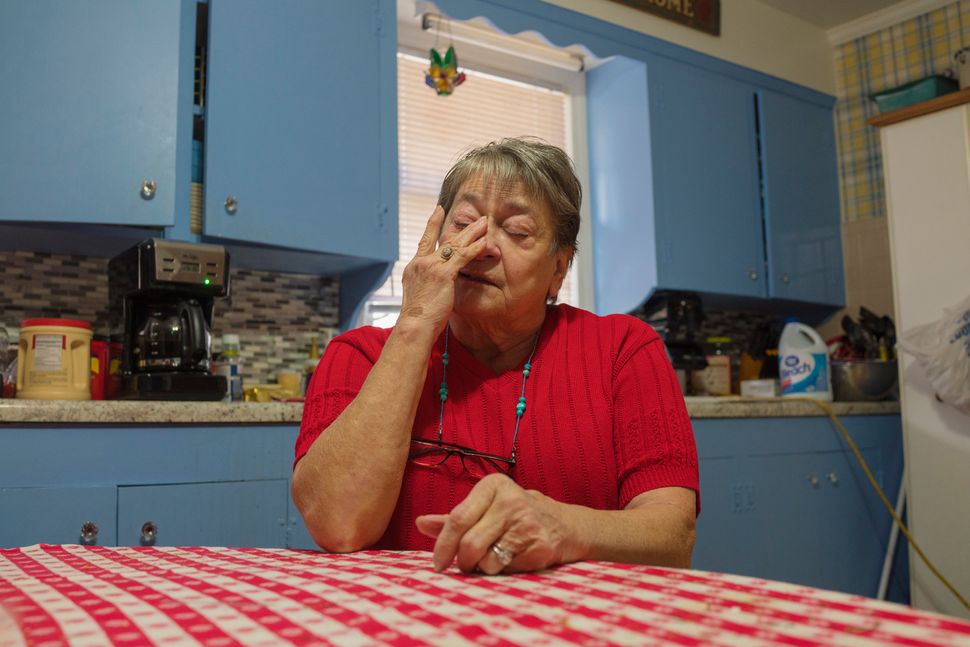
«Siendo tan joven, ella realmente no sabe cómo se siente. Ella no sabe lo que quiere ser. O a quién quiere ser «, dijo Thompson mientras sus ojos se llenaban de lágrimas, reviviendo el trauma que experimentó Sunnie.
Sunnie todavía no habla de los sentimientos que ella puede tener o no. Ella está al borde de la pubertad. Pero a Thompson le preocupa lo que sucederá después.
En el momento en que Sunnie fue expulsada de la escuela, los abogados de las Escuelas Cristianas de Timberlake le dijeron a los medios: «Los padres y tutores envían a sus hijos a la escuela debido a nuestras creencias y normas cristianas. Tenemos el deber de crear un entorno que apoye estos valores cristianos «.
HuffPost se acercó a la escuela y le preguntó si tenían algo más que agregar sobre la situación de Sunnie, años más tarde. Dijeron que no.
La política anti LGBTQ de la escuela sigue vigente.
MATT EICH PARA HUFFPOST
Timberlake Christian Schools en Forest, Virginia, continúa teniendo una política anti LGBTQ.
Las conductas punibles incluyen, «pero no necesariamente se limitan a, vivir, tolerar o apoyar la inmoralidad sexual; practicar el estilo de vida homosexual o la identidad de género alternativa; promoviendo tales prácticas; o de lo contrario tener la incapacidad de apoyar los principios morales de la escuela «, según el sitio web de la escuela .
La historia de Sunnie es inusual debido a lo joven que es. Tenía pensamientos y proyecciones de adultos sobre ella antes incluso de estar cerca de tenerlos ella misma.
Pero una versión similar de esta historia se desarrolla en todo el país regularmente.
En 2012, el mismo año en que 15,000 estudiantes de Indiana usaron cupones , Warren salió con su familia y amigos como transgénero, le dijo a HuffPost. Al final de su tercer año, le informó al director de su escuela católica que regresaría cuando era un niño en su último año.
El obispo de la diócesis que supervisa la Escuela Secundaria Cathedral pensó que esto era inaceptable. Pero en lugar de echar a Warren o decirle que no regrese, los administradores ignoraron la forma en que eligió identificarse, dijo Warren.
A los maestros se les dijo que si llamaban a Warren por su nombre elegido, se enfrentarían a represalias. Aquellos con quienes Warren estaba cerca, que quería respetar su nueva identidad, tenían miedo de vencer a la diócesis, dijo. Algunos encontraron soluciones al llamarlo por su apellido o iniciales.
Warren estuvo profundamente involucrado en la banda de marcha de la escuela y en las obras de la escuela. Durante las actuaciones de la banda de marcha, anunciarían a los artistas. Warren pidió a los locutores que dejaran su nombre, ya que sabía que solo se anunciaría su «nombre muerto». Pidió no aparecer en los programas de las obras de la escuela.
«Estaba bastante deprimido la mayor parte del tiempo. Tenía una ansiedad social horrible «, dijo Warren, quien retenía su apellido porque sus compañeros universitarios no están al tanto de su transición.
Incluso después de que Warren cambiara su nombre legalmente ese año escolar, la escuela se negó a aceptarlo. Enviaron las transcripciones de la escuela secundaria a las universidades con el nombre equivocado, lo que obligó a Warren a explicar la confusión a las oficinas de admisiones, por lo que se vio obligado a salir solo.
Un representante de la Arquidiócesis de Indianápolis dijo que abre sus puertas a «todos los que están comprometidos con una educación católica de calidad, independientemente de su raza, etnia, sexo, género, socio-economía, religión, diferencias de aprendizaje, etc. Nuestras políticas de admisión y las prácticas en cada sitio local se ajustan a este enfoque. «La escuela secundaria no respondió a las solicitudes de comentarios sobre la situación.
Sin embargo, la diócesis tiene una política contra el empleo de miembros del personal en uniones del mismo sexo, dijo un representante a HuffPost durante la recopilación de datos.
Para Warren y Sunnie, otros niños en sus escuelas privadas no fueron el problema. Ellos fueron de apoyo.
Fueron los adultos.
Thompson solo espera que los adultos en Timberlake aprendan a tratar a los niños con amabilidad y empatía.
«Dios quiere que ames a todos», dijo ella. «Especialmente sus hijos. Él ama a sus hijos «.
Thompson asiste a sesiones regulares de asesoramiento para informarse sobre cómo ser la mejor madre que puede ser para su bisnieta.
» Claro, ahora tengo 74 años, así que no sé si estaré aquí por 10 años, cuando tenga 22 años. Espero a Dios que me permita quedarme aquí hasta que crezca. Pero espero que ella haga algo por ella misma. Sé alguien y enorgullécete de quién es ella «.
Datos y gráficos por Alissa Scheller.
Si ha experimentado discriminación en las escuelas, envíe un correo electrónico arebecca.klein@huffpost.com.
Esta es la tercera historia en una investigación de HuffPost sobre las políticas y el plan de estudios de las escuelas que participan en programas de elección de escuelas privadas.La primera historia, mirando el plan de estudios utilizado en las escuelas cristianas evangélicas, está aquí . La segunda historia, que trata de escuelas con fuertes lazos con Scientology, está aquí .
OtrasVocesenEducacion.org existe gracias al esfuerzo voluntario e independiente de un pequeño grupo de docentes que decidimos soñar con un espacio abierto de intercambio y debate.
¡Ayúdanos a mantener abiertas las puertas de esta aula!








 Users Today : 60
 Total Users : 35492337
 Views Today : 79
 Total views : 3610910