Page 3298 of 6179
1 3.296 3.297 3.298 3.299 3.300 6.179

La educación, en la balanza entre lo público y lo privado en el Perú

Perú/26 de septiembre de 2017/Víctor Vimos Vimos, corresponsal en Perú/Fuente: www.eltelegrafo.com.ec

La oferta educativa se multiplica frente a esa demanda y sobre el terreno fértil de la Constitución.

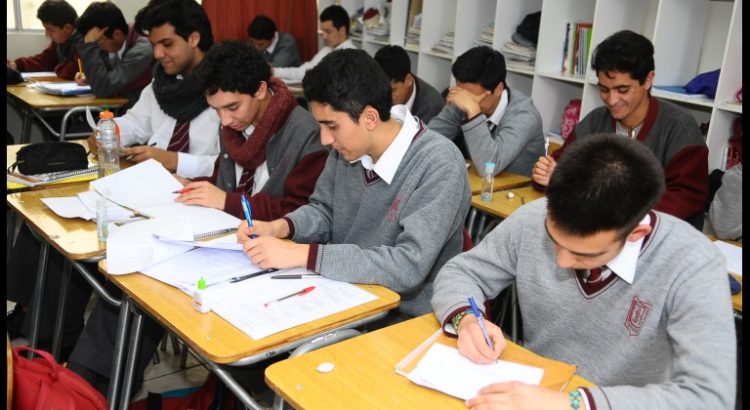
El imaginario que liga a lo privado como garantía de buena educación, desequilibra la balanza en el Perú. Un reporte reciente de Datum, dice que el 58% de padres limeños, si pudieran, escogerían la educación privada para sus hijos. Detrás de esa aspiración, los factores que ejercen influencia son varios y terminan por retratar no solo las brechas económicas y organizativas entre lo público y lo privado, sino además un clima de desconfianza hacia la institucionalidad estatal.

La primera década del 2000 significó un tiempo de migración estudiantil: hasta 2011, un 25% del total de alumnos estaban matriculados en centros privados,  casi el doble del 14% que estos centros recibían apenas iniciado el siglo. Una modificación de la preferencia que, sobre todo, tuvo eco en la educación inicial y primaria y colocó al Perú a la cabeza de los países de la región en los que más se había experimentado este movimiento.

Para el Dr. César Guadalupe, Presidente del Consejo Nacional de Educación y especialista en la materia, la inclinación de la balanza hacia lo privado se explica en distintas dimensiones. “Entre el 90 y el 2000, la educación pública peruana se derrumba como parte del colapso general que vivía el Estado: se instala el imaginario de que la educación pública peruana es la peor del mundo. Los rankings internacionales, las pruebas de aprendizaje, en esos años, fortalecen este discurso repetitivo, como si existiera un ranking capaz de medir el desempeño total de la educación a nivel mundial”, menciona. Esta erosión de lo público coincide con un crecimiento económico sostenido: durante los últimos quince años aumenta progresiva y dimensionalmente la capacidad adquisitiva de las familias peruanas. La oferta educativa se multiplica frente a la escasa demanda y sobre el terreno fértil de la Constitución que liberaliza la competencia educativa tras el lucro.

Ese desplazamiento, sin embargo, no distingue la heterogeneidad sobre la que se ha  construido la educación privada. “Tradicionalmente y hasta el 90, lo privado en el Perú estaba asociado con la educación religiosa: las élites económicas y algunos sectores de la clase media, ocupaban esos establecimientos”, indica el Dr. Guadalupe. Pero en la última década, la diversidad de lo privado ha tomado tintes irregulares: la infraestructura, la preparación de los maestros y el peso de los criterios de padres y dueños de estos centros sobre las mallas educativas, son algunos de los elementos que han problematizado la formación de los estudiantes en este sector. Ahora mismo, en Lima, unos 5.680 centros educativos iniciales, primarios y secundarios, privados, superan de lejos a los 1.795 centros públicos. Hasta el año pasado, el número de alumnos matriculados en las opciones privadas y públicas, casi era el mismo. Sin embargo se calcula que un 12% de estos centros privados funciona, todavía, de manera ilegal: no han cumplido los requisitos necesarios para poder recibir alumnado.

La Dra. Liliana Muñoz, Vicedecana de la Facultad de Educación de la Universidad Peruana Cayetano Heredia,  observa esta relación entre lo público y lo privado desde la formación de los docentes. “Los maestros que se preparan en centros y universidades privadas, generalmente, optarán por postular a centros educativos privados y probablemente, estos colegios privados procuren maestros con estas características, conocemos, quienes hemos ejercido la enseñanza, que el maestro de la escuela pública, muchas veces, trabaja también en escuelas privadas y en ellas deja su mayor esfuerzo y atención”, indica.

Las mejoras para la educación pública en estos años, no han sido pocas. En el año 2000 el gasto público en educación era de 1543 millones de dólares, y hoy supera los 8.000 millones. La inversión por alumnos pasó de ser de 300 a 1.100 dólares al año. Hasta el año 90, el sueldo de un maestro bordeaba los $50, hoy se ubica en 600.

Estos avances, sin embargo, resultan limitados frente a un panorama educativo estatal caracterizado por una organización, a ratos, poco efectiva debido a la centralidad a la que obedece. La conexión entre las necesidades del estudiante y las respuestas institucionales se torna difícil ante varios intermediarios, algo que en la educación privada está resuelto no solo por el bajo número de alumnado por cada centro, sino porque en última circunstancia quien toma las decisiones es el dueño. “La educación pública se ha vuelto poco flexible, tenemos un Estado que cumple el papel controlador, ante el que el profesor es apenas un ente aplicador de iniciativas ajenas a él,  por eso, en algunos establecimientos privados se desarrollaron formas propias de acercar a los estudiantes al aprendizaje y los resultados han sido positivos”, indica la Dra. Muñoz.

Aun así, la educación pública ha tenido un repunte importante en los últimos años. “Toda la evidencia que tenemos habla de un progreso paulatino en la educación pública, del lado de la educación privada, sin embargo, ese repunte no ha sucedido, el aparecimiento de centros educativos sin las adecuadas condiciones ha jalado hacia abajo la calificación de los centros privados tradicionales para la educación de las élites”, menciona.

Este repunte no ha logrado desplazar  el criterio que asocia a lo privado con la calidad educativa. La reciente protesta de maestros, que paralizó por casi dos meses a las escuelas públicas ha vuelto a poner la tela de desconfianza en la educación estatal. Reforzada, además, por un imaginario que acerca a la formación privada con una garantía social que supera el tiempo en el aula.  “Esa diferencia hay que mirarla con cautela: quizá la selección en unas universidades busca a estudiantes con más ventajas simbólicas que otros, así que la diferencia no solo la pone la universidad, sino es resultado de políticas de selección. Eso hace que las mediciones del retorno laboral, por ejemplo, sean muy complejas, no hay forma de controlar o medir ese capital social sobre el que operan las selecciones de alumnos”, menciona el Dr. Guadalupe.

Salvo, algunos casos, el retorno económico laboral para el grueso de la población peruana es bajo, de lo que se entiende que la vinculación entre lo privado y un mejor lugar en la sociedad es una verdad a medias. Los procesos de movilización social que han operado en los últimos años han empoderado la voz del padre de familia como la voz de un consumidor de la mercancía educativa. Lo privado ha respondido a eso con una diversidad de resultados. Desde lo público, la respuesta ha sido lenta. Si en 1999 existían 3,7 millones de niños en la primaria estatal, hoy, llegan a 2,5 millones, sin embargo, el número de maestros en estos mismos años ha crecido, ubicándose ahora en 145.000 maestros.

Fuente de la Noticia:

http://www.eltelegrafo.com.ec/noticias/mundo/9/la-educacion-en-la-balanza-entre-lo-publico-y-lo-privado-en-el-peru

Comparte este contenido:

España: Kilometroak 2017 en Oñati: declaraciones de Uriarte sobre educación

España/26 de septiembre de 2017/Fuente: http://www.eitb.eus

La consejera vasca de Educación ha explicado que ese acuerdo pretende «actualizar y modernizar» las bases del sistema educativo.

La consejera vasca de Educación, Cristina Uriarte, ha destacado este domingo en Oñati (Gipuzkoa) la necesidad de alcanzar un acuerdo por la educación en Euskadi algo que, según ha dicho, precisará de la colaboración de todos los agentes, y en el que «las lecturas y los cálculos políticos no tienen cabida».

Según informa su departamento en una nota, Uriarte ha hecho esta reflexión durante la apertura del Kilometroak 2017, la fiesta en favor de las ikastolas guipuzcoanas, en la que desde primeras horas de hoy están participando miles de personas en un circuito dispuesto por la ikastola Txantxiku, organizadora de esta edición del evento.

Al acto de apertura de la fiesta también han asistido la presidenta del Parlamento Vasco, Bakartxo Tejeria, el diputado general de Gipuzkoa, Markel Olano, la presidenta de las Juntas Generales de este territorio, Eider Mendoza, y el alcalde de Oñati, Mikel Biain.

Asimismo, el evento ha contado con la presencia de distintos representantes políticos como los dirigentes del PNV Joseba Egibar y Maria Eugenia Arrizabalaga, y los de EH Bildu Rebeka Ubera y Xabier Olano, entre otros.

 Durante su intervención, Uriarte ha explicado que el principal reto que presenta el nuevo curso académico es «la consecución de un acuerdo por la educación» que el Gobierno Vasco pretende «impulsar» para «actualizar y modernizar» las bases del sistema educativo.

«El objetivo es tan necesario como comprensible: actualizar la formación de nuestros hijos y el sistema educativo de quienes nacerán los próximos años. Definir la educación que realmente quiere y necesita nuestra sociedad», ha dicho Uriarte, antes de reclamar la «colaboración» en este empeño de todos los agentes educativos.

Fuente de la Noticia:

http://www.eitb.eus/es/noticias/sociedad/detalle/5100039/kilometroak-2017-onati-declaraciones-uriarte-educacion/

Comparte este contenido:

Armenia: Access to education and equity. Live discussion

Armenia/September 26, 2017/Source: http://en.a1plus.am

“PROBLEMS OF AVAILABILITY AND EQUALITY OF IMPLEMENTATION OF THE RIGHT TO EDUCATION IN THE GENERAL EDUCATIONAL SPHERE OF RA”

The presentation and discussion of the REASERCH

Open Society Foundations – Armenia and “Article 3” Club invite to the presentation and discussion of the preliminary findings of the “Problems of Availability and Equality of Implementation of the Right to Education in the General Education Sphere of RA” research report.

The research objective is to evaluate and identify the equality and justice issues in public education that hinder the full realization of the right to education, as well as develop alternative policy solutions in cooperation with various stakeholders.

In recent years, numerous studies held by the Armenian education system, as well as official statistics have been continuously alarming about the linkage between the level of education of the population and poverty, the lack of access to quality education for socially vulnerable families and / or rural children, especially girls.

The figures speak for themselves, and the study recorded the most profound picture of the problems and their causes:

  • During the period of 2010-2015, poverty among the population with a higher education has dropped by about 3%, while the proportion of people with elementary and lower education has increased by about 16.8%.
  • Compared to 2009 (6.8%), in 2015, the share of payments for education in general household expenditure has essentially decreased, with the costs being substantially different in urban and rural areas. In 2015 they were 2.5% and 0.7%, meanwhile in 2009 they were 8% and 3.6%.
  • During 2016/2017 academic year, 34.3% of children of families in need, got scores 9 and 10, meanwhile, in the case of the children of well-provided families, the indicator was 42.8%. In the same period, the children of the well-provided families did not score 0-5, whereas 8.7% of children of families in need received such scores.

Speakers are:

DAVID AMIRYAN – Deputy Director for Armenian Programs of Open Society Foundations

LILIT NAZARYAN Coordinator of Educational Programs in Armenia OF Open Society Foundation

https://www.facebook.com/article3club/videos/1938960212983058/

 Source:

http://en.a1plus.am/1263977.html

Comparte este contenido:

Ukrainian education minister to meet with Hungarian human resources minister in October to discuss education bill

Ukrainian – Hungarian/September 26, 2017/Source: http://en.interfax.com.ua

Ukraine’s Education and Science Minister Lilia Hrynevych will hold a meeting with Hungary’s Human Resources Minister Zoltan Balog to discuss the law on education not on Monday, August 25, but in October, the Ukrainian ministry’s press service told Interfax-Ukraine.

«The Ministry of Education and Science of Ukraine has received a copy of a letter proposing a meeting between Education and Science Minister of Ukraine Lilia Hrynevych and Minister of Human Resources of Hungary Zoltan Balog sent to the International Department of the Ministry of Education at 19:30 on Friday, September 22, 2017. The letter was received today, September 25, 2017,» the Education Ministry told the agency.

The press service noted that since the minister did not plan a trip to Zakarpattia and on Monday, September 25, is in Kyiv, she will not be able to meet with Balog.

«The meeting of Lilia Hrynevych with the human resources minister of Hungary has already been scheduled for October under preliminary agreements between the parties,» the Education Ministry reported.

During the meeting, among other things, the parties plan to discuss the law on education passed by the Verkhovna Rada of Ukraine on September 5.

Earlier, Balog asked for a personal meeting with Hrynevych on September 25 during his visit to Zakarpattia to discuss the bill on education.

It was reported that on September 5, the Verkhovna Rada passed an education bill launching education reform in Ukraine. The bill determines, among other things, that teaching at schools should be conducted in the national language.

However, in line with the educational program, one or more subjects can be taught in two or more languages – the state language, the English language, in other official languages of the European Union.

Persons belonging to national minorities are guaranteed the right to study in their native language along with the Ukrainian language in separate classes (groups) in municipal institutions of preschool and primary education.

On September 19, Verkhovna Rada Speaker Andriy Parubiy signed the bill and submitted it to president.

The foreign ministers of Bulgaria, Hungary, Greece, and Romania later signed letters to the Ukrainian foreign minister, in which they expressed concerns about the new bill on education in the context of the possible effect it may have on the rights of minorities and education in students’ native languages.

Source:

http://en.interfax.com.ua/news/general/450797.html

Comparte este contenido:

Private Sector to Help Drive Indonesia’s Public Education Overhaul: F&E Group

Indonesia/September 26, 2017/Source: http://jakartaglobe.id

Indonesia’s education sector will receive a big boost from a more robust involvement from the private sector to complement existing government efforts to improve the quality of public education in Southeast Asia’s largest economy.

F&E Group unveiled a comprehensive plan to inject investment into the public education sector in the country ahead of its Global Educational Supplies and Solutions Indonesia (GESS Indonesia) event, which will take place on Sept. 27-29 at the Jakarta Convention Center.

«Our research shows that Indonesia has already made tremendous strides in improving access to basic education over the past two decades. Efforts are now being made to improve quality, but will need more private sector initiatives to support ongoing government programs aimed at improving teacher performance, as well as student learning experiences and skills that will help them become active contributors to Indonesia’s economy,» F&E Group project director Matt Thompson said in a statement.

According to a United Nations Population Fund report, Indonesia will have 65 million young people joining the workforce by 2035, as the education system is largely expected to give them the requisite skills to become employable.

The report prompted action from the Ministry of Education and Culture, which said the government is currently trying to local empower students to be capable of competing for jobs in Indonesia, or anywhere in the world.

«We are constantly reviewing our policies and programs to ensure no one is left behind, and each student is given the right education to be competent and competitive enough,» said Ananto Kusuma Seta, the Education Ministry’s special adviser for innovation and competitiveness.

Digital Education Market

With policy reforms designed to create a more accessible and responsive education system in the country, the government will also aim to reach its goal of raising the annual per capita income from $3500 in 2011 to $14,250 by 2025 through crucial technology adaptations as smartphone penetration in Indonesia is forecast to reach 100 million users in 2018.

To meet these demands, Indosat’s Ooredoo pledged $1 million in 2015 to enhance digital education aimed at providing cloud-based interactive classroom materials, tablets to schools in five provinces across the country and training teachers to possess necessary IT skills.

On the other hand, educational tech start-ups are also sprouting in Indonesia to help address the flourishing digital education market, like HarukaEdu, ArsaKids, KelasX, Cakra, Rabbit Hole, Generasi Cerdas, Youth Manual and Mediafon.

The GESS exhibition is expected to see more than 100 education suppliers and brands from across the globe showcase a wide range of products and solutions geared towards Indonesia’s education market.

These products include cutting-edge digital tools and software aimed at improving the teaching and learning experience in classrooms.

«In addition, we will also have a pavilion dedicated to start-ups as a way of supporting the private sector’s initiatives in implementing programs that hope to complement the government’s ongoing efforts to improve the quality of education in Indonesia,» Thompson said.

GESS Indonesia’s admission is free for education professionals and will consist of over 100 sessions, workshops and presentations covering a variety of topics and themes addressing opportunities and challenges in Indonesia’s education sector.

Source:

http://jakartaglobe.id/news/private-sector-help-drive-indonesias-public-education-overhaul-fe-group/


Comparte este contenido:

Jordan Eases Education Enrollment Rules for Syrian Refugees

Jordan/September 26,2017/ Source: https://www.albawaba.com

  • Prime Minister Hani Mulki has approved a request for Syrian refugees to enroll in government schools without possessing required documents.
  • To avoid overcrowding, the new students would attend afternoon sessions in double-shift schools.
  • Special programs have also been introduced to help Syrian children catch up on the years of education they have missed.
  • Approximately 80,000 Syrian children in Jordan were out of school for various reasons including the lack of required documents.


Prime Minister Hani Mulki has approved a recommendation by concerned officials to allow Syrian refugees who do not possess the required documents to enroll in government schools, officials have announced.

To be able to join formal education in the Kingdom, Syrians have to present a special ID card issued by the Interior Ministry indicating their status as refugees.

In exclusive remarks to Al Rai and The Jordan Times, Education Minister Omar Razzaz said that the decision is consistent with the government’s policy not to leave any children without education “because we do not want anyone to lose their right to education”.

In remarks to The Jordan Times, State Minister for Media Affairs and Government Spokesperson Mohammad Momani said: “In line with our value system in Jordan, we do not accept that any child be left out without education.”

“Education is among a string of services provided to Syrian refugees from the moment they are received on border,” the minister said, renewing a call on the international community to ensure proportionate assistance for Jordan to continue carrying out its humanitarian mission.

Asked if the new numbers would add to the problem of crowding at schools, he said that the newcomers would join afternoon periods in double-shift schools, where there is no such a problem.

In an exclusive statement to The Jordan Times, UNICEF Representative Robert Jenkins said: “We would like to congratulate the government of Jordan for this bold and positive step forward towards ensuring that every vulnerable girl and boy in Jordan goes to school.

“UNICEF stands by the Ministry of Education in doing everything we can for every child to access quality education and get a fair chance in preparing for a better future for themselves and their families.”

In addition to expanding schools in Syrian refugee camps, the Ministry of Education has opened a total of 200 schools operating double shifts to offer formal education to young refugees, according to UNICEF. Catch-up education programmes are also being rolled out to reach children who have missed more than three years of schooling, for them to accelerate their learning, and enroll in the formal system, the agency has said in a report.

In Jordan, according to official figures, more than 126,000 Syrian children were receiving education in public schools last year, while 80,000 were out of school, for different reasons, including the fact that they did not have the necessary identification documents. There is no official estimate of how many children would benefit from the new policy.

According to a report by Save the Children, 35 percent of the 4.8 million Syrian refugees in the region are of school age. Whereas before the conflict 94 percent of Syrians attended primary or lower secondary school by June 2017, 43 percent of Syrian refugees were out of school. “This is, in fact, an increase from 34 percent in December 2016,” according to the organization.

Source:

https://www.albawaba.com/news/jordan-eases-education-enrollment-rules-syrian-refugees-1025718

Comparte este contenido:

EEUU: Trump to create $200M grant program for computer education

EEUU/September 26, 2017/By: DARLENE SUPERVILLE/Source: http://www.seattletimes.com

President Donald Trump on Monday directed his education secretary to prioritize science and technology education and spend at least $200 million annually on competitive grants so schools can broaden access to computer science education in particular.

During an Oval Office appearance, where he was surrounded by students from local schools, Trump said more than half of U.S. high schools don’t teach computer programming and that nearly 40 percent don’t offer physics.

He said more widespread access to such instruction will help students develop the skills they need to compete and win in tomorrow’s workforce.

 “Who likes to win?” Trump asked the students. “Who likes to lose?”

Ivanka Trump, the president’s daughter and senior White House adviser on the workforce issues, told reporters during a telephone briefing earlier Monday that it is vital that students, especially girls and racial minorities, learn how to write computer code and study computer science.

 She said exposure in grades K-12 is vital.

“Today represents a giant leap forward as we think about aligning the skills that are taught in the classroom with the skills that are in demand in the modern economy,” Ivanka Trump said in the Oval Office before the president signed a directive instructing Education Secretary Betsy DeVos to act.

 Money for the grants has been appropriated by Congress, officials said. Trump’s order asks DeVos to prioritize high-quality STEM – science, technology, engineering and math – education along with computer science education under an existing grant program that schools and districts have access to.

Ivanka Trump said she would visit Detroit on Tuesday with private sector officials as they announce pledges in support of computer science education.

Source:

http://www.seattletimes.com/nation-world/nation-politics/trump-to-create-200m-grant-program-for-computer-education/?utm_source=RSS&utm_medium=Referral&utm_campaign=RSS_all

Comparte este contenido:
Page 3298 of 6179
1 3.296 3.297 3.298 3.299 3.300 6.179