Cuba/09 de Septiembre de 2017/Mesa Redonda
Sobre los significativos cambios en la calidad del proceso docente educativo que se han introducido y consolidado en la educación general en Cuba abordó el espacio televisivo Mesa Redonda de este miércoles 6 de septiembre, segunda parte de dos programas dedicados al inicio del Curso Escolar 2017-2018 en la Educación General en Cuba.
El tercer perfeccionamiento se anunciaba en la Mesa Redonda anterior como una de las características fundamentales de la educación general en Cuba. La doctora Silvia María Navarro Quintero, directora general del Instituto Central de Ciencias Pedagógicas, explicó que éste surge por la necesidad de actualizar libros, planes, programas y orientaciones metodológicas a partir del propio desarrollo de la ciencia, las exigencias sociales, los cambios operados en la sociedad, la necesidad de poner a la escuela a la altura de los tiempos.
Refirió que entre los años 2010-2013 el Instituto Central de Ciencias Pedagógicas hizo un diagnóstico de la realidad del Sistema Educativo que sirvió para saber cómo se trabajaría el tercer perfeccionamiento.
La investigación reveló la sobrecarga de algunos programas y sus contenidos, las insuficientes horas de las cuales se disponen para consolidar y sistematizar determinados contenidos que se reiteraban o que no tenían el suficiente tratamiento de un nivel a otro de enseñanza (de primaria a secundaria básica) y que es necesario sistematizar para entender otros más complejos que tienen su base en estudios precedentes.
Recordó que en 1975 se realizó el primer perfeccionamiento del sistema de educación, en 1987 se realizó el segundo, y de esos dos muchos son los contenidos que sustentan el tercero que también tiene como soporte los Lineamientos del Sexto y Séptimo Congreso del Partido, los objetivos de la Primera Conferencia y la Resolución Ministerial sobre las adecuaciones a la organización escolar presentada cursos atrás.
Refirió que a partir de los propios resultados del diagnóstico se hizo necesario armonizar y buscar que libros, planes y programas estuvieran acompañados de una escuela organizada de manera diferente, donde el activismo de los alumnos, los docentes, los familiares y la comunidad tuvieran un lugar importante.
Anunció que durante los últimos tres años en 68 instituciones educativas de seis provincias del país se han estado probando las nuevas formas de trabajo, como son la construcción en cada centro de su propio Proyecto Educativo.
Aclaró que el Proyecto Educativo no es algo nuevo y no significa una sobrecarga para el docente, sino que es el grupo de actividades y estrategias que van a utilizar participativamente todos los comprometidos en la vida de la escuela.
Con frecuencia se escucha que la escuela está llamada a ser el centro más importante de la comunidad. Para ello se necesita que la escuela construya su propio Proyecto Educativo identificando los recursos humanos, materiales y didácticos de los que se dispone en derredor, a lo que se le llama trabajo en red, lo que significa la identificación de los mejores profesionales para la preparación metodológica de los integrantes de la red.
Informó que la familia es otro de los componentes de cierre de las nuevas formas de trabajo, las cuales necesitan para lograrse la armonización con un componente curricular. El Proyecto Educativo es adaptarse a las especificidades de la escuela, de la comunidad, del consejo popular, del municipio, de la provincia. Definió que la idea es establecer un currículo donde se exige y se respete un currículo general, común y obligatorio, que garantice la unidad e integridad del sistema, para que el alumno venza los mismos objetivos en una localidad que en otra.
Añadió que la construcción del Proyecto Educativo y del currículo institucional permitirá que el colectivo encuentre los círculos de interés, los programas complementarios y las actividades que se correspondan con el lugar, la actividad fundamental y las motivaciones donde está enclavada la escuela.
Expuso además que una de las causas que provoca el perfeccionamiento es la sobrecarga de maestros y alumnos, lo que posibilita que el estudiante pueda profundizar en contenidos extracurriculares a través de un círculo de interés. La sobrecarga no se da solo con un mismo contenido, la incorrecta dosificación también significa sobrecarga. Por tanto, un círculo de interés o un programa complementario no solo sirven para reforzar contenidos, también para estimular habilidades, a través de las potencialidades de la comunidad.
Esta nueva manera ha determinado la elaboración de nuevos libros, planes, programas, orientaciones metodológicas y cuadernos de trabajo se empezaron introdujeron en todos los municipios cabecera en el municipio especial Isla de la Juventud. Son entonces 152 instituciones las que están trabajando con los nuevos libros, planes, programas, orientaciones metodológicas, cuadernos de trabajo y con una nueva organización de la escuela.
La doctora Silvia María Navarro Quintero comentó que no se debe asociar la carga docente y el contenido a la cantidad de libros, porque hoy hay muchos recursos en soporte digital como son visitas a museos virtuales que la empresa CINESOFT está poniendo a disposición de la educación.
Los materiales y libros que se están probando avisan que constituyen un recurso provisional y para uso de centros experimentales. La bondad del volumen de las orientaciones metodológicas es que en un único documento el maestro encuentra los contenidos esenciales que necesita para planificar una clase. En el libro está recogida la caracterización sicológica de los escolares, la ejemplificación de los ejercicios, la sugerencia para utilizar los productos de CINESOFT, las sugerencias para trabajar con escolares talentosos o con dificultades educativas especiales y la propuesta de otras actividades encaminadas a la formación vocacional, al componente práctico, a la actividad experimental se pudieran hacer.
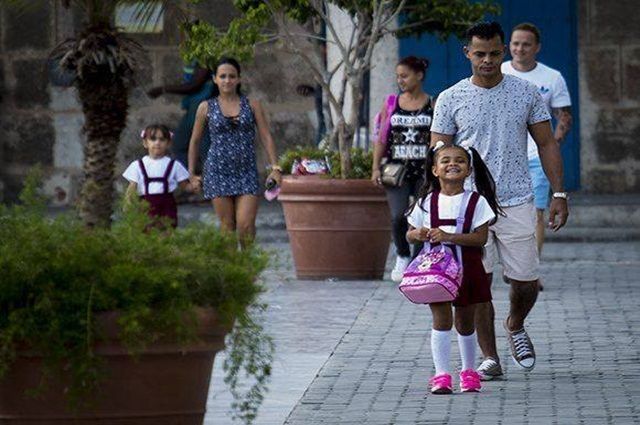
Secundaria Básica Carlos Ulloa, una experiencia del perfeccionamiento educativo
La Secundaria Básica Carlos Ulloa en Pinar del Río contiene una de las experiencias directas de las que se ha hablado con anterioridad. Su directora, la máster en ciencias Magalys Hernández Barroso, explicó que en el Consejo Popular Hermanos Cruz se realiza el perfeccionamiento en red de diferentes niveles educativos desde mayo de 2014.
Explicó que el perfeccionamiento llegó en un primer momento a las formas de trabajo y que a partir de este curso a través de nuevos documentos, programas y libros de texto. Los primeros tres años les han permitido organizar su propio Proyecto Educativo Institucional que le da autonomía a la escuela, sustentado por las acciones que se emiten del grupo docente.
Sentenció que con este perfeccionamiento se ha ganado en estilo de dirección, en capacidad de decisión, en involucrar e incorporar a todas las personas de la sociedad que tienen el deber de educar a las nuevas generaciones, lo que significa que el trabajo en red abarca la implicación y la participación del presidente del Consejo Popular, de los delegados del Poder Popular, de los organismos a su alrededor.
Hoy en la escuela de habla de aulas a fines con perspectivas deportivas, de programas complementarios impartidos por combatientes de la Revolución Cubana, de proyectos impartidos por compañeros del MININT, de círculo de interés de corte pedagógico y de otras especialidades de la enseñanza técnico-profesional, de la atención a las casas de estudio, a los alumnos con dificultades, que es todo lo que conforma el currículo institucional, un término nuevo que da la posibilidad de que el estudiante esté donde tenga sus necesidades, intereses y motivos.
La escuela tiene un Consejo de Escuela representado por los padres, un trabajo en red representado por los organismos, lo que significa que se establecen convenios y con el autorizo y el consentimiento pleno de la familia se tiene conocimiento de dónde se encuentra el alumno. Además, hay espacios para que los alumnos demuestren que hicieron en esos programas complementarios.
Sobre su experiencia personal dijo que en los últimos tres cursos ha sentido que la escuela se ha convertido en una nueva familia insertada en la sociedad porque la institución se siente acompañada por los agentes educativos del entorno. Un trabajo que avanza hacia la formación integral de las nuevas generaciones.
Señaló que en la actualidad hay un libro de texto para cada asignatura, que los libros complementarios no se utilizan por parte de los estudiantes, el cuaderno de trabajo es único y válido para los tres cursos y para todas las asignaturas.
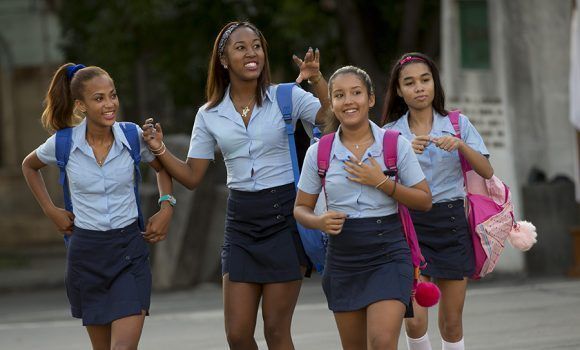
Los nuevos contenidos de la educación cubana
La actualización de las asignaturas es también una necesidad que tiene hoy el sistema educativo cubano. La máster en ciencias Miriam Egea Álvarez, jefa del Departamento de Marxismo Leninismo e Historia del Ministerio de Educación, refirió que ahora se habla de un proyecto que incluye el criterio de maestros y metodólogos junto con la valoración de especialistas e investigadores de la Academia de la Historia de Cuba, del Instituto de Historia de Cuba, de la Unión de Historiadores y de la Unión de Escritores y Artistas, lo que lo enriquece de manera que da la posibilidad de tener en cuenta no solo la contextualización, sino también la búsqueda de un enfoque más integral y que posibilita que desde la ciencia histórica se actualicen los libros.
Planteo que hoy se hace un análisis desde un enfoque marxista-leninista, tercermundista, emancipatorio, con los elementos clave de un pueblo en Revolución. Por ello hoy se puede hablar de la conformación de las disciplinas de Historia, que relacionará lo universal, con lo regional, lo nacional y lo local; y Educación para la vida ciudadana, nuevo nombre de la asignatura Educación Cívica, que en su nueva concepción elimina reiteraciones de conocimientos y se vincula más con la vida cotidiana de los hombres y las mujeres de nuestro país.
Señaló que estas nuevas concepciones contienen el pensamiento de nuestro Héroe Nacional José Martí, del Comandante en Jefe Fidel Castro, del Guerrillero Heroico Ernesto Che Guevara y de otros importantes pensadores latinoamericanos y de corte universal que aportan intencionadamente a la formación humanista de las nuevas generaciones que permita conformar un pensamiento crítico, reflexivo, comprometido, motivándolas a amar a su país.
El perfeccionamiento plantea un trabajo flexible y específico que se ajusta al contexto, lo que significa tener sentido del momento histórico y en correspondencia acercarse más a la realidad y participar en su transformación.
La máster en ciencias Miriam Egea explicó que cuando se habla de la formación para la vida ciudadana, no se limita solo a la asignatura, hay que verlo en una concepción de integralidad del sistema de influencias educativas que confluyen en el centro de manera intencionada.
Concluyó que en este proceso se ha tenido en cuenta la opinión de la familia cubana que ha nutrido y sugerido.
La experimentación en la propia escuela
Por otra parte, la doctora Silvia María Navarro Quintero, directora general del Instituto Central de Ciencias Pedagógicas, expresó que uno de los rasgos distintivos del perfeccionamiento es la experimentación y la introducción asincrónica de los resultados.
Se han seleccionado grupos de diferentes años de vida para probar documentos, materiales y nuevas formas de trabajo lo que posibilita enmendar para poder generalizar. Un curso se trabaja en la experimentación a través de la introducción, el próximo se enmendarán los resultados y se generalizan en el curso siguiente.
Recalcó que se pueden tener los mejores programas educativos, pero que la escuela es organizada y dirigida por la formación que sea capaz de alcanzar el personal docente de la institución, la experticia de los directivos y la actuación de los metodólogos decide la armonía entre las formas de trabajo y la concepción curricular. Es en esa armonía que puede hacerse realidad las principales modificaciones que se están elaborando.
Emocionada comentó que los creadores de este programa son todos los comprometidos con la obra revolucionaria. Los colectivos de autores están conformados por maestros, metodólogos, directores de escuela, testigos de perfeccionamientos anteriores, profesores de las universidades, compañeros del INDER, de cultura, del MININT, de Salud Pública. Para la asignatura de computación los profesores del pre-universitario militar Hermanos Tamayo.
Definió que el mayor valor de esta elaboración es que ha sido conjunta y escalonada. Enfatizó en la consulta sistemática que se ha hecho a estos programas al interior del MINED por más de 40 mil docentes y directivos. Se ha trabajado de conjunto con la Academia de Historia, con el Centro de Neurociencia, el Centro Juan Marinello, el Instituto de la Lengua, el Instituto de Filosofía, la Asociación Alejo Carpentier, la Sociedad Ludwing, y otros organismos e instituciones, para un total de 42, con las que se ha conciliado la construcción de este nuevo currículo institucional que está en función con el modelo que el pueblo cubano se ha propuesto crear.
Fuente: http://mesaredonda.cubadebate.cu/mesa-redonda/2017/09/07/detalles-del-tercer-proceso-de-perfeccionamiento-del-sistema-educativo/



 Users Today : 17
 Total Users : 35497829
 Views Today : 17
 Total views : 3617492