Page 3394 of 6196
1 3.392 3.393 3.394 3.395 3.396 6.196

The Liberian Government’s school privatisation program exposed

Africa/Liberia/PrensaIE

Resumen: Una copia filtrada del informe gubernamental encargado de investigar el programa de Escuelas de Colaboración para Liberia ha concluido que no puede funcionar «con presupuestos sostenibles y niveles de personal y sin efectos secundarios negativos en otras escuelas». El borrador confidencial del borrador, publicado en una publicación de Liberia , también encontró que el primer año de las escuelas de asociación para Liberia (PSL) «no era tan rentable como otros programas en países en desarrollo evaluados». El costo a largo plazo del programa «sigue siendo alto en comparación con los programas que producen efectos comparables en otros lugares», entre ellos Ghana y Kenya. «La subcontratación de nuestro deber más sagrado a compañías de educación sin fines de lucro como Bridge ha sido expuesto como un experimento privado muy costoso», dijo Fred van Leeuwen, secretario general de Educación Internacional (EI).

En enero de 2016, en un movimiento polémico, el Gobierno de Liberia anunció su intención de externalizar su sistema de educación primaria y preescolar a un actor corporativo con fines de lucro con sede en Estados Unidos, Bridge International Academies (BIA). Tras una considerable oposición a esta medida sin precedentes, el Gobierno concibió el programa PSL, en el que ocho actores operarían 93 escuelas en el primer año. El Ministerio de Educación, bajo la dirección del Ministro de Educación, George Werner, decidió aumentar el número de escuelas a 202 en el proceso, a pesar de que el PSL estaría sujeto a una evaluación rigurosa a través de un ensayo controlado aleatorio (RCT) el segundo año del proyecto. «Las conclusiones negativas de este informe pueden explicar la prisa del ministro para ampliar el programa de privatización, más que duplicarlo, seis meses en el» juicio «y antes de la publicación del informe contrario a las garantías de que no lo haría», dijo Mary Mulbah, Presidenta de la Asociación Nacional de Docentes de Liberia (NTAL). El informe muestra que cualquier mejora en los resultados de los estudiantes se logró gracias al aumento de la financiación entre 100 y 2.000 por ciento más que las escuelas públicas, incluyendo un 37 por ciento más de maestros.


A leaked copy of the Government commissioned report investigating the Partnership Schools for Liberia programme has concluded that it cannot work “with sustainable budgets and staffing levels, and without negative side effects on other schools.”

The confidential draft summary, released in a Liberian publication, also found that the first year of the Partnership Schools for Liberia (PSL) “was not as cost-effective as other programs in developing countries evaluated”. The long-term cost of the programme “remains high compared to programs yielding comparable effects elsewhere”, including Ghana and Kenya.

“Outsourcing our most sacred duty to unaccountable for-profit education companies like Bridge has been exposed as a very costly private experiment” said Fred van Leeuwen, General secretary, Education International (EI).

In January 2016, in a controversial move, the Government of Liberia announced its intention to outsource its primary and pre-primary education system to a US-based for-profit corporate actor, Bridge International Academies (BIA). Following considerable opposition to this unprecedented move the Government conceived the PSL program, where eight actors would operate 93 schools in the first year.

Despite claiming that PSL would be subject to a rigorous evaluation through a Randomized Control Trial (RCT), six months into the trial, the Ministry of Education, under the leadership of Education Minister George Werner, decided to increase the number of schools to 202 in the project’s second year.

“The negative findings of this report may explain the minister’s rush to expand the privatisation program, by more than doubling it, six months into the ‘trial’ and prior to the release of the report contrary to assurances that he would not do so” said Mary Mulbah, President of the National Teachers Association of Liberia (NTAL).

The report shows that any improvements in student outcomes were achieved on the back of increased funding ranging between 100 to 2,000 percent more than public schools, including 37 percent more teachers.

“What is most disturbing is that in many instances the improved student outcomes were achieved by pushing out students from schools on the “trial” denying children access to their local schools. In some cases this has  resulted in children being left out of school” added Mulbah.

Bridge International Academies, the government’s preferred private operator, is the subject of particular criticism in the report.

As one of eight actors participating in the pilot program, Bridge International Academies was desperate to show that its model for school management is the future of education. Unfortunately for Bridge, the facts and figures are in and it doesn’t look good for the company bankrolled by the likes of Pearson, the World Bank, DfID, Bill Gates and Facebook’s Mark Zuckerberg.

The report, detailing the progress of the PSL, pulls few punches when taking a closer look at Bridge’s financial operations, behaviour and lack of sustainability.

Under the PSL, the Liberian Government matches its investment per pupil, which is currently $50 USD, and hands it over to the private contractor to independently manage its public schools to see if this model presents a sustainable method to improving its education system. However, when it comes to Bridge the numbers just don’t add up.

According to the report, Bridge has spent an average of $1,052 USD per pupil, shattering any possibility that its own financial model is sustainable. With its billionaire funders footing the bill, Bridge has gone to any length to try and convince the public that it has the answer to quality education.  Yet, compared to other providers, student gains at Bridge managed schools were not as cost effective.

Bridge also saw a decrease in enrolments. When it came to ensuring education for all students, Bridge found a way to skirt the rules. Not having to abide by the same contractual obligations as the other pilot participants, Bridge quickly moved to cap class sizes in its schools, pushing out thousands of students. In addition to pushing out students, Bridge also purged 74 percent of existing teachers from classrooms.

This behaviour, all under the supervision of Education Minister Werner, reveals the desperate unethical measures that Bridge is prepared to undertake in order to sell its failed ideology to unsuspecting students, parents and business partners.

The government report vindicates the demand of National Teachers’ Association of Liberia (NTAL) and civil society organisations that the government immediately abandon the PSL program.

The study has shown that Liberia must look within to improve its education system rather than selling it off to highest bidder who does not have free, quality public education at its core. If sustainability and a quality education system that serves all children is the goal, then Minister Werner and Bridge have failed its most important test.

Fuente: https://www.ei-ie.org/en/detail/15334/the-liberian-governments-school-privatisation-program-exposed
Comparte este contenido:

Venezuela: Trabajadores educativos recibieron charla sobre el Plan de Parto Humanizado

Venezuela/Septiembre de 2017/Autor: Pablo Duarte/Fuente: MPPE

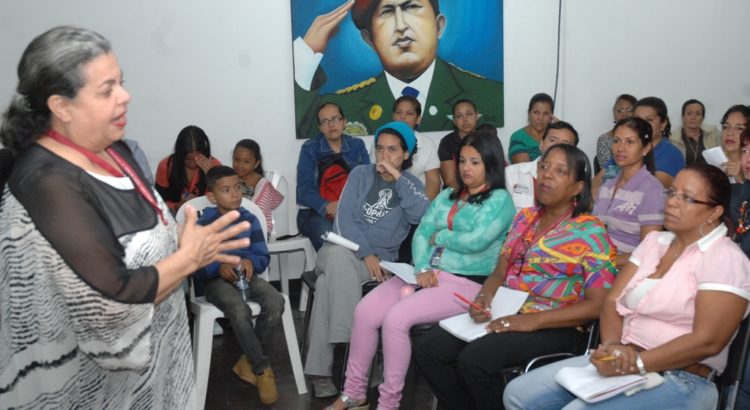
Como parte del avance del Plan Nacional de Parto Humanizado en nuestro país, este miércoles se realizó una charla relacionada con este tema para “crear conciencia sobre la importancia del parto en la vida de las personas”, según lo informó la viceministra de Educación Inicial y Primaria del Ministerio del Poder Popular para la Educación, Gisela Toro.

Esta actividad contó con la participación de un grupo de docentes y miembros del equipo de trabajo del Viceministerio de Educación Inicial y Primaria del MPPE, así como varias madres integrales que atienden a los niños y niñas en los Centros de Educación Inicial (CEI).

“En el taller se brindó información teórica y estamos trabajando en la elaboración de distintos materiales conjuntamente con el ministerio del Poder Popular para la Mujer y el ministerio del Poder Popular para la Salud”, informó la viceministra Toro.

La funcionaria indicó que la idea de estas actividades es lograr que las personas entiendan que el embarazo es “algo maravilloso y que las mujeres en edad para salir embarazadas tienen derechos que les otorga la legislación venezolana”.

La viceministra señaló que entre esos derechos está la potestad de decidir, entre otros aspectos, cómo desean dar a luz y bajo qué circunstancias.

“Ya las mujeres no tienen que parir como lo diga el médico ni como lo decida la clínica o el hospital. Pueden exigir si desean dar a luz en cuclillas o en compañía de algunos familiares. Como institución debemos ayudar a la gente a tomar conciencia sobre la importancia del parto.

 El embarazo y el parto de una mujer son elementos de vital importancia porque conllevan al nacimiento de un miembro más de la sociedad. Cuando veamos a una mujer embarazada debemos respetarla, ayudarla y apoyarla si así lo requiere”, explicó Lara.

Fuente: http://me.gob.ve/index.php/noticias/86-noticias-2027/septiembre/3283-trabajadores-educativos-recibieron-charla-sobre-el-plan-de-parto-humanizado


Comparte este contenido:

India: The point of good education is to have a good life

India/Septiembre de 2017/Fuente: The Hindu

Resumen: El tema del cónclave de este año fue «Pedagogía de Educación Superior y Aprendizaje de la Nueva Era». En el evento participaron varios académicos, profesionales corporativos y directores de destacadas escuelas de Delhi y la Región de la Capital Nacional. Satya Narayan R., fundador de CL Educate, dijo: «Es importante que a los niños se les enseñe la meta habilidad de aprender. La investigación muestra que 6 de 10 puestos de trabajo en 2025 aún no se conocen. Con el tiempo habrá un cambio en la tecnología y es importante que los estudiantes aprendan la habilidad de adaptarse a ella «. La primera mesa redonda tuvo Jyoti Gupta, el director de la Escuela Pública de Delhi Ghaziabad; Vijay Datta, director de la Escuela Moderna Barakhamba Road; Anuj Bhasin, el Comisionado de Comercio, Educación, Gobierno de Canadá; y Poonam Devdutt, director de la Escuela de Estudios Empresariales de la Universidad Shobhit de Meerut; como panelistas.

The Hindu in School and CL Educate organised the Knowledge Conclave 2017 at The Park hotel here on Thursday.

The theme for this year’s conclave was “Higher Education and New Age Learning Pedagogy’. A number of academicians, corporate professionals and principals of prominent schools in Delhi and the National Capital Region spoke at the event.

Change in technology

Satya Narayan R., the founder of CL Educate, said, “It is important that children are taught the meta skill of learning. Research shows that 6 of 10 jobs in 2025 are not yet known. With time there will be a change in technology and it is important that students learn the skill of adapting to it.”

The first panel discussion had Jyoti Gupta, the principal of Delhi Public School Ghaziabad; Vijay Datta, the principal of Modern School Barakhamba Road; Anuj Bhasin, the Trade Commissioner, Education, Government of Canada; and Poonam Devdutt, the director, School of Business Studies, Shobhit University Meerut; as panellists.

The discussion on “Institutions and Schools: Area for Collaboration” saw the panellists emphasise the importance of linkage between schools and universities.

“Institutions of higher education and schools need to be connected to develop skills which will make them employable. The point of good education is to have a good life. I have my doubts whether we are producing happy children despite concentrating on improving efficiency,” said Dr. Devdutt.

Emphasising the importance of vocational courses, Dr. Datta said, “As educators, we need to develop respect for labour work. A shoemaker who is doing his job well is as important to the nation’s strength as the Prime Minister. It is important that we recognise this fact.”

“In foreign countries, equal importance is given to vocational courses as well as academic courses. The Central Board of Secondary Education [CBSE] and Delhi University [DU] should sit together and charter a course that will help students. It is important to have an upward linkage,” said Ms. Gupta. The keynote address on “New age technologies for education” was delivered by Ritu Gupta, director, marketing, consumer and small business, Dell India.

Fuente: http://www.thehindu.com/news/cities/Delhi/the-point-of-good-education-is-to-have-a-good-life/article19639352.ece

Comparte este contenido:

Nueva Zelanda: Four new charter schools announced by govt

Nueva Zelanda/Septiembre de 2017/Fuente: RNZ

Resumen:  El Gobierno Nacional ha anunciado cuatro nuevas escuelas charter, incluyendo la primera en la Isla Sur y Gisborne. El subsecretario de Educación David Seymour dijo que abriría en 2019. Incluyen un puesto avanzado de Christchurch de la escuela militar de la vanguardia de Auckland y una High School secundaria para los niños desde los años nueve a 11 en Gisborne, Tūranga Tangata Rite. Este último sería dirigido por Te Runanga o Turanganui a Kiwa, que representa los intereses de Rongowhakata, Ngai Tāmanuhiri y Te Aitanga a Māhaki. También habrá una escuela secundaria bilingüe maorí para ir con la escuela primaria dirigida por la Manukau Urban Māori Authority en South Auckland y City Senior School, una escuela de la ciudad de Auckland con un enfoque en ciencia, tecnología, ingeniería, matemáticas y artes.

The National government has announced four new charter schools, including the first in the South Island and Gisborne. Under-secretary of education David Seymour said they would open in 2019.

They include a Christchurch outpost of Auckland’s Vanguard Military School, and an iwi-run junior high school for children in years nine to 11 in Gisborne, Tūranga Tangata Rite.

The latter would be run by Te Runanga o Turanganui a Kiwa, which represents the interests of Rongowhakata, Ngai Tāmanuhiri and Te Aitanga a Māhaki.

There will also be a Māori bilingual secondary school to go with the primary school run by the Manukau Urban Māori Authority in South Auckland, and City Senior School, an inner-city Auckland school with a focus on science, technology, engineering, maths and arts.

There are currently 10 charter or partnership schools, with two more scheduled to open next year.

Mr Seymour said the announcement could not be delayed until after the election because the schools needed time to set up.

«The number of applications that we have and the number of partnership schools that are now over-subscribed shows there is a need for this and why shouldn’t we get some more opened,» he said.

Asked if the schools were being set up in areas that needed more schools, Mr Seymour said that would be proven by parental demand.

«These schools get paid for the number of students that choose to attend them and whether or not there’s a need for them is up to those students and parents.»

He was confident the schools would survive any change of government that might follow this month’s general elections, noting strong Labour Party connections to two of the schools and general support for the schools among Māori.

«I think they would be mad to do anything to these schools because fundamentally, they are succeeding academically,» he said.

Teacher unions were critical of the announcement.

Post Primary Teachers Association president Jack Boyle said Ministry of Education figures showed only 59.7 percent of charter school leavers from charter schools left with NCEA level 2 or above last year, compared to a system-wide figure of 80.3 percent.

«Opening charter schools is not going to raise the achievement of our children. It’s not going to close any gaps. It’s not going to level any playing fields. The only thing charter schools do successfully is reward mediocrity by using scarce education money to prop up private owners,» he said.

Educational Institute president Lynda Stuart said the money spent on charter schools should be spent on support for children with special needs.

Fuente: http://www.radionz.co.nz/news/national/338911/four-new-charter-schools-announced-by-govt


Comparte este contenido:

Rusia: One and a half kilos of technologies: Rostec begins to introduce electronic textbooks Source : https://realnoevremya.com/articles/1772-some-schools-in-russia-being-equipped-with-tablets

Rusia/Septiembre de 2017/Autor: Aleksander Shakirov/Fuente: Real Noevrenya

Resumen: El 1 de septiembre, el proyecto comenzó en cuatro municipios de la provincia de Sverdlovsk, incluyendo Ekaterimburgo y Nizhny Tagil. Como director general de NCEO Konstantin Kozlov informó a RBK, el proyecto cubrirá 350 grupos-participantes (más de 10.000 estudiantes de la escuela) y más de 700 maestros. En el marco del programa, la NCEO planea distribuir 8.000 tabletas, que están destinadas a sustituir todos los libros de texto de los estudiantes, incluidos libros y libros. La tableta se hace en forma de un libro. Una pantalla es usual, la otra es de papel electrónico. En la pantalla en color, los alumnos verán diferentes presentaciones, videos y otros archivos multimedia. La pantalla con papel electrónico no es perjudicial para la visión del niño, Kozlov señaló.

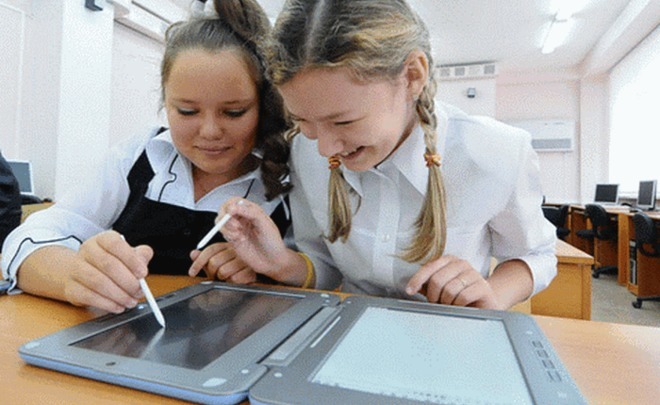
The national centre of electronic education (controlled by Rostec) launches a pilot project for equipping schools in Sverdlovsk Oblast with dual-screen tablets. The projects will concern more than 10,000 pupils and can become another step in transferring of school education to digital format. Its creators plan to introduce tablets nation-wide. However, it is predictably faces the financial problem. Read the details in the material of Realnoe Vremya.

1,5 kilos of technologies

On 1 September, the project started in four municipalities of Sverdlovsk Oblast, including Yekaterinburg and Nizhny Tagil. As director general of NCEO Konstantin Kozlov reported to RBK, the project will cover 350 groups-participants (more than 10,000 school students) and more than 700 teachers. In the framework of the programme, the NCEO plans to give out 8,000 tablets, which are intended to substitute all student textbooks, including workbooks and books.

The tablet is made in the form of a book. One screen is usual, the other is of electronic paper. On the colour screen, the pupils will watch different presentations, videos and other media files. The display with electronic paper is not harmful for child vision, Kozlov noted.

The tablet operates on Android, the weight is 1,5 kilos, the size of each screen is 10 inches. The creators plan to reduce the weight of the device. The NCEO has already spent 300 million of own funds for the pilot project realisation. In the framework of the project, it is also planned to monitor important indicators (progress in studies, readiness of teachers to new introductions and so on), after which there may appear a model of electronic education building that will cover all the regions of Russia.

The Russian development of Chinese production

The assembly of the tablet was conducted in the Chinese plant Foxconn, the world largest contract producer of electronics (in particular, they assemble iPhone, iPad, Amazon Kindle, Nintendo and Xbox). The NCEO highlights that the school tablets is the Russian development, its serial production will be on the industrial capacities of Rostec.

The assembly of the tablet was conducted in the Chinese plant Foxconn. Photo: vistanews.ru

The device is estimated at more than 30,000 rubles. In the future it will cost less than 20,000 rubles. »Two thousand rubles is not the price of educational tablet that will allow to implement them widely in schools,» believes chief analyst at Mobile Research Group Eldar Murtazin. »For such price it is possible to buy even a computer. What is more, it has more advantages,» said Murtazin to RBK. For the same reason, the initiative won’t be interesting for the Ministry of Education, Murtazin believes. »Besides, the concept of dual screen proved itself to be unsuccessful,» said the expert.

The head of the project HalalGuide Ayrat Kasimov holds the opposite point of view. According to him, the future belongs to such projects:

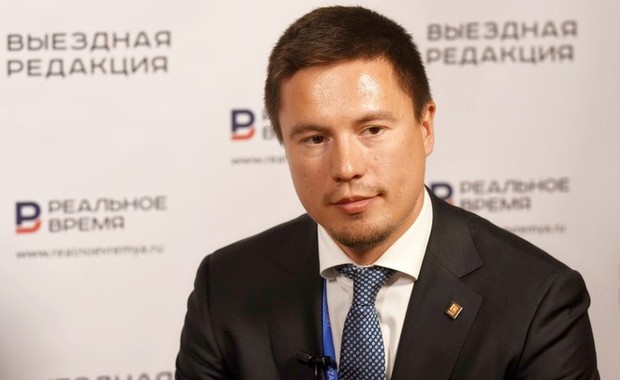
»We ourselves go to work only with a smartphone, not a pack of books. These tablets, as I understand it, have LED screens, that means that they are not harmful for children vision and will be a perfect solution,» told Kasimov to Realnoe Vremya. »I think it is acceptable to pay 30,000 rubles once in 11 years of education. If only the tablets have a guarantee for the whole period of education. I think, all expenditures for the purchase of tablets will eventually fall on the shoulders of parents anyway. Not all families, especially with many children, can afford it. But in general, I am for such introductions – the educational process will go faster. At the same time, it is important for children to develop motor skills. Perhaps, additionally they should introduce some lessons of sculpting to compensate the time children work with tablets.»

According to Ayrat Kasimov, the future belongs to such projects. Photo: incrussia.ru

The only problem is money

»From the point of view of the price for the tablet, it is quite adequate,» said director of IT park Anton Grachyov, who commented on the news to Realnoe Vremya. »Personally I saw the prototype of the tablet two years ago. The question is in other: will the regional and federal ministries of education have money for this? Or municipalities. I think every municipality will define itself if they have money for it. But if they have federal support, then why not.»

According to the head of IT Park, the experience of the Kazan IT academy shows that children better absorb information while playing.

»This certainly will work together with an interactive board. A teacher is writing something on the board and it immediately appears on the screens of the pupils. Here it is more important not the tablet itself, but software and content,» said Grachyov.

Anton Grachyov believes that this will certainly work together with an interactive board. Photo: Oleg Tikhonov

Having a choice

According to Associate Professor at the Institute of Pedagogy and Psychology of the Kazan Federal University Galina Aleksandrova, the scientific research for harmfulness of the use of tablets by students has not been conducted yet:

»Such introduction without preliminary research I consider to be wrong,» says Aleksandrova. It is a different story that these devices become a usual part of our life, and maybe it is teh reason for the idea that it is more economical. As for the comprehension of information, there is no definite answer. Many people use electronic devices and feel themselves great, other people use books. It all depends on personal preferences. I consider it wrong to introduce only one form. Every person has the right to choose the form convenient personally for them for information presentation,» told to Realnoe Vremya the associate professor.

Fuente: https://realnoevremya.com/articles/1772-some-schools-in-russia-being-equipped-with-tablets

Comparte este contenido:

Japón: School transforms lives of kids left behind

Japón/Septiembre de 2017/Autor: Pav Suy/Fuente: Khmer Times

Resumen:  Durante años, Thim Ty escuchó a vecinos que dijeron que sería inútil enviar a su hija que tiene dificultades de aprendizaje a la escuela. Sin embargo, en casa, Chantha de 14 años de edad (no su verdadero nombre) se enfrentó a la discriminación de las personas que viven cerca que no permitiría a sus hijos jugar con ella. Todo esto cambió después de que la situación de Chantha llegara a la atención de las autoridades comunales, quienes pusieron a la Sra. Ty en contacto con una ONG respaldada por japoneses que apoya la educación inclusiva para niños con discapacidades. Chantha acaba de comenzar el primer grado en la Escuela Primaria Preah Prasop en la provincia de Kandal con la ayuda de la Asociación de Ayuda y Socorro de Japón, conocida como AAR Japón.

For years, Thim Ty listened to neighbours who said it would be useless to send her daughter who has learning difficulties to school.

Yet at home, 14-year-old Chantha (not her real name) faced discrimination from people living nearby who would not let their children play with her.

This all changed after Chantha’s plight came to the attention of commune authorities, who put Ms Ty in touch with a Japanese-backed NGO that supports inclusive education for children with disabilities.

Chantha has just started grade one at Preah Prasop Primary School in Kandal province with help from the Association for Aid and Relief Japan, known as AAR Japan.

“When I sent her there, I was afraid she would cause difficulties for other students and teachers but when I asked the teachers, they said it was not a problem,” Ms Ty said.

“Since going to school, she knows how to be more polite to older people, unlike when she was just staying at home.

“Her disability means she has difficulty speaking and couldn’t pronounce the alphabet.”

Ms Ty said Chantha can only speak easy words, but can now pronounce some characters of the alphabet.

After help from the NGO to send her to a hospital in Takhmao on a regular basis, she can do some housework such as clothes washing.

AAR Japan started the project to help students with disabilities three years ago and is currently working in 15 communes of Kandal province’s Khsach Kandal district.

Chantha’s condition is only one of the difficulties Ms Ty, a 55-year-old mother of six, has faced.

“She was born with this condition because I had problems with my reproductive system.

“I had two babies who died and the doctor told me not to have more, but back then we didn’t know how to protect ourselves from having babies,” she said.

Things have improved since the inclusive education project started.

Ms Ty said there is less discrimination now. She told neighbours who prevented their children from playing with Chantha that she would complain to the NGO about discrimination if they carried on.

AAR Japan project manager Yean Ratana, right, says they train teachers to deal with different disabilities. KT/Chor Sokunthea

“The children just play with her now,” Ms Ty said.

Yean Ratana, project manager with AAR Japan, said this was the last year of the current three-year project.

“We are planning to help four more schools in four communes,” he said.

In June, AAR signed up for the project’s last year to provide nearly $300,000 to retrofit schools and train teachers.

“AAR Japan will continue its activities in supporting inclusive education for children with disabilities in Kandal province to enable all children to get enrolled without discrimination,” Japanese Ambassador Horinouchi Hidehisa said at the time.

“We focussed on the children with disabilities, but all students will also benefit from the infrastructure and paved roads.

“We help support children with disabilities by providing ramps and disabled toilets.

“They can move about freely in school. We don’t discriminate against children with different kinds of disability. If we cannot help blind children, we can facilitate sending them to a specialised NGO.”

Mr Ratana said 15 communes in Khsach Kandal district were covered by the AAR Japan inclusive education project.

This included both technical assistance and money from the Japanese government. Four Cambodian and two Japanese people were working on the project.

KT/Chor Sokunthea

“First we work with the authorities, health centres and the education department and then we train our working group members and build the infrastructure.

“We also train teachers on how to deal with with different kinds of disability,” Mr Ratana said.

The official project was started after a pioneer project at three primary schools in 2013.

The project did not cover high schools because the number of student dropouts at primary school was higher.

“After the successful pioneer project, they received grants for the three-year project,” he said.

Though he could not put a figure on the enrolment of students with disabilities, Mr Ratana said it had increased. AAR Japan helped to provide disabled students with services for free.

“We can send blind children to the hospital. Parents just have to accompany them to the appointment and pay for their own lunch.

“Treatment costs, medicine, the consultation and travel costs will be covered by our NGO,” Mr Ratana said.

The NGO also provides wheelchairs, glasses, hearing aids and bicycles.

He said the project aimed to be a role model for other NGOs who wished to improve the education of students with disabilities.

KT/Chor Sokunthea

The school director and commune authorities fear the project will not be sustainable after the removal of AAR Japan funding, but Mr Ratana said the work would continue.

“We are doing a proposal to request funding from the Japan International Co-operation Agency,” he said.

“Though the project is coming to a close, we have a follow-up. We don’t want to see the activity ending after the project is removed.”

Preah Prasop Primary School director Sous Sokheang said there were 29 students with disabilities out of 1,500 students in the school.

Some had learning difficulties and others had physical disabilities.

“We have 23 teachers and all of them have received training from AAR about how to deal with the students with disabilities,” he said.

Mr Sokheang also worries about how the project will be sustained when the project money runs out. The school budget was only enough for support of the original operations.

Grade one teacher Sou Theavy, 24, said students without disabilities can study at the proper pace, those with disabilities needed extra attention.

“I have one student with a learning disability. I have a lot of difficulty with her,” Ms Theavy said.

“She cannot catch up with other students so we need to help her a lot.

“Otherwise, it will affect other students, so we give them more work at home or in their free time,” she said.

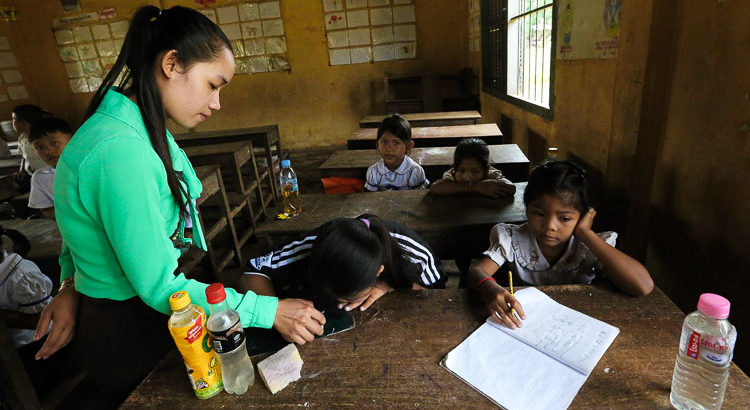
Students with disabilities are integrated into mainstream classes. KT/Chor Sokunthea

Ms Theavy said that students with mobility problems have to leave classes first because they might be pushed by other students and be put in danger. For eye problems, the NGO offers glasses.

“I have also had training about disabilities. Before the training we didn’t know about types of disability or how to help them,” she said.

New commune chief Choung Chhuny said she had seen a lot of differences since the project started, including less discrimination and more awareness about disability.

“Our contribution to the project is also to collect the data of each house in the commune and report it to the NGO,” she said.

She said the commune office was working with the provincial hall to create a committee for disabilities, for which the provincial hall had approved a budget request.

Hout Chamnan, department chief of Khsach Kandal district office, said the people who worked for disabled students were admired for what was a difficult job.

“They are the children that sometimes their parents leave behind, but they take on the burden.

“They are a non-political group who work for the development of the people.

“People blame having a disabled child on sin from a previous life but the NGO makes them understand and value students with disability,” he said.

Mr Chamnan acknowledged that his office did not focus much on students with disabilities before.

“So far we are focussing on people with disability. Now they are being promoted and assisted in all areas.

“We welcome all constructive comments from the AAR for the improvement of our work,” he said, adding that he wanted to see AAR Japan stay on in the area.

Fuente: http://www.khmertimeskh.com/5082102/school-transforms-lives-kids-left-behind/

Comparte este contenido:

Millions of children miss school because of war and drought in East Africa

Africa/Septiembre de 2017/Fuente: Norwegian Refugee Council

Resumen: Decidimos huir de Burundi porque había guerra. Echo de menos la escuela donde estaba estudiando en Burundi. Tenía suficientes materiales: zapatos y ropa, bolígrafos, goma de borrar y una bolsa de escuela «, dice Nyongere, de diez años, en el campamento de refugiados de Nduta, en Tanzania. Pero este año no tiene escuela para asistir. Con la guerra y la sequía golpeando a varios países del este de África, millones de niños como Nyongere que huyeron de sus hogares están abarrotados en los campamentos con pocas escuelas, y poca oportunidad para una educación. La falta de educación para los niños desplazados podría crear una generación perdida», dice Gabriella Waaijman, Directora Regional del Consejo Noruego para los Refugiados. «Mañana es el Día Internacional de la Alfabetización, y los niños tienen derecho a ir a la escuela. La educación puede salvar la vida de los niños durante las emergencias. Las escuelas proporcionan a los niños un lugar seguro, construyen estructuras sociales protectoras, enseñan conocimientos esenciales para la supervivencia y salvaguardan el futuro de los niños y las comunidades.

“We decided to flee Burundi because there was war. I miss the school where I was studying in Burundi. I had enough materials: shoes and clothes, pens, eraser and a school bag,” says ten-year-old Nyongere at Nduta refugee camp in Tanzania. But this year he has no school to attend.

With war and drought hitting several East African countries, millions of children like Nyongere that fled their homes are crammed into camps with few schools, and little chance for an education.

“The lack of education for displaced children could create a lost generation,” says Gabriella Waaijman, Regional Director for the Norwegian Refugee Council. “Tomorrow is International Literacy Day, and children have the right to go to school. Education can save children’s lives during emergencies. Schools provide children a secure location, they build protective social structures, they teach essential knowledge for survival, and they safeguard the futures of children and communities.”

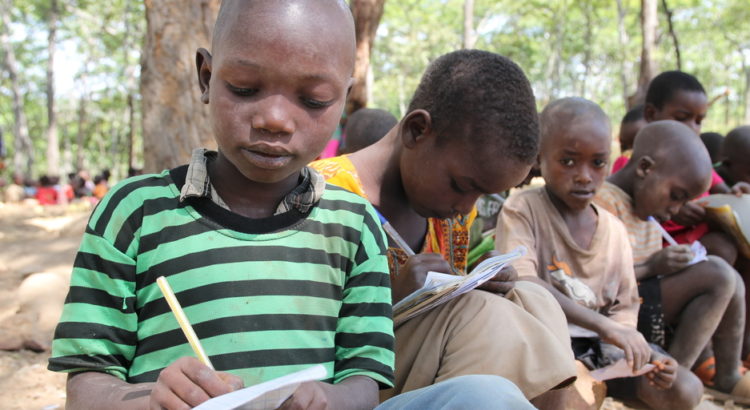
Many children remain stuck in refugee camps for years, wishing that they could go to school. In the Kigoma district camps in Tanzania, some classes are held under trees, and the number of students in each class can be as high as 200. About half of 318,000 Burundian and Congolese refugees in Tanzania living in refugee camps are children. Only 65 percent of primary, and three percent of secondary students are in school.

In South Sudan 2.2 million children are out of school due to conflict in several regions. The country has the highest proportion of children out of school globally, with over 70% of children not getting an education. Over one third of all schools have been damaged or destroyed during the conflict.

In Somalia, over two decades of conflict meant that access to basic education was among the world’s lowest. This was worsened by the current drought which caused 766,000 people to flee their homes, imperilling the little but hard-won progress in education. 1.7 million children of school age are not in school, and 30 percent of children complete four years of schooling without learning basic elementary skills.

In Uganda, there are now over one million refugees from South Sudan, and more than half are children. 40% of 6-13 year olds are not enrolled in primary school; and 80% of secondary school-aged young people are not enrolled in secondary education. Each teacher has up to 128 children in their class.
In Kenya, 588,000 school age children need emergency education assistance due to the drought crisis. Over 1,200 schools do not have access to safe drinking water. Only seven percent of funding needs for emergency education have been met.

With the East African drought crisis, education receives far less funding than other emergency programmes. Out of the $970 million in funding committed to the drought crisis in Ethiopia, Kenya, and Somalia, only $16.5 million is for education projects, only 1.7 percent of total funds. Education funding for other crises in the region is also far below the need. The international aid community agreed in 2015 that four percent of humanitarian aid should go to education, but that target has not been reached for any country in the region. Among areas of humanitarian need, education is funded the least. This leaves a huge funding shortfall.

Education is lifesaving for displaced children. School attendance can keep children from joining armed groups. Lifesaving awareness on landmines and unexploded bombs can be taught in school. Without hygiene knowledge that children can learn in school, some refugee children can die of disease. Schools for refugees often provide lunches, reducing child malnutrition and vulnerability to disease.

“Everyone agrees on the importance of education, especially for children affected by conflict. Therefore, it is incomprehensible and unjustifiable that so little funding is provided for education for children in emergencies,” said Waaijman.

With more children fleeing their homes and with little humanitarian funding for schools, East Africa faces an education crisis. The Norwegian Refugee Council calls on the international community and donors to live up to commitments they made previously, asking them to ensure that education plays its role in alleviating humanitarian crises. More funding should be committed for the education response for the multiple crises in East Africa.

Fuente: https://www.nrc.no/news/2017/millions-of-children-miss-school-due-to-war-and-drought-in-east-africa/

Comparte este contenido:
Page 3394 of 6196
1 3.392 3.393 3.394 3.395 3.396 6.196