Page 3738 of 6195
1 3.736 3.737 3.738 3.739 3.740 6.195

#REDLAMYC llama a los Estados de la OEA a dar una respuesta regional frente al grave incremento de la violencia contra niñez y adolescencia

Amèrica del Norte/Mexico/Boletín de prensa REDLAMYC

En el marco de la 47 Asamblea General de la Organización de los Estados Americanos (OEA) que se realiza en Cancún, México; REDLAMYC Red Latinoamericana y caribeña por la defensa de los derechos de los niños, niñas y adolescentes, hizo un llamado a los Estados miembro a actuar para frenar los altos índices de violencia que viven niñas, niños y adolescentes en la región.

Respecto a la situación que se vive en el Estado de Venezuela indicó que es urgente que el estado permita ayuda humanitaria con alimentos y medicinas para niñas, niños y adolescentes. Especialmente aquellos alejados de las zonas urbanas y los integrantes de grupos altamente excluidos.

En su mensaje, Juan Martín Pérez García, Secretario Ejecutivo de esta red de redes destacó que la violencia generalizada representa uno de los mayores problemas en América Latina y el Caribe[1], algunas de sus expresiones son la violencia intrafamiliar y sexual, la migración forzada, las desapariciones forzadas, la trata de personas, la corrupción, la impunidad.

Señaló la migración infantil como una de las preocupaciones ya quecondición migratoria coloca en una posición de vulnerabilidad a niñas, niños y adolescentes que enfrentan múltiples riesgos como: robo, secuestro, abuso sexual, homicidio, tráfico de órganos, explotación sexual y laboral.

Reconoció que, si bien se han dado avances en el ámbito legislativo con los Sistemas Nacionales de Protección Integral de Niñas, Niños y Adolescentes estos “no han alcanzado a tener ni el presupuesto, ni la fuerza política para lograr sus cometidos de ahí que queremos animarles a que puedan colocar esfuerzo importante en ello.”

Por otro lado, frente a las políticas de seguridad se estima que en América Latina y el Caribe más de dos millones de niñas, niños y adolescentes tienen a su madre, padre privado de libertad, por ello, viven en una situación de vulnerabilidad que debe ser atendida por los Estados.

Otro de los retos es brindar atención y servicios de calidad a la primera infancia. De acuerdo con Pérez García “muchos estudios que nos dan cuenta del valor tan importante que tiene apoyar el desarrollo de niños y niñas en los primeros mil días de vida y desafortunadamente no es algo que esté presente en nuestra región.”

Otra de las crisis esta vinculada al abandono escolar, ejemplo de la gravedad de la situación es que más de la mitad de los adolescentes de 17 años de edad están fuera de la escuela. Ello requiere, garantizar trayectorias completas y exitosas, y no únicamente el acceso o la cobertura. De lo contrario “condenamos a este segmento de la población a trabajos precarios y a heredar la pobreza.”

Entre los graves retrocesos en la región están los procesos de reforma para reducir la edad de imputabilidad penal e incrementar las penas de privación de la libertad para las y los adolescentes en conflicto con la ley[2]. Es necesario frenar la criminalización de las y los adolescentes y de manera particular aquellos que son más pobres. Los sistemas de justicia para las y los adolescentes deben ser preponderantemente socio–educativos, resocializadores y promotores de una cultura de respeto a los derechos.

Es indispensable avanzar en la promoción de los derechos de niñas, niños y adolescentes y hacer el tránsito y el cambio culturalLos niños no son propiedad de las familias, no son propiedad de las comunidades, son ciudadanos y ciudadanas que requieren el reconocimiento y la escucha de todas y todos los Estados.

Finalmente se invitó a fortalecer el rol que tienen el Sistema Interamericano de Derechos Humanos, particularmente la Comisión Interamericana y su Relatoría de Derechos de la Niñez y al Instituto Interamericano del Niño, la Niña y Adolescentes; así como a animar para que la Asamblea escuche la voz de niños, niñas y adolescentes de forma directa ya que esta es la mejor forma de reconocerlos como ciudadanas y ciudadanos.


[1] La tasa de homicidios asciende a 21,6 por cada 100.000 personas de acuerdo con la Comisión Económica para América Latina y el Caribe, CEPAL 2014

[2] A finales de 2010, en Panamá se aprobó una reforma al sistema de justicia juvenil que disminuyó la edad de imputabilidad penal de 14 a 12 años de edad, y en Costa Rica otra que permite la aplicación del derecho penal de adultos, a partir de los 15 años de edad. Brasil presentó este año el proyecto de ley proyecto ley PEC nº 171/1993 sobre «Iimputabilidade penal do menor». Los gobiernos de Honduras y Argentina también han colocado el tema de bajar la edad penal. En relación con las penas máximas, en El Salvador se incrementó de 7 a 15 años la medida de internamiento. En la República Dominicana, las y los adolescentes entre los 13 y 15 años de edad pueden ser sancionados con 3 y 10 años de prisión, y en edades de 16 a 17 años, entre 5 y 15 años de reclusión. Asimismo, en la actualidad hay proyectos similares en los órganos legislativos de Brasil, Colombia y Venezuela.

Fuente: http://www.redlamyc.info/index.php/106-presentacion-e-historia-nuevo/1594-redlamyc-llama-a-los-estados-de-la-oea-a-dar-una-respuesta-regional-frente-al-grave-incremento-de-la-violencia-contra-ninez-y-adolescencia

Comparte este contenido:

A view from China on the future of innovation and education

Asia/China/Weforum

Resumen: En el marco de una reunión del Foro Económico Mundial en Dalian la próxima semana, Tsinghua Holdings indica que el espíritu humano y la ciencia son clave para el crecimiento inclusivo en China. El siguiente texto forma parte de su discurso

Many years ago, I sat in a classroom at Tsinghua University, staring at Euler’s formula on the blackboard and marveling at its mathematical beauty. This is a formula that relates mathematics’ most famous constants (pi, zero, Euler’s number “e”, and imaginary number “i”) in one equation; its beauty lies in the infinite possible functions and exponents that can be created.

Today, I came across this formula once again, after years of engagement in promoting innovation in technology, industry and culture. I now understand the parallel between Euler’s formula and human life; just as bringing mathematics’ important constants together can create endless possible functions and exponents, uniting humanity’s most promising gifts can create boundless potential for human progress.

We have been blessed with nature’s resources and a strong innovative spirit; these things have enabled all of our scientific, technological and social progress, leading us to a tomorrow of infinite possibilities. In tangible form, this can be seen in our high-speed railways, our colossal cruise ships, our instantaneous communication systems and our artificial intelligence.

The beginning of the 16th century birthed many important scientists, philosophers, and inventors. From the age of discovery through to the information age, human development and scientific innovation have merged together to form the thriving glory that is modern life. ​

While mathematics is the universal language of communication, it is innovation and the human spirit which provide the path to sustainable and inclusive human development.

Currently, the developmental state of different cultures, nationalities, and regions remains unbalanced. We need both scientific innovation and human spirit to give more people access to modern technology.

In this way, diverse cultures can communicate and develop better relations, resulting in a more stabilized society, increased protection of vulnerable groups, improved environmental conservation, and the potential for more sustainable development in underdeveloped nations and regions. ​

Innovation is at the heart of creating value – and there are three important factors that encourage innovation. Firstly, the creation of science parks, industrial parks, innovation communities and incubators creates platforms for entrepreneurs to connect meaningfully with innovation resources.

Secondly, sufficient financial resources, including venture capital funds and parent funds, prop up innovation. Lastly, developing vast networks through international cooperation facilitates innovation among enterprises worldwide.

Technological innovation leads us towards a better life. We gather together because technology is making the world smaller and more accessible. The mass application of information technology gives people in less-developed areas access to the internet, connecting them to the outside world, sharing the convenience of the new digital age.

Advances in technology improve our health and thus offer us a better life. Innovative biochip-related products and clinical applications have succeeded in addressing human health needs, such as hereditary hearing loss, Down’s syndrome and thalassemia.

Viewed in economic terms, innovation can of course create unicorn companies (start-ups valued at more than US$1 billion); but more importantly it builds subsidiary sectors within the advanced technology innovation industry.

These sectors have delivered state-of-the-art public safety and security technologies as well as emergency management solutions to national-scale disaster relief, urban public safety, hazardous chemical safety and risk-detection methods.

An advanced security inspection solution has been created, as well as products that serve the needs of civil aviation, customs, railways, highways, and national conferences. The purpose is to enhance safety for the people.

Human spirit, meanwhile, is the key to promoting inclusive growth. To offer a better education to as many people as possible has always been a major challenge.

How can innovation accelerate the impact of education? It’s heartening to see the new trend of massive open online courses (MOOC) succeed in integrating internet thinking into education and providing affordable learning.

As long as you want to learn, access is available to the knowledge you need. In three years, a MOOC platform provided educational services to nearly 160 countries and regions, reaching 7,500,000 subscribers.

Human spirit is no doubt everywhere in life, from the buildings in which we live and work to our preferred holiday destinations. Human settlement science perfectly interprets how we apply science, arts and humanity to a holistic approach aimed at creating a better life.

Due to the advanced technology and knowledge we acquire in virtual and augmented reality, the restoration of historical heritage through digitalization now is a dream coming true.

Urbanization and architecture with the core sense of human spirit have led us to be able to build parks over old waste-water treatment sites, to rebuild historical communities bursting with vitality, and to upgrade traditional industries with new technologies and new ideas.

We strongly believe that our future prosperity will be and must be inclusive, shared by all nationalities and cultures. The common values of humanity teach us to embrace differences, and differences give birth to innovation.

At Tsinghua Holdings, we initiated the Star Clustering Plan with the aim of connecting global innovators, capital, and cooperation. If we take life as Euler’s “e”, and innovation and human spirit as imaginary number “i,” it is certain that we will continue to create new chapters for history.

Life is limited; innovation is infinite.

Xu Jinghong, Chairman of Tsinghua Holdings, is one of the Co-Chairs of the Annual Meeting of the New Champions 2017 in Dalian, China, on June 27-29

The article first appeared on World Economic Forum. Read it here.

Comparte este contenido:

Africa: Make Girls’ Access to Education a Reality

Africa/HRW

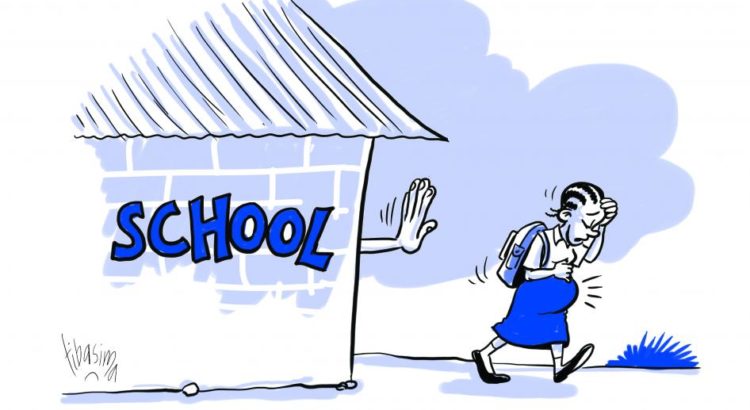
Resumen: (Dakar) – Millones de niñas adolescentes embarazadas y casadas a través de muchos países africanos se les niega su educación debido a las políticas y prácticas discriminatorias, dijo Human Rights Watch hoy en día, en el Día del Niño Africano . Más de 49 millones de niñas van a la escuela primaria y secundaria en el África subsahariana , con 31 millones de ellos fuera de la educación secundaria, lo que socava sus derechos y limitar sus oportunidades.

(Dakar) – Millions of pregnant and married adolescent girls across many African countries are being denied their education because of discriminatory policies and practices, Human Rights Watch said today, on the Day of the African Child. More than 49 million girls are out of primary and secondary school in sub-Saharan Africa, with 31 million of them out of secondary education, undermining their rights and limiting their opportunities.

Early marriage and teenage pregnancy are significant factors. In sub-Saharan Africa, 40 percent of girls marry before age 18, and African countries account for 15 of the 20 countries with the highest rates of child marriage globally. The region also has the world’s highest prevalence of adolescent pregnancies. In 14 sub-Saharan countries, between 30 and 51 percent of girls give birth before they are 18. Cultural or religious beliefs often stigmatize unmarried, pregnant girls, with the result that many pregnant girls are forced into early marriages.

“The African continent has one of the world’s highest rates of adolescent pregnancy, but many governments insist on tackling this social and public health challenge by punishing girls and jeopardizing their future,” said Elin Martínez, children’s rights researcher at Human Rights Watch. “Governments should focus on helping girls prevent unintended pregnancies and support their efforts to stay in school.”

Although most sub-Saharan African countries have made commitments to guarantee compulsory primary and lower-secondary education for all children, many exclude or expel pregnant girls and young mothers from school.

Tanzania and Sierra Leone are among the sub-Saharan African countries that have harmful policies and practices that discriminate against pregnant and married girls, Human Rights Watch research shows. In Tanzania, Human Rights Watch found that school officials conduct pregnancy tests and expel pregnant students. Nineteen-year-old Rita, from northern Tanzania, said she was expelled when she became pregnant at age 17. “Teachers found out I was pregnant,” she said. “I found out that no student is allowed to stay in school if they are pregnant … I didn’t have the information [sexual education] about pregnancies and what would happen.”

Some countries, including Cameroon, South Africa, and Zambia, have adopted “re-entry” policies so that adolescent mothers can return to school after giving birth. However, even if governments have these policies, school officials often fail to carry them out adequately or at all. Young mothers frequently lack support to re-enroll due to school fees and related costs, limited support from their families, stigma in school, and a lack of affordable childcare and related early childhood services.

Many adolescent girls become pregnant because they lack the information needed to make informed decisions about their sexuality, family planning, and their reproductive health, while others are coerced into sex and require protection and access to health services and support. According to the United Nations, 80 percent of women ages 15 to 24 who have HIV globally live in sub-Saharan Africa and across the continent, and girls aged 15 to 19 are five times more likely to be infected with HIV than boys.

Sexuality and reproduction are often not included in the national school curricula. In a handful of countries where they are included in HIV awareness or “life skills” programs or subjects, teachers are frequently unwilling to teach these subjects because of the sexual and reproductive health content, or due to constraints on teaching time and resources.

All African governments have made a commitment to the UN Sustainable Development Goals to guarantee gender equality and universal access to free primary and secondary education for all children by 2030. The African Union has recognized the importance of ending child marriage, understanding that it is a major impediment to regional development and prosperity, and of eliminating all forms of gender-based violence and discrimination.

African governments should guarantee that girls have equal access to free quality primary and secondary education and support to stay in school, Human Rights Watch said. Governments should reverse harmful policies and practices that stigmatize girls, including forced pregnancy testing and regulations that allow for the expulsion of pregnant or married girls. Governments should also adopt laws that clearly set 18 as the minimum marriage age for boys and girls.

They should also adopt clear guidelines that instruct schools to re-enroll young mothers, provide support services in schools, and ensure that young mothers have access to early childhood services. Governments should also ensure that all children have access to age-appropriate, comprehensive sexuality, and reproductive education. Where possible, school-based services should be connected to youth-friendly health services to ensure that adolescents receive impartial, nonjudgmental information.

“Governments have the prime responsibility to ensure that girls access free primary and secondary education, without facing stigma and discrimination,” said Martínez. “All governments should scrap policies that exclude pregnant or married girls, and put in place special measures to ensure that all adolescent girls can go to school.”

In Girls’ Own Words

Malawi
In Malawi, roughly half of all girls marry before age 18. Between 2010 and 2013, 27,612 girls in primary and 4,053 girls in secondary schools dropped out due to marriage. During the same period, another 14,051 primary school girls and 5,597 secondary school girls dropped out because they were pregnant.

Girls told Human Rights Watch that marriage interrupted or ended their education, and with it their dreams to be doctors, teachers, or lawyers. Many said that they could not return to school after marriage because of lack of money to pay school fees, childcare, flexible school programs or adult classes, and the need to do household chores. Others said that their husbands or in-laws would not allow them to stay in school.

Kabwila N., 17, said she left school in standard eight at age 15 because of poverty. She said she could not go back to school because she felt ashamed about her pregnancy: “I would not want to go back to school because I started having sex with my boyfriend while at school. I am not fit to go back.”

South Sudan
In South Sudan, 52 percent of girls marry before their 18th birthday. According to UNESCO, over 1.3 million primary-school-age children are out of school, and the country has the world’s lowest secondary school enrollment rate, at four percent.

Mary K., of Yambio County, said: “My father refused me to go to school. He said it is a waste of money to educate a girl. He said marriage will bring me respect in the community. Now I have grown up and I know that this is not true. I cannot get work to support my children and I see girls who have some education can get jobs.”

Anyier D., 18, said that her uncles forced her to leave school at 14 in 2008 to marry an old man she did not know: “I would wish to return to school even if I have children. People think that I am happy but I am not because I don’t have an education. I don’t have something of my own and I am only cleaning offices. If I had gone to secondary school, I would get a good job.”

Tanzania
In Tanzania, fewer than a third of girls who complete primary schooling complete lower-secondary school, and over 15,000 girls drop out annually due to pregnancy. Human Rights Watch found that in some cases adolescent girls dropped out of lower-secondary school due to sexual exploitation and violence by teachers.

Joyce, 17, from Shinyanga, said: “There are teachers who engage in sexual affairs with students – I know many [girls] it has happened to … If a student refuses, she is punished … I feel bad … even if you report the matter it won’t be taken seriously. It makes us feel unsafe. Three girls dropped out because of teachers and sex in 2015.”

Fuente: https://www.hrw.org/news/2017/06/16/africa-make-girls-access-education-reality

Comparte este contenido:

EEUU: Landmark Law on Higher Education Should Be Scrapped, DeVos Suggests

América del Norte/EEUU/chronicle.com/Adam Harris

Resumen: Por segunda vez en dos meses, la secretaria de Educación Betsy DeVos ha sugerido que es el momento de desechar la legislación que rige la política federal de educación superior y empezar una nueva. Durante un discurso realizado el martes en la Asociación de Fomento y Land-Grant Universities, la Sra DeVos dijo que la Ley de Educación Superior de 1965 pudo haber sobrevivido a su utilidad.

For the second time in as many months, Education Secretary Betsy DeVos has suggested that it’s time to scrap the legislation that governs federal higher-education policy and to start afresh. During a speech on Tuesday to the Association of Public and Land-Grant Universities, Ms. DeVos said the Higher Education Act of 1965 may have outlived its usefulness.

«We are advancing and growing as a people at an unbelievable rate. But the public policy that guides education has only inched along,» Ms. DeVos told the audience of university leaders. «Consider the Higher Education Act, or HEA. This 50-year-old law still governs and defines much of what you can — and cannot — do to educate the students you serve.»

«For me, and I suspect for most Americans, it doesn’t make a lot of sense to simply amend a 50-year-old law,» she continued. «Adding to a half-century patchwork will not lead to meaningful reform. Real change is needed.»

“Why would we reauthorize an act that is like 50 or 60 years old?”

Her remarks echoed what she said last month during an appearance at the ASU+GSV conference, in Salt Lake City. «Why would we reauthorize an act that is like 50 or 60 years old and has continued to be amended?» she said. «Why wouldn’t we start fresh and talk about what we need in this century and beyond for educating and helping our young people?»

The legislation has been reauthorized several times since it was first passed. Its most recent iteration was set to expire in 2013, but was extended to allow legislators more time to work on a new version.

Sen. Lamar Alexander of Tennessee, chair of the Senate education committee, has told The Chronicle that reauthorizing the Higher Education Act is his top education priority during this Congress.

Clare McCann, a senior policy analyst at New America, a think tank in Washington, said Ms. DeVos’s continued suggestion of a replacement for the landmark law shows how the Trump administration misunderstands higher education.

“We can reimagine higher ed without starting from scratch on the entire concept of it.”

«There’s a lot of room in higher education for significant improvement, that needs overhaul, but the basics of the Higher Education Act are not likely going to change — and I’m not sure that they should,» Ms. McCann said. «We can reimagine higher ed without starting from scratch on the entire concept of it.»

If the Education Department were to seek a brand-new piece of governing legislation for federal higher-education policy, and get the requisite support from Congress, it would be a heavy — though not impossible — lift, said Dan Madzelan, vice president for government relations at the American Council on Education.

The point of reauthorizing the act is for legislators to have a starting point, said Mr. Madzelan, who previously worked in the department for more than 30 years. «You have knowledge of the existing programs: what is working, what can work better, and what should just be eliminated.»

«Contrast that with not reauthorizing it and starting with something new,» he said. «You would have to begin from a blank sheet of paper.»

Adam Harris is a breaking-news reporter. Follow him on Twitter @AdamHSays or email him at adam.harris@chronicle.com.

Fuente; http://www.chronicle.com/article/Landmark-Law-on-Higher/240412

Imagen de archivo de OVE

Comparte este contenido:

Docentes en Argentina: «El reclamo es justo y debe resolverlo el gobierno»

America del Sur/Argentina/Cba24n
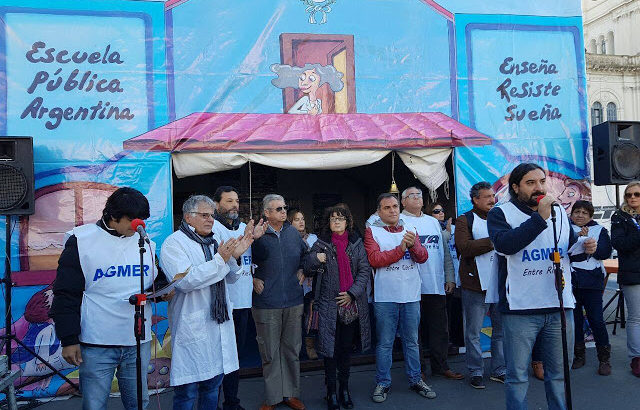
El pedido por la paritaria nacional de la Escuela Pública Itinerante llegó a Córdoba. Baradel habló de una gestión “incapaz”.

Después de la jornada inaugural, la Escuela Pública Itinerante que se instaló en la plaza Agustín Tosco de pleno centro de la ciudad de Córdoba, este jueves continúan las actividades, bajo el lema de una “defensa de la educación pública”.

En su primer día entre talleres y conferencias, hubo un reconocimiento a los organismos de Derechos Humanos, cuya tarea en tierras cordobesas fue central, por haber gestado por caso que el primer juicio por crímenes de lesa humanidad sea en territorio provincial.

La presencia de referentes, entre ellos Sonia Torres de Abuelas de Plaza de Mayo, llevó a un emotivo momento al primer día del espacio gestado por los docentes públicos de todo el país, quienes reclaman al gobierno por el cumplimiento de la Ley de Financiamiento y la convocatoria a una paritaria nacional.

“La educación es un derecho y nadie puede quedar excluido. Acá le decimos no a la mercantilización. Le pedimos al Estado nacional un involucramiento en la suerte de la escuela pública” lanzó el secretario general de la Central de Trabajadores Argentinos (CTA), Hugo Yasky, además de advertir que habría consecuencias por una reciente denuncia a la Organización Internacional del Trabajo (OIT).

La imagen puede contener: 3 personas, personas de pie y personas en el escenario

A su vez, Roberto Baradel, quien desde el Sindicato Único de Trabajadores de la Educación de Buenos Aires (SUTEBA) encabeza la oposición a la gestión nacional con una paritaria aún no resuelta con María Eugenia Vidal, indicó a Canal 10: “La sociedad sabe que nuestro reclamo es justo y que debe resolverlo el gobierno. Y esa sociedad le demostrará en las urnas el resultado si esa incapacidad sigue”.

Para hoy, además de actividades para niños, se tocarán con invitados temáticas que van desde las implicancias de la nueva ley de ART, las neurociencias y la educación y jubilados.

Fuente: http://www.cba24n.com.ar/content/docentes-el-reclamo-es-justo-y-debe-resolverlo-el-gobierno

Imagen tomada de: https://3.bp.blogspot.com/-KPsu3jjuC_M/WUng9jPITnI/AAAAAAAALAI/es5AnAzKf3oAhwf0TnUanALF6w-9kXEFgCLcBGAs/s640/Escuela%2BItinerante.jpg

Comparte este contenido:

Hunger strike over Canada’s treatment of Indigenous peoples proves valuable education for Queen’s Park visitors

Canadá/Junio de 2017/Fuente: Now

Resumen:  El miércoles, 14 de junio, el jefe hereditario de los Pies Negros Davyn Calfchild deja que el fuego ceremonial en frente de su campamento se consuma, poniendo fin a su ayuno de 13 días. Durante casi dos semanas, Calfchild ha acampado a la sombra de la Legislatura de Ontario para llamar la atención sobre las condiciones devastadoras que enfrentan las comunidades indígenas. Apoyado bajo las banderas, junto a la senda, hay una señal hecha a mano que enumera los problemas que el ayuno de Calfchild busca destacar: mujeres y hombres asesinados y desaparecidos, suicidios juveniles en las reservas, víctimas indígenas de la violencia en Thunder Bay y genocidio. Enmarcado en las grietas en la parte superior de una mesa de picnic cerca, uno de los signos de la pizarra dice: «20.000 años en la ‘capilla.»

Under the nose of Edward VII’s horse at Queen’s Park, an array of colourful First Nations flags ripple in the morning breeze.

Swaying among the banners is an upside-down Canada 150 flag and trademark Hudson’s Bay sweater. Neatly printed in thick marker between the trademark horizontal stripes: #Shame150.

On Wednesday, June 14, hereditary Blackfoot Chief Davyn Calfchild lets the ceremonial fire in front of his encampment burn out, ending his 13-day fast. For nearly two weeks, Calfchild has camped in the shadow of the Ontario Legislature to draw attention to the devastating conditions facing Indigenous communities.

Propped up under the flags, next to the footpath, is a handmade sign listing the issues Calfchild’s fast seeks to highlight: murdered and missing women (and men), youth suicides on reserves, Indigenous victims of violence in Thunder Bay and #genocide150. Wedged into the cracks on top of a nearby picnic table, one of the whiteboard signs reads: “20,000 years in the ’hood.”


Calfchild wants it known that the cultural genocide continues in Canada. “Children’s Aid Society has replaced residential schools in taking away Native children and assimilating them,” he says.

Calfchild’s wife, Anishinabe song keeper Cathy Tsong Deh Kwe, has been by her husband’s side throughout the fast.

“In order for us to become more visible, people have to learn more about us. One of the things we have been doing here is educating the public.”

A helmeted cyclist arrives on his bike and empties a bag of firewood onto the pile donated by supporters. He’s told that the fire is burning down but the wood won’t go to waste – one of the fire keepers will take it home. Miigwetch.

John Scully has cycled past Calfchild’s camp every day on his way to work.

Scully, who has worked with Indigenous artists and students, says, “We need to support Indigenous people in their autonomy. They’ve been making decisions for 20,000 years, and we need to stop being the colonizers. We need to stop telling them what to do.

“As Canadians, we are so ignorant of Indigenous issues,” says Scully. “Events like this will help make people aware. I’ve learned a little bit about the process of colonization and about the Two-Row Wampum treaty Davyn was talking about.”

The Two-Row Wampum is a belt made from white and purple beads, the preferred way for First Nations to mark treaties and covenants at the time of first contact.

The treaty, made in 1613 between Dutch settlers and the five nations of the Haudenosaunee (Iroquois), was later extended to include American, British and French settlers and other First Nations. The white beads represent truth, and the two rows of purple beads represent two vessels travelling in parallel: a canoe for the Onkweh:onwhe (original people) and a sailboat for the settlers.

Onondaga Nation Chief Irving Powless Jr. puts the significance of the Two-Row Wampum in context in his 1994 essay:

“As we travel down the road of life together not only with each other, but with the whole circle of life – the animals, the birds, the fish, the water, the plants, the grass, the trees, the stars, the moon and the thunder – we shall live together in peace and harmony, respecting all those elements.

“We shall not pass laws telling you what to do. You shall not pass a law telling me and my people what to do. The Haudenosaunee have never violated this treaty. We have never passed a law telling you how to live. You and your ancestors, on the other hand, have passed laws that continually try to change who I am, what I am and how I shall conduct my spiritual, political and everyday life.”

Calfchild promotes the Two-Row to campsite visitors every chance he gets.

“It’s the key to the future,” he says. “The two nations have to work together side by side, not one dictating to the other.”

John Croutch is an Anishinabe educator who specializes in cultural identity and culinary practices. He’s come down to the park to check in on Calfchild’s fast. He points to the symbols of colonialism all around us.

“This is the original territory of the Wendat and later the Haudenosaunee people,” says Croutch. “What’s been happening here for the last 13 days speaks to the fact that laws were passed to prevent us from living on our land.”

A tour group from the Ministry of Education makes its way to the campsite and stops in front of the flags. Calfchild, surrounded by supporters, welcomes the visitors before he launches into a lecture.

“When it comes to the education in this country – what happened in the residential schools, the 60s scoop, the colonization of our territories, the dishonouring of the treaties, things that need to be renegotiated – it’s the responsibility of Canadian citizens to understand what truly happened to our people and not cover it up.”

The visitors listen quietly, some with their heads bowed.

“We’re not here as enemies; we’re here as your friends. We’re here to help you if you want that help,” Calfchild finishes up. “We have to think about the children and the world we want to leave them. If you can’t be honest in the education system, how can they trust you? How can they trust us? So it’s time for our people and your people to start educating the people properly and start being honest.”

Calfchild thanks the group, and Tsong Deh Kwe announces the protocol for the potlatch celebration that will break the fast. Three community members have joined the fast in solidarity over the last few days.

Before the feasting begins, 81-year-old urban elder and Cree spiritual leader Vern Harper has a few encouraging words for the gathering.


Harper, who experienced a cycle of residential schools and foster homes as a boy, remembers having his mouth washed out with soap as a five-year-old for speaking Cree.

“When we say we’re going to do something, sometimes people will say, ‘I’ll be there in spirit.’ My uncle used to say, ‘Get your ass over there.’  Here I am.” Laughter all around what’s left of the fire.

Harper is the sixth-generation grandson of Big Bear, who fought the last battle between the Cree and the Canadian government in 1885.

“We need to take care of our families and take care of Mother Earth. When we have food, be thankful. I love all of you, and we got to keep struggling, never give up. Don’t be a worrier – be a warrior. Miigwetch.”

Cheers and whoops ring across the park.

Comparte este contenido:

Vietnan: Over 866,000 students take HS Exam

Vietnan/Junio de 2017/Fuente: Vietnan News

Resumen: Más de 866,000 estudiantes de todo el país se reunieron en 2.364 lugares de prueba ayer por la tarde para completar todos los procedimientos de registro para el Examen Nacional de la Escuela Preparatoria de tres días, los estudiantes de examen importante que pasan 12 años preparándose. El examen está programado para correr desde hoy hasta el 24 de junio. Los candidatos tomarán cinco pruebas: matemáticas, literatura, lengua extranjera, ciencias naturales (incluyendo física, química, biología) y ciencias sociales (incluyendo historia, geografía y educación ciudadana). El profesor asociado Mai Văn Trinh, jefe del Departamento de Pruebas y Aseguramiento de la Calidad de la Educación, dijo que las pruebas incluyen un 60 por ciento de conocimientos básicos.

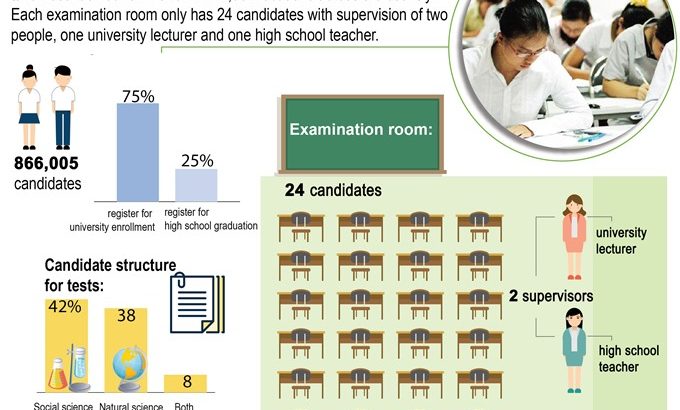
Over 866,000 students across the country gathered at 2,364 testing locations yesterday afternoon to complete all registering procedures for the three-day National High School Exam, the all-important exam students spend 12 years preparing for.

The exam is scheduled to run from today through June 24.

Candidates will take five tests: math, literature, foreign language, natural science (including physics, chemistry, biology) and social science (including history, geography and citizen education).

Associate Professor Mai Văn Trinh, head of the Department of Testing and Education Quality Assurance, said the tests include 60 per cent basic knowledge.

The 40 per cent ‘knowledge’ portion of the tests will be used to classify the levels of candidates. It goes toward university admissions, Trinh said.

As of 2015, high school graduation and university entrance exams have been mixed into one national exam called the national high school exam.

The results of the national high school exam are considered for both high school graduation and university admissions.

New changes made

Deputy Minister of Education and Training Bùi Văn Ga said this is the first year the ministry assigned each locality to chair the exam under instructions from the ministry.

Ga said the ministry has sent representatives to co-operate with localities to organise and ensure a smooth exam for candidates.

This year, all supervisors will take lucky draws before a test to choose their testing room. The move is expected to ensure a transparent exam, he said.

Each testing room only has 24 candidates. In previous years, the number was 30-40 candidates, he said.

Trinh said the ministry has also published sample tests before the real tests so that candidates could prepare more fully.

“This is the first time the ministry has done this,” he added

Candidates are allowed to bring recorders and video cameras into the testing rooms with the conditions that the recorders do not transmit information and receive audio signals, he said.

The purpose of the movement was to allow candidates to record violations in the testing rooms and send to authorised agencies, he added.

Everything ready

Ga said the ministry’s inspection teams has visited localities to check their preparedness for the exam.

Nguyễn Huy Bằng, chief inspector of the Ministry of Education and Training’s Office, said two hotlines will receive complaints and feedback from candidates, parents and others. People can contact 04 3623 1285 and 0923 006 757. Faxes can be sent to 04 3869 3145. Inspectors will verify and deal with violations based on the complaints and feedback.

The hotlines will be operated 24 per hours daily until July 06 when the test-marking activities finish, he said.

Ten inspection teams will randomly visit testing locations, he added.

This year, the Department of High-Tech Crime Prevention under the Ministry of Public Security also participated in the national high school steering committee.

The police force worked with the department of education and training to prepare for incidents related to hi-tech violations during the exam.

In Hà Nội, the city administration has even planned for incidents of flood, thunderstorms, food poisoning.

The health sector has conducted more inspections to ensure on food hygiene and safety. It arranged medical staff and medicines to be ready at testing locations in case of food poisoning and emergencies. Additionally, mobilised medical teams stand at the ready.

The Hà Nội Youth Union made plans to deal flooding during the exam. The voluntary team of up to 10,000 members was tasked to provide assistance if necessary.

According to the National Centre for Hydro-meteorological Forecasting, Vietnamese temperatures will range from 23-35 degrees Celsius during the next three days.

Hà Nội and HCM City are the two localities with the highest number of candidates. The number is 72,939 in Hà Nội and 71,469 in HCM City.

In a related movement, the Hà Nội’s Education and Training Department yesterday announced results of the high school entrance exam.

Candidates can access hanoi.edu.vn to search the results. Around 76,000 students in Hà Nội attended the high school entrance exam last Friday.—

Fuente: http://vietnamnews.vn/society/education/378760/over-866000-students-take-hs-exam.html#ohdQWLEjGehP0ahc.97

Comparte este contenido:
Page 3738 of 6195
1 3.736 3.737 3.738 3.739 3.740 6.195