Page 4081 of 6125
1 4.079 4.080 4.081 4.082 4.083 6.125

Unesco se pronunció sobre Día Mundial del Agua

Marzo de 2017/Autora: Erika Rojas/Fuente: 2do Enfoque

Irina Bokova, directora General de la Unesco, se pronunció sobre el Día Mundial del Agua. Más del 80 por ciento de las actividades que ejecuta el hombre producen aguas residuales que son liberadas en el medio ambiente, sin un tratamiento previo lo que ocasiona una mayor contaminación para naturaleza y los seres humanos.

El Informe Mundial de las Naciones Unidas sobre el Desarrollo de los Recursos Hídricos dejó ver que sin un tratamiento adecuado para este recursos no se están salvando vidas y mejorando la calidad de los ecosistemas, tampoco se genera un crecimiento sostenible en el tiempo. Todo lo contrario se ocasiona muerte, tragedia, y aguas contaminadas.

Muchos expertos han señalado en múltiples ocasiones que la guerra en los países será por el agua, si no se hace un saneamiento adecuada en beneficio de los derechos humanos, la dignidad y supervivencia de nuestras mujeres, hombres, niños y seres humanos de todo el mundo.

Para la Unesco es vital que la sociedad pueda avanzar en esa materia a través de la Agenda 2030 para el Desarrollo Sostenible en su conjunto, puesto que esta cubre los 17 Objetivos de Desarrollo Sostenible y sus metas interrelacionadas con el organismo.

De ser tratadas, las aguas residuales estas podría convertirse una alternabilidad para los seres humanos en el mundo y satisfacer la demanda, sin embargo para lograr esos objetivos es de vital importancia cambiar los hábitos,  invertir en la gestión de las aguas residuales, aplicar los procesos de reciclaje, y por último se obtendría un vital líquido apto para el consumo humano en beneficio de países y comunidades remotas.

La Unesco y los ecologistas no exageran con la premisa de que el agua es vida. Los procesos de “tratar, desechar, reducir, reutilizar, reciclar y recuperar deberían cumplirse a escala mundial”. Las aguas residuales podrían ser sinónimo de vida y una fuente alternativa de abastecimiento económico, eficiente, sostenible, seguro, puntual, y fiable, siempre que se cumplan con todos los parámetros antes mencionados en Latinoamérica y en el mundo. Estas se utilizaría en actividades de riego, usos industriales, hasta finalmente para el consumo humano de agua potabilizada en las comunidades.

Para la Unesco, los esfuerzos suman voluntades y no se agotan en el tiempo. Ellos instan a reforzar esfuerzos educativos para aumentar los beneficios de la reutilización de este líquido a través del Programa Hidrológico Internacional, su red de centros, cátedras, y comités nacionales.

Para el logro de la Agenda 2030, la Unesco pide a los ciudadanos del mundo a no desaprovechar las oportunidades para mejorar la gestión de las aguas residuales, las cuales no se pueden ni deberían desperdiciarse.

Fuente: http://segundoenfoque.com/unesco-se-pronuncio-sobre-dia-mundial-del-agua-45-337909/

Comparte este contenido:

UNICEF critica la situación de niños migrantes en Alemania

Alemania/Marzo de 2017/Fuente: UNICEF

Muchos de los niños migrantes que llegan a Alemania siguen pasando largos periodos en albergues poco seguros y abarrotados, y algunos tienen acceso limitado a la educación y no reciben una atención sanitaria adecuada, dijo el martes la agencia de Naciones Unidas para la infancia.

El estudio de UNICEF sobre la situación de 350.000 niños y adolescentes que llegaron a Alemania como refugiados desde 2015 dice que suelen pasar meses, e incluso años, el albergues donde a veces son testigos o están expuestos a violencia y abusos.

Solo un tercio de todos los menores alojados en albergues tienen acceso a educación, explicó el informe. Los niños refugiados no tienen el mismo acceso al tratamiento de enfermedades crónicas y psicológicas que los alemanes, agregó.

Para el estudio, UNICEF entrevistó a unos 447 trabajadores de residencias para solicitantes de asilo, que hablaron de forma anónima, entre mayo y septiembre de 2016.

Fuente: http://washingtonhispanic.com/portal/internacional/unicef-critica-la-situacion-de-ninos-migrantes-en-alemania/

Comparte este contenido:

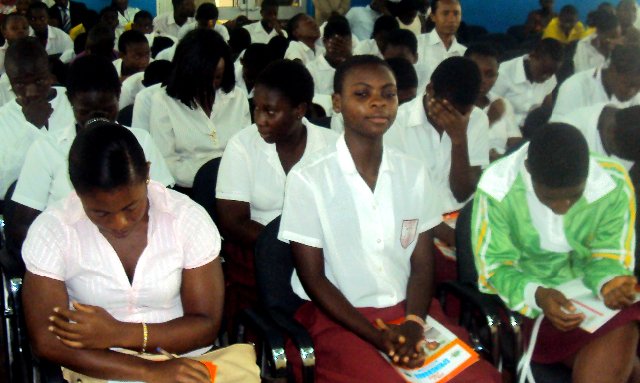
Action steps to enhance job opportunities for youth in Ghana

Ghana/Marzo de 2017/Fuente: Myjoy on line
RESUMEN: Usted va a la escuela con la ambición de conseguir un trabajo después de la terminación, pero al solicitar un trabajo, se le requiere tener experiencia laboral. La pregunta es: ¿Qué realmente importa en el mundo laboral de hoy? ¿Está recibiendo educación, experiencia de trabajo o ambas cosas? Muchos jóvenes en Ghana, que tienden a carecer de experiencia laboral, se han convertido en víctimas de rechazo por parte de una serie de empresas. Las pocas empresas que abren solicitudes de trabajo de vez en cuando parecen tener sus propias preferencias de candidatos potenciales-quieren trabajadores mayores y más experimentados y no jóvenes novatos. Para comprender mejor la mejor manera de prepararse para penetrar en el mercado de trabajo, es fundamental revisar un factor clave: el sistema de educación formal.

You go to school in anticipation of getting a job after completion, but upon applying for a job, you are required to have work experience. The question is: What really matters in today’s world of work? Is it getting an education, work experience or both?

Many youth in Ghana, who tend to lack work experience have become victims of rejection by a number of businesses. The few companies that open job applications once in a while seem to have their own preferences of prospective candidates—they want older, more experienced workers and not young novices. To better understand how best to prepare oneself to penetrate the job market, a revisit of a key factor is critical—the formal education system.

The Ghana’s education system has been sluggish in catching up with the changes in the world economy and the labour market which is being largely driven by advances in information technology (IT). There is a deficit in Ghanaian schools regarding how students are being taught IT skills that are crucial for many present-day jobs.

Although technology permeates every aspect of our lives — from smartphones to digital televisions — many people struggle with technical skills and literacy in computer functions globally. Consequently, many youth who are new to work are not well grounded in either knowledge or practice to occupy available positions. Despite the large number of youth who are seeking jobs, a lot of companies have expressed difficulty in finding employees. A big challenge in Ghana is that a lot of youth have a negative perception about IT jobs, regardless of one’s programme of study. In other words, there is a general misconception that IT jobs are only meant for those who study IT. Schools—from elementary to senior high—need to train students with skills of high value, such as programming, using statistical software tools and not just the basic computer skills such as typing.

There are clear, notable skills gap in Ghana’s technology sector. Jobs that require the use of technological skills will only increase with time as long as complex problems demand to be solved; but many students are not finishing school with the skillsets that will enable them to get a current job or benefit from future opportunities in technology. The skill set employees are looking for now is largely influenced by Ghana’s position as a service-sector driven country. In the corporate sector, for example, these skills include self-confidence and effective communication when engaging with customers or clients—referred to as “employability” skills—from acceptable behaviour in the workplace to teamwork and problem-solving. The complaint by corporate entities is that the young people they discover – who are desperately looking for work-  have low levels of skills. Therefore, there is the need for corporate bodies to work closely with schools to train students in these areas, as well as open their doors for regular internships.

Another concern, which dashes the hopes of many youth landing a job is attitude. Many young people have the wrong attitudes, behaviours or social skills to work. For instance, a person working as a receptionist, attending to guests in a shop might stop working to reply a text or call, suggesting that part of the problem may be a question of the kind of training received in school, or just a lack of discipline. The truth is that many youth in Ghana can be as smart as what if they are not well-mannered in their speech and conduct. They end up lowering their prospects of getting a job and keeping it.

Action steps

The Ghanaian government faces a daunting task as it tries to satisfy the teeming youth with productive work. First, it has to tackle the skills gap. Part of the problem is that senior high schools and universities/technical institutions are too separated from the demands of enterprises. In contrast, advanced countries like Germany, which has the lowest rate of youth employment in the European Union (EU), have employers working closely with the government and unions to ensure that the education system, apprenticeships and vocational programmes teach business skills that corporations need.

There should be greater employer involvement in Ghana’s education system. To meet that target, the Ministry of Education should encourage employers to be actively involved in the universities and technical institutions. Apart from studying a comprehensive curriculum and writing examinations or project theses, students also need to develop the necessary skills and attitudes that employers want. Considering that, the career services of academic institutions should have a strong knowledge of the skills that employers are looking for, as well as the local needs of the labour market.

The classroom is not the only place to teach skills. In fact, learning should not end in the classroom. Ghana has a history of apprenticeship programmes that help young people gain the kind of work experience needed to start their careers. However, there should be a balance between the skills acquired in the services sector and that which is acquired in manufacturing to ensure that available apprenticeships are able to reflect on the needs of the Ghanaian labour market.

Another problem is how employers and prospective employees perceive non-academic certifications. University education is very important, and people (especially girls) should be encouraged to attain one, at least. However, focusing on university education alone shrouds the benefits of vocation learning. That is the alternative to university’s becoming a second choice option for many youth and one to be avoided if possible. For employers, the problem with Ghana’s vocational path is that the whole system of apprenticeships is filled with uncertainty about the quality of certifications. Reforming standards, could be a government policy to help restore trust and confidence in such programmes. These negative perceptions could change if there are widely recognised qualifications that would benefit both students and employers.

As the Ghanaian economy continues to expand, a number of young people will still have to be absorbed by certain sectors as a matter of necessity. Although higher economic indicators like per capita income is important, that alone would not solve Ghana’s youth unemployment challenge. Rather, identifying the needed skills within the economy should inform any educational reform.Going to school is important, but so is work experience where skills-on-the-job training is acquired.

Therefore, balancing the knowledge learned in school with the practical skills needed to work in one’s area of expertise is a sure way to enhance job opportunities for the Ghanaian youth.

Fuente: http://www.myjoyonline.com/opinion/2017/March-21st/action-steps-to-enhance-job-opportunities-for-youth-in-ghana.php

Comparte este contenido:

La FAO analiza programas de alimentación escolar en Latinoamérica

Marzo de 2017/Fuente: Unión Radio

La Organización de las Naciones Unidas para la Alimentación y la Agricultura (FAO) realiza hoy en Costa Rica un encuentro latinoamericano para analizar el avance de los programas de alimentación escolar en la región.

La reunión “La alimentación escolar como estrategia nacional para el alcance de los Objetivos de Desarrollo Sostenible”, busca el fortalecimiento de estos programas en el marco de la iniciativa América Latina y Caribe sin Hambre 2025.

La alimentación escolar tiene un impacto muy grande en los temas sociales, en la seguridad alimentaria nutricional, en el combate a la malnutrición, pero además ligada a otros programas de agricultura puede convertirse en una herramienta de desarrollo“, expresó durante la actividad el representante mesoamericano de FAO, Tito Díaz.

Las autoridades explicaron que la actividad busca conocer las experiencias de un programa de cooperación Brasil-FAO para mejorar este servicio en América Latina.

Según la FAO, la alimentación y sana nutrición en las escuelas permite a los niños desarrollarse mejor, que tengan más energía y se mantengan físicamente activos.

“Es una realidad preocupante, que en ocasiones esta es la única alimentación que reciben los estudiantes en el día. Se calcula que el problema de subalimentación ha disminuido, sin embargo, datos del 2012 al 2014 revelan que cerca de 805 millones de personas padecen hambre en el mundo”, cita la FAO en un informe.

En el caso de Costa Rica, el Ministerio de Educación Pública (MEP) manifestó que realiza inversiones anuales para alimentar a la población escolar, equipar los comedores, fomentar el uso de las huertas escolares y contratar a servidoras de comedores.

En la actividad, que continuará mañana, participó la primera dama, la española Mercedes Peñas, la ministra de Educación Pública de Costa Rica, Sonia Marta Mora; la viceministra del Ministerio de Agricultura y Ganadería costarricense, Ivannia Quesada; así como ministros y representantes de los países de la región, de los Programas de Alimentación Escolar y autoridades de la FAO.

Fuente: http://unionradio.net/la-fao-analiza-programas-alimentacion-escolar-en-latinoamerica/

Comparte este contenido:

New Zealand school abolishes gendered uniforms

Nueva Zelanda/marzo de 2017/Fuente: Independent

RESUMEN: Por lo menos 80 escuelas públicas en el Reino Unido ahora tienen uniformes neutrales del género, con el Allens Croft en Birmingham creado para ser el primero en para haber abolido códigos separados del vestido para los muchachos y las muchachas. La primaria es designada una «escuela de mejores prácticas» por la organización educativa Educate and Celebrate, que ha recibido más de 200.000 en fondos del Departamento de Educación para impartir capacitación en igualdad y diversidad al personal de las escuelas de todo el país. La medida es parte de una iniciativa financiada por el Gobierno para apoyar a los niños LGBT en las escuelas y tratar de fomentar un enfoque más tolerante e inclusivo con una actitud menos prescriptiva hacia el género. Mientras que los defensores de los derechos de las personas LGBT como Stonewall han acogido con beneplácito el movimiento hacia uniformes neutros en cuanto al género, los críticos lo han ridiculizado como una corrección política que podría dañar a los niños. Andrea Williams de Christian Concern advirtió: «Este tipo de políticas que están saliendo en realidad podría ser muy perjudicial, potencialmente (por) la imposición de una agenda ideológica radical de adultos impuesta a la inocencia de los niños». Pero Jamie Barry, director de Parson Street Primary en Bristol, quien puso un uniforme neutral de género, dijo: «Los niños no siempre pueden comprender o comprender su identidad de género a una edad temprana, así que creo que es importante que tengamos una política que tenemos Una cultura de aceptación, por lo que hemos introducido (los uniformes), porque a medida que nuestros hijos crecen, queremos que sepan que está bien expresarse o ser quien eres «.

A primary school in New Zealand has abolished gendered school uniforms to avoid stereotyping, following in the footsteps of dozens of British schools.

The move comes after some girls at Dunedin North Intermediate School in the South Island complained about having to wear “archaic” kilts, headteacher Heidi Hayward said.

The school, which has around 200 pupils aged 10-13, began allowing female pupils to wear trousers in 2016.

But this created further problems when the small number of girls who chose to wear trousers were teased for dressing “like boys”, staff said.

In response, the school created five “gender neutral” options, including shorts, long pants, culottes, a kilt and long trousers, with pupils free to choose any of the options, regardless of their gender.

Ms Hayward told the Otago Daily Times that the initiative aimed to remove gender stereotypes.

«We don’t say there’s a girls’ uniform and a boys’ uniform,» she said. «There’s five options for the uniform, and as long as you wear them in their entirety, you can wear whichever uniform you please.

«Last year I had a couple of kids who challenged me. They said: `Why do we have to wear kilts? You can wear pants. Why can’t we?’ That seemed pretty logical to me. It was 2016 and I thought it was odd that we still have these stereotypes. What we were hoping to avoid is making it hard.

«If you’re a girl who doesn’t want to wear a skirt, you should have an option that works for you. That’s where the culottes come in,» she said, adding that none of the boys so far have opted for the kilt.

She said pupils have been accepting of the options, but parents had taken longer to warm to the initiative.

«The kids weren’t really fussed about it. It’s adults that have taken a while to get their heads around it – they’ve asked lots of questions.»

New Zealand’s Ministry of Education has advised all schools in the country to offer gender-neutral uniforms to better provide for sexual diversity among students.

The recommendation is not without its critics, with some claiming it panders to a small minority of children who are confused about their gender.

Bob McCorskie, director of New-Zealand based charity Family First, said: “Uniforms are part of life. There are places where there are certain uniforms that women wear and ones that men wear. We’re creating this false environment in schools which doesn’t reflect reality.”

At least 80 state schools in the UK now have gender neutral uniforms, with Allens Croft in Birmingham believed to be the first to have abolished separate dress codes for boys and girls.

The primary is designated a “best practice school” by the charity Educate and Celebrate, which has received more than £200,000 in funding from the Department for Education to deliver equality and diversity training to staff in schools across the country.

The move is part of a Government-funded drive to support LGBT children in schools and to try to encourage a more tolerant and inclusive approach with a less prescriptive attitude towards gender.

While LGBT rights campaigners such as Stonewall have welcomed the move towards gender-neutral uniforms, critics have derided it as political correctness which could potentially damage children.

Andrea Williams of Christian Concern warned: “These kind of policies that are coming out actually could be very harmful, potentially (by) the imposition of a radical ideological agenda of adults imposed on the innocence of children.”

But Jamie Barry, headteacher of Parson Street Primary in Bristol, who put in place a gender neutral uniform, said: “Children may not always realise or understand their gender identity at an early age so I think it’s important we have a policy that we have a culture of acceptance, so that’s why we’ve introduced (the uniforms), because as our children grow up, we want them to know it’s okay to express yourself or be who you are.”

Fuente: http://www.independent.co.uk/news/world/new-zealand-school-abolishes-gendered-uniforms-a7641976.html

Comparte este contenido:

Ecuador: Lasso reduciría educación gratuita y de calidad, dice experta

Ecuador/Marzo de 2017/Fuente: Telesur

La miembro del equipo de campaña de Alianza PAIS, María Fernanda Espinoza, aseguró que el candidato Guillermo Lasso propone la privatización de la educación en el marco de un Estado neoliberal.

La propuesta de gobierno del candidato presidencial de la derecha ecuatoriana, Guillermo Lasso, anuncia un sistema de cheques para el sistema educativo «que reduce la posibilidad de los jóvenes de tener una educación de calidad y gratuita», contrario a Lenín Moreno que propone «la educación de calidad y gratuita», explicó a teleSUR  María Fernanda Espinoza, miembro del equipo de campaña del candidato de Alianza PAIS.

Otra de las propuestas de Lasso se enfoca en la reducción de 14 impuestos y esto «significaría menos 3.688 millones de dólares al Estado, es decir, que las personas que son ricas dejarían de pagar impuestos, pero en cambio habría que despedir a miles de empleados públicos por falta de recursos», explicó la exministra de Relaciones Exteriores de Ecuador.

«Lenín Moreno quiere escuchar a los jóvenes, a las mujeres y así enriquecer su plan de campaña a través de los ecuatorianos», resaltó Espinoza. «Moreno suscribió más de ocho compromisos con distintos grupos sociales, hizo pactos con organizaciones indígenas y con empresarios. Ha tocado los corazones y los sectores del pueblo pacífico de Ecuador».

El próximo 2 de abril se realizará la segunda vuelta en Ecuador donde se enfrentarán dos visiones de país, la primera es la del candidato Lenín Moreno que propone «un Estado incluyente, una economía popular para todos, versus un Estado neoliberal donde los ciudadanos se convierten en clientes sin derechos», agregó la también representante permanente de Ecuador ante las Naciones Unidas.

El presidente de Ecuador, Rafael Correa, advirtió sobre una «bomba» que prepara la derecha ecuatoriana para la segunda vuelta, y al respecto Espinoza dijo: «En la primera vuelta en Ecuador había personas que ocuparon el Consejo Nacional Electoral (CNE) en Quito (capital) e interrumpieron el tráfico presionando el proceso que avanzaba con normalidad, hubo conatos de incidentes que mientras demoraban el conteo denunciaban que el proceso no avanzaba».

Sobre las 49 empresas en paraísos fiscales como Delaware e Islas Caimán que posee Lasso, la exministra señaló que la vida del candidato de la fórmula CREO-SUMA «ha sido una campaña sucia que afecta a los ecuatorianos (…) Un estudio prolijo del medio argentino Página 12 muestra cómo el banquero se fue enriqueciendo tras el Feriado Bancario en Ecuador».

Fuente: http://www.telesurtv.net/news/Lasso-reduciria-educacion-gratuita-y-de-calidad-dice-experta-20170321-0062.html

Comparte este contenido:

Canadá: Alberta government announces 26 new school projects

Canadá/Marzo de 2017/Autor:Kyle Muzyka/ Fuente: CBC News

RESUMEN: El gobierno de Alberta anunció que ha aprobado 26 nuevos proyectos escolares, como prometió en el presupuesto de la semana pasada para 2017. La Premier Rachel Notley y el Ministro de Educación David Eggen estuvieron en Woodhaven Middle School en Spruce Grove el martes para anunciar los proyectos, que incluyeron financiamiento para ocho nuevas escuelas, nueve reemplazos para escuelas más antiguas y siete modernizaciones.
También hay fondos para la planificación de dos escuelas adicionales. La financiación de la construcción se anunciará en una fecha posterior. Ocho nuevas escuelas atenderán a poblaciones en crecimiento en Edmonton, Calgary y Airdrie.

The Alberta government announced it has approved 26 new school projects, as it promised in last week’s 2017 budget.

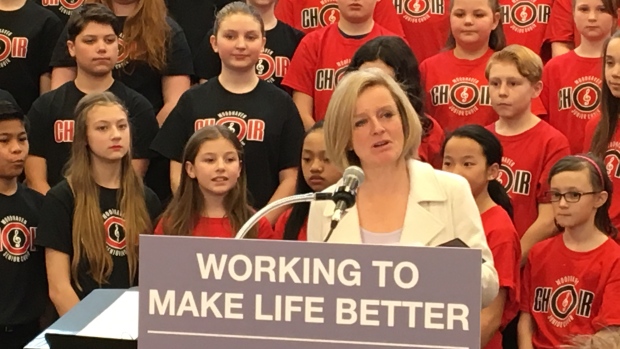
Premier Rachel Notley and Education Minister David Eggen were at Woodhaven Middle School in Spruce Grove Tuesday to announce the projects, which included funding for eight new schools, nine replacements for older schools and seven modernizations.

There is also funding for the planning of two additional schools. Construction funding will be announced at a later date.

Eight new schools will address growing populations in Edmonton, Calgary and Airdrie.

In Edmonton:

  • The Meadows (junior high, Edmonton Public Schools)
  • Pilot Sound (elementary, Edmonton Public Schools)

In Calgary:

  • Cranston (elementary, Calgary Board of Education)
  • Evergreen (elementary, Calgary Board of Education)
  • Coventry Hills (elementary, Calgary Board of Education)
  • Auburn Bay (elementary core, Calgary Catholic School Division)

In Airdrie:

  • Airdrie (elementary, Calgary Catholic School Division)
  • Hillcrest (K-9, Rocky View Schools)

The nine replacement schools include:

  • Ecole Joseph Moreau, Edmonton (Greater North Central Francophone Education Region)
  • Highlands junior high, Edmonton (Edmonton Public Schools)
  • Banff elementary Phase 2, Banff (Canadian Rockies Regional Division)
  • Camilla School, Riviere Qui Barre (Sturgeon School Division)
  • Replacement composite high school, Grande Prairie (Grande Prairie Public School District)
  • Irma school replacement, Irma (Buffalo Trail Public Schools Regional Division)
  • Huntsville school, Iron Springs (Palliser Regional Schools)
  • Wye School, Sherwood Park (Elk Island Public Schools)
  • Ecole les Cypres, Medicine Hat (Southern Francophone Education Region)

The seven schools that will be modernized are:

  • Bonnyville Centralized, Bonnyville (Northern Lights School Division)
  • Forest Lawn High School, Calgary (Calgary Board of Education)
  • Evergreen Elementary School, Drayton Valley (Wild Rose School Division)
  • Ben Calf Robe, Edmonton (Edmonton Catholic Schools)
  • St. Patrick Catholic School, Grande Prairie (Grande Prairie Catholic School District)
  • St. Patrick’s Community School, Red Deer (Red Deer Catholic Regional Schools)
  • Woodhaven Middle School, Spruce Grove (Parkland School Division)

«Modernizations are quite significant,» Eggen told reporters. «For example, here at Woodhaven [in Spruce Grove], it means increasing capacity by probably at least 300 students.»

He said modernizations could mean anything from new classrooms to new gymnasiums, depending on each case.

The two schools the government is providing funding to design are expected to be an elementary school in Lethbridge and another school in the Ellerslie area of Edmonton.

Calgary Board of Education (CBE) chair Joy Bowen-Eyre said the schools will make a dent in its list of capital projects.

«We’re growing exponentially and because of that we could fill four new elementaries every year based on our population growth, so we will continue to work with the government,» Bowen-Eyre said.

She said the CBE still has several middle schools on its wish list that need to be approved, as well as high schools.

The March 16 budget included $500 million for new school projects over the next four years.

It also provided $20 million geared toward new playgrounds and $473 million for maintenance and renewal of schools around the province.

The government said the 26 school projects announced Tuesday will create more than 6,000 jobs. Construction on almost all of the projects will begin in 2018 after design is complete. Schools are projected to begin opening in 2021.

Fuente: http://www.cbc.ca/news/canada/edmonton/rachel-notley-2017-budget-schools-1.4034310

Comparte este contenido:
Page 4081 of 6125
1 4.079 4.080 4.081 4.082 4.083 6.125