Page 4855 of 6179
1 4.853 4.854 4.855 4.856 4.857 6.179

Reino Unido: «Ethnicity: Italian or Sicilian?» UK schools provoke row with online form

Europa/Reino Unido/16 Octubre 2016/Fuente y Autor: thelocal
Resumen:El embajador italiano en el Reino Unido ha intervenido después de los padres se quejaron de la distinción que se hace entre Italia, Sicilia y Nápoles en los cuestionarios del distrito escolar. Al seleccionar su origen étnico de un menú desplegable que aparece en los sitios web del distrito escolar, los italianos en el Reino Unido se enfrentaron a una elección sorprendente. Se les pidió a definirse como sea ‘italiana’, ‘Italian – Sicilia’, ‘Italian – napolitano’ o ‘Italiano – Otros’.
The Italian Ambassador to the UK has intervened after parents complained about the distinction made between Italy, Sicily and Naples in school district questionnaires.

When selecting their ethnicity from a drop-down menu on school district websites, Italians in the UK faced a surprising choice. They were asked to define themselves as either ‘Italian’, ‘Italian – Sicilian’, ‘Italian – Neapolitan’ or ‘Italian – Other’.

Complaints initially came from parents in Bradford, north England, but it became clear this was not an isolated case, and that several school districts in England and Wales differentiated between northern and southern Italians.

The Italian Embassy «intervened, requesting the immediate removal of this categorization», it said on its official Facebook page on Tuesday evening.

It also found time to give the UK authorities a quick Italian history lesson, reminding them: «Italy is a unified country, since March 17th, 1861.»

Ambassador Pasquale Terracciano told Ansa the choice was a «local initiative» and that rather than being discriminatory, the three options were probably motivated by a desire to identify any «non-existent linguistic needs».

He added however that «the road to hell is paved with good intentions».

Italy and Brexit

The incident comes at an important moment for Italian-British relations, after the UK voted to leave the European Union in June, leaving the thousands of Italians who study and work in the UK with an uncertain future. The vote was particularly bad news for Italian youngsters, many of whom move to the UK where they can often find better employment opportunities..

While UK Prime Minister Theresa May has said she «expects» to be able to guarantee the rights of Italians living in the UK, no promises have been made.

Furthermore, the shock of the ‘No’ vote appears to have made PM Matteo Renzi about his own upcoming referendum on December 4th.

Although Italy’s referendum is about constitutional reforms, it is feared that the wider consequences of a win for the ‘No’ camp could include a boost for the populist Five Star Movement, who want Italy to hold its own EU referendum.

Fuente de la noticia: https://www.thelocal.it/20161012/english-schools-criticized-for-differentiating-between-italians-sicilians-and-neapolitans

Fuente de la imagen: https://www.thelocal.it/userdata/images/article/7de81c5248e838c30880c7e4f1b8d382262befd3069dcb26deb9833e0e636d83.jpg

Comparte este contenido:

Argentina: 19 de octubre paro nacional de mujeres

América del Sur/Argentina/16 Octubre 2016/Fuente y Autor: sinmordaza

A menos de una semana del Encuentro Nacional, Foros de mujeres convocan a una medida de fuerza para el miércoles 19 de octubre, consistente en no asistir a los lugares de trabajo.

El brutal femicidio de Lucía Pérez, una adolescente de 16 años, en la ciudad de Mar del Plata expone, una vez más, la crueldad y la violencia a la que están expuestas las mujeres. A menos de una semana del Encuentro Nacional que convocó 70 mil participantes en Rosario, mujeres autoconvocadas y militantes independientes lanzaron un paro nacional para el próximo 19 de octubre, sin asistencia a los lugares de trabajo.

«La convocatoria se realiza bajo la consigna «Si mi vida no vale, produzcan sin mí», y tiene la intención de visibilizar el reclamo colectivo de poner freno a la violencia hacia las mujeres y, al mismo tiempo, generar un choque con el estereotipo de objeto productivo», explicaron referentes del foro Hermanas Rosarinas Autoconvocadas, uno de los espacios donde se replica el anuncio de la medida.

Agregaron que la idea empezó a dar vueltas este miércoles por la noche, en foros de mujeres de las que son partícipes y surgió de integrantes «hartas de marchar y no ser escuchadas, la idea de tomar el ejemplo de las mujeres polacas que paralizaron el país, en su lucha por el aborto».

«El Femicidio de Lucia Pérez, bestial y sumamente perverso, es otra instancia diaria de las que vive una mujer cada 30 horas», expresaron y convocaron a la concentración en Rosario, evento que se realizará a las 16 en la Plaza San Martín, Dorrego y Córdoba.

«Porque estas lágrimas no lavan la rabia. Porque solas no podemos ni queremos. #NiUnaMenos #VivasNosQueremos», puede leerse en los foros de mujeres que convocan al paro y también en los muros de Facebook de quienes espontáneamente adhieren a la medida.

Fuente de la noticia: http://www.sinmordaza.com/noticia/386952-19-de-octubre-paro-nacional-de-mujeres-.html

Fuente de la imagen: http://www.sinmordaza.com/imagesnueva/noticias/grandes/153098_nacionales.jpg

Comparte este contenido:

Liberia: NGO Official wants education for ebola-affected kids prioritized

África/Liberia/16 Octubre 2016/Fuente: allafrica/Autor: David Pamas Seedee

Resumen: El Director Ejecutivo Adjunto de la ONG Niños de Educación local y la Iniciativa de Empoderamiento (CEEI) en el condado de Bomi quiere prioridad a la educación de los niños que sobrevivieron al virus del Ébola. En una entrevista con la agencia de noticias Liberia en Tehr Ciudad,  Richard Swen instó al grupo de legisladores del condado de considerar la asignación de recursos del Fondo del Condado de Desarrollo (MID) y el Fondo de Desarrollo Social (SDF) para la educación de estos niños .

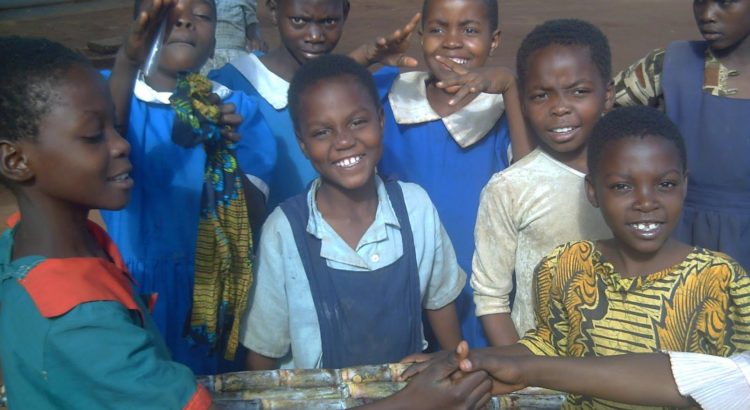
The Deputy Executive Director of the local NGO Children Education and Empowerment Initiative (CEEI) in Bomi County wants priority given to the education of children who survived the Ebola Virus Disease.

In an interview with the Liberia News Agency in Tehr Town, Tehr District, Bomi County recently, Richard Swen urged the County Legislative Caucus to consider allocating funding from the County Development Fund (CDF) and the Social Development Fund (SDF) for the education of these children..

According to CEEI Deputy Director Swen, the organization has started an initiative to provide the registration fees, uniforms and Government Elementary Textbooks for 35 children in the district school system for the 2016/2017 Academic Year.

He said US$1,635 was used to register, buy books, uniforms, book bags, footwear and exercise books for the 12 female and 23 male students from Nursery to Sixth Grade level.

Director Swen said the funding was made available by Dr. Andrew Richardson and Family Foundation in U.S.A.

He said the organization is targeting 80 school-age children in primary school who survived the Ebola crisis in the county.

He said similar donation was made in Suehn Mecca District with 21 elementary students benefiting.

Fuente de la noticia: http://allafrica.com/stories/201610140641.html

Fuente de la imagen: http://www.wvi.org/sites/default/files/COM_5409.JPG

Comparte este contenido:

España: Aragón cuenta con 83 centros acreditados para prácticas de futuros docentes

Europa/España/16 Octubre 2016/Fuente: elperiodicodearagon/Autor:EFE

Ochenta y tres centros docentes aragoneses tienen este curso la certificación de la Agencia de Calidad y Prospectiva Universitaria de Aragón (ACPUA) para ser centros de prácticas para futuros docentes después de que doce de ellos la hayan logrado recientemente.

Se trata de los colegios Agustín Gericó, Romareda, El Buen Pastor y La Salle Montemolín de Zaragoza, el IES Leonardo de Chabacier de Calatayud, el colegio Madre María Rosa Molas de Zaragoza, el CFPE Nuestra Señora de Guayente de Sahún (Huesca), el IES Pedro de Luna de Zaragoza, el CPIFP Pirámide de Huesca, los colegios San Gabriel de Zuera y San José de Calasanz Escolapios de Barbastro y el IES Valdespartera de la capital aragonesa.

La ACPUA, admitida en la European Association for Quality Assurance in Higher Education (ENQA) desde el 15 de junio de 2016, se encarga de evaluar, certificar y acreditar las enseñanzas conducentes a la obtención de títulos de carácter oficial y con validez en todo el territorio nacional, han informado fuentes del ejecutivo en una nota.

También se ocupa de garantizar el buen desarrollo de las prácticas ofrecidas en los planes de estudios de las nuevas titulaciones adaptadas al Espacio Europeo de Educación Superior y vigila el correcto desarrollo del Practicum que deben realizar los alumnos del Máster Universitario en Profesorado de Educación Secundaria Obligatoria, Bachillerato, Formación Profesional y enseñanza de idiomas, artísticas y deportivas.

Y de los estudiantes del curso de formación pedagógica y didáctica para los profesores técnicos de FP y enseñanzas deportivas de la Universidad de Zaragoza, así como del Máster de la Universidad Nacional de Educación a Distancia (UNED) y de otras universidades con convenio con el Departamento de Educación, Cultura y Deporte del Gobierno de Aragón.

Para que los centros educativos que acogen a los alumnos del Practicum reciban la credencial ACPUA, deben haber obtenido una valoración positiva en las encuestas de evaluación que completan los estudiantes al finalizar la fase de prácticas y en los informes del profesor universitario responsable.

Asimismo, tienen que haber participado correctamente durante dos años en dicho Practicum.

Los centros que consiguen la certificación se comprometen a participar en la tutorización de alumnos en prácticas y forman parte de una red estable de centros en la que se cursará el Practicum del Máster Universitario y del curso de formación pedagógica y didáctica con el objetivo de garantizar la calidad de ambas titulaciones.

Fuente de la noticia: http://www.elperiodicodearagon.com/noticias/aragon/aragon-cuenta-83-centros-acreditados-practicas-futuros-docentes_1149825.html

Fuente de la imagen: http://www.aragondigital.es/not/2016/10/14/img/img1494191s.jpg

Comparte este contenido:

Nigeria: 13% of Lagos population can’t read or write

África/Nigeria/16 Octubre 2016/Fuente:AllAfrica /Autor:Gboyega Akinsanmi

Resumen: El gobierno estatal de Lagos  dijo que el 13 por ciento de la población del estado no puede leer ni escribir, en consecuencia aproximadamente  tres millones de habitantes son analfabetos. Sin embargo, el gobierno del estado dio a conocer un programa de alfabetización de adultos, que según dijo fue diseñado para educar eficazmente a tres millones de residentes que no podían leer, no escribir en un plazo de tres años.

The Lagos State Government yesterday said 13 per cent of the state’s population estimated at 21 million, cannot read or write, thus positing that three million residents «are illiterate.»

However, the state government unveiled an adult literacy programme, which it said was designed to effectively educate three million residents who could not read not write within three years.

The state Governor, Mr. Akinwunmi Ambode, unveiled the programme tagged: ‘Lagos Is Learning’ at the Ikeja Police College, disclosing his administration’s strategic objective to achieve 100 per cent literacy by 2019.

Ambode, who was represented by the Deputy Governor, Dr. Oluranti Adebule, generously cited the statistics of the United Nations Educational, Scientific and Cultural Organisation (UNESCO), which put the total number of illiterates in the country at 54 million.

Citing the outcome of research the state recently conducted, Ambode said 13 per cent of Lagos population «cannot read or write. This amounts to three million residents. This level of illiteracy is unacceptable.»

The governor, thus, noted that the target of his administration on or before 2019 was «to raise the literacy level in the state from 85 per cent to 100 per cent within the next three years.»

He said he had mapped out strategies to achieve 100 per cent literacy level, noting that the adult education centres in the state «will be increased from 522 to 1,000, while additional 1,000 teachers will be engaged.»

He added that the programme would be free of charge for participants in order as «to accommodate more people. The population of illiterate is not consistent with our vision to become Lagos Africa’s model megacity.

«This is because illiterates lack basic literacy. We are launching it because they lack other essential skills which make them more vulnerable to the activities of criminals and other anti-social groups.

«So, we are launching this project to kick illiteracy out of Lagos State. Our goal is to achieve 100 percent literacy in the state. Towards this end, we planned to increase the number of basic adult learning centres from 532 to 1, 000.

«We will also engage additional 1, 000 facilitators who would be trained in basic skills and techniques in the teaching of adult education. We multiply and diversify channels to improve literacy in the state.»

He, thus, noted that the state government «will strengthen relationship with various stakeholders both local and internationals in the state. I encourage residents of Lagos to take the opportunity to learn.

«It is never too late to learn; age is not barrier to acquire basic literacy. It will help the learners forge a better understanding between the government and the people and as well as aid personal development.»

Also at the unveiling, the Special Adviser on Education, Mr. Obafela Bank Olemoh said the initiative was aimed at improving the standard of living of adults without formal education and make them self-reliant and employable.

Bank-Olemoh said the initiative was also targeted at raising the level of literacy in the state from 85 per cent to 100 per cent in the next three years, calling on international and non-governmental organisations to partner with the state government to achieve the mandate of the programme.

Fuente de la noticia: http://allafrica.com/stories/201610141011.html

Fuente de la imagen:  http://www.universal.org.ar/site/wp-content/uploads/2012/10/nigeria1.jp

Comparte este contenido:

México: Joven fue aceptado como estudiante-investigador en la Agencia Espacial NASA

América del Norte/México/16 Octubre 2016/Fuente: peru/Autor: EFE

Yair Israel Piña, estudiante de Física en la Universidad Nacional Autónoma de México(UNAM), fue aceptado por la Administración Nacional de Aeronáutica y del Espacio (NASA) estadounidense como estudiante-investigador, informó la institución educativa.

Con 20 años de edad, Piña es el primer mexicano y el estudiante más joven en recibir esta distinción.

“Debo continuar con las investigaciones, servir de ejemplo a los demás, incentivarlos, demostrarles que no hay que atarse de manos, buscar la puerta adecuada, tocar, platicar y solucionar los retos que tenemos en nuestro país”, dijo Piña, de acuerdo con un boletín de la UNAM.

Por medio del International Space Education Board, el también alumno asociado en el Instituto de Ciencias Nucleares fue seleccionado por su trabajo en el desarrollo de materiales con propiedades termoluminiscentes para la medición de la radiación en el espacio, añadió el texto.

De acuerdo con la institución, la designación de Piña se dio a conocer luego del 67 Congreso Astronáutico Internacional, efectuado en Guadalajara, occidental estado mexicano de Jalisco.

“La observación siempre es algo importante, distinguir la radiación y las partículas para prevenir algún desastre de salud en los astronautas se me hizo de gran interés. Somos los únicos en México que desarrollamos esta línea de investigación”, aseveró el alumno.

“Mi madre me dijo: demuéstrame que eres bueno para estudiar física y te lo permitiré. Así, a los 15 años, mi mayor inclinación la despertó el Instituto de Ciencias Nucleares, cuando en segundo de prepa (bachillerato) me aceptaron para hacer una estancia de investigación sobre ciclos de combustible nuclear con Julio Herrera”, relató Piña.

En 2015 fue aceptado para intervenir en el programa Orión de la NASA cuando publicó su primer artículo científico en torno a la medición de la radiación en el espacio o dosimetría espacial. “Mi trabajo se realizó en la Unidad de Irradiación y Seguridad Radiológica del Instituto de Ciencias Nucleares”, dijo.

El artículo fue publicado en el Journal of Physics y, junto con su profesor Epifanio Cruz, propuso y creó un detector activo para distintos tipos de radiación aplicable en vuelos espaciales.

“Es por eso que la NASA utiliza nuestro artículo para tomarlo como referencia en las futuras misiones, que son a la Luna y a Marte, y es indexado al Sistema de Datos Astrofísicos de la agencia”, explicó.

Piña también fue llamado a integrarse al Project Pilot Manager en la Universidad de Samara, Rusia, para desarrollar un componente satelital y medir la cantidad de iones en la ionosfera.

“Uno de mis sueños es llevar el nombre de la Universidad al espacio. Algo que me caracteriza es la pasión con la que hago las cosas, y el orgullo de pertenecer a esta institución. Tengo una frase: Amor y respeto al pueblo que me vio nacer, México, pero honor y gloria al pueblo que me forjó, la UNAM”, finalizó.

Fuente de la noticia: http://peru.com/epic/ciencia/nasa-joven-fue-aceptado-como-estudiante-investigador-agencia-espacial-noticia-478783

Fuente de la imagen: http://cde.peru.com/ima/0/1/5/1/3/1513081/611×458/nasa.jpg

Comparte este contenido:

Francia: Transform France’s educational offer abroad

Europa/Francia/16 Octubre 2016/Fuente:timeshighereducation /Autor: Jack Grove

Resumen:  Francia requiere una «urgente» nueva estrategia para ampliar el número de estudiantes de sus universidades . A pesar de educar a casi 37.000 estudiantes de todo el mundo el año pasado, la educación superior francesa se situó muy por detrás de los principales proveedores del mundo de la educación transnacional – los EE.UU., Reino Unido y Australia – de acuerdo con el informe publicado el 26 de septiembre por Francia estrategia, un centro de estudios patrocinados por la Oficina del primer ministro francés.

A lack of strategy and autonomy are to blame for French universities’ failure to keep pace on transnational education, study suggests

France requires an “urgent” new strategy to expand the numbers of students its universities teach abroad, a major review has recommended.

Despite educating almost 37,000 students across the world last year, French higher education lagged considerably behind the world’s main providers of transnational education – the US, UK and Australia – according to the report published on 26 September by France Stratégie, a thinktank sponsored by the office of the French prime minister.

Not including distance learning, the UK has nearly three times as many students in its programmes abroad (95,000) as France, says the first-ever quantitative analysis of French transnational education.

Its distance learning provision is also modest, reaching just 5,700 students internationally compared with the 110,000 who took a UK training course online in 2014, the report adds. The figure was 25,000 for Australia.

France’s “niche offer” abroad largely consisted of students taking master’s courses, with some 70 per cent of degrees awarded abroad at postgraduate level, often in specialised fields where the country enjoys a strong reputation, such as fashion, hospitality and the hotel industry, the report says.

Those courses tended to have smaller enrolments – around 200 on average – than the mass-market undergraduate programmes that formed the bulk of provision from UK and Australian universities, the report says.

Engineering schools were the most active participants in French transnational education, with almost 7,000 students abroad, while business schools had 3,000, with French universities tending to limit their involvement to partnerships with overseas institutions.

“In short, universities are not heavily involved in this form of internationalisation,” says the report, which is titled French Transnational Education: The Urgent Need for a Strategy.

The country’s limited provision of third-level education abroad is blamed on the “absence of any stable or clearly stated strategy” from government, while “with a few exceptions…institutions’ strategies in this area remain largely unformulated” – with managers seeing international issues as being of “secondary importance”.

It calls on the state to adopt a “proactive strategy” to improve the “worrying” state of Frenchtransnational education, which has its roots in “Franco-French constraints and issues”, such as excessive governmental red tape, “institutions’ still limited autonomy, regulatory provisions regarding graduation and the legibility of our present system”.

Institutions should also be given more means to finance international projects, as well as “more room for action regarding pricing rules on tuition fees for their programmes abroad” to take advantage of the “silent revolution” that internationalisation represents in higher education.

With tuition fees for domestic and international students at minimal levels – under €200 (£171) – French universities do not have the same incentives as UK universities to enrol international students, explained Tim Gore, chief executive officer of the University of London Institute in Paris.

“As they do not gain the majority of their income from fees, it takes away the economic incentive to attract foreign students, but there are other motivations to do this – sometimes related to wider national objectives, such as economic development,” he said.

But some higher education institutions are already very entrepreneurial and more likely to trade abroad, Mr Gore added, noting that France is still “an important player” in this area, particularly in its former colonies in Africa and Asia.

“There is a view that Anglo-Saxon universities are much more mercenary [about attracting international students], but France has many institutions – such as grandes écoles and, of course, business schools which charge reasonable fees – which are quite autonomous and are fairly entrepreneurial,” he said.

Fuente de la noticia: https://www.timeshighereducation.com/news/transform-frances-educational-offer-abroad-says-report

Fuente de la imagen: https://www.timeshighereducation.com/sites/default/files/styles/the_breaking_news_image_style/public/concorde.jpg?itok=D4jI-9Fp

Comparte este contenido:
Page 4855 of 6179
1 4.853 4.854 4.855 4.856 4.857 6.179