Page 5192 of 6186
1 5.190 5.191 5.192 5.193 5.194 6.186

EE.UU: Secret Teacher: students need to know bad grades aren’t the end of the world

EE.UU./19 de agosto de 2016/www.theguardian.com


Resumen: Todos hemos estado allí. La noche en blanco antes del gran día. El viaje de nerviosismo a la escuela. La entrega de los sobres. Las caras de los padres dispuestos a escuchar las noticias. El sonido de celebración y sniffling haciendo eco alrededor de la sala. Esta escena familiar jugará por todo el país de nuevo en el próximo par de semanas, ya que miles de adolescentes recogen sus resultados a nivel de A y GCSE. Los estudiantes de este año han tomado sus exámenes en una olla a presión educativo. Han tenido que hacer frente a nuevos cursos, los presupuestos más ajustados (que a menudo han significado clases más grandes y menos recursos) y en constante aumento de las expectativas gubernamentales en las escuelas. Los maestros están bajo colosal presión para entregar resultados y es inevitable que habremos transferido algo de este pánico por lo menos a algunos de nuestros estudiantes. No es de extrañar, entonces, si se sienten preocupados ya que se alinean en el día de los resultados.

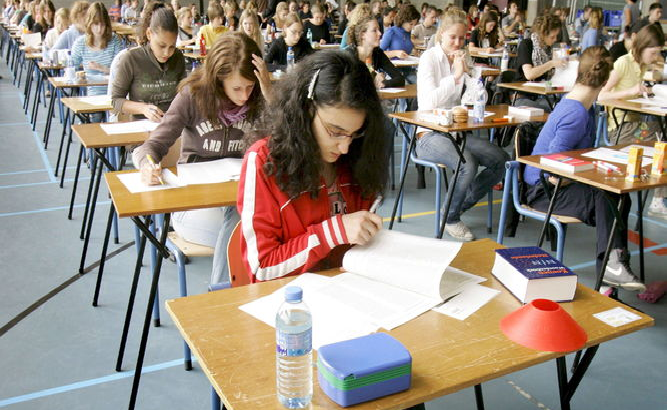
We’ve all been there. The sleepless night before the big day. The jittery journey to school. The handing over of the envelopes. The faces of parents keen to hear the news. The sound of celebration and sniffling echoing around the hall.

This familiar scene will play out across the country again over the next couple of weeks, as thousands of teenagers collect their A-level and GCSE results.

This year’s students have taken their exams in an educational pressure cooker. They’ve had to cope with new courses, tighter budgets (which have often meant bigger classes and fewer resources) and ever-rising governmental expectations on schools.

Teachers are under colossal pressure to deliver results and it is inevitable that we will have transferred some of this panic to at least some of our students. Little wonder, then, if they feel apprehensive as they line up on results day.

Related:Take it from an examiner, your students’ exam results could easily be wrong

Many students will have worked hard and been rewarded, and nothing should detract from their achievements. But let’s talk about the ones who are disappointed.

If we have given the impression, consciously or otherwise, that these exams will make or break their lives, then we will have created sense of failure in these young people. Add a load of friends proudly posting their dazzling results on social media, and you have a potentially toxic mix. But they shouldn’t despair. Here’s why.

First, I have marked GCSE and A-level exams. That grade may feel incredibly personal, but it’s not. Whoever marked it may well have marked dozens that day and in all likelihood will themselves have been under pressure to get through as many as they could as the deadline loomed. For them it was just another paper they had to mark before they could have dinner or go to bed. A low mark is not a personal slight.

Second, the reliability of marking is seriously questionable. The scale of the operation is massive: hundreds of people scattered all over the country attempting to mark thousands of scripts at the same level over the course of a few weeks. Many of them never even meet another examiner face-to-face. It’s a fact of life that some of them (sometimes quite a few of them) get it wrong. The exam boards do what they can to mitigate against this, but it’s an uphill battle.

But above that, what do exams actually test anyway? Memory, certainly. They test time management. They test elements of competence in individual subjects. But, ultimately, they really test how good a person is at sitting exams – and this is even more true with the demise of coursework from many areas of the curriculum.

They are infinitely less effective at testing passion, inspiration and potential. And I’ve yet to come across an exam that can assess honesty, loyalty or sense of humour.

I think about my students: the girl who was so nervous that she could hardly speak before giving a presentation but who persevered and nailed it. I think of the boy who put his hand up unprompted to say that he had really enjoyed it. I think of the girl who waited behind after nearly every lesson to clarify or expand on the points raised. And I think of the boy who set up a support and study group for other students who struggled with understanding English.

Related:How can we combat the teacher shortage in deprived areas?

Academic glory might not be on the cards for them, but I have no worries whatsoever about them carving their places in the world. They may not leave school with an array of A*s, but they have qualities that will stand them in good stead in whichever line of work they choose to pursue.

And if all that sounds a little airy-fairy, it’s worth stating that, while I can’t deny that academic results can open doors to certain careers, it’s certainly not the case that they are the only route to fulfilment and prosperity. Just look at the recent finding in Australia that plumbers and electricians earn up to twice as much as lawyers.

So good luck with results day. But let’s all of us, teachers, parents and students, whether things go our way or not, remember that there is far more to life.

Tomado de: https://www.theguardian.com/teacher-network/2016/aug/13/secret-teacher-students-need-to-know-bad-grades-arent-the-end-of-the-world

Comparte este contenido:

Nigeria: 54 Tertiary Students Renounce Cultism in Benue

Nigeria/19 de agosto de 2016/allafrica.com

Resumen: Al menos 54 estudiantes de diferentes instituciones terciarias en el estado de Benue ayer renunciaron al cultismo. Los cultistas arrepentidos fueron presentados al Comisionado de la Policía del estado, Bashir Makama, durante su interacción doncella con los jefes de las instituciones terciarias y los estudiantes por una organización no gubernamental conocida como Fundación Campus Cult Erradicación. Dos de los miembros del culto arrepentidos que hablaron en nombre de sus colegas masculinos y femeninos, dijeron que estaban cansados de hacer las cosas mal y querían llegar a ser mejores personas. Hicieron un llamamiento a la policía para garantizar la seguridad de sus antiguas fraternidades. Coordinador de la Fundación, Samuel Ejembi, dijo que la organización tenía que cargar con la garantía de que los estudiantes que participan en el cultismo renunciaron a sus actividades ilegales y ser rehabilitados. En respuesta, el comisario de la Policía dijo que el foro interactivo estaba destinado a identificar los problemas y proferir soluciones para comprobar cultismo. Aseguró a los estudiantes arrepentidos con protección policial.

 Noticia original:

Makurdi — At least 54 students from different tertiary institutions in Benue State yesterday renounced cultism.

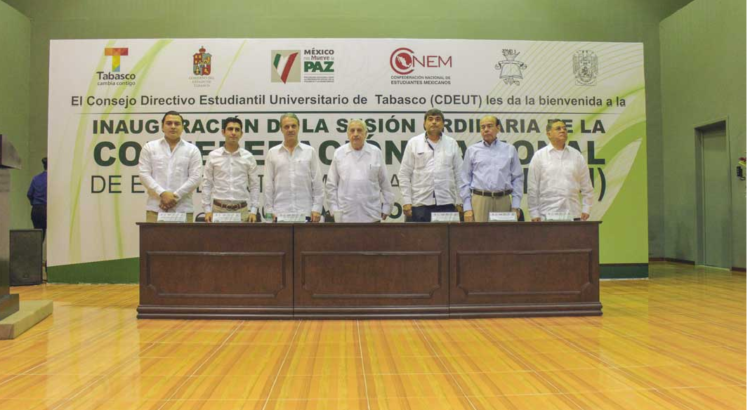
The repentant cultists were presented to the state Commissioner of Police, Bashir Makama, during his maiden interaction with heads of tertiary institutions and students by a non-governmental organisation known as Campus Cult Eradication Foundation.

Two of the repentant cultists who spoke on behalf of their male and female colleagues, said they were tired of doing the wrong things and wanted to become better people.

They appealed to the police to guarantee their safety from their former fraternities such as the Vikings and Red bra that might come after them for a pound of flesh.

Coordinator of the Foundation, Samuel Ejembi, said that the organisation was saddled with ensuring that students involved in cultism renounced their illegal activities and be rehabilitated.

Responding, the Police commissioner said the interactive forum was meant to identify problems and proffer solutions to check cultism. He assured the repentant undergraduates of police protection.

Tomado de: http://allafrica.com/stories/201608100577.html

Imagen: https://www.google.com/search?q=Students+Renounce+Cultism+in+Benue&source=lnms&tbm=isch&sa=X&ved=0ahUKEwitxoiN2MvOAhVCYyYKHe5QALsQ_AUICSgC&biw=1366&bih=667#imgrc=ouU5-mdu-usHmM%3A

Comparte este contenido:

Internet Usage and Educational Outcomes Among 15-Year-Old Australian Students

Australia/19 de agosto de 2016/e-learning-teleformacion.blogspot.com

Hoy traemos a este espacio para la lectura el estudio titulado «Internet Usage and Educational Outcomes Among 15-Year-Old Australian Students» del profesor ALBERTO POSSO de la  Royal Melbourne Institute of Technology, Australia, publicado en el International Journal of Communication 10(2016), 3851–3876Este economista, nos presenta el paper así: Children in rich countries are using the Internet for social networking and gaming at very high rates, particularly in Australia.

Resumen:

Este estudio se ocupa de si estas actividades afectan el rendimiento escolar en matemáticas , lectura y ciencias mediante la Organización para la Cooperación Económica y el Programa 2012 de Desarrollo de conjunto de datos de evaluación internacional de estudiantes . Los resultados sugieren que el uso de redes sociales en línea reduce el rendimiento académico. Por el contrario, jugar juegos en línea aumenta puntuaciones. Se argumenta que aunque ambas actividades se asocian con un alto costo de oportunidad de estudio, videojuegos potencialmente permiten a los estudiantes aplicar y afinar las habilidades aprendidas en la escuela . Faltar a la escuela, a falta de un año académico en el pasado  y de ser indígenas también son importantes predictores de bajo rendimiento.

This study addresses whether these activities affect educational achievement in mathematics, reading, and science using the Organization for Economic Cooperation and Development’s 2012 Program for International Student Assessment data set. The results suggest that using online social networks reduces academic achievement. Conversely, playing online games increases scores. It is argued that although both activities are associated with a high opportunity cost of study, video games potentially allow students to apply and sharpen skills learned in school. Skipping school, failing an academic year in the past, and being indigenous are also important predictors of underachievement. It is suggested that monitoring, counseling, and tutoring students who are at risk of failure may useful. Keywords: educational attainment, Internet use, online gaming, social networks, Australia

Para leer la investigación entrar en: [ slideshare vía International Journal of Communication ]

Tomado de: http://e-learning-teleformacion.blogspot.com/2016/08/internet-usage-and-educational-outcomes.html?utm_source=feedburner&utm_medium=feed&utm_campaign=Feed%3A+E-learningConocimientoEnRed+%28e-learning%2C+conocimiento+en+red%29

Imagen: https://www.google.com/search?q=Internet+Usage+and+Educational+Outcomes+Among+15-Year-Old+Australian+Students&espv=2&biw=1366&bih=667&source=lnms&tbm=isch&sa=X&ved=0ahUKEwiZt-a708vOAhWCpR4KHSflA9UQ_AUIBygC#imgdii=GbVPvWl9XRhjbM%3A%3BGbVPvWl9XRhjbM%3A%3BxPlnO5rB2UfhRM%3A&imgrc=GbVPvWl9XRhjbM%3A

Comparte este contenido:

Rwanda and Switzerland to Construct a VTC School

Ruanda-Suiza/19 de agosto de 2016/allafrica.com

Resumen:

El Gobierno de Ruanda, representado por el Ministerio de Educación, y Suiza, representado por la Agencia Suiza para el Desarrollo y la Cooperación (COSUDE), firmaron un memorando de entendimiento sobre el proyecto de la FTP: Promoción orientada al mercado La formación y la creación de empleo en los Grandes Lagos Región. El memorando de entendimiento fue firmado por el Ministro de Educación Dr. Papías Musafiri Malimba en nombre del Gobierno de Rwanda y el embajador en Ruanda RALF Heckner en nombre de Suiza. El apoyo de Suiza en la FTP, es un programa de 12 años de Promoción del Mercado Orientada La formación y la creación de empleo en la región de los Grandes Lagos con el objetivo de apoyar los esfuerzos de la Ruanda de mejorar el acceso, la calidad y la pertinencia del sistema de formación profesional. La atención se centra en la mejora cualitativa de la prestación de la FTP, una mayor accesibilidad para los segmentos más socio-económicamente desfavorecidos y vulnerables de la población rural en la Provincia Occidental, y el acceso a oportunidades de formación más diversificados. El programa se inició en 2012 y está siendo implementado en la Provincia Occidental por Swisscontact; una ONG suiza especializada en la formación profesional. primera fase de tres años terminados en 2015. En el nuevo acuerdo fase del Programa, Suiza financiará la construcción de un VTC en Nyabihu Distrito lo que hace un total de 6 CFPs en la provincia occidental y también continuar el apoyo y fortalecer la calidad de los centros construidos en la fase uno.

Kigali — The Government of Rwanda, represented by the Ministry of Education, and Switzerland, represented by the Swiss Agency for Development and Cooperation ( SDC) signed a Memorandum of Understanding on TVET project : Promoting Market Oriented Skills Training and employment creation in the Great Lakes Region.

The Mou was signed by the Minister of Education Dr. Papias Musafiri Malimba on behalf of the Government of Rwanda and the Ambassador to Rwanda RALF Heckner on behalf of Switzerland.

The Switzerland support in TVET, is a 12-year program of Promoting Market Oriented Skills Training and Employment Creation in the Great Lakes Region aiming at supporting the Rwanda’s efforts to improve access, quality and relevance of the TVET system. The main focus is on qualitative improvement of TVET provision, enhanced accessibility for the most socio-economically disadvantaged and vulnerable segments of the rural population in Western Province, and access to more diversified training opportunities.

The program started in 2012 and is being implemented in the Western Province by Swisscontact; a Swiss NGO specialized in vocational training. The Program’s first phase of three years ended in 2015. In the new phase agreement, Switzerland will finance the construction of one VTC in Nyabihu District thus making a total of 6 VTCs in western province and also continue support and strengthen the quality of the centres constructed in phase one.

Tomado de: http://allafrica.com/stories/201608080571.html

Imagen: https://www.google.com/search?q=Ruanda+y+Suiza+para+la+construcci%C3%B3n+de+una+Escuela+VTC&source=lnms&tbm=isch&sa=X&ved=0ahUKEwi-y7HH1MvOAhWL1x4KHdYzAkYQ_AUICCgB&biw=1366&bih=667#tbm=isch&q=Ruanda+y+Suiza+construcci%C3%B3n+de+una+Escuela+&imgrc=c1EbluLA-o9xiM%3A

Comparte este contenido:

Fundación española educa a docentes uruguayos en emociones

España/11 agosto 2016/www.elobservador.com.uy/Fuente: El Observador

La Fundación española Botín desembarcó en Uruguay, con el objetivo de comenzar a implementar en cinco centros educativos su programa Educación Responsable, un programa que procura promover el desarrollo emocional, social y creativo en niños y adolescentes, a través de la formación y el apoyo a los docentes. El objetivo es generar en los estudiantes una mejora del clima escolar que redunde en los centros educativos.

Con este propósito, días atrás visitó el país Adriana Yepes, directora del programa Educación Responsable, que en España coordina más de 210 centros educativos, y del cual Uruguay se ha convertido en la primera expansión fuera de frontera.

En diálogo con El Observador, Yepes explicó que la base del programa es la inteligencia emocional, en la cual se trabaja a través de diferentes dimensiones: la parte afectiva (autoestima, empatía, identificación y expresión emocional), la parte cognitiva (autocontrol, toma de decisiones, actitudes positivas hacia la salud) y la parte social (habilidades de interacción, de oposición asertiva y habilidades de comunicación).

Fuente: http://www.elobservador.com.uy/fundacion-espanola-educa-docentes-uruguayos-emociones-n952682

Comparte este contenido:

Nigeria: Unity Schools – Govt Bans PTA Levies

Nigeria/19 de agosto de 2016/allafrica.com

Resumen:

El Gobierno Federal ha prohibido la recaudación de la tasa de desarrollo por las Asociaciones de Padres y Maestros (PTA), en los 104 colegios de la unidad de todo el país, el Ministerio Federal de Educación dice. El Ministerio en un comunicado en Abuja el martes, dijo que la prohibición, destinada a aliviar el sufrimiento de los padres, entraría en vigor inmediatamente. La declaración fue firmada por Bem Goong, subdirector, prensa, en el ministerio. «No se permite el PTA de cualquier universidad unidad para iniciar cualquier proyecto de desarrollo en cualquiera de los colegios de la unidad sin la autorización expresa o por escrito del Ministerio Federal de Educación.

«Las nuevas medidas están destinadas a detener la tendencia impactante donde gravámenes de desarrollo impuestas a los padres por los ACP son cada vez más altos que los gastos de escolaridad exigidos por el gobierno que estableció las escuelas de la unidad», dijo el ministerio. El ministerio dijo que el Ministro, Adamu Adamu, había tomado nota de gravámenes excesivos PTA en Kings College, Lagos, y Federal de Ciencia y universidad técnica, Yaba, Lagos. Se dice que en las dos escuelas, tasas cobradas por JSS1 en primer término fue N69, 400 mientras que la colección era PTA N70, 000 en reyes y N74, 000 en Yaba.»Con esto, el total pagado por los padres en estas dos escuelas a N139, N143 y 400, 400 respectivamente. Con la reducción de los gravámenes de desarrollo y prohibición de cargos para nuevos proyectos, así como vinculación de la tasa de desarrollo hasta un máximo de N5, 000, los padres de JSS1 en estas dos escuelas pagarán ahora N88, 000. «Reconozco los papeles complementarios desempeñados por los padres y el apoyo proporcionado por el PTA a los colegios, pero no voy a permitir que los PTA se constituyen en un gobierno dentro de un gobierno a nivel de las escuelas de la unidad y, a expensas de los padres,» el ministerio citado Adamu por el diario. Se dice que Adamu expresó preocupación de que los ACP en los colegios unidad habían formado en asociaciones nacionales y dijo que la ejecución de otras organizaciones, como la Asociación Nacional de Padres y Maestros de Escuelas del Gobierno Federal (NAPTAFEGC), el aumento de la carga de los padres.

Noticia original:

The Federal Government has banned the collection of development levies by Parent-Teacher Associations (PTA) in the 104 unity colleges across the country, the Federal Ministry of Education says.

The ministry in a statement in Abuja on Tuesday, said the ban, aimed at alleviating the sufferings of parents, would take effect immediately.

The statement was signed by Bem Goong, deputy director, press, in the ministry.

«No PTA of any unity college is allowed to initiate any development project in any of the unity colleges without the express or written authorisation of the Federal Ministry of Education.

«The new measures are aimed at arresting the shocking trend where development levies imposed on parents by PTAs are becoming higher than the school fees charged by government which established the unity schools,» the ministry said.

The ministry said that the Minister, Adamu Adamu, had noted excessive PTA levies in Kings College, Lagos, and Federal Science and Technical College, Yaba, Lagos.

It said that in the two schools, fees charged for JSS1 in the first term was N69, 400 while the PTA collection was N70, 000 at Kings and N74, 000 at Yaba.

«This brings the total paid by parents in these two schools to N139, 400 and N143, 400 respectively.

«With the reduction on development levies and ban on charges for new projects as well as pegging of the development levy to a maximum of N5, 000, parents of JSS1 in these two schools will now pay N88, 000.

«I acknowledge the complementary roles played by parents and the support provided by the PTA to the colleges but I will not allow the PTAs to constitute themselves into a government within a government at the level of unity schools and at the expense of parents,» the ministry quoted Adamu as saying.

It said that Adamu expressed concern that PTAs in unity colleges had formed themselves into national associations and said that running additional organisations, such as National Parents and Teachers Association of Federal Government Colleges (NAPTAFEGC), increased the burden on parents.

The News Agency of Nigeria (NAN) recalls that NAPTAFEGC recently rejected an alleged 300 per cent increase in school fees of unity schools.

Gabriel Nnaji, National President of NAPTAFEGC, had told journalists that the alleged increase from N20, 000 to N75, 000, was unacceptable to parents.

He said that an average parent with more than a child in unity schools would not be able to afford the cost.

However, Adamu on Tuesday denied knowledge of the increment in fees.

Tomado de: http://allafrica.com/stories/201608100587.html

Imagen: https://www.google.com/search?q=Nigeria:+Unity+Schools+-+Govt+Bans+PTA+Levies&source=lnms&tbm=isch&sa=X&ved=0ahUKEwj83syU0MvOAhWRsh4KHXI2AIUQ_AUICSgC&biw=1366&bih=667#imgrc=LYtVVB-OlYrz2M%3A

Comparte este contenido:

Venezuela: Somos Poder Popular. Tecnología de Información libre en la comunidad organizada

Venezuela/19 de agosto de 2016/oei.es/Por: Sandra Carolina Castillo Acosta

IBERCIENCIA: Comunidad de Educadores para la Cultura Científica.
En la República Bolivariana de Venezuela proyectos que se ejecutan para el uso masivo de tecnologías de información, trascienden más allá del aula de clase y van hacia el poder popular a través de las comunidades organizadas, logrando que se involucren y apliquen estas tecnologías en su cotidianidad y sean parte de su sentido común. 

Iniciativas que buscan fortalecer el uso de las tecnologías de información se llevan a cabo más allá de las aulas de educación formal en la República Bolivariana de Venezuela, gracias a que existe en la Constitución del año 1999, otorgarle un papel fundamental a la ciencia y tecnología en el desarrollo económico y social del país y se desarrollan a partir de allí una serie de programas como el proyecto de Canaima Educativo que nace en el año 2008 y considera dos ejes fundamentales: Adquisición de computadoras específicamente para fines educativos y la instalación de una fábrica en Venezuela para ensamblaje y servicios de las mismas. Todo lo expuesto es parte de lo que conlleva a que grupos de comunidades organizadas desarrollen proyectos, que se amparan en el desarrollo y uso de las tecnologías libres.

Destacan algunas experiencias como “La Escuela una Fabrica del Saber…” que nace como semilla promotora de cambios y transformaciones desde lo local en el sistema educativo venezolano y que llevan los docentes que forman la Red Docente en Tecnologías Libres; otras iniciativas vista desde otra óptica pero con fines similares como lo es el trabajo en comunidad, surge en el año 2011 el “Club de Robótica de la Universidad de Oriente” (UDO) y tiene como misión “ Fomentar la creatividad y la innovación tecnológica en la comunidad universitaria de la zona norte del estado Anzoátegui, brindando las herramientas y el apoyo adecuado de un grupo multidisciplinario que, en colaboración mutua, puedan ayudar a desarrollar ideas y/o proyectos.”

Surgen otras tales como Caciquit@s que es un programa educativo que busca apoyar la educación formal con Tecnologías de Información en Software Libre, de manera de que profesores, tutores s y los niños y niñas, puedan estudiar desde sus canamitas (computadoras portátiles) de una formadiferente y divertida, donde su principal impacto va dirigido a que niños, niñas y adolescentes aprendan a aprender de una manera lúdica y divertida, fomentando su creatividad y forjando una educación liberadora a través del uso y aplicación de las tecnologías de información libres.

No debe dejarse a un lado que se han implementado en el país los Centros Bolivarianos de Informática y Telemática (CBIT), constituidos por aulas tecnológicas dotadas de computadoras, acceso a internet, servidores con sistema operativo y aplicaciones de Software Libre que permiten el desarrollo de actividades formativas con el apoyo de recursos didácticos y permiten el contacto directo de los niños, niñas y adolescentes con tecnología.

Se incluye en algunas escuelas técnicas públicas la especialidad de robótica siendo una referencia la que surge en la ciudad de Caracas y en el estado Carabobo, donde se imparten las menciones de electrónica, mecánica e industrial y los estudiantes se involucran en el uso de las tecnologías dentro de una estrategia de aprender haciendo y buscando el desarrollo de capacidades en esas áreas mencionadas.

Sin embargo, avanzando en esta búsqueda de ese poder popular apropiado de las tecnologías de información, se encuentran experiencias que tienen aún más trascendencias y aparecen las comunas tecnológicas como una llamada Don Luis Zambrano, quien lleva el nombre de un inventor venezolano autodidáctico. Esta comuna realiza una serie de actividades que busca fortalecer el uso y el desarrollo de las tecnologías libres, desde una visión global que va más allá de lo territorial.

Todas estas iniciativas que nacieron en la búsqueda de que las comunidades organizadas utilicen las tecnologías y que se fomente además el desarrollo y uso del software libre, se hace sentir al unísono de esas comunidades organizadas el “ser poder popular” , conjugados en colectivos, clubes, consejos comunales, comunas.

Tomado de: http://oei.es/divulgacioncientifica/?Somos-Poder-Popular-Tecnologia-de-Informacion-libre-en-la-comunidad-organizada

Comparte este contenido:
Page 5192 of 6186
1 5.190 5.191 5.192 5.193 5.194 6.186