Page 5289 of 6181
1 5.287 5.288 5.289 5.290 5.291 6.181

Australia:$1M Available in Education Grants

Oceania/Australia/31 Julio 2016/Fuente y Autor:probonoaustralia

Resumen: Dos rondas de subsidios de educación por un valor total $ 1 millón han puesto en marcha desde el Fondo de Impacto de aprendizaje para mejorar los resultados académicos de los niños australianos.

Two education grant rounds worth a total of $1 million have launched from the Learning Impact Fund to improve the academic outcomes for Australian children.

he first round is open to any education programs designed to improve the academic achievement of children in Australia. The second round is for programs focused on building resilience skills in students in Victorian schools.

The Learning Impact Fund is an initiative of the recently launched Evidence for Learning (E4L),  which has been incubated by Social Ventures Australia and supported by the Commonwealth Bank and the Education Endowment Foundation (UK) as a founding partner.

It is designed to identify, fund, evaluate and scale effective education programs in Australia.

“The fund also addresses the lack of rigorous evidence on the cost and effectiveness of educational practice in Australian schools,” Evidence for Learning’s director Matt Deeble said.

“The resilience round offers grants for program evaluation, and is a co-investment from E4L and VicHealth which has contributed $100,000 for program implementation and E4L, $50,000 for evaluation.

“The aim is to identify promising school-based initiatives that build social and emotional learning and resilience in Victorian students, which also improve academic achievement.”

He said E4L invites education program developers to apply for both grant rounds, including Not for Profit and for-profit organisations, Catholic education offices, charities, universities, government bodies and social enterprises.

“We want to empower educators with the very best information to make decisions about which programs and approaches to implement in their schools,” Deeble said.

VicHealth CEO Jerril Rechter said almost 75 per cent of mental illness begins before 25 years of age and it is crucial to take a preventative focus and proactively work to build resilience.

“In the 21st century young people will face a range of challenges including a more competitive job market, growth in technology and overexposure to online content so it’s important to build resilience early to help young people cope with life’s up and downs,” Rechter said.


Fuente de la noticia: http://probonoaustralia.com.au/news/2016/07/1m-available-australian-education-grants/

Fuente de la imagen: http://probonoaustralia.com.au/wp-content/uploads/2016/07/School-children-legs-RS.jpg

Comparte este contenido:

Francia: Português será integrado no sistema educativo francês

Europa/Francia/31 Julio 2016/Fuente y Autor: Jornal de Noticias

Resumen: La ministra de Educación de Francia, firmo un acuerdo en el cual el idioma portugues formara parte del curriculo escolar frances como lengua extranjera a partir del proximo año lectivo .

Acordo foi assinado em Paris com a ministra da Educação de França, Najat Vallaud-Belkacem
O ministro da Educação disse, esta segunda-feira, que o português passará, a partir do próximo ano letivo, a integrar os currículos do sistema escolar francês como língua estrangeira.

Os ministros da Educação de Portugal e França, Tiago Brandão Rodrigues e Najat Vallaud-Belkacem, respetivamente, assinaram, em Paris, uma declaração política para reforçar a cooperação bilateral no domínio da língua.

Com esta declaração, acima de tudo, conquistamos, por um lado, que o português possa ser ensinado em França como língua estrangeira viva, havendo a sua integração nos currículos do sistema escolar, isto é, em vez de ser uma língua supletiva, uma língua que complementava os currículos, a partir de agora, o português passa a fazer parte do sistema escolar, completamente integrado», disse à Lusa Tiago Brandão Rodrigues, contactado a partir de Lisboa.

De acordo com o ministro da Educação, «o português passará a ser tratado como as línguas internacionais mais difundidas, como o inglês, o espanhol, o italiano», facto que classificou como «muito importante».

Segundo um comunicado do Ministério da Educação português, a França fará a substituição do «Ensino de Língua e Cultura de Origem (ELCO)» no sistema escolar por um novo dispositivo, o «Ensino Internacional de Línguas Estrangeiras (EILE)», que começará a ser aplicado já no ano letivo de 2016/17.

Por outro lado, disse Tiago Brandão Rodrigues, essa mudança também é importante para a comunidade portuguesa, que terá acesso ao português integrado nos currículos e «porque existirá uma continuidade ao longo de todo o sistema escolar» do ensino da língua portuguesa, tanto no ensino básico como no secundário.

Permitirá ainda, segundo o ministro, o aumento de alunos que não são de origem portuguesa nos cursos de português, pois também vão ter acesso à língua portuguesa ao longo em todo o sistema escolar em França.

«Portugal irá continuar a dar todos os recursos que dava até aqui para o ensino do português em território francês e a França passa a dar mais recursos importantes para a consolidação da língua portuguesa», indicou o ministro.

Tiago Brandão Rodrigues sublinhou ser importante aprofundar a cooperação educativa e linguística em acordos futuros e manter um acompanhamento técnico regular do ensino do francês em Portugal e do português em França. «Portugal é pioneiro nessa iniciativa do Governo francês, que quer alargar esse compromisso com outras línguas», disse ainda.

Essa declaração política, afirmou Tiago Brandão Rodrigues, «acontece também essencialmente num quadro dos laços de amizade que existe bilateralmente, como se viu também nesses últimos tempos pelas visitas mútuas que aconteceram a ambos os países».

«Acima de tudo é importante entender que o francês e o português apresentam-se como línguas com dimensões internacionais, como línguas de trabalho de organizações internacionais, mas também línguas da ciência, línguas de culturas, línguas de comunicação», afirmou.

Para o ministro português, «era importante» ter «instrumentos para robustecer a aprendizagem e o ensino da língua, do português em França e do francês em Portugal».

Segundo a nota do Ministério da Educação, esta declaração conjunta traduz, «antes de mais, uma forte vontade política, uma vez que inaugura uma nova e ainda mais ambiciosa etapa de promoção recíproca do ensino do português e do francês nos sistemas educativos de ambos os países».

De acordo com o documento, a partir do trabalho que conduziu à assinatura desta declaração conjunta, ambos os ministros concordaram que seja celebrado até ao fim do ano um novo acordo de cooperação educativa.

O documento também foi assinado pelo ministro dos Negócios Estrangeiros de Portugal, Augusto Santos Silva.

Fuente de la noticia: http://www.jn.pt/nacional/interior/portugues-sera-integrado-no-sistema-educativo-frances-5304998.html

Fuente de la imagen: http://static.globalnoticias.pt/jn/image.aspx?type=generate&name=big&id=5304998&source=&w=744&h=495&t=20160725181700

Comparte este contenido:

India: Government called out for its failure to ensure the right to education

Asia/India/31 Julio 2016/Fuente y Autor: Education International

Resumen: Un nuevo informe de la Educación Internacional de edu-empresas que operan en Hyderabad y Delhi, India ha dado a conocer las desigualdades educativas en el sistema, mientras que la unión de los políticos, los sindicatos, así como los padres y profesores en torno a una causa común.

Politicians joined national and state leaders of Education International (EI)’s Indian member organisations, the AIPTF, AIFTO, and AISTF along with hundreds of concerned educators and families for the launch of EI’s latest research, Profiting from the Poor: the Emergence of Multinational Edu-businesses in Hyderabad, India. The study, co-authored by Sangeeta Kamat, Carol Anne Spreen and Indivar Jonnalagadda, raises serious concerns about the growing commercialisation and privatisation of education in India.

Findings show the government is creating exemptions for private providers with respect to national standards as they relate to teachers, curriculum and school facilities in India’s Right to Education (RTE) Act. It also reveals that disinvestment in public education has led to deterioration and closure of government schools. India’s education budget is a mere 3.8 percent of the gross national product, or GDG, which falls short of the minimum 6 percent recommended by the UNESCO Education 2030 framework.

As a result, fee charging for-profit schools targeting poor communities have become an expanding market in India, attracting the interest of global corporations and foreign investors. Families spend at least one-fifth of their monthly income per child to access primary education in these schools, with the costs increasing at higher grades.

Enrolment in private schools is now over 50 percent in the regions of Andhra Pradesh (AP) and Telangana and over 80 percent in Hyderabad alone.

The AP government has recently signed a Memorandum of Understanding to outsource its government schools to Bridge International Academies, an international chain of fee-charging for profit schools that has come under heavy criticism in Uganda, Kenya, and Liberia. Bridge has declared its intention to operate 4,000 schools in AP.

Free quality education, a core State obligation

“Education provided by private proprietors or edu-businesses is neither free nor equitable”, stated UN special rapporteur on the right to education, Kishore Singh, at the launch event in Delhi. “This is in gross contradiction with the Sustainable Development Goal 4 set by the international community in 2015 and endorsed by the government of India”.

Singh urged the government to protect education from its commercialisation and make it a legal requirement for edu-businesses to meet essential conditions to ensure the right of all students to quality education.

“No private schools should be allowed to employ under-qualified teachers and to de-professionalise teaching”, said Singh . “In the Indian culture, teachers were highly regarded and respected. Valorising the teaching profession is of key importance today. Teachers are the custodians of quality education.”

Education International’s Angelo Gavrielatos emphasised the need for building community alliances with parents, students and civil society to halt the growing commercialisation of education. “The danger of governments outsourcing education activities to profit-making corporations is that it poses at risk not only public education systems themselves, but also their ability to promote democracy, social cohesion and equity.”

The India report is part of EI’s global effort to expose and reverse the trend of commercialisation and privatisation of public education.


Fuente de la noticia: https://www.ei-ie.org/en/news/news_details/4050

Fuente de la imagen: https://www.ei-ie.org/kroppr/eikropped/Kishore_Singh_146943064314694306431328.jpg


Comparte este contenido:

Furor en el mundo por juego de realidad aumentada de Pokémon Go

31 Julio 2016/Fuente y Autor: Ambito

El videojuego de aventura de «realidad aumentada» Pokémon Go está causando furor en Estados Unidos, donde millones de usuarios buscan personajes virtuales ocultos en el mundo real con la ayuda de sus teléfonos móviles.

El videojuego, desarrollado por Niantic Inc. y distribuido por la japonesa Nintendo, debutó en EE.UU., Australia y Nueva Zelanda hace tan solo una semana, pero su popularidad es tal que ha provocado ya varios colapsos de los servidores en los que se aloja.

El juego ha logrado también rebasar los 65 millones de usuarios diarios que la red social Twitter tiene en Estados Unidos y ha generado aglomeraciones urbanas insospechadas para los no iniciados.

La fiebre ha ayudado también a disparar las acciones de Nintendo, que se han apreciado un 56,65 por ciento en la Bolsa de Tokio entre el pasado jueves y hoy gracias al éxito de ventas de Pokémon Go.

A diferencia de lo que suele ser tradicional con los videojuegos, Pokémon Go no se juega en el sofá sino en calles, parques, playas y otros enclaves del mundo real, que aparecen reflejados en la pantalla del jugador y donde se ocultan los personajes ficticios.

El sistema es sencillo. El juego utiliza el sistema de posicionamiento global del teléfono inteligente del usuario, así como su reloj, para detectar dónde y cuándo está el jugador en la vida real y dentro del juego, para hacer «aparecer» un personaje de Pokémon cerca de él, que se ve en la pantalla del teléfono, para que el usuario pueda «atraparlo».

A medida que el jugador se mueve, dependiendo del lugar y la hora, aparecen más y más variados tipos de personajes de Pokémon. Esta unión de juego en la realidad física y la virtual es lo que en el argot de los videojuegos se conoce como «realidad aumentada».

En la ciudad californiana de Santa Mónica, por ejemplo, cientos de jugadores deambulaban este lunes por la noche por el puerto armados con sus teléfonos a la caza de un Pokémon.

La escena era similar a la que se vivió, ese mismo día, en el emblemático parque neoyorquino de Central Park, donde cientos de jóvenes apuntaban con sus móviles a árboles y otros lugares del parque en búsqueda de los codiciados personajes de ficción.

La caza de los Pokémon ha conducido también a extraños descubrimientos, como el hallazgo de una joven en el estado de Wyoming que encontró un cadáver mientras jugaba.

«Iba caminando hacia el puente a lo largo de la costa cuando vi algo en el agua. Me llevó unos segundos darme cuenta de que era un cuerpo», explicó a los medios locales este fin de semana la joven de 19 años Shayla Wiggins, quien deambulaba en búsqueda de un Pokémon cuando se encontró el cuerpo.

La histeria por Pokémon Go está cobrando tales dimensiones en EE.UU. que ha habido departamentos de policía que han emitido advertencias para que se adopten ciertas precauciones y no permitan verse tan absorbidos por el juego descuidando su seguridad, tal y como la aplicación lo sugiere desde el primer momento.

«Están llegando montones de informaciones sobre situaciones de peligro», sobre todo por la distracción de peatones y conductores por estar jugando, informó hoy el Consejo Nacional de Seguridad.

«Lo que está hecho para ser un juego divertido puede tener consecuencias trágicas en la vida real si estás manejando o cruzando la calle», advirtió hoy el Departamento de Vehículos de Nueva York.

Los comercios locales tratan también de aprovechar la popularidad del juego, con carteles que proponen a los transeúntes que hagan una parada en sus instalaciones para cazar algún monstruo inesperado.

La realidad aumentada permite situar elementos virtuales en el mundo físico y ha hecho posible, en este caso, que los aficionados del vídeojuego distribuido por Nintendo recorran las calles ayudados por mapas virtuales y buscando con sus cámaras Pokémon.

La sensación por el juego se ha hecho tan grande en Estados Unidos, que está a punto de superar a Twitter en términos de usuarios activos diarios de teléfonos con sistema android.

El juego, que está disponible para los sistemas android e iOS y cuya descarga es gratuita, se basa en el universo de criaturas fantásticas que popularizaron los juegos de ordenador y los dibujos animados Pokémon, que surgieron a finales de la década de 1990.

En la nueva versión hay 151 criaturas, aunque el catálogo que se desarrolló antiguamente llegó a tener más de 700, y además de cazar a los personajes, el juego tiene directores de gimnasio y entrenadores contra los que los jugadores pueden luchar.

Aunque aún no se ha concretado, los avances promocionales que han sacado los promotores del videojuego adelantan que en un futuro se podrá jugar a Pokémon Go con varios jugadores a la vez para compartir la experiencia con los amigos.


Fuente de la noticia: http://www.ambito.com/846790-furor-en-el-mundo-por-juego-de-realidad-aumentada-de-pokemon-go

Fuente de la imagen: http://media.ambito.com/diario/2016/0712/imagenes/not_846790_12_200024.jpg

Comparte este contenido:

Nigeria: NUC suspends admission into NOUN’s law programme

África/Nigeria/31 Julio 2016/Fuente y Autor: Premiumtimesng

Resumen: La Comisión Nacional de Universidades (NUC) ha puesto sobre la admisión de retención en el programa de derecho de la Universidad Nacional Abierta de Nigeria , el Prof. Julio Okojie, Secretario Ejecutivo de NUC . El consejo ha argumentado que la enseñanza y el estudio de la ley fue clínica y no se pueden hacer por correo. El Sr. Okojie confirmó que los estudiantes nigerianos en la diáspora se transfieren a las universidades locales no sólo a causa de la crisis de divisas, sino también para mejorar el nivel de educación universitaria.

The National Universities Commission (NUC) has put on hold admissions into the law programme of the National Open University of Nigeria (NOUN), Prof. Julius Okojie, NUC’s Executive Secretary has, said.

Mr. Okojie said on Thursday that the moratorium would be in place pending the resolution of issues with the Council on Legal Education (CLE).

The CLE has persistently disallowed NOUN’s law graduates from being admitted into the Nigerian Law School.

The council has argued that the teaching and study of law was clinical and cannot be done by correspondence.

«This matter is being addressed because it is between us, CLE and the university.

«What we have done in the interim is stop new intake into that programme so that they do not have a backlog; we are addressing the issue.

«I must say that the law programme in National Open University (NOUN) was approved by the NUC; it is our responsibility.

«When CLE came up with the idea of no part time law, NOUN did not consider law a part time programme by their mode; so they did not stop the programme.»

According to him, NOUN’s law programme is not conceived as part time as there is no need studying if one will not attend law school.

He urged CLE to admit NOUN’s law graduates and give the institution its quota in terms of how many students they could admit.

Mr. Okojie confirmed that Nigerian students in the Diaspora were transferring to local universities not just because of forex crisis but also for improving standard of university education. (NAN)

Fuente de la noticia: http://www.premiumtimesng.com/news/more-news/206953-nuc-suspends-admission-nouns-law-programme.html

Fuente de la imagen: http://media.premiumtimesng.com/wp-content/files/2015/08/Okojie.jpg

Comparte este contenido:

México: Invento que puede ser la solución a la sequía en el mundo

América del Norte/México/31 Julio 2016/Fuente y Autor: Diarioecologia

El ingeniero mexicano, Sergio Rico, ha creado un polvo cuyas propiedades permiten almacenar agua durante más de un mes con el fin de resolver los problemas de escasez de agua que sufren muchas regiones del país. Este singular método de riego controlado, bautizado como lluvia sólida, está siendo utilizado con éxito por agricultores mexicanos y ya se exporta a otros países del mundo como España.

Su capacidad para absorber hasta 200 veces su peso en agua, convierte este polímero inocuo biodegradable en una potencial herramienta de retención de agua, para luego liberarla de forma paulatina en el momento oportuno de la siembra. El Acrilato de Potasio, al hidratarse con agua de lluvia, se transforma en un gel capaz de retener este preciado líquido durante 40 días. De forma que las raíces puedan estar hidratadas sin tener que esperar a la temporada de lluvias, dándole a la planta mayor tiempo para su desarrollo y posterior recolección.

La técnica de aplicación de este producto es bastante simple, y se reduce a extender el polímero sobre la base de los árboles y plantas, a la espera de que se hidrate con las lluvias y retenga el líquido suficiente como para garantizar el grado óptimo de humedad en las raíces durante las próximas 6 semanas.

El sistema reutiliza el agua de las precipitaciones ocasionales, que de otra forma se perderían en el subsuelo. Pero se puede utilizar también como método alternativo al riego por goteo, por su capacidad de controlar el grado de hidratación de los cultivo sin tener que recurrir a la compleja infraestructura hidráulica de este sistema de riego, o también, como solución paliativa para aquellos terrenos de cultivo, que por su ubicación, presentan serias dificultades para acceder a la red de riego.

Tras los ensayos realizados en varios cultivos de maíz del estado mexicano de Jalisco, la lluvia sólida consiguió multiplicar hasta por cinco la productividad obtenida con el sistema tradicional de riego a manta.

Según el responsable del invento, tan solo se requieren 25 kg de producto por hectárea de cultivo, permitiendo un ahorro del 80% en los costes de producción. Asegura que se reduce el volumen de agua y de fertilizantes a lo estrictamente necesario, y requiere menor mano de obra y consumo de energía durante el proceso.

El director de Ingeniería en Desarrollo Sustentable del Tecnológico de Monterrey, Carlos Ortiz, avala el éxito de la lluvia sólida en la zona sur y sureste del país, pero también pone de relieve las reticencias de los productores mexicanos a utilizar este polímero biodegradable de riego por su arraigo a los métodos tradicionales de cultivo.

Rico fundó la empresa Silos de Agua en 2002 con el fin de comercializar el producto entre los productores mexicanos. La eficacia de la lluvia sólida ha traspasado las fronteras del país y ya se comercializa en Argentina, Ecuador, India, Rusia, Perú, España, Emiratos Árabes Unidos y próximamente se espera llegar también a Haití.


Fuente de la noticia: http://diarioecologia.com/el-invento-mexicano-que-puede-ser-la-solucion-a-la-sequia-en-el-mundo/?doing_wp_cron=1469500216.2693729400634765625000

Fuente de la imagen: http://farm2.staticflickr.com/1589/24800186695_e29f0b7710_z.jpg


Comparte este contenido:

Rwanda: Evening classes should be handled with extra care

África/Rwanda/31 Julio 2016/Fuente:Newtimes /Autora: Cristine Osae

Resumen: Alta matrícula, horarios de trabajo del alumno en conflicto, y la pura comodidad de clases una vez a la semana han empujado a muchas universidades para programar cursos nocturnos.  Las clases nocturnas traen desafíos especiales de enseñanza. Estos estudiantes tienden a interactuar socialmente más de estudiantes de día, lo que exige intervenciones instructor frecuentes para mantener la calma y el orden, y muchos vienen a clase abrumado, hambrientos y cansados.

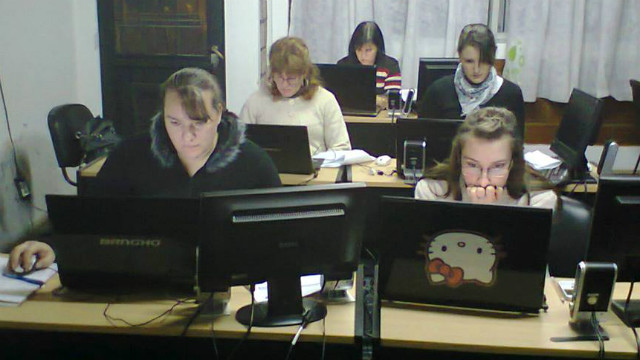
High enrollments, conflicting student work schedules, and the sheer convenience of once-a-week classes have pushed many universities to schedule evening courses.

Held from 6pm to 9pm or 7pm to 10pm, these classes at some institutions are typically packed, sometimes with more than 100 students in a large lecture theater. How can faculty effectively teach, control, or even simply keep awake the students in such classes, many of whom start their days very early in the morning with unimaginable responsibilities?

Those out in the working world would agree that it’s just not often practical to get time to up-skill and, as a result, full-time education isn’t an option. Part-time or evening courses represent a more practical alternative. Make no mistake; gaining work experience is absolutely vital in improving your employability status. An evening course provides a student with the time needed to gain valuable work experience that perhaps a full-time student may not have.

However, one can agree that it is tedious because classes are taken when one is too exhausted. In addition, balancing school work and employment is quite a crack-down. Plus, one may not get to consult with the lecturers or even get time for extensive reading because time is a luxury. Nevertheless, with the right attitude comes the determination to excel. If anything, what are the options?

Evening classes bring special teaching challenges. These students tend to interact socially more than day students, necessitating frequent instructor interventions to maintain calm and order, and many come to class overwhelmed, hungry and tired. In addition, there are the usual challenges: poor lighting conditions in many large lecture theaters; lack of, or poor-quality, audiovisual equipment; and distractions caused by student electronic devices such as cell phones, iPods, or laptops. Under such conditions, even the most ardent instructor can become frustrated.

How educators can help

In most large evening classes, there is always a mix of students, ranging from the highly motivated to the couldn’t-care-less types. To enhance student engagement and maintain interest, one ought to incorporate strategies such as combining audiovisuals (PowerPoint presentations, short video clips, and transparencies) with class discussions and activities. Doing so is challenging in large classes set in «lecture-only» theaters. However, passionate educators are quite creative and can improvise.

Although PowerPoint isn’t exactly a brand-new technology, most traditional lecturers would rather use chalk or markers. This is not to ridicule chalk or markers but rather call for more creativity. The argument is that use of illustrations and pictures interspersed with text slides as much as possible may engage the student’s interest. Many students are usually relatively fresh at the beginning of class and are likely to remain attentive through the whole lecture should you make it stimulating and relatable. A point noteworthy is that PowerPoint presentations can make learners passive unless the lecturer involves them.

Intergroup questions are equally an amazing approach with evening students. Before the first class meeting of a semester, organise students in groups of five to ten and post group numbers and the names of group members on a notice board, where students can access them. During the first meeting, call students’ names and ask them to move into their groups for a «get-to-know-each- other» session and information exchange. To maintain regularity, ask group members to stay with their groups at the same location in the lecture theater in future meeting sessions. Each group can prepare intergroup questions for other groups to answer, or the lecturer can assign topics for discussion. With these groups, a lot can be achieved within the lecture room.

This system works well in a number of ways. It encourages students to read course material ahead of time; helps the instructor cover course content and explain concepts and material that are not clear during the question-and answer session; keeps students motivated and energized by requiring individual responsibility, attention, and group commitment (no one wants to be blamed for letting the group down); encourages active participation among students, allowing them to develop and polish their oral communication skills; gives students a sense of owning the questions and the learning; and creates excitement and a sense of achievement, especially if group members answer their questions correctly.

Short quizzes also come in handy if the evening students are to be kept on toes. During the last ten to fifteen minutes of each evening session, an optional extra-credit quiz worth ten to fifteen points can be given. The quiz, which can be multiple-choice, is given on a projection screen (eliminating unnecessary copying). Of course during the quizzes, the instructor has to remain vigilant, moving around the room to discourage students who whisper to each other, exchange answer sheets, or check their notes. All the points students accumulate over the weeks can be put into a «point savings account» that students can see on the board. The «fatter» the account gets, the more motivated students become to keep it high.

The quiz is very popular and has obvious benefits. It allows students to monitor their understanding of the lecture session’s material right away; it gives the instructor feedback about the quality of instruction and student understanding; it motivates (or forces) students to stay for the entire class, as the quiz is administered at the very end; it encourages students to pay attention to the material presented (because of the pressure of immediate assessment); it allows the instructor to monitor daily attendance; and it saves the instructor’s time, because some of the quiz questions can be rephrased and used on midterms and the final.

Today, with an increasing number of nontraditional students returning to school, we are challenged to develop creative and innovative ways to make our classes work for them and to make our course material relevant to their daily lives. Evening classes, which afford these students flexibility and convenience, are one way to meet their needs.

Fuente de la noticia: http://www.newtimes.co.rw/section/article/2016-07-20/201861/

Fuente de la imagen: http://footage.framepool.com/shotimg/qf/799929145-banco-de-escuela-curso-para-adultos-nairobi-asistencia-a-la-escuela.jpg

Comparte este contenido:
Page 5289 of 6181
1 5.287 5.288 5.289 5.290 5.291 6.181