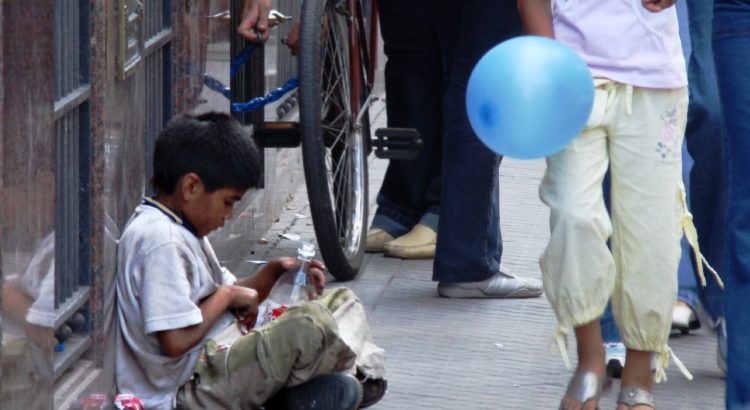
¿Qué importa más? ¿Debatir porcentajes que representarían en la óptica de las distintas tendencias políticas los niños que ocupan con adultos los colchones que se desparraman en las noches por las recovas de Paseo Colón, Leandro Alem, algunas calles céntricas, como el lateral del edificio Del Plata (próximo al obelisco), la terminal de ómnibus de Retiro o las estaciones de tren y subte; o aunar esfuerzos de una buena vez para revertir esa realidad visual, tangible, dolorosa?
Pero, a veces, un trabajo de investigación como el que hicieron recientemente CIPPEC, UNICEF, FLACSO y el Ministerio Desarrollo Humano y Hábitat de la Ciudad de Buenos Aires, que se basó en la última información censal disponible (Censo Nacional de Población y Vivienda de 2010) para la Ciudad Autónoma de Buenos Aires, permite identificar cómo se distribuyen las carencias en el mapa citadino.
Y así surge que los barrios que presentan mayor índice de vulnerabilidad social en chicos de 0 a 4 años son, al mismo tiempo, los que mayor porcentaje de esa franja etárea poseen en la capital federal, como Villa Soldati, Villa Riachuelo y Villa Lugano, en una primera línea; y La Boca, Barracas, Parque Patricios y Nueva Pompeya, un escalón más abajo. Se la mide por
> la tasa de mortalidad infantil,
> la proporción que asiste a algún establecimiento educativo, y
> el tipo de alimentación que recibe.
Sin embargo, ninguna de esas comunas marcha al frente del índice de mortalidad infantil, que encabezan Villa Real, Monte Castro, Versalles, Floresta, Vélez Sarsfield y Villa Luro, en un primer plano. A pesar de que las caracteriza un nivel socioeconómico más relegado muestran un mejor acceso a la educación relativo; San Cristóbal y Balvanera, vienen en la tanda siguiente de la mortalidad infantil, y luego Flores y Parque Chacabuco.
Lo que sí, no figuran ni a placé en la medición de asistencia escolar, liderada por
> Palermo,
> con Belgrano, Núñez y Colegiales en 2do. término;
> Coghlan, Saavedra, Villa Urquiza y Villa Pueyrredón, en un 3er. nivel, y
> Caballito en el 4to.
——————
Población 0-4 años sobre el total
1) Soldati, Villa Riachuelo, Villa Lugano,
2) Boca, Barracas, Parque Patricios y Nueva Pompeya 8,9 y 7,1% respectivamente.
3) Flores, Parque Chacabuco ,
4) Parque Avellaneda, Liniers y Mataderos
——————
El relevamiento da como resultado lo que es por todos conocido: en una división arbitraria norte-sur del plano municipal,
> la educación campea en los barrios que están hacia el lado del río de la Plata,
> mientras que la salud infantil flaquea yendo para el lado del Riachuelo.
Raúl Mercer, reconocido médico sanitarista argentino, señala que la posibilidad de estar sano/enfermo “depende más del código postal que del código genético”.
En este mismo sentido, según la OMS “el 24% de las enfermedades a nivel global se debe a factores medioambientales. La cifra se eleva hasta el 33% en el caso de los niños, demostrando el enorme impacto que el medio ambiente puede tener en los niños, en sus expectativas y en su derecho a la vida y a disfrutar del más alto nivel de salud posible”.
Estos datos marcan la necesidad de mirar y privilegiar a la infancia. Según Mercer, «Hace unos años, desde Fundación Arcor, postulamos que “la infancia es la medida”, lo cual quiere decir que la situación de los niños puede ser tomada como indicador de cómo estamos como sociedad. Si logramos construir un ambiente en donde nuestros niños estén bien, todos los ciudadanos lo estarán. De esta manera y siguiendo al pedagogo italiano Francesco Tonucci, postulamos que “elegir a los niños como brújula para hacer política y ejecutarla asegura que no solo beneficiará a los mismos niños sino a la comunidad toda”.
Centros de Primera Infancia
Por su parte, CIPPEC, UNICEF, FLACSO y el Ministerio Desarrollo Humano y Hábitat de la Ciudad de Buenos Aires expusieron len la Usina del Arte las conclusiones de un estudio sobre la atención que brinda el gobierno de la Ciudad, a través de 64 Centros de Primera Infancia (CPI) creados desde hace 5 años en toda la jurisdicción, acerca del crecimiento y desarrollo saludable de casi 9.000 niños y niñas de 45 días a 4 años de edad en situación de vulnerabilidad social. Se puso de relieve que, efectivamente, las comunas en las que el programa tiene presencia son aquellas que muestran situaciones de mayor vulnerabilidad social.
En términos generales, esto se verifica tanto al considerar la situación de cada comuna (medida a través del Índice de Vulnerabilidad Social) como así también indicadores sectoriales específicos, propios de las áreas de Salud y Educación.
——————
Vulnerabilidad social
Villa Soldati, Villa Riachuelo, Villa Lugano
Boca, Barracas, Parque Patricios y Nueva Pompeya
Retiro, San Nicolás, Puerto Madero, San Telmo, Monserrat y Constitución
Parque Avellaneda, Liniers y Mataderos
Flores y Parque Chacabuco (*) menos proporcionalmente a la cantidad de niños.
——————
Estuvieron en la presentación Guadalupe Tagliaferri, ministra de Desarrollo Humano y Hábitat de la Ciudad Autónoma de Buenos Aires, Fernando Straface, secretario General del Gobierno de la Ciudad de Buenos Aires,Gala Díaz Langou, directora del Programa de Protección Social de CIPPEC,Fabián Repetto, investigador principal del Programa de Protección Social de CIPPEC, Sebastián Waisgrais, especialista en Monitoreo de Derechos e Inclusión Social de UNICEF Argentina, y Rosalía Cortés, de la Facultad Latinoamericana de Ciencias Sociales (FLACSO).
“Los CPI transforman la vida de los niños pero también las de las familias y las de la comunidad. En este sentido, las docentes, auxiliares y demás personal de los centros son quienes realmente hacen que 8.900 niños tengan una vida mejor”, afirmó Guadalupe Tagliaferri, ministra de Desarrollo Humano y Hábitat de la Ciudad.
El 99% de los padres encuestados calificó positivamente el trabajo de los CPI. Consultados acerca de los motivos de esa valoración, las respuestas más frecuentes aluden al trato que reciben tanto sus hijos/as como ellos mismos, lo que los niños/as aprenden en el CPI, y el profesionalismo de quienes trabajan allí. Otro dato ilustrativo acerca de la conformidad de las familias con los servicios que ofrece el CPI es el hecho de que el 87% de los consultados respondió que su hijo/a siempre tiene ganas de concurrir.
Al ser consultados sobre las acciones de promoción de la salud y nutrición de los CPI, el 97% valora positivamente la calidad y variedad de los alimentos que se ofrecen a los niños, el 96% valora positivamente los controles de salud y vacunación, el 95% valora positivamente los controles periódicos de peso y talla, y el 92% valora positivamente las charlas y actividades de prevención. También en el caso de la estimulación temprana y formación, un muy alto porcentaje de padres (99%) valoró positivamente las acciones de estimulación temprana y formación desarrolladas en los CPI.
“Algo que detectamos con este trabajo es que los CPI le permitieron a más de la mitad de los padres insertarse en el mercado laboral, o continuar con su trabajo. Esto trajo un impacto no solo en los ingresos familiares sino también en la tranquilidad del cuidado de los chicos”, afirmó Rosalía Cortés, de la Facultad Latinoamericana de Ciencias Sociales (FLACSO).
Entre algunos de los desafíos que se detectaron para mejorar la gestión de los CPI, se mencionaron los de mejorar las relaciones y condiciones laborales de quienes trabajan en los centros, fortalecer la articulación con otros sectores de Gobierno (especialmente con Salud y Educación), y ampliar el horario de atención, para permitir una mayor participación laboral de las familias en general y de las madres en particular.
——————
Mortalidad infantil
Villa Real, Monte Castro, Versalles, Floresta, Vélez Sarsfield, Villa Luro
San Cristóbal, Balvanera,
Flores, Parque Chacabuco
Boca, Barracas, Parque Patricios, Nueva Pompeya
Vila Soldati, Villa Riachuelo, Villa Lugano
——————
El censo callejero
El mapa de la vulnerabilidad, en realidad, no hace más que localizar por zonas lo que cualquiera puede ver caminando por las calles porteñas o transitando en vehículos públicos o privados. Chicos desatendidos y a la deriva, en situación de indigencia, mal nutridos, mal vestidos y mal queridos mala distribución del ingreso y de la riqueza, vulnerables a la explotación, malos tratos, violencia y discriminación.
Pero yendo a los números, un reporte realizado por la Subsecretaría de la Familia, dependiente del Ministerio de Desarrollo Social a mayo de 2015 daba cuenta que en el ámbito porteño existen 27 familias involucradas en situación de calle, con 49 niños que revistan como tales, de los que 33 son varones y 15 niñas. Lavan vidrios 8, venden en la vía pública 10, abren y cierran puertas de taxis y remises en forma habitual 7 y mendigan dinero 10.
Ninguno de los registrados en sus legajos pernocta en la calle, afirma, y que el 95% de los que están sujetos de protección en los términos de la Ley N° 5357 se encuentran escolarizados, y que sus familias de origen o extensas a su cargo son beneficiarias de diferentes programas sociales, a saber; Asignación Universal por Hijo; Progresar; Familias que incluyen; Pequeño Hogar; Acompañamiento y Supervisión en Territorio; Programa Abrigo; Vales Pro- Familia y de asistencia material directa, siempre que se den las condiciones establecidas para cada uno de los dispositivos enumerados.
Este relevamiento oficial abarca hasta preadolescentes e incluye a los más pequeños, por lo que sirven sólo para tener una idea de las dimensiones de la jurisdicción de la Capital Federal, que según los economistas Jorge Paz, Javier Curcio y Sebastián Waisgrais no son representativas de lo que sucede en todo el país, para quienes, según investigaron, la probabilidad de que un niño residente en el noroeste argentino sea pobre es 6,5 veces más elevada que la de un niño de CABA.
Difieren sustancialmente con los resultados difundidos por el gobierno de la Ciudad estimaciones como las difundidas hace poco por C5N, que en los zócalos consignaba que existen alrededor de 18.500 personas en situación de calle, de las cuales 4.500 son niños y 2.000 abuelos. Y que en total se cuentan 5.000 familias.
El presidente Macri, que se comprometió a terminar con la pobreza, asumió con casi 5 millones de niños y adolescentes (0-17 años) del país que viven en hogares situados bajo el umbral de la pobreza, de acuerdo con el último Barómetro de la Deuda Social de la Infancia de la Universidad Católica Argentina (UCA). Si fuera por metas estadísticas, su antecesora en el sillón de Rivadavia, Cristina Kirchner, ostenta haber bajado 3 puntos ese índice en su segunda presidencia, por el efecto que tuvo la Asignación Universal por Hijo.
Pero así y todo, 1,1 millón viven en hogares que ni siquiera cuentan con ingresos para adquirir la canasta básica alimentaria.
El informe de UCA comienza con esta medición tradicional de la pobreza, pero añade también cifras sobre la pobreza multidimensional que son aún peores: un 56,2% de los menores argentinos -es decir, casi 6,9 millones- tiene insatisfecha al menos una necesidad básica.
La cifra es más alta que la que difundió Unicef el pasado mayo, porque el organismo de Naciones Unidas consideró como pobres sólo a aquellos niños con al menos 3 necesidades básicas insatisfechas, si bien en otra medición añadió a las privaciones en información (acceso a internet, TV, teléfono fijo y móvil, computadora), protección contra la violencia doméstica, salud y el tiempo para jugar son, en ese orden, las más importantes en la Argentina.
——————–
Asistencia escolar
Palermo
Belgrano, Núñez, Colegiales
Coghlan, Saavedra, Villa Urquiza y Villa Pueyrredón
Caballito
Villa Real, Monte Castro, Versalles, Floresta, Vélez Sarsfield, Villa Luro (*)
———————
Hambrientos en el granero
Entre las privaciones que sufre la infancia argentina resulta especialmente grave la falta de alimentación. En un país que produce alimentos para 400 millones de personas -casi 10 veces su población- un 4,6% de los menores padeció episodios de hambre en 2015 y no contó con ningún tipo de alimentación gratuita, ya sea un comedor comunitario o la escuela, donde los niños se aseguran de recibir al menos un plato de comida al día. Según el Barómetro, la cifra se redujo 3 puntos porcentuales en el periodo estudiado.
«Sucede que no necesariamente todos los niños asisten a la escuela»,explica Ianina Tuñón, la investigadora responsable del informe, basado en 5.700 casos de aglomerados urbanos de más de 80.000 habitantes.
Tuñón destaca que un 5% de los chicos entre 4 y 17 años no van a la escuela, pero la cifra se dispara hasta el 70% en los menores de 4 años, cuando la educación no es obligatoria.
Como consecuencia, los más pequeños son también los más desprotegidos, ya que para los hogares más pobres el colegio no ofrece solo educación sino que también garantiza asistencia sanitaria y alimentación.
Precisamente, garantizar la enseñanza pública obligatoria a partir de la sala de 4 fue uno de los ejes de campaña de Cambiemos.
Un 18,7% de la infancia argentina vivía a fines de 2015 en casas sin agua corriente ni inodoro con descarga, 7,5 puntos porcentuales menos que en 2010, mientras que un 22,9% padecía condiciones de hacinamiento en el hogar.
Sin necesidad de consultar tanta estadística, Eduardo Galeano escribía en los ’90 en su obra Los Alumnos: “Día tras día, se niega a los niños el derecho a ser niños. Los hechos, que se burlan de ese derecho, imparten sus enseñanzas en la vida cotidiana. El mundo trata a los niños ricos como si fueran dinero, para que se acostumbren a actuar como el dinero actúa. El mundo trata a los niños pobres como si fueran basura, para que se conviertan en basura. Y a los del medio, a los niños que no son ricos ni pobres, los tiene atados a la pata del televisor, para que desde muy temprano acepten, como destino, la vida prisionera. Mucha magia y mucha suerte tienen los niños que consiguen ser niños”.
El tiempo transcurre, se discuten porcentajes, pero las historias de niños, niñas y adolescentes que viven, se crían y trabajan en el único hogar que no los rechaza, el asfalto urbano, siguen siendo las mismas que registró la trabajadora social Inés María Correa, formada en la tradición de curas villeros de la década de los ’70 como Carlos Mugica, y con un trabajo social que ejerció en instituciones públicas así como también privadas, en el libro “Generación Calle”, un testimonio descarnado y urgente sobre los que menos tienen y más necesitan narrado a partir de las voces de sus protagonistas, «los más vulnerados y vulnerables», que hoy son la 3ra. generación de pibes que están en la calle.
Fuente:
Imagen: http://cdn.urgente24.com/sites/default/files/notas/2016/07/11/ninos_pobres.jpg






 Users Today : 168
 Total Users : 35491352
 Views Today : 268
 Total views : 3605026