Page 5408 of 6182
1 5.406 5.407 5.408 5.409 5.410 6.182

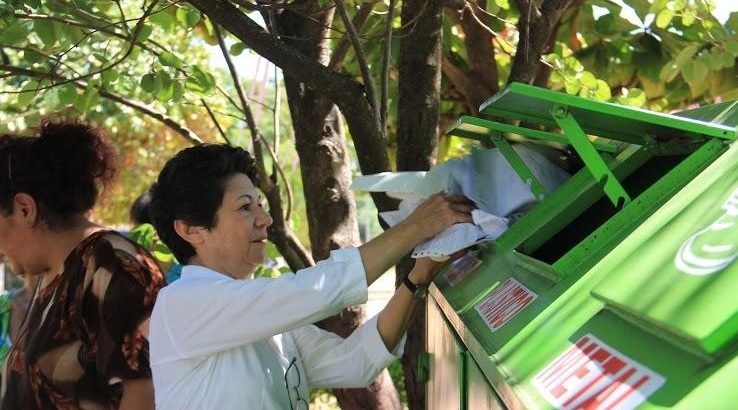
Paraguay: Sede de Congreso Mundial de Educación Física

América del Sur/Paraguay/Julio de 2016/Noticias/http:/www.lanacion.com.py

Desde este sábado 9 y hasta el próximo martes 12 de julio, Paraguay será sede del XXV Congreso Mundial de la Federación Internacional de Educación Física (FIEP), destinado a profesionales de la educación física, pero también a estudiantes y público en general.

El evento, a ser desarrollado en las instalaciones de la Secretaria Nacional de Deportes (SND), el Instituto Superior de Educación (ISE), la Dirección General de Educación Permanente (PRODEPA) y en la Escuela Nacional de Educación Física (ENEF), es organizado por la Delegación FIED Paraguay y la ENEF.

La apertura oficial del Congreso está prevista para las 18:00 horas de este sábado, en el polideportivo de la SND. Los interesados en participar todavía pueden hacerlo, contactando a través de los teléfonos 500-180 y 505-842, como también vía correo electrónico (coord.fiep@gmail.com).

18 cursos

Las delegaciones confirmadas, provenientes de Brasil, Argentina, México, Chile, Perú, Guatemala, además del anfitrión Paraguay, que incluso contará con cuatro representaciones del interior, tendrán una gran e interesante cantidad de cursos.

Los mismos son: Hándbol, Nutrición Deportiva, Hidroterapia para deportistas y juegos recreativos, Fitness, Básquetbol, Futsal FIFA, Masaje Anti Stress y Deportivo, Master Class, Ritmos latinos, Atletismo, Biomecánica deportiva, Actividades físicas para adultos mayores, Educación Física Escolar y Personal Trainning.

También se ofrecerán cursos de Organización de Eventos Deportivos, Aerobic Escolar y comunitario, Prescripción de ejercicios físicos aplicados a obesos, hipertensos, diabéticos y Fútbol de campo.

Entre los disertantes, provenientes de distintos países, se destacan el preparador físico paraguayo Porfirio Maidana, que acaba de ser contratado por el club Crucero del Norte, así como también el entrenador del Olimpia, Fernando Jubero.


Fuente:http://www.lanacion.com.py/2016/07/08/paraguay-sede-de-congreso-mundial-de-educacion-fisica/

Fuente imagen: http://www.lanacion.com.py/wp-content/uploads/2016/07/fiep-750×420.jpg

Comparte este contenido:

Argentina: Miles de tucumanos recibieron el 9 de Julio y entonaron el Himno Nacional en la casa histórica

América de Sur/Argentina/Julio de 2016/Noticia/ www.telam.com.a

Resumen:

Los tucumanos se volcaron masivamente a las calles para celebrar el día del Bicentenario de la Independencia y una multitud se acercó en las horas previas a la Casa Histórica de Tucumán para esperar el momento de entonar el Himno Nacional justo a la hora 0 del 9 de Julio, acto que fue encabezado por la vicepresidenta de la Nación, Gabriela Michetti, y el gobernador Juan Manzur.

También participaron de la ceremonia el ministro de Educación de la Nación, Esteban Bullrich; el intendente de la capital provincial, Germán Alfaro y funcionarios provinciales.

El Himno Nacional fue entonado por los cantantes tucumanos Fernando de la Orden y Miguel Marengo y seguido por todos los presentes, tras lo cuál comenzó un espectáculo con fuegos artificiales.

La vigilia para recibir los 200 años de la Patria comenzó varias horas antes de lo previsto y miles de personas fueron llegando a la plaza Independencia y a la Casa Histórica para participar de un momento histórico que tiene a los tucumanos como anfitriones por ser el lugar donde hace 200 años se declaró la Independencia del país.

Extraoficialmente se estima que más de 40.000 personas llegaron hasta el centro tucumano, aunque no todos pudieron acceder hasta el paseo de la Casa Histórica ya que algunos se instalaron allí hasta seis horas antes para no perderse detalles de una celebración que se extendió a lo largo y a lo ancho de todo el país.

Familias enteras, entremezclados entre tucumanos y turistas llegaron hasta la Plaza Independencia, a escasos metros de la Casa Histórica, donde pudieron visitar las carpas que se ubicaron para exhibir artesanías, comidas típicas, vestimentas, entre otros.

Los presentes acompañaron el calor popular cantando el Himno Nacional en reiteradas oportunidades, mientras que padres con sus hijos en brazos, chicos jugando, amigos estrechándose en abrazos, fueron las postales que se apreciaron.

Cuando llegó el 9 de Julio un show de fuegos artificiales le puso color a los festejos, mientras que en la explanada de la Casa de Gobierno se preparaban para arrancar la fiesta denominada «Feliz Cumpleaños», que incluye espectáculos artísticos.

Fuente: http://www.telam.com.ar/notas/201607/154566-miles-de-tucumanos-recibieron-el-9-de-julio-y-entonaron-el-himno-nacional-en-la-casa-historica.html

Fuente: http://www.telam.com.ar/advf/imagenes/2016/07/578070eac951e_760x506.jpg

Comparte este contenido:

Italia: Apple to open iOS App Development Center in Italy this October

Europa/Italia/Julio 2016/Autor: Mike Wuerthele / Fuente: appleinsider.com

Resumen:  Un alto directivo de Apple, Luca Maestri, ha declarado a la Universidad italiana de Nápoles Federico II, como el lugar para la primera incubadora de talento de codificación iOS en Europa, preparado para abrir sus puertas en pocos meses.

The Apple-sponsored site will support educators, as well as providing a curriculum for attendees of the college. Furthermore, Apple will partner with companies and organizations in Italy to enhance the educational materials presented, and to assist in finding opportunities for graduates.

At launch, 200 new students will be selected to participate in the nine-month class, with applicants from all over Europe invited to apply and take the admissions test. The university is seeking faculty for the program as well, according to Macerkopf.

«We are thrilled to be working with University of Nales Federico II to launch the first iOS Developer Academy in Europe,» said Apple’s Chief Financial Officer Luca Maestri. «Some of the most creative developers in the world come from Europe, and we are confident this center will help the next generation get the skills they need for success.»

The University of Naples Federico II is the oldest public university in the world, and is the third university in Italy ranked by enrolled students. It currently has a computer science department, but nothing else similar to Apple’s condensed developer program.

«Europe is home to some of the most creative developers in the world and we’re thrilled to be helping the next generation of entrepreneurs in Italy get the skills they need for success,» said Apple CEO Tim Cook when the program was initially announced in January 2016. «The phenomenal success of the App Store is one of the driving forces behind the more than 1.4 million jobs Apple has created in Europe and presents unlimited opportunities for people of all ages and businesses of all sizes across the continent.»

Apple also claims that the App Store is responsible for the creation of more than 75,000 jobs in Italy. Notable Italian developers include IK Multimedia and travel app purveyor Musement.

Apple expects expansion of the iOS App Development Center model in other European countries. No additional locations are known at this time. Several initiatives are underway in India, with a large design and development accelerator scheduled to open in Bengaluru in 2017.

Fuente de la noticia: http://appleinsider.com/articles/16/07/08/apple-to-open-ios-app-development-center-in-italy-this-october-

Fuente de la imagen: http://photos.appleinsidercdn.com/gallery/17498-15077-universityofnaples_720-l.jpg


Comparte este contenido:

China and Russia Establish Association of Universities to Expand Educational Cooperation

Asia/China/Julio 2016/Autor: Arthur Dominic Villasanta / Fuente: chinatopix.com

Resumen: Las cabezas de las principales universidades de China y Rusia se reunieron recientemente para discutir la cooperación chino-rusa en los campos científicos y educativos.

The heads of some of China’s and Russia’s leading universities met recently to discuss Chinese-Russian cooperation in the scientific and educational fields.
The Rectors Forum took place at the Lomonosov Moscow State University as a part of the XVII session of the Russian-Chinese Commission for Humanitarian Cooperation. The discussion involved a wide range of issues, including Chinese universities participating in academic exchanges and the development of the youth intellectual competition system.
«This forum will go down in the history of relations between our countries,» said Victor Sadovnichiy, Rector of the Moscow State University (MSU).
He said the implementation of the state strategy depends on the efficiency of Russia’s and China’s scientific and educational cooperation. He noted that the first contacts in the field of education and science between Russia and China began during the early 17th century.
The forum resulted in the Declaration to establish the «Association of Universities of the Russian Federation and the People’s Republic of China» signed by Sadovnichy and Zhu Shanglu, Chairman of the Beijing University Council.
In addition, agreements about the cooperation in various spheres of activity were signed between the specialized educational institutions of China and Russia. Among these are medical and technical sciences, linguistics, public administration, education, agriculture and transport.
Representatives of student sports organizations signed a memorandum of intent to the Russian-Chinese student festival of winter sports. Fifteen agreements were signed between universities and research and educational organizations of China and Russia.
Currently, 200 Russian and 600 Chinese universities have established partnerships in areas that are strategically important to both countries. They have concluded over 900 direct contracts with each other and have created eight professional associations of Russian and Chinese universities.
There are about 25,000 Chinese students studying in Russian universities while 17,000 Russian students are studying in China. There are 1,500 Chinese students enrolled at Moscow University, a number that might increase to 100,000 in the future.
Shenzhen is working on building a joint Chinese-Russian university. This university is a cooperative project of MSU and the Beijing University of Technology.
The architectural foundation for the new university’s future building will be similar to the main building at MSU. Construction of this building should be completed by late 2018. China has taken the initiative of creating the university while MSU will provide educational programs and research and development.

Fuente de la noticia: http://www.chinatopix.com/articles/94686/20160707/china-russia-establish-association-universities-expand-educational-cooperation.htm

Fuente de la imagen: http://images.chinatopix.com/data/thumbs/full/88897/600/0/0/0/higher-learning.jpg

Comparte este contenido:

EEUU: Clinton Embraces Sanders’ Plan for Tuition Free College

América del Norte/EEUU/Julio 2016/Autor: Harper Neidig / Fuente: The Hill

Resumen:  Hillary Clinton propuso el miércoles un plan para eliminar la matrícula universitaria para la mayoría de las familias, un tema empujado por Democrática presidencial principal rival Bernie Sanders.

Hillary Clinton on Wednesday proposed a plan to eliminate college tuition for most families, a topic pushed by Democratic presidential primary rival Bernie Sanders.

Under the plan, families making $125,000 or less will pay no tuition at public, in-state universities and colleges.

“The plan will be phased in over five years, but families earning $85,000 or less will immediately be able to attend an in-state college or university without paying any tuition,” reads an announcement on Clinton’s website.

The presumptive Democratic presidential nominee also unveiled a plan to use executive actions to offer a three-month moratorium on payments for those with federal student loans.

«American families are drowning in debt caused by ever-rising college costs, and it is imperative that the next president put forward a bold plan to make debt-free college available to all,» Clinton said in a statement. «My New College Compact will do just that — by making sure that working families can send a child or loved one to college tuition-free and by giving student debt-holders immediate relief.

“While [presumptive GOP presidential nominee] Donald Trump offers little more than broken promises to get rich quick, I remain committed to ensuring that a college degree is attainable for anyone in this country with the desire and determination to earn one.»

The new Clinton plan does not go as far as one proposed by Sanders, who has not yet endorsed her and is continuing to pressure the party to adopt some of his proposals.

The Vermont senator has made universal, tuition-free public college and university a major platform of his campaign. Clinton’s plan, according to the announcement, would relieve about 80 percent of students from the burden of tuition.

Shortly after the announcement, Sanders lauded Clinton for the proposal, saying the compromise «will have a profound impact on the future of our country.”

“I want to take this opportunity to applaud Secretary Clinton for the very bold initiative she has just brought forth today for the financing of higher education. This proposal combines some of the strongest ideas she fought for during the campaign with some of the principles that I fought for. The final product is a result of the work of both campaigns,» he said in a statement.

“Let me be very clear. This proposal, when implemented, will revolutionize the funding of higher education in America, improve the economic future of our country and make life immediately better for tens of millions of people stuck with high levels of student debt.»

Sanders refused to offer a timeline for endorsing Clinton during a meeting with House Democrats on Wednesday.

Even so, lawmakers viewed the coordination between the two campaigns Wednesday as a positive step toward party unity ahead of the convention later this month.

“Today is evidence that Sen. Sanders and Secretary Clinton are working together,” said Rep. Ben Ray Luján (D-N.M.), the chairman of the House Democrats’ campaign arm.

«He’s very committed to making sure that our message of doing something for the middle class is going to resonate,» said Rep. Jackie Speier (D-Calif.).

Fuente de la noticia: http://readersupportednews.org/news-section2/318-66/37864-clinton-embraces-sanders-plan-for-tuition-free-college

Fuente de la imagen: http://readersupportednews.org/images/stories/article_imgs21/021735-hillary-070616.jpg

Comparte este contenido:

Japón: Teachers say Japan’s young voters need to have political awareness nurtured in schools

Asia/japón/Julio 2016/Autor: MIZUHO AOKI / Fuente: japantimes.co.jp

Resumen:  Tres estudiantes de secundaria, de 18 años de edad, en Shinagawa Joshi Gakuin en Tokio dijeron que estaban contentos de emitir su voto en las elecciones de la Cámara Alta del domingo, estando entre los primeros adolescentes de la nación a unirse al electorado.

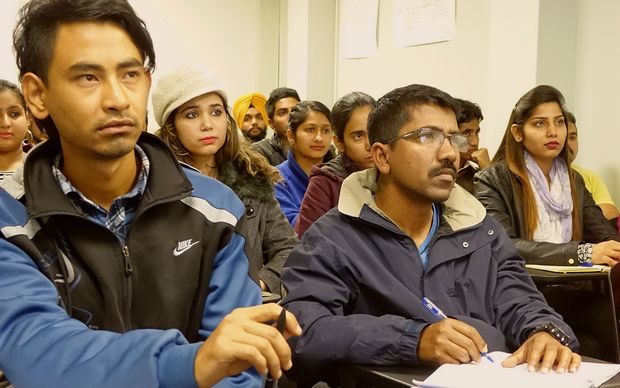
Three 18-year-old high school students at Shinagawa Joshi Gakuin in Tokyo said they were excited to cast their ballots in Sunday’s Upper House election, being among the nation’s first teenagers to join the electorate.

“Just the thought of having a chance to possibly change the future (of this country), and the prospects of seeing more policies addressed to younger generations makes me excited,” said Rena Yamaguchi, a third-year student at the school, while her two fellow students nodded.

“It’s a historic event, and I’m proud to be among the first 18-year-olds to vote,” agreed Mizuki Inoue.

The students also admitted, however, to being slightly bewildered, and were not exactly confident about selecting a party or a candidate.

They have studied campaign pledges and followed media coverage. But rather than making things clear, the long lists of policy pledges have left the girls uncertain about how to make the best decision.

“We want to know what we are supposed to look for before casting our votes,” Inoue said.

Now that the voting age has been lowered from 20 to 18, the nurturing of political literacy among young people is becoming increasingly important to overcome the strong sense of apathy and inertia that has characterized them in recent decades.

Observers naturally see this as an opportunity to get younger generations more involved in politics.

Educators, however, are caught in a dilemma, trapped between cultivating students’ political literacy and maintaining political neutrality as required by law.

Education ministry guidelines require teachers to maintain this “neutrality” by refraining from expressing their personal political views.

“It’s easily said. But in reality, it’s hard to maintain that neutrality,” said Shigeyuki Yamane, a social studies teacher at Kokugakuin Kugayama High School in Tokyo.

In light of the new minimum voting age, the school held a special class about the importance of voting and the basic rules of an election. It also conducted a mock election last year, hoping to raise student awareness.

But when it comes to teaching students about contentious political issues, it can get difficult, he said.

“Even just nodding when a student expresses an opinion about a certain political party may give the impression that I support that party,” Yamane said.

When discussing contentious issues such as the constitutionality of the Self-Defense Forces, he made sure to introduce the different stances of political parties to ensure neutrality.

“It makes us nervous,” Yamane said. “Political neutrality, after all, is to introduce both sides of an argument.”

In Japan, political education had long been almost a taboo topic, observers say.

Shigeo Kodama, a professor of education at the University of Tokyo, said the taboo originally functioned to keep certain ideologies from manifesting themselves in school education.

From the late 1950s to 1970s, the Japan Teachers’ Union (Nikkyoso), which was a strong supporter of opposition parties and mainly leftist-leaning, staged strikes to fight the conservative government’s education policies, particularly the textbook screenings and rating system for teachers.

To prevent ideological confrontations, schools gave short shrift to political issues, Kodama said.

Also, university student movements in the 1960s against issues such as Japan’s security alliance with the United States were rife, later spreading to high school students, with some setting up barricades to close schools in protest.

In response to those events, in 1969, the education ministry issued guidelines banning high school students from engaging in political activities.

“With the guidelines, politics were put on a par with alcohol and tobacco,” Kodama said.

Rather than cultivating students’ social awareness, schools put weight on nurturing their ability to pass high school and university entrance exams, though that focus has been changing slowly in the past two decades, he said.

One recent change was the education ministry’s scrapping of the 1969 guidelines last year, lifting the longtime ban on political activities by high school students.

“Schools avoided exposing young people to politics for a long time,” Kodama said. “Considering that, it’s not something that can be changed overnight.

“Japan is still struggling to transform the educational system it adopted during the period of rapid economic growth (between the 1950s and 1970s),” Kodama said.

One lingering concern is that educators are still refraining from raising political issues in class due to fears of violating neutrality. But teachers need to understand, Kodama said, that ensuring political neutrality means teaching students about both sides of contentious issues, and explaining why political parties are fighting over them.

“Otherwise students may never understand,” Kodama said. “The teacher’s role is to fully explain a current situation without taking sides, and to think together with students.”

Shigeo Kawaguchi, a social studies teacher at Denen Chofu Gakuen High School, agreed, saying teachers must provide students with many different points of view on current political issues.

He attempted to stimulate students think about such issues by introducing several newspaper articles in his classes.

He has also shown a placard used in a rally to oppose the security legislation to expand the scope of overseas operations of the Self-Defense Forces. Kawaguchi was among the participants in the rally .

“I don’t think I’m violating political neutrality,” Kawaguchi said. “I’m showing them that adults should have opinions on (political issues).

“I believe children won’t form political opinions unless teachers say what they think,” he said. “I always tell students it is OK to have different opinions from mine.”

Shiori Ito, 16, one of Kawaguchi’s students, said his introduction to current political issues helped deepen her understanding of what was going on in society.

“I think it has given me the chance to gain more knowledge about society,” said Ito, a second-year student who will be speaking in the United States this summer about the voting age change on a travel-abroad program.

Although Ito is not eligible to vote in Sunday’s election, she welcomed the change. “It is a great opportunity for society to hear the voices of teenagers. We could change society.”

Kawaguchi also said it is important for adults to discuss social issues to cultivate political awareness among young students.

“Their parents and their grandparents need to discuss politics in front of them,” Kawaguchi said. “But sadly, many don’t.”

Fuente de la noticia: http://www.japantimes.co.jp/news/2016/07/08/national/politics-diplomacy/teachers-say-japans-young-voters-need-political-awareness-nurtured-schools/#.V4CoINLhC01

Fuente de la imagen: https://www.google.co.ve/search?q=Teachers+say+Japan%E2%80%99s+young+voter&source=lnms&tbm=isch&sa=X&ved=0ahUKEwjVpv6CuuXNAhWEJB4KHaxvAQEQ_AUICCgB&biw=1366&bih=637

Comparte este contenido:

Francia: finalités et objectifs du système éducatif et de l’école

Fines – objetivos  del  sistema educativo y de la República

Europa/Francia/Julio de 2016/Noticia/ theconversation.com

Resumen:

Este texto es de la conferencia de clausura «Escenarios para una nueva escuela» se realizó tras dos años de reflexión del seminario «La escuela y la República» Colegio Bernardo, que trataban de analizar la relación entre la escuela y la República. El simposio fue organizado por Bernard Hugonnier y Gemma Serrano, Co-directores del seminario. Gaby Hostens, director de Política Internacional de la Educación, Ministerio de Educación de Flandes; Miembro del Seminario de Investigación «La escuela y la República» Colegio Bernardo.  Señala que, hay un amplio consenso sobre los objetivos estratégicos y operacionales del sistema de educación, pero a menudo hay confusión entre los dos.La distinción es importante porque un modelo de gobernanza eficaz tiene un impacto en la decisión, y los socios que deben tomar la iniciativa y asumir la responsabilidad de los fines de formulación y desarrollo. De tal manera que Objetivos Estratégicos: En los documentos de política, literatura científica y las publicaciones de la OCDE, CIDREE, etc., hay un consenso bastante amplio en estos objetivos. Los objetivos estratégicos se definen de la siguiente manera: un desarrollo armonioso y equilibrado individual para todos; habilidades (conocimientos, habilidades y actitudes) para preparar todo para su integración efectiva en la vida social y económica (la educación superior y el mercado de trabajo); aprender a aprender durante toda la vida. Entre tanto, los Fines operativos en la Unión Europea, la cual ha hecho un esfuerzo considerable para identificar lo que llama las competencias básicas, pero son más bien los objetivos operativos: la comunicación en la lengua materna; comunicación en lenguas extranjeras; competencia matemática y competencias básicas en ciencia y tecnología; competencia digital; aprender a aprender; competencias sociales y cívicas; el espíritu de iniciativa y espíritu de empresa; conciencia y expresión culturales. Señala  de igual manera la importancia relativa de estos objetivos: los objetivos prioritarios
La consecución de estos objetivos al mismo tiempo está fuera de la cuestión. La realización dependerá del nivel de educación (preescolar, primaria, secundaria, terciaria, etc.) o el tipo de educación (general o profesional, especial).
Está claro que la preparación de los jóvenes al mercado de trabajo será una prioridad en el tipo de profesional de la educación y la adquisición de la base de conocimiento de prioridad en la enseñanza primaria.
Responsabilidades en el desarrollo y el logro de estos objetivos. En general, los sistemas educativos (muy) políticos centralizados año centralmente desarrollan los propósitos estratégicos y operativos y requieren las instituciones y maestros (individuales).  En este sentido el control sobre la calidad es ejecutado por un servicio (inspección) centralDando más responsabilidad va de la mano con una mayor profesionalización de los líderes escolares: rigurosos métodos de contratación (con participación de los agentes internos y externos), habilidades para la gestión eficaz de la formación de los equipos de la escuela. Estas habilidades se justifican un papel más importante de los líderes escolares en la gestión de los recursos humanos: reclutamiento, evaluación del personal y el desarrollo profesional.

Fuente:  https://theconversation.com/ecole-et-republique-finalites-et-objectifs-du-systeme-educatif-et-de-lecole-5-61704

Fuente: https://62e528761d0685343e1c-f3d1b99a743ffa4142d9d7f1978d9686.ssl.cf2.rackcdn.com/files/128540/width926/image-20160628-7851-1tw6hri.jpg

Ce texte est issu du colloque conclusif « Scénarios pour une nouvelle école » organisé le 23 juin 2016, suite à deux années de réflexion du séminaire « École et République » du Collège des Bernardins qui se proposait d’analyser la relation entre l’école et la République. Le colloque était organisé par Bernard Hugonnier et de Gemma Serrano, co directeurs du séminaire. Nous allons publier une série de huit articles sur le sujet.

Par Gaby Hostens, director of international Education Policy, Ministère de l’Education des Flandres ; membre du séminaire de recherche « École et République » du Collège des Bernardins

Apparemment, il y une grande unanimité sur les finalités stratégiques et opérationnelles du système éducatif, mais souvent il y a confusion entre les deux.

La distinction est importante parce qu’un modèle de gouvernance efficace a un impact sur le lieu de décision et sur les partenaires qui doivent prendre l’initiative et assumer la responsabilité de l’élaboration et le développement des finalités.

Finalités stratégiques

Dans les documents politiques, la littérature scientifique et les publications de l’OCDE, CIDREE, etc., il y a un assez large consensus sur ces finalités.

Les finalités stratégiques se définissent ainsi : développement individuel harmonieux et équilibré pour tous ; acquisition de compétences (connaissances, aptitudes et attitudes essentielles) pour préparer tous à une intégration efficace dans la vie sociale et économique (études supérieures et marché du travail) ; apprendre à apprendre tout au long de la vie.

Je préfère inclure « pour tous » dans les finalités stratégiques plutôt qu’ajouter une finalité séparée intitulée « garantir une égalité des chances ». « Pour tous » me paraît plus inclusif : tous les élèves, étudiants et adultes sont inclus !

Un projet international coordonné par l’OCDE et le Service Fédéral Suisse des Statistiques, DeSeCo (définition et sélection de compétences clés,), a identifié trois compétences clés :

  • Se servir d’outils de manière interactive (langue, technologie, etc.).
  • Interagir dans des groupes hétérogènes.
  • Agir de façon autonome.
Finalités opérationnelles

L’Union Européenne a fait un effort considérable pour identifier ce qu’elle appelle des compétences clés mais qui sont plutôt des objectifs opérationnels : la communication dans la langue maternelle ; la communication en langues étrangères ; la compétence mathématique et les compétences de base en sciences et technologies ; la compétence numérique ; apprendre à apprendre ; les compétences sociales et civiques ; l’esprit d’initiative et d’entreprise ; la sensibilité et l’expression culturelles.

Pour chaque compétence il y a une description des connaissances, aptitudes et attitudes essentielles.

Donner l’opportunité aux élèves, étudiants et adultes de participer à la réalisation et d’atteindre ces finalités me paraît un droit humain.

Importance relative de ces finalités : finalités prioritaires

Réaliser ces finalités simultanément est hors de question. La réalisation dépendra du niveau de l’enseignement (pré-primaire, primaire, secondaire, tertiaire, etc.) ou du type d’enseignement (général ou professionnel, spécial).

Il est clair que la préparation des jeunes au marché de travail sera prioritaire dans l’enseignement de type professionnel et l’acquisition de connaissances de base prioritaire dans l’enseignement primaire.

Par contre, le développement et l’acquisition de compétences transversales doivent être au programme de tous les niveaux et types d’enseignement et deviendront graduellement plus importants.

Responsabilités dans le développement et la réalisation de ces finalités

En général, dans les systèmes éducatifs (très) centralisés les responsables politiques an niveau central développent les finalités stratégiques et opérationnelles et les imposent aux établissements et professeurs (individuels).

Ces derniers exécutent les décisions des responsables politiques. Le contrôle sur la qualité est exécuté par un service (d’inspection) central.

Mieux vaut un modèle de gouvernance du système éducatif qui donne des responsabilités spécifiques à chaque niveau. L’élaboration des finalités stratégiques et des grandes lignes des objectifs opérationnels doit se faire au niveau central après consultation des partenaires du monde de l’éducation.

Comme la réalisation des objectifs opérationnels est de la responsabilité des établissements scolaires, il me paraît opportun et logique de donner un rôle crucial aux équipes scolaires dans le processus éducatif qu’est le développement du contenu des objectifs opérationnels. Je veux souligner l’importance de ces équipes scolaires sous la direction des chefs d’établissement.

Elaboration d’objectifs mesurables

Une évaluation efficace est difficilement concevable sans objectifs mesurables. Ils faciliteront l’évaluation formative des élèves et des étudiants qui est la responsabilité exclusive des professeurs qui disposent ainsi d’un trésor de données quantitatives et qualitatives pour améliorer leur enseignement et l’apprentissage des élèves.

L’évaluation sommative peut être soit interne, externe ou une combinaison des deux : équipes scolaires et inspection.

La radioscopie scolaire me paraît avoir une plus grande valeur ajoutée qu’une inspection individuelle de professeurs de discipline parce que toute l’équipe scolaire est concernée.

Les recommandations faisant suite à la radioscopie peuvent déclencher un processus permettant d’améliorer la qualité de l’enseignement.

Des ressources pour réduire l’échec scolaire et les inégalités

Un système éducatif doit essayer d’atteindre la plus grande qualité pour tous. Réaliser cet objectif ambitieux est la responsabilité de tous ceux qui participent au processus éducatif qu’ils soient responsables politiques, inspecteurs ou professeurs.

Il y a une division de travail assez prononcée. La responsabilité principale se situe au niveau des établissements : l’équipe scolaire est sous la direction du chef d’établissement.

Chaque établissement devrait élaborer un projet d’établissement dans lequel la politique pour atteindre cet objectif est élaborée de façon approfondie. L’élaboration de ce projet, avec la participation de tous les partenaires de l’établissement (enseignants, parents, milieux sociaux, culturels et économiques), est de la responsabilité de l’établissement et tient compte du contexte local.

Cet objectif est l’affaire de toute l’équipe. Il faut engager toute l’équipe dans la lutte contre les inégalités. De surcroît, l’équipe scolaire doit engager des partenaires des milieux social, économique et culturel pour réaliser cette mission.

La responsabilité principale de l’inspection est d’évaluer la politique de l’établissement pour atteindre cet objectif et de contrôler la qualité. Mettre les ressources humaines et financières additionnelles à la disposition des établissements est le devoir des responsables politiques.

Une gouvernance pour la mise en œuvre de ces finalités

Un système éducatif qui a l’ambition de réaliser ces objectifs a besoin d’un système de gouvernance robuste avec un système transparent de responsabilités.

Si les établissements sont les premiers responsables de la qualité de l’enseignement et de la réduction des inégalités sociales et de l’échec scolaire, il faut leur donner l’autonomie et les leviers pour atteindre ces objectifs.

Un rôle plus central du chef d’établissement me paraît absolument et inévitablement nécessaire.

Donner plus de responsabilités va de pair avec une plus grande professionnalisation des chefs d’établissement : méthodes rigoureuses de recrutement (avec participation de partenaires internes et externes), compétences pour une gestion efficace de l’équipe scolaire, formation continue.

Ces compétences justifient alors un rôle plus important des chefs d’établissement dans la gestion des ressources humaines : recrutement, évaluation du personnel et développement professionnel.


Comparte este contenido:
Page 5408 of 6182
1 5.406 5.407 5.408 5.409 5.410 6.182