Page 5463 of 6195
1 5.461 5.462 5.463 5.464 5.465 6.195

Panamá: Un nuevo reconocimiento

Un nuevo reconocimiento

Centro américa/Panamá/02 de Julio 2016/Noticias/La estrella de Panamá

‘Sucedió en enero’, proyecto cinematográfico de ficción encabezado por Luis Romero fue uno de los 16 proyectos seleccionados por el Programa Ibermedia, conjuntamente con la Conferencia de Autoridades Cinematográficas de Iberoamérica (CACI) y AECID, para el V Taller de Proyectos Cinematográficos de Centroamérica y Caribe que se llevará a cabo en Antigua, Guatemala, del 22 al 30 de octubre.

El taller está dirigido a guionistas, directores y productores del área Centroamérica y Caribe con experiencia previa en la actividad cinematográfica o audiovisual. y tendrá una orientación integral por parte de asesores expertos.

‘Sucedió en enero’ fue uno de los proyectos ganadores del Fondo de Cine 2014, además del PanamaLab 2015 del Festival Internacional de Cortometrajes de Hayah.. Su participación en este taller se suma a estos reconocimientos.

Para su realizador la selección de su proyecto para este taller certifica las posibilidades de que se convierta en un filme de ficción importante.

‘El hecho de que los proyectos nacionales se valoren en el exterior demuestra que el cine panameño está muy bien encaminado’, dijo Romero vía correo electrónico a La Estrella de Panamá .

Romero trabaja en este proyecto desde hace más de un año, sin embargo, el proceso no ha sido sencillo. ‘Sucedió en enero es uno de los 12 proyectos ganadores del Fondo de Cine cuyo proceso se ha visto afectado al ser detectadas fallas administrativas, por lo que el desembolso de los dineros destinados a premiar a los ganadores no ha sido posible.

Una serie de reuniones se han llevado a cabo entre los afectados y la Dirección de Cine del Ministerio de Comercio e Industrias para resolver este problema que pudiese afectar las próximas convocatorias de este concurso.

«Sucedió en Enero», es una adaptación de la obra de teatro del mismo nombre, escrita por Mireya Hernández, madre de Romero y que recibió el Premio Nacional de Literatura «Ricardo Miró» 2006 en teatro.

La trama está relacionada con la gesta del 9 de enero de 1964 que encabezaron estudiantes del Instituto Nacional que exigieron el cumplimiento de las nuevas disposiciones de izar la bandera panameña en terrirorio de la Zona del Canal, en ese tiempo, bajo la jurisdicción de Estados Unidos de América.

==========

PROYECTOS PARTICIPANTES

El taller se llevará a cabo en Antigua, Guatemala, del 22 al 30 de octubre

Colombia: ‘Estela’, fFicción de Liliana Díaz; ‘El último rival’, documental de Angie Bernal y César Castro

Costa Rica: ‘Avanzaré tan despacio’, híbrido de Natalia Solórzano; ‘Sesiones para Pibe’, documental de Ana Lucía Jiménez

Cuba: ‘Letargia’, ficción de Camelia Farfán – Fabián Suárez: ‘El Gabinete del Doctor Rota’, híbrido de Orisel Castro y ‘A media voz’ documental de Patricia Pérez

Guatemala ‘Regreso al país del olvido’, documental de José Morales Ferulli y ‘Guantan’, ficción de Jesús de la Cruz

México: ‘Abrazos perdidos’, ficción de Jorge López Salazar; ‘Can your pussy do the dog?’, ficción de Óscar Pereyra y ‘La leyenda de Agustín Lorenzo’, híbrido de Pablo Gleason

Panamá: Sucedió en enero, ficción de Luis Romero

República Dominicana: El protocolo, ficción de Pablo Lozano

Venezuela: Nadie es inocente, ficción de Rubén Iriarte y ‘Llano, amor y balas’, ficción de Javier Mateos


Fuente imagen:http://laestrella.com.pa/media/news/image/249956_800x600_crop_5776f685b34b1.jpg

Redacción La Estrella de Panamá
periodistas@laestrella.com.pa
 

Comparte este contenido:

Nigeria: Education standards and scrapping Post-UTME

África/Nigeria/Julio 2016/Autor: Editor / Fuente: guardian.ng

ResumenLa falta de un sistema de educación permanente siempre ha sido un inconveniente grave para Nigeria y ni siquiera los candidatos a la admisión en las instituciones educativas se salvan de sufrir el malestar general.

By scrapping the Unified Tertiary Matriculation Examination (UTME), otherwise called Post- JAMB (Joint Admissions and Matriculation Board) examination, the Federal Government once again advertises inconsistency in Nigeria’s educational system and quest for development. Lack of an enduring education system has always been a serious minus for Nigeria and not even the admission of candidates into educational institutions is spared the malaise. This is sad.

Virtually, every new administration, indeed, Minister of Education, throws up a new system that sets aside what was in place, often, with dire consequences.

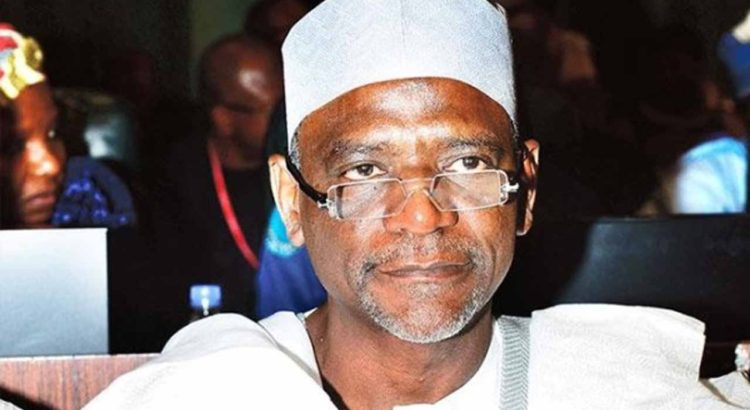
The latest jolt came from the Minister of Education, Adamu Adamu, who, the other day, in Abuja, announced the scrapping of Post-UTME after the 2016 combined Policy Committee meeting on admission into degree-awarding institutions, National Diploma, Nigeria Certificate of Education and National Innovative diploma-awarding institutions.

The meeting also set a flat cut-off point of 180 for an examination that carries 400 points. This lowering of standards is a shame that sets Nigeria up as a haven of mediocrity.

According to the minister, the Federal Government has confidence only in the examinations conducted by the Joint Admissions and Matriculation Board (JAMB).

He recalled that Post-UTME was introduced by many universities and polytechnics as further pre-requisite for admission irrespective of whether the students passed the JAMB examination or not.

The minister then directed that universities should not be holding examinations and if they had any complaint against JAMB, should bring it forth for resolution. He said tertiary institutions in the country must observe “the admission criteria based on merit, catchment area and educationally less developed states.”

The Federal House of Representatives has agreed with the decision and directed the Federal Ministry of Education and the National Universities Commission (NUC) to ensure the abolition of Post-UTME forthwith. It lamented that the examination had become subjective, streesful and exploitative to poor candidates and their parents.

UTME was introduced in 2005 without enough interrogation and analysis by the then Minister of Education presumably, to bypass alleged inefficiency of JAMB. But since then, no respite came the way of candidates and their parents.

Ten years later, the same UTME became even a more controversial examination by the way the universities and other tertiary institutions turned it to a money-making venture. The quality objective that informed its introduction was overlooked. At some point, universities differed on what they charged candidate against the flat N1000 rate fixed by government, with some charging as much as N5000 or more.

Turning what was supposed to be a screening exercise of candidates, with no strings attached, into another examination that clearly overrode the JAMB entrance requirement, was in bad fate and candidates as well as their parents were blatantly ripped off.

The UTME had all the trappings of the same gross malpractices that are often found in JAMB examination in the first place. Allegations of bribery, corruption, nepotism and favoritism were rife. Mounting complaints therefore prepared the ground for what has been done which is to scrap the test.

The decision, therefore, was absolutely necessary. As a matter of fact, it was long overdue. The inconveniences were unbearable and the purpose of introducing the pre-admission screening was defeated

Also the very low cut-off mark is deplorable and cannot produce the best brains that the country needs. With standards so low, Nigerians are celebrating mediocrity.

There must be a sensible way of setting standards. One is to go back to Advanced Level system in which higher school certificate education of two or more years prepares all students for university.

Also what is being done now is no more than dragging one part of the country down for another. Granted, a gap exists between the North and the South of the country in education, this is not the way to bridge it.

Reducing the entry point to the barest minimum is wrong as an attempt to ensure uniformity in the country.
It should be recognised that the level of educational penetration differs in different parts of the country and the way to raise the backward parts is to have special arrangement for them rather than push everybody at the same time.

In the United States, for instance, there are community colleges that were set up to see to the needs of candidates with lower academic capacity. From those colleges, they graduate to the universities. After some time, the system harmonises.

A similar arrangement once existed in the North through the schools of basic studies. That should be revived as there cannot be a single standard for all institutions.

University education is about excellence. But Nigerian universities have been reduced to less than their worth. Nigeria cannot excel when all universities are placed on the same level. Each university should be free to set its minimum entry point based on the standard it has set for itself. That would be the beginning of raising the standard of education in the country.

Fuente de la noticia: http://guardian.ng/opinion/education-standards-and-scrapping-post-utme/

Fuente de la imagen: http://cdn.guardian.ng/wp-content/uploads/2016/03/Adamu-Adamu-Minister-of-Education.jpg

Comparte este contenido:

Armenia: French University of Armenia has become beacon of Armenian – French cooperation

Asia/Armenia/Julio 2016/Autor: Editor / Fuente: arka.am

Resumen:  El primer ministro armenio Hovik Abrahamian asistió el 30 de junio, a una celebración festiva dedicada al  decimoquinto aniversario de la Universidad Francesa de Armenia.

Armenian Prime Minister Hovik Abrahamyan attended June 30 a ceremonious event dedicated to the 15th anniversary of the French University of Armenia.

Congratulating the students, teachers and graduates on the anniversary of the university, the Prime Minister noted that by introducing European standards of higher education, the French University gave a new quality and a new spirit to the Armenian-French cooperation.

According to Hovik Abrahamyan, thanks to close interaction between the Armenian and French ministries of Foreign Affairs and Education and Science, the University has become a beacon of the Armenian-French cooperation.

“Having a unique place and being highly rated in our country’s educational system, the French University of Armenia has the merit of building up and combining the know-how accumulated in the Armenian and French educational systems over years. During 15 years of efficacious activity, the University has awarded diplomas to over 1,500 graduates in management, marketing, finance and law,” the Prime Minister said, adding that the graduates of the University have committed their knowledge and high professionalism to the cause of strengthening our statehood, developing the economy and promoting civil society in Armenia.

The Prime Minister said that this is the outcome of the dedicated work of the faculty and the administrative staff, the continued assistance provided by the Armenian and French authorities, Jean Moulin Lyon 3 University, as well as mutually beneficial cooperation with university partners. Reiterating his congratulations, Hovik Abrahamyan wished the faculty and the students every success and new achievements in the future.

For localization of European and French higher educational standards, valuable contribution to vocational education and the development of the French University in Armenia, as well as on the 15th anniversary of the University, Hovik Abrahamyan awarded the Prime Minister’s commemorative medal to FUA Fund Rector, Doctor of Technical Sciences Professor Jean-Marc Lavesti and President of the Jean Moulin Lyon 3 University, Doctor of Humanitarian Sciences, Professor Jacques Comby.-0-

Fuente de la noticia: http://arka.am/en/news/society/french_university_of_armenia_has_become_beacon_of_armenian_french_cooperation_pm_says/

Fuente de la imagen: http://arka.am/upload/resize_cache/iblock/b31/344_258_2/b3112b6f212ca586cc0a9b0a689e1398.jpg

Comparte este contenido:

India: Engineering an education revolution

Resumen:   Cuando Shivam Garg y sus 20 amigos participen en el más grande evento educativo de deportes de motor, Formula Student de Europa, el 14 de julio en Londres, Reino Unido, será otro galardón del Instituto Indio de Tecnología (IIT) de Bombay. El suyo es el único equipo de la India que ha diseñado un coche eléctrico para esta competición. Ellos tratarán de ganar su cuarto premio consecutivo como el mejor equipo no europeo en esta competición.

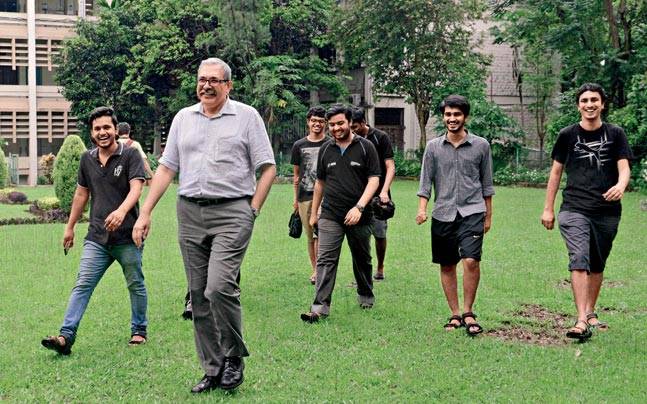
When Shivam Garg and his 20 friends participate in Europe’s biggest educational motorsport event, Formula Student, on July 14 in London, UK, it will be another feather in the cap of Indian Institute of Technology (IIT) Bombay. Theirs is the only Indian team which has designed an electric car for this competition. They will try to win their fourth straight award as the best non-European team in this competition.

The racing team’s success story is in sync with the rising graph of IIT Bombay in the academic as well as the non-academic sphere. Its healthy educational climate and research-oriented outlook has made it one of the best technical institutes that also encourages students to excel in extracurricular activities.

With an impressive 1:14 faculty-student ratio, IIT Bombay is the most sought-after institute for engineering aspirants. It has witnessed three big trends in the past few years. The number of students has grown from 5,300 in 2009 to 10,000 now. Computer science and engineering, electrical engineering and mechanical engineering are the most sought- after courses.

There is almost five-fold growth in its research and development activities. Simultaneously, there is huge student interest in entrepreneurship, with a vibrant startup ecosystem developing around the campus. No wonder, the institute spent Rs 243 crore on R&D in 2015, published 1,500 research papers, produced 266 PhD scholars and filed 130 patents.

High-tech infrastructure facilities such as the Laser Doppler Vibrometer, High Resolution Mass Spectrometer, Orientation Imaging Microscope and Image-Based Diagnostic Systems give researchers here a head start. They have obtained licences for innovations like the electric three-wheeler, an Ethernet switch router, modular toilet unit for Indian Railways and a modular hybrid air conditioner.

Second-year student Anuraj Gupta says the alumni association, good placement offers and good on-field experience at IIT Bombay serve as a magnet for students. «Students get good placement offers as the alumni working with different companies are sentimentally attached to the institute. They then come looking for the best brains.»

Figures vindicate Gupta’s assertion. Till June 2015, 310 organisations had taken part in the campus placements and offered 1,118 jobs. The year 2014-15 saw the largest registration for placement at 1,675; of them 1,118 got jobs. The institute has not only produced well-qualified engineers but also equally qualified consultants. Last year, 155 jobs were offered in field of data analytics making it the biggest recruiter after engineering and information technology companies. It was followed by job offers in corporate consulting (107), financial services (100), R&D (48) and educational institutes (45), public sector (10) and FMCG (6). Obviously, jobs in engineering and technology were the highest at 381 followed by IT (199).

In 2015, around 365 job offers were of a salary more than Rs 11 lakh per annum. Only 83 were offered a salary less than Rs 5 lakh a year. The highest domestic salary offer was Rs 34 lakh a year, and the highest international salary offer was Rs 65 lakh per annum. The average domestic salary offer was Rs 9.5 lakh per annum.

Located close to two lakes, Vihar and Powai, the IIT Bombay campus is a natural delight for its students. The greenery and the pleasant atmosphere keep him energetic, says student Archit Sanadhya. Of course, the Gulmohar Cafeteria, or Gullu as students call it and the Students’ Activity Centre remain favourite haunts.

Director Devang Khakhar says the highly flexible curriculum which offer plentiful choice of subjects and hands-on learning make the IIT Bombay education very effective. «The campus experience transforms our students,» he says. «We provide them rigorous academic work and excellent extra-curricular facilities. Our modern laboratories allow students to participate in research. Our core strength is our outstanding faculty.»

The institute introduced two new courses last year, a Bachelor in Design (BDes) and Executive MBA ,jointly with Washington University, St Louis. Around 800 students had applied for the 35 seat BDes course.

Separate gyms, playing areas, sports library, mess and shops at each of the 16 hostels keep students occupied. They also look forward to two big annual events, Mood Indigo, Asia’s largest cultural festival at the college level, and Techfest, a science & technology festival to promote technology, scientific thinking and innovation.

Stories of the simplicity of two of its alumni-defence minister Manohar Parrikar and entrepreneur-turned-politician Nandan Nilekani-are legion. But there’s equal interest in the likes of Bharat Desai, chairman of IT firm Syntel. «After all, he is the richest IITian,» says a student. And his role model too.

Fuente de la noticia: http://indiatoday.intoday.in/story/indian-institute-of-technology-mumbai-engineering-college/1/704308.html

Fuente de la imagen: http://media2.intoday.in/indiatoday/images/stories/univ-technical-jul11-1_647_070116094322.jpg

Comparte este contenido:

Reino Unido: Marcha por Europa congrega a miles de personas contra el Brexit

Europa/Reino Unido/02 julio 2016/Noticia/ telesurtv.net
Los ciudadanos en contra de la salida de Reino Unido de la UE piden ante el Parlamento que se tomen medidas para evitar que el referendo sea la última palabra sobre el brexit.

Miles de personas se sumaron este sábado a la «Marcha por Europa» en Londres para manifestar su rechazo a la salida de Reino Unido de la Unión Europea (UE), decisión adoptada por la misma ciudadanía en el referendo del pasado 23 de junio.

Los británicos en contra de esta medida recorrieron las calles de Londres hasta llegar a la Plaza del Parlamento, donde realizan un multitudinario picnic anti-brexit.

«UE, te quiero» y «esperanza en lugar de odio» han sido algunas de las consignas de los manifestantes.

«Podemos evitar el Brexit si nos negamos a aceptar el referéndo como la última palabra», dijo Kieran MacDermott, organizador de la marcha y estudiante del King’s College de Londres.

La Marcha por Europa se celebra al mismo tiempo en decenas de ciudades británicas.


Fuente: http://www.telesurtv.net/news/Marcha-por-Europa-congrega-a-miles-de-personas-contra-el-brexit-20160702-0003.html

Fuente:http://www.telesurtv.net/__export/1467462063484/sites/telesur/img/multimedia/2016/07/02/cmw46b_xgaas19v.jpg_1718483346.jpg

Comparte este contenido:

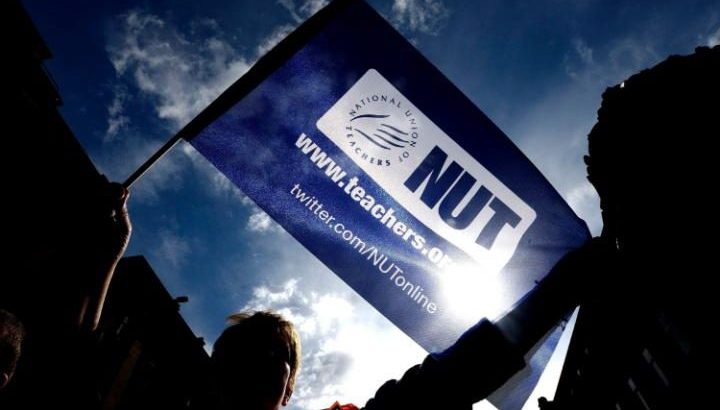
Reino Unido: NUT strike, why are teachers set to strike on July 5?

Europa/Reino Unido/Julio 2016/Autor: Josie Gurney-Read / Fuente: telegraph.co.uk

Resumen:  El 5 de julio, los miembros de la Unión Nacional de Profesores (NUT) se movilizan en lo que será el primer día nacional de acción del sindicato desde el 2014. Los miembros votaron abrumadoramente a favor de la acción con el fin de hacer frente a la financiación de la escuela y reanudar las negociaciones sobre contratos de los maestros.

On July 5, members of the National Union of Teachers (NUT) will walk out in what will be the union’s first national day of action since 2014.

Members voted overwhelmingly in favour of action in order to address school funding and to resume negotiations on teacher contracts.

In the NUT’s ballot, 91.7 per cent voted in favour of strike action, with a 24.5 per cent turnout.

It will be the latest in a series of strikes that the union has called to tackle issues that have remained similar for many years.

But in a letter written to Nicky Morgan, the Education Secretary, on June 28, the NUT highlighted further reasons for striking, stating that the note was a «last appeal» before action was taken.

With strike action set to affect thousands of children across the UK, what reasons have teachers given for the decision?

Haven’t we been here before?

Yes and no. In July 2014, NUT members took part in a day of action alongside members of UNISON, UNITE, GMB, PCS and the FBU.

At the time, the NUT cited pay, pensions and workload as three key reasons for walking out. According to the union, pension contribution increases and pay restraint had meant that teachers had seen a 15 per cent fall in the value of their take home pay.

Performance related pay (PRP) was also a key issue, along with the oft-quoted 60 hour working week.

So what’s new?

Workload is still an issue, but the NUT focused on funding in their letter to the Education Secretary. Writing in June, Kevin Courtney, the acting general secretary of the National Union of Teachers, warned that the funding situation in schools could get «progressively worse».

He cited forecasts from the Institute for Fiscal Studies which predicted an 8 per cent cut in funding in real terms over the next few years.

The NUT argues that these funding cuts could have «negative implications» including; an increase in class sizes, fewer subject choices for children, and cuts in support and teaching staff. All of which could affect standards overall.

Anything else?

Yes, the «de-regulation of teacher terms and conditions». In plain English? Following the Government’s push to turn all schools into academies, decisions about pay and working conditions are increasingly being made at school level, rather than following a national standard.

The NUT’s concern is that there is little evidence that making decisions, for example, on sick pay and maternity leave at school level, leads to higher standards – in fact, the union suggests that this responsibility could distract school leaders from the important business of educating children.

But pay is still an issue?

Pay is definitely still a concern for unions. At the most basic level, the NUT have said that unless pay and working conditions improve, it is unlikely that the teacher recruitment and retention «crisis» will get better at any point soon.

In short, what are the NUT asking for?

In his letter to Nicky Morgan, Mr Courtney outlined three requests to avoid the strike action.

1.-Fund schools sufficiently to cover the increased staff costs you have imposed on them.
2.-Tell academies they must at least have regard to the national terms and conditions.
3.-Promise meaningful talks to look for a full resolution of the dispute.

What have the Department for Education (DfE) said?

A Department for Education spokesman said: «It is disappointing the National Union of Teachers has chosen to take unnecessary and damaging strike action, which less than a quarter of its members voted for. It is even more disappointing when we have offered and committed to formal talks between ministers and the unions to address their concerns about pay.

“Industrial action causes disruption to children’s education and parents who have to take time out of work to arrange childcare, we urge the NUT not to proceed with this strike and to resolve pay disputes at the negotiating table rather than playing politics with children’s futures.»

Fuente de la noticia: http://www.telegraph.co.uk/education/2016/06/29/nut-strike-why-are-teachers-threatening-to-strike-on-july-5/

Fuente de la imagen: http://www.telegraph.co.uk/content/dam/education/2016/06/23/NUT-large_trans++zPDZVAnxkOCx_pj0EK6q2ie_KZA7U11Z2fv3xK1bZa0.jpg

Comparte este contenido:

China: UN chief welcomes China joining the International Organization for Migration

Asia/China/02 Julio 2016/Noticias/Boletín de Beijin

El 1 de julio de 2016 – El Secretario General Ban Ki-moon, ha celebrado la decisión de China para unirse a la Organización Internacional para las Migraciones (OIM), diciendo que el país hará una «valiosa contribución» a la OIM.

En un comunicado emitido ayer, el Secretario General señaló que el momento es «crucial» dadas las necesidades urgentes de los migrantes y refugiados.

El anuncio se produce un día antes de los Estados Miembros de la OIM decidió unirse al sistema de las Naciones Unidas como una organización relacionada.

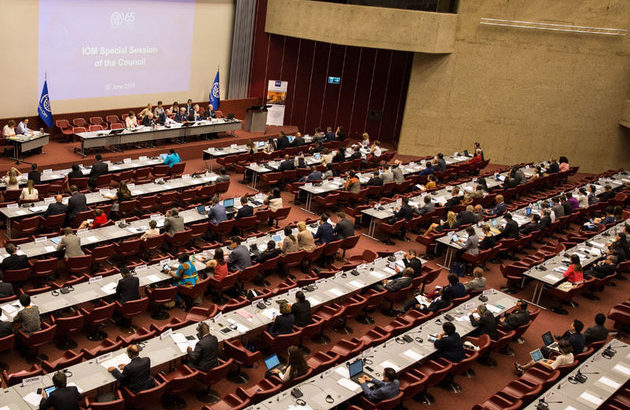
«Hoy [30 de junio] ha sido un punto de inflexión en la vida de esta organización, que está celebrando su año número 65,» El Director General de la OIM William Lacy Swing, dijo en una reunión de su Consejo especial en Ginebra el jueves, en la que «los Estados miembros aprobaron el movimiento por el que la OIM se unirá al sistema de las Naciones Unidas «.

«Esperamos tener pronto un asiento y una voz en la mesa de la ONU y la ONU pronto tendremos una agencia para la migración dedicado», agregó.

Se espera que el Secretario General de la ONU para recibir la notificación oficial pronto. La decisión entonces será presentado a la Asamblea General de la ONU para su aprobación. Se espera que entre en vigor, tras la firma del acuerdo, durante una cumbre de la ONU sobre los migrantes y refugiados el 19 de septiembre.

Fuente: http://www.beijingbulletin.com/index.php/sid/245472375

Fuente Imagen :http://cdn.bignewsnetwork.com/uni1467394863.jpg

1 July 2016 — Secretary-General Ban Ki-moon has welcomed China’s decision to join the International Organization for Migration (IOM), saying that the country will make a «valuable contribution» to IOM.

In a statement issued yesterday, the Secretary-General noted that the timing is «crucial» given the urgent needs of migrants and refugees.

The announcement comes just one day before IOM member states decided to join the United Nations system as a related organization.

«Today [30 June] has been a watershed moment in the life of this organization, which is celebrating its 65th year,» IOM Director General William Lacy Swing told a meeting of its Special Council in Geneva on Thursday, in which «Member States approved the motion by which IOM will join the United Nations system.»

«We expect to soon have a seat and a voice at the UN table and the UN will soon have a dedicated migration agency,» he added.

The UN Secretary-General is expected to receive the official notification soon. The decision will then be submitted to the UN General Assembly for approval. It is expected to enter into force, upon signature of the agreement, during a UN Summit on migrants and refugees on 19 September.

Comparte este contenido:
Page 5463 of 6195
1 5.461 5.462 5.463 5.464 5.465 6.195