Page 6068 of 6178
1 6.066 6.067 6.068 6.069 6.070 6.178

Fundayacucho inicia convocatoria de becas Rusia- Venezuela

convocatoria para los docentes, investigadores y profesionales venezolanos, residenciados legalmente en la República Bolivariana de Venezuela

Caracas 29 de Marzo de 2016 /Prensa Fundayacucho

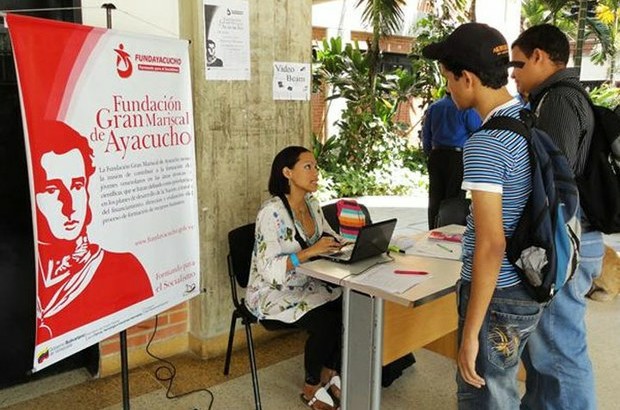
Las solicitudes deberán entregarse con la documentación completa en la sede de la Fundación Gran Mariscal de Ayacucho (Fundayacucho)
da1b0e39-aed7-4bc6-bded-5de79bc473c5

La Fundación Gran Mariscal de Ayacucho (Fundayacucho) inició la convocatoria para los docentes, investigadores y profesionales venezolanos, residenciados legalmente en la República Bolivariana de Venezuela, que deseen cursar estudios de postgrado en universidades en la Federación de Rusia.

Los programas de Especialización, Maestría y Doctorado que se ofertan en la Convocatoria 2016 se enmarcan dentro de las siguientes áreas y especialidades: matemática y mecánica, ingeniería mecánica, electrónica, radiotécnica y sistemas de comunicación, ciencias de la computación, electro y termo ingeniería, geociencias, computación y ciencias de la información, física y astronomía, ciencias políticas y racionalización.

También se ofertan: economía y gerencia, arquitectura, informática, seguridad de la información, fotónica, instrumentación óptica y sistemas de biotécnica y tecnologías, ecología industrial y biotecnología, ingeniería y tecnología de transporte terrestre, nanotecnología y nanomateriales, agricultura, bosques e industria pesquera.

El gobierno del presidente Nicolás Maduro continúa fortaleciendo la formación profesional para el desarrollo del país, a través de este programa de becas con uno de nuestros aliados estratégicos, ratificando los lazos de hermandad y compromiso por el desarrollo que el presidente Vladimir Putin y el Jefe de Estado venezolano han ratificado de manera constante.

Este convenio es muestra de la fortaleza de nuestra política exterior orientada a la paz, a la solidaridad, al desarrollo de nuestras potencialidades para el bienestar del pueblo, contrario a lo establecido por el imperio norteamericano, a través del infame decreto del gobierno de Barack Obama.

Las solicitudes deberán entregarse con la documentación completa en la sede de la Fundación Gran Mariscal de Ayacucho (Fundayacucho) ubicada en la Calle 3b de la zona Industrial de la Urbina, Caracas. Edificio de Fundayacucho, planta baja desde el 28 de marzo de 2016 hasta el 28 de abril de 2016 sin prórroga

Para mayor información sobre la convocatoria Rusia-Venezuela, lo invitamos a visitar la pagina web: www.fundayacucho.gob.ve

Fuente: http://www.vtv.gob.ve/articulos/2016/03/29/fundayacucho-inicia-convocatoria-de-becas-rusia-venezuela-501.html


Comparte este contenido:

África: Educational Attainment Data Release 

The UNESCO Institute for Statistics (UIS) has released new national data on educational attainment and mean years of schooling for the population aged 25 years and older.


Attainment data are now available for 147 countries, 9 more than in the previous release. The data are available in the form of 2 indicators: the highest completed level of education and the minimum completed level of education.


The new educational attainment data follow the levels of education defined in the International Standard Classification of Education (ISCED) 2011. Compared to ISCED 1997, ISCED 2011 makes it possible to present more disaggregated data for persons who have completed tertiary education.


In addition, this is the first UIS release to present time series with attainment data. Data on the highest and minimum completed levels of education are available for the period of 1995 to 2015, allowing analysis of national trends in attainment over time.


The UIS is also releasing an expanded dataset with estimates of mean years of schooling. This indicator measures the average number of years of education completed by a country’s adult population (25 years and older), excluding years spent repeating grades. Mean years of schooling are available for 149 countries, covering the period 1970 to 2014.


To access the new data go to the UIS Data Centre and click on Education – Educational attainment. The tables with attainment data can also be accessed directly from the links below:


• Population by highest completed level of education
• Population by minimum completed level of education (cumulative)
• Mean years of schooling

– See more at: http://www.uis.unesco.org/Education/Pages/education-attainment-data-release-2016.aspx#sthash.rOfGIUeH.dpuf

Comparte este contenido:

Kenya: Kenyatta Pledges Reform in Education for People With Disabilities

África/Kenya/Marzo 2016/Fuente: CapitalNews /Autor: PSCU

Resumen: El presidente Uhuru Kenyatta realizo una visita sorpresa a Joytown la escuela secundaria para los discapacitados físicos donde reiteró que el gobierno va a buscar la manera de reformar el sector de la educación para atender las necesidades de los estudiantes con discapacidad.

President Kenyatta said the government will ensure that the reforms to be undertaken in the education sector will streamline remuneration of teachers in schools and institution taking care of the disabled.

He was fulfilling a pledge he had made a week ago to some students from the school who participated in the Seeing is Believing Initiative of the Duke of Edinburgh’s International Awards and President’s Award – Kenya held at the slopes of Mount Kenya.

President Kenyatta said the government will ensure all Kenyans get equal opportunities saying it is not fair for disabled pupils some of whom are suffering from cerebral palsy to undertake same exam with those who don’t suffer from any disability.

Two students in the school, Purity Wangare of Form 3 and Gabriel Mutua suffering from cerebral palsy recited moving poems in English and Kiswahili on why the government needs to consider giving special national exam to students with disabilities.

Students who suffer from the disease have challenges writing fast, drawing graphs and are also slow in oral communication.

They said that physically disabled students are forced to do exams in the same format, specifically writing on paper, like other students even though they are limited by their physical state.

The President said his government takes keen interests to the needs of the disabled and that is why he appointed a Principal Secretary in charge of special programmes to ensure they are fully catered for.

«There are many people outside doing wonderful jobs, in fact I have a disabled PS who is doing a fantastic job,» said the President.

Further adding, «We will do everything possible to support this institution and also you as an individual to gain employment or self-employment.»

He pledged to work in partnership with the school to expand its facilities and improve on its infrastructure.

In the spirit of Easter celebrations, the President who was accompanied by the First Lady Margaret Kenyatta and other first family members gave various gifts to the school and also cut a cake with the students and teachers who expressed gratitude to the Head of State for his surprise visit.

The School’s principal Leah Kamunye thanked the President and his family for the surprise visit saying ‘it’s a good Easter surprise.»

The school which was started in 1980 with a population of 30 students has expanded and currently hosts a population of 250 students.

Fuente de la noticia:http://www.capitalfm.co.ke/news/2016/03/uhuru-pledges-reform-education-people-disabilities/

Fuente de la imagen:http://www.capitalfm.co.ke/news/files/2016/03/UHURU-JOYTOWN.jpg

Socializado por: Editores África

Comparte este contenido:

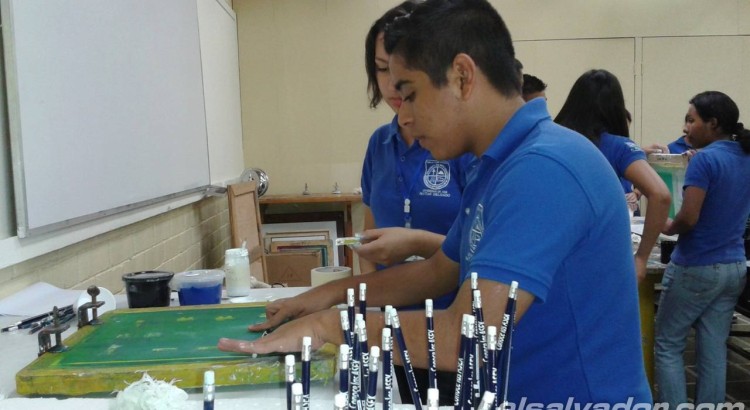
Guatemala: La Matías Delgado promueve Academias Experimentales

Están dirigidas a jóvenes estudiantes del sector público, entre séptimo y tercer año de bachillerato.

Guatemala/28 de marzo de 2016/Elsalvador.com

1459095073865

Las ASEx (Academias Sabatinas Experimentales ASEx) son una iniciativa de innovación y experimentación de métodos, técnicas y recursos educativos para que estudiantes del sector público entre 7° y último año de bachillerato complementen su formación académica desarrollando competencias en el área de las comunicaciones y gestión empresarial que les permitan destacarse como protagonistas del desarrollo local en sus comunidades de origen.

Los estudiantes que egresan, conocen y dominan información y tecnología avanzada que potencian su capacidad analítica para insertarse con mayor ventaja en el medio académico.

Son capaces de crear sus propios emprendimientos y de aprovechar las oportunidades en el mercado laboral en diferentes sectores. Tienen la flexibilidad necesaria para adaptarse a un proceso de cambio a nivel local y nacional.

Los estudiantes logran sus competencias en un ambiente universitario que los obliga a estar en contacto con la realidad, estableciendo relaciones con sus pares y con profesionales destacados, adquiriendo conocimiento, identidad y arraigo con el país.

El proceso de formación estimula el sentido de orgullo de la nacionalidad salvadoreña, para forjar una juventud comprometida con valores para una convivencia pacífica y democrática, identificándose con el emprendimiento y la innovación para el desarrollo empresarial.

La UJMD ha diseñado un sistema de enseñanza-aprendizaje basado en 40 módulos de formación por competencias, con un promedio de duración de 40 horas cada uno. Son permanentemente evaluados y enriquecidos por profesionales identificados y comprometidos con la educación como medio para la transformación personal y nacional.

El pensum tiene cinco áreas de formación: tecnología, emprendimiento, comunicación, investigación y experimentación.

Impacto

El proyecto busca dar oportunidades a estudiantes del sector público a nivel nacional para desarrollarse con excelencia en un entorno inclusivo, equitativo, participativo e innovador. Mediante este proyecto la UJMD garantiza que su proyección social tiene un alcance e impacto a nivel nacional.

Los estudiantes que participan en la academia viven una experiencia educativa de estándares superiores a la media nacional que les motiva la búsqueda de oportunidades de estudios superiores, porque adquieren disciplina y prácticas que les permite responder fácilmente a las exigencias universitarias. Adicionalmente desarrollan competencias que les permite insertarse en el mercado laboral con mayores ventajas.

Los centros educativos de donde provienen los estudiantes se benefician con el liderazgo y la madurez que los estudiantes adquieren en las Academias, son proactivos, son propositivos, son innovadores y fomentan el  trabajo en equipo. Son capaces de transformar su entorno irradiando: entusiasmo, liderazgo, comunicación efectiva y emprendimiento.

Las comunidades, municipios y gobiernos locales aprovechan y apoyan el talento y las competencias de los estudiantes que están en las ASEx, dando oportunidades de participación en la elaboración de artículos para prensa, organización de  eventos, actos públicos, promoción de grupos juveniles y programas de recuperación ambiental entre otros.

Para la Universidad el desempeño de los estudiantes en las ASEx, ha motivado el compromiso de crear oportunidades de continuidad de estudios superiores para lo cual ha diseñado un sistema de becas que cubre matrícula, materiales y gastos personales. Además ha gestionado becas en otras instituciones de educación superior a nivel nacional e internacional.

Las ASEx reflejan la misión educativa de la UJMD de formar a través de la investigación, la docencia y la proyección social estudiantes con alta competencia, con espíritu de investigación e innovación, sólida moralidad, profunda sensibilidad humana y clara visión de futuro.

 Fuente: http://www.elsalvador.com/articulo/negocios/matias-delgado-promueve-academias-experimentales-105789
Comparte este contenido:

UNESCO Institute for Statistics (UIS): Measuring inclusive and equitable quality education and lifelong learning for all

 Education 2030

Measuring inclusive and equitable quality education and lifelong learning for all 

The Sustainable Development Goals (SDGs) will remain just that – a set of goals – without accurate data that countries can use to monitor progress and develop evidence-based policies. In response, the UNESCO Institute for Statistics (UIS) is leading the development and production of the frameworks and indicators needed to monitor SDG 4 to ensure equitable and inclusive quality education and lifelong learning for all by 2030.

To guide this work, the UIS is chairing the Technical Advisory Group (TAG) on post-2015 indicators, which includes technical experts from UNESCO, the EFA Global Monitoring Report, UNICEF, the World Bank and the OECD, as well as representatives of different Member States and civil society organizations. The TAG has released a new proposal presenting a framework for thematic monitoring of SDG 4 (including 43 indicators) based on extensive consultations with Member States, experts and the public. These indicators are included in the Education 2030 Framework for Action, which was adopted by Member States at UNESCO’s General Conference in November 2015. 


At the same time, the UIS is working with partners to develop the initiatives needed to produce a range of new indicators especially in priority areas, such as learning, equity and education finance.

– See more at: http://www.uis.unesco.org/Education/Pages/Education-2030.aspx#sthash.IVEtwgRp.dpuf

Comparte este contenido:

Ghana: Nigerian Students Shine at Ghanaian University Graduation

África/Ghana/Marzo 2016/Fuente y Autor: Thisdaylive.com

Resumen:Dos estudiantes nigerianos ganaron el primer premio en la novena graduación Congregación del Instituto de Tecnología de Accra (AIT). Ghana, atrae anualmente más de  7.000 estudiantes extranjeros de cerca de 60 países para sus universidades privadas y públicas.

Two Nigerians have won the top prize at the 9th Graduation Congregation of the Accra Institute of Technology (AIT), a leading technology-focus private university in Ghana. The event held at the Ghanaian capital city over the weekend.

In a statement released by the University, Mr. Peter Hunnoho Moses, who graduated with a First Class Honours Bachelor of Science Degree in Information Technology was adjudged the overall best student of the graduation class with a cumulative GPA of 3.99. The overall best student in the Female category went to Ms. Odinaka Abel Favour, who graduated with a First Class Bachelor of Science Degree in Business Administration with a cumulative GPA of 3.90.

In his speech to the audience, which saw graduation of Bachelor’s degree holders and PhDs, Prof. Clement Dzidonu, the President of the University observed that this is a major achievement given that, AIT has the toughest and the highest grading system within the university system in Ghana. «To get an A grade in a subject at AIT you must score above 90 and to get a First Class with a cumulative GPA close to the maximum 4.2, means that a student must consistently get A grades across the board», Dzidonu noted.

The Deputy Minister for Education, responsible for Tertiary Education, Hon. Samuel Okudjeto Ablakwa, who was the Special Guest of Honour, congratulated the university for mounting mainly science, technology and engineering programmes which in his view was in line with the Ghanaian government’s determination to implement and enforce the 60:40 policy guidelines aimed at giving priority to science, mathematics and engineering programmes in the tertiary institutions.

He announced that in line with this, the Ministry of Education through the National Accreditation Board (NAB) and the National Council for Tertiary Education (NCTE) has drawn up new guidelines that would ensure that the accreditation of new universities and academic programmes meet these guidelines.

The Deputy Minister also congratulated those receiving the overall best graduating student awards and noted that, Ghana is currently attracting over 7,000 foreign students from close to 60 countries to its private and public universities annually.

He announced that the government is mindful of the internationalisation of higher education and the Ministry of Education is empowering its statutory higher education regulatory bodies to ensure that the high academic standards of a number of the Ghanaian universities including AIT are internationally benchmarked to continue to attract more foreign students.

Chairman of the AIT Board of Trustees, Prof. Francis K. Allotey, in his address to the congregation, announced the election of two eminent academics to the Board, namely: Prof. Goolam Mohamedbhai who is the former Vice Chancellor of University of Mauritius; former Secretary General of the Association of African Universities (AAU); former President of the International Association of Universities (IAU) and the former Chairman of the Association of Commonwealth Universities.

The other is Prof. Anuwar Ali, the former Vice Chancellor of the National University of Malaysia; former President and Vice Chancellor of the Open University of Malaysia and member of the Higher Education Council of Malaysia. «With this new members, the AIT Board of Trustees, now boast of five former Vice Chancellors of World-Class universities; there is no doubt that AIT has the most high-powered and academically distinguished University Board on the African continent», he observed.

Fuente de la noticia:http://www.thisdaylive.com/index.php/2016/03/27/nigerian-students-shine-at-ghanaian-university-graduation/

Fuente de la imagen:http://leadersandco.s3-eu-west-1.amazonaws.com/wp-content/uploads/2016/03/26235142/Nigerian-Students-in-Ghanaian.jpg

Socializado por: Editores África

Comparte este contenido:

Venezuela: Ciclo de conferencias Transformación curricular en el nivel de educación primaria

MIÉRCOLES 30 DE MARZO DE 2016


PROGRAMA:

  • 8:30 am. Himno Nacional. Palabras de Bienvenida por parte de la Viceministra de Educación Inicial y Primaria, Profa. Gisela Toro de Lara.


  • 9:00 a.m a 11:00 a.m. Ciclo de Conferencias: “TRANSFORMACIÓN CURRICULAR EN EL NIVEL DE EDUCACIÓN PRIMARIA”. Con la participación de los Ponentes: Yoama Paredes, Viceministra de Educación Media y Luis Bonilla, Presidente del Consejo del Iesalc, UNESCO.


  • 11:30 a.m a 12:00 m. Sesión de preguntas y respuestas.


  • 12:00 m a 01:00 p.m. Intervención por parte de la Profa. Marubi Arcas. Directora General de Educación Primaria Bolivariana.


Comparte este contenido:
Page 6068 of 6178
1 6.066 6.067 6.068 6.069 6.070 6.178