Saltar al contenido principal
Page 672 of 6179
1 670 671 672 673 674 6.179

Bolivia: Maestros del trópico protestan contra la Caja Nacional de Salud por mala atención

Los maestros del trópico protestaron en la puerta de la Caja Nacional de Salud (CNS), este jueves, por la mala atención y pidiendo mejoras para evitar más muertes por Covid-19.

“Nos declaramos en estado de emergencia y en pie de lucha en defensa de nuestros afiliados. No vamos a permitir más la negligencia y mala atención que dan los médicos y funcionarios de la CNS, porque por culpa de esa mala atención tenemos más muertos, especialmente, por Covid-19”, declaró el dirigente de los maestros del trópico, José Catorceno.

Los profesores protestaron en la puerta de la administración de la CNS, ubicada en la calle Esteban Arze, para denunciar las deficiencias en la atención.

El sector exige mejoras en la atención y pide a los administradores que tomen acciones, pues considera que no es justo que les  diga que “no hay medicamentos, que no hay oxígeno, que no hay camas en terapia intermedia, que no hay camas en terapia intensiva, cuando administra millones del dinero de los trabajadores”.

Advirtió que si no hay mejoras inmediatas radicalizarán sus medidas a nivel nacional con el magisterio rural. “Se les da una pequeña oportunidad para que mejoren, sino se instalarán bloqueos, huelgas y se tomarán las cajas”.

Denuncia

El martes falleció un maestro después de una semana de peregrinar por atención. Los médicos lo abandonaron dejándolo con una enfermera y no le dieron cama de terapia intermedia ni intensiva, dijo el dirigente.

El martes recién después de una semana le dieron una cama de terapia intensiva, pero falleció. El dirigente dijo que la reacción de los médicos fue demasiado tarde.

Fuente: https://www.lostiempos.com/actualidad/cochabamba/20210617/maestros-del-tropico-protestan-contra-caja-nacional-salud-mala

Comparte este contenido:

España: El III Congreso Internacional Montessori acerca de manera gratuita alternativas a la educación tradicional

Tu Guía Montessori repite por tercer año consecutivo la organización de esta cubre virtual internacional. Treintena de ponentes de diferentes continentes abordarán el tema «Montessori en el mundo: otra educación es posible.» Las conferencias se podrán ver de forma gratuita del 5 al 9 de julio de 2021

Después del éxito de las dos primeras ediciones del Congreso Internacional Montessori la Guía Montessori Miriam Escacena vuelve a organizar este espacio de encuentro a nivel mundial en torno a la educación.

El evento tendrá lugar la semana del 5 al 9 de julio y reunirá a una treintena de expertos de España, México, Argentina, Chile, México, Perú, EEUU, Bélgica, Italia, India y Japón que ofrecerán conferencias sobre diferentes temáticas relacionadas con la Educación como un elemento de cambio social.

El programa de este año ha sido diseñado con el objetivo de divulgar desde la evidencia científica y derribar algunos mitos que giran en torno a esta pedagogía. Las ponencias de los expertos se podrán ver desde la web Tu Guía Montessori, y estarán basadas en cinco temáticas que se engloban bajo el título «Montessori en el mundo: otra forma de educar es posible». Los ponentes abordarán, entre otros, aspectos relacionados con la educación Montessori, el desarrollo de competencias, la aplicación de esta pedagogía a escuelas públicas, filosofía del método y proyectos que se hacen realidad aún con muy pocos recursos.

¿A quién va dirigido?

«El Congreso Internacional Montessori está dirigido a todas las personas interesadas en la educación, ya sean familias como profesionales. El año pasado fue muy especial, ya que celebrábamos el 150 aniversario del nacimiento de Maria Montessori en 1870 y más de 52.000 personas pudieron ver las conferencias desde distintos países del mundo» – explica Escacena, al frente de la organización.

«Nuestra audiencia es ya fiel a este evento y creemos que el Congreso de este año va a superar expectativas.

Cada vez son más familias que entienden el valor del legado educativo que van a transmitir a sus hijos, que anhelan una evolución del sistema tradicional hacia un enfoque más integral y respetuoso en el que los niños y niñas puedan construir su propio aprendizaje de forma significativa.

Al mismo tiempo, hemos notado un gran incremento de público de profesionales que asiste para mejorar su desempeño en el día a día, tales como educadores, maestros, docentes, psicólogos, integradores sociales, terapeutas… etc. Así como equipos directivos de instituciones educativas que desean poner en práctica la innovación en base a las últimas investigaciones de la neurociencia».

¿Cuándo y dónde tendrá lugar el evento?

Las conferencias podrán disfrutarse la semana del 5 al 9 de julio (de lunes a viernes), y el domingo anterior habrá un evento inaugural en vivo en el que la audiencia podrá interactuar con organizadores y ponentes.

A partir del lunes, cada día se podrán ver 6 ponencias al día de forma gratuita en la web de Tu Guía Montessori, las cuales estarán disponibles por 24 horas. El único requisito será tener una conexión a internet y registrarse previamente con el nombre y la dirección de correo electrónico.

Además, se ofrece la posibilidad de reservar un pase Premium para poder ver las ponencias durante un año y disfrutar, además, de material extra ofrecido por los ponentes, patrocinadores y colaboradores (seminarios en vivo, e-books, descuentos en programas de formación y en materiales relacionados con la pedagogía, etc.), siendo esta la forma de financiar el proyecto con un enfoque de reciprocidad.

Durante esta semana del congreso se harán entrevistas en vivo a los ponentes de diferentes países del mundo que se emitirán a través de las redes sociales.

Beneficios de participar en el Congreso

En palabras de la organización, «la finalidad de esta tercera edición del Congreso Internacional Montessori es lograr llevar a los hogares y a los profesionales un espacio que permita:

– Comprobar cómo la neurociencia demuestra hoy día lo que Maria Montessori intuyó hace más de 100 años.

– Descubrir cómo se desarrolla la educación Montessori, cuáles son las áreas de aprendizaje y cómo se trabaja con materiales manipulativos.

– Aprender sobre desarrollo de competencias tales como pensamiento creativo, inteligencia emocional, comunicación no violenta, etc.

– Conocer claves útiles que sirvan de inspiración, comenzando por crear un ambiente preparado en el hogar.

– Adquirir valiosas herramientas prácticas que se pueden aplicar en el día a día, tanto en la crianza y educación de los hijos como para los alumnos si se es maestro o se trabaja con la infancia.

– Tomar conciencia de la necesidad de que exista un cambio de paradigma en el mundo educativo y obtener argumentos sólidos para defender dicho planteamiento.

– Escuchar experiencias de primera mano sobre cómo crear una escuela Montessori incluso con muy pocos recursos, o como llevar esta pedagogía a la escuela pública desarrollando una adaptación curricular acorde a la legislación».

¿Cómo participar de forma gratuita?
De una manera sencilla a través de este link.

El único requisito es solicitar inscripción electrónica en este enlace: https://www.tuguiamontessori.com/congreso/ y seguir las instrucciones que aparecerán a continuación para confirmar la inscripción, (requisito indispensable para poder ser añadido a la lista de difusión cumpliendo el Reglamento Europeo de Protección de Datos Personales).

Para cualquier información adicional sobre el evento o posibles patrocinios se puede escribir directamente a la organización (congreso@tuguiamontessori.com).

Fuente: https://www.murcia.com/empresas/noticias/2021/06/17-el-iii-congreso-internacional-montessori-acerca-de-manera-gratuita-alternativas-a-la-educacion-tradi.asp

Comparte este contenido:

Estados Unidos: Aumentan las manifestaciones en Carolina del Norte a la víspera de Juneteenth

Siguen tomando fuerza en Carolina del Norte las manifestaciones en contra de la esclavitud, todo a la víspera del aniversario 19 de Juneteenth.

A medida que la fecha del 19 de junio y el movimiento obtiene una aceptación más generalizada, el estado busca contar la historia completa de la esclavitud.

“Esta es una oportunidad para realmente tener un ojo crítico”, dijo Angela Thorpedirectora de la Comisión de la Herencia Afroamericana de Carolina del Norte.

“¿Cómo era la esclavitud en todo nuestro estado y cómo podemos honrar a las personas que son liberadas o que se liberan a sí mismas?”, añadió.

Las manifestaciones aumentaron en el estado durante los últimos días luego de la indignación que provocó un evento promovido por Latta Plantation, a las afueras de Charlotte.

El evento promovía a los “refugiados blancos que habían sido desplazados y también tienen una historia que contar”.

Dicho acto tuvo que ser cancelado y los funcionarios del condado de Mecklenburg cerraron Latta Plantation hasta nuevo aviso.

En el Capitolio, en el centro de Raleigh, los visitantes pueden hacer dibujos, retratos o escribir los nombres de antiguos esclavos como forma de homenaje.

Por su parte, Stagville Plantation, en las afueras de Durham, está realizando manifestaciones en la propiedad que en el pasado albergó a casi 1,000 esclavos.

Cabe destacar que el movimiento “Junio 19” representa el 19 de junio de 1865, el día en que las personas esclavizadas en Galveston, Texas, recuperaron su libertad.

En esa misma fecha se dio la rendición en Virginia y Carolina del Norte, por lo que el estado tuvo una conexión directa.

Fuente: https://lanoticia.com/aumentan-las-manifestaciones-en-carolina-del-norte-a-la-vispera-de-juneteenth/

Comparte este contenido:

Mujeres y niños en los campos de refugiados yemeníes pagan el precio de la guerra

Durante casi siete años, la guerra civil de Yemen ha dejado 233.000 personas muertas y el 80% de la población se ha vuelto dependiente de la ayuda para sobrevivir.

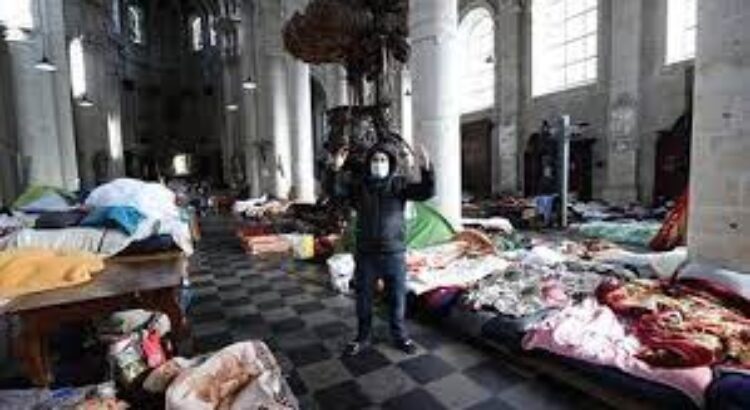
Cientos de miles de mujeres y niños que han sido desplazados debido a la guerra de siete años en Yemen y se han refugiado en campos de refugiados luchan por sobrevivir en condiciones difíciles.

El Alto Comisionado de las Naciones Unidas para los Refugiados dijo recientemente que la guerra ha desplazado a 4 millones de personas, en su mayoría mujeres y niños, de los cuales el 64% no tiene ingresos.

«Me mudé para vivir en cuatro campamentos durante seis años, antes de terminar en el campamento de al-Barakani en la provincia de Taiz [suroeste]», dijo Jawhara al-Rai a la Agencia Anadolu.

«No hay vida real en el campo. Casi muero de la tristeza porque no hay necesidades básicas cubiertas o ayuda. La temporada de lluvias se ha convertido en una pesadilla para todos los desplazados en los campos. Todo aquí se moja, incluso el trigo y la leña, y la vida se convierte en una tragedia», dijo Al-Rai.

La temporada de lluvias comienza desde mediados de abril hasta agosto y decenas de miles de personas, en su mayoría desplazadas, ya se han visto afectadas, según un informe de la Oficina de Coordinación de Asuntos Humanitarios de las Naciones Unidas en Yemen.

«Vivimos, dormimos, comemos y cocinamos en esta carpa mojada por la lluvia, sin mantas, camas ni calentadores», dijo al-Rai mientras abrazaba a su bebé que lloraba.

Huda al-Dinani, que vive en el mismo campamento, le contó a la Agencia Anadolu su preocupación por la falta de asistencia. «Hemos sido desplazados a este campamento durante meses, y desde entonces ninguna organización se ha puesto en contacto con nosotros para brindarnos ayuda o asistencia».

«No recibimos carpas, comida ni enseres excepto de un benefactor que nos entrega una bolsa de harina todos los meses», aseguró al-Dinani mientras permanecía junto a sus tres hijos.

«Esta trágica situación nos obligó a mendigar en los mercados para seguir viviendo», confirmó a Al-Dinani, mientras señaló lo que una mujer sentada frente a un lugar para cocinar estaba haciendo. Cocinaba agua con harina para asemejar un aseed, un manjar yemení hecho con pescado seco servido con queso local y una ensalada fresca.

«Cuando nos enfermamos, no vamos al médico ni recibimos tratamiento. Sufrimos de hambre, enfermedades y pobreza», agregó al-Dinani.

Además, contó que hay una propagación de serpientes. “Hace unos días matamos a una serpiente frente a la carpa. Tenía miedo por mis hijos porque una mordedura venenosa terminaría con sus vidas en minutos».

Dos millones de desplazados

El periodista yemení Afaf al-Abara dijo que las condiciones de los desplazados en Yemen son muy difíciles, especialmente para las mujeres y los niños.

«Hay muchas mujeres que están pasando por la terrible experiencia del hambre y las enfermedades, mientras que otras han muerto debido a partos difíciles por la falta de servicios de salud o la propagación de enfermedades», dijo a la Agencia Anadolu.

«Hay alrededor de 2 millones de mujeres yemeníes desplazadas, que sufren la amargura y crueldad de la experiencia del desplazamiento, y viven con la esperanza de que la guerra termine y regresar a sus hogares», aseguró Al-Abara.

Durante casi siete años, Yemen ha sido testigo de una guerra que ha dejado 233.000 personas muertas y el 80% de la población de 30 millones se ha vuelto dependiente de la ayuda para sobrevivir, en la peor crisis humanitaria del mundo, según la ONU.

El conflicto se ha agravado desde marzo de 2015, cuando una coalición árabe liderada por la vecina Arabia Saudita llevó a cabo operaciones militares en apoyo de las fuerzas gubernamentales, frente a los hutíes respaldados por Irán, que controlan varias gobernaciones, incluida la capital, Saná.

Fuente: https://www.aa.com.tr/es/mundo/mujeres-y-ni%C3%B1os-en-los-campos-de-refugiados-yemen%C3%ADes-pagan-el-precio-de-la-guerra/2277812#

Comparte este contenido:

Against Apartheid Pedagogy in the Age of White Supremacy

By; Henry Giroux

The toxic thrust of white supremacy runs through American culture like an electric current. Jim Crow is back without apology suffocating American society in a wave of voter suppression laws, the elevation of racist discourse to the centers of power, and the ongoing attempt by right-wing politicians to implement a form of apartheid pedagogy that makes important social issues that challenge the racial and economic status quo disappear. The cult of manufactured ignorance now works through disimagination machines engaged in a politics of falsehoods and erasure. Matters of justice, ethics, equality, and historical memory now vanish from the classrooms of public and higher education and from powerful cultural apparatuses and social media platforms that have become the new teaching machines.

In the current era of white supremacy, the most obvious version of apartheid pedagogy, is present in attempts by Republican Party politicians to rewrite the narrative regarding who counts as an American. This whitening of collective identity is largely reproduced by right-wing attacks on diversity and race sensitivity training, critical race programs in government, and social justice and racial issues in the schools. These bogus assaults are all too familiar and include widespread and coordinated ideological and pedagogical attacks against both historical memory and critical forms of education.

The fight to censor critical, truth telling versions of American history and the current persistence of systemic racism is part of a larger conservative project to prevent teachers, students, journalists, and others from speaking openly about crucial social issues that undermine a viable democracy. Such attacks are increasingly waged by conservative foundations, anti-public intellectuals, politicians, and media outlets. These include right-wing think tanks such as Heritage Foundation and Manhattan Institute, conservative scholars such as Thomas Sowell, right-wing politicians such as Mitch McConnell, and far-right media outlets such as City JournalThe Daily CallerThe Federalist, and Fox News. The threat of teaching children about the history and systemic nature of racism appears particularly dangerous to Fox News, which since June 5, 2020 has posited “critical race theory” as a threat in over 150 different broadcasts.[1] What is shared by all of these individuals and cultural apparatuses is the claim that critical race theory and other “anti-racist” programs constitute forms of indoctrination that threatens to undermine the alleged foundations of Western Civilization.

The nature of this moral panic is evident in the fact that 15 state legislatures across the country have introduced bills to prevent or limit teachers from teaching about the history of slavery and racism in American society. In doing so, they are making a claim for what one Texas legislator called “traditional history,” which allegedly should focus on “ideas that make the country great.”[2] Idaho’s lieutenant governor, Janice McGeachin, is more forthright in revealing the underlying ideological craze behind censoring any talk by teachers and students about race in Idaho public schools. She has introduced a taskforce to protect young people from what she calls, with no pun intended, “the scourge of critical race theory, socialism, communism, and Marxism.”[3]

Such attacks are about more than censorship and racial cleansing. They make the political more pedagogical in that they use education and the power of persuasion as weapons to discredit any critical approach to grappling with the history of racism and white supremacy. In doing so, they attempt to undermine and discredit the critical faculties necessary for students and others to examine history as a resource in order to “investigate the core conflict between a nation founded on radical notions of liberty, freedom, and equality, and a nation built on slavery, exploitation, and exclusion.”[4] The current attacks on critical race theory, if not critical thinking itself, are but one instance of the rise of apartheid pedagogy. This is a pedagogy in which education is used in the service of dominant power in order to both normalize racism, class inequities, and economic inequality while safeguarding the interests of those who benefit from such inequities the most. In pursuit of such a project, they impose a pedagogy of oppression, complacency, and mindless discipline. They ignore or downplay matters of injustice and the common good, and rarely embrace notions of community as part of a pedagogy that engages pressing social, economic and civic problems. Instead of an education of civic practice that enriches the public imagination, they endorse all the elements of indoctrination central to formalizing and updating a mode of fascist politics.

The conservative wrath waged against critical race theory is not only about white ignorance being a form of bliss but is also central to a struggle over power—the power of the moral and political imagination. White ignorance is crucial to upholding the poison of white supremacy. Apartheid pedagogy is about denial and disappearance–a manufactured ignorance that attempts to whitewash history and rewrite the narrative of American exceptionalism as it might have been framed in the 1920s and 30s when members of a resurgent Ku Klux Klan shaped the policies of some school boards. Apartheid pedagogy uses education as a disimagination machine to convince students and others that racism does not exist, that teaching about racial justice is a form of indoctrination, and that understanding history is more an exercise in blind reverence than critical analysis. Apartheid pedagogy aims to reproduce current systems of racism rather than end them. Organizations such as No Left Turn in Education not only oppose teaching about racism in schools, but also comprehensive sex education, and teaching children about climate change, which they view as forms of indoctrination. Without irony, they label themselves an organization of “patriotic Americans who believe that a fair and just society can only be achieved when malleable young minds are free from indoctrination that suppresses their independent thought.”[5] This is the power of ignorance in the service of civic death and a flight from ethical and social responsibility. Kati Holloway, citing the NYU philosopher Charles W. Mills, succinctly sums up the elements of white ignorance. She writes:

“White ignorance,” according to NYU philosopher Charles W. Mills, is an “inverted epistemology,” a deep dedication to and investment in non-knowing that explains white supremacy’s highly curatorial (and often oppositional) approach to memory, history and the truth. While white ignorance is related to the anti-intellectualism that defines the white Republican brand, it should be regarded as yet more specific. According to Mills, white ignorance demands a purposeful misunderstanding of reality—both present and historical—and then treats that fictitious worldview as the singular, de-politicized, unbiased, “objective” truth. “One has to learn to see the world wrongly,” under the terms of white ignorance, Mills writes, “but with the assurance that this set of mistaken perceptions will be validated by white epistemic authority.”[6]

New York Times columnist Michelle Goldberg reports that right-wing legislators have taken up the cause to ban critical race theory from not only public schools but also higher education. She highlights the case of Boise State University, which has banned dozens of classes dealing with diversity. She notes that soon afterwards, “the Idaho State Senate voted to cut $409,000 from the school’s budget, an amount meant to reflect what Boise State spends on social justice programs.”[7] Such attacks are happening across the United States and are not only meant to curtail teaching about racism, sexism, and other controversial issues in the schools, but also to impose strict restrictions on what non-tenured assistant professors can teach and to what degree they can be pushed to accept being both deskilled and giving up control over the conditions of their labor.

In an egregious example of an attack on free speech and tenure itself, the Board of Trustees at the University of North Carolina denied a tenure position to Pulitzer Prize-winning journalist, Nikole Hannah-Jones because of her work on the New York Times Magazine’s 1619 project, “which examined the legacy of slavery in America.”[8] The failure to provide tenure to Hannah-Jones, who is also the recipient of a MacArthur Foundation “Genius Grant,” and an inductee into the North Carolina Media and Journalism Hall of Fame, is a blatant act of racism and a gross violation of academic freedom. Let’s be clear. Hannah-Jones was denied tenure by the North Carolina Board of Trustees because she brings to the university a critical concern with racism that clashes with the strident political conservatism of the board. It is also another example of a racist backlash by conservatives who wish to deny that racism even exists in the United States, never mind that it should even by acknowledged in the classrooms of public and higher education.

This is a form of “patriotic education” being put in place by a resurgence of those who support Jim Crow power relations and want to impose pedagogies of repression on students in the classroom. This type of retribution is part of a longstanding politics of fear, censorship and academic repression that has been waged by conservatives since the student revolts of the 1960s.[9] It is also part of the ongoing corporatization of the university in which business models now define how the university is governed, faculty are reduced to part-time workers, and students are viewed as customers and consumers.[10]

Equally important, Hannah-Jones’ case is an updated and blatant attack on the ability and power of faculty rather than Boards of Trustees to make decisions regarding both faculty hiring and the crucial question who decides how tenure is handled in a university.[11] Keith E. Whittington and Sean Wilentz are right in stating that the Board’s actions to deny Hannah-Jones a tenured professorship are about more than a singular violation of faculty rights, academic freedom, and an attack on associated discourses relating to critical race theory. They write:

For the Board of Trustees to interfere unilaterally on blatantly political grounds is an attack on the integrity of the very institution it oversees. The perception and reality of political intervention in matters of faculty hiring will do lasting damage to the reputation of higher education in North Carolina — and will embolden boards across the country similarly to interfere with academic operations of the universities that they oversee.[12]

Holding critical ideas has become a liability in the contemporary neoliberal university. Also at risk here is the relationship between critical thinking, civic values, and historical remembrance in the current attempts to suppress not just voting rights but also dangerous memories, especially regarding the attack on Critical Race Theory. David Theo Goldberg has brilliantly outlined how the war on Critical Race Theory and other anti-racist programs is designed largely to eliminate the legacy and persistent effects of systemic racial injustice and its underlying structural, ideological, and pedagogical fundamentals and components. This is apartheid pedagogy with a vengeance. As Goldberg writes:

First, the coordinated conservative attack on CRT is largely meant to distract from the right’s own paucity of ideas. The strategy is to create a straw house to set aflame in order to draw attention away from not just its incapacity but its outright refusal to address issues of cumulative, especially racial, injustice…. Second, the conservative attack on CRT tries to rewrite history in its effort to neoliberalize racism: to reduce it to a matter of personal beliefs and interpersonal prejudice. … On this view, the structures of society bear no responsibility, only individuals. Racial inequities today are …not the living legacy of centuries of racialized systems…. Third, race has always been an attractive issue for conservatives to mobilize around. They know all too well how to use it to stoke white resentment while distracting from the depredations of conservative policies for all but the wealthy.[13]

The public imagination is now in crisis. Radical uncertainty has turned lethal. In the current historical moment, tyranny, fear, and hatred have become defining modes of governance and education. Right-wing politicians bolstered by the power of corporate controlled media now construct ways of thinking and feeling that prey on the anxieties of the isolated, disenfranchised, and powerless. This is a form of apartheid pedagogy engineered to substitute disillusionment and incoherence for a sense of comforting ignorance, the thrill of hyper-masculinity, and the security that comes with the militarized unity of the accommodating masses waging a war on democracy. The public imagination is formed through habits of daily life, but only for the better when such experiences are filtered through the ideals and promises of a democracy. This is no longer true. Under neoliberal fascism, the concentration of power in the hands of a ruling elite has ensured that any notion of change regarding equality and justice is now tainted, if not destroyed, as a result of what Theodor Adorno called a retreat into apocalyptic bombast marked by “an organized flight of ideas.”[14]

Violence in the United States has become a form of domestic terrorism; it is omnipresent and works through complex systems of symbolic and institutional control. It extends from the prison and school to the normalizing efforts of cultural apparatus that saturate an image-based culture. Violence registers itself in repressive policies, police brutality, and in an ongoing process of exclusion and disposability. It is also present in the weaponization of ideas and the institutions that produce them through forms of apartheid pedagogy. Fear now comes in the form of both armed police and repressive modes of education. As the famed artist Isaac Cordal observes, “We live in societies….that use fear in order to make people submissive….Fear bends us [and makes us]vulnerable to its desires….Our societies have been built on violence, and that heritage, that colonial hangover which is capitalism today still remains.”[15] Under gangster capitalism’s system of power, the poverty of the civic and political imagination is taking its last breath.

Authoritarian societies do more than censor and subvert the truth, they also shape collective consciousness and punish those who engage in dangerous thinking.[16] For instance, the current plague of white supremacy fueling neoliberal fascism is rooted not only in structural and economic forms of domination, but also intellectual and pedagogical forces, making clear that education is central to politics. It also points to the urgency of understanding that white supremacy is first and foremost a struggle over agency, assigned meanings, and identity—over what lives count and whose don’t. This is a politics and pedagogy that often leaves few historical traces in a culture of immediacy and manufactured ignorance.

The emergent and expanding presence of white supremacy and fascist politics disappear easily in a culture dominated by the endless images of spectacularized violence that fill screen culture with mass shootings, police violence, and racist attacks on Blacks and Asian Americans in the post-Trump era. Disconnected and decontextualized such images vanish in an image-based culture of shock, entertainment, and organized forgetting. When critical ideas come to the surface, right-wing politicians and pundits attack dissidents as un-American and the oppositional press as “an enemy of the American people.” They also attempt to impose a totalitarian notion of “patriotic education” on public schools and higher education and censor academics who criticize systemic abuses.[17]

As is well known, former President Trump, waged a relentless attack on the media and in ways too similar to ignore echoed written and spoken sentiments that Hitler used in his rise to power.[18] In this instance, culture, increasingly shaped by an apartheid pedagogy, has turned oppressive and must be addressed as a site of struggle while working in tandem with the development of an ongoing massive resistance movement. This suggests the need for a more comprehensive understanding of politics and the power of the educational force of the culture. Such connections necessitate closer attention be given to the educational and cultural power of a neoliberal corporate elite who use their mainstream and social media platforms to shape pedagogically the collective consciousness of a nation in the discourse and relations of hate, bigotry, ignorance, and conformity.

America’s slide into a fascist politics demands a revitalized understanding of the historical moment in which we find ourselves, along with a systemic critical analysis of the new political formations that mark this period. Part of this challenge is to create a new language and mass social movement to address and construct empowering terrains of education, politics, justice, culture, and power that challenge existing systems of racist violence and economic oppression. The beginning of such a political and pedagogical strategy can be found in the Black Lives Matter movement and its alignment with other movements fighting against authoritarianism. The Black Lives Matter movement teaches us “that eradicating racial oppression ultimately requires struggle against oppression in all of its forms…[especially] restructuring America’s economic system.”[19] This is especially important as those groups marginalized by class, race, ethnicity, and religion have become aware of how much in this new era of fascist politics they have lost control over the economic, political, pedagogical, and social conditions that bear down on their lives. Visions have become dystopian, devolving into a sense of being left out, abandoned, and subject to increasing systems of terror and violence. These issues can no longer be viewed as individual problems but as manifestations of a broader failure of politics. Moreover, what is needed is not a series of stopgap reforms limited to particular institutions or groups, but a radical restructuring of the entirety of U.S. society.

The call for a socialist democracy demands the creation of visions, ideals, institutions, social relations, and pedagogies of resistance that enable the public to imagine a life beyond a social order in which racial, class, gender, and other forms of violence produce endless assaults on the environment, systemic police violence, a culture of ignorance and cruelty. Such challenges must also address the assault on the public and civic imagination, mediated through the elevation of war, militarization, violent masculinity, and the politics of disposability to the highest levels of power. Capitalism is a death driven machine that that infantilizes, exploits, and devalues human life and the planet itself. As market mentalities and moralities tighten their grip on all aspects of society, democratic institutions and public spheres are being downsized, if not altogether disappearing, along with the informed citizens without which there is no democracy.

Any viable pedagogy of resistance needs to create the educational and pedagogical tools to produce a radical shift in consciousness, capable of both recognizing the scorched earth policies of neoliberal capitalism, and the twisted ideologies that support it. This shift in consciousness cannot take place without pedagogical interventions that speak to people in ways in which they can recognize themselves, identify with the issues being addressed, and place the privatization of their troubles in a broader systemic context.[20] Niko Block gets it right in arguing for a “radical recasting of the leftist imagination,” in which the concrete needs of people are addressed and elevated to the forefront of public discussion in order to confront and get ahead of the crises of our times. He writes:

the crises of the twenty-first century call for a radical recasting of the leftist imagination. This process involves building bridges between the real and the imaginary, so that the path to achieving political goals is plain to see. Accordingly, the articulation of leftist goals must resonate with people in concrete ways, so that it becomes obvious how the achievement of those goals would improve their day-to-day lives. The left, in this sense, must appeal to people’s existing identities and not condescend the general public as victims of “false consciousness.” All this means building movements of continual improvement and refusing to ask already-vulnerable people for short-term losses on the abstract promise of long-term gains. This project also demands that we understand precisely why right-wing ideology retains a popular appeal in so many spaces.[21]

A pedagogy of resistance must be on the side of hope and civic courage in order to fight against a paralyzing indifference, grave social injustices, and mind deadening attacks on the public imagination. At stake here is the struggle for a new world based on the notion that capitalism and democracy are not the same, and that we need to understand the world, how we think about it and how it functions, in order to change it. In the spirt of Martin Luther King, Jr’s call for a more comprehensive view of oppression and political struggle, it is crucial to address his call to radically interrelate and restructure consciousness, values, and society itself. In this instance, King and other theorists, such as Saskia Sassen, call for a language that ideological ruptures and changes the nature of the debate. This suggests more than simply a rhetorical challenge to the economic conditions that fuel neoliberal capitalism. There is also the need to move beyond abstract notions of structural violence and identify and connect the visceral elements of violence that bear down on and “constrain agency through the hard surfaces of [everyday] life.”[22]

We live in an era in which the distinction between the truth and misinformation is under attack. Ignorance has become a virtue, and education has become a tool of repression that elevates self-interest and privatization to central organizing principles of both economics and politics. The socio-historical conditions that enable racism, systemic inequality, anti-intellectualism, mass incarceration, the war on youth, poverty, state violence, and domestic terrorism must be remembered in the fight against that which now parades as ideologically normal. Historical memory and the demands of moral witnessing must become part of a deep grammar of political and pedagogical resistance in the fight against neoliberal capitalism and other forms of authoritarianism.

A pedagogy of resistance necessitates a language that connects the problems of systemic racism, poverty, militarism, mass incarceration, and other injustices as part of a totalizing structural, pedagogical, and ideological set of condition endemic to capitalism in its updated merging of neoliberalism and fascist politics. Audre Lorde was right in her insistence that “There is no such thing as a single-issue struggle because we do not live single-issue lives.”

We don’t need master narratives, but we do need a recognition that politics can only be grasped as part of a social totality, a struggle rooted in overlapping differences that bleed into each other. We need relational narratives that bring together different struggles for emancipation and social equality.

Central to any viable notion of pedagogical resistance is the courage to think about what kind of world we want—what kind of future we want to build for our children. These are questions that can only be addressed when we address politics and capitalism as part of a general crisis of democracy. This challenge demands the willingness to develop an anti-capitalist consciousness as the basis for a call to action, one willing to dismantle the present structure of neoliberal capitalism. Chantal Mouffe is correct in arguing that “before being able to radicalize democracy, it is first necessary to recover it,” which means first rejecting the commonsense assumptions that capitalism and democracy are synonymous.[23]

Clearly, such a project cannot combat poverty, militarism, the threat of nuclear war, ecological devastation, economic inequality, and racism by leaving capitalism’s system of power in place. Nor can resistance be successful if it limits itself to the terrain of critique, criticism, and the undoing of specific oppressive systems of representation. Pedagogies of resistance can teach people to say no, become civically literate, and create the conditions for individuals to develop a critical political consciousness. The challenge here is to make the political more pedagogical. This suggests analyzing how the forces of gangster capitalism impact consciousness, shape agency, and normalize the internalization of oppression. Such a project suggest a politics willing to transcend the fragmentation and politicized sectarianism all too characteristic of left politics in order to embrace a Gramscian notion of “solidarity in a wider sense.”[24] There is ample evidence of such solidarity in the policies advocated by the progressive Black Lives Matter protest, the call for green socialism, movements for health as a global right, growing resistance against police violence, emerging ecological movements such as the youth-based Sunrise movement, the Poor People’s Campaign, the massive ongoing strikes waged by students and teachers against the defunding and corporatizing of public education, and the call for resistance from women across the globe fighting for reproductive rights.

What must be resisted at all costs, is an “apartheid pedagogy,” rooted in the notion that a particular mode of oppression, and those who bear its weight, offers political guarantees.[25] Identifying different modes of oppression is important, but it is only the first step in moving from addressing the history and existing mechanisms that produce such trauma to developing and embracing a politics that unites different identities, individuals, and social movements under the larger banner of democratic socialism. This is a politics that refuses the easy appeals of ideological silos which “limits access to the world of ideas and contracts the range of tools available to would-be activists.”[26]

The only language provided by neoliberalism is the all-encompassing discourse of the market and the false rhetoric of unencumbered individualism, making it difficult for individuals to translate private issues into broader systemic considerations. Mark Fisher was right in claiming that capitalist realism not only attempts to normalize the notion that there is not only no alternative to capitalism, but also makes it “impossible even to imagine a coherent alternative to it.” [27] This is a formula for losing hope because it insists that that the world cannot change. It also has the hollow ring of slow death.

The urgency of the historical moment demands new visions of social change, an inspired and energized sense of social hope, and the necessity for diverse social movements to unite under the collective struggle for democratic socialism. The debilitating political pessimism of neoliberal gangster capitalism must be challenged as a starting point for believing that rather than being exhausted, the future along with history is open and now is the time to act. It is time to make possible what has for too long been declared as impossible.

Notes.

1) Adam Harris, “The GOP’s ‘Critical Race Theory’ Obsession,” The Atlantic (May 7, 2021). Online: https://www.theatlantic.com/politics/archive/2021/05/gops-critical-race-theory-fixation-explained/618828/ 

2) Kate McGee, “Texas’ Divisive Bill Limiting How Students Learn About Current Events And Historic Racism Passed By Senate,” Texas Public Radio (May 23, 2021). Online: https://www.tpr.org/education/2021-05-23/texas-divisive-bill-limiting-how-students-learn-about-current-events-and-historic-racism-passed-by-senate 

3) Julie Carrie Wong, “The fight to whitewash US history: ‘A drop of poison is all you need’,” The Guardian (May 25, 2021). Online: https://www.theguardian.com/world/2021/may/25/critical-race-theory-us-history-1619-project 

4) George Sanchez and Beth English, “OAH Statement on White House Conference on American History,” Organization of American History (September 2020). Online: https://www.oah.org/insights/posts/2020/september/oah-statement-on-white-house-conference-on-american-history/#:~:text=History%20is%20not%20and%20cannot%20be%20simply%20celebratory.&text=The%20history%20we%20teach%20must,slavery%2C%20exploitation%2C%20and%20exclusion

5) Editorial, “Mission goals and objectives,” No Left Turn in Education, (2021). Online: https://noleftturn.us/ 

6) Kali Holloway, “White Ignorance Is Bliss—and Power,” Yahoo! News (May 24, 2021). Online: https://news.yahoo.com/white-ignorance-bliss-power-080232025.html 

7) Michelle Goldberg, “The Social Justice Purge at Idaho College,” New York Times. (March 26, 2021). Online: https://www.nytimes.com/2021/03/26/opinion/free-speech-idaho.html 

8) Katie Robertson, “Nikole Hannah-Jones Denied Tenure at University of North Carolina,” New York Times (May 19, 2021). Online: https://www.nytimes.com/2021/05/19/business/media/nikole-hannah-jones-unc.html 

9) Michelle Goldberg, “The Campaign to Cancel Wokeness,” New York Times. (February 26, 2021). Online: https://www.nytimes.com/2021/02/26/opinion/speech-racism-academia.html 

10) Henry A. Giroux, Neoliberalism’s War on Higher Education (Chicago: Haymarket Press, 2020). 

11) Silke-Marie Weineck, “The Tenure Denial of Nikole Hannah-Jones Is Craven and Dangerous,” The Chronicle of Higher Education (May 20, 2021). Online: https://www.chronicle.com/article/the-tenure-denial-of-nikole-hannah-jones-is-craven-and-dangerous 

12) Keith E. Whittington and Sean Wilentz, “We Have Criticized Nikole Hannah-Jones. Her Tenure Denial Is a Travesty,” The Chronicle of Higher Education (May 24, 2021). Online: https://www.chronicle.com/article/we-have-criticized-nikole-hannah-jones-her-tenure-denial-is-a-travesty?utm_source=Iterable&utm_medium=email&utm_campaign=campaign_2377858_nl_Afternoon-Update_date_20210524&cid=pm&source=ams&sourceId=11167 

13) David Theo Goldberg, “The War on Critical Race Theory,” Boston Review (May 7, 2021). Online: http://bostonreview.net/race-politics/david-theo-goldberg-war-critical-race-theory 

14) Volker Weiss, “afterword,” in Theodor W. Adorno, Aspects of the New Right-Wing Extremism (London: Polity, 2020), p. 61. 

15) Brad Evans and Isaac Cordal, “Histories of Violence: Look Closer at the World, There You Will See,” Los Angeles Review of Books,” December 28, 2020). Online: https://lareviewofbooks.org/article/histories-of-violence-look-closer-at-the-world-there-you-will-see/ 

16) Henry A. Giroux, Dangerous Thinking in the Age of the New Authoritarianism (New York: Routledge, 2015). 

17) Charlotte Klein, “Mitch McConnell: Don’t Teach Our Kids That America Is Racist,” Vanity Fair (May 4, 2021). Online: https://www.vanityfair.com/news/2021/05/mitch-mcconnell-dont-teach-our-kids-that-america-is-racist; Michael Crowley, “Trump Calls for ‘Patriotic Education’ to Defend American History From the Left,” New York Times (September 17, 2020). Online: https://www.nytimes.com/2020/09/17/us/politics/trump-patriotic-education.html 

18) Editorial, “Trump’s crusade against the media is a chilling echo of Hitler’s rise,” Las Vegas Sun (August 14, 2017). Online: https://lasvegassun.com/news/2017/aug/14/trumps-crusade-against-the-media-is-a-chilling-ech/; for a larger examination of this issue, see Federico Finchelstein, A Brief History of Fascist Lies (Oakland: University of California Press, 2020). 

19) Lacino Hamilton, “This is going to Hurt,” The New Inquiry (April 11, 2017). Online: https://thenewinquiry.com/this-is-going-to-hurt/ 

20) See Robert Latham, A. T. Kingsmith, Julian von Bargen and Niko Block, eds Challenging the Right, Augmenting the Left–Recasting Leftist Imagination (Winnipeg, Canada: Fernwood Publishing, 2020). 

21) Nico Block, “Augmenting the Left: Challenging the Right, Reimagining Transformation,” Socialist Project: the Bullet (August 31, 2020). Online: https://socialistproject.ca/2020/08/augmenting-the-left-challenging-the-right-reimagining-transformation/ 

22) David Graeber, “Dead Zones of the Imagination,” HAU: Journal of Ethnographic Theory 2 (2012), p. 105 

23) Chantal Mouffe, For a Left Populism, [London: Verso, 2018], p. 37. 

24) Institute for Critical Social Analysis, “A Window of Opportunity for Leftist Politics?” Socialist Project: the Bullet (August 3, 2020). Online: https://socialistproject.ca/2020/08/window-of-opportunity-for-leftist-politics/ 

25) I have taken the notion of “apartheid pedagogy” from Adam Shatz, “Palestinianism” London Review of Books (43:9 (May 6, 2021), p. 28. Online: https://www.lrb.co.uk/the-paper/v43/n09/adam-shatz/palestinianism 

26) Robin D.G. Kelley, “Black Study, Black Struggle – final response,” Boston Review, (March 7, 2016). Online: http://bostonreview.net/forum/black-study-black-struggle/robin-d-g-kelley-robin-d-g-kelleys-final-response 

27) Mark Fisher, Capitalist Realism: Is There No Alternative? (Winchester, UK: Zero Books, 2009), p. 2. I would be useful on this issue to read the brilliant Stanley Aronowitz, especially The Death and rebirth of American Radicalism (New York: Routledge, 1996), 

Henry A. Giroux currently holds the McMaster University Chair for Scholarship in the Public Interest in the English and Cultural Studies Department and is the Paulo Freire Distinguished Scholar in Critical Pedagogy. His most recent books are America’s Education Deficit and the War on Youth (Monthly Review Press, 2013), Neoliberalism’s War on Higher Education (Haymarket Press, 2014), The Public in Peril: Trump and the Menace of American Authoritarianism (Routledge, 2018), and the American Nightmare: Facing the Challenge of Fascism (City Lights, 2018), On Critical Pedagogy, 2nd edition (Bloomsbury), and Race, Politics, and Pandemic Pedagogy: Education in a Time of Crisis (Bloomsbury 2021):His website is www. henryagiroux.com.

Comparte este contenido:

México: Enfrentan mujeres migrantes discursos de odio y violencia sexual

Las mujeres y niñas migrantes y refugiadas se encuentran en una situación de mayor vulnerabilidad a lo largo de su trayecto y aún en su destino, informó Tamara Martínez Ruíz, coordinadora para la Igualdad de Género de la UNAM, en la mesa “Rechazando la discriminación y los discursos de odio: acceso de la mujer migrante a la justicia”.

“Una de las problemáticas a las que se enfrentan son los discursos de odio, que tienen detrás distintos niveles de violencia o agresión y consecuencias que muchas veces son fatídicas”.

La educación es una de las herramientas más poderosas para la erradicación de la violencia en el mundo y es una manera de lograr el acceso a la justicia para las mujeres migrantes, afirmó

Se trata de uno de los ejes importantes para que se empoderen y accedan a un empleo, y con ello logren mejor condición de vida, agregó al participar en el “Segundo Encuentro Cultural Mujer Migrante de México y el Mundo”, organizado por la Secretaría de Relaciones Exteriores (SRE) a través del Consulado General de México en Houston.

La universitaria recalcó que es preciso considerar la feminización de la migración como escenario contemporáneo. En 2017, “México fue el principal expulsor de mujeres; de la violencia no se cuenta con cifras exactas; sin embargo, se sabe que entre 24 y 80 por ciento de las mujeres migrantes y refugiadas experimentan violencia sexual en su tránsito”.

Y agregó: “son un detonante de prácticas violentas de distintos órdenes, políticas, económicas o sociales, y de su perpetuación. Incluso, llegan a materializarse en crímenes contra personas o grupos que son considerados como inferiores o ‘peligrosos’”. Entre las mujeres migrantes ese discurso encuentra uno de sus máximos grados de violencia en el feminicidio.

Ante estos mensajes, recalcó la coordinadora, es imperante manifestar una postura de cero tolerancia y considerar límites entre la libertad de expresión y la incitación o promoción del racismo, sexismo, misoginia y xenofobia, entre otros. También se requiere incluir la perspectiva de género en el tema de las migraciones.

Para combatir la violencia de género y los discursos de odio contra las mujeres migrantes, la universitaria propuso, entre otras acciones, la colaboración entre instituciones políticas, organismos internacionales y sociedad.

Fuente: https://www.unomasuno.com.mx/enfrentan-mujeres-migrantes-discursos-de-odio-y-violencia-sexual/

Comparte este contenido:

Congreso colombiano dicta leyes a espaldas del reclamo popular

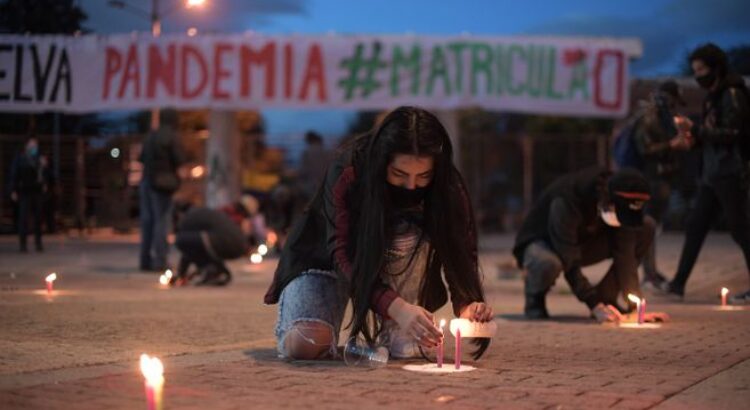
Tras 50 días de Paro Nacional en Colombia que demanda un cambio en las políticas económicas y sociales, el Congreso de esa nación rechazó, de espaldas a los reclamos populares, hundir el proyecto de ley “Matrícula cero” que buscaba favorecer la gratuidad de matrícula en universidades públicas para los estudiantes más vulnerables.

Otra de las leyes votadas da superpoderes a la Procuraduría para pasar por encima de la sentencia de la CIDH.

Tras 50 días de Paro Nacional en Colombia que demanda un cambio en las políticas económicas y sociales, el Congreso de esa nación rechazó, de espaldas a los reclamos populares, hundir el proyecto de ley “Matrícula cero” que buscaba favorecer la gratuidad de matrícula en universidades públicas para los estudiantes más vulnerables.

A pocos días de concluir el período de legislatura, en la Comisión Sexta del Senado, los integrantes del partido en el Gobierno votaron cinco en contra de la ley para su hundimiento, frente a dos que votaron a favor y cinco que decidieron no votar.

El proyecto había sido presentado en julio de 2020 por estudiantes y los congresistas Wilson Arías (Polo Democrático), Gustavo Bolívar (MAIS) y Antonio Sanguino (Alianza Verde).

Su objetivo era propiciar la gratuidad de la educación de jóvenes considerados entre los más vulnerables en el país.

Igualmente, se votó otro proyecto de ley que da facultades a la Procuraduría para que pueda sancionar a funcionarios como alcaldes y gobernadores sin intermediación de un juez.

“Se le atribuye a la Procuraduría General de la Nación funciones jurisdiccionales para la vigilancia superior de la conducta oficial de quienes desempeñan funciones públicas, inclusive los de elección popular, y adelantar las investigaciones disciplinarias e imponer las sanciones de destitución, suspensión e inhabilidad y las demás establecidas en la ley”, reza el texto.

En este sentido, modifica artículos de la ley anterior como las causales de exclusión, extinción, caducidad y prescripción de responsabilidad disciplinaria, entre otros cambios.

Con esta Ley, el Estado desacataría las sentencias de la Corte Interamericana de Derechos Humanos (CIDH) sobre las violaciones a los derechos humanos en el país. Varios congresistas de la oposición señalaron que la norma entrega superpoderes a este órgano para la persecución a los opositores.

Fuente: https://www.telesurtv.net/news/congreso-colombiano-dicta-leyes-espaldas-reclamo-popular-20210617-0022.html

Comparte este contenido:
Page 672 of 6179
1 670 671 672 673 674 6.179
OtrasVocesenEducacion.org