Page 702 of 6178
1 700 701 702 703 704 6.178

Uganda: Oxygen shortage hits Moroto hospital

Oxygen shortage hits Moroto hospital

Moroto Regional Referral Hospital currently has 18 patients at the Covid-19 treatment unit all needing oxygen support. File Photo

Moroto, Uganda | THE INDEPENDENT | Moroto Regional Referral Hospital is facing a shortage of oxygen for critically ill Covid-19 patients.

Moroto Regional Referral Hospital has an oxygen plant but its current production rate is much lower than its capacity of 15 cylinders per day.

According to the hospital director, Dr Ben Watmon, the plant produces less than half of the required oxygen, making Covid-19 treatment difficult. He says because of this, the hospital struggles to provide oxygen to critically ill patients, sometimes affecting general management of Covid 19 cases.

He adds that the situation is made worse by the unstable power supply to the hospital due to constant power blackouts, forcing the hospital to bring in oxygen from Mbale and Soroti after every two days.

The low level of oxygen production comes at a time when the district has recorded the highest number of Covid-19 patients ever.

Currently, there are 18 patients at the Covid 19 Treatment Unit at Moroto Hospital all needing oxygen support with an additional 20 under home based care.
On Friday, 45 new cases were confirmed in Moroto district, taking the total number of active confirmed cases to 83, the highest number recorded at the time since Covid 19 outbreak in March last year.

Moroto Regional Referral Hospital has handled 293 cases, 268 discharged and 3 deaths.

According to Dr Hans Lokale, the District Health Officer, the district Covid-19 taskforce has embarked on risk communication, testing and tracing of contacts to mitigate community infections.

*****

URN

Fuente de la Información: https://www.independent.co.ug/oxygen-shortage-hits-moroto-hospital/


Comparte este contenido:

Canadá: Pope Francis, Canadian cardinals meet after remains found at former residential school

Pope Francis, Canadian cardinals meet after remains found at former residential school

Warning: Some of the details in this story may be disturbing to some readers. Discretion is advised. 

Pope Francis met with both Vatican-based Canadian cardinals on Saturday as their country reels from the discovery of the remains of 215 children at a former school for Indigenous students run by the Catholic Church.

The pope met separately with Cardinal Michael Czerny and Cardinal Marc Ouellet, the Vatican said in its daily announcement of papal appointments.

Ouellet meets with the pope every Saturday in his capacity as head of the Vatican department that oversees bishops.

Czerny, the Vatican’s expert on migrants and refugees, does not have a regular weekly meeting with the pope. He is a Czech-born Canadian national whose family emigrated to Montreal when he was two years old.

While the Vatican did not say what was discussed in the private audiences, diplomats said it would be highly unusual if the recent events in Canada did not come up.

Many Canadians have called on the pope to make a formal apology for the Catholic Church’s role in the residential schools, which operated between 1831 and 1996 and were run by a number of Christian denominations on behalf of the government.

Francis, who was elected pope in 2013, has already apologized for the Church’s role in colonialism in the Americas but he has mostly chosen to make such apologies while visiting countries. No papal visit to Canada is scheduled.

Visiting Bolivia in 2015, Francis apologized for the “many grave sins were committed against the native people of America in the name of God.”

Canadian Prime Minister Justin Trudeau said on Friday the Catholic Church must take responsibility for its role in running many of the schools.

The residential school system forcibly separated about 150,000 children from their homes. Many were subjected to abuse, rape and malnutrition in what the Truth and Reconciliation Commission in 2015 called “cultural genocide.”

Run by the government and various Christian Churches, their stated aim was to assimilate Indigenous children.

The discovery last month of the remains of the children at the Kamloops Indian Residential School in British Columbia, which closed in 1978, has reopened old wounds and is fueling outrage in Canada about the lack of information and accountability.

In 2008, the Canadian government formally apologized for the system. Trudeau said on Friday many are “wondering why the Catholic Church in Canada is silent, is not stepping up.”

Anyone experiencing pain or distress as a result of their residential school experience can access this 24-hour, toll-free and confidential National Indian Residential School Crisis Line at 1-866-925-4419.

Fuente de la Información: https://globalnews.ca/news/7924220/pope-francis-canadian-cardinals-residential-schools/
Comparte este contenido:

Estados Unidos: The pervasive problem of ‘linguistic racism’

The pervasive problem of ‘linguistic racism’
Not everyone who speaks English is treated the same way. What happens when accent discrimination creeps in to our conscious and unconscious – and what do we do about our biases?

Last summer, Triangle Investigations, a New York-based HR consultancy, examined allegations of accent discrimination at a global non-profit organisation. An Ethiopian-accented staff member had reported that his colleagues frequently interrupted him during Zoom calls, commented on the unintelligibility of his English and excluded him from meetings. He became self-conscious during the meetings that he was able to attend, and ended up using the chat feature instead of speaking up, says Kia Roberts, Triangle’s founder and principal.

When Roberts and her team looked into the matter, they found that the allegations had substance, and that employees of colour had been treated differently; they were being spoken to disrespectfully, as if they weren’t competent to hold their positions, and their opinions and suggestions weren’t being taken seriously. The investigation ultimately led the non-profit to introduce employee training and periodic HR check-ins to try and remedy the issue.

Of course, this case of linguistic discrimination wasn’t an isolated episode. Globally, more people are using English than ever, and it’s a dominant language in businessscience and government. English is constantly evolving, because of the diverse ways different nations and groups use it. Yet instead of embracing this linguistic diversity, we still rank particular types of English higher than others – which means that both native and non-native speakers who differ from what’s considered ‘standard’ can find themselves judged, marginalised and even penalised for the way their English sounds.

Not every type of linguistic discrimination is intentional; many people who think they’re being inclusive don’t understand that their inherent biases are pushing them to make judgements they don’t even know they’re making. Yet no matter what’s driving these kinds of incidents, workers feel lasting, often demoralising, effects. And, as these kinds of situations continue – especially when companies don’t recognise or stop them – things can get worse for workers, as they’re side-lined or flat-out excluded in the workplace.

As the globe becomes even more connected in a remote-work world, the ability for workers to be able to speak to each other effectively and respectfully is imperative. So, how do we end linguistic discrimination – and create a more inclusive, functional use of language to benefit native and non-native speakers alike?

Speakers from some multilingual countries are thought to use less 'legitimate' forms of English than others (Credit: Getty Images)

Covert or overt

Globally, non-native speakers of English outnumber native speakers three to one, although defining the term ‘native English speaker’ is complicated. The term usually refers to anyone who speaks English from early childhood, as their first language. But many children grow up learning multiple languages simultaneously – for instance, if their parents are from different places, or if a nation has several official languages.

A particular status is attached to English that sounds as if it comes from countries that are wealthy, majority white and mostly monolingual. According to this limited view, multilingual countries like Nigeria and Singapore have less ‘legitimate’ and desirable forms of English (even though English is an official language in both). Globally, the most respected types of English are varieties such as British, American and Australian, says Sender Dovchin, a sociolinguist at Curtin University in Perth, Australia.

Within any country, certain forms of English bring fewer benefits. To give just one example from the US, African-American English remains misunderstood and discriminated against. And on an international level, certain types of speakers face judgements based on perceptions of their nationality or race, rather than their actual communication skills. “When English is spoken by some Europeans, including for example French-, German-, Italian-accented English, they can be considered really cute, sophisticated, stylish and so forth,” explains Dovchin. But, she adds, English spoken by Asians, Africans or Middle Easterners may be viewed as challenging and unpleasant.

English spoken by Asians, Africans or Middle Easterners may be viewed as challenging and unpleasant

This linguistic stereotyping applies even when those Asians, Africans or Middle Easterners are in fact native speakers of English. Just seeing an Asian face makes some Americans consider that speaker’s English to be hard to understand, regardless of how they actually speak or where they were born. I was born in the US, hold a UK passport and have an English degree, but like many other people of Asian descent, I’ve had the surreal experience of people complimenting my English fluency.

These perceptions feed into linguistic racism, or racism based on accent, dialect and speech patterns. The overt form of linguistic racism can involve deliberate belittling or shaming, such as “ethnic-accent bullying” that occurs despite someone’s actual English proficiency. Or it can be more covert, like the unwitting social exclusion of people with foreign-accented English, or a seemingly well-intended compliment toward an Asian American’s English.

These examples show that it may not be obvious to the perpetrators what they’re doing, because there are a number of subtle psychological mechanisms at play. Cognitively, it takes more work to understand a less familiar accent. The extra brainpower involved, as well as warmer feelings toward members of one’s own group, can lead to negative attitudes toward a person speaking a different type of English. Overall, it’s common to assume that non-native speakers are less truthful, less intelligent and less competent; psychology studies suggest that people attach less credibility to statements spoken in a foreign accent.

These subtle mechanisms feed into behaviours that can impact negatively on people speaking different forms of English. I’ve been guilty of this in practice. I’ve found myself gravitating to colleagues I can easily banter with (so that I don’t have to explain or replace Americanisms like ‘inside baseball’ or British terms like ‘take the piss’). I’ve edited away Indian English expressions in reports, like ‘upgradation’, without wondering why I treat ‘upgrading’ as the better term. And in bouts of impatience during work conversations, I’ve spoken over or finished the sentences of colleagues who are more hesitant.

Not every type of linguistic racism is intentional, but judgements are pervasive due to our inherent biases (Credit: Getty Images)

This type of bias can take a significant psychological toll. Dovchin’s research shows that many people who are shamed or excluded because of their language develop inferiority complexes, and start to believe that they’re actually less intelligent. Lots of multilingual people report being fairly confident in their English-language skills in their home countries, then losing their confidence due to the way they’re treated in English-first countries.

At worst, linguistic racism can lead to deprivation in education, employment, health and housing. In the workplace, people with certain accents can be openly harassed (like a Puerto Rican call centre worker who was told by a customer, “your stupid accent makes me sick”), or excluded from specific opportunities (like a Pakistani transport worker in London whose manager kept him out of conference calls).

The discrimination might also mean that certain people don’t even get through the door. For instance, Paul Graham, the founder of Y Combinator, which directs seed funding to start-ups, has openly admitted that the programme is biased against applicants with strong foreign accents. In an interview with business publication Inc., he speculated that “it could be that anyone with half a brain would realise you’re going to be more successful if you speak idiomatic English, so they must just be clueless if they haven’t gotten rid of their strong accent”. An outcry followed these comments, but Graham was unrepentant, writing “you can’t make it be work to understand you”. This is a classic expression of native-speaker privilege: the minority of global English speakers demanding that the majority change.

How to chip away at linguistic racism

Linguistic racism needs to be tackled head on, both at a corporate and individual level. “If we wait for it to happen organically, it will never happen,” believes Dovchin.

First, organisations need to be strategic about having ongoing conversations about linguistic diversity as a type of diversity, educating staff about how language-related biases affect communications and opportunities and incorporating this into policies.

But, on an individual level, speakers of English as a first language can make their English more accessible. They can slow down, and avoid inside jokes and idioms, for instance. They can talk less in meetings to give more space to non-native speakers, while also allowing non-native speakers to chair meetings and set the tone for communications. They can also pay attention to body language and improve their listening skills – for instance, by seeking out popular culture featuring varied groups of people, and thus varied ways of communicating. With greater exposure, the brain becomes better at understanding differently accented speech. Overall, everyone can become more aware of language-related biases.

Research shows that many people who are shamed or excluded because of their language develop inferiority complexes

Suresh Canagarajah, a linguist at Pennsylvania State University, US, says that given how transnational work has become, we all need to get better at communicating with people speaking all kinds of English. “You can’t afford to say ‘I don’t understand Chinglish or I don’t understand Indian English’, because you’re going to lose out on that market.” This certainly applies to hiring decisions; highly qualified candidates may be overlooked if they trigger a hiring manager’s biases about less prestigious types of English. There, says Canagarajah, “You’re focusing on the wrong thing, and maybe losing on a lot of expertise.”

Yet even if companies and individuals do what they can to level the playing field, another option is to change our ideas about what constitutes ‘good’ English. In many workplace settings, it would make more sense to focus on effective communication rather than flowery prose or slangy chat. In functional settings, someone who is adept at understanding varied types of English is actually a better communicator than a person who can only understand their own form, whether it’s considered native or not.

I’ve been reflecting a lot on the extent to which my career depends on my privilege as a so-called native English speaker. To teach English in Romania, I wasn’t required to have any teaching qualifications; simply being American was enough. To be hired to write and edit publications, my primary asset has been my familiarity with the kind of English that carries global cachet.

The very least that I, and others like me, can do with this privilege is to become aware of its effects and reduce the ways that we contribute to it. Individual acts of thoughtfulness can’t dismantle the structures of power that keep North American and Western European English dominant. But they can help cultivate an appreciation of English in all its diversity.

Fuente de la Información:    https://www.bbc.com/worklife/article/20210528-the-pervasive-problem-of-linguistic-racism

Comparte este contenido:

Informe de Coyuntura sobre Colombia será presentado este lunes a través del canal de YouTube de Otras Voces en educación

OVE 6 de junuio, 2021

Este lunes se estará presentando el Informe de Coyuntura sobre Colombia, titulado «CAUSAS, PRELIMINARES Y ACTUALIDAD DEL CONFLICTO SOCIAL EN COLOMBIA

Será a las 3 pm hora de Colombia y podrán ver la presentación a través del canal de Youtube de Otras Voces en educación

El informe en Pdf

* INFORME COYUNTURA NACIONAL-COLOMBIA JUNIO 2021

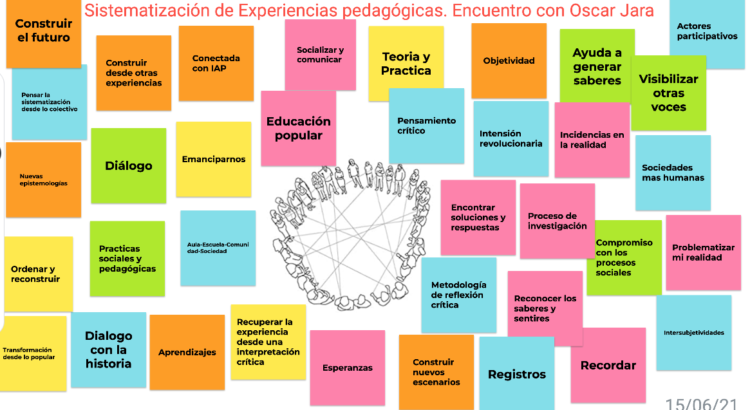
Este es el flayer promocional


Comparte este contenido:

México: Madres de víctimas de feminicidio «clausuran» Fiscalía General de Justicia, denuncian violencia institucional

Por: Erika Lozano

Madres de víctimas de feminicidio y sobrevivientes de violencia de género clausuraron simbólicamente la Fiscalía General de Justicia de la Ciudad de México la tarde de este viernes. Las mujeres demandaron una audiencia con la Fiscal General, Ernestina Godoy, a quien acusaron de obstaculizar el acceso a la justicia para las víctimas.

«Hay una indolencia por parte de quienes deberían proporcionarnos seguridad y atender nuestros casos», denunció Carolina Ramírez, sobreviviente de feminicidio proveniente del estado de Veracruz, quien señaló que se han organizado en un grupo víctimas a nivel nacional. «Exigimos justicia para no morir, no queremos ser una estadística y cuando las autoridades no nos atienden nos ponen en riesgo», denunció.

Mujeres víctimas de ataques con ácido, sobrevivientes de feminicidio, madres de víctimas de las alcaldías Coyoacán, Iztapalapa, Tláhuac, Milpa Alta, Azcapotzalco, de la Ciudad de México, así como provenientes de estados como Morelos y Veracruz, se sumaron a la protesta para exigir un «alto a la violencia feminicida», además, demandaron a las autoridades que investiguen los casos de «violencia intrafamiliar» como tentativas de feminicidio.

Araceli Osorio, madre de Lesvy Berlín Rivera Osorio, denunció la inacción de las Fiscalías especializadas en violencia de género, y agregó «hoy decidimos clausurar de manera simbólica este lugar que nos es ajeno a las víctimas, porque no encontramos el acompañamiento que debería brindar una institución como esta a las personas que hemos sufrido una violencia».

Osorio recordó que las autoridades deberían investigar con la «debida diligencia» todas las muertes violentas de mujeres, como lo señala la sentencia de la Suprema Corte de Justicia de la Nación «Mariana Lima Buendía. «Nosotras nos hemos vuelto fuertes, y la fuerza que tenemos es porque hemos aprendido a acompañarnos», dijo.

«Nosotras no quisiéramos estar aquí hoy, quisiéramos estar viviendo tranquilamente sin los agresores», explicó la activista y exigió una respuesta por parte de las autoridades, quienes, insistió, «están en deuda con las víctimas».

Fuente e imagen: https://desinformemonos.org

Comparte este contenido:

El Comité del Paro denuncia la negativa del gobierno colombiano a negociar un pliego de emergencia

Por: Agencia Telesur

  • Francisco Maltés, de la Central Unitaria de Trabajadores: “hoy ha quedado constatado una vez más que el Gobierno no quiere negociar ni el pliego de emergencia, ni negociar, prefiere la vía de la represión”.
  • En una nueva jornada nocturna de represión por parte del ESMAD, se denunció el asesinato de tres personas en la ciudad de Cali.

El Comité del Paro Nacional ha denunciado que el Gobierno del presidente de Colombia, Iván Duque, rechaza negociar incluso el pliego de emergencia, en el marco de las protestas populares que se han prolongado ya por 38 días.

Delegados del Comité del Paro y del Gobierno sostuvieron este viernes un nuevo encuentro con la intención de avanzar en conversaciones que buscan un acuerdo que finalice las manifestaciones, que se realizan desde el 28 de abril pasado.

El presidente de la Central Unitaria de Trabajadores, Francisco Maltés, declaró, al finalizar la reunión, que “hoy ha quedado constatado una vez más que el Gobierno no quiere negociar ni el pliego de emergencia, ni negociar, prefiere la vía de la represión”.

Subrayó que el Comité ha insistido en que “debe parar la violencia y brutalidad policial. No más asesinatos”.

Maltés dijo que si el Ejecutivo insiste en negarse a rubricar el preacuerdo de garantías, el cual se convino el 24 mayo anterior en presencia de tres ministros y otros funcionarios, el punto se llevará a la delegación de la Comisión Interamericana de Derechos Humanos (CIDH), que arribará al país la semana entrante.

El consejero presidencial para la Estabilización, Emilio José Archila, por su parte, pidió al Comité Nacional del Paro que respete la metodología de trabajo convenida para avanzar en las pláticas.

Jornada de represión

Medios locales y usuarios de Twitter, en tanto, reportaron una nueva jornada nocturna de represión por parte del Escuadrón Móvil Antidisturbios (ESMAD) de la Policía Nacional, contra manifestantes en la ciudad de Cali, cabecera del suroccidental departamento de Valle del Cauca.

El proyecto de comunicación alternativa Periferia Prensa denunció en su cuenta de Twitter que el ESMAD disparó contra las personas que se manifestaban en la zona de Paso del Comercio, en Cali, con un saldo de tres muertos y cinco heridos.

Otros usuarios dijeron que las personas heridas de bala ascendían a ocho.

Un balance ofrecido por la organización no gubernamental (ONG) Temblores, a través de su plataforma Grita, señaló que desde el 28 de abril hasta el 31 de mayo, se han registrado 1.649 detenciones arbitrarias contra los manifestantes, así como 3.789 casos de violencia policial.

Igualmente, 1.248 personas han sido víctimas de violencia física, se han reportado 45 homicidios por parte de la policía, presuntamente; 705 intervenciones violentas, 65 personas con lesiones oculares, 187 casos de disparos de arma de fuego y 25 hechos de violencia sexual.

Fuente e imagen: https://www.tercerainformacion.es

Comparte este contenido:

Zacatecas no regresará a clases ni con semáforo verde: gobernador. México

América del Norte/04-06-2021/Autor: Alfredo Valadez Rodríguez/Fuente: www.jornada.com.mx

Zacatecas. “Ni siquiera con semáforo verde, Zacatecas regresará a clases presenciales, en el presente ciclo escolar”, advirtió en conferencia de prensa el gobernador Alejandro Tello Cristerna,

Para cuidar la salud de las personas su administración “ha determinado implementar el regreso a clases, hasta la segunda semana de agosto”, es decir un mes antes de que concluya su gobierno, dijo.

De esta forma, el mandatario estatal atajó la presión pública, proveniente de un grupo de escuelas y colegios privados, que a en redes sociales y algunos medios de comunicación, estaban exigiendo al gobierno estatal el regreso a clases presenciales.

Tello Cristerna realizó el anuncio en una conferencia de prensa donde estuvo acompañado por María de Lourdes de la Rosa, titular de la Secretaría de Educación de Zacatecas, así como por Gilberto Breña Cantú, secretario de salud en la entidad.

Además, informó que hasta ayer lunes –donde Zacatecas se mantiene en color amarillo del semáforo Covid-19-, en el estado se han vacunado 209 mil 523 personas en el territorio zacatecano, que representa apenas dijo, el 19.44 por ciento “del universo mayor de 18 años”.

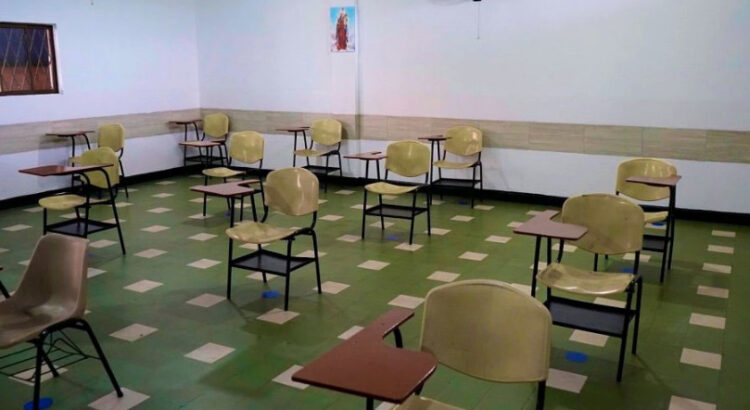
En este contexto, que “no hay condiciones para el regreso a las aulas, dado que el grueso de la población aún no está vacunado y la entidad aún se encuentra en color amarillo del semáforo epidemiológico, aunado a que el presente ciclo escolar está por concluir”, aclaró.

Asimismo, el mandatario zacatecano expuso que (a diferencia de los directivos de escuelas y colegios privados, interesados en un rápido retorno a clases presenciales), “en la gran mayoría de los casos, los padres de familia han externado que prefieren esperar a tener certeza y mayor avance en la vacunación”, antes de dejar las clases virtuales, por internet.

Al respecto, la titular de la Secretaría de Educación, María de Lourdes de la Rosa Vázquez, recordó que el pasado 28 de mayo, autoridades federales dieron a conocer que podría haber regreso voluntario a las aulas, en algunos estados del país, “siempre y cuando esté en verde el semáforo epidemiológico”, pero en el caso de Zacatecas, eso no ocurrirá.

Existen nueve puntos para activar los Comités Participativos de Salud, donde se revisarán los filtros de prevención, consistentes en el hecho de tener acceso al agua, jabón o gel antibacterial; cuidar a la comunidad que está en el grupo de riesgo; el uso obligatorio del cubrebocas y respetar la sana distancia, explicó.

Además, el regreso deberá ser de forma escalonada y con asistencia alternada; maximizar el uso de espacios abiertos; suspender ceremonias, actos cívicos o reuniones; implementar filtros de detección temprana del virus y, por último, brindar apoyo socioemocional a estudiantes y docentes, comentó.

Gilberto Breña Cantú, titular de la Secretaría de Salud estatal, recordó que aunque las cifras de contagios y muertos por Covid-19 han ido a la baja, sin embargo “la pandemia sigue”.

Hasta el lunes 31 de mayo del presente año a 438 días del inicio oficial de la pandemia en México, en Zacatecas “se han realizado 65 mil 760 pruebas, de las que 30 mil 556 han sido positivas, 34 mil 991 negativas y 213 están pendientes. También se han presentado dos mil 962 defunciones, un total de 27 mil 267 personas que tuvieron el padecimiento sanaron y 346 están activas, añadió.

Fuente e Imagen: https://www.jornada.com.mx/notas/2021/06/01/estados/zacatecas-no-regresara-a-clases-ni-con-semaforo-verde-gobernador/

Comparte este contenido:
Page 702 of 6178
1 700 701 702 703 704 6.178