Page 734 of 6179
1 732 733 734 735 736 6.179

Francia: Macron Plans First Visit to Rwanda this Month

Macron Plans First Visit to Rwanda this Month

French President Emmanuel Macron said Tuesday he would make his first visit to Rwanda at the end of this month, a possible breakthrough in relations overshadowed by France’s role during the 1994 genocide.

«I confirm I am going to Rwanda at the end of the month. The visit will be one of politics and remembrance but also economic,» Macron said at the end of an Africa summit in Paris.

He added he had agreed with his Rwandan counterpart Paul Kagame, whom he met on the sidelines of a summit meeting on Monday, «to write a new page in relations».

His visit will be the first trip by a French president since Nicolas Sarkozy visited the country in 2010.

Kagame told journalists from the France 24 television channel and RFI radio Monday that Rwanda and France have a «good basis» to create a relationship after a landmark report acknowledged France bore overwhelming responsibilities over the 1994 genocide.

«We are in the process of normalization,» he added.

Macron moved to repair ties with Rwanda by commissioning a report by historians into the role of French troops in the genocide, in which about 800,000 people were killed.

It concluded in March that France had been «blind» to preparations for the massacres of members of the Tutsi ethnic group by the Hutu regime, which was backed by France.

Kagame has in the past accused France of «participating» in the genocide, but he said he accepted the findings of the French commission that Paris was not complicit in the killings.

«It’s not up to me to conclude that this is what they should have said,» Kagame said. «It is something that I can accommodate.»

Fuente de la Información: https://www.voanews.com/africa/macron-plans-first-visit-rwanda-month


Comparte este contenido:

Ghanna: Involve parents in the education of their wards—Denmark-based Ghanaian Educationist

Involve parents in the education of their wards—Denmark-based Ghanaian Educationist

A Denmark-based-Ghanaian educationist and lecturer at the Aalborg Universitet Dr. Hanan Lassen Zakaria have called for the involvement of parents in the education of their wards at all stages of education.

This, Dr. Hanan observed would help improve students’ performance and also make the education system more participatory.

Dr. Hanan observed this as part of remarks he gave during a review meeting of the Professional Learning, Communities, and Coaching (PLCC) project on Thursday, April 8, 2021, at the Tamale College of Education.

The one-year pilot project dubbed «Strengthening Basic School Teacher Quality through Professional Learning, Communities and Coaching» (PLCC) is being implemented by the College (TACE ) with funding support from the Commonwealth of Learning (CoL).

In all, 380 basic school teachers in 32 selected schools in the Northern and North East regions of Ghana benefit from the project.

PLCC is implemented in five districts, namely; Tamale Metro, Sagnerigu municipal, Kumbungu District, Yendi municipal, and the West Mampurigu district assembly.

Originally, the pilot project started in October 2019 to reposition In-Service Basic School Teachers and enhance their professional competencies in lesson development and delivery.

The implementation was however interrupted by the outbreak of the COVID-19 pandemic, therefore the delays.

As the last activity under the pilot project, the meeting provided an opportunity for the implementers to analyze their successes, challenges, and the way forward.

Dr. Hanan Lessen who is the lead consultant for the project noted that though there are lots of efforts in building the capacity of teachers and students, the parents were often forgotten when it comes to their education.

«The thinking says that if you support or if parents get involved with their kid’s education, the tendency is that the learning outcomes of their kids in schools will be higher» he stated.

He noted that the outcomes of the pilot project were very encouraging and that the first phase termed TACE CoL 1.0 would be replaced with phase two ( TACE CoL 2.0) to give room for more inputs.

He advised that the number of clusters under the PLCC project be increased so that many schools can benefit.

The Vice-Principal of the college Mr. Nuhu Imoro Alhassan on behalf of the principal Dr. Sulemana Iddrisu stated that despite the outbreak of the Covid-19 pandemic, the project was able to achieve its objectives.

«For the pandemic, the pilot project would have come to an end by August last year» he noted.

Metropolitan Director of education for the Tamale Metro Assembly Mr. T. D Amithus, in his submission lauded the project. And called for increment in beneficiary schools to give way for more pupils to benefit from the project.

«The thing that should be done differently which would have made the project a lovely one is just to increase the number of schools so that many schools will benefit. The organization is okay, whatever that they have done is appropriate, but what would have been more interesting and make the project an enticing one would have been to size up the numbers» he said

Beneficiary teachers who spoke to the media thanked the Tamale College of education and the Commonwealth of Learning (CoL) for the knowledge they have gained from the project. According to some of them, though they were trained teachers, the benefits they derived from the project were incomparable.

On his part, project contact person, Mr. Hamza Alhassan said it was a dream come true that phase one of the project has ended successfully despite the spark of the COVID-19 pandemic and other challenges.

He also said he was hopeful that many of such projects would come out to help make Teachers more professionals as they should be, which would, in turn, improve learners’ performance in schools.

Fuente de la información: https://www.modernghana.com/news/1080437/involve-parents-in-the-education-of-their-wards.html

Comparte este contenido:

Singapore Warns New COVID Strains Infecting Kids

Singapore Warns New COVID Strains Infecting Kids

Children walk home with their guardians after school in Singapore on 17 May, 2021, as the country prepares to shut all schools and switch to home-based learning until the end of the term due to a rise in the number of COVID-19 cases. (AFP Photo)

Singapore will close schools from Wednesday as authorities warned new coronavirus strains like the one first detected in India were affecting more children in the city-state.

The government has been tightening restrictions following a recent rise in local transmissions after months of near-zero cases.

At a virtual news conference late Sunday, authorities announced that primary and secondary schools as well as junior colleges would shift to full home-based learning from Wednesday until the end of the school term on 28 May.

Hours before Sunday’s news conference, Singapore confirmed 38 locally transmitted coronavirus cases, the highest daily count in eight months. Some of the cases involved children linked to a cluster at a tuition centre.

Health Minister Ong Ye Kung, citing a conversation he had with the ministry’s director of medical services Kenneth Mak, told a news conference Sunday that the B.1.617 strain «appears to affect children more».

The strain was first detected in India .

«Some of these mutations are much more virulent and they seem to attack the younger children,» Education Minister Chan Chun Sing said at the news conference.

«This is an area of concern for all of us,» he said, adding however that none of the children who had been infected were seriously ill.

The government is «working out the plans» to vaccinate students under the age of 16, Chan said in a Facebook post.

The financial hub joins Taiwan in shutting down schools to stem the surge in infections.

Taiwan’s capital Taipei and adjacent New Taipei City announced Monday that schools would suspend classes from Tuesday until 28 May.

Taiwan, which emerged relatively unscathed last year, announced a further 333 local cases Monday, bringing the total to just over 2,000.

Non-Passenger Ban

The rise in local transmissions in Singapore will probably scupper a quarantine-free travel bubble with Hong Kong, due to begin on 26 May after an earlier failed attempt.

Singapore has limited public gatherings to two, banned restaurant dine-ins and closed gyms in an attempt to stop the surge in infections.

Authorities have also banned non-passengers from entering the airport terminal and closed an adjacent mall as around 9,000 workers undergo testing.

Singapore had to fight serious coronavirus outbreaks last year when the illness surged through crowded dormitories housing low-paid foreign workers, infecting tens of thousands.

But by global standards, its outbreak has been mild – officials in the city of 5.7 million have reported more than 61,000 cases so far and 31 deaths. – AFP

Fuente de la Información: https://theaseanpost.com/article/singapore-warns-new-covid-strains-infecting-kids


Comparte este contenido:

Antarctica is headed for a climate tipping point by 2060, with catastrophic melting if carbon emissions aren’t cut quickly

Antarctica is headed for a climate tipping point by 2060, with catastrophic melting if carbon emissions aren’t cut quickly

While U.S. Secretary of State Antony Blinken draws attention to climate change in the Arctic at meetings with other national officials this week in Iceland, an even greater threat looms on the other side of the planet.

New research shows it is Antarctica that may force a reckoning between the choices countries make today about greenhouse gas emissions and the future survival of their coastlines and coastal cities, from New York to Shanghai.

That reckoning may come much sooner than people realize.

The Arctic is losing ice as global temperatures rise, and that is directly affecting lives and triggering feedback loops that fuel more warming. But the big wild card for sea level rise is Antarctica. It holds enough land ice to raise global sea levels by more than 200 feet (60 meters) – roughly 10 times the amount in the Greenland ice sheet – and we’re already seeing signs of trouble.

Scientists have long known that the Antarctic ice sheet has physical tipping points, beyond which ice loss can accelerate out of control. The new study, published in the journal Nature, finds that the Antarctica ice sheet could reach a critical tipping point in a few decades, when today’s elementary school kids are raising their families.

The results mean a common argument for not reducing greenhouse gas emissions now – that future technological advancement can save us later – is likely to fail.

Long lines are formed by the glacier's flow

The new study shows that if emissions continue at their current pace, by about 2060 the Antarctic ice sheet will have crossed a critical threshold and committed the world to sea level rise that is not reversible on human timescales. Pulling carbon dioxide out of the air at that point won’t stop the ice loss, it shows, and by 2100, sea level could be rising more than 10 times faster than today.

The tipping point

Antarctica has several protective ice shelves that fan out into the ocean ahead of the continent’s constantly flowing glaciers, slowing the land-based glaciers’ flow to the sea. But those shelves can thin and break up as warmer water moves in under them.

As ice shelves break up, that can expose towering ice cliffs that may not be able to stand on their own.

There are two potential instabilities at this point. Parts of the Antarctic ice sheet are grounded below sea level on bedrock that slopes inward toward the center of the continent, so warming ocean water can eat around their lower edges, destabilizing them and causing them to retreat downslope rapidly. Above the water, surface melting and rain can open fractures in the ice.

When the ice cliffs get too tall to support themselves, they can collapse catastrophically, accelerating the rate of ice flow to the ocean.

Illustration shows how warming water can get under glaciers and destabilize them

The study used computer modeling based on the physics of ice sheets and found that above 2 C (3.6 F) of warming, Antarctica will see a sharp jump in ice loss, triggered by the rapid loss of ice through the massive Thwaites Glacier. This glacier drains an area the size of Florida or Britain and is the focus of intense study by U.S. and U.K. scientists.

To put this in context, the planet is on track to exceed 2 C warming under countries’ current policies.

Other projections don’t account for ice cliff instability and generally arrive at lower estimates for the rate of sea level rise. While much of the press coverage that followed the new paper’s release focused on differences between these two approaches, both reach the same fundamental conclusions: The magnitude of sea level rise can be drastically reduced by meeting the Paris Agreement targets, and physical instabilities in the Antarctic ice sheet can lead to rapid acceleration in sea level rise.

The disaster doesn’t stop in 2100

The new study, led by Robert DeConto, David Pollard and Richard Alley, is one of the few that looks beyond this century. One of us is a co-author.

It shows that if today’s high emissions continued unabated through 2100, sea level rise would explode, exceeding 2.3 inches (6 cm) per year by 2150. By 2300, sea level would be 10 times higher than it is expected to be if countries meet the Paris Agreement goals. A warmer and softer ice sheet and a warming ocean holding its heat for centuries all prevent refreezing of Antarctica’s protective ice shelves, leading to a very different world.

The vast majority of the pathways for meeting the Paris Agreement expect emissions will overshoot its goals of keeping warming under 1.5 C (2.7 F) or 2 C (3.6 F), and then count on future advances in technology to remove enough carbon dioxide from the air later to lower the temperature again. The rest require a 50% cut in emissions globally by 2030.

Although a majority of countries – including the U.S., U.K. and European Union – have set that as a goal, current policies globally would result in just a 1% reduction by 2030.

It’s all about reducing emissions quickly

Some other researchers suggest that ice cliffs in Antarctica might not collapse as quickly as those in Greenland. But given their size and current rates of warming – far faster than in the historic record – what if they instead collapse more quickly?

As countries prepare to increase their Paris Agreement pledges in the runup to a United Nations meeting in November, Antarctica has three important messages that we would like to highlight as polar and ocean scientists.

First, every fraction of a degree matters.

Second, allowing global warming to overshoot 2 C is not a realistic option for coastal communities or the global economy. The comforting prospect of technological fixes allowing a later return to normal is an illusion that will leave coastlines under many feet of water, with devastating economic impacts.

Third, policies today must take the long view, because they can have irreversible impacts for Antarctica’s ice and the world. Over the past decades, much of the focus on rapid climate change has been on the Arctic and its rich tapestry of Indigenous cultures and ecosystems that are under threat.

As scientists learn more about Antarctica, it is becoming clear that it is this continent – with no permanent human presence at all – that will determine the state of the planet where today’s children and their children will live.

[Understand new developments in science, health and technology, each week. Subscribe to The Conversation’s science newsletter.]

Fuente de la Información: https://theconversation.com/antarctica-is-headed-for-a-climate-tipping-point-by-2060-with-catastrophic-melting-if-carbon-emissions-arent-cut-quickly-160978

Comparte este contenido:

How student-designed video games made me rethink how I teach history

How student-designed video games made me rethink how I teach history


Imagine you’re a young samurai in Japan in 1701. You have to make a difficult choice between an impoverished life in exile, or the prospect of almost certain death while trying to avenge the death of your dishonored lord. Which do you choose?

Ako: A Tale of Loyalty,” a video game built in 2020, takes players along a difficult journey through early modern Japan filled with decisions like this one. It’s become an essential component of my classes on Japanese history, but it wasn’t developed by a professional game studio. Instead, it was created by a team of four undergraduate history majors with no specialized training.

Loading screen for black-and-white video game

Designing a video game may seem like a strange assignment for a humanities classroom, but as a professor who teaches a range of courses in East Asian history I have found that such exercises provide an engaging learning experience for students while also generating new educational content that can be widely shared.

The gaming revolution

Nearly two-thirds of American adults play video games, and that figure rises steadily each year. Fueled by stay-at-home orders and social distancing during the COVID-19 pandemic, global gaming sales rose to nearly US$180 billion in 2020.

Among university students, video games are utterly pervasive. When I ask my classes who consumes video game content, either as a player or via streaming services like Twitch, it’s rare that a single student’s hand is not raised.

Schools and colleges have rushed to respond to these trends. Programs like Gamestar Mechanic or Scratch help K-12 students learn basic coding skills, while many universities, including my own, have introduced game design majors to train the next generation of developers.

History professors, however, have been slower to embrace video games as teaching tools. Part of the problem is that the historical content contained within games is often, with some exceptions, repetitive and superficial.

Artwork from video game

While there are many games focused on Japanese history, for example, the majority reinforce the same tired image of the heroic warrior bound by the rigid code of “bushidō,” a code that scholars have shown had very little to do with the daily life or conduct of most samurai.

Designing humanities games

In 2020, I asked four undergraduate history majors to design a fully functional video game with a clear educational payoff built around a controversial episode in Japanese history.

I was motivated by two ideas. First, I wanted to move beyond a standard reliance on academic essays. While I still assign essays, many students find them fairly passive exercises which don’t stimulate deep engagement with a topic.

Second, I was convinced that university professors need to get into the business of producing games content. To be clear, we’re not going to design anything even close to what comes out of professional studios. But we can produce compelling games that are ready to be used both in colleges and – equally important – K-12 classrooms, where teachers are always looking for vetted scholarly content. A conventional academic essay is intended for just one person, the professor. But a video game produced by a group of committed undergraduates can be played by thousands of students at different institutions.

Video game artwork of two Japanese women

At first, I worried the task I had set was too big and the technological barriers too high. None of the four team members was enrolled in a video game design program or had specialized training. It quickly became clear that such fears were overblown.

The team decided to work on a visual novel game, a genre that originated in Japan and can best be described as interactive stories. The design process for such games is facilitated by programs such as Ren’Py, which streamline development.

Learning by design

The team’s first task was to design a believable central character. Successful games push players to emotionally invest in their characters and the choices they make. In the case of “Ako,” the design team created a young samurai named Kanpei Hashimoto who was grounded in the period but also easy to relate to as a young person struggling to find his way in a complex world.

From there, the team created branching storylines punctuated by clear decisions. In total, “Ako” has five possible outcomes depending on the choices a player makes. Numerous smaller decisions along the way open up additional ways to navigate the game.

The next step was dialogue. A typical academic essay is around 2,500 words, and students often complain about how difficult it is to fill the required pages. In contrast, the “Ako” team wrote over 30,000 words of dialogue. It required extensive research. What would a samurai family have eaten for breakfast? How much did it cost to buy a “kaimyō,” or posthumous Buddhist name, for a deceased parent? How long did it take to make the oiled paper umbrellas, called “wagasa,” that many poor samurai sold to survive?

Video artwork of monk

Finally, the students developed historically accurate artwork. The game has four chapters with 30 background images and 13 characters. Making sure everything was consistent with this period in Japanese history was a huge undertaking that stretched both me and the students.

Ultimately, the team learned more about samurai life and early modern Japan than any group of students I had worked with across a single semester. They read a dizzying array of books and articles while working and reworking the overall design, dialogue and artwork. And they succeeded in developing a fully functional video game that has already been used in other classrooms across the country.

Most importantly, I believe their experience provides a template for how student-designed video games can transform the humanities classroom.

[Insight, in your inbox each day. You can get it with The Conversation’s email newsletter.]

Fuente de la Información: https://theconversation.com/how-student-designed-video-games-made-me-rethink-how-i-teach-history-159310


Comparte este contenido:

México: Brutal represión a estudiantes de la Escuela Normal Rural “Mactumactzá” en Chiapas

América del Norte/México/18-05-2021/Autor y Fuente: OVE/Escuela Normal Rural Mactumactzá Fecsm

Brutal represión por parte de la policía estatal que sufrieron esta mañana las y los estudiantes de la Escuela Normal Rural “Mactumactzá” en Chiapas, México mientras se encontraban entregando volantes informativos a las y los ciudadanos en la caseta de cobro ubicada en el municipio de Chiapa de Corzo.

Con el propósito de “informar a la ciudadanía sobre el proceso de obtención de fichas y de evaluación para el ingreso a la formación docente en nuestra escuela sea de manera presencial ya que en los lugares lejanos y serranías no se cuenta con luz eléctrica para poder presentar el examen en línea” añadiendo que “los policías rodearon a nuestras y nuestros compañeros por órdenes del gobernador del estado Rutilio Escandón Cadenas y reprimieron con gases, después subieron a nuestras y nuestros compañeros a un convoy y no sabemos hasta el momento dónde se encuentran”.

Agregan que existen alrededor de 250 estudiantes desaparecidos y que no saben a dónde se las llevaron y temen por su integridad física y psicológica, señalan al gobernador Rutilio Escandón Cadenas como responsable de todo lo sucedido y de lo que les suceda a las y los estudiantes desaparecidos. Reportan también las y los estudiantes que, en las detenciones, las jóvenes han sido acosadas y agredidas sexualmente por los policías.

Nos mandan al portal algunas imágenes y videos de lo ocurrido.


Las diversas normales que se encuentran en el estado de Chiapas, representantes regionales y delegacionales sindicales del magisterio chiapaneco pertenecientes a la Sección VII de la CNTE-SNTE y familias, se manifestaron en distintas partes del estado repudiando las acciones fascistas y la violencia de estado que ha mantenido a lo largo de este gobierno autodenominado 4T.

Videos:

Posicionamiento de la región Selva Ocosingo

Región Lagos, Tojolabal En la toma de las instalaciones de la Fiscalía General del Estado

Asimismo, distintas secciones del magisterio democrático de la Coordinadora Nacional de Trabajadores de la Educación (CNTE) se pronunciaron en contra de la brutal represión policial hacía las y los estudiantes de esta casa formadora de maestros y maestras en conferencia de prensa a nivel nacional

Las y los estudiantes de Escuela Normal Rural “Mactumactzá” convocan a estudiantes de las distintas normales del estado y del país, organizaciones sociales, campesinas y obreras, familias, egresadas y egresados, entre otras no menos importantes, a que asistan a las instalaciones de la escuela para apoyarles en esta coyuntura.

¿Se repetirá la misma historia que la del 2014 en Iguala, Guerrero, México; en donde, a la fecha, siguen desaparecidos 43 estudiantes de la Escuela Normal Rural de Ayotzinapa?

Fuente e Imagen: OVE/Escuela Normal Rural Mactumactzá Fecsm

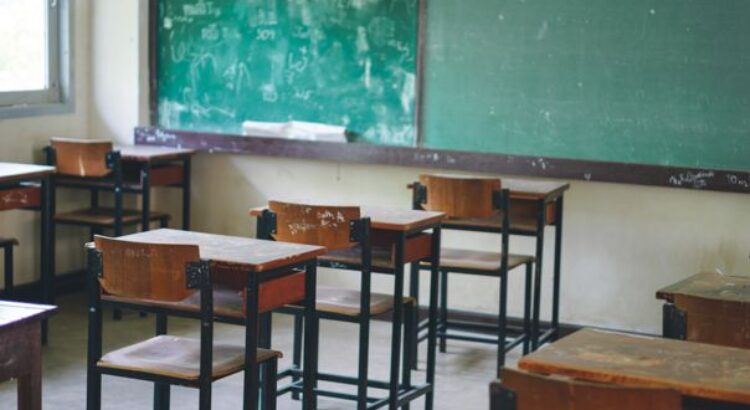
Educación en pandemia. Claves sobre el regreso a clases presenciales en México

Por: Maestro Arturo Méndez  Agrupación Magisterial y Normalista Nuestra Clase/izquierda diario 

¿Cómo viene avanzando el regreso a clases? ¿Qué expresan los distintos sectores involucrados? ¿Qué hacer desde el magisterio?

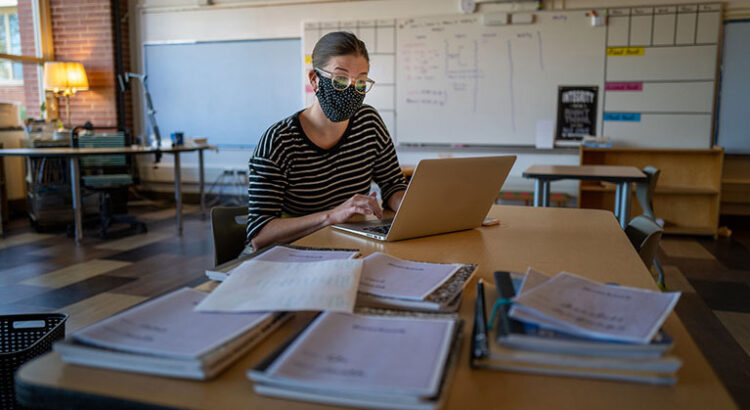
Sin pretender ser exhaustivos, presentamos un panorama sobre la situación del regreso a clases presenciales en México, la actitud de los gobiernos federal y locales, la posición de sectores empresariales, de la derecha y la iglesia, de algunas organizaciones sindicales y una perspectiva independiente para luchar por garantizar un regreso seguro.

1. Con las prisas del gobierno —respondiendo a la presión de los empresarios— para el regreso a clases presenciales, el 22 de mayo concluirá la vacunación del personal escolar, pero para volver a las escuelas no se contempla la vacunación del alumnado ni de las familias de quienes integramos la comunidad escolar.

2. Según la titular de la SEP, Delfina Gómez, las clases presenciales podrán reiniciarse 15 días después de que concluya la vacunación a docentes, personal administrativo y de apoyo. Será de manera voluntaria y gradual, primero en escuelas multigrado, rurales y de baja matrícula, con la condición de que el semáforo epidemiológico de los estados se encuentre en color verde.

3. Desde el 19 de abril, Campeche fue el primer estado en volver a clases presenciales, con un programa piloto implementado en 137 primarias multigrado, en localidades con baja densidad poblacional, sin conectividad o con acceso limitado y mediante un esquema mixto escalonado.

A principios de mayo, sin embargo, el caso de una maestra contagiada de COVID obligó al confinamiento de 54 alumnos y dos docentes durante catorce días, y a retrasar dos semanas la segunda fase del plan, que contemplaba el regreso a secundarias.

4. En Sinaloa, 633 escuelas fueron habilitadas como Centros Comunitarios de Aprendizaje para atender presencialmente, desde el 26 de abril, a alumnas y alumnos en riesgo de abandono escolar. Lo anterior, estando en semáforo amarillo.

5. El 11 de mayo arrancó el plan piloto para el regreso a clases presenciales en Guanajuato, en 118 planteles, desde preescolar hasta el nivel superior. La vacunación al personal escolar en el estado se realizó del 4 al 11 de mayo, lo que significa que no se aguardó el tiempo suficiente para que la vacuna alcanzara un nivel de protección suficiente. Esto, mientras que el semáforo epidemiológico en la entidad se mantiene en amarillo, contradiciendo lo estipulado por la SEP. Sin embargo, para esta semana se espera la integración de un nuevo bloque de escuelas a las clases presenciales.

6. Este lunes 17 de mayo, Coahuila se sumó a los estados del país que han regresado a las escuelas, contemplándose la asistencia de 20 mil alumnos. Según había informado previamente el gobernador del estado, el plan piloto abarca 70 escuelas, de las cuales 62 se encuentran en zonas urbanas. Esto último, en contradicción con lo dicho como regla general por Delfina Gómez en cuanto a que se iniciaría primero en zonas rurales.

7. La semana pasada, la secretaria de Educación anunció el regreso a las aulas para el 24 de mayo en otros cuatros estados: Chiapas, Veracruz, Nayarit y Tamaulipas, en los que se preparan planes pilotos.

8. En el resto de las entidades todavía no hay fecha precisa para el regreso a clases presenciales, pero algunos gobiernos estatales, como los de Michoacán y Chihuahua, ya han expresado su disposición a hacerlo en las –insuficientes- condiciones planteadas por el gobierno federal.

9. Para la Ciudad de México, según lo dicho por Delfina Gómez, se prevé la vuelta a las escuelas hasta el próximo ciclo escolar. Sin embargo la jefa de Gobierno, Claudia Sheinbaum, anunció que la capital del país está a pocos puntos de pasar a semáforo verde, mientras ya se están realizando obras de mantenimiento en las escuelas y se están promoviendo “tequios” para la participación de madres, padres, tutores e incluso el alumnado en la limpieza de planteles, contemplándose también a maestras y maestros luego de que se nos aplique la vacuna. De esta manera, aprovechándose de la buena voluntad de la gente, se deja en manos de la comunidad escolar algo que debería ser garantizado por el Estado. La incertidumbre sobre la fecha de regreso, mientras tanto, persiste.

10. Por otra parte, continúa la presión por parte de sectores empresariales y de derecha para acelerar el regreso a clases presenciales.

En Nuevo León, el movimiento “Abre mi escuela”, surgido en San Luis Potosí, exige el regreso para finales de mayo.

En Durango, las universidades privadas agrupadas en la Federación de Instituciones de Educación Superior, presionan para la reapertura 15 días después de que se aplique la vacuna al personal.

En Sonora, desde finales de abril se echó a andar el programa Anticipa Educando Sonora con el que, para principios de mayo, seis escuelas privadas reanudaron clases presenciales. En respuesta, la Asociación Estatal de Padres de Familia ha pedido a la Secretaría de Salud estatal que detenga el regreso a clases presenciales en las escuelas particulares.

Por su parte, organismos empresariales como la Canaco-Servytur de Querétaro y la Canacintra del Estado de México, han expresado su apoyo a la política de volver apresuradamente a las escuelas, dejando ver sus intereses al plantear abiertamente que el regreso a clases presenciales contribuiría a la reactivación económica.
Incluso desde la iglesia surgen voces en el mismo sentido, como en el caso del obispo de Veracruz, quien respaldó públicamente el regreso a clases en el estado para 24 de mayo.

11. En la UNAM, las autoridades establecieron el 24 de mayo como fecha para el regreso a labores presenciales de más de 30 mil trabajadores administrativos, lo que anticipa el regreso a clases presenciales, todo ante el silencio cómplice de la dirección del STUNAM.

Por otro lado, el Sindicato Independiente de Trabajadores de la UAM ha puesto el ejemplo al plantear la vacunación de toda la comunidad de la Autónoma Metropolitana como condición para reanudar las clases presenciales.

12. En educación básica, los dirigentes charros del SNTE no sólo actúan como cómplices de la política del gobierno, sino que la promueven mediante su formulación de las “3 V”: semáforo en verde, regreso voluntario, personal vacunado; atreviéndose a decir que estas condiciones son suficientes para un regreso seguro.

13. Del 12 al 18 de abril la CNTE realizó una encuesta, dirigida al magisterio, sobre las condiciones para el regreso a clases presenciales.

Como resultado, la encuesta arrojó que en el país no existen las condiciones de infraestructura en las escuelas para regresar en este ciclo escolar, junto al hecho de que 7 de cada 10 trabajadores de la educación se encuentran entre la población de riesgo, ya que son vulnerables por enfermedades previas o comorbilidades, y que esa misma cantidad percibe un alto riesgo de contagio en el traslado de su casa a su centro de trabajo.

Frente a ello, la CNTE estableció 13 condiciones para el regreso a clases presenciales. Sin embargo, los dirigentes de la Coordinadora aclararon que la encuesta “no tiene como objetivo decir un sí o no tajante al regreso a clases presenciales”, sino que el objetivo es “mostrar una serie de carencias que se tienen que resolver antes de que se tomen decisiones precipitadas”.

Ahora, como parte de la declaración política de su XIV Congreso Nacional, la CNTE sostiene que “se debe cumplir con las garantías necesarias ponderando el derecho a la vida de los estudiantes, trabajadores de la educación, tutores, madres y padres de familia”, planteando exigencias como material de sanidad, personal médico, servicios básicos, vacunación de toda la población y cantidad de estudiantes acorde a las dimensiones del aula.

Lo anterior, sin embargo, no viene acompañado de una política de organización escuela por escuela, impulsando la unidad entre trabajadoras y trabajadores de la educación, madres y padres de familia, para impedir mediante la movilización un regreso en condiciones de riesgo. Esto, como expresión de la tregua que sostiene la dirigencia de la CNTE con el gobierno de la 4T (de la cuarta transformación de López Obrador), confiando en que las demandas del magisterio se resolverán mediante mesas de negociación y no mediante la fuerza de la movilización independiente, unitaria y combativa, a pesar de que han tenido 18 mesas con AMLO con resultados casi nulos.

14. La vuelta a clases presenciales implica, a nivel nacional, la movilidad y la concentración en centros de estudio de alrededor de 40 millones de personas, más todo lo que se reactivaría alrededor. Las experiencias en países como Brasil, Argentina y Chile muestran las consecuencias fatales de un regreso prematuro a las escuelas.

15. Para finales de abril, según cifras oficiales, en México se habían registrado más de 600 muertes infantiles por COVID-19, así como 57 mil 546 contagios en menores de 0 a 15 años, de los cuales 3 mil 652 tuvieron que ser hospitalizados. En adolescentes de entre 15 y 19 años, se reportaban 67 mil 093 casos.

Estas cifras terribles dejan claro que niñas, niños y adolescentes no son inmunes a la enfermedad, lo que muestra la irresponsabilidad del gobierno al acelerar el regreso a clases presenciales sólo con la vacunación del personal escolar. Además, no debemos olvidar que alumnas y alumnos pueden contagiar a sus familias.

16. La pretendida preocupación de Delfina Gómez por la salud mental y el aprendizaje de alumnas y alumnos, no sólo se desmiente ante el riesgo sanitario que implica una vuelta prematura a las escuelas, sino ante el hecho de que, durante toda la pandemia, el gobierno no se ha preocupado por garantizar los medios necesarios para que todas y todos puedan acceder a la educación a distancia, lo que ha llevado al rezago, la exclusión y la deserción de millones de estudiantes, preocupación que sigue ausente para la educación híbrida que quieren imponer.

Detrás del apuro del gobierno por volver a clases presenciales no hay una preocupación por la salud ni por la educación de niñas, niños y adolescentes, sino un criterio económico en beneficio de los empresarios. Esta política es parte del impulso de la “nueva normalidad” que ha obligado a millones de trabajadoras y trabajadores no esenciales a volver al trabajo en plena pandemia, arriesgando su salud, sus vidas y las de sus familias, dando como resultado llegar a más de dos millones de contagios y más de doscientas mil muertes.

17. Frente a la negligencia del gobierno, luchemos por un regreso seguro a clases presenciales, con toda la población vacunada y con condiciones óptimas en las escuelas garantizadas por el Estado, como servicios de agua, drenaje y luz, insumos sanitarios y de limpieza, personal médico, de trabajo social y de atención psicológica, así como por la construcción de escuelas para acabar con el hacinamiento y las carencias de infraestructura, todo lo cual implica exigir mayor presupuesto para educación y salud, el cual podría provenir, por ejemplo, de impuestos progresivos a las grandes fortunas y del no pago de la deuda externa y del Fobaproa.

18. Para hacer cumplir nuestras demandas, transformemos el desacuerdo, el enojo y las preocupaciones que se expresan en redes sociales en organización desde las escuelas, entre docentes y personal de apoyo, madres, padres de familia y tutores, para impulsar una gran campaña o movimiento nacional por un regreso seguro a clases presenciales, que incluya: la movilización unitaria en las calles (con todas las precauciones necesarias), buscando la unidad con el movimiento estudiantil y con otros sectores de trabajadores y populares; manifestarnos por todas las vías posibles; exigir a los delegados sindicales convocar a asambleas virtuales para poder discutir democráticamente en cada escuela qué hacer; conformar comités de seguridad e higiene en cada escuela, integrados por docentes, personal de apoyo, madres, padres y tutores, independientes de las autoridades y con capacidad resolutiva.

El regreso seguro a clases presenciales no vendrá de la mano del gobierno. Somos las comunidades educativas quienes debemos definir democráticamente, con ayuda de especialistas independientes, en qué condiciones y cuándo es seguro volver.

Claves-sobre-el-regreso-a-clases-presenciales-en-Mexico


Comparte este contenido:
Page 734 of 6179
1 732 733 734 735 736 6.179