Por: Olivia Carballar
Ninguna de las mujeres que hablan en este reportaje viajó hasta España por placer o por gusto. Ninguna lo hizo para pasar unas vacaciones. Todas las mujeres que hablan en este reportaje llegaron a España por necesidad, obligadas por la situación política, social y económica de su países de origen. De allá –aseguran todas ellas– se sienten expulsadas. Acá –dicen igualmente– se sienten ninguneadas, como si el trabajo que realizan no valiera nada, como si fueran menos que nadie. Ninguna imaginaba, según su relato, que iba a pasar por situaciones vejatorias, en ocasiones, de maltrato, en este “país del primer mundo”, como en algún momento definen España. Todas aceptaron las condiciones laborales que les pusieron encima de la mesa, a pesar de que, más veces que menos, esas condiciones no reconocían –ni reconocen– su dignidad como personas, como seres humanos. Porque ninguna, ninguna de ellas, quería dejar de enviar dinero a su familia. Y porque a veces hay que recordar lo obvio: todas tienen que comer.
Son trabajadoras del hogar, mujeres migrantes de Centroamérica que decidieron dejar su vida y comenzar algo a lo que no se atreven a llamar una nueva vida. Comenzaron, por poner un nombre, otra cosa. Sus vidas, las de verdad, son las que no les dejaron vivir allá, sus carreras frustradas, la educación de sus hijos e hijas, sus casas, los abrazos perdidos de los abuelos y abuelas que ya no están. La mayoría no ha regresado a su tierra desde entonces. Todas conviven con la idea de que tardarán tiempo en hacerlo. La pandemia vino a poner, como en muchas otras desigualdades invisibles, la guinda de una situación que algunas califican como de “esclavitud moderna”.
Lo que cuenta Vanessa al otro lado del teléfono, desde Barcelona, puede encajar en esa definición. De 34 años y enfermera en Honduras, emprendió el viaje embarazada de cuatro meses, acompañada por su marido y la hija que ya tenían de nueve años. Llegaron a España el 22 de noviembre de 2016. Y aquel día empezó a formar parte del listado de fechas importantes que, para bien o para mal, nunca se olvidan. Contaban con el apoyo de su cuñada, ya asentada desde mucho antes, con un trabajo fijo y una red. Pero había un ESTO. Esto era lo que había, esto es lo que hay. Un ESTO por lo que, según los testimonios recopilados y las experiencias que comparten de otras compañeras, tienen que pasar.
Tras dar a luz a su hijo, en la primera casa donde trabajó, como interna, había días que solo dormía una hora. Lo hacía sentada en una silla de plástico, aterrorizada pensando en cuándo sonaría el timbre. “Tenía un timbre en la habitación”, narra Vanessa. Aún dice que lo escucha, años después: “Recuerdo ese timbre, el sonido de ese timbre. Nunca pensé que recibiría maltrato”. Según explica, la señora a la que cuidaba la sometía a humillaciones: “Cada cinco minutos me decía que quería agua, o pipí o galletas. Yo la tenía que mover a todos lados. Inmigrante de eme. Hija de la gran pe. Todo eso me decía. Y una no está acostumbrada a oír esas cosas. Me hice mucho daño en la espalda”.
Cuenta que la hija de aquella mujer le propuso pagarle 100 euros más. Entonces cobraba 1.000 euros: por un trabajo continuo e interno con apenas unas horas libres a la semana. No había otra cosa, no hay otra cosa, esto es lo que había, esto es lo que hay, resuena como un eco. Pero aquella vez, dijo que no. No se trataba de dinero. Se trataba ya de no sufrir, de dignidad: las fajas que tiene que llevar para aguantar el dolor y las lloreras que se pilla ahora al ver las fotos de su hijo cuando aún era un bebé y ella no podía apenas verlo. “Yo le quité el pecho para irme a esa casa, con cinco meses, no lo veía. Y cuando lo hacía, no lo podía cargar del dolor de espalda. Cuando dejé aquel trabajo y volví, mi hijo me rechazaba. Mi hijo no me quería, no me conocía. Y no quería que lo cargara”. Otra vez, en otra casa, le pidieron que limpiara la cocina a fondo y, varias horas después, le dieron cuatro euros. “Salí llorando, cuatro euros”.
Los testimonios de otras compañeras que pertenecen a la Red de Hondureñas Migradas, son parecidos: hay quien ha sufrido abusos, hay quien tiene que comprarse el papel higiénico, hay quien solo puede comer lo que come la persona a la que cuida: patatas hervidas, zanahorias hervidas. Hay quien come sopa de tomate el lunes. Y al día siguiente la come con arroz. Y al día siguiente la come en revuelto. “Es triste. Ni los cerdos comen aquí así. Es lo que hay. Mi amiga lo hace porque está sacando un curso para estudiar un módulo superior. Siempre nos mueve la necesidad y siempre tenemos claras las metas que tenemos”, explica Karla, hondureña de 47 años.
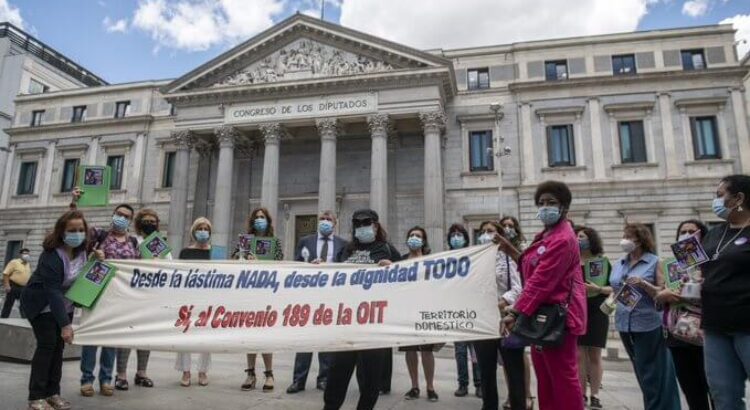
Y hay, también, quien en los meses de confinamiento se ha pasado encerrada, aguantando todas estas situaciones, con dos tetra bricks de leche para cuatro meses, como denuncia Rafaela Pimentel, una de las impulsoras de la Red de Trabajadoras del Hogar y de la asociación Territorio Doméstico. “Ya veníamos de situaciones difíciles, por eso estamos organizadas. Veníamos de años reclamando derechos básicos para mujeres que realizan un trabajo importante y un trabajo esencial. Aunque el nombre se lo han puesto ahora. Esencial. Sin nuestro trabajo, la sociedad no podría moverse. Y con la pandemia ha sido horrible. Las personas que teníamos que estar cuidando, en primera línea, no teníamos ningún apoyo. ¿Qué podríamos esperar? Pues que se complicara más”, dice Rafaela entre cortes de túneles, mientras hace el trayecto en tren desde su casa a su trabajo, en Madrid. Ella es dominicana y lleva 28 años en España. La primera vez que empezó a organizarse fue en su barrio, en Vallecas, allá por el año 95. En 2006 puso en marcha Territorio Doméstico. Estamos en 2020 y las trabajadoras del hogar continúan sin derechos básicos: ni tienen paro ni cotizan en el Régimen General de la Seguridad Social.
“Muchas compañeras tuvieron que quedarse durante los cuatro meses que duró el confinamiento en los trabajos porque, claro, los cuidados no se podían dejar. A muchas se las llevaron fuera de Madrid. Sin ver a sus familias, a sus amigas, sin ver a nadie. Y, como colectivo –prosigue Rafaela–, hemos tenido que aportar un sostenimiento de psicología terapéutica para algunas compañeras. Porque esto va a tener un impacto terrible. Muchas trabajadoras encerradas vivieron situaciones más complicadas por la propia pandemia, con más trabajo, con horarios terribles, compañeras que apenas les daban de comer, sin ni siquiera hacer una llamada, ni poder enviar dinero a su familia. Los locutorios estaban cerrados. Y mucha gente sin papeles envía el dinero por locutorios porque como no tiene cuenta en el banco…”.
Según las cifras que se manejan, con datos de la Encuesta de Población Activa (EPA), del Ministerio de Trabajo y otras entidades, el colectivo de empleadas del hogar está compuesto por unas 600.000 trabajadoras, la mayoría mujeres extranjeras, pero unas 200.000 de ellas no cotizan. Un informe del sindicato UGT indica que los sueldos de las personas que trabajan en el sector doméstico son cerca de un 60% menores al salario medio bruto en España. Y, según un estudio de Oxfam Intermón y del Instituto de Estudios de Género de la Universidad Carlos III, una de cada tres empleadas domésticas vive en hogares que están por debajo del umbral de la pobreza (el 16% en la población general) y duplican los retrasos en el pago del alquiler o la hipoteca respecto a cualquier otro trabajador. El mismo informe calcula que si este sector económico estuviera legalmente remunerado equivaldría al 2,8% del PIB.
“El colectivo de trabajadoras del hogar y cuidados es el único sin derecho a paro, podemos ser despedidas sin causa justificada y estamos excluidas de la ley de prevención de riesgos laborales. Seguimos cuidando en esta situación a miles de personas que lo necesitan en sus domicilios y que no son atendidas desde un sistema público insuficiente e infradotado. Somos 600.000 trabajadoras. Hemos denunciado la discriminación histórica que sufre nuestro colectivo y hoy somos excluidas nuevamente”, decía el escrito, al inicio del primer confinamiento, que la Red Estatal de Trabajadoras del Hogar trasladó al Gobierno. Porque, de la misma manera que han sido ignoradas tradicionalmente, las trabajadoras del hogar también quedaron para el final en la lista de ayudas adoptadas por el Gobierno en plena pandemia. En los primeros meses de pandemia, el sistema especial de Empleadas de Hogar perdió unas 20.000 afiliadas.
Del subsidio extraordinario por desempleo aprobado el 31 de marzo –del que quedaban excluidas las mujeres sin papeles o aquellas que no cotizan, muchas de ellas por la propia situación diabólica de precariedad en el sector–, el Gobierno ha reconocido la prestación al 80% de las solicitantes. Según una respuesta parlamentaria, hasta el 4 de noviembre, el Ministerio de Trabajo y Seguridad Social había resuelto 36.587 solicitudes. Hasta octubre solo se habían resuelto 23.000 de las 52.000 que habían sido presentadas. “La falta de respuesta gubernamental es tal que se ha resuelto menos de la mitad de una prestación que estructuralmente ya es insuficiente y no cubre ni la totalidad de las compañeras ni se corresponde con la realidad precarizada y vulnerable del sector”, denunció entonces el recién creado sindicato SINTRAHOCU en su primer comunicado, en el que exigía, además, la inclusión de las trabajadoras del hogar en la ampliación de todos los subsidios, entre ellos la Renta Activa de Inserción y obligar la inspección laboral y prevención de riesgos laborales adaptadas a las medidas sanitarias por la COVID-19.
Hay más colectivos que consideran que los sindicatos mayoritarios no las representan y se han autoorganizado ellas mismas, como ha ocurrido también en otros sectores como el de las Kellys o camareras de piso. Desde Barcelona, Sindihogar, Sindicato independiente de Trabajadoras del Hogar y los Cuidados (THC), nació, según explican, ante la ausencia de una organización independiente, con perspectiva de género, clase y raza de orden jurídico sindical. En su página web resumen el listado de reivindicaciones. O, dicho de otra manera, el listado de las discriminaciones que sufren: ratificación del Convenio 189 de la OIT (2011), que obliga a la equiparación de los derechos laborales y de seguridad social de las trabajadoras del hogar y del cuidado al resto de trabajadores/as; inclusión total del empleo del hogar en el régimen General de la Seguridad Social; derecho a la prestación por desempleo: cotización por salarios reales; obligación por parte de las personas empleadoras a realizar contratos por escrito; eliminación del pago en especie; tabla salarial con revisión según el IPC; cumplimiento de las pagas extras; derecho a vacaciones anuales y descansos diarios y semanales; derogación del despido por desistimiento de la persona empleadora; eliminación de las oficinas de colocación y de las ETT, la derogación de la Ley de Extranjería; visibilización de las situaciones precarias de las cuidadoras, las trabajadoras por horas y las internas, sensibilización; y concienciación en torno a la fundamental importancia social del trabajo del hogar y de los cuidados.
La ministra de Trabajo, Yolanda Díaz, dijo que la prestación por desempleo había llegado para quedarse. “Que se dejen de chapuzas, queremos estar en el régimen general, que este trabajo se reconozca, que las personas que lo hacemos seamos valoradas y tengamos derechos como cualquier otro trabajador, y ya está, un salario digno que nos permita tener una vivienda digna. Eso es lo que debe hacer el Gobierno, que se deje de chapuzas”, afirma rotunda Rafaela Pimental, que gana 690 euros. En ese mismo trayecto, su teléfono no deja de sonar a diario. Es el momento de atender a las compañeras, de echar las manos, de seguir organizándose ante lo que consideran un abandono por parte del Estado. El día antes, rememora, una amiga la llamó para contarle la situación de una mujer a la que tratan de ayudar en estos momentos: “Tiene dos hijos, uno de 5 y otro de 14 años, con asilo, no tiene trabajo, que es lo único que pide. Y si no paga la habitación este mes los echan. Necesita ropa, abrigo, un techo y alimentos. Lo básico”. Y añade, para remarcar lo que significa básico: “Vamos, una mierda”.
Los testimonios de otras compañeras que pertenecen a la Red de Hondureñas Migradas, son parecidos: hay quien ha sufrido abusos, hay quien tiene que comprarse el papel higiénico, hay quien solo puede comer lo que come la persona a la que cuida: patatas hervidas, zanahorias hervidas. Hay quien come sopa de tomate el lunes. Y al día siguiente la come con arroz. Y al día siguiente la come en revuelto. “Es triste. Ni los cerdos comen aquí así. Es lo que hay. Mi amiga lo hace porque está sacando un curso para estudiar un módulo superior. Siempre nos mueve la necesidad y siempre tenemos claras las metas que tenemos”, explica Karla, hondureña de 47 años.
Y hay, también, quien en los meses de confinamiento se ha pasado encerrada, aguantando todas estas situaciones, con dos tetra bricks de leche para cuatro meses, como denuncia Rafaela Pimentel, una de las impulsoras de la Red de Trabajadoras del Hogar y de la asociación Territorio Doméstico. “Ya veníamos de situaciones difíciles, por eso estamos organizadas. Veníamos de años reclamando derechos básicos para mujeres que realizan un trabajo importante y un trabajo esencial. Aunque el nombre se lo han puesto ahora. Esencial. Sin nuestro trabajo, la sociedad no podría moverse. Y con la pandemia ha sido horrible. Las personas que teníamos que estar cuidando, en primera línea, no teníamos ningún apoyo. ¿Qué podríamos esperar? Pues que se complicara más”, dice Rafaela entre cortes de túneles, mientras hace el trayecto en tren desde su casa a su trabajo, en Madrid. Ella es dominicana y lleva 28 años en España. La primera vez que empezó a organizarse fue en su barrio, en Vallecas, allá por el año 95. En 2006 puso en marcha Territorio Doméstico. Estamos en 2020 y las trabajadoras del hogar continúan sin derechos básicos: ni tienen paro ni cotizan en el Régimen General de la Seguridad Social.
“Muchas compañeras tuvieron que quedarse durante los cuatro meses que duró el confinamiento en los trabajos porque, claro, los cuidados no se podían dejar. A muchas se las llevaron fuera de Madrid. Sin ver a sus familias, a sus amigas, sin ver a nadie. Y, como colectivo –prosigue Rafaela–, hemos tenido que aportar un sostenimiento de psicología terapéutica para algunas compañeras. Porque esto va a tener un impacto terrible. Muchas trabajadoras encerradas vivieron situaciones más complicadas por la propia pandemia, con más trabajo, con horarios terribles, compañeras que apenas les daban de comer, sin ni siquiera hacer una llamada, ni poder enviar dinero a su familia. Los locutorios estaban cerrados. Y mucha gente sin papeles envía el dinero por locutorios porque como no tiene cuenta en el banco…”.
Según las cifras que se manejan, con datos de la Encuesta de Población Activa (EPA), del Ministerio de Trabajo y otras entidades, el colectivo de empleadas del hogar está compuesto por unas 600.000 trabajadoras, la mayoría mujeres extranjeras, pero unas 200.000 de ellas no cotizan. Un informe del sindicato UGT indica que los sueldos de las personas que trabajan en el sector doméstico son cerca de un 60% menores al salario medio bruto en España. Y, según un estudio de Oxfam Intermón y del Instituto de Estudios de Género de la Universidad Carlos III, una de cada tres empleadas domésticas vive en hogares que están por debajo del umbral de la pobreza (el 16% en la población general) y duplican los retrasos en el pago del alquiler o la hipoteca respecto a cualquier otro trabajador. El mismo informe calcula que si este sector económico estuviera legalmente remunerado equivaldría al 2,8% del PIB.
“El colectivo de trabajadoras del hogar y cuidados es el único sin derecho a paro, podemos ser despedidas sin causa justificada y estamos excluidas de la ley de prevención de riesgos laborales. Seguimos cuidando en esta situación a miles de personas que lo necesitan en sus domicilios y que no son atendidas desde un sistema público insuficiente e infradotado. Somos 600.000 trabajadoras. Hemos denunciado la discriminación histórica que sufre nuestro colectivo y hoy somos excluidas nuevamente”, decía el escrito, al inicio del primer confinamiento, que la Red Estatal de Trabajadoras del Hogar trasladó al Gobierno. Porque, de la misma manera que han sido ignoradas tradicionalmente, las trabajadoras del hogar también quedaron para el final en la lista de ayudas adoptadas por el Gobierno en plena pandemia. En los primeros meses de pandemia, el sistema especial de Empleadas de Hogar perdió unas 20.000 afiliadas.
Del subsidio extraordinario por desempleo aprobado el 31 de marzo –del que quedaban excluidas las mujeres sin papeles o aquellas que no cotizan, muchas de ellas por la propia situación diabólica de precariedad en el sector–, el Gobierno ha reconocido la prestación al 80% de las solicitantes. Según una respuesta parlamentaria, hasta el 4 de noviembre, el Ministerio de Trabajo y Seguridad Social había resuelto 36.587 solicitudes. Hasta octubre solo se habían resuelto 23.000 de las 52.000 que habían sido presentadas. “La falta de respuesta gubernamental es tal que se ha resuelto menos de la mitad de una prestación que estructuralmente ya es insuficiente y no cubre ni la totalidad de las compañeras ni se corresponde con la realidad precarizada y vulnerable del sector”, denunció entonces el recién creado sindicato SINTRAHOCU en su primer comunicado, en el que exigía, además, la inclusión de las trabajadoras del hogar en la ampliación de todos los subsidios, entre ellos la Renta Activa de Inserción y obligar la inspección laboral y prevención de riesgos laborales adaptadas a las medidas sanitarias por la COVID-19.
Hay más colectivos que consideran que los sindicatos mayoritarios no las representan y se han autoorganizado ellas mismas, como ha ocurrido también en otros sectores como el de las Kellys o camareras de piso. Desde Barcelona, Sindihogar, Sindicato independiente de Trabajadoras del Hogar y los Cuidados (THC), nació, según explican, ante la ausencia de una organización independiente, con perspectiva de género, clase y raza de orden jurídico sindical. En su página web resumen el listado de reivindicaciones. O, dicho de otra manera, el listado de las discriminaciones que sufren: ratificación del Convenio 189 de la OIT (2011), que obliga a la equiparación de los derechos laborales y de seguridad social de las trabajadoras del hogar y del cuidado al resto de trabajadores/as; inclusión total del empleo del hogar en el régimen General de la Seguridad Social; derecho a la prestación por desempleo: cotización por salarios reales; obligación por parte de las personas empleadoras a realizar contratos por escrito; eliminación del pago en especie; tabla salarial con revisión según el IPC; cumplimiento de las pagas extras; derecho a vacaciones anuales y descansos diarios y semanales; derogación del despido por desistimiento de la persona empleadora; eliminación de las oficinas de colocación y de las ETT, la derogación de la Ley de Extranjería; visibilización de las situaciones precarias de las cuidadoras, las trabajadoras por horas y las internas, sensibilización; y concienciación en torno a la fundamental importancia social del trabajo del hogar y de los cuidados.
La ministra de Trabajo, Yolanda Díaz, dijo que la prestación por desempleo había llegado para quedarse. “Que se dejen de chapuzas, queremos estar en el régimen general, que este trabajo se reconozca, que las personas que lo hacemos seamos valoradas y tengamos derechos como cualquier otro trabajador, y ya está, un salario digno que nos permita tener una vivienda digna. Eso es lo que debe hacer el Gobierno, que se deje de chapuzas”, afirma rotunda Rafaela Pimental, que gana 690 euros. En ese mismo trayecto, su teléfono no deja de sonar a diario. Es el momento de atender a las compañeras, de echar las manos, de seguir organizándose ante lo que consideran un abandono por parte del Estado. El día antes, rememora, una amiga la llamó para contarle la situación de una mujer a la que tratan de ayudar en estos momentos: “Tiene dos hijos, uno de 5 y otro de 14 años, con asilo, no tiene trabajo, que es lo único que pide. Y si no paga la habitación este mes los echan. Necesita ropa, abrigo, un techo y alimentos. Lo básico”. Y añade, para remarcar lo que significa básico: “Vamos, una mierda”.
“España hace oídos sordos a la OIT. A nosotras nos dejan desprotegidas si el anciano muere o la situación económica de la familia cambia, como con la pandemia. Yo no tengo a nadie en este país que me acoja si me quedo sin nada. Y eso nos hace más vulnerables. Zapatero lo dejó para enero de 2019, pero el señor Rajoy lo pospuso a 2025. Si nosotros ponemos nuestra mano de obra, si nuestro trabajo cotiza en la Seguridad Social, vamos a levantar este país”, argumenta la hondureña Karla.
Ella cuenta que tenía su propio protocolo en la casa donde trabajaba y donde sigue trabajando, en Cáceres (Extremadura). Y gracias a él, sin saber que estaba contagiada, evitó que la persona mayor a la que cuida se contagiara. “Yo sufrí el COVID cuidándola. Estuve muy mal, con apenas fuerza. Me ponía malita. Fue al principio, en abril. No supe que era COVID. Pero siempre la cuidaba con la mascarilla puesta. Me enteré en julio, porque cuando fui a hacerme una colonoscopia que tenía prevista y me hicieron la PCR por protocolo de anticuerpos positivos. La carga viral era suave. Yo me cuidé tanto por ella, porque su vida depende de mi cuidado. Muy fuerte la señora, y no lo cogió. Gran susto”.
Cuatro años después de llegar a España, Karla trabaja como interna y vive ahora, según sus propias palabras, una situación aceptable. Pero no olvida lo que ha pasado, el hambre, la necesidad, el frío y esa especie de impuesto revolucionario que tienen que pagar por ser migrante, mujer, de otro país, cuando vienen de su país de pagar otros tantos: “Allá tú tienes un negocio, llega un grupo dedicado al crimen organizado, al narcomenudeo, te dicen ‘usted tiene que darme tanto y yo la cuido’. Y eso de cuidar es que nadie te va a asaltar. Y luego hay otro grupo que se llaman maras y vienen a pedirte. Y de repente hay tres grupos delictivos pidiéndote y tu negocio no te da. Si tú decides cerrarlo o emigrar, y ellos se enteran, te matan antes de que tú cierres o te vayas. Y estás amarrada. Y lo triste es que todo ese dinero de las extorsiones va para arriba, es una cadena. El señor que gobierna tiene el control sobre esas maras. La vida no vale nada”.
Karla trabajaba para el Estado. Era funcionaria, asesora técnica financiera: “Brindaba asesoría para quienes abrían un negocio. Yo tenía un salario mes a mes, pero la situación es tan peligrosa… que sales en la mañana y no sabes si vas a volver con vida por la tarde. Vas en el coche, en el comercio, y te apartas a un lado para no pisar un charco de sangre de alguien a quien han asesinado por ajustes de cuentas. Abusan en las oficinas. Uno se recoge a las seis de la tarde por el peligro. Los negocios… Vienes del súper, abres el portón de tu casa y entran los ladrones contigo, te roban la compra, el coche y, si entran dentro, hacen y deshacen, con abusos sexuales también. Es muy fuerte. Mi familia vive en una zona de circuitos cerrados y privada. Yo vivo –lo dice todavía en presente, como si viviera allí– en una zona más modesta pero es muy buena zona. Pero te pueden perseguir y te extorsionan y muchas veces venimos huyendo de esas cosas”.
Es rotunda: “Tenemos un narcogobierno y no me da miedo decirlo. Un hombre de armas tomar. Su hermano era diputado, está preso en EE.UU. por narcotráfico. ¿Por qué los organismos internacionales no van a por él, a por el presidente? Mientras sea dignatario no le pueden poner la mano encima. Reformó la Constitución y se reeligió con fraude. Y sus secuaces van a tratar de continuar en el poder. Allá la gente que protesta es reprimida, gaseada, es desaparecida y es asesinada. El pueblo está atado de pies y manos. Además de la represión, de la pobreza y de la pandemia. Robaron todo el dinero. El encargado de los hospitales móviles le dio 40 millones de dólares a una empresa que desapareció. Y bueno, esa es la situación. Yo trabajaba para ese partido de gobierno y por eso tenía mi plaza. He sido obligada a huir. A este narcogobierno sumamos la pandemia y que acaban de pasar dos huracanes y está devastado nuestro país. Ha retrocedido cien años. Se espera una migración masiva”.
Ella logró traer a su hija, pero aún tiene en Honduras a dos hijos, que los cuida su hermana. “No traje denuncias porque lamentablemente la justicia allá es vergonzosa y te puedes encontrar con las mismas personas que te han hecho secuestro exprés. Cuando ves a un policía, no te sientes segura, sientes temor. Desde el gobierno para abajo hay una redada de corrupción y todos trabajan para los malos”, denuncia Karla. Su hija ha vuelto a solicitar el asilo, esta vez alegando el peligro que corre en su país por ser homosexual.
En estos días, previos a la Navidad, Karla anda entre la tristeza y la alegría de saber que, al menos, puede enviarles remesas. Acaba de venir, además, de una recogida de alimentos y materiales para su país en ayuda por los destrozos de los huracanes: “Qué duro fue ver –lo dice así, ver, ver desde lejos sin poder hacer nada– a mi hermana, con mis dos hijos, irse de mi casa. Se fueron con lo puesto, con lo poco que pudieron echar en una mochila para ponerse a salvo. Y todo lo que nos ha costado tener eso, pues ahí se queda para que te lo roben. Y así vamos, a veces no nos enteramos de lo que les pasa a los nuestros. Allá, en un grupo de WhatsApp, alguien dice ‘cuando le asaltaron y le quitaron el móvil’… ¡Y me entero de que es a mi hija! No te enteras de que los familiares han estado ingresados hasta que salen…”. Aunque lo más duro, según Karla, lo más duro es que viven sin ti, se casan, tienen hijos, se gradúan sin ti. “Dejas la mitad de la vida allá”.
Dania vive en Murcia. Llegó a España hace dos años con su marido. Vinieron, según denuncia, huyendo de la persecución política a la que eran sometidos en su país, en Nicaragua. “Todo empezó cuando nos casamos. Nos conocimos trabajando en el área de turismo. Yo siempre fui progobierno, era militante del partido. Pero mi marido era del partido contrario”, cuenta. Su familia está rota, dividida entre quienes apoyan al gobierno y entre quienes han tenido que huir. “El vínculo familiar debería estar antes que la ideología política. Mi propio hermano me llamaba con amenazas, que saliera de ahí”, relata, con voz suave, al otro lado del teléfono. Ella, a diferencia de Karla, sí traía pruebas, y les ha sido concedido el asilo. “Teníamos una casa a las afueras del pueblo y nos vigilaban. Dejamos de salir porque nos seguían. Nos espiaban, nos controlaban, teníamos miedo. Nos obligaron a salir sí o sí de nuestro país. Al hermano de mi marido lo secuestraron. Un país que amas tanto se ha deteriorado”, dice ahora con la voz encogida en la garganta.
En España, tuvo suerte con la primera casa en la que entró a trabajar. Pero siempre con el miedo, la incertidumbre y el desasosiego metidos en el cuerpo. “La familia era muy buena, muy buena, pero como no tienes papeles no tienes derecho a nada, ni a vacaciones, ni medias pagas, lo que te den es lo que tienes que aceptar”, asegura. “En la segunda casa, como no tenía papeles, la señora no me quería contratar. Pero confió en mí, le gustaron mis formas”. Mientras tanto, estuvo como el preso que vive con la condicional. “Ahora que ya los tengo, todo ha cambiado. Los papeles han venido a cambiar la situación. Con papeles tienes más opciones, tienes más libertad”. Ella sabe lo que es viajar por placer y viajar para huir.
La modificación de la Ley de Extranjería es otra de las reivindicaciones en el colectivo. El Movimiento estatal #RegularizacionYa, que exige la regularización permanente y sin condiciones de todas las personas migrantes y refugiadas ante la emergencia sanitaria y social por la COVID-19, llegó a presentar una proposición no de ley en el Congreso, defendida por varios partidos –Unidas Podemos, Esquerra Republicana (ERC), EH Bildu, Junts per Catalunya, BNG, Compromís y CUP–, que finalmente fue rechazada. El PSOE –partido de gobierno– alegó que tanto la legislación española como la europea lo que permiten es una regularización “puntual, individualizada y tasada”, no como la masiva que reclaman. En estos momentos, el movimiento espera, según explican en su página web, que Unidas Podemos, el otro socio de gobierno, busque, “de forma honesta y a la altura”, una solución digna a la irregularidad sobrevenida, entre otros colectivos, a las trabajadoras del hogar y cuidados.
“Exigimos que la ley se revise porque estamos obligados a trabajar en el trabajo sumergido, valga la redundancia, y estamos expuestas a abusos, maltratos, porque a un inmigrante se le permite regularizar su situación a los tres años mediante un arraigo social. Imagina, una persona tres años en España no va a vivir de ayudas. Esos son mitos, bulos, no tenemos derecho a nada porque no tenemos papeles, serán otro tipo de migrantes y en otras circunstancias. Una se ve obligada a trabajar como sea y donde sea. Muchos, amontonados en pisos, en habitaciones, en condiciones increíbles. Muchas veces la gente es engañada, los hombres van a las obras, los despiden y encima los denuncian y los meten presos. Te sientes intimidada. Entonces, al no tener nosotros ese amparo de la Ley de Extranjería…”, reflexiona Karla. “A mi criterio, si un extranjero puede demostrar que es productivo y que no le va a quitar el trabajo a ningún español o a ninguna española, ¿por qué Extranjería no puede hacer una enmienda y concederle a esa persona el permiso de trabajo? Porque aquí dicen que no hay trabajo y es cierto, el trabajo no está como que vas a salir a la calle y lo vas a encontrar. Pero si buscas, a las dos o tres semanas lo encuentras y te lo digo yo con conocimiento de causa. Solamente está en querer hacer el trabajo que se ofrece y muchos no quieren estar al cuidado de mayores, de niños, no quieren limpiar. Que no es fácil, pero nosotros tenemos una meta clara y no tenemos a nadie que nos pueda acoger. Y, sencillamente, si no trabajamos, no comemos y no tenemos para vivir, y la necesidad nos obliga a aceptar lo que sea. Y en condiciones tremendas”, insiste.
Reyna, nicaragüense de 31 años, tuvo que lanzar un crowdfunding, en colaboración con otras organizaciones en Euskadi, para poder hacer frente a la situación de desamparo en pandemia. Trabajadora social, en septiembre hace tres años que llegó a España. Su madre, que tiene 53, viajó seis meses antes por la imposibilidad de sostener a su familia: trabajaba por un salario que no llegaba ni a la tercera parte de la canasta básica –la cantidad mínima para cubrir las necesidades de un hogar–. “A mí me cerraron todas las puertas laborales porque firmé en contra del Canal Interoceánico”, un proyecto faraónico, con años de historia, que intentó reflotar sin éxito el presidente Daniel Ortega. “Nunca pensé que al llegar aquí me iba a costar un año encontrar un trabajo, precario. No sabía cuál era la realidad”. Su primer trabajo fue en una casa de seis miembros, ocho horas, por un suelo de 700 euros, también inferior, como en el caso de su madre allá, al salario mínimo de acá, de España.
A Reyna la despidieron de su trabajo el 15 de abril, un mes justo después del inicio del estado de alarma por la pandemia. “Me despidieron alegando que no sabían qué iba a pasar, me pagaron lo que quisieron. Los iba a demandar, pero era cansado, no había garantías”. Su madre también se quedó sin trabajo. Y ahí surgió, en el grupo en el que se han organizado, Feministas por Nicaragua Euskal Herria, la idea del crowdfunding. Consiguieron entre los grupos que participaron –Mujeres con Voz, Mujeres Tejiendo Red, Trabajadoras No Domesticadas, en colaboración con Fondo de Mujeres Calala, Pikara Magazine y Sortzen Consultoría– unos 18.000 euros. “Nosotras ayudamos a unas 30 mujeres con pequeños bonos porque las ayudas que había lanzado el Gobierno no eran para nosotras, sobre todo las que estábamos en situación irregular. Porque había que cotizar, un montón de requisitos que nosotras no teníamos. Y la solidaridad entre nosotras. Amigas que estaban mejor que nosotras nos ayudaban con la compra y cosas así”, explica. El 1 de noviembre ha comenzado un nuevo trabajo en una casa, donde cuida a una bebé.
Reyna habla muy rápido, como si quisiera que el tiempo transcurriera a la velocidad de la luz. “Aquí no tengo derecho ni a vivienda digna. No tengo tarjeta sanitaria. En el médico me han tratado fatal. Y con la situación política en Nicaragua me toca quedarme aquí. No veo la manera de que pasen esos benditos tres años por esa dichosa ley de extranjería, que es la peor de las violencias que podemos tener las migrantes. Tampoco puedes estudiar porque, uno, es carísimo, y dos, como estoy en situación irregular, tampoco tengo derecho a nada. Es una superdesigualdad increíble”. Literalmente, Reyna asegura sentirse encerrada. El día de la entrevista le acababan de denegar el asilo a su hermano, que también viajó a España. Tiene 15 días para abandonar el país. “Es una pesadilla, ahora no podemos ni volver por el COVID”. Y desde el COVID, además, no pueden mandar remesas. “30 o 40 dólares, pequeños envíos por si a mi hermano que sigue allí le cortan la luz. Pero mayor envío no. Ni hemos podido concretar metas que traíamos como casas, negocios y tal. Yo he solicitado el arraigo social el 1 de octubre. Con la esperanza de que mi situación migratoria cambie y poder optar a otro empleo, con mejor salario”, aclara.
Son mujeres que quieren prosperar y no pueden. Como le ocurre también a Lourdes, hondureña de 27 años. Ella llegó a España con 19, sin saber absolutamente “naaaaada”, así, con muchas aes en su dicción, con apenas 300 euros en el bolsillo. En un taxi le cobraron 100. Quiso estudiar Derecho en su país, pero su madre no pudo costearlo. “No tengo padre, me crié con mi abuela. Honduras no es país para vivir. La luz y la comida es más cara allí que aquí. Nos mataron a un primo que era periodista, y en la Corte no hay un expediente, ni juicio”, asegura.
En España ya ha estudiado un módulo de educación infantil –una opción bastante parada ahora por la pandemia– y está ahora estudiando primero de Derecho por la UNED mientras trabaja como empleada del hogar. Vive en Madrid. Tiene estabilidad y la tratan bien. Pero –y volvemos al principio– no entiende cómo en España, en España, ese país del primer mundo al que un día decidió migrar, discrimina a las trabajadoras del hogar: “Por más empleada de hogar que seas, todos los trabajos son dignos, requieren un trato justo y un salario justo. No es normal que en un país que es el primer mundo no tengamos derecho a paro”. Y lanza, también, una reflexión sobre el otro lado del océano: de su trabajo se está beneficiando el mismo gobierno que la expulsó, pero no puede dejar a su familia de allá tirada.
“Las remesas son las que sostienen a esos países realmente. Cogen los gobiernos de los países de origen y los de acá reciben sus impuestos. Pero es que si no envías, la gente de tu familia no come, ni se pueden pagar tratamientos médicos”, denuncia Rafaela Pimentel. En la Red Estatal de Trabajadoras del Hogar también tuvieron que crear una caja de resistencia: “Porque sí, muchas ayudas, pero a ver quién es la guapa o el guapo que le dice al casero que no va poder pagar la luz”. Por eso, las redes, la autoorganización, ha sido vital para sobrevivir durante muchos años, pero mucho más en pandemia. “Como organización, hemos hablado con los caseros y, así, a muchas compañeras no las sacaron de los pisos o de sus habitaciones. O a sus propios compañeros si ellas estaban internas. Ha sido terrible sostener todo eso. Pero ha sido muy importante sostenernos”, añade Rafaela. Durante todos estos meses han formado a promotoras de salud, están acompañando a muchas mujeres a interponer denuncias, en los ambulatorios… El sostén, siempre el sostén.
Y también están para sonreír. “La alegría es fundamental. Nos mandamos canciones, audios, vídeos”. Porque a ellas la pandemia también les ha arrebatado vidas. Vanessa, por ejemplo, perdió en agosto a su abuelito.
Fuente: https://desinformemonos.org/expulsadas-de-sus-paises-esclavizadas-en-espana/
Imágenes: Álvaro Minguito/La Marea




 Users Today : 19
 Total Users : 35510232
 Views Today : 21
 Total views : 3638366