Saltar al contenido principal
Page 989 of 6195
1 987 988 989 990 991 6.195

Ecuador: Cabildo de Guayaquil evaluará resultado de proyecto educativo en la zona de Monte Sinaí

Cabildo de Guayaquil evaluará resultado de proyecto educativo en la zona de Monte Sinaí

El Municipio y Unicef evaluarán los resultados del proyecto Educando en el Camino de Monte Sinaí, con el fin de asegurar un avance y conocer las condiciones de donde parte este plan de apoyo educativo.

Educación en pandemia

Educando en el Camino, iniciativa de la alcaldesa Cynthia Viteri y la Dirección de la Mujer, se ejecuta mediante el Centro de Desarrollo y Autogestión y el Ministerio de Educación, y brinda tutorías con sesiones individuales y grupales de máximo seis niños.

La iniciativa fue instaurada por el cabildo de Guayaquil para suplir la falta de recursos técnicos y tecnológicos y combatir la deserción escolar en Monte Sinaí ante el confinamiento obligado por la pandemia del COVID-19.

“Con Unicef (Fondo de las Naciones Unidas para la Infancia) y la organización Desarrollo y Autogestión en diciembre haremos un levantamiento de la línea base con una muestra de los niños y las niñas del proyecto, para saber cómo está su nivel de estudios y que cuando termine el programa se pueda hacer un comparativo de la entrada y salida, para evidenciar los resultados y el aporte del proyecto”, informó la directora municipal de la Mujer, Vivianne Almeida.

Mientras tanto, los 273 tutores de este programa, involucrados en la atención directa a 6.000 niños y niñas del sector de Monte Sinaí, el pasado lunes 23 de noviembre terminaron su capacitación en temas de protección infantil.

El trabajo contó con la coordinación de la Dirección de la Mujer, el Consejo Cantonal de Protección Integral de Derechos de Guayaquil (CCPID-G) y la Junta Cantonal de Protección Integral de Derechos.

“La capacitación a los tutores se ha venido dando desde hace varios días, bajo una articulación con el Consejo Cantonal de Protección Integral de Derechos, para que todos tengan herramientas sobre temas de derechos de la niñez, políticas de protección y sepan cómo deben actuar ante una situación de vulneración de derechos”, explicó Almeida.

Ella también indicó que se atendieron las medidas de bioseguridad para evitar los contagios de COVID-19, por lo que los maestros fueron capacitados por grupos.

Actualmente solo unos pocos tutores faltan de capacitarse y lo realizarán en una próxima entrega del curso.

En el desarrollo del proyecto, los niños recibieron kits escolares que incluían lápices de colores, tijeras, juegos geométricos y materiales que se utilizan en el trabajo educativo.

Fuente de la Información: https://www.eluniverso.com/guayaquil/2020/11/27/nota/8064340/cabildo-evaluara-proyecto-educativo-monte-sinai

Comparte este contenido:

El Papa Francisco critica el «consumismo febril» e insta a involucrar a los pobres en la planificación de la economía pospandémica

El Papa Francisco critica el «consumismo febril» e insta a involucrar a los pobres en la planificación de la economía pospandémica

Fuentes: RT

El sumo pontífice subrayó que la peor reacción, cuando la pandemia se termine, sería «caer aún más en un consumismo febril y en nuevas formas de autoprotección egoísta».

El papa Francisco instó este sábado a los jóvenes economistas, emprendedores y líderes empresariales a que sean más sostenibles y promuevan modelos de desarrollo pospandémicos que involucren a los pobres.

En un videomensaje para los participantes del foro juvenil ‘La economía de Francisco’, celebrado en la ciudad italiana de Asís, el líder de la Iglesia católica apuntó que la peor reacción, cuando la pandemia termine, sería «caer aún más en un consumismo febril y en nuevas formas de autoprotección egoísta«. «No olviden que de una crisis nunca salimos igual: salimos mejor o peor. Cultivemos lo que es bueno, aprovechemos la oportunidad y pongámonos todos al servicio del bien común», afirmó.

El sumo pontífice subrayó que se debería invitar a los «pobres y excluidos», que fueron más golpeados por la crisis sanitaria, a participar en los debates sobre la creación de una «narrativa económica diferente» que es necesaria urgentemente. «De ellos aprendamos a avanzar en modelos económicos que beneficiarán a todos, porque el enfoque estructural y de toma de decisiones estará determinado por el desarrollo humano integral», declaró y agregó que la gravedad de la situación actual, provocada por el coronavirus, «exige una toma de conciencia responsable de todos los actores sociales», sobre todo los jóvenes.

Además, el papa Francisco dijo que la política y la economía no deben «someterse a los dictados y al paradigma eficientista de la tecnocracia» y añadió que en el futuro el mundo no estará «condenado» a modelos económicos cuyo interés se limita al lucro y a promover políticas públicas «favorables, despreocupados por su costo humano, social y ambiental», recoge AP.

Sin embargo, admitió que será una tarea difícil el cambiar «los estilos de vida, los modelos de producción y consumo, las estructuras consolidadas de poder que hoy rigen la sociedad».

Fuente: https://actualidad.rt.com/actualidad/374381-papa-francisco-critica-consumismo-febril

Fuente de la Información: https://rebelion.org/el-papa-francisco-critica-el-consumismo-febril-e-insta-a-involucrar-a-los-pobres-en-la-planificacion-de-la-economia-pospandemica/

Comparte este contenido:

Bulgaria: Parliament Rejects Draft New Constitution

Bulgaria: Parliament Rejects Draft New Constitution

SOFIA, BULGARIA – The Bulgarian parliament on Wednesday rejected a controversial plan by Prime Minister Boyko Borisov to rewrite the constitution, which he submitted in August in an attempt to defuse the political crisis.

This proposal, recently criticized by the Venice Commission, the Council of Europe’s consultative body on constitutional matters, received only 110 votes in favor, while a qualified majority of 160 out of 240 deputies was needed to continue the procedure.

The Conservative government had launched such an initiative to try to weaken the protest movement, which vehemently denounces its alleged links with the oligarchy.

But this decision, seen as a maneuver to buy time and stay in power until the general elections were held in March 2021, provoked a strong reaction from the demonstrators. Clashes with the police left more than 45 injured in Sofia in early September.

The project brought for its detractors no limitation of the power of the Attorney General Ivan Geshev, today untouchable, whose resignation is demanded by the protesters.

Deploring «a missed opportunity,» the Venice Commission regretted, in a press release, «that the launch of the constitutional reform was not preceded by an appropriate public debate, that the project was drawn up within the majority Parliament, apparently without any external input, and that the reasons for certain amendments were not well explained.”

The demonstrations brought together thousands of people for more than 100 days, before becoming scarce in recent weeks, in particular because of the health situation caused by the COVID-19 pandemic.

Fuente de la Información: https://www.voanews.com/europe/bulgaria-parliament-rejects-draft-new-constitution


Comparte este contenido:

Iran scientist linked to military nuclear program killed

Iran scientist linked to military nuclear program killed

The scene where Mohsen Fakhrizadeh was killed in Absard, a small city just east of the capital, Tehran, Iran, Friday, Nov. 27, 2020.


DUBAI, United Arab Emirates — An Iranian scientist named by the West as the leader of the Islamic Republic’s disbanded military nuclear program was killed Friday in an ambush on the outskirts of Tehran, authorities said.

Iran’s foreign minister alleged the killing of Mohsen Fakhrizadeh bore “serious indications” of an Israeli role, but did not elaborate. Israel, long suspected of killing several Iranian nuclear scientists a decade ago, declined to immediately comment. Israeli Prime Minister Benjamin Netanyahu once told the public to “remember that name” when talking about Fakhrizadeh.

The killing risks further raising tensions across the Mideast, nearly a year after Iran and the U.S. stood on the brink of war when an American drone strike killed a top Iranian general in Baghdad. It comes just as President-elect Joe Biden stands poised to be inaugurated in January and will likely complicate his efforts to return America to a pact aimed at ensuring Iran does not have enough highly enriched uranium to make a nuclear weapon.

That deal, which saw Iran limit its uranium enrichment in exchange for the lifting of economic sanctions, has entirely unraveled after President Donald Trump withdrew from the accord in 2018.

Trump himself retweeted a posting from Israeli journalist Yossi Melman, an expert on the Israeli Mossad intelligence service, about the killing. Melman’s tweet called the killing a “major psychological and professional blow for Iran.”

Details about the slaying remained slim in the hours after the attack, which happened in Absard, a village just east of the capital that is a retreat for the Iranian elite. Iranian state television said an old truck with explosives hidden under a load of wood blew up near a sedan carrying Fakhrizadeh.

As Fakhrizadeh’s sedan stopped, at least five gunmen emerged and raked the car with rapid fire, the semiofficial Tasnim news agency said.

Fakhrizadeh died at a hospital after doctors and paramedics couldn’t revive him. Others wounded included Fakhrizadeh’s bodyguards. Photos and video shared online showed a Nissan sedan with bullet holes in the windshield and blood pooled on the road.

While no one claimed responsibility for the attack, Iranian Foreign Minister Mohammad Javad Zarif pointed the finger at Israel, calling the killing an act of “state terror.”

“Terrorists murdered an eminent Iranian scientist today. This cowardice — with serious indications of Israeli role — shows desperate warmongering of perpetrators,” Zarif wrote on Twitter.

Hossein Dehghan, an adviser to Iran’s supreme leader and a presidential candidate in Iran’s 2021 election, also blamed Israel — and issued a warning.

«In the last days of their gambling ally’s political life, the Zionists seek to intensify and increase pressure on Iran to wage a full-blown war,» Dehghan wrote, appearing to refer to Trump’s last days in office. “We will descend like lightning on the killers of this oppressed martyr and we will make them regret their actions!”

The attack comes just days before the 10-year anniversary of the killing of Iranian nuclear scientist Majid Shahriari that Tehran also blamed on Israel. That and other targeted killings happened at the time that the so-called Stuxnet virus, believed to be an Israeli and American creation, destroyed Iranian centrifuges.

The area around Absard, which has a view of Mount Damavand, the country’s highest peak, is filled with vacation villas. Roads on Friday, part of the Iranian weekend, were emptier than normal due to a lockdown over the coronavirus pandemic, offering his attackers a chance to strike with fewer people around.

Fakhrizadeh led Iran’s so-called AMAD program that Israel and the West have alleged was a military operation looking at the feasibility of building a nuclear weapon. Tehran long has maintained its nuclear program is only for civilian purposes.

The International Atomic Energy Agency says Iran “carried out activities relevant to the development of a nuclear explosive device” in a “structured program” through the end of 2003. That was the AMAD program, which included work on the carefully timed high explosives needed to detonate an implosion-style nuclear bomb.

Iran also “conducted computer modeling of a nuclear explosive device” before 2005 and between 2005 and 2009, the IAEA has said. The agency said, however, that those calculations were “incomplete and fragmented.”

IAEA inspectors now monitor Iranian nuclear sites as part of the now-unraveling nuclear deal with world powers. Experts believe Iran has enough low-enriched uranium to make at least two nuclear weapons if it chose to pursue the bomb. Meanwhile, an advanced centrifuge assembly plant at Iran’s Natanz nuclear facility exploded in July in what Tehran now calls a sabotage attack.

Fakhrizadeh, born in 1958, had been sanctioned by the U.N. Security Council and the U.S. for his work on AMAD. Iran always described him as a university physics professor. A member of the Revolutionary Guard, Fakhrizadeh had been seen in pictures in meetings attended by Iran’s Supreme Leader Ayatollah Ali Khamenei, a sign of his power.

In recent years, U.S. sanctions lists name him as heading Iran’s Organization for Defensive Innovation and Research. The State Department described that organization last year as working on “dual-use research and development activities, of which aspects are potentially useful for nuclear weapons and nuclear weapons delivery systems.”

In 2018, Netanyahu gave a presentation in which he unveiled what he described as material stolen by Israel from an Iranian nuclear archive.

“A key part of the plan was to form new organizations to continue the work,” Netanyahu alleged. “This is how Dr. Mohsen Fakhrizadeh, head of Project Amad, put it. Remember that name, Fakhrizadeh.”

Fuente de la Información: https://www.startribune.com/iran-scientist-linked-to-military-nuclear-program-killed/573211681/

Comparte este contenido:

Ghana: Robotics And ICT Center Will Impact The Youth Positively, Minister Of Communications Commends MTN

Robotics And ICT Center Will Impact The Youth Positively, Minister Of Communications Commends MTN

Accra, November 26, 2020 – The MTN Ghana Foundation has commissioned a multi-purpose ICT library and robotics lab at Ebenezer Senior High School which will also serve the Dansoman community.

The Dansoman Community Library is the first Secondary School library in Ghana to have a modern integrated ICT Center and a Robotics lab. The robotics and ICT lab will be a learning resource center for training students and young people in robotics.

The multipurpose facility was constructed at a cost of GHC 770,000 and comprised of a 100-seater conventional library area, a 20-seater ICT center, a world-class Robotics lab, and washrooms.

Speaking at the commissioning, the CEO of MTN Ghana Selorm Adadevoh said “When the idea of a modern integrated ICT library and robotics lab in Dansoman was brought to us at MTN Foundation, I was personally very inspired by it. We gladly accepted to embark on this project at the Ebenezer Senior High School because we understand the life-changing opportunities such a facility would bring to the people of Dansoman”.

“One of our core mandates is to improve the quality of life of people through appropriate and sustainable interventions in communities where MTN operates”, he added.

On his part, The MTN Foundation Board Chairman Prof. Franklyn Manu urged the management and beneficiaries to adopt good maintenance culture to preserve the facility.

He said “Such a facility will require constant upkeep, maintenance, and replacement of to ensure its longevity”.

The special guest of honor Mrs. Ursula Owusu-Ekuful, Minister of Communications and Member of Parliament for Ablekuma West Constituency commended MTN Ghana Foundation for supporting the school and community with such a modern facility.

She said “I am excited about this project: It is clear from all the success our young people have chalked that they do not lack talents and ability to succeed. What our young people need, are the tools and the platforms to showcase what they have. When given the right tools and the right skills, our young people can compete and be the best in the world.”

The ceremony was attended by Mr. Samuel Koranteng, Corporate Services Executive of MTN Ghana, Mrs. Nabila Williams, a Board Member of MTN Ghana Foundation, Dr. Yaw Okraku-Yirenkyi, a Co-Founder of the Ghana Robotics Academy Foundation (GRAF), Hon. George Cyril Bray, MCE of Ablekuma West Constituency, Mr. Hayford Siaw, Director of Ghana Library Authority, District Director of Education, and the Headmistress of Ebenezer Secondary School.

Since the inception of the MTN Ghana Foundation in 2007, the Foundation has implemented over 150 major projects in areas of health, education, and economic empowerment at a total cost of USD 15million. These projects are estimated to have impacted over 4 million people.

About The MTN Foundation:

The MTN Ghana Foundation was established in November 2007 as the vehicle to select and implement MTN’s Corporate Social Investments. MTN Ghana Foundation has three areas of focus -Health, Education and Economic Empowerment. From its inception to date, the Foundation has undertaken 151 major projects across the country. Notable health projects include the construction of a Neonatal Care Center for Tamale Teaching Hospital, refurbishment of the 2nd-floor maternity block of the Korle Bu Teaching Hospital, construction of a maternity block for Ejisu Government Hospital, and construction of an Emergency Center for Atua Government Hospital.

Education projects undertaken include construction of a boys dormitory for Akropong School for the Blind, construction of a six-unit classroom block for Kodjonya Millennium School, the establishment of 10 MTN ICT Learning Centers in each of Ghana’s 10 regions, and the institution of an Innovation Hub at KNUST to promote Telecoms Engineering and Research. Key projects undertaken in Economic Empowerment include the construction of shea butter processing centers, provision of seed capital, and skill training for Women of Tizaa Dini Association of Yendi and the Sung Suma Women Association of Wa.

For more information visit http://www.mtn.com.gh/about-mtn/community/mtn-ghana-foundation.

11262020111449-0g830n4ayt-outside-view-of-the-newly-commissioned-multi-purpose-ict-library-and-robotics-lab-at-dansoman

1126202063715-0g830m4yxt-a-student-from-the-ghana-robotics-academy-foundation-doing-a-demonstrating-for-mrs-ursula-owusu-ekuful-minister-of-communications-and-other-dignitaries-9

1126202063715-j5fqi7t2gb-a-facilitator-from-the-ghana-robotics-academy-foundation-explaining-to-hon-minister-ceo-of-mtn-and-other-dignitaries-how-they-use-robotics-to-teach-and-develop-solutions

1126202063715-nsjum8x432-a-student-from-the-ghana-robotics-academy-foundation--doing-a-demonstrating-for-mrs-ursula-owusu-ekuful-minister-of-communications-and-other-dignitaries--7

Fuente de la Información: http://otrasvoceseneducacion.org/wp-admin/post-new.php


Comparte este contenido:

Indonesia: Ending Violence Against Women

Ending Violence Against Women

Athira Nortajuddin

This file photo shows an Indonesian activist standing next to a banner that reads «We are human beings not commodities» in Jakarta. (AFP Photo)

You might have seen a few posts from friends or organisations on social media which highlight the colour orange alongside the hashtags #OrangeTheWorld and #GenerationEquality these past few days.

The campaign, “Orange the World: Fund, Respond, Prevent, Collect!” is the theme for 2020’s International Day for the Elimination of Violence against Women which falls on 25 November every year. Even some iconic buildings and landmarks will be “oranged” to recall the need for a violence-free future. This can be seen from the Pyramids and the Sphinx of Egypt which was lit up in orange to kick off the 16 days of activism against gender-based violence.

Violence against women and girls (VAWG) is one of the most widespread, persistent and devastating human rights violations today, affecting one in three women in her lifetime. The ‘Declaration on the Elimination of Violence Against Women’ issued by the United Nations (UN) General Assembly in 1993 defines violence against women as “any act of gender-based violence that results in, or is likely to result in, physical, sexual or psychological harm or suffering to women, including threats of such acts, coercion or arbitrary deprivation of liberty, whether occurring in public or in private life.”

VAWG comes in many forms that include intimate partner violence such as femicide and marital rape, sexual violence and harassment, human trafficking, female genital mutilation and child marriage.

Unfortunately, violence against women is a common problem in many parts of the world including the Asia-Pacific region. Over 37 percent of women in South Asia, 40 percent of women in Southeast Asia and 68 percent of women in the Pacific have experienced violence at the hands of their partners.

However, due to stigma, impunity and shame surrounding the issue, many cases go unreported with victims suffering in silence.

While gender-based violence can happen to anyone and anywhere, some women and girls are especially vulnerable such as young girls and older women, women who identify as lesbian, bisexual, transgender, migrants and refugees, indigenous women and ethnic minorities, those living with disabilities and those living through humanitarian crises.

VAWG has devastating physical, emotional, financial and social impacts on victims and communities. It negatively affects women’s sense of self-worth, their wellbeing and overall quality of life. Moreover, it affects the full participation of women and girls in education, employment, politics and civic life, which then leads to increasing poverty and inequality.

In A Pandemic

In recent months, many have stayed indoors due to virus fears. COVID-19 preventive measures such as movement control and social distancing have been implemented to curb the spread of the coronavirus. Unfortunately, this means that victims of abuse are trapped inside their homes with their abusers.

UN Women stated that there has been an upsurge in incidents during the pandemic, with some countries reporting a five-fold rise in calls to helplines in the first weeks of the coronavirus outbreak.

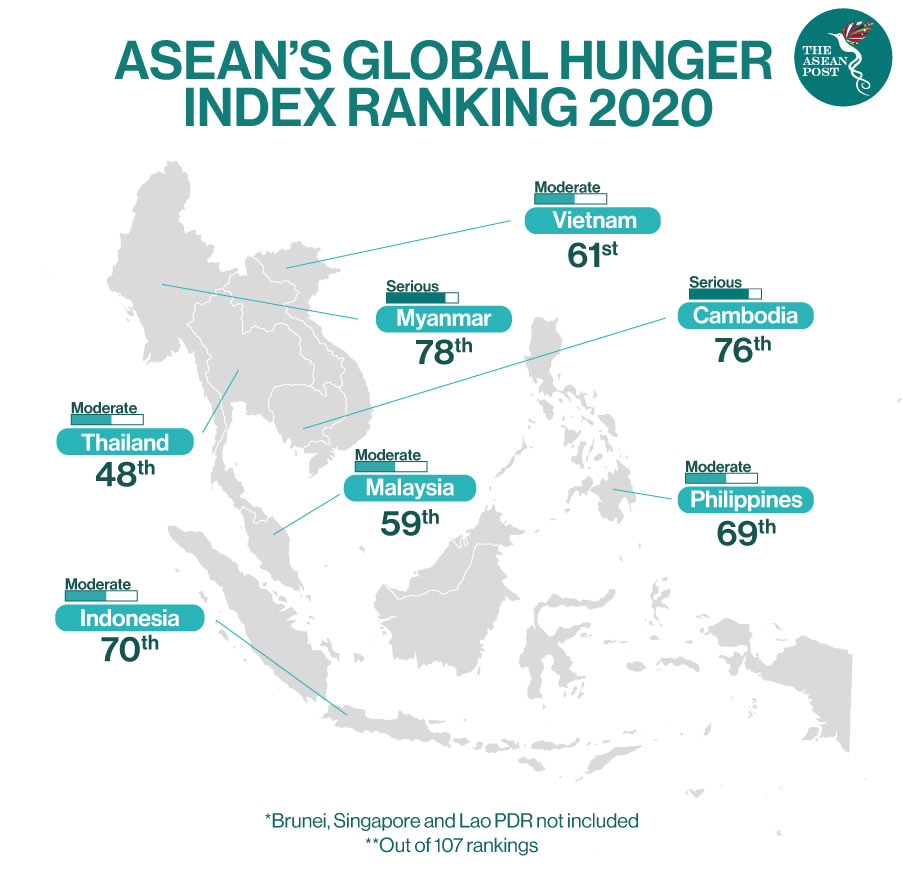
Closer to home, some ASEAN member states have also reported a rise in domestic violence cases since the pandemic began. According to a media report dated 24 November, domestic abuse reports in Thailand increased by 66 percent since March. In just the first seven months of 2020, there were 367 reported cases with 242 of them resulting in the death of the victim.

Whereas data from the Legal Aid Foundation of the Indonesian Women’s Association for Justice also showed an increase of domestic violence cases in the populous archipelago. Some 110 cases were reported in Indonesia from 16 March to 20 June. The three-month figure is almost half the number of domestic violence cases reported in 2019.

Ending violence against women and girls

Prevention

A number of efforts to eliminate violence against women and girls have been made across the world. They mainly focus on responding to and providing services for survivors of violence such as support and counselling. Some progress can be seen across the Asia-Pacific region. For instance, 90 percent of countries in the region now have dedicated laws on eliminating violence against women, compared to less than 50 percent a decade ago. A third of the countries in the region have also criminalised marital rape. Also, in 2015, ASEAN member states adopted the ASEAN Regional Plan of Action on the Elimination of Violence against Women.

Nevertheless, prevention is the only way to stop VAWG before it even happens.

“Addressing the structural causes, as well as the risk and protective factors, associated with violence,” is crucial to ending violence against women and girls completely, suggests UN Women.

“It requires political commitment, implementing laws that promote gender equality, investing in women’s organisations, and addressing the multiple forms of discrimination women face daily.”

Some prevention strategies include educating and raising awareness among all members of the public including women and men, and boys and girls. For instance, in the Asia-Pacific region, UN Women works with other UN agencies on the Partners for Prevention programme that aims to reduce the prevalence of gender-based violence in the region through behaviour and attitudinal change among boys and men, as well as increased institutional capacity and policy enhancements.

Fuente de la Información: https://theaseanpost.com/article/ending-violence-against-women

Comparte este contenido:

Estados Unidos: My Student Experience: ‘Even Though There is a Pandemic and We Are Teaching Virtually, I Wouldn’t Change it for the World,’ Says Jana Humphrey ‘20MAT

My Student Experience: ‘Even Though There is a Pandemic and We Are Teaching Virtually, I Wouldn’t Change it for the World,’ Says Jana Humphrey ‘20MAT

This is part of a monthly “My Student Experience” series in which the NC State College of Education highlights the student experience through profiles, stories and videos.

As a child, Jana Humphrey ‘20MAT loved the story of Matilda. And she knew if she was ever to become a teacher, she wanted to be just like Miss Honey.

Humphrey tried several different professions, from counseling to camp director, but ultimately realized that teaching was and has always been her life’s passion. As a former pre-K teacher and instructional assistant (IA), Humphrey decided to pursue a teaching license.

“Nothing compares to the reward I experience in a classroom. I had my own personal lightbulb moment when I was teaching pre-kindergarten, and I knew that I wanted to go back to school for my teaching license,” she said.

Humphrey chose the Master of Arts in Teaching program in the NC State College of Education because she felt it was the best fit for her. She says it checked all the boxes — master’s program, in-person and online classes, the ability to finish in two years and supportive faculty.

Now in her final semester of the elementary education content area, Humphrey is wrapping up her internship experience, where she is teaching in a first grade classroom at Cary Elementary School — a school she is all too familiar with. She worked as an IA at the school.

“I have pretty close connections with our students and families because I have been an IA here for a few years, and I have worked in the after school program (ASP). Fortunately, through ASP and carpool duty, I was able to already start building relationships with several of our students,” she said.

For Humphrey, her day begins at 9 a.m. and ends at 3:45 p.m. with five blocks of lessons and independent activities a day, including a morning meeting with the positivity project. Most of the time when there is a break, she is in virtual and in-person meetings. Collaboration and teamwork, she says, have been key to delivering strong instruction for their students.

Her cooperating teacher has taught her to keep it simple, which she says is especially important with virtual learning. “I have a tendency to try to invent new things or have overly complex independent activities. My mentor teacher is great about reminding me that, while we want quality work, we do not need to overwhelm our 6-year-old students with the latest app or trick.”

With her student teaching experience being online and virtual learning, Humphrey says it’s been challenging but also unique.

“It can be overwhelming to student-teach with the world watching. It is a little intimidating to know that I am technically being observed not just by colleagues, like my mentor teacher, university supervisor and administrative staff, but also by the families of my students,” she said.

What she’s enjoyed most about the internship experience has been the students.

“I love learning how resilient they are and seeing the community that the classroom has even over Google Meet. My class loves to celebrate each other during our online learning by clapping for each other and ‘raising the roof,’” she said. “They love to show our connection symbol when someone else is talking and they have a connection with them. It just amazes me how connected we are even virtually.”

Even with virtual teaching, Humphrey and her mentor teacher have made a point of finding ways to connect with their students outside of the computer screen. As a reward for positive student behavior and to celebrate birthdays, they visit students at their homes. They physically distance themselves and stay in the car, but conduct drive-bys.

“It’s been a great way to get to see some of our students in person. It’s also been a great management tool for our students,” she said. “They get to cash in rewards for teacher visits, mystery mail, etc. They get really excited and go above and beyond daily to earn these rewards.

Through this internship experience, Humphrey says she feels that she was mistaken thinking she knew all about teaching with her prior experience as a pre-K teacher. She has learned that it takes a lot more patience and flexibility than she could ever imagine.

“Even as an IA, I had no idea the number of late nights that teachers have working and perfecting lesson plans. I also have learned that we make a million decisions a day,” she said. “There is so much that we have to decide quickly and efficiently.”

Humphrey will graduate on Dec. 4 and will be one step closer to becoming Miss Honey.

“Having that teaching license at the end of the day will make everything worth it. Even though there is a pandemic and we are teaching virtually, I wouldn’t change it for the world!”

Fuente de la Información: https://ced.ncsu.edu/news/2020/11/25/my-student-experience-even-though-there-is-a-pandemic-and-we-are-teaching-virtually-i-wouldnt-change-it-for-the-world-says-jana-humphrey-20mat/


Comparte este contenido:
Page 989 of 6195
1 987 988 989 990 991 6.195
OtrasVocesenEducacion.org